5 features that make a movie or TV show great


In this day and age of superhero movies, I’m going to dare to give you guidelines on how to judge the quality of a movie. Great movies don’t make money, this is a fact. The reason commonly given is the populace is too dumb and unsophisticated to appreciate their merits. I don’t want to go into this discussion as it spills way beyond the scope of this humble post. However, the opposite is not true either: don’t think that just because a movie delivered a poor box office it deserves any praise. It may be simply because…well…it’s crap. Good movies usually:

1. Focus on character not on plot. Despite the well-known structure of storytelling dug out by mythologist Joseph Campbell and turned into a simplified manual for Hollywood scriptwriters, spelling out all the steps that need to be present in the hero’s journey for a story to resonate with the audience, writers and directors still need to highlight characters. The plot needs to be there, its phases followed in new and  creative ways, but strong characters are what we remember about the best films we see. We may not remember details of the story, but Marlon Brando’s Vito Corleone in the Godfather, Robert De Niro’s Trevis Bickle in Taxi Driver or Robin Wright’s Claire Underwood in House of Cards  are unforgettable.

Marlon Brando as Vito Corleone

Marlon Brando as Vito Corleone

2. Have complex characters. These great characters have the following common characteristics: they don’t comply to black and white codes of ethics, they tend to develop their own morality and follow it consistently; they show either superior intelligence, or charisma or beauty. Or all of them together. Understatement is their main weapon. They do not say everything: a lot needs to be inferred by their eyes, their turn of head, they way their mouths hang open for slightly longer than necessary. They are subtle and complex. We never get to understand their inner agenda to the full.

3. Have scenes played against the grain. Great movies catch the audience off guard, surprise them. They use, for example, as the commentary for a acene, a song  or piece of music that means its exact opposite or that does not belong to the historic period or place the story takes place. The use of LA CUMPARCITA in Woody Allen’s  Alice,  which takes place in contemporary Manhattan – the music plays as Mia Farrow’s and Joe Mantegna’s characters, after taking a magic potion that makes them invisible, pay the taxi driver and the doors of the car open for them to leave completely unseen; the voice over quips: “nothing shocks NYC cab drivers”  – enhances and adds to the humor and oddity of the situation.
Mia Farow as Woody Allen's Alice

Mia Farow as Woody Allen’s Alice

4. Let emotions emerge naturally. These movies do not manipulate their audience to make them weep. Sentimentality makes films that could otherwise be great syrupy and corny. Emotions must reflect real life and its poignancy to work as art. Think of the scene in Walter Salles’s Central Station in  which the character played by Fernanda Montenegro is shown, in a montage, writing a series of letters to relatives of people who are illiterate and therefore can’t write themselves. They are real people in this particular case  – but might as well be actors – from a small city in the northeast of Brazil, and the succession of short scenes showing these people dictating their messages breaks ones’ heart with their truth, simplicity and beauty.
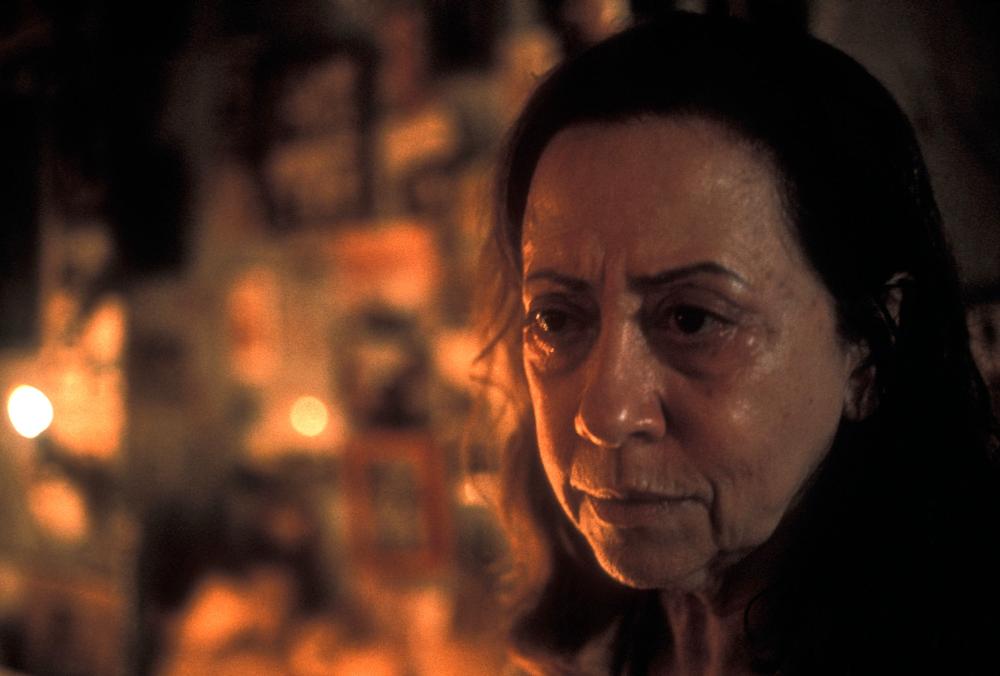
Fernanda Montenegro in  Walter Salles's Central Station

Fernanda Montenegro in Walter Salles’s Central Station

5. Don’t show or say everything.  Life is not neat. Great movies reflect life yet show it through a more interesting angle. But not all must be solved in those two hours a movie lasts. Life is a flow and conflicts are rarely resolved in their entirety. There is no need to explain every character’s motives or reactions or  tie all the loose ends of the story by the conclusion of the movie or TV show. Let the audience wonder. Give them opportunity to use their imagination. Take the typical end of the iconic 2001 a Space Odyssey. If you haven’t read the book, and there’s no need to (it was written to go with the movie), the last 15 min of the movie are all up to you. What is going on? What does that trip to Saturn really mean metaphysically? What’s this guy shown in progressive stages of aging. Who’s this fetus in the intergalactic womb? The viewer will keep those images for a long time in their minds (in my case,  for decades!) and neve stop trying to figure them out.

2001 A Space Odissey

2001 A Space Odissey

Well, great movies are not supposed to follow recipes. So now throw all I said before out of the window and make your own rules.

Good luck

Jorge Sette.
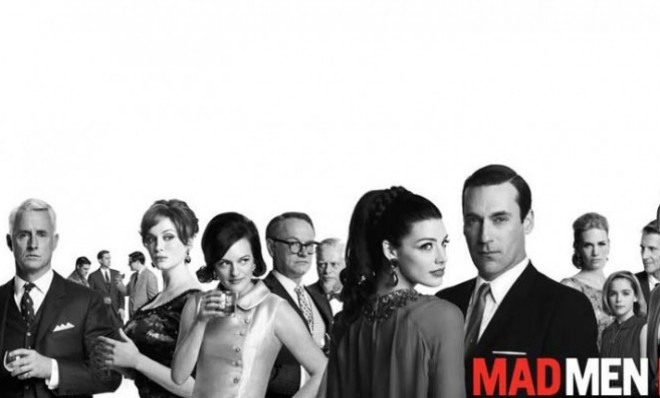
Mad Men: the end of an era


No, I’m not making any references to the famous John Lennon phrase in the beginning at of the seventies (“the dream is over”), although this historical  period will coincide – I suppose  – with the historical time in the series when the storyline will be over.

I have not seen the second half of the last season of MAD MEN yet (it’s currently on). I’m in fact talking about the imminent end of one of the best and most revolutionaries TV shows of all time.

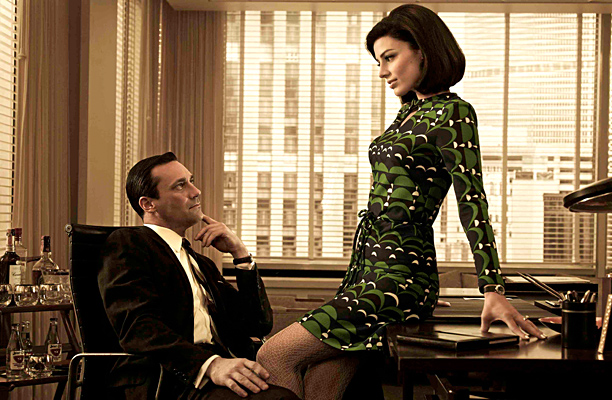
Mad Men

Mad Men

I clearly remember the first episode  of MAD MEN – it was already more than 10 min into the show when I switched on the TV, and, already in the armchair, took a punch in the stomach by what I saw: I had no idea what I was seeing. Could not label or classify it in any of the common categories we use for TV shows and movies.  Could it be the rerun of a famous movie of the nineteen sixties (the image looked too crispy and glossy for that, though), a soap opera, a miniseries? It all looked so strange and new.  Regardless of what it was, I was immediately hooked by the vivid colors on the screen,  the nuanced dialogue, the strange and depreciative way the women characters  were treated in the workplace, the out-of-place boyish and silly behavior of grown men in what seemed to be the setting of an advertising agency, the glamour of the characters’ wardrobe. What was going on?

I remember clearly that the first scene I saw showed the character Peggy Olson (Elisabeth Moss) in the process of  being hired for a job as a secretary (what else were women allowed to do back then?), but the atmosphere of the workplace seemed totally weird: men were being rude and sarcastic to women to their faces (some still do that today, but usually behind that backs), employees were chain-smoking at the office and nobody bothered. All the offices themselves seemed to have a fully stocked bar for whoever wanted to get smashed during work hours. Sexually inappropriate jokes were being thrown right and left among the male employees.

After hired, Peggy was given pointers by one tough Joan Holloway (Christina Hendricks) who seemed to be the personification of a sixties beauty – when women were supposed to be curvaceous, have a huge bust and impossibly narrow waistlines. Joan enhanced her looks by wearing stunningly colorful dresses for work, topped by a shiny updo of red hair, carrying an authoritarian  dominatrix look about herself, exuding sexuality and power: I had just met one of the most original and nuanced characters on TV history.

Then enter Dan Draper (Jon Hamm), from a classic stock of handsome movie stars from yesteryear, not very fashionable nowadays, incredibly seductive with his square chiseled jaw and deep dark eyes, a man’s man, who seemed to seduce all the women around. With eyes glued to the TV and ears attentive to every bit of non-naturalistic but expertly crafted dialogue, which exuded excellence, humor, insight, and irony, I wondered if that was one of the Oscar-winning movies I might have missed from previous years,

The last scene of this first episode was very eloquent, and gave away this was a new TV show I was not allowed to miss: Don Draper gets home. Despite all the unashamed flirting he exercised  during the office hours, he comes to a serene household in the suburbs, where a loving wife and two kids await. The spouse is blond and almost a caricature of a fifties housewife in the bland and domesticated way she looks, except you can immediatey tell from those eyes that Betty Draper (January Jones) is in reality a lot more complex psychologically than she lets on at first sight and more fitting for a jaded woman of the XXI century. Don walks up the stairs heading to the kids’ bedroom, tucks them in,  and kisses them good night in their sleep, as we hear the beginning of the beautifully evocative chords of My Fair Lady’s song ON THE STREET THAT YOU LIVE. We immediately sense  something is awfully off in that supposedly peaceful household. The credits begin to roll.

For the next 8 years or so,  I haven’t missed one single episode of MAD MEN (I tend to buy the DVD sets with the complete season, and spend wonderful weekends binging on it, never ceasing to be amused, surprised, awed and moved by the beauty, sophistication, elagance of dialogue, pathos, superp acting and general charisma of Mathew Weiner’s show.

Well, all good things come to an end. Let’s just hope that in the near future American producers and writers will fight hard to put out modestly successful shows, by the standards of American movies and TV anyway – like MAD MEN, and THE SOPRANOS, which preceded it – undeniably too refined to be appreciated by the barbaric masses who crowd the theaters with their stinking huge bags of  popcorn for the next installment of THE AVENGERS. In the case of Brazil, let’s hope TV people learn and try to shake and shape the sensibility of tired workers who get home after hours in the traffic to nagging wives and whining kids, and, beer in hand, can do nothing but resign themselves to watch catatonically  the pathetic episodes of the latest prime time soap opera or Reality TV show.

Streaming TV (Netflix and Amazon) is the future – we need more shows that push the envelope and, through fiction and documentaries, provide us with unusual angles and insights into life, which, for now, only good literature can impart.

Mad Men

Mad Men

I say goodbye to Don, Peggy, Roger, Joan, Betty,  Sally (the extraordinary child actor who plays the Draper daughter) and all the exceptional ensemble of the show with a deep pain in my heart. They will live in my mind forever, like characters of a Philip Roth novel.

Au revoir

Jorge Sette.

Paintings in the Movies: Art within Art


I’m fascinated by the game of mirrors and metalinguistic reflections reverberating from the use of art inside art inside art inside art, and all the implications and possible interpretations that result from this spiraling labyrinth. More precisely, this post is about famous paintings that feature in movies either as a direct element of the plot, or, more subtly, as an aid to help compose the fabric of the subtext. I’ll cover 3 interesting instances of clever uses of famous works of art and artistic style in the movies, which always cause a jolt of pleasure in the viewer who recognizes them, and, as a consequence, is able to connect the dots and understand the references.

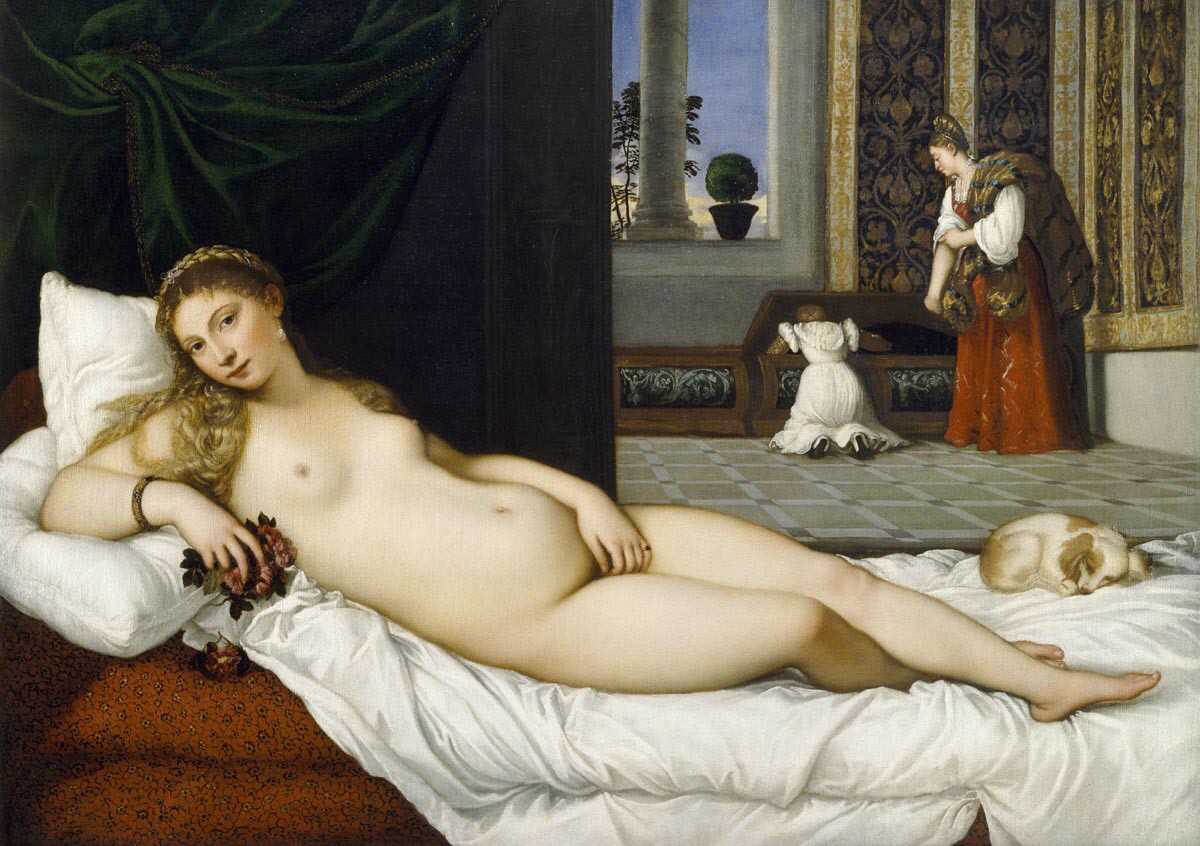
1. The Skin I live In, by Pedro Almodovar, 2011. Let’s start with this brilliant Almodovar classic, which was heavily criticized when it first came out for its alleged shift of style from what the director had been famous for. Well, if these critics meant the movie adds layers of complexity to Almodovar’s previous works, I couldn’t agree more. However, if they are implying the movie was not funny, I don’t think they got it. It’s hilarious, although in a somewhat dark way. In addition to the humor, one important aspect of the movie is the theme of the contrast between culture and nature, between what is innate and what is fabricated and handed down by civilization; how far can one go to change what is considered natural? Without going into too much detail about the plot of the movie, let’s just say it’s about a surgeon who thinks it’s OK to recreate the human skin in order to improve it. And he tests his theory on an unlikely guinea pig: the man who allegedly abused his daughter, and whom he has turned into a woman, through an unauthorized gender reassignment surgery! Too weird? Maybe. But the point here is to discuss the symbolic meaning of the painting that decorates the surgeon’s mansion in Toledo, and keeps popping up in the scenes where he goes up and down the elaborate staircase: The Venus of Urbino, by Titian, 1538. This painting summarizes the main theme of the movie: the idealization and beautification of the real world. In this case, a beautiful goddess, with flawless white skin, concocted by an artist, conveys the impossibility that she could be recreated outside of this imaginary world. She will not leap off the painting and exist in real life.

The Venus of Urbino, by Titian, 1538

The Venus of Urbino, by Titian, 1538

2. Skyfall, by Sam Mendes, 2012. By far my favorite 007 movie. Everything works perfectly to make this a classic: action-packed opening scene, dreamlike credit sequence showcasing Adele’s song, a lot of fighting and shooting throughout, stunning locations (London, Istanbul, Shanghai), sophisticated dialogue, superb acting. And, as the underlying theme, we are to led to confront the universal and always worrying issue of the inexorable passage of time and how human beings cope with it. The main theme is made explicit in an anthological scene (see video clip below) where an aging 007 meets his new and young quartermaster: Q. They are both at the National Gallery in London contemplating Turner’s The Fighting Temeraire, 1838, which depicts an old ship being tugged somewhere to be destroyed. These are the best lines of the blistering dialogue that ensues:

Q:    Old age is no guarantee of efficiency.

007: And youth is no guarantee of innovation.

Do I need to explain anything else?

Turner’s The Fighting Temeraire, 1838.

Turner’s The Fighting Temeraire, 1838.

Q meets James Bond:

3. Mean Streets, Martin Scorsese, 1973. In this movie the symbolism does not come from showing a specific artwork. However, you can tell the cinematography and art direction are heavily influenced by the style of Caravaggio. You seem to be watching the application in movies of Caravaggio’s artistic principles: Scorsese, just like his baroque predecessor, depicts the contemporary world (1973 New York) of the Italian Mob, shown in beautifully staged scenes where the technique of chiaroscuro or tenebrism predominates. Every scene seems to have the lighting coming from a single or, sometimes, two naked light bulbs carefully placed to focus on the foreground, where the action is taking place. The background is dimmed or blackened in shadows. The characters seem to behave as modern versions of Caravaggio and his mates themselves, rambling through the dark streets of VII century Rome (represented by 1973 New York) after nightfall, going to taverns (bars, and pool joints) and whorehouses (stripclubs). They are constantly gambling, getting involved in brawls and fights, some of those – in the movie – nicely choreographed to the Rolling Stones or the Beatles songs. In addition to that, you hardly ever see a shot without an element of the Catholic iconography featuring prominently in the setting: images of Christ, the Virgin Mary, crucifixes, photos of the pope and the interior of churches themselves. What would we call this? Post-modern baroque?

Caravaggio's Cardsharps, 1596.

Caravaggio’s Cardsharps, 1596.

Let us know what you thought of this post: write your feedback on the comments section of the blog.

NOTE: If you are into art, you may consider checking out our eBook series TEACHING ENGLISH WITH ART: http://wp.me/p4gEKJ-1lS

Au revoir

Jorge Sette.

OUR BLOG “LINGUAGEM” HAS HAD A GREAT FIRST YEAR!


HAPPY NEW YEAR, EVERYONE.

Please find below some official stats sent by wordpress.com on the blog LINGUAGEM. We’ve had a great first year. Thanks for the support and we will back stronger than ever in 2015.

BLOG LINGUAGEM: 2014 official stats

BLOG LINGUAGEM: 2014 official stats


Screen Shot 2014-12-30 at 8.48.34 PM Screen Shot 2014-12-30 at 8.52.35 PM


Au revoir

Jorge Sette.

Why is TV becoming better than the movies?


It all started when a mob family guy began to have panic attacks after a flock of ducks flew away from his backyard  leaving him with an irreparable sense of loss and despair. He started seeing a psychiatrist. We also noticed an uncanny resemblance between the way he conducted his mob activities and the way big companies operate in the real world.  Was this possibly a metaphor of corporate America? Then there was the focus on his family – unusual in mafia movies (except for The Godfather). We had hardly ever seen a mob wife on the small screen before, with all the details of her lifestyle, including a sense of how her ambition blinds her to the criminal work of her husband. As long as she is able to afford the nice house in the suburbs of Newark and the espresso machine, she is not complaining. If you add to these ingredients the fact the the husband is played by the ultra charismatic late actor James Gandolfini and the wife by the remarkable Edie Falco, you begin to understand why TV is changing into a medium of great content and art work. Of course I’m talking about The Sopranos in this case, the show that basically changed the way cable TV producers, liberated from the pressure of sponsors, started to want to experiment with new formats. The revolution is continuing in streaming video now.

The new TV

The new TV

Almost ten years after the end of that seminal show, we have now an offer of excellent series and made-for-tv movies all over the place, competing in quality of content and presence of great actors in the cast. The bar is being raised continuously.  Movie stars don’t think twice before crossing the bridge to the former lower land of television, when the invitation is tempting enough. Some of them, such as academy-award winner Kevin Spacey even bring their own projects to new media channels (which is the case of the successful House of Cards on Netflix.)

I’ve always been a lover of the movies, but I must confess these days I’d much rather watch an episode of Downton Abbey or Mad Men from the comfort of my couch than struggle to park at the nearest mall to watch a superhero blockbuster or a silly Brazilian comedy on the big screen. Besides, there is the new pleasure of binge watching on weekends, that is, covering sometimes a whole season or two in less than 48 hours. I’m aware of the perils of addiction, don’t worry. Look at the tragic end that befell most of the Candy Crush Saga players…

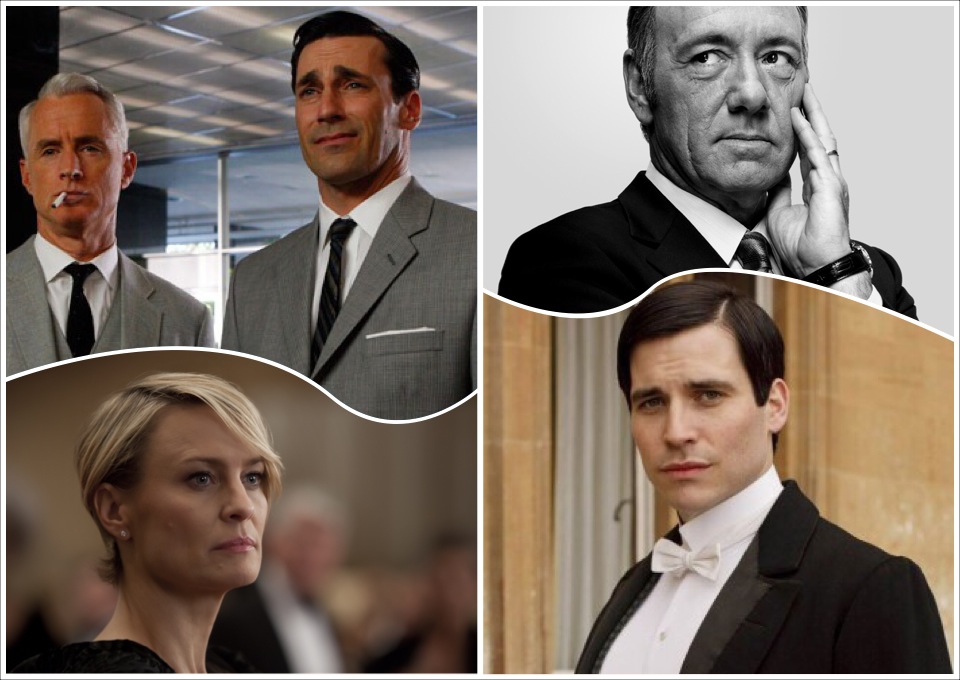
I forced myself to think why it is that TV is so much better now. Could I pinpoint some of the main differences between Charlie’s Angels in the seventies and The Shield? They are both cop shows. Therefore, they’re basically about catching the bad guys, right? So what’s new? Well, for starters, the protagonists in the new shows are not saints, but multifaceted human beings. They all have a dark side and are badly flawed somehow, like the heroes of Greek tragedies. Vic Mackey (Michael Chiklis), one of the main characters in The Shield, for example, doesn’t think twice before partaking in the spoils of war the drug dealers he chases accumulate. Don Draper (Jon Hamm) of Mad Men has  a compulsive infidelity drive, despite the nice and caring women who love him. He also hides a dark secret from his past. Walter White (Bryan Cranston) from Breaking Bad or Dexter (Michael C. Hall) from the show of the same name are both hardcore criminals! Walter runs a meth lab and is the kingpin of an international drug operation. His family knows nothing about it at first, but then his wife gets coopted and starts working for her husband. Dexter carves his victims with sadistic pleasure: OK, they only get submitted to the horrific ritual if they’ve committed crimes themselves but then again… Nurse Jackie, also played beautifully by Edie Falco in the show of the same name, is a committed nurse, who loves and cares for her patients, always going the extra mile to help them. Only she has sex with a coworker, jeopardizing the stability of her nice family structure, to have access to the painkillers she is addicted to.

 The new TV

The new TV

In addition to the flawed heroes, you will notice that most of these shows are about ensembles. There’s of course the main hero and his journey, but all the other subplots are as interesting or sometimes even more enticing than the main one. Supporting roles are usually played by very accomplished actors, so even a small scene played by a guest star can be a little gem.

Last but not least, there is the superb writing. If movies are the domain of directors and producers, as they have total control over their work, TV or streaming video is the realm of writers. They run the show there.  And surely this is a very strong reason why plots, structure, dialogues, and subtext have gained a lot more prominence over their big screen counterparts. A lot is not said in these shows’s plots. The subtlety of the dialogues, the importance of silences and the facial expression of great actors add a lot to the the depth of a scene. Also, the fact that sometimes the storyline or specific scenes focus on very small things of everyday life, and yet highlight unusual details and reveal interesting motives of a character make for great entertainment: the theft of a bottle of wine by a gay footman (Downton Abbey) or the puberty troubles of a girl (Mad Men) add a lot to the attraction of a show,  illuminating areas of the human experience that in the past were limited to literature or art movies.

If you have not watched any of the shows we discussed above, I strongly recommend you have a go at them. Let us know what you think by sharing your thoughts in this space.

In the meantime, check out my Pinterest board on BEST TV SHOWS (click on the picture below):

Au revoir

Jorge Sette.

The Old Man and the Sea


What’s all the fuss about this little tale of on old Cuban fisherman on the hunt for a huge marlin in the blue seas of the Gulf Stream, and his fight against the sharks that try to steal his spoils of war on the way back home? I needed to find out.

In his deceptively simple writing, Ernest Hemingway expresses all his concepts about life, old age, the meaning of victory, friendship, cooperation and masculinity in the fewer than 130 pages of this unforgettable story.

It’s a book with layers of meanings, and the right one for you will emerge and resonate deeply and fast – depending on your age and the point of life you’re at.

The Old Man and the Sea. Illustration by C.F. Tunnicliffe and Raymond Shepard.

The Old Man and the Sea. Illustration by C.F. Tunnicliffe and Raymond Shepard.


The powerful narrative of Hemingway will make you put yourself in this old man’ shoes (or lack thereof). You will feel the fishing line cutting through your hands and your back while you try to keep the marlin hooked, as the huge fish swims forward fighting for freedom, pulling your skiff along for endless hours out to the deep sea. The old man’s thoughts will be your thoughts – although I suspect his love for baseball will surely be replaced by your passion for soccer if you don’t live in the USA; his endurance and respect for life will sink profoundly into your heart. His recurring dreams of lions walking on a distant African beach will duplicate all your yearning for naturalness, beauty, purity and strength.

The Old Man and the Sea made me realize three great movies I’ve watched recently have strong references to it, without my noticing them at the time: Life of Pi, Captain Phillips and All is Lost, the latter featuring Robert Redford from the height of the dignity of his 77 years of age. The same themes of endurance, self-reliance and the power of dreaming reverberate through all of them, resolved in different and exciting original artistic forms. And, of course, they all go back to Melville’s Moby Dick.

I don’t expect anything else from a work of art: give me something beautiful and simple – throw some ocean into it, if possible – test my hero to the limits of his physical and mental strength, put me in his head as he struggles, and the artist will have managed to take me to places I have never been before, and, as a consequence, made my life richer and a lot more meaningful.

Au revoir

Jorge Sette.

Gabriela, Clove and Cinnamon: a must-read novel


I’m planning to eat a moqueca today, a typical Brazilian dish consisting of salt water fish stew in coconut milk, onions, garlic, tomatoes, coriander and dendê oil from Bahia. This will be my way of celebrating having finished the delicious novel Gabriela, Clove and Cinnamon by Brazilian writer Jorge Amado.

Despite the fact that our literature is not very well known outside the borders of Brazil, chances are the reader will have heard of Amado and his homeland, Bahia. He is one of our most popular writers of the XX century, and his books have been translated into more than 40 languages throughout the world.

Many of his works have been turned into famous Brazilian soap operas, miniseries and movies, but, of course, the experience of watching Amado either on the big or small screen does not compare to the much deeper pleasure of embarking on the deliciously funny, poetic and encompassing canvas of his writing.

Gabriela – Image generated by ChatGPT.

Jorge Amado treats the reader with a wealth of unforgettable characters from the lowest to the highest echelons of the provincial cities of the northeast of Brazil, who intermingle in a network of politics, friendships, romance and violence.

Gabriela, the novel, is a dream of humor, poetry and cultural information. As a Brazilian, it felt great to be transported to the Ilhéus (a town on the coast of Bahia) of the first decades of last century, when the booming of the cacao exportation was making changes in the town and its customs at a pace never seen before. Progress was threatening the lifestyle and status quo of the families of the first farmers who got hold of huge expanses of land by force, with the help of their armed jagunços, never hesitating to use violence and murder in constant ambushes against their opponents. But now times were changing, with the arrival of technology and progressist businessmen, who came to those backward towns attracted  by the riches generated by the cacao.

Jorge Amado delivers his prose in a light, funny and detached tone, packed with irony, yet showing great warmth and understanding towards his characters. He depicts prostitutes, rich farmers (the so-called “colonels”), their minions (“jagunços”), churchgoing  and gossipy splinters, lonely concubines, small time businessmen and pathetic pseudo-intellectuals, against the backdrop of the geography and culture of the small provincial cities of the early decades of the 20th century. His prose will stay with you for a long time after you close the book (or switch off your Kindle), such is its power and universality.

Moreover, “Gabriela” is a very sensual text, filled with the colors, smells and tastes of Bahia. It’s a book that celebrates life and the liberation of minds, especially women’s, from the colonial chains and obsolete traditions of a male-dominated society. It’s a radical hymn against machismo, opening up doors to the possibility of freedom.

Gabriela, the protagonist, represents the essence of Brazilianness, in her beauty, simplicity, lightheartedness and pleasure for life. Of course, both the main characters of “Gabriela, Clove and Cinnamon” and “Dona Flor and Her Two Husbands”, another famous Amado novel, are deeply associated in our minds with the image of Brazilian actress Sônia Braga, who portrayed them both in famous movies and soap operas during the seventies. Of course, I was too young at the time to fully enjoy them – this, however, does not stop me from putting the face of Ms Braga to the wild Gabriela of the pages of the novel. After all, Sônia Braga was an icon of Brazilian sexuality and beauty in her day.

Jorge Amado is a pleasure to read. His stories will certainly make a profound mark in your life and deepen the awareness you may have of Brazilian culture. I strongly recommend you have a go at it.

Au revoir,

Jorge Sette.

Heart of Darkness: the horror, the horror


After meeting Colonel Kurtz in the powerful portrayal given by Marlon Brando in “Apocalypse Now”, when the movie first launched, I always wanted to get to know the original character he was based on: the mysterious Englishman lost in the jungles of Africa created by Joseph Conrad in his novella “Heart of Darkness”. If you, like me, are into dark themes and water (be it sea or river), this is the book for you.

For many years I hesitated to start the book. The  language on the first page looked obscure, and I was not sure I had the energy to go through it. I even downloaded  it in different versions (I believe they were free). The copies lay on my iPad for a couple of years now. Then I came across it in the beautiful voice of Kenneth Branagh, as an audiobook, but, for some reason, I kept losing my concentration whenever I reached Parque Villa Lobos – a nice recreational area in Sao Paulo – on my bike, and could not follow the story from then on. Well, the audiobook at least showed me that if I got past the first couple of pages, with their detailed description of ships coming and going on the Thames at dusk, things would get more interesting. So I resumed the book. And did not regret it.

Brando_Apocalypse Now

Marlon Brando as Colonel Kurtz in Apocalypse Now.

Although the novella is written in prose, as you embark in the story within the story, which tells of seaman Marlow’s time as a captain of a French steamboat  working in the business of ivory trade somewhere in Central Africa, going up the Congo river, “a mighty big river, that you could see on the map, resembling an immense snake uncoiled, with its head in the sea, its body at rest curving afar over a vast country, and its tail lost in the depths of the land”,  it turns into a somber and gripping poem which becomes hard to put down. Although the book is short, the reader’s experience is very deep and lasting.

Marlow is in search of a tradesman named Kurtz, who seems to have lost contact with the ivory trading company they both work for. He was famous for having been an excellent employee, sending tons and tons of ivory down the river back to the headquarters. But for now, rumor has it something may have happened to him, as all communication seems to have ceased. Is he dead? Could he be ill? After all not many white men remained healthy, physically or mentally, after a couple of months in those desolate and warm latitudes.

Of course, as with all great works of art, the book lends itself to many interpretations and can be read on many levels. I believe that, at some point, Conrad was even accused of racism for the use of  the word nigger many times, and also for treating the natives as an indiscriminate living mass, not considering them as human individuals in the story. For today’s ears, it is certainly uncomfortable to read the word nigger inserted without any qualification or explanation within a passage, but let’s not forget the story is told from the point of view of Marlow, the seaman we don’t know much about. We know, however, that Marlow is aware that even London, “the biggest and greatest town in the world”, started off as a dark and uncivilized place, and that the Romans must have gone through something similar to what he is going through right now, floating on that snake of a river, in the middle of nowhere, surrounded by looming trees and sighing vegetation, under a scorching sun.

The book explores this fascinating encounter of a civilized man with the primitive world, which seems to exert a powerful pull over him, making him reconsider the values White Europe stands for. Therefore, it’s a harsh criticism of the barbaric colonialism in Africa, which, under the guise of a civilizatory mission, invaded and exploited those virgin regions of the world for pure material profit, causing a lot of destruction and pain along the way. The book questions what really is civilization and what terrible energies get unleashed when Paris and London clash with the Congo in the figure of Kurtz: “the horror, the horror”.

Others say that the book is about the battle between good and evil (stay in the boat and be safe or go on land like Kurtz and lose your soul to corruption due to lack of restraint). Whatever interpretation you lend to the story, the fact is that Heart of Darkness is one of the most poetic books I have ever read. Its account of a boat trip along that methaforically muddy river in the primitive jungle that pulsates like an alien heart will stay with me for years. It also made me appreciate the boldness and creativity of director Francis Ford Coppola, who transported the story to a totally different context (the Vietnam war in the late sixties and early seventies),  managing to make the themes and topics of the book even more relevant in a new era of barbarism.

Have you read the book?  What did you think of it? Share your opinion with us.

Au revoir

Jorge Settte.


Why Maleficent doesn’t work as a fairy tale


Maleficent, the new Disney movie that tells the story of Sleeping Beauty from the point-of-view of its original Nemesis – the evil fairy godmother – had all the potential to awe audiences, going way beyond its stunning visuals, if they had decided to work on more complex and original levels, paying closer attention to how mythology and its archetypes (typical characters) sustain great storytelling.

One can’t help but think of Wicked, that, first as novel, and then as a successful Broadway musical, also narrated the backstory of an evil character, the Wicked Witch of the West, of The Wizard of Oz fame, from the difficulties she had as a (literally) green child all the way to her adulthood, when she gets to meet Dorothy and her shoes. Although both Maleficent and Wicked chose to tell the story from the point of view of the alleged villain, the latter accomplished a lot more artistically.

Maleficent as a character is carefully construed to represent a strong role model for girls. Angelina Jolie looks stunning in the role, and will visually fascinate girls and boys alike. Boys, however, will surely be more entertained by the great number of superhero-like action scenes and predictable visual effects. It’s unfortunate, however, that the story is too weak to replace the original in children’s imagination, as it’s a lot less dark and scary in its connotations. Fairy tales are not supposed to be watered-down versions of their originals, and it’s a shame that Disney progressively goes in this direction with every new version they produce.

These are some of the problems that weaken Maleficent (Spoiler alert: you may want to watch the movie before reading the following):

Angelina Jolie as Maleficent

Angelina Jolie as Maleficent

1. The hero/heroine archetype of the story keeps shifting (is it Prince Phillip? Aurora? Or Maleficent herself?) Stories need a well-defined hero with a clear objective. The hero can and should be flawed (so there’s nothing wrong with Maleficent’s rage and wish for revenge from a dramatic stance). However, the whole story should be about her journey, and the transformation she goes through along what is commonly called the dramatic arc. Maleficent the movie does not really have any of its characters growing or changing through experience in its almost two hours of storyline. In this version, Maleficent has always been a strong and benevolent fairy, protective or the moor and its creatures. Then she makes one mistake led my revenge or jealousy, and spends the rest of the movie trying to fix it. This does not a good story maketh.

2. I’m sure that, for young moviegoers, the three little “good fairy-godmothers” are visually enchanting and can even be funny at times (especially the one played by Imelda Staunton), and they dutifully fill the role of tricksters, an important kind of archetype, providing the comic relief every story needs. However, adults will miss the irony and wit usually delivered by such characters in more sophisticated versions of kids’ movies.

3. Diaval, the raven, is too weak as a mentor, another essential archetype in effective stories. Maleficent, both as a movie and as a character, would have benefited a lot more if she had a more intriguing, wiser, and possibly older tutor to rely on. It would have given the movie a much stronger structure.

4. King Stefan, who starts off as Maleficent’s first love, does not have a clear archetypal role in the story. He’s too lame as a shadow/nemesis, and not very convincing as a shapeshifter (archetype usually filled by the heroine’s romantic interest). Similarly, young prince Phillip fails to awaken the sleeping princess with his cold teenage kiss: I don’t think we need to say anything more about his role in the story after this flop. Therefore, the movie really relegates male figures to totally secondary and pathetic roles.

5. Aurora’s role also does not fit in within the mythological structure of effective storytelling, being neither a hero nor a shadow, or any other essential archetype. She roams around the moors, beautiful and wide-eyed, without any specific dramatic function. The couple of scenes in which both Aurora and Prince Phillip, at different moments, unconsciously float in the air in the wake of Maleficent clearly indicate that these characters lack what is fundamental in archetypes of more importance: agency. Frankly, these levitation scenes boarder the ridicule.

6. The movie climax, packed with action and pyrotechnics, does not look any different from the last superhero movie you may have watched. The grand finale depicts lots of deus-ex machina solutions ( “Into a dragon”, orders Maleficent, before her loyal raven becomes a fire-spitting monster. Well, that is an easy way out, right? Worse: he fails! Maleficent will need to get her creepy dead wings back to succeed.

Speaking of those wings: at first, the scene in which they are cut off looked like this was going to be one of darkest and best moments of the movie, and could easily stand for all the feminist and environmentalist metaphors the movie repeatedly uses. However, the fact that they fly back and reattach themselves to their owner in a climactic scene at the end spoils all the dark beauty and menacing effect of the former scene. Now the wings are just another deus ex-machina-kind of solution employed by poorly-creative scritpwriters. Besides, one wonders why the wings did not decide to do this years before.

Now it’s your turn. Share with us your opinion on Maleficent.

For more on storytelling I would suggest you read two other posts in this blog:  “The Power of Storytelling – The Mythological  Structure ” (http://wp.me/p4gEKJ-F2) and “More Storytelling Tips for Marketers” (http://wp.me/p4gEKJ-UK).

Au revoir

Jorge Sette.

Under the Skin: ET for adults


What does Earth look like through the eyes of an alien? If you ever wondered about it, now you have a plausible answer: it looks like Scotland! The language is weird, humanity is mostly friendly and naive, and the views are breathtaking. It’s a cold  and lonely place in general, but you will have plenty of opportunity to be on the receiving end of much warmth: especially if you look like a dark-haired and full-lipped Scarlet Johansson. However, the place can have its dangers.

After using only her sexy voice to play an operating system with which Joaquin Phoenix’s character falls deeply in love in the academy award-nominated  movie Her, the actress takes on another risky role in director Jonathan Glazer’s Under the Skin. Now she’s nothing less than a predator alien in the shape of a beautiful woman, who spends most of her time driving along desert streets on the hunt for lonely men – who cannot believe their luck! Only, contrary to the preys’s idea, the plan is not sex, but to turn them into ET food.

Under the skin, the movie

Under the Skin, the movie

Under the Skin is not a movie for the masses. It’s slow at times and there’s hardly any dialogue. Just like 2001 a Space Odissey in its day, it does not explain everything you want to know: I guess you would need to read the novel it’s based on to find out all the details. However, Scarlet Johansson has enough star quality to carry the movie on her spotless shoulders. And the viewer will see a lot more than her shoulders, as the movie features a great number of explicit nude scenes.

The plot is also not without flaws, as, in my opinion, the change of the main character from alien predator to traveler open to new experiences and excited about discovering a new world is too sudden. However, the movie lasts the right amount of time, it does not drag and finishes exactly when it should.

It’s worth pointing out, as well, that it portrays one of the most poignant scenes in movie history: an abandoned toddler crying on an amazingly beautiful and desolate beach, waiting for its parents to come back from the sea. In addition to this, the underwater scene which shows men being turned into alien food is also very original.

Kudos to Ms Johansson, who does not play safe or shies away from challenging endeavours. I wonder what her next role will be.

Au revoir

Jorge Sette