Writing: focus on the process and not on the product


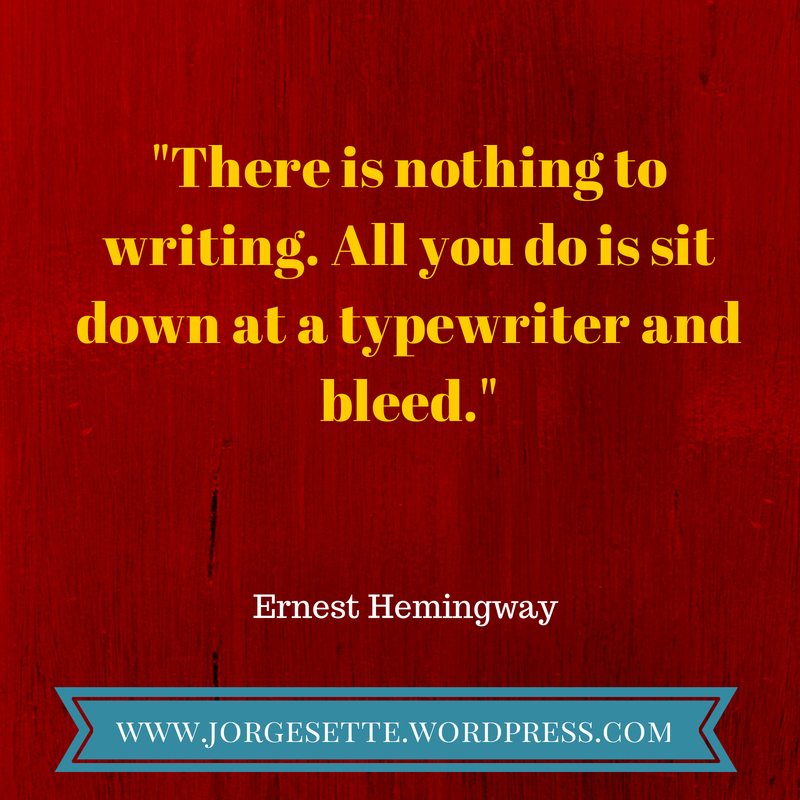
When you read a piece of good writing in The Economist, Folha de São Paulo or The New Yorker, you will probably wonder about the special powers of the writer. How is it possible to sit in front of a laptop and, in one go, come up with such a refined and polished text. The writer must have counted on a potent muse sitting by his side, you conclude. But, for anybody who has attempted the hard task of putting a piece of writing together, the recognition that the path is a little harder will soon dawn on him. Hemingway defined the process in the most dramatic way: “There is nothing to writing. All you do is sit down at a typewriter and bleed.

Of course, the Hemingway process would not be very popular in most of our schools and online courses today. As we are concerned mainly about writing in the language class in this post, we need to draw a line. After all, chances are teachers and coordinators would be charged with abuse and put in jail if they expected or encouraged the students to follow anything like the method proposed by the great author of THE OLD MAN AND THE SEA.

Luckily, there is a third way: fire the muse and follow a step-by-step process to your writing activities. Writing is a skill students must master. We have never written so much as in today’s world. Most of our communication on the Internet occurs in the form of writing, one way or another.

Following the 5-step process we’ll be outlining below is probably the most effective way to come up with a good text. Of course, if you have the privilege of counting on good professional editors, the process becomes a lot easier, but not many people – least of all language students – can afford this luxury on a day-to-day basis, so we must rely on ourselves, and, if we are lucky, on some of our friends and classmates for aid.

Process Writing

Process Writing


Therefore, what we are advocating here is that writing should not be a solitary activity: pairs or groups of students should take part in it, although, ideally, each one should be working on his own individual piece. There are very clear steps to follow in what is generally know as process writing. This is, in our opinion, the best approach to teach and practice this productive skill in the language classroom. Let’s cover each of the phases in the sections below.

1. Brainstorming (generating ideas). When you are given a writing assignment, get together with a colleague and think of all the ideas the topic might generate. Don’t censor yourself at this stage, anything goes. If there’s no given topic, your freedom is even greater, and you will have fun imagining all possible topics, points-of-view, arguments or characters that may go into your piece. This is more fun when done with another person or in a small group. Then, each one can follow their own thread of thoughts, after this initial kicking off of ideas, and get down to writing their first draft.

2. Drafting. Now it’s time to prioritize all the wonderful ideas you generated in the step above. Consider the physical space you need for the text: is it a blog post, a story, an essay, an infographics design, a tweet? How many words are you supposed to use in your assignment? Don’t even consider using all your ideas. Pre-select, choose, discard, adjust, change. Cut, cut, cut. Establish what should go into each paragraph, which sentence you will pick as the topic one. Draft and redraft as many times as you feel you should. The more, the better. Change sentences to a different part of the text for stronger impact or more consistency. Decide what should be the beginning, the middle and the end of the piece. It’s always easier to start with the end. Remember the clever words of the Cheshire Cat to Alice, in Alice in Wonderland, by Lewis Carroll:

Would you tell me, please, which way I ought to go from here?”

“That depends a good deal on where you want to get to,” said the Cat.

“I don’t much care where” said Alice.

“Then it doesn’t matter which way you go,” said the Cat.

3Revising. Now, possibly with the help of a friend, you are going to begin refining and polishing your text. Your colleague will read the text, ask questions whose answers he would expect to find in it, but does not. He will probably make suggestions. There’s no need to take everything he says into consideration. Your are the writer after all, so the final decision is yours, but try and incorporate some of his feedback. Apply your own critical thinking skills to decide if the text is coherent, well thought out, convincing, logical.

4. Editing. This next step involves going deeper in the process started in the previous step. Time to check for grammar, vocabulary and syntax mistakes. Make sure collocations and register (formal and informal) are adequate. Have the spellcheck on your computer on. Consult a thesaurus, dictionaries, and grammar guides. Read aloud to make sure your text sounds good, to make sure it sounds English. Enter phrases and idioms you wish to use into Google to see if they appear in other texts and really mean what you wish to say. Again, get help from your friends.

5. Publishing. This is the last phase of your work. You will be deciding on the images to use, the layout, the kind of font you find appropriate. This part is a lot of fun, in general. Reread it one more time. Any more changes? If you are using a digital device, be brave and push the button PUBLISH. Next time you write something it will be even easier.

The Steps of Process Writing

The Steps of Process Writing

Sometimes these steps may occur in a different order. Writing is messy. Moreover, the number of drafts cannot be stipulated: the more the better. But we all know there are time constraints to be taken into account, and the final product needs to be presented at some point. So let’s use common sense, and work on your piece within a time frame that suits your teacher’s expectations. In a language lesson, of course, it is the drafting that counts: the more you focus on polishing and making your piece more impactful and error-free, by adding ideas, deciding on the best location of sentences, breaking paragraphs in more consistent ways, and finally asking your friends for help to identify grammar and vocabulary problems, the more you will be learning. That’s when learning is really taking place. The final product is only the logical consequence of the hardest possible work you put into the project.

And remember, the final product does not need to be a masterpiece. The secret to fine writing has been repeated countless times by the experts – although both students and teachers seem to resist it: good writing is rewriting. Besides, writing improves over time, and the more you practice, the better results you will get. Good luck.

NOTE: If you are interested in process writing, you may consider checking out our eBook series TEACHING ENGLISH WITH ART. Click here for further info on the series: http://wp.me/p4gEKJ-1lS

Check out this fun video clip on our CARAVAGGIO eBook:

Au revoir

Jorge Sette.

Caravaggio and the Myth of Medusa


Medusa was a beautiful priestess serving at the temple of Athena. Her beauty attracted a number of suitors, but she had to turn them down, as, according to her vows, she was supposed to remain a virgin.

However, Poseidon, God of the Sea, fell in love with Medusa and appeared to her in the shape of a bird. Being a god, it was easy for him to have his way with the poor maid and sleep with her.

As customary in mythological tales, the victim takes the blame for this sort of incident, and Athena, in a fury, turned Medusa into a horrific monster with the skin of a corpse and poisonous snakes for hair. Besides, anyone who dared to look her in the eyes would immediately turn to stone.

Caravaggio's Medusa

Caravaggio’s Medusa

Perseus, son of Jupiter with the mortal Danae, grew up on the Island of Seriphus. For many years he longed to receive a visit from his father, but it did not happen. His mother would tell him to be patient, as time did not work in the same way for gods.

Danae attracted the attention of Polydectes, king of the island, who tried to force her to marry him. She refused, but the King imposed one condition not to marry her: Perseus must bring him the head of Medusa as a gift.

Perseus, although unprepared and young, did not hesitate to accept the challenge. He knew he had first to find the Grey Sisters, horrible old hags who lived in the forest and shared one eye between them. They kept taking turns at using the eye ball. In a moment of distraction, while one of them was passing the eye to another, Perseus snatched it and told them that he would keep the eye unless they told him where the nymphs lived. The nymphs would tell him where to find Medusa and would give him the necessary weapons to fight her. The old hags acquiesced.

Perseus set out to meet the nymphs, who gave him three weapons: the sword of Jupiter, his father; the shield of Athena, the Goddess of Wisdom; and the winged sandals of Hermes, the Messenger of the Olympic Gods. He was also told not to look Medusa in the eye or he’d be turned to stone.

As he approached the lair of the monster, Perseus noticed a number of statues of men scattered in the garden. These were probably men who had tried to get to Medusa before him and were dully petrified. All was rock and desolation around the cave of the monster.

Perseus turned his back to the entrance and walked backwards towards the inner chambers of the cave, looking into the reflection on his polished shield for orientation. This way he would not have to look Medusa in the eyes directly. As he located her, he turned around with his eyes shut and struck her neck with the powerful sword of Jupiter, decapitating the creature.

Using Hermes’ sandals, he flew back to the Island of Seriphus, arriving right at the moment when the wedding between his mother and King Polydectes was about to take place. He shouted: Here’s your gift! And held the head of Medusa in front of the king. The King looked into the eyes of the dead monster and, as a result, was turned immediately to stone. And so Danae was free to go and live with her son again.

Caravaggio’s work, inspired by the myth of Medusa, was painted on an actual shield. It was not meant to be hung, but passed from hand to hand when viewed.

Note: the text above is from the ebook: TEACHING ENGLISH WITH ART: CARAVAGGIO. For further info on the series please CLICK HERE:  http://wp.me/p4gEKJ-1lS

Check out the video:

Au revoir

Jorge Sette


English Teaching Should Go Beyond Language!


Teaching English with Art: the ENGLISH LANGUAGE LEARNING materials you have been waiting for:

Click on the image below to know more about TEACHING ENGLISH WTH ART and buy your eBooks:

Teaching English with Art

Teaching English with Art

OUR BLOG “LINGUAGEM” HAS HAD A GREAT FIRST YEAR!


HAPPY NEW YEAR, EVERYONE.

Please find below some official stats sent by wordpress.com on the blog LINGUAGEM. We’ve had a great first year. Thanks for the support and we will back stronger than ever in 2015.

BLOG LINGUAGEM: 2014 official stats

BLOG LINGUAGEM: 2014 official stats


Screen Shot 2014-12-30 at 8.48.34 PM Screen Shot 2014-12-30 at 8.52.35 PM


Au revoir

Jorge Sette.

Which novels do you wish you had written yourself?


When you are at the stage of brainstorming for a nonfiction blog post or a piece of creative writing, it’s inevitable to remember a couple of articles, books and novels related to the topic you read at some point and enjoyed. They will be a source of inspiration and influence in your writing, making you somehow even slightly jealous, wishing you had thought of that first. But, of course, you would also have needed the right language to encapsulate it. After all, more important than the plot itself is how you say things.

Take the book Life of Pi by Yann Martel, for example, whose original idea some people claim was stolen from our Brazilian writer Moacyr Scliar. Well, plagiarism is hard to establish, there are a lot of gray areas, but one thing I’m sure of: Martel did not write the same story nor, most definitely, used the same language as Scliar. Jorge Luis Borges, in his marvelous piece Pierre Menard, Autor del Quixote, from the book Ficciones takes this idea even further, asserting that a book written with the exact same words by a different author at a different time would be read in a new way, due to the dissimilar historic contexts, and therefore would not be the same book at all. I agree.

After reading a comment on Facebook by a friend saying that she is full of ideas for blog posts but do not find the time to write them (yes, we all know how teachers are busy!), I made a joke saying that all my good ideas had already been stolen by the likes of Shakespeare, Tolstoy or Philip Roth.

Then I though for a moment, and decided to give serious consideration as to which novels I really wished I had written and why. This is my humble list:

Books I wish I had written

Books I wish I had written

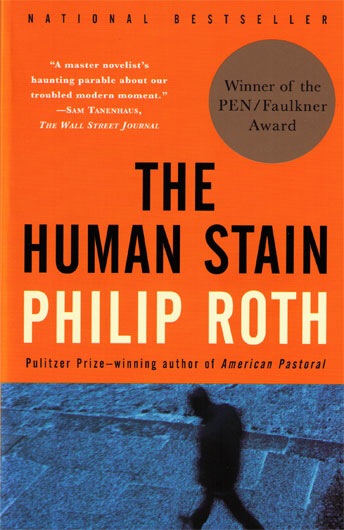
1.The Human Stain, by Philp Roth: it’s hard to discuss this book without giving a bit too much away, so apologies for the spoilers. The story of a light-skinned black boy who grabs the opportunity to pass for a Jew in 1950’s America and later becomes a Classics Professor at a small college is a complex account of the choices you make in life and the responsibilities and consequences that come with them. The need to make concessions and compromise basic values to achieve a bigger goal is the central theme of the book. The deep moral dilemma you face when you take such a radical decision, including the necessity to abandon and cut relations with your family and community to start a new life somewhere else as a completely different person, is evaluated by the author from unusual and unexpected angles in this impressive book. As irony is the hallmark of Roth, the book starts with the most paradoxal of incidents: the professor, noticing that two of the students enlisted in his class never seem to be present, asks the class the question which brings about his doom: “do they exist or are they spooks?” The latter being an old loaded word, a racist epithet for blacks. It turns out that the Professor, never having seen those students before, meant spooks in the most common sense of the word, that is, ghosts, and, after all the pressure and hassle he goes through, without support from any of his colleagues and students – for a number of political reasons – he decides to resign and end his career. I would love to have written this story for its universality: any minority can identify with what Coleman, the Jewish/Black professor, goes through, and can easily put themselves in his shoes. Given the opportunity would you do the same? Would you change your race, color, nationality, sexual orientation or gender? Or would you just give up all of your chances of fully growth and spend the rest of your life as a second class citizen in a society that will only offer you the fulfillment of your whole potential if you are the right color?

The Human Stain

The Human Stain

2. Dom Casmurro, by Machado de Assis: this must be the book I reread most often in my entire life. I know it almost by heart. What attracts me is the way the characters are so well-rounded and fully developed, leaping out of the page as if you could go for a walk and talk to them. This does not mean, however, that you will know them any better. This is the whole point of the story. The dissimulation, the fact that we never know anyone completely. The impossibility of dealing with only one version of the reality. I can’t get enough of the artistry of the author, who, narrating the story in the first person, never lets the reader be sure about what really happened: was the main character’s wife an adulterer? Is the boy she gives birth to his son or his best friend’s? The doubt will corrupt his marriage and ultimately destroy all the love in his life. He becomes empty and isolated, having chosen the version of reality which will cause him the most pain and damage. Don’t we all choose the latter?

Dom Casmurro

Dom Casmurro

3. We need to talk about Kevin, by Lionel Shriver: a professional woman is in love with her work and her husband. She writes and publishes travel guides, having the chance to go places, tour interesting and remote regions, avoiding getting stuck in a housewife’s rut, being independent most of the time. Yet, she can count on a loving husband to comfort and look after her when she comes back home after a long trip: this is a dream life. She has the best of both worlds. Then, what else is it that society claims will make every woman even happier and more complete: to have a baby. From the birth of Kevin, her firstborn, to the dantesque crime scene at the end of the book, We need to talk about Kevin reads like a nightmare. You can’t put it down. A thriller in every sense of the word. But one that goes way beyond the limitations of the genre. Shriver’s ambitions are a lot more encompassing. She discusses the nature of evil. Is it caused by nurture or nature? How is it created? Has Kevin always been the monster she feared he was or was his low self-esteem caused by his mother’s lack of love and care that turned him into a criminal? Was the mother’s resentment for having to give up all the pleasure and independence of her former life, her pre-baby life, toxic enough to corrupt and undo the little creature? The sense of guilt of a mother for not conforming to the patterns of a society that takes motherly love for granted only contributes to the character’s anguish and mental confusion. Of course, the book will show different perspectives of the scenarios we painted, but the conclusion will be up to the reader.

We need to talk about Kevin

We need to talk about Kevin

These are all great themes and I don’t need to tell you how masterfully these concepts and ideas are exploited by those wonderful writers. The angles they illuminate, the perspectives they reveal would hardly have occurred to the average reader. That’s why they are geniuses and we are blog writers. But we can always try to get closer to their art in our writing. According to Malcolm Gladwell, another writer whose books I wish I could have written (although they are nonfictional), all it takes is a dedication of 10,000 hours of work to become a world class master at your craft.

Which books would you like to have written yourself? Let us know.

Au revoir

Jorge Sette.

Gabriela, Clove and Cinnamon: a must-read novel


I’m planning to eat a moqueca today, a typical Brazilian dish consisting of salt water fish stew in coconut milk, onions, garlic, tomatoes, coriander and dendê oil from Bahia. This will be my way of celebrating having finished the delicious novel Gabriela, Clove and Cinnamon by Brazilian writer Jorge Amado.

Despite the fact that our literature is not very well known outside the borders of Brazil, chances are the reader will have heard of Amado and his homeland, Bahia. He is one of our most popular writers of the XX century, and his books have been translated into more than 40 languages throughout the world.

Many of his works have been turned into famous Brazilian soap operas, miniseries and movies, but, of course, the experience of watching Amado either on the big or small screen does not compare to the much deeper pleasure of embarking on the deliciously funny, poetic and encompassing canvas of his writing.

Gabriela – Image generated by ChatGPT.

Jorge Amado treats the reader with a wealth of unforgettable characters from the lowest to the highest echelons of the provincial cities of the northeast of Brazil, who intermingle in a network of politics, friendships, romance and violence.

Gabriela, the novel, is a dream of humor, poetry and cultural information. As a Brazilian, it felt great to be transported to the Ilhéus (a town on the coast of Bahia) of the first decades of last century, when the booming of the cacao exportation was making changes in the town and its customs at a pace never seen before. Progress was threatening the lifestyle and status quo of the families of the first farmers who got hold of huge expanses of land by force, with the help of their armed jagunços, never hesitating to use violence and murder in constant ambushes against their opponents. But now times were changing, with the arrival of technology and progressist businessmen, who came to those backward towns attracted  by the riches generated by the cacao.

Jorge Amado delivers his prose in a light, funny and detached tone, packed with irony, yet showing great warmth and understanding towards his characters. He depicts prostitutes, rich farmers (the so-called “colonels”), their minions (“jagunços”), churchgoing  and gossipy splinters, lonely concubines, small time businessmen and pathetic pseudo-intellectuals, against the backdrop of the geography and culture of the small provincial cities of the early decades of the 20th century. His prose will stay with you for a long time after you close the book (or switch off your Kindle), such is its power and universality.

Moreover, “Gabriela” is a very sensual text, filled with the colors, smells and tastes of Bahia. It’s a book that celebrates life and the liberation of minds, especially women’s, from the colonial chains and obsolete traditions of a male-dominated society. It’s a radical hymn against machismo, opening up doors to the possibility of freedom.

Gabriela, the protagonist, represents the essence of Brazilianness, in her beauty, simplicity, lightheartedness and pleasure for life. Of course, both the main characters of “Gabriela, Clove and Cinnamon” and “Dona Flor and Her Two Husbands”, another famous Amado novel, are deeply associated in our minds with the image of Brazilian actress Sônia Braga, who portrayed them both in famous movies and soap operas during the seventies. Of course, I was too young at the time to fully enjoy them – this, however, does not stop me from putting the face of Ms Braga to the wild Gabriela of the pages of the novel. After all, Sônia Braga was an icon of Brazilian sexuality and beauty in her day.

Jorge Amado is a pleasure to read. His stories will certainly make a profound mark in your life and deepen the awareness you may have of Brazilian culture. I strongly recommend you have a go at it.

Au revoir,

Jorge Sette.

BuzzFeed Quizzes are driving me crazy


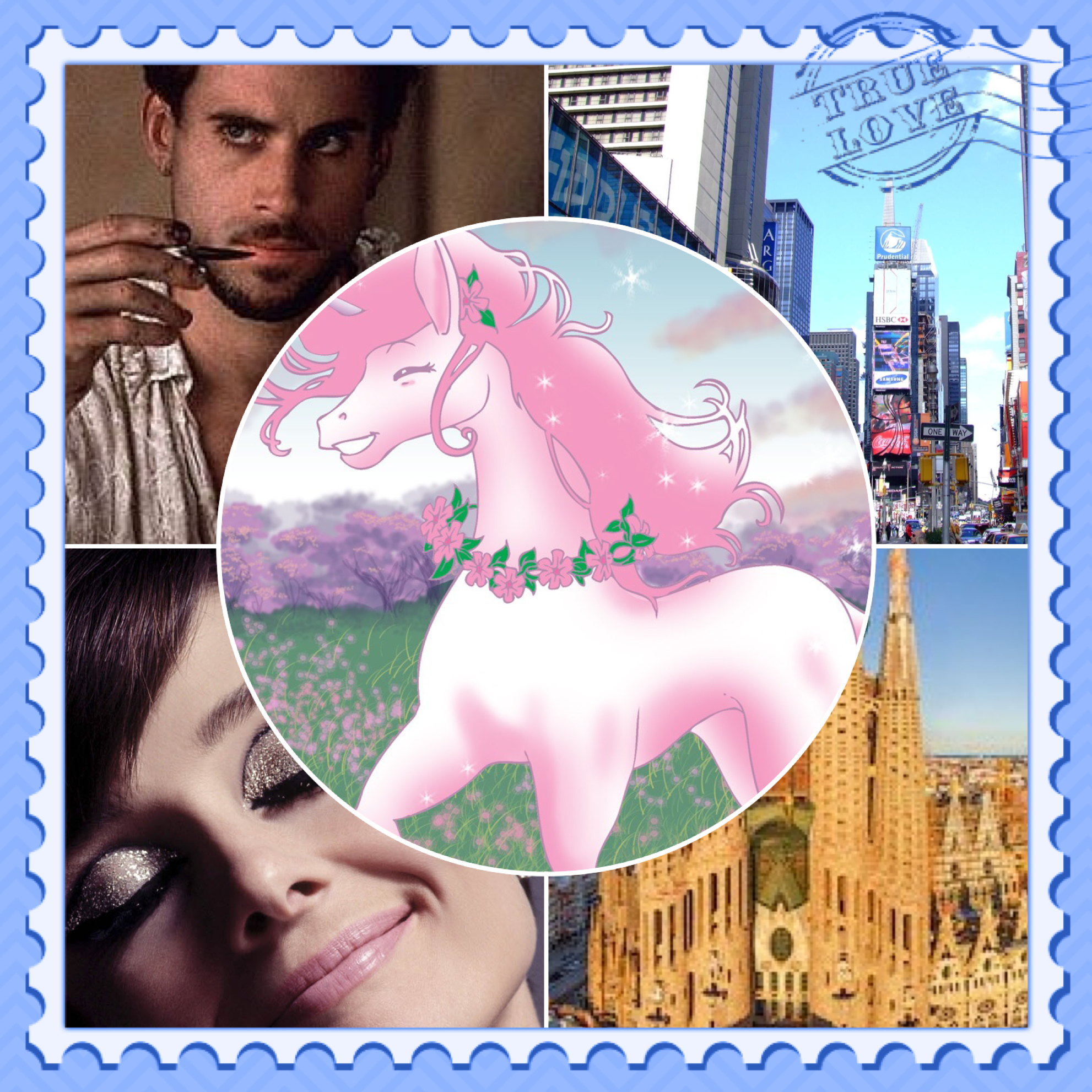
I’m getting awfully confused with all these BuzzFeed quizzes I’ve been taking: it looks like I’m an Audrey Hepburn version of a unicorn, living in New York, commuting everyday (or should I say galloping) to Barcelona, while honing my Shakesperean skills as a writer to be read as a self-published $ 0.99 e-book on Amazon. I need more from life.

BuzzFeed quizzes

Au revoir

Jorge Sette


Should you have a blog as a marketer?


Should you have a blog as a marketer?

Click on the image for the full text.

Heart of Darkness: the horror, the horror


After meeting Colonel Kurtz in the powerful portrayal given by Marlon Brando in “Apocalypse Now”, when the movie first launched, I always wanted to get to know the original character he was based on: the mysterious Englishman lost in the jungles of Africa created by Joseph Conrad in his novella “Heart of Darkness”. If you, like me, are into dark themes and water (be it sea or river), this is the book for you.

For many years I hesitated to start the book. The  language on the first page looked obscure, and I was not sure I had the energy to go through it. I even downloaded  it in different versions (I believe they were free). The copies lay on my iPad for a couple of years now. Then I came across it in the beautiful voice of Kenneth Branagh, as an audiobook, but, for some reason, I kept losing my concentration whenever I reached Parque Villa Lobos – a nice recreational area in Sao Paulo – on my bike, and could not follow the story from then on. Well, the audiobook at least showed me that if I got past the first couple of pages, with their detailed description of ships coming and going on the Thames at dusk, things would get more interesting. So I resumed the book. And did not regret it.

Brando_Apocalypse Now

Marlon Brando as Colonel Kurtz in Apocalypse Now.

Although the novella is written in prose, as you embark in the story within the story, which tells of seaman Marlow’s time as a captain of a French steamboat  working in the business of ivory trade somewhere in Central Africa, going up the Congo river, “a mighty big river, that you could see on the map, resembling an immense snake uncoiled, with its head in the sea, its body at rest curving afar over a vast country, and its tail lost in the depths of the land”,  it turns into a somber and gripping poem which becomes hard to put down. Although the book is short, the reader’s experience is very deep and lasting.

Marlow is in search of a tradesman named Kurtz, who seems to have lost contact with the ivory trading company they both work for. He was famous for having been an excellent employee, sending tons and tons of ivory down the river back to the headquarters. But for now, rumor has it something may have happened to him, as all communication seems to have ceased. Is he dead? Could he be ill? After all not many white men remained healthy, physically or mentally, after a couple of months in those desolate and warm latitudes.

Of course, as with all great works of art, the book lends itself to many interpretations and can be read on many levels. I believe that, at some point, Conrad was even accused of racism for the use of  the word nigger many times, and also for treating the natives as an indiscriminate living mass, not considering them as human individuals in the story. For today’s ears, it is certainly uncomfortable to read the word nigger inserted without any qualification or explanation within a passage, but let’s not forget the story is told from the point of view of Marlow, the seaman we don’t know much about. We know, however, that Marlow is aware that even London, “the biggest and greatest town in the world”, started off as a dark and uncivilized place, and that the Romans must have gone through something similar to what he is going through right now, floating on that snake of a river, in the middle of nowhere, surrounded by looming trees and sighing vegetation, under a scorching sun.

The book explores this fascinating encounter of a civilized man with the primitive world, which seems to exert a powerful pull over him, making him reconsider the values White Europe stands for. Therefore, it’s a harsh criticism of the barbaric colonialism in Africa, which, under the guise of a civilizatory mission, invaded and exploited those virgin regions of the world for pure material profit, causing a lot of destruction and pain along the way. The book questions what really is civilization and what terrible energies get unleashed when Paris and London clash with the Congo in the figure of Kurtz: “the horror, the horror”.

Others say that the book is about the battle between good and evil (stay in the boat and be safe or go on land like Kurtz and lose your soul to corruption due to lack of restraint). Whatever interpretation you lend to the story, the fact is that Heart of Darkness is one of the most poetic books I have ever read. Its account of a boat trip along that methaforically muddy river in the primitive jungle that pulsates like an alien heart will stay with me for years. It also made me appreciate the boldness and creativity of director Francis Ford Coppola, who transported the story to a totally different context (the Vietnam war in the late sixties and early seventies),  managing to make the themes and topics of the book even more relevant in a new era of barbarism.

Have you read the book?  What did you think of it? Share your opinion with us.

Au revoir

Jorge Settte.


Using Instagram to Promote your Business (summary)


0001-75

Click on the image to read the the full article.