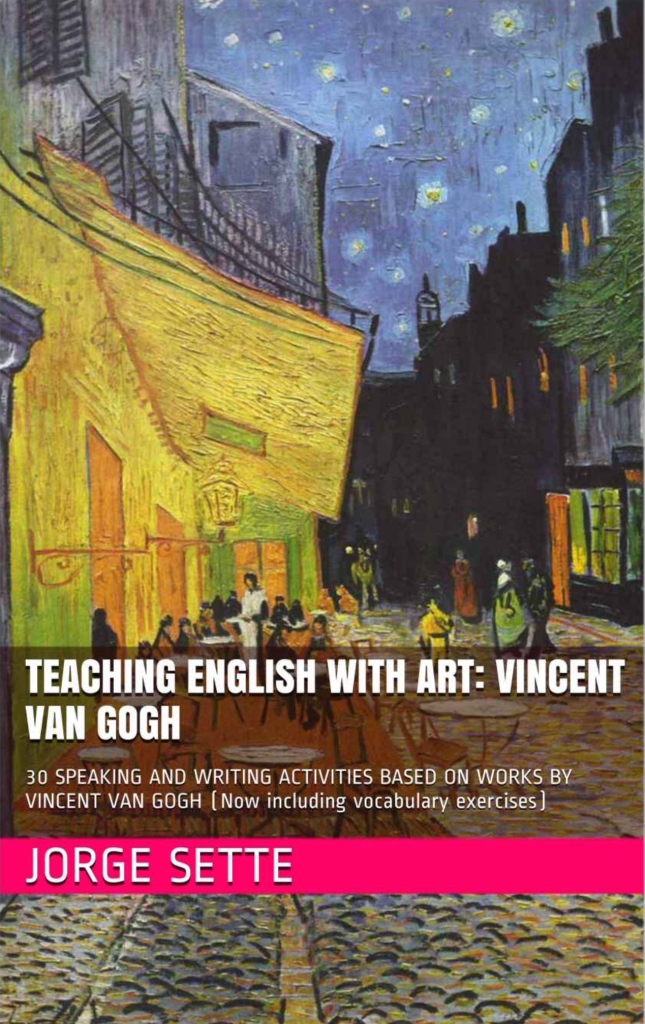
Teaching English with Art: Vincent van Gogh. This seventh volume of our successful series of eBooks combining ENGLISH TEACHING AND ART is a wonderful supplement to any coursebook or extra materials your students may already be using in the English class. It contains 30 speaking and writing activities (now including specific vocabulary exercises) for classroom use, based on some of the most striking works by one of the most beloved and controversial artists of Western Culture, VINCENT VAN GOGH.
The objective of the eBook is to expose the students to art while teaching English, fulfilling therefore one of the tenets of effective language acquisition: providing a realistic context for the language to be learned and practiced as a means to an end. Your students will love to exercise their English discussing the works of van Gogh. This is a proven way to make language acquisition fun and effective by creating in the classroom an atmosphere of interest, motivation and emotion. Each activity is clearly correlated to the COMMON EUROPEAN FRAMEWORK OF REFERENCE (CEFR), and the level is stated next to it.
Click on the image below to download the ebook:
Click on the image above to get your copy from the KINDLE STORE.
Check out the video clip on the ebook TEACHING ENGLISH WITH ART: VINCENT VAN GOGH
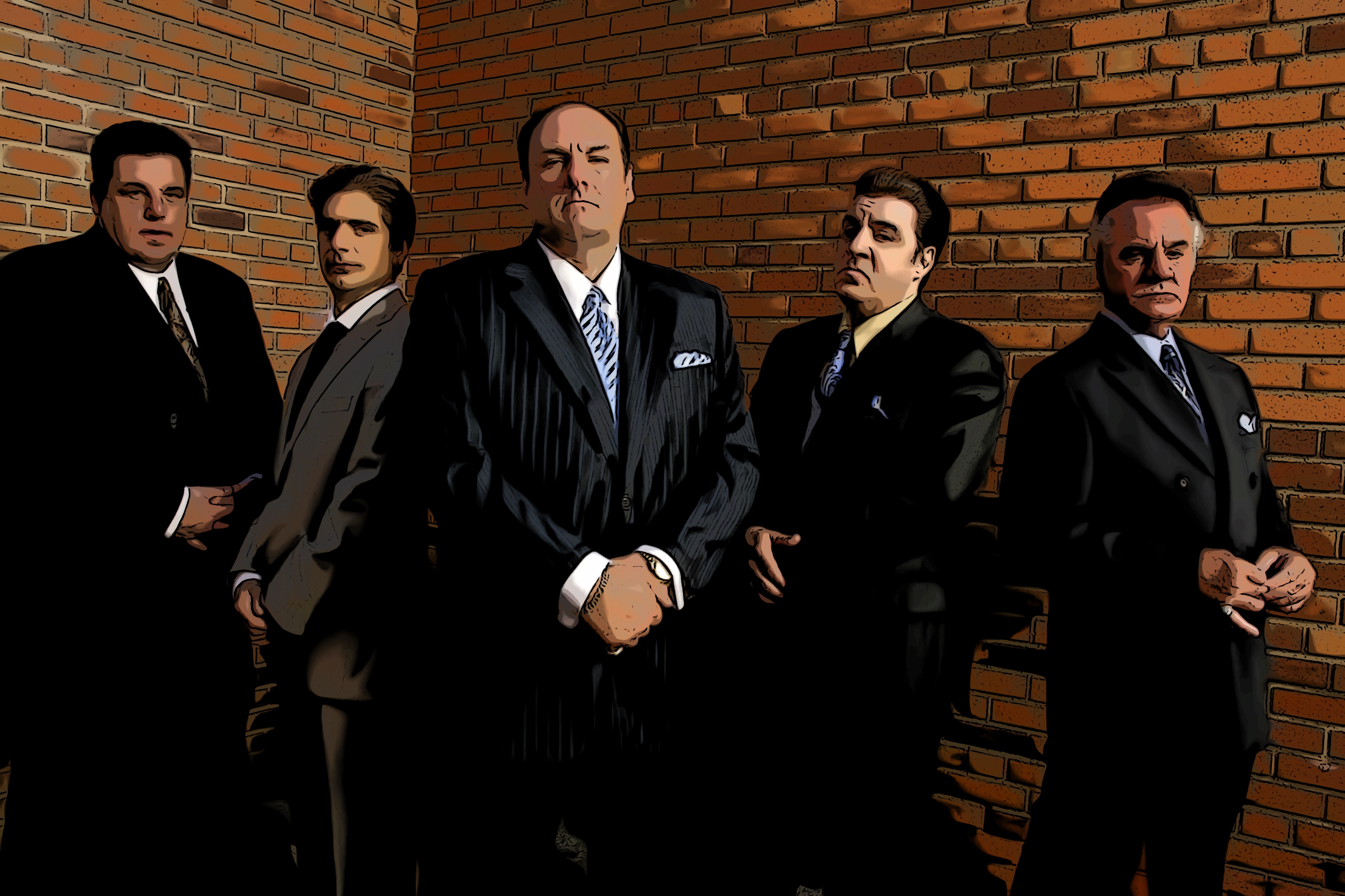
We had The Sopranos, Mad Men and Breaking Bad. All these shows made history by breaking new ground in televison, focusing on the excellence of scripts, stunning acting and great premises.
The Sopranos dared to show in our living rooms how disturbingly “normal” a Mob family could look as seen from the inside, and thus struck a powerful blow on corporate America by likening the lifestyle and “business” methods used by Mob leader Tony to those commonly employed by CEOs of huge companies throughout the world.
Mad Men is all about contrasting society’s habits and especially womens’s position in the workplace by focusing on a a group of advertisers in the 1960s – the coolest professional category at the time – and having us analyse the context with today’s eyes. Has it changed that much? Do men, although behaving more subtly, still have the same demeaning attitudes towards women in the workplace? Food for thought. In addition to that, for those who work in the area of marketing, as I do, it’s fascinating to see how simple and direct it was for those Madison Avenue guys to lure and entice customers back in the sixties, when companies kept all the power of communication, especially through television, as opposed to the shift and landslide caused but the Internet and social media these days, which have given the customer a lot more voice and power in dealing with product/service sellers.
Mad Men
Walter White, the iconic protagonist of Breaking Bad, taught us that not all human beings are stable enough to maintain a solid and permant state of sanity and acceptable social behavior intact when exposed to extreme circumstances and under brutal pressure (in his case, the fact that cancer would eventually kill him and leave his family – wife and two kids – financially unprotected, after years of slaving away as a chemistry school teacher). He decides then to use his brilliant knowledge as a scientist to start a new and illegal business, becoming the fearless and cold-blooded drug dealer Heisenberg. Again, it’s been said that watching the show would easily substitute for a formal business course at Harvard! More than that, however, it demonstrates the lengths a person will go and the changes in personality that may occur as the result of one’s feeling abused and wronged by the institutions of one’s community.
Breaking Bad
Now we are watching another one of these groundbreaking series American TV has been lavishing upon us for the past 15 years or so. They are becoming even more daring as they stand on the shoulders of previous giants. Netflix’s Orange is the New Black, for example, under the pretext of depicting thelife of the inmates of a women’s federal prison, explores the feminine universe in all its details. The prison reflects of course what goes on with women in the American society as whole. With a lot of humor and irony, but also delicacy and poignancy, the show discusses the nuances of real (as opposed to stereotyped) lesbianism and homophobia, the violence and prejudice against minorities (women, blacks, latinos, homosexuals, immigrants, religious cultists and transexuals) and, not less interestingly, how power is gained, maintained and lost at different times in a community. The show is very political in bringing to light the different kinds of negotiations and shady deals one has to strike at all hierarchical levels to survive and keep one’s dignity and rights in society. I will not say anything about the ensemble of great actors who compose the cast. Suffice it to say that the acting is superb and the actos’ looks are initially revolting – until you grow accustomed to them and realize that’s what real people look like. Unlike the fake ” ugly ” looks worn by the likes of Meryl Streep in Ironweed or Charlize Theron in Monster,the women in OITNB look rather common, it’s just that we are not used to seeing them on TV. I have just read an article on the Internet pointing out that the show is effectively changing peoples’ negative opinions and attitudes towards the minorities it featured. Besides great entertainment, what more can you expect from a TV show? Well done!
Orange is the New Black
Do you watch Orange is the New Black? What do you think of it? Please leave a comment in the appropriate section of the blog before you move to another page.
I was lucky to grow up in a house packed with books. Both my mother and father loved reading. However, a dear aunt who lived with us for the most part of our lives was the real family bookworm. She wouldn’t stop buying books. This is the kind of environment that fosters the taste for reading in a kid. We wanted to know what the fuss was all about. Why do these grown-ups keep their eyes glued to those pages when the rest of us are having such a great time in front of the television watching Lost in Space? I had to find out.
My Mom decided to buy a collection of juvenile books which had just come out. Each volume came out quarterly and was sold from newsstands. It was basically through this collection that I made the acquaintance of some of the great storytellers of all time: Dickens, R. L. Stevenson, Jules Verne, Mark Twain, Victor Hugo and Jack London to name just a few. J. K Rowling was not among them, but I must confess I find Harry Potter’s The Prisoner of Azkaban a very sophisticated and clever book. The dementors, strange creatures that look after the magic prison featured in the story, are prone to inspire all kinds of psychological metaphors which can be disturbing even to adult readers.
In this post I’m going to list some of the books I loved when I read them as a child or a teenager and try to explain the power they exerted on my imagination, making me become an avid reader for life.
The Bookworm by Spitzweg, Carl 1850
1. Treasure Island by R. L. Stevenson: this was probably the first “real” book I’ve ever read (as opposed to the toy-books and comics I read before). It had a hard cover and it was thick by a 11-year-old’s standards. My brother and I read it around the same time and we couldn’t stop talking about Jim, the kid hero, who finds a map to a hidden treasure, after a mysterious captain dies at his parents’ inn by the sea. This is basically a coming-of-age tale, as Jim embarks on a perilous journey to find the treasure. Of course it has all the clichés we associate with pirate tales today. But I believe it must have been among the very first books to create and develop those same clichés in the first place. Whenever my brother and I would go to desert beaches for a day or the weekend – they’re a lot more common on the northeastern coast of Brazil, where we lived, than in the rest of the country – we relived in our imagination, as we ran up and down dunes and rocks, Jim’s adventures and challenges. We were Jim ourselves.
2. The Adventures of Tom Swayer by Mark Twain: who can forget Tom and Huck, best buddies, having fun, playing games and pranks in a small town by the Mississipi river in the early 1840s? Tom lived with a little bother, Sid, and a cousin, Mary, under the strict surveillance of Aunt Polly, who was always harassing the poor boy on matters of religion, cleanliness and good manners. Huck, on the other hand, was a boy of the streets, son of a drunk hobo, free to do whatever he pleased. Tom was the leader of the gang of the boys in the area, playing pirates and robbers, traveling to islands and exploring caves. The book is also about a boy’s first love and, although for most of us this was not so interesting, Twain made us care a lot about Becky, Tom’s sweetheart, by having them get lost in a maze-like cave, persecuted by a wanted criminal in the thrilling climax of the book. Unforgettable. This book is continued on a much more sophisticated work, The Adventures of Huckleberry Finn, considered Twain’s masterpiece. But I only got to read that a lot later in life.
3. The Call of the Wild by Jack London: the progressive inner journey of Buck – a domesticated dog kidnapped by an unscrupulous farmer employee, and sold to work as a sled dog in Alaska- into his wild self is beautiful and liberating. The story is boldly told from the point of view of the animal itself, so we get a whole new perspective. The story is so powerful that makes one wonder whether we ourselves should not follow a similar path in the search of our truest soul, shedding all the masks and disguises imposed by a false concept of civilization.
4. Oliver Twist by Charles Dickens: of course the possibility of losing my mother was the worst nightmare I had growing up. My father died in an accident when I was very young, so I grew up in constant fear that my Mom might leave me too. Reading Oliver Twist was a great cathartic way to put myself in the character’s shoes and deal with the horrible situations I feared the most, with the relief that, whenever I put the book down, all the horrors I had been through remained pure fantasy and my Mom would still be safely living with me. It was reassuring to realize I’d never had to beg for food as the poor hero after being served a meager meal in one of the most heart-wrenching passages of the book: “Please, sir, I want some more.”
5. Journey to the Center of the Earth by Jules Verne: if you read it today, it will feel a bit dated and definitely unbelievable. But at the time I first read it, I was fascinated by the trip to Iceland to reach the right volcano crater which would lead the characters down to the center of the planet. Some of the images branded forever in my brain by the powerful storytelling are, for example, the huge lake in the depths of the earth where we watch a fascinating fight between aquatic Cambrian monsters; the enormous caves jammed with stalagmites and stalactites (I bet you don’t know the difference between them!) the characters had to walk across on their way down, or the narrow halls and passageways along which they crawled down on their mission to get to the center of our planet. However, it was hard to keep the suspence of disbelief during the passage at the end of the book, when the characters are implausibly ejected to the surface of the planet by riding a flimsy raft on rising boiling magma, traveling up a volcano channel. No way!
The books mentioned above are commonly associated with boys’ taste for challenge, danger, violence and adventure. I suspect, however, that girls might derive the same pleasure from them. What do you think? Please leave your comment and rate this post as you leave the page. Don’t forget to tell us about your favorite books too.
Art tends to be surrounded by awe and respect. Museums resemble cathedrals in the way people move around the halls speaking in hushed tones and looking humbly at the works on display. Art or Hight Art – as it’s sometimes called – should be regarded in a more natural and intimate way by the viewers. The lack of great museums in the region makes the contact with art a particularly formal experience for us Latin Americans. But things are changing as more and more people go abroad, frequent museums, and substitute pleasure and fun for the old sense of respect infused in them when they stood in front of a famous painting or sculpture not many years ago. The myths we are outlining below concern more that kind of art you find in museums and galleries: the visual art produced by the great masters.
1. Art is usually spontaneous and organic. The legend says the talent lies dormant in the artist until it’s suddenly awaken by the muses. In fact, the development of artistic skills is a long and hard path, involving a lot of academic learning, Of course, there are more or less intuitive artists, and mentors may sometimes replace art schools. Formal learning, however, is integral to the process and only practice makes perfect.
2. The best art has idealized versions of mythology, history or biblical themes as its subject matter. This tradition started being disputed around the time the pre-Impressionists, such as Manet with his mundane and realistic nudes, and the social art of Courbet. Their fight against tradition and academicism was taken to a whole new level by the Impressionists, especially by Monet, who understood art as the apprehension of fleeting moments in time such as the effects of light bouncing off trees, water and plain people in everyday situations. That was what mattered and deserved registering.Colors became bright and more vibrant.
Argenteuil, c. 1872-1875, by Monet.
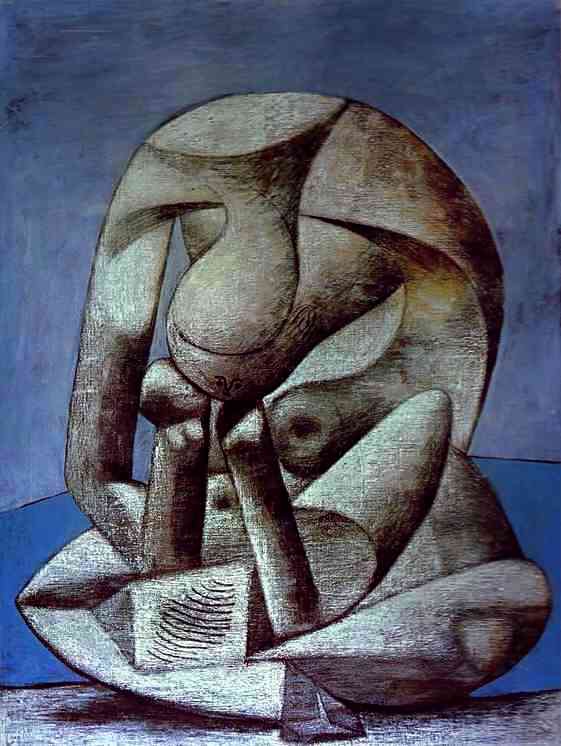
3. The best art is realistic. Fauvism, Cubism and Modern Art in general showed that there was not much point in replicating what film and photography had started doing so well as of the XIX century. Art couldn’t and shouldn’t compete with them. So art needed to change. It should remain an expression of what is human, including reality, but as seen through the eyes, emotions, neuroses, and obsessions of the artistic self. Art was a personal way to express the artist’s inner world. Unlike previous painters, the sense of perspective developed since the Renaissance and the concepts of beauty and balance taken as tenets by the artistic community underwent an earthquake which shattered those ideals to pieces. This is still going on.
Young Girl Reading a Book on the Beach, by Picasso.
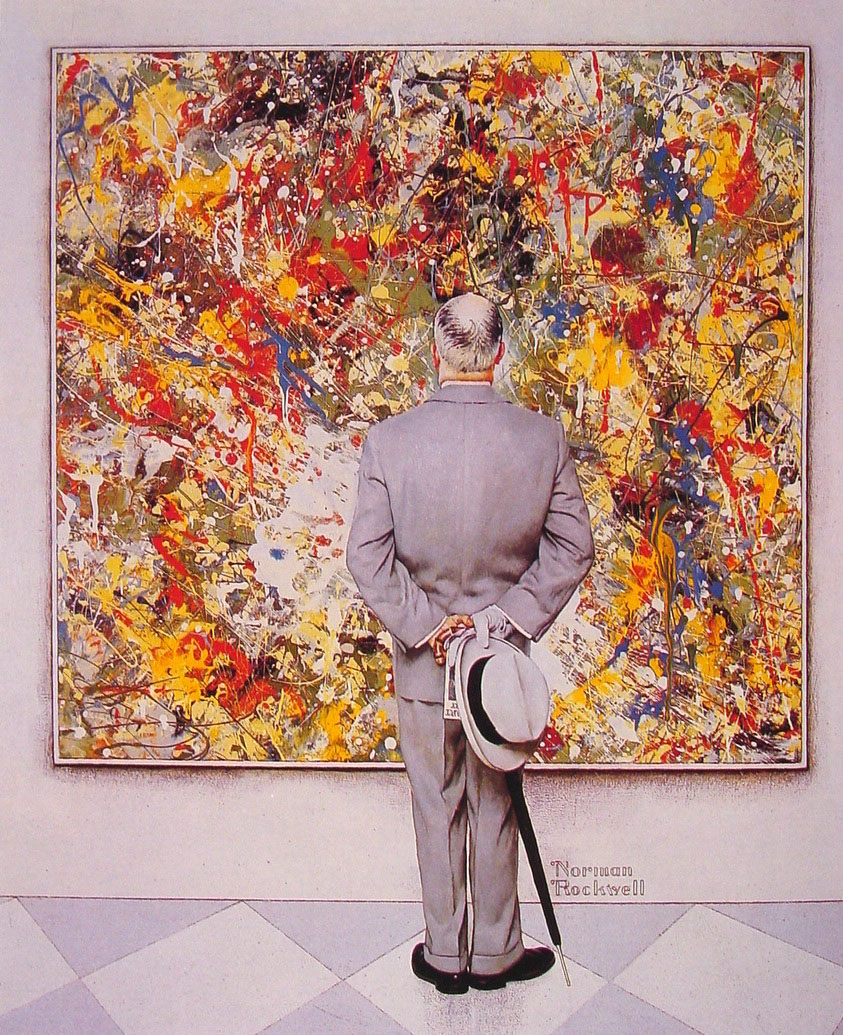
4. Art dealers and critics are the experts and they know it all about good and bad taste. We all know how the Impressionist group struggled to have their works exhibited in the tradition-dominated Salón in XIX century Paris. There are no absolutes in art and if you read Tom Wolf’s iconoclastic The Painted Word – which I strongly recommend – you will laugh widely and be infused by a sense of liberation as he dissects and analyses ironically the American art of the XX century. There is also a hilarious chapter in his latest book, Back to Blood, which mocks merciless the Modern Art World of contemporary Miami, with its dealers, experts, artists and stupid billionaire clients. A must-read.
The Connoisseur: Rockwell’s sarcastic take on Modern Art used as the cover for Tom Wolfe’s THE PAINTED WORD.
5. You have an innate predisposition to love, hate or be totally indifferent to art. Not so simple. Just like marmite – for those who have had a chance, like me, to live in he UK for a while and see this initially disgusting jam-like spread sitting on the breakfast table every morning, or even Japanese food, whose ever-present ripe odor coming out of restaurants may put you off getting in at first – art is an acquired taste. You don’t have to like it right away, but you may grow to love it by exposure. There is no need to enjoy every famous artist either. Be selective. Art grows in people. And I strongly defend that by offering history of art as a subject in the secondary and high school – not very common in most schools in South America – or by parents exposing their kids to art books at home or visiting museums, young people’s taste will get more refined and we will see a growth in art appreciation over time.
6. Art is for older people. The younger you are the more appealing iconoclastic and unconventional art will look to you, especially if you have a rebel streak (who doesn’t?) in you. Therefore your initial interest for the drama and violence in Caravaggio, as you grow more mature, may be replaced by calmer Monets or a more contained Velàzquez later on in life. Their beauty and absence of direct conflict can be refreshing as you grow more mature. I still love Janis Joplin, The Stones, Jim Morrison and Sid Vicious. Sometimes it was not even the quality of their music but their life style, perfomances and stage persona – some of them very short-lived, by the way – which captivated me. However, as I grew more mature, classical music started to show its charms and take over my musical taste.
We will be talking more about art in the next post. Watch this space.
If you are a language teacher and interested in art you may want to check out our new series of ebooks TEACHING ENGLISH WITH ART, available for download from the Kindle Store. We focus on vocabulary learning, speaking and writing skills in the series. Check it out by clicking here: : http://wp.me/p4gEKJ-1lS
In the early 1940s, Matisse underwent a serious and invasive surgery as part of treatment for intestinal cancer. After the operation, he was a very different person, lacking the energy and strength to be on his feet for long stretches of time at the easel painting on a canvas.
However, he was about to start a revolutionary new phase in his artistic life. Despite his physical weakness, his mind seemed to be ablaze with creativity and many say he was given a second life. This resurrection manifested itself mainly through a new art form he began to develop at the time: his famous cut-outs. Instead of painting, Matisse would now spend his days in bed or in a wheelchair, cutting out, with huge tailor scissors, abstract forms directly from gouache-painted sheets of paper, and then, with the help of assistants, pin them against a white background in striking and original compositions.
He would constantly move the pieces around until he was fully satisfied with the final result of these “collage-like” designs. The colors were vibrant and pure, lending the composition a life-affirming quality. Icarus is one of the most famous works from this period.
Icarus. 1947. Illustration for the book Jazz.
The Legend of Icarus
In Greek mythology, Icarus and his father Daedalus, a master craftsman from ancient Athens, were made prisoners on the island of Crete after helping Ariadne and Theseus escape from the Minotaur’s labyrinth, which Daedalus himself had designed for King Minus.
The Minotaur was a creature with the head of a bull and the body of a man who lived in the center of the labyrinth
Daedalus plotted to escape from his prison by making wings of feather and wax for himself and his son. However, he warned Icarus against flying too close to the sun because his wings would melt. Icarus, in the typical fashion of bold young men, disobeyed his father’s instructions and soared to the heights, coming dangerously close to the sun. His wings melted and he plunged to the sea, drowning. The story of Icarus is usually used as a cautionary tale against excessive ambition.
Many critics and viewers suspect that there is an alternative source of inspiration to the Icarus cut-out. What do you think it might be? What may this work represent if not necessarily the legend of Icarus?
Imagine that this work is about the horrors of war instead. After all, Matisse put it together soon after the end of the Second World War. In this case, what do you think each element of the cut-out stands for? Think about this interpretation and try to see the elements of the work in the light of this new context. It will add a lot to it.
If you wish to read more about Matisse’s cut-outs, please refer to our previous blog post: http://wp.me/p4gEKJ-1kq
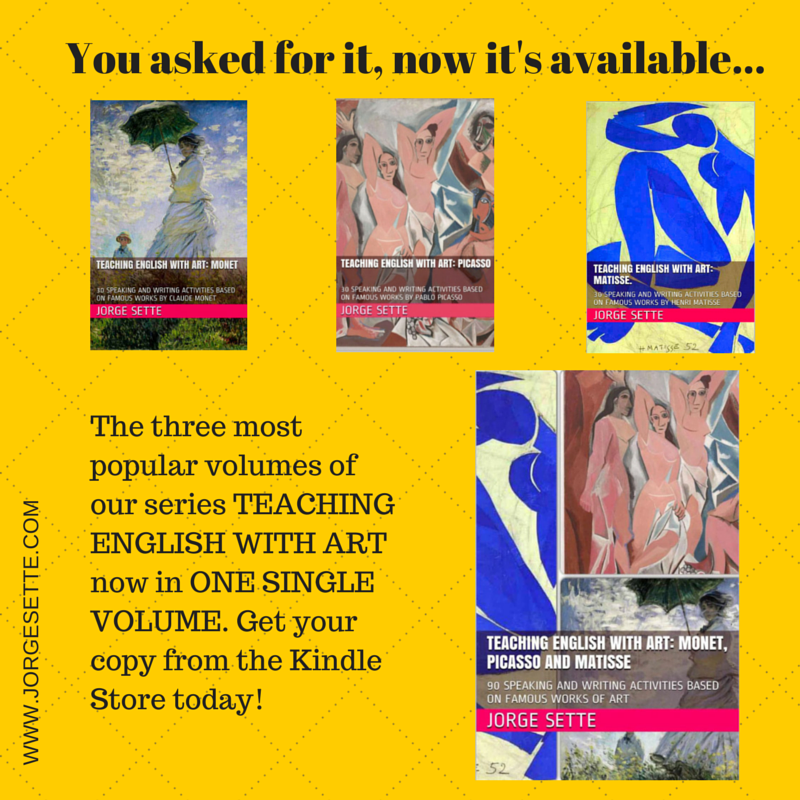
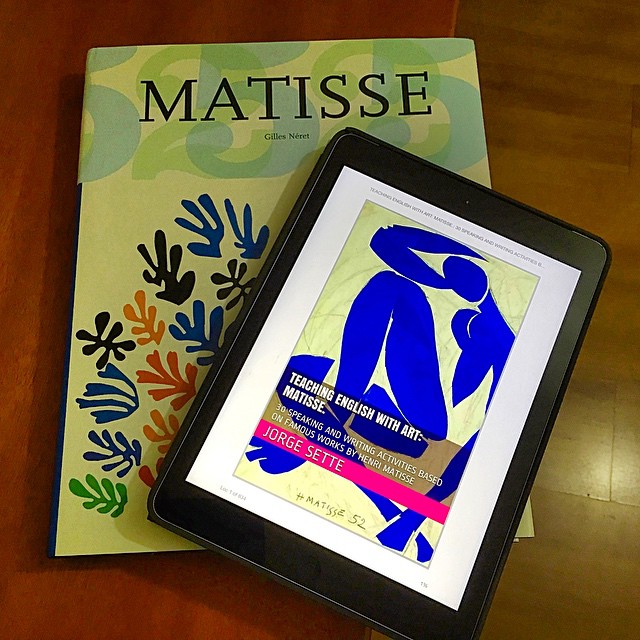
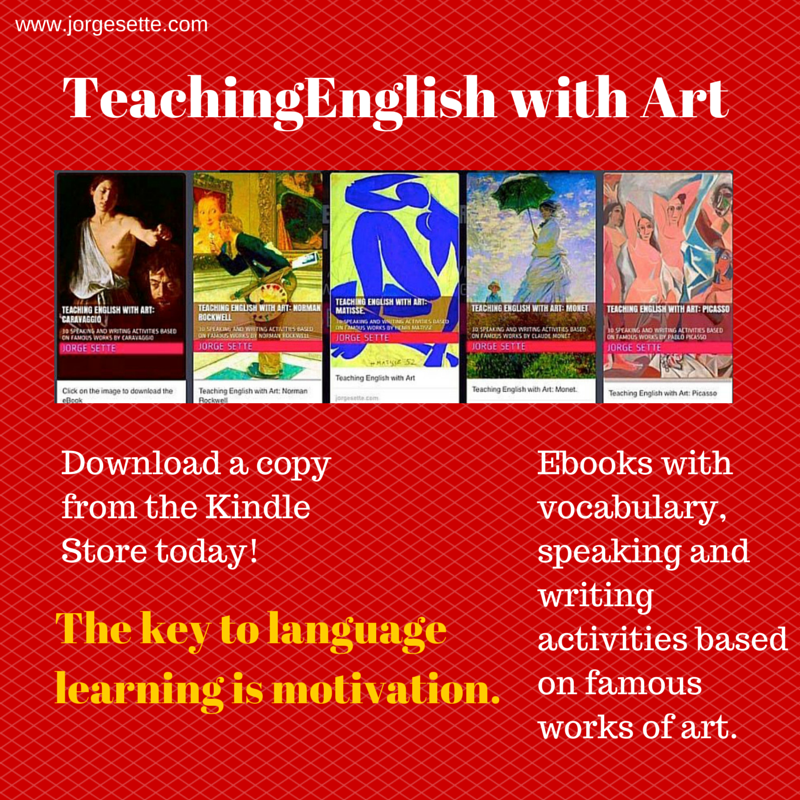
For those of you who are English Teachers and love Matisse and art in general, we offer a wonderful collection of didactic eBooks for the students to practice vocabulary, speaking and writing, based on the works of famous painters: TEACHING ENGLISH WITH ART. The series is comprised of 7 books so far, and features works by Matisse, Picasso, Caravaggio, Monet, Norman Rockwell and Vincent van Gogh. For further information on how to download the materials, please click here: http://wp.me/p4gEKJ-1lS
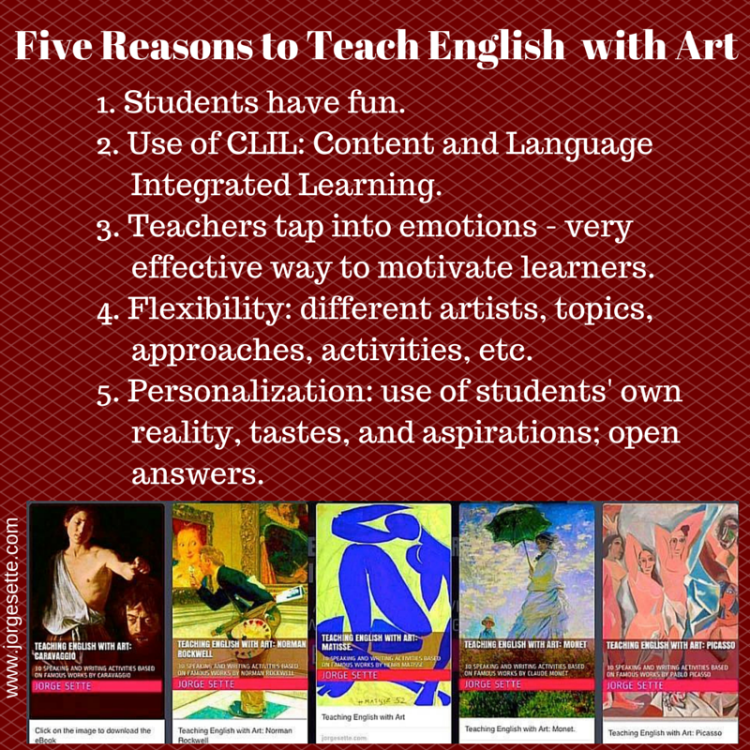
Click on the image above to learn more about the advantages of TEACHING ENGLISH WITH ART.
As most of you know, we have launched a series of supplementary eBooks, TEACHING ENGLISH WITH ART, based on the works of famous artists, to help the students practice their English (for further info on the series, please click here http://wp.me/p4gEKJ-1lS).
We have received an overwhelming response in terms of feedback. Sales fortunately are doing well too. However, we realized that some teachers are hesitating to use the materials for a number of reasons. Having gone through all the feedback we have been getting, we decided to write this post to answer some of the most frequently asked questions by teachers (or even students) about the materials.
I can’t teach English through art!
1. Do I need to be an art specialist to teach from these books? Of course not. The idea of these books is to extend vocabulary, speaking and writing practice, providing more interesting and customizable topics that resonate better with the students and foster more engaging and genuine participation in the classroom. You are a language teacher, no one expects you to be an art connoisseur. Treat the topic as you would any other topic you find in more traditional course books. All the info you need about the particular artist featured in the eBook (so far, we have Matisse, Picasso, Caravaggio, Monet and Norman Rockwell) can be found in the introduction to the book.
2. What should I teach the students about the artist? As I said before, you will find a quiz and a brief summary on the artist’s life and times in the introduction to the book and some texts on more specific topics related to a certain painting after or before some exercises. Basically we should give the students some idea on why this artist gained so much popularity, what are the main characteristics of his/her style and the historical context he/she lived in. If possible, add an interesting anecdote about his/her life to lend some color to your lesson: such as the fact the Caravaggio is allegedly the only great artist who committed murder; or that Monet dedicated his time to art as much as he did to gardening in his old age; or that Picasso did most of his work in a dark and damp studio at night using the feeble light of candles. A quick watch on a couple of videos on YouTube will give you a lot more info than you can possibly need, if you wish to expand your understanding of the artist. Alternatively, you can assign this pre-research to the students themselves, as part of the lesson: “get all the info you can on (artist’s name) and be prepared to talk about him/her at the beginning of the next class”
Artist’s life and times. Guernica by Picasso.
3. I don’t know anything about topic/task based speaking activities or process writing. As these are the main methodological points used in the series you should familiarize yourself with them. These are important areas any language teacher should master. You need to study them. A good start with be to read the following posts in this blog: Topic-Based versus Task-Based Speaking Activities (http://wp.me/p4gEKJ-1nJ) and Writing: Focus on the Process not on the Product (http://wp.me/p4gEKJ-1ot).
4. I can’t deal with technology. These are eBooks, so I completely understand the resistance some teachers may feel towards them. Not many people read eBooks yet. However, believe me, this is the future and there’s no way back. You can check all the practicalities of ebooks in the following post 7 Reasons I prefer eBooks to Print ones: http://wp.me/p4gEKJ-yC. As for our series, all you and your students need to do is download the KINDLE app for free and install it on any device you can possibly have. It works in all systems, mobile or desktop. Get help from your students, they will know how to do it. And they will feel pleased to show the teacher how tech savvy they are. Then go to the KINDLE STORE on Amazon.com and download the eBook of your choice.
Print books versus eBooks
5. Which book shall I pick? At this point, we have 5 eBooks featuring a different artist each (Matisse, Picasso, Caravaggio, Monet and Norman Rockwell). They are all very popular and liked all over the world. But of course, you and your students will have your preferences. Each book has exercises at different levels (from beginner to advanced), so my recommendation would be for you to conduct a needs analysis with your class before choosing the first book. Show them the covers, show paintings (loads of pictures available on the Internet) by each artist and get them to vote for the first artist they wish to work with. I’m sure your lessons will become so succsessful you will cover the whole set of eBooks we have on offer eventually though :).
TeachingEnglish with Art: 5 artists to pick from. Matisse, Picasso, Caravaggio, Monet and Norman Rockwell.
I hope we could answer some of your questions here. Good luck with the lessons and do not hesitate to contact me if you have more questions. We will be launching more eBooks of the series TEACHING ENGLISH WITH ART soon.
Monet is the quintessential Impressionist artist. His paintings sell for millions of dollars today. He is one of the most beloved artists in history and enjoyed a long and productive life, spanning almost 90 years. You will not find many people who do not like his paintings. Maybe because most of them were painted in plein air or open air, the outdoors, and not confined to dark studios, a new characteristic adopted by some artists as of the 1870s. This new way of painting was facilitated by the easiness of transportation provided by the steam vapor trains, the more easily to carry easels and the new paints bought in the recently-fabricated screw-top collapsible tubes.
These points I listed below summarize the life and work of one of the greatest artists the Western Culture has ever produced. You can read and possibly quote from them to sound more knowleageble and sophisticated at the next dinner party you attended, if, despite loving Monet’s ouvre like most people, you don’t know much about him.
1, He was born as Claude Oscar Monet on 14 November 1840 in Paris, but spent most of his childhood on the northern coast of France, Le Havre, where his family had moved to in his early infancy.
2. He was utterly bored in the traditional school and spent most of the time drawing caricatures of his teachers and other well-known people in the town. His caricatures became very popular and he started selling them at local store, being able to earn a living very early in life.
3. He happened to meet a plein air landscape painter, Boudin, who practically became his coach and mentor, developing in Monet the taste for painting seascapes and landscapes, observing the fleeting reflections of the sunlight in the sea water, trees and leaves. After his apprenticeship with Boudin, it was hard for Monet to be happy painting or copying famous works of art as a trainee confined in the crowded rooms of museums and art galleries. His painting was all about vibrant colors, vivid scenes, ordinary people often seen at a distance, the effects of light at different times of day and in different seasons upon the same objects. An obsession for water and its innumerable ways of being represented on canvas. Monet wanted to paint contemporary life the way it appeared to him.
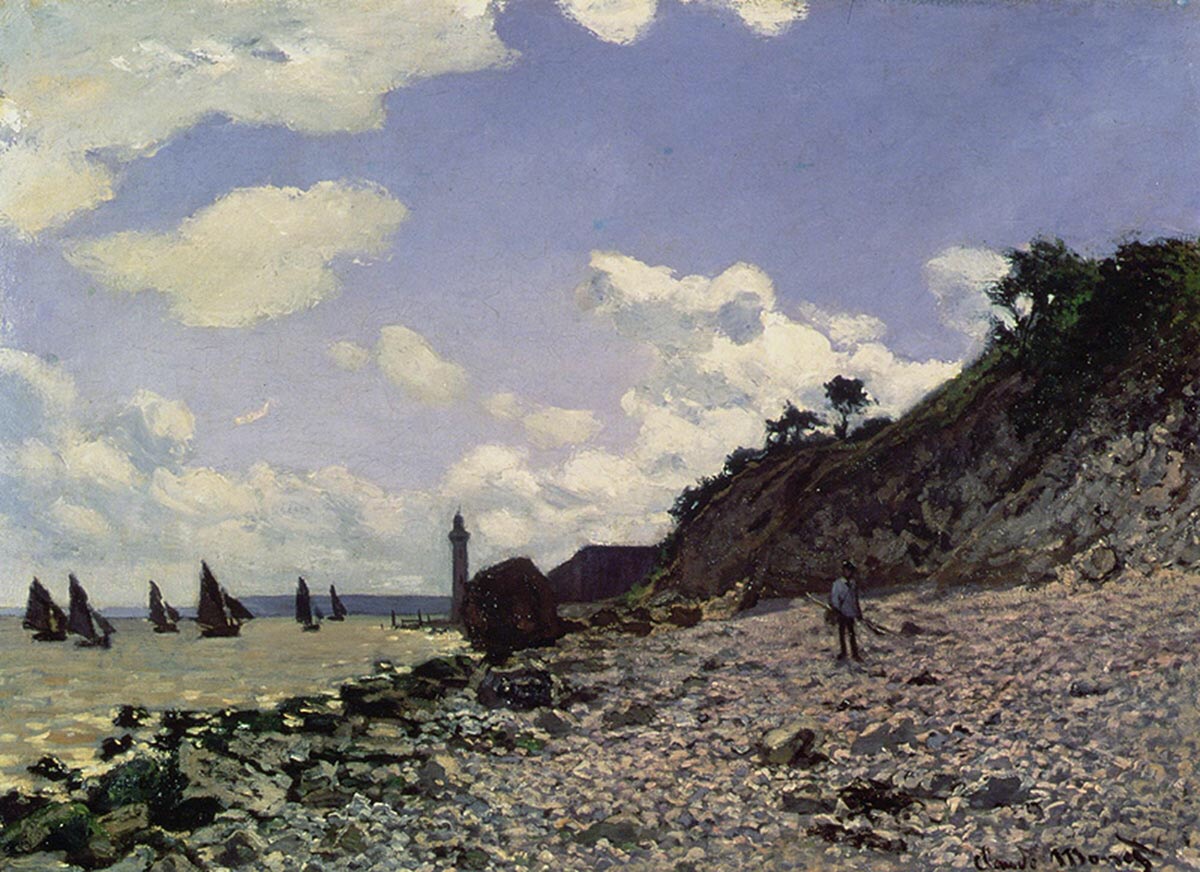
Beach at Honfleur by Monet, Claude. 1864
4. Monet was sent by his parents to the Acadeémie Suisse in Paris, whose flexibility and respect for the individual idissioncrasies of the students resonated with Monet’s personality. Soon afterwards he was called up for military service, though, and served with the armies in Algeria. He claims that the exposure to the light and motifs in Africa had a great influence on his style of painting. He did not stay long in the army however. Family influence and health problems allowed him to be discharged after two years.
5. Back to school in Paris, he started as an apprentice in the studio of Charles Gleyre in 1862, where he was lucky to meet what was to compose the core of the impressionist group of painters in the future: Renoir, Sisley and Bazille. They became inseparable friends, spending a lot of time painting together outside of Paris in the forest of Fontainebleau.
6. It was very difficult for this wave of new painters to have their works accepted by the conservative official artistic exhibition in Paris, the Salón, held ever year at the Académie des Beux-Ar, which attracted thousands of visitors. The Salón favored more traditional works of art, with perfect finishes, depicting usually historical, mythological or religious subjects. Those paintings, done in dark colors, replicated the techniques known since the Renaisssance and covered the walls from ceiling to floor.
Dejeuner sur l’Herbe, Chailly by Monet, Claude. 1865
7. Despite having a few works accepted at the Salón, such as the Woman in the Green Dress, inspired by the woman he loved and lived with at the time, Camille Doncieux, who posed for it, Monet and his friends had most of his works refused by the Salón, which led them eventually to create their own exhibitions.
Camille (The Woman in the Green Dress) by Monet, Claude. 1866
8. To escape the Franco-Prussian war in 1870, Monet, already married to Camille and with a son, moved to London, living there for some time and returning via Holland. Many of his works were painted in these countries, where he was heavily influenced by the contact with the works of Turner and Constable.
9. In 1874, the group of new artists decided to produce the first of their own parallel exhibitions, which, ridiculed at the beginning and attracting very few attendants, was ferociously attacked by the art critics. A famous art critic involuntarily named the movement IMPRESSIONISM, when making derisive comments about a Monet’s painting titled Impression: Sunrise, which showed a simple blotch of red color representing the sun hovering over the sea and casting its reflections on the water for the delight of a few early fishermen in a couple of boats. The artists of the movement did not not take the critic seriously and started using the name for their style, as they had enjoyed what was meant as an insult. The exhibition grew every year, being repeated 8 times over the course of the next 12 years. As times moved on, the eyes and minds of the viewers, influenced by the increasing praise of art critics, began to appreciate and accept the new artistic movement.
Impression, soleil levant (Impression, Sunrise) by Monet, Claude. 1872
10. Around 1990 Monet started developing his famous series paintings: featuring haystacks, poplars, the cathedral of Rouen and the famous water lilies, which he showed in a number of sequential cavasses, many of them painted one after the other, with the artist moving from one canvas to the next, arranged in a row in the fields, so that he could capture the slight variations of the effects of the changing light on the subjects, as the sun moved in the sky. He would work on them in a sequence of consecutive days.
11. A heavy smoker, Monet died of lung cancer on 5 December 1926 in his house in Giverny in 1926, where he had created a wonderful garden and a pond in the grounds of the property, which he began to use as the main topics of his latest paintings. He lived a full, long, productive and recognized artistic life. His house and garden in Giverny are famous and popular turistic sites in today’s France.
For those of you who are English Teachers and love Monet and art in general, we offer a wonderful collection of didactic eBooks for the students to practice vocabulary, speaking and writing, based on the works of famous painters: TEACHING ENGLISH WITH ART. The series is comprised of 5 books so far, and features works by Matisse, Picasso, Caravaggio, Monet and Norman Rockwell. For further information on how to download the materials, please click here: http://wp.me/p4gEKJ-1lS
Check this brief video on the material on TEACHING ENGLISH WITH ART: MONET:
Hope you enjoy the ebooks. Give us your feedback by rating them on Amazon.com or by writing some feedback in the comments section of this blog post.
In this day and age of superhero movies, I’m going to dare to give you guidelines on how to judge the quality of a movie. Great movies don’t make money, this is a fact. The reason commonly given is the populace is too dumb and unsophisticated to appreciate their merits. I don’t want to go into this discussion as it spills way beyond the scope of this humble post. However, the opposite is not true either: don’t think that just because a movie delivered a poor box office it deserves any praise. It may be simply because…well…it’s crap. Good movies usually:
1. Focus on character not on plot. Despite the well-known structure of storytelling dug out by mythologist Joseph Campbell and turned into a simplified manual for Hollywood scriptwriters, spelling out all the steps that need to be present in the hero’s journey for a story to resonate with the audience, writers and directors still need to highlight characters. The plot needs to be there, its phases followed in new and creative ways, but strong characters are what we remember about the best films we see. We may not remember details of the story, but Marlon Brando’s Vito Corleone in the Godfather, Robert De Niro’s Trevis Bickle in Taxi Driver or Robin Wright’s Claire Underwood in House of Cards are unforgettable.
Marlon Brando as Vito Corleone
2. Have complex characters. These great characters have the following common characteristics: they don’t comply to black and white codes of ethics, they tend to develop their own morality and follow it consistently; they show either superior intelligence, or charisma or beauty. Or all of them together. Understatement is their main weapon. They do not say everything: a lot needs to be inferred by their eyes, their turn of head, they way their mouths hang open for slightly longer than necessary. They are subtle and complex. We never get to understand their inner agenda to the full.
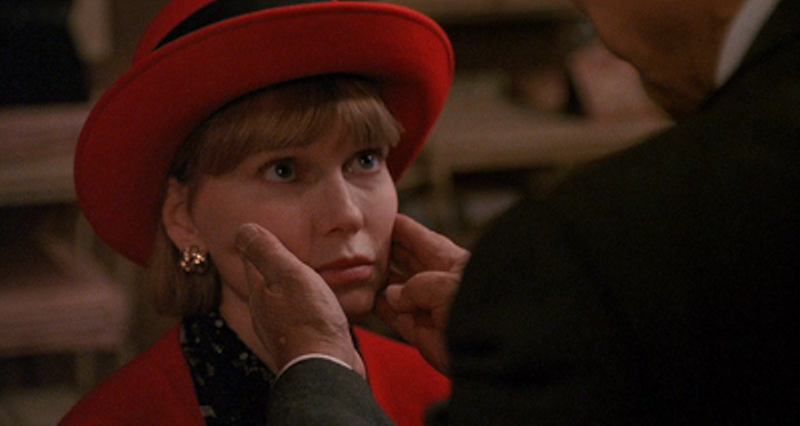
3. Have scenes played against the grain. Great movies catch the audience off guard, surprise them. They use, for example, as the commentary for a acene, a song or piece of music that means its exact opposite or that does not belong to the historic period or place the story takes place. The use of LA CUMPARCITA in Woody Allen’s Alice, which takes place in contemporary Manhattan – the music plays as Mia Farrow’s and Joe Mantegna’s characters, after taking a magic potion that makes them invisible, pay the taxi driver and the doors of the car open for them to leave completely unseen; the voice over quips: “nothing shocks NYC cab drivers” – enhances and adds to the humor and oddity of the situation.
Mia Farow as Woody Allen’s Alice
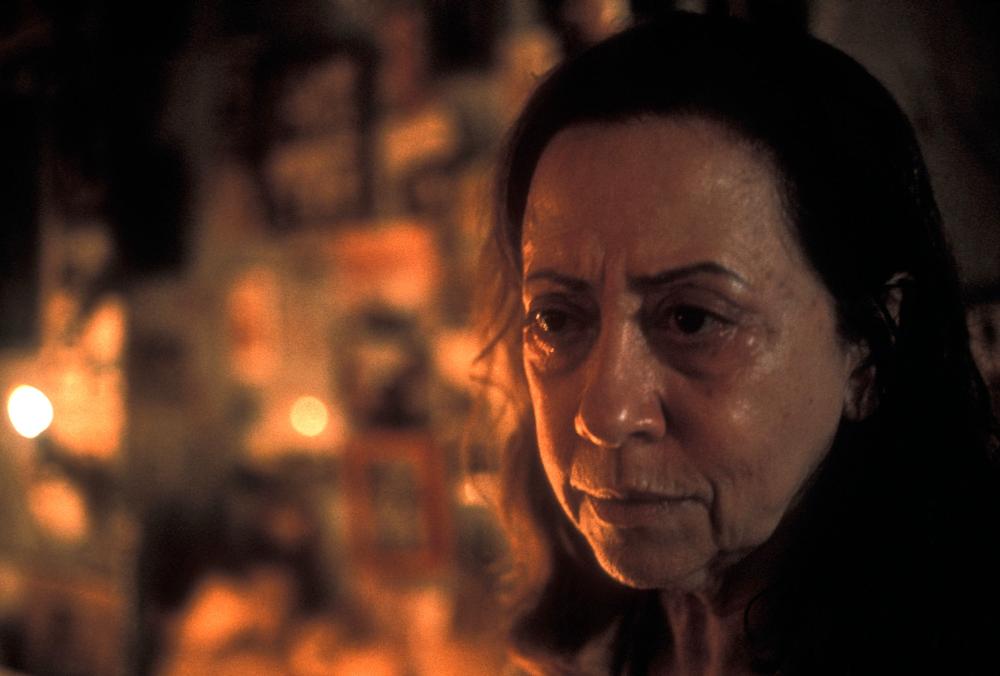
4. Let emotions emerge naturally. These movies do not manipulate their audience to make them weep. Sentimentality makes films that could otherwise be great syrupy and corny. Emotions must reflect real life and its poignancy to work as art. Think of the scene in Walter Salles’s Central Station in which the character played by Fernanda Montenegro is shown, in a montage, writing a series of letters to relatives of people who are illiterate and therefore can’t write themselves. They are real people in this particular case – but might as well be actors – from a small city in the northeast of Brazil, and the succession of short scenes showing these people dictating their messages breaks ones’ heart with their truth, simplicity and beauty.
Fernanda Montenegro in Walter Salles’s Central Station
5. Don’t show or say everything. Life is not neat. Great movies reflect life yet show it through a more interesting angle. But not all must be solved in those two hours a movie lasts. Life is a flow and conflicts are rarely resolved in their entirety. There is no need to explain every character’s motives or reactions or tie all the loose ends of the story by the conclusion of the movie or TV show. Let the audience wonder. Give them opportunity to use their imagination. Take the typical end of the iconic 2001 a Space Odyssey. If you haven’t read the book, and there’s no need to (it was written to go with the movie), the last 15 min of the movie are all up to you. What is going on? What does that trip to Saturn really mean metaphysically? What’s this guy shown in progressive stages of aging. Who’s this fetus in the intergalactic womb? The viewer will keep those images for a long time in their minds (in my case, for decades!) and neve stop trying to figure them out.
2001 A Space Odissey
Well, great movies are not supposed to follow recipes. So now throw all I said before out of the window and make your own rules.
It’s no news that most people, including me, spend 90% of their waking hours staring idiotically at the various device screens we carry around wherever we go – or, more likely – wherever we stay, motionless. My eyes keep shifting from my iPhone to the iPad to the laptop, and back to the iPhone again for hours on end.
We all check our social media news feed and timeline hundreds of times a day, count the likes and shares on the latest clever joke or quotation we posted, watch carefully the pictures of what our friends are eating, the problems they are having with traffic jams or with their kids. I didn’t use to care at all what my friends’ kids did over the weekend or the costume they wore for the latest school function: now I follow these events with the attention and interest I used to devote to facts such as the beginning of the Iraq War or the the inaugural speech of Queen Dilma. We won’t stop answering our messages about nothing on whatsapp or looking for our next prospective date on Tinder. The date will never happen in the real world, as one of the parties will cancel 5 min before the scheduled coffee, but this does not stop us from keeping trying and hoping for the best. Do married people do the same? Is that how they have lovers and affairs today?
I can’t cook well, but the Internet emboldens me to pass on tips on the kinds of seasoning and ingredients my relatives should use on their pasta for their next Sunday lunch – by the way, I will not be taking part in it, as they live in Recife, some 3,000 km from where I live – and offer expert advice and consolation to my cousin who broke up a 10-month-old relationship with her boyfriend, with the authority of a marriage councellor.
The current times are no doubt different from how we behaved only ten years ago, when our lives were more real than virtual. But what worries me is not to know if this is worse. I’m not complaining.
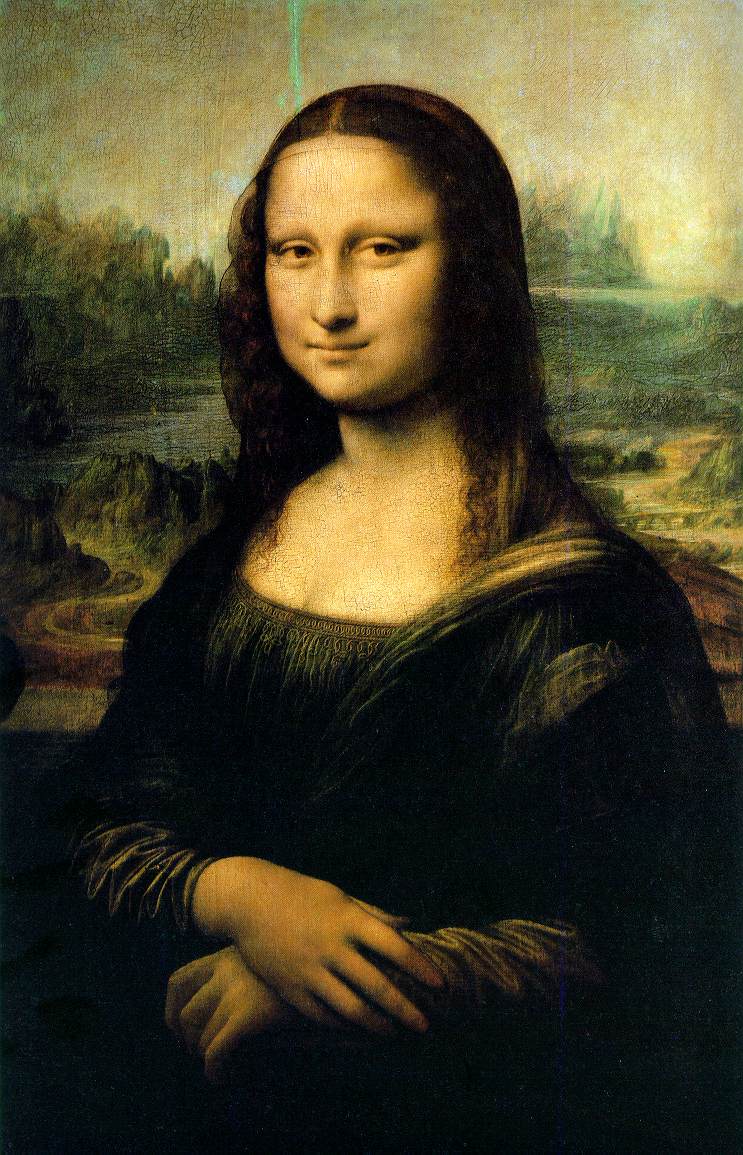
I have always been an avid reader and nothing in real life compares to the excitement I get from a well-written novel by Philip Roth or an insightful factual book by Malcolm Gladwell, from whom I learned that, to excel in anything at world class level, one needs to devote at least 10,000 hours to the practice of that skill: I counted nervously how much time I had left on Earth based on the average longevity of the members of my family – maybe I should have left the women out of the calculations, as they tend to outlive their men by many years – and was thrilled to find out that I still could pick a skill and try to become a Leonardo da Vinci at it.
I could still become a Leonardo da Vinci if I practice for at least 10,000 hours.
So, if life as portrayed in fiction and non-fiction books is so much more enticing than reality, who are we to judge the validity of the virtual lives of today’s world – especially teenagers’ and kids’ – who have never known any other kind of life? This is just a fact of human history, an unexpected turn taken by the course of our species, and there is no way we will ever be the same again. Artificial intelligence, robotics, 3-D printing and genetic engineering are already on our doorstep, and the possibility of cloning yourself so you can have the ideal partner for life cannot be that distant in time.
Let’s embrace change. Disturbing? Definitely. But life is exciting for this very reason. Some people claim that it’s death that gives life meaning. We wouldn’t be able to love or appreciate anything if we did not know there would be an end to it. Soon. Well, death is a kind of radical change, so the same goes for technology – we are living and appreciating a totally new life style, more and more isolated from the real (as opposed to virtual) contact with other human beings and nature, and getting used to it at an amazingly fast pace. I foresee a time when the only opportunity we will have to be touching other people’s skins will be during the Carnival in Vila Madalena, when it’s impossible to avoid the barbaric crowds gathering around you, and I can’t refrain from flinching at the idea. Can’t we all do our own ALALAÔ from the comfort of the hammocks in the verandahs of our tiny apartments via Skype?
Physical contact with other people will be considered more and more dangerous and rare, as we immerse in our virtual worlds, moulded to our own tastes and specifications. Yesterday, for example, I eagerly anticipated a time when, riding my bike, I wouldn’t run the risk of running over a beautiful teenage girl who all of a sudden crossed my path at Parque Villa Lobos in Sao Paulo with her head down and eyes glued to the screen of her smartphone. As I yelled to warn her against the imminent catastrophe, she simply looked up at me with a defiant look in her face and carried on crossing the street as if I was just an annoying piece of Candy Crush Saga which wouldn’t align to her taste! I should have kept using the stationary bike at home.









 Jorge Sette "Linguagem"