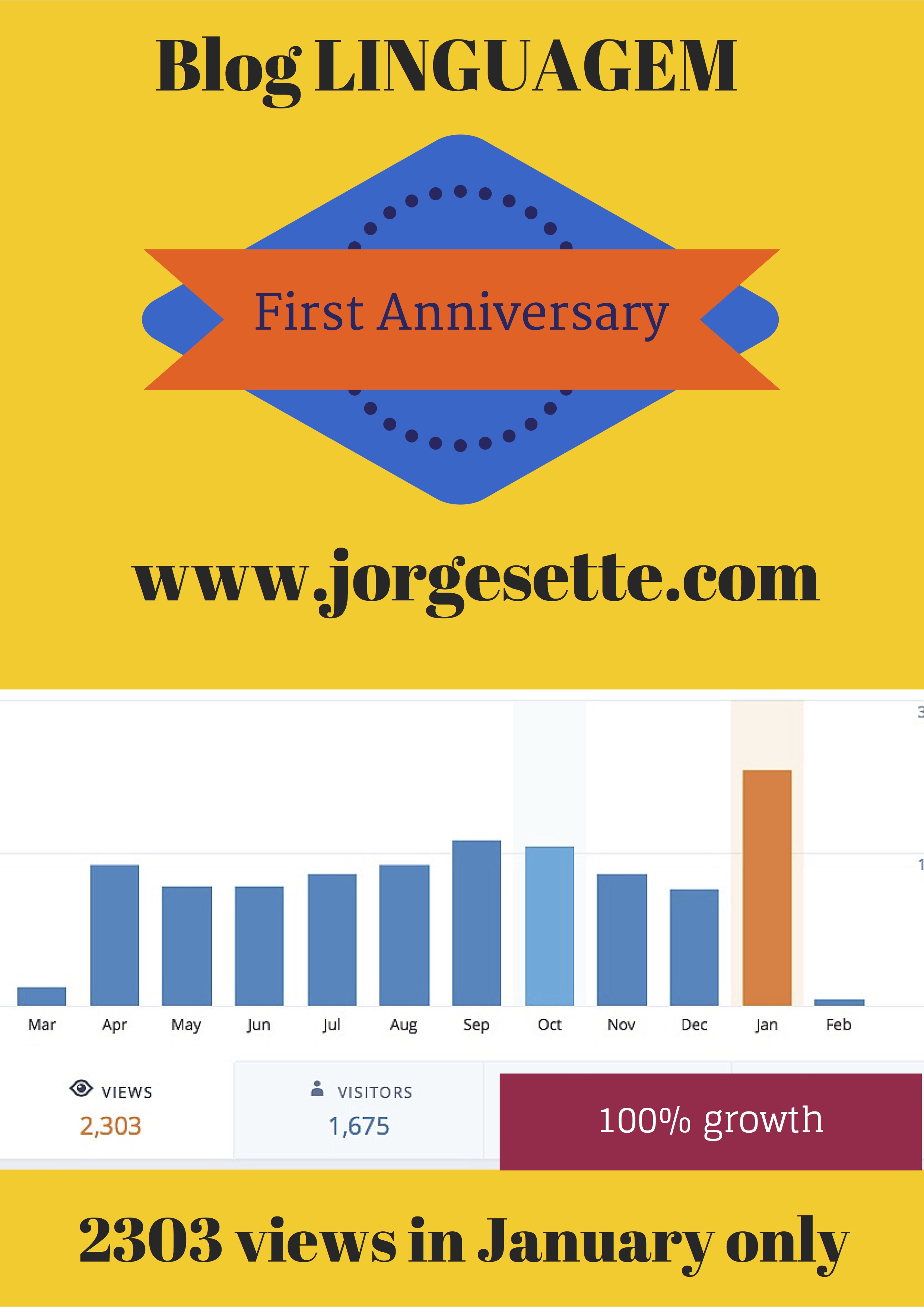
Blog Linguagem: 1st Anniversary. Jan 2015: 100% Growth!


We broke all our records in Jan 2015 with a 100% growth.  Join us now: http://www.jorgesette.com

LINGUAGEM, MARKETING, SALES TRAINING, CULTURE, ART

100% GROWTH

100% GROWTH


Our main customers. Where do they come from?

Our main customers. Where do they come from?


Click on the link below to check out our latest stats in PDF format.

Blog LINGUAGEM- First Anniversary


Au revoir


Jorge Sette.

Topic-Based versus Task-Based Speaking Activities


Speaking is one of the most valued skills in learning a foreign language. When you want to find out about the general knowledge of a person in a foreign language you usually ask DO YOU SPEAK (language)? I can’t remember ever hearing from someone if I could listen to English, on the other hand.

Most learners therefore expect to speak the language fast when they join a course or hire a teacher. As teachers, however, we know that, being a productive skill, speaking will have to come after listening in the process of the students’ linguistic development. The same goes for writing: it needs to follow reading. Receptive skills (listening and reading) precede productive skills (speaking and writing). This is an absolute law that emulates the acquisition of the native language.

Ideally, students would have to spend sometime quietly listening to as much English as possible, at the right level, which, according to the linguist Stephen Krashen, would be roughly tuned to slightly above their current level in the language (i + 1), before they are asked to produce utterances. This quiet period of listening comprehension is called by the experts The Silent Period. This is when input is internalized (becoming intake).

In general, language schools and teachers cannot afford to apply this methodology exactly as it’s prescribed, as, for marketing reasons and to keep their businesses, they need to satisfy the strong expectation the students (clients) have about being able to speak the language quickly. Therefore teachers need to, at least, create a few speaking opportunities in the beginner’s class. Fair enough, this will not cause any serious disruption in the learners’ acquisition process.

Task-Based Speaking Activitie

Task-Based Speaking Activities

It would be important, however, to manage these expectations aptly, making it clear to the students that their ability to speak English will grow proportionally to the amount of linguistic input they get exposed to. The more they listen and read, the quicker and more fluently they will be able to speak the target language. Especially in dealing with adult students, I recommend teachers have a candid conversation with their students about what the methodology entails.

Having covered how to deal with the students’ frustration of not being able to produce English as fast as they would like to, let’s move on to how a teacher can create speaking opportunities for their students at any level.

There are basically two kinds of speaking activities: Topic-Based activities and Task-Based activities. The first refers to the kind of activities that usually involve giving the students a topic and expecting them to talk about it or discuss it. The latter involves a task: students use the language as a means to an end, trying to solve a problem or complete a task. Both kinds of activities are valid and enjoyed to a greater or lesser extent by different kinds of students. I would say that, as a general rule, task-based activities work better for lower levels while topic-based ones for intermediate to upper levels of linguistic proficiency. But this is not an absolute law.

An example of a task-based activity would be to have the students list the best places to go on vacation. Individually, each student would draw their own list (with, let’s say, 5 items, numbered in order from the best place) and, then, they would be paired off with the task of coming up with a common list. They would have to discuss the pros and cons of each place and prioritize their recommendations. Then each pair would present the negotiated list to the rest of the class.

An example of a topic-based activity, on the other hand, would be a debate: Gay Marriage: are you for or against? The students would express their own views on the issue. Teacher could guide the discussion by presenting typical and polite phrases to introduce disagreement, explain turn-taking rules, show them how to modalize one’s point of view, etc. Language and conversation skills would be taught together.

The exercises you find in our series TEACHING ENGLISH WITH ART include both topic and task-based speaking activities. The visual input is always a painting from a great master (Matisse, Picasso, Caravaggio). Students look at the painting in their ebooks and do the speaking activity indicated for their level (we use the Common European Framework of Reference to set the level). However, most activities are very open-ended and personalized, so sometimes the teacher can use even more advanced activities with lower-level learners, as the students themselves will adapt the production to their own level of English. An alternative way of dealing with the activities would be to project the image of the painting from a laptop or tablet onto a white wall to make it more of a heads-up type of exercise.

More on speaking and writing activities in the upcoming blog posts. Watch this space. To download a book from the series TEACHING ENGLISH WITH ART, please click here: http://wp.me/p4gEKJ-1lS

Teaching English with Art

Teaching English with Art

Au revoir

Jorge Sette.

OUR BLOG “LINGUAGEM” HAS HAD A GREAT FIRST YEAR!


HAPPY NEW YEAR, EVERYONE.

Please find below some official stats sent by wordpress.com on the blog LINGUAGEM. We’ve had a great first year. Thanks for the support and we will back stronger than ever in 2015.

BLOG LINGUAGEM: 2014 official stats

BLOG LINGUAGEM: 2014 official stats


Screen Shot 2014-12-30 at 8.48.34 PM Screen Shot 2014-12-30 at 8.52.35 PM


Au revoir

Jorge Sette.

How to Train Adults Effectively


You may have heard the term ANDRAGOGY. No, it’s not something you need to treat and there’s no need to be scary if you find out your husband is into it. It’s simply the word we use for “pedagogy” when the learners are not children.

Although there are many overlaps between the processes of teaching adults and children – they both love learning through playing, for example – there are some differences too. And those differences must be taken into consideration, if you are designing a course or training session for your employees, or other adult participants.

Some of the differences, established by Malcolm Knowles, an American Adult Educator of the XX century, are, for example, adults need to know why they are learning; adults wish to take responsibility for their learning, so they should contribute and take active part in the process; they have already a wealth of experience to build on and the new items to be learned (knowledge, skills, or attitude) will add to their baggage; the purpose of learning must be objective and perceived as relevant, which is, to help them with their lives or give them pleasure; they are more willing to learn things that meet a specific need or desire; they are more likely to be moved by intrinsic motivation (self-steem, for example) than extrinsic (rise in salary, promotion, relocation, etc).

Having established these basic differences, we must also add that both kids and adults have, individually, different learning styles (visual, auditory, kinesthetic), and some are more likely to use either the more analytical (left) or the more creative (right) side of the brain. These individual differences must also be taken into account when you design and develop a training course. I know, you must be thinking by now that, unless you are a teaching on a one-to-one basis, you can’t possibly cater for all these needs and idiosyncrasies. The good news is yes, you can. Let’s list here the basic steps you should take in putting together an effective training course for a group of adults. I will be using examples from a very successful course I created while I ran a consultancy service called Tutor in the mid-nineties, The course Pronunciation for Brazilian Teachers of English attracted hundreds of teachers every time it was offered at different venues and times all over the country. Sometimes these were open events, for which any teacher could sign up. Other times, these were tailor-made or adapted modules for specific schools as a service for their teachers.

Training adults effectively

Training adults effectively

Obviously, it’s not possible to cover all the details of a well-designed and implemented training course in the space of a blog post. This is not my intention. But I promise to come back to the topic periodically as you ask questions and comments on this overview of the mains steps I give you below:

1. Needs analysis: being a Brazilian teacher myself, I identified very early on that most teachers in the country had a huge gap in the knowledge and practice of pronunciation. They spoke English – some better than others – but very few had actually learned or knew explicitly about the different phonemes of the language or the mechanics of pronunciation. Many were not familiar with concepts such as stress and intonation either. Therefore, most of them, in their classes, tended to skip teaching the coursebook sections that dealt with these areas of the language. The famous English phonemic chart you can find on a number of websites, DVDs, or apps today was not so easy to access back then. So this was a big opportunity for me to start a business and help the teachers. On the other hand, when I gave tailor-made courses at specific schools, I had to unearth the real needs of the teachers and how much they already knew about the subject, so I could adapt the off-the-shelf course I’d already put together. In these cases, you do your research through oral interviews with prospective participants and supervisors, through written questionnaires, through focus groups or by watching some of the teachers at work.

2. Design: now that you know the participants’ needs, you must define how the course is going to be delivered: is it going to be presential, done via a webinar or blended? In addition to that, you need to determine and write down the learning objectives of the course. What is expected from the participants in terms of performance as they finish the training session? What is going to change?  Of course, the clearer you state these objectives, the more effectively you will create and apply the materials you are planning for the course. A typical objective would be, for example, by the time the teachers finish this first module of the course they should be able to recognize and reproduce (orally and in writing) all the individual symbols that represent the phonemes of the English language and use them in clear contexts (as in specific words). You will notice that the objective follows the popular formula S.M.A.R.T (specific, measurable, achievable, relevant and time-bound).

3.  Development: this is the hands-on phase of the process, when you are going to create all the different materials that will compose the course and help you impart the content of the sessions (deductive approach: lectures), or lead the students to discover parts of it by themselves (inductive approach, discovery), and finally practice and discuss the learning points. Remember you are creating a course for a number of individuals with different types of learning styles, tastes and ways to use the brain. So variety is the key. Always start with a relevant icebreaker or energizer to create an atmosphere conducive to learning and give the participants a chance to get to know each other from the beginning. Believe me: these warm-ups will make your job a lot easier later on. Especially if they are thematically linked to the topic of the course. Keep the pace fast (that’s the rhythm most participants are used to in today’s hectic world and keep alternating and using diversified activities: short lectures with the help of visuals such as slides (note: even during these lectures, make the process learner-centered by getting them to participate actively, through questions, for example, or comments); games;  guided note-taking (students fill in the gaps of sentences previously written in the handouts;  physical activities (involving movement), pair work, group work, debates, etc. I know, it can sound a bit overwhelming. But it’s doable. Remember: the longer the course the more variety it requires and you will have more time to apply different activities to suit as many different learning styles as possible. If the course is short, or broken down into modules, you will have to prioritize.

4. Implementation: this is the great moment you and your trainees have been expecting. You are putting all your preparation in practice. if you have the chance to run a small pilot with a group of volunteers before that, fine, but most trainers cannot afford the time to do that. Try and include during the ice-breaker, or before that,  a moment when the participants will be able to express their expectations regarding the training. Of course if you did the needs analysis well, there will be no surprises here. But maybe you’ll have to make small adjustments to fit their unexpected hopes. Flexibility is an important characteristic of good trainers. Try to exercise it. As the session progresses and you get more comfortable with he group, allow for more participation,  become more of a facilitator to the process, call them by their names (name tags or desk tents with their names written on them are a must), and carry on making adjustments whenever needed, especially regarding the time each activity lasts. You may have to shorten an upcoming task if the current one drags for too long. Create a detailed schedule for yourself so you can keep track of how much time each activity should take. In long courses, things may get out of hand if you don’t stick to this timetable. Do not forget to have breaks throughout the course. Most people are fueled by caffeine these days or they need to stretch their legs  and walk around after long hours sitting down.

5.  Closing: at the end, allow time for feedback and final questions. You can devise interesting activities for that too. Ask questions about what they think should be done as a follow-up to the session. Or explain the follow-up plan you have already designed: job aids, individual couching, accompanied visits to clients, lesson-monitoring for feedback, etc.

You will not have to start from scratch every time you design a course. I used some of the materials and activities I created for my initial course for years, with small adaptations now and then, to suit different contexts or to update them. But it’s good to understand and go through the whole creation process a few times to make it fresh.

Training is a field that is growing and more professionals will be needed. If you are interested in it, start educating yourself: read as much as you can on the topic, follow blogs, enroll in training sessions as a learner, and participate in conferences. It’s a very hard and demanding job, yet very exciting and varied. Good luck.

Au revoir

Jorge Sette.
What are your questions about the future of education?


This is going to be an unusual post. We won’t be giving you any solutions, only problems and issues to consider. All of us who work in the field of education, either as teachers, school owners, publishers or booksellers are worried about the future of our business, or should I say, our mission. From the get-go, I would like to state my position regarding education, so it’s clear and can inform the vocabulary I might use throughout this post. I think of education as a business. Not just like any other business, but a very special and interesting one, as it is the source of human development and betterment. However, in a capitalist society, education is regulated by the same principles of supply and demand of all other businesses.

My objective in this post is simply to raise five of the questions I’m sure most of you share with me. I propose we start searching possible answers, reading up on the topics, and begin a debate on each of these issues. You are more than welcome to use this space (my blog LINGUAGEM) to share your views and ideas on the points listed below. My questions concern these following points:

The School of Athens (detail) by Raphael, 1509

The School of Athens (detail) by Raphael, 1509

1. Teachers. My first question is, of course, will we have a job in the future? As teachers, and other professionals of the education business – publishers, school owners and booksellers – I anticipate the answer will be yes (fortunately), but our jobs will change a lot. More and more the ball will be on our clients’ court (students and parents) and, as a consequence, we will have to adapt and try to reach them directly and on their own terms if we want to survive as professionals. They will have a strong say on everything regarding education: the kind of teacher they prefer, the methodology, the learning materials they will use, and how they wish to purchase them.

2. Methodology. What will be the most popular and preferred way of learning? We have always known learners have different leaning styles and are stronger and weaker at different forms of intelligence. One solution fits all will not do. Therefore, I suspect, we will see a lot of blended learning, with great variation on the percentage of online learning versus classroom lessons. Also, how much of this online learning will be self-learning or involve a tutor or teacher helping them out outside the classroom? In what situations will inductive/deductive approaches work best? The importance of learning pace is also another point to be considered: will these students require more individual lessons or profit more from a group learning environment? How much of the class will need to be flipped, when students deal with the theoretical points at home on their own and then come to class to solve practical problems, discuss doubts or simply apply what they learned in a more controlled environment.

 3. Learning Materials. I’m pretty sure print materials are on the way out, as ebooks can offer all the advantages of print ones, and a lot more. If we already prefer to read novels on the Kindle, what to say of the possibilities inbuilt in a multimedia biology or history educational kit, which will allow them to watch a living cell divide itself or a dramatized episode taken place during the Renaissance played out as a video clip at the click of a mouse. Gaming, in addition, will make learning a lot more active and interesting, stimulating parts of the brain a lecture could never achieve to do. However, there is plenty of room for variation within online learning. We need to consider, for example, the best length of video clips to make retention more effective; should each 5-min footage be stopped and followed by a short quiz? What works best: animations or reals actors? Could a simple replication online of an old-fashioned blackboard with a teacher writing on it and explaining the teaching point work? The latter is exactly what Khan Academy does: except that the teacher is exceptionally good and the classes work like magic! Have you ever had trouble with algebra or trig? Try the modules on Khan and you will enjoy the beauty and magic of concepts that seemed arid and boring when you were in high school.

4. Schools/Colleges. What kind of changes will brick-and-mortar schools have to go through to compete with online learning? Blending is the first thing that comes to mind. But if teachers won’t be lecturing and classes are really going to be flipped, what other kinds of special services could schools and colleges provide to attract and retain clients? It’s really exciting to think about this. The moment we understand better how our brains absorb and/or create knowledge, we may need to hire psychologists, speech therapists and neurologists as part of our regular staff to help our learners out and differentiate our schools from the competition.

5. Metrics. Adaptive learning. How are we going to measure and adapt our teaching to the specific needs of students? What international scales, tests and certifications can be created to align consistently the different approaches across different institutions and regions?

These are all very big questions and require a lot of studying and research before we can come up with the right answers. Besides, the process is really dynamic and won’t stop. It will continue evolving and throwing new lights on education and the learning process. These are really exciting times we live in if we are in the field of education.

My recommendation is start reading up and updating yourself as much as you can on what is going on in the field and start experimenting with new forms of teaching, writing, reading, producing and selling learning materials right now. We don’t want you to have to struggle to catch up.The future of education has already started.

I guess this is all for today. Don’t forget to share your views and make your comments about those topics as you leave this page. We’ll be delighted to read them.

Note: you might want to check out our new book TEACHING ENGLISH WITH ART: MATISSE   available  from AMAZON.COM as an ebook.  Click here for more info: 

http://wp.me/p4gEKJ-1kP

Au revoir

Jorge Sette.


Gabriela, Clove and Cinnamon: a must-read novel


I’m planning to eat a moqueca today, a typical Brazilian dish consisting of salt water fish stew in coconut milk, onions, garlic, tomatoes, coriander and dendê oil from Bahia. This will be my way of celebrating having finished the delicious novel Gabriela, Clove and Cinnamon by Brazilian writer Jorge Amado.

Despite the fact that our literature is not very well known outside the borders of Brazil, chances are the reader will have heard of Amado and his homeland, Bahia. He is one of our most popular writers of the XX century, and his books have been translated into more than 40 languages throughout the world.

Many of his works have been turned into famous Brazilian soap operas, miniseries and movies, but, of course, the experience of watching Amado either on the big or small screen does not compare to the much deeper pleasure of embarking on the deliciously funny, poetic and encompassing canvas of his writing.

Gabriela – Image generated by ChatGPT.

Jorge Amado treats the reader with a wealth of unforgettable characters from the lowest to the highest echelons of the provincial cities of the northeast of Brazil, who intermingle in a network of politics, friendships, romance and violence.

Gabriela, the novel, is a dream of humor, poetry and cultural information. As a Brazilian, it felt great to be transported to the Ilhéus (a town on the coast of Bahia) of the first decades of last century, when the booming of the cacao exportation was making changes in the town and its customs at a pace never seen before. Progress was threatening the lifestyle and status quo of the families of the first farmers who got hold of huge expanses of land by force, with the help of their armed jagunços, never hesitating to use violence and murder in constant ambushes against their opponents. But now times were changing, with the arrival of technology and progressist businessmen, who came to those backward towns attracted  by the riches generated by the cacao.

Jorge Amado delivers his prose in a light, funny and detached tone, packed with irony, yet showing great warmth and understanding towards his characters. He depicts prostitutes, rich farmers (the so-called “colonels”), their minions (“jagunços”), churchgoing  and gossipy splinters, lonely concubines, small time businessmen and pathetic pseudo-intellectuals, against the backdrop of the geography and culture of the small provincial cities of the early decades of the 20th century. His prose will stay with you for a long time after you close the book (or switch off your Kindle), such is its power and universality.

Moreover, “Gabriela” is a very sensual text, filled with the colors, smells and tastes of Bahia. It’s a book that celebrates life and the liberation of minds, especially women’s, from the colonial chains and obsolete traditions of a male-dominated society. It’s a radical hymn against machismo, opening up doors to the possibility of freedom.

Gabriela, the protagonist, represents the essence of Brazilianness, in her beauty, simplicity, lightheartedness and pleasure for life. Of course, both the main characters of “Gabriela, Clove and Cinnamon” and “Dona Flor and Her Two Husbands”, another famous Amado novel, are deeply associated in our minds with the image of Brazilian actress Sônia Braga, who portrayed them both in famous movies and soap operas during the seventies. Of course, I was too young at the time to fully enjoy them – this, however, does not stop me from putting the face of Ms Braga to the wild Gabriela of the pages of the novel. After all, Sônia Braga was an icon of Brazilian sexuality and beauty in her day.

Jorge Amado is a pleasure to read. His stories will certainly make a profound mark in your life and deepen the awareness you may have of Brazilian culture. I strongly recommend you have a go at it.

Au revoir,

Jorge Sette.

How can content marketing help your business?


Content marketing is a digital strategy that consists of creating and publishing a range of alluring pieces of content and distributing them freely on the Internet to get the participation of your target audience in a conversation with you. Its objective is multidimensional: to entice your clients and goad them into interacting with you (maybe by signing up to a newsletter or blog); to build your image as a thought leader, that is, to get them to trust you as a genuine expert and problem-solver in your industry; to bring your audience closer and closer to you by raising their interest and engagement; and to finally do business with them.

These steps are generally referred to as the sales funnel: leading a number of people through progressive stages towards your business goal, which is hopefully a sell that represents a win-win situation for both parties involved. Content marketing is a form of inbound marketing, therefore, which means that, instead of interrupting your prospect through broadcasting, you start a conversation using a topic they like to talk about, and then attract them to you for more content that will hopefully inform, entertain or teach them something useful. The best metaphor is meeting guests at a cocktail party and then inviting them to a more serious conversation in your office at a later date.


Image-The Luncheon of the Boating Party by Renoir, Pierre-Auguste1

The Luncheon of the Boating Party by Renoir, Pierre-Auguste


Most of the readers of this blog are in the language business. They are either school owners and teachers, or publishers and consultants. You are, therefore, in the best position to exercise this form of strategy we call content marketing, as you deal with language itself:  a vehicle to convey and discuss all forms of different content, as long as they are of interest to your audience. We are all working more and more towards niches, the market is fragmented and we are all discussing how to best make use of the so-called long tail, reaching very specific audiences by catering to their needs.

Another interesting characteristic of these times is that the lines between sales, marketing and customer service are blurring, as most businesses are directing their customers towards the internet for promotion, sales and help. Salespeople and Customer Service professionals are becoming high-level consultants, and it will soon become a privilege for a client to receive a real salesperson at their office to do business with.

So, in all departments of our companies, we should be producing digital content to communicate with the clients about our respective areas of expertise and skills. How do you produce content that can be used to build a relationship with your audience, solidify your position as a thought leader, gain their trust and finally SELL your goods and services to them?

I will outline a number of steps that will help you get started:

Define your buying persona: who is your typical client? How old is she?  Where does she work? What kind of content would she be interested in?  How does she use the Internet? Remember: the tendency is to sell to a niche, so try creating a realistic persona for each specific niche you want to reach.

Decide where you targeting audience is: this question was partially answered in the definition of your buying persona, but now let’s dig deeper. What is the best social media channel to find the people you are trying to sell to? This will be best done through testing and measuring. It will be hard to know beforehand what channels will provide the most response, conversion and sales rates, as the clients go down the sales funnel we mentioned before.  Start with the major ones: Facebook, LinkedIn, Pinterest and Instagram. Then follow the metrics and start refining your strategy.

Create a content strategy and a calendar: breakdown your content output in the following way: 40% of it should be general interest content loosely linked to the product or service you sell. If you are a language school, for example, write or post images about interesting places, different cultures, national festivals, etc. Then the next 30% of  your content should be directly connected to your product or service, although you are not selling it in a hard way yet (still using the example of a language school: give tips on learning strategies, good books to read, meaning of slang used in TV shows and films, interesting facts and figures about languages, quizzes, etc). Another 20% should consist of direct offers to sign up to specific communications, take advantage of promotions, give away coupons, etc., aimed at those who are already at the stage of making a firmer commitment to you. Finally, get your customer service team to use the remaining 10% to help your customer deal with post-sales problems and issues, by harnessing a frequently asked question page or producing how-to videos.

Assign different people in your marketing, sales and customer service teams to produce the content they can: ask your team what skills they have and what kind of content they would feel comfortable producing. Are they good writers? Do they make videos in their spare time? Are they weekend photographers? Illustrators? Would they like to use their beautiful voices to read a scripted podcast? Of course, if you are lucky, you may count on a professional design department, but these are becoming harder to budget for. Fortunately, the apps available on the Internet are making this facet of the job accessible to many of us who lack sophisticated designer skills. Everybody should be expected to contribute.

Measure, measure, measure: and adapt your content strategy accordingly. Don’t obsess about absolute metrics in your measuring process, as different platforms will give you different figures for a number of reasons: focus on trends over time and try to improve your KPIs (key performance indicators, as discussed and approved by your senior management) over time.

There is a lot more to say about content marketing. We will continue the conversation in future posts. For now, please share your ideas and comments with us in the blog.

Au revoir

Jorge Sette.


Exciting times to be a marketer: you are in show business!


You may have heard this before: everyone is in marketing nowadays. To make a living, you need to promote and sell something: your image as an ideal employee; your qualifications as the perfect fit for an advertised professional position; the product or service the company you already work for specializes in; or your own business. Everything is a brand, from products and ideas to people and causes. Non-profits, as you know, need as much promotion as any other business.

Moreover, marketing has changed radically in the last ten years or so. It has become a lot more exciting. As a marketer, you are not allowed to interrupt your audience with a loud selling message or by yelling a silly slogan at them any longer. You may even try, but it will not be very effective. Now things got a lot more complex, genuine, interactive, and, I dare say, even more artistic. Marketing needs to excel at beauty, creativity, usefulness, and the ability to keep a conversation going with the customer for as long as necessary. After all, we are aiming to keep them for life.

Content marketing

As a consequence, we all need to turn our marketing departments into media companies or publishers to be able to promote effectively in this new landscape: whether your are selling language learning courses,  ebooks or cars. Gone are the days of the proverbial pushy second-hand car salesmen we still see in movies. To turn our marketing team into a media company, we must become content creation machines, spilling out entertainment, compelling stories, clear explanations and timely info about your product or service to build a loyal audience on and off line. Only then are we allowed to sell to this community we worked so hard to attract and shape. Build the community first, gain its trust, give away lots of free and relevant content, and afterwards, you will own the right to offer them your “purple cow” (borrowing the expression from marketing guru Seth Godin): the very compelling product they can’t wait to buy from you.

Take for example the need to create a personality and specify the values your brand stands for. Storytelling is the keyword here. Every time you get in touch with your audience you have an opportunity to add a new piece of your corporate narrative by reinforcing the values and personality of your brand. This must be done through different social media channels, using the right tone of voice. Companies that invest in marketing will assign different people to manage distinct social media channels and the kind of content feeding they require. Besides, they need a marketing coordinator/manager to oversee the whole operation, analyze the metrics,  and make sure the conversation with the client remains consistent.

Marketing in the business of language learning – my speciality

What I find really exciting as a marketer in the language learning line of business is how easy it is to produce content that will captivate your target audience, turning them into leads and then customers. If you sell LANGUAGE, which is a vehicle, you have a lot more elbow room to play with content. Language can be used to talk about anything. So there can be a lot of variety in your communication. And what can be more exhilarating than the possibility of creating blogs, podcasts, videos, PowerPoint presentations, ebooks, webinars, etc. to express your passion for language teaching/learning through a wealth of rich content?  Marketers are given a unique chance to become writers, video makers, newsreaders and designers: we’ve been given the opportunity to be in show business after all! Few people would turn this opportunity down.

3862439287_0ac8632eb9

Show business


Start now!

Of course, you may not feel excited about every piece of content you will have to create to attract customers, especially because it needs to cater for the community’s needs and interests, not yours. The more you get to know your prospects, the easier it will be to publish the right kind of content for them. But assuming  you like or identify with the product your are selling, there will always be room to express your passion.

Hubspot, the inbound marketing software company, is the benchmark  for content creation, attracting clients to their community by giving tonnes of excellent content away for free. Well, there is obviously no need to get to their level of sophistication and productivity, but if you do not start creating compelling content right now, you will not be in business for very long. Believe me, creating content is key. And it can be a lot of fun.

Au revoir

Jorge Sette

21 thoughts that might cross your mind while you’re sitting on the beach in Ipanema


Cheer up, you are in Rio. Thoughts…

1. Why didn’t I go to the gym more regularly for at least six months before I decided to come here?

2. Oh my God, can this water get any icier? Impossible to swim here.

3. I’d love to have two bags of these GLOBO chips.

4. I’ll have the açaí with muesli and banana.

5. Why is everybody running away while these dark-skinned boys are chasing after them?

6. I’ll ask the nice lady sitting to my right if she would mind looking after my stuff while I go for a quick swim.

7. Don’t they mind my overhearing their private conversation about how they’re cheating on their wives? Turn it down.

8. Has marijuana been legalized in Brazil? I can’t see anyone NOT smoking.

9. What a view they must have from Vidigal.

10. Those three must be from São Paulo.

11. Isn’t that Chico Buarque walking along the sidewalk?

12. I have never seen these gringos this happy when they are at home.

13. I must stop after this one. I believe this is my fourth caipirinha.

14. Maybe I will get the beach towel with the Christ the Redeemer on it.

15. Jesus, they should get a room.

16. OMG, that wave was a little tsunami and washed all that guy’s clothes and belongings away.

17. Are they really going to try on the speedos right here on the beach before buying them?

18. Wow, it looks like we are going to have a beautiful sunset today. Will be standing on Pedra do Arpoador in 30 min.

19. Will go ITAU biking later on.

20. Time to shift position and stare at the Two Brothers now.

21. How many more years do I still have to teach English to be able to buy that penthouse over there?

IMG_1178

Ipanema, Rio.


Storytelling with Winslow Homer, the famous American Painter


Storytelling with Winslow Homer, the famous American Painter

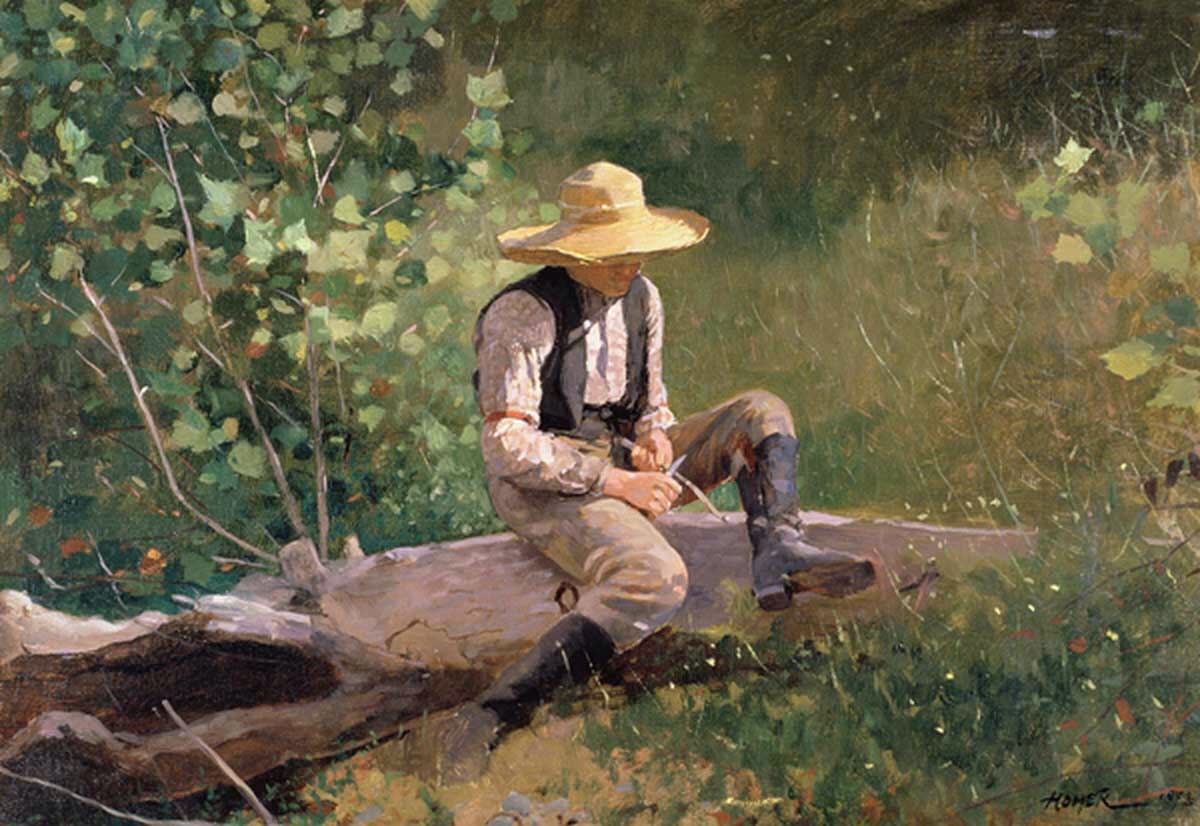
Winslow Homer.  Click on the picture to access the SlideShare presentation. You might want to check  out our post on the mythological structure of storytelling as well:  http://wp.me/p4gEKJ-F2

Note: you might want to check out our new book TEACHING ENGLISH WITH ART: MATISSE   available  from AMAZON.COM as an ebook.  Click here for more info: 

http://wp.me/p4gEKJ-1kP