10 Reasons Why Portuguese as a Foreign Language is on the Rise Globally


In recent years, the world has witnessed a significant surge in the number of people learning Portuguese as a foreign language. This trend is not just a passing fad but a reflection of the growing importance of Portuguese on the global stage. Whether it’s for business, travel, or cultural enrichment, there are numerous compelling reasons to take up Portuguese. In this blog post, we will explore ten key reasons why Portuguese is becoming increasingly popular and why you should consider learning it too.

1. Portuguese is a Global Language

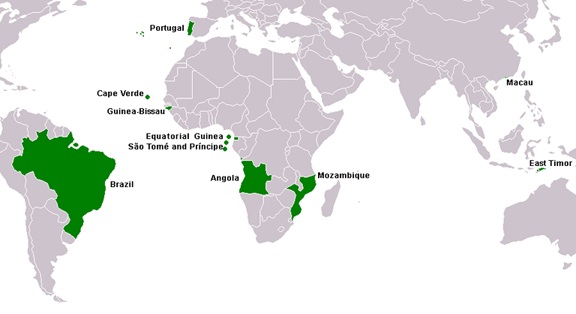
Portuguese is the sixth most spoken language in the world, with over 220 million native speakers. It is the official language of nine countries (plus Macau), including Brazil, Portugal, Mozambique, Angola, and several others. This widespread use makes Portuguese a valuable language for international communication and opens up opportunities in various regions across the globe.
2. Economic Opportunities in Brazil

Brazil, the largest Portuguese-speaking country, boasts one of the world’s largest economies. With its diverse industries, including agriculture, manufacturing, and technology, Brazil offers numerous business opportunities. Learning Portuguese can give you a competitive edge in the job market and help you tap into the economic potential of this vibrant country.

3. Rich Cultural Heritage

Portuguese-speaking countries have a rich cultural heritage that spans literature, music, dance, cinema, and cuisine. From the soulful sounds of Fado music in Portugal to the vibrant Carnival celebrations in Brazil, learning Portuguese allows you to immerse yourself in these unique cultural experiences and gain a deeper appreciation for the traditions and customs of these countries.

4. Travel and Tourism

Portuguese-speaking countries are popular travel destinations, known for their stunning landscapes, historical landmarks, and warm hospitality. Whether you’re exploring the picturesque streets of Lisbon, relaxing on the beautiful beaches of Rio de Janeiro, or embarking on a safari in Mozambique, knowing Portuguese can enhance your travel experiences and help you connect with locals on a more personal level.

Rio de Janeiro, Brazil

5. Academic and Research Opportunities

Portuguese is an important language in academia and research, particularly in fields such as Latin American studies, linguistics, and history. Many universities and research institutions offer programs and scholarships for students who are proficient in Portuguese. By learning the language, you can access a wealth of academic resources and collaborate with scholars from Portuguese-speaking countries.

6. Growing Influence in Africa

Portuguese is an official language in several African countries, including Angola, Mozambique, and Guinea-Bissau. These countries are experiencing rapid economic growth and development, making them attractive destinations for investment and business ventures. Learning Portuguese can help you navigate these emerging markets and build strong connections with local partners.

7. Enhanced Cognitive Skills

Learning a new language has been shown to improve cognitive skills, such as memory, problem-solving, and multitasking. Portuguese, with its unique grammar and vocabulary, can provide a stimulating mental workout and keep your brain sharp. Additionally, being bilingual or multilingual can enhance your overall communication skills and cultural awareness.

8. Access to Portuguese Literature and Media

Portuguese literature is rich and diverse, with renowned authors such as Fernando Pessoa, José Saramago, Machado de Assis and Clarice Lispector. By learning Portuguese, you can read these literary works in their original language and gain a deeper understanding of their nuances and cultural context. Additionally, you can enjoy Portuguese-language films, music, and television shows, further enriching your cultural experience.

9. Strengthening Personal and Professional Relationships

Knowing Portuguese can help you build stronger personal and professional relationships with Portuguese-speaking individuals. Whether you’re working with colleagues from Brazil, making friends in Portugal, or collaborating with partners in Angola, speaking their language can foster trust, respect, and effective communication.

10. A Fun and Rewarding Challenge

Learning Portuguese can be a fun and rewarding challenge. The language has a melodic quality and a rich vocabulary that can be enjoyable to learn and use. As you progress in your language journey, you’ll experience a sense of accomplishment and satisfaction that comes with mastering a new skill.

Conclusion

In conclusion, there are countless reasons to take up Portuguese as a foreign language. From economic opportunities and cultural enrichment to travel and cognitive benefits, learning Portuguese can open up a world of possibilities. So why not embark on this exciting linguistic adventure? Whether you’re a student, a professional, or simply a language enthusiast, Portuguese is a valuable and rewarding language to learn. Start your journey today and discover the many benefits of speaking Portuguese!

Note: Jorge Sette, M.A. in Applied Linguistics offers lessons of Brazilian Portuguese online. The number of spots is limited. Hurry up! Don’t hesitate to reach out to him at: jorge.sette@terra.com.br
10 Fascinating Facts About the Portuguese Language


Portuguese is one of the world’s most widely spoken languages, but there’s so much more to it than meets the eye. Here are ten intriguing facts about this beautiful and versatile language:

1. Portuguese Is the Official Language of 10 Countries

Portuguese is the official language of: Portugal, Brazil, Angola, Mozambique, Cape Verde, Guinea-Bissa, São Tomé and Príncipe, East Timor, Equatorial Guinea, Macau (the latter is not a sovereign country, but it recognizes Portuguese as an official language).

Together, these nations and regions form the Community of Portuguese Language Countries (CPLP).

2. Brazil Has the Largest Portuguese-Speaking Population

With over 220 million of the world’s Portuguese speakers, Brazil is the largest Portuguese-speaking country. As a matter of fact, Brazil accounts for more than 80% of all Portuguese speakers worldwide.

3. Portuguese Is the Fastest-Growing European Language

Portuguese is the fastest-growing European language after English. Its spread in Africa and its increasing relevance in global trade contribute to its rising prominence.

4. It Has Influenced Other Languages

Portuguese has left its mark on several languages, especially in Asia. For example, words like chá (tea) entered Japanese, Cantonese, and even English via Portuguese traders.

5. It’s a Romance Language

Portuguese evolved from Latin, just like Spanish, French, and Italian. Its closest linguistic relative is Galician, spoken in the Galicia region of Spain.

6. Portuguese Is the Sixth Most Spoken Language Worldwide

Portuguese has 265 million speakers, ranking as the sixth most spoken language in the world, following Mandarin Chinese, Spanish, English, Hindi, and Arabic.

Soccer – Ipanema Beach, Rio.

7. It’s One of the Most Phonetic Languages

Although Portuguese pronunciation may seem tricky at first, the language is relatively phonetic. Once you learn the rules, it’s often possible to pronounce words correctly by reading them.

8. Many Portuguese Words Have Arabic Origins

When the Moors ruled the Iberian Peninsula, they introduced many Arabic words into Portuguese. Common examples include açúcar (sugar), alface (lettuce), álcool (alcohol), alfazema (lavender) almofada (pillow), marfim (ivory), azeite de oliva (olive oil), and algodão (cotton).

9. There Are Unique Portuguese Sounds

Portuguese has sounds that are rare in other Romance languages. For instance, nasal vowels (marked by a tilde, like in ocupação) are a distinctive feature that can be challenging, and, yet, interesting to learners.

10. It’s One of the Oldest Modern Languages

Portuguese was officially recognized as a language in 1290 by King Denis of Portugal. He founded the first Portuguese university and declared that the Vulgar Language (spoken Portuguese) should replace Latin as the official language in legal documents.

Conclusion

Portuguese is a rich and fascinating language with a global footprint. Whether you’re learning it for travel, business, or cultural appreciation, these facts highlight its historical and linguistic significance. Did any of these surprise you? Let us know in the comments!

NOTE: I give online classes of Brazilian Portuguese for foreigners. If you are interested, don’t hesitate to reach out: jorge.sette@terra.com.br
Jorge Sette


OUR BLOG “LINGUAGEM” HAS HAD A GREAT FIRST YEAR!


HAPPY NEW YEAR, EVERYONE.

Please find below some official stats sent by wordpress.com on the blog LINGUAGEM. We’ve had a great first year. Thanks for the support and we will back stronger than ever in 2015.

BLOG LINGUAGEM: 2014 official stats

BLOG LINGUAGEM: 2014 official stats


Screen Shot 2014-12-30 at 8.48.34 PM Screen Shot 2014-12-30 at 8.52.35 PM


Au revoir

Jorge Sette.

Teaching English with Art: make your online lessons stand out


Ideal for online lessons!!

If you are having any of the following problems, we can help you…

a. Are your students often bored during the English class? b. Don’t they know what to say when you set up speaking activities? c. Do you spend the weekend correcting writing assignments that don’t seem to help them improve? d. Is it hard to personalize productive skills and link the English lesson to the other subjects in the school curriculum? e. The students know nothing about Art and high culture in general. 

Click on each of the pictures below to get your copy from the KINDLE STORE:

Click on the image above to go to Amazon.com

Click on the image above to go to Amazon.com

Click on the image above to get your copy from the KINDLE STO

Click on the image above to get your copy from the KINDLE STORE.

Click on the picture above to get your copy.

Click on the picture above to get your copy.

Teaching English with Art: Norman Rockwell

Click on the image above to download the eBook.

Teaching English with Art

Click on the image to download the ebook.

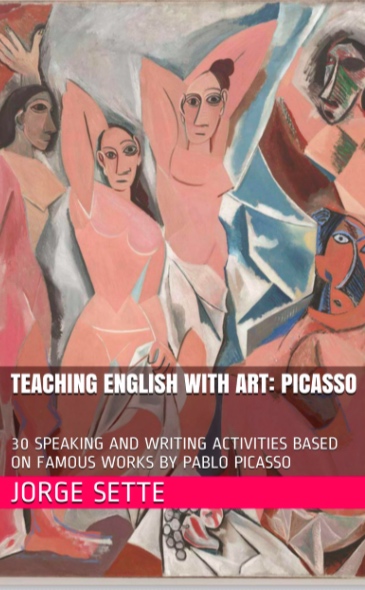
Teaching English with Art: Picasso

Click on the image to download the eBook.

Click on the image to download the eBook

Click on the image to download the eBook

Teaching English with Art: Monet.

Click on the image to download the eBook.

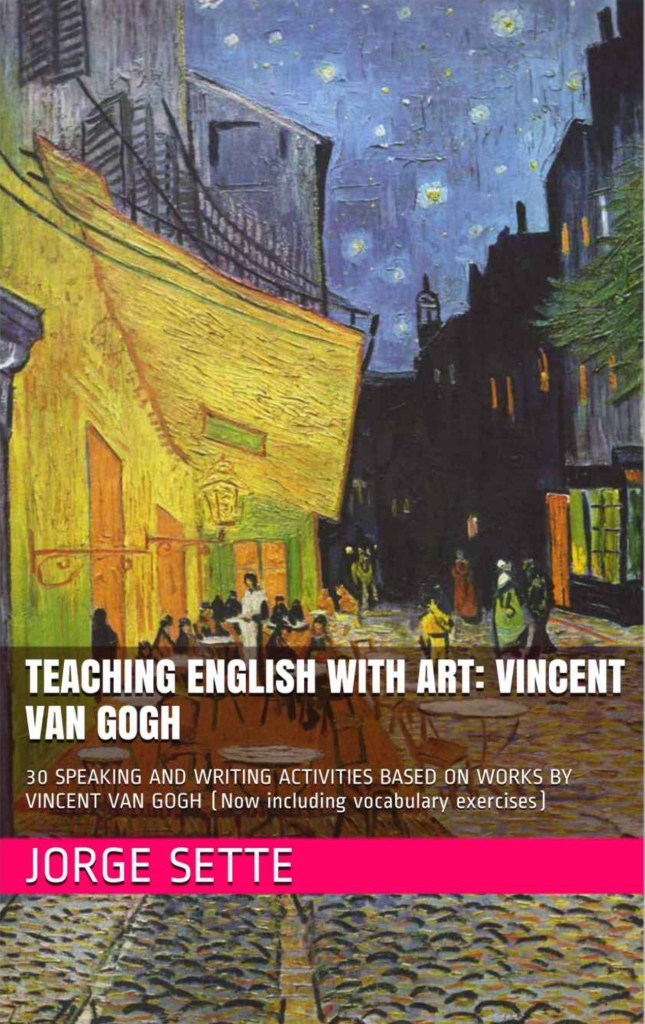
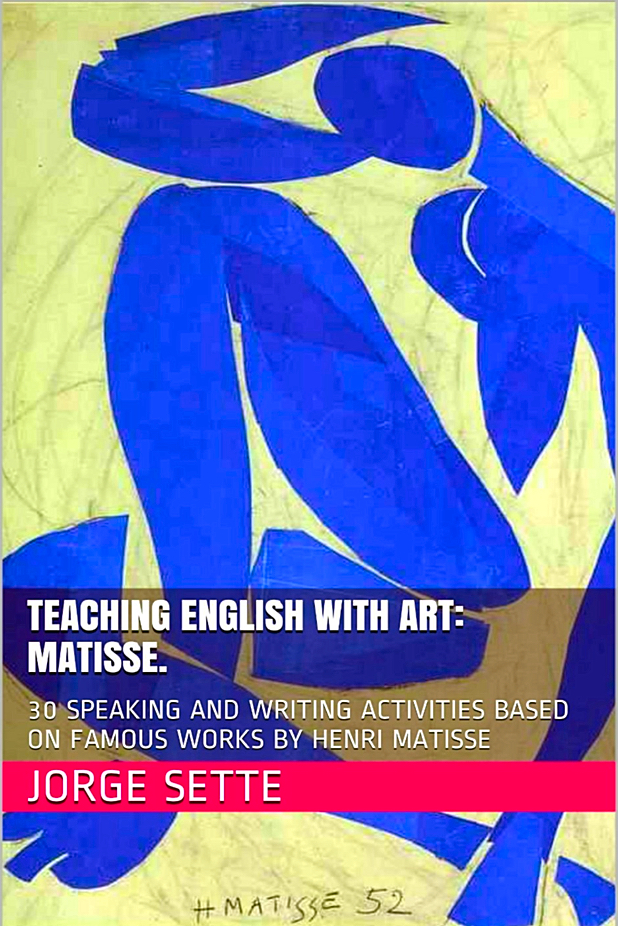
Teaching English with Art is the series for you! This eBook series is a wonderful supplement to any coursebook or extra materials your students may already be using in the English class. Each volume contains 30 speaking and writing activities for classroom use based on some of the most striking works by famous artists: for now we have MATISSE, PICASSO, CARAVAGGIO, MONET, NORMAN ROCKWELL, WINSLOW HOMER, a special three-in-one volume of MONET + PICASSO + MATISSE (90 activities), and we’ve just launched VAN GOGH.

IMPORTANT NOTE:

PERSONALIZATION: if you wish to change the cover of any of the ebooks, add your school logo, negotiate a special price for a determined number of students, or make other suggestions of customization, do not hesitate to talk to us. We are VERY FLEXIBLE. Make your ebook UNIQUE!

The objective of these eBooks is to expose the students to high art while having them practice English, fulfilling, therefore, one of the tenets of effective language acquisition: providing a realistic context for the language to be learned and practiced as a means to an end. Your students will love to practice their English discussing  and doing writing  tasks based on the works of these great artists.  The activities are highly personalized, so the students can express their own opinions and feelings. This is a proven way to make language acquisition fun and effective by creating in the classroom an atmosphere of interest, motivation and personalization. Each activity is clearly correlated to the COMMON EUROPEAN FRAMEWORK OF REFERENCE (CEFR), and the level is stated next to it. Ideally both you and your students should purchase the material.  For heads up activities, project the images on a white wall. Chose your favorite artist and click on the corresponding  image below to go to AMAZON.COM and get your e-book:

If you need more instructions on how to purchase the eBooks, please click here: http://wp.me/p4gEKJ-1Cz

Jorge Sette.

What it takes to be Michael Jackson


I’ve never been a huge fan of Michael Jackson’s music, although his gift as a performer and dancer has always impressed me. I grew up hearing his songs, like many of the readers, so he felt like a distance cousin, far away but still part of my life.

Despite the fact that THRILLER (1982), his second solo album after he left The Jackson 5, sold more than a 100 million copies, making it the best-selling album of all time, I was never really interested in mimicking the steps and choreography of the promo video clip, and was left sitting alone with my rum and coke at the parties of that era, while all my zombie friends took over the dance floor.

In the early 90s, before the advent of cable television in Brazil, when regular TV still had the power of unifying people, making most of us watch the same shows and discuss them at the water cooler the following day, I waited excitedly for the release of every new computerized video clip featuring a Michel Jackson hit, just like everyone else at the time. To say nothing of the fact that, in Brazil,  a lot of kids from the generation after mine were named by their parents MAICON, in honor of the King of Pop. They couldn’t get it right.

Obviously, I was shocked by his untimely death and saddened by all the allegations of child abuse he had to confront (hoping that the verdict of not guilty was fair and right after all). The Oscar-winning Danish movie THE HUNT presents us with a nightmarish scenario of what it must feel like to be accused of this sort of crime if you are innocent. Once the doubt is planted in people’s minds, it will not be uprooted.

This evening, however, I watched a documentary about Michael Jackson on Netflix, and it was fascinating to be reminded of how talented and mature he was at the age of 10, an old soul. Nevertheless, in a scene in the film, someone comments that whatever he missed in childhood due to his extreme professionalism, he made up in adulthood. Of course, he was referring to the toys he got as an adult, to Neverland, and to the obsession of physically transforming his body through plastic surgery, rather than only in his imagination, like most kids do.

But what really resonated with me was all the evidence that, besides being a naturally gifted person, he was a workaholic, and added much to his innate talent through a lot of studying and dedication. It was said that even after his voice changed in adolescence he could still carry on being a great singer, as he had learned what to do technically with his voice when rendering a song, from analyzing famous singers from the past. So, what does that teach us about how to become a Michael Jackson, or a John Lennon, or a Bill Gates? Or, in other words, an extremely successful person in our career.

Image

Michael Jackson

Work and drive

I’m a great believer that hard word and dedication are the most important levers for success in life – whichever standards you choose to measure success by. Malcolm Gladwell, in a book called OUTLIERS (which I strongly recommend) speaks of the magical number 10,000, as the minimum amount of hours necessary for someone to dedicate to a specific task if they are to excel in it. Not all of us had or will ever have the opportunity and drive to do this, let’s face it.

Of course, being endowed by nature with a special talent, such as a higher than average IQ, amazing kinesthetic intelligence, or the looks of Scarlett Johansonn, will already place you ahead of the pack. But you cannot dismiss the effort that all real celebrities – as opposed to the Paris Hilton type – must have put into building their careers. There are odds working for them, that is undeniable, but in general, this is accompanied  by unusual amounts of time and effort invested in accomplishing their endeavors.

A Mentor and team work

Also, in all interviews I read and documentaries I watch about people who have done amazing things, there is a strong element of team work and mentoring involved. You just can’t make it on your own. Talent needs coaching, support and help with the hard decisions to be made along the way. Surround yourself with friendly and supportive people, who maybe complement your skills, and get yourself a mentor. Today.

Persistence

I know a lot of talented people who do not advance further in their career for lack of resilience and toughness. They shy away and quit at the prospect of every obstacle (and there will be many) they face. If you ever have the chance to watch a couple of episodes of the popular series HOUSE OF CARDS, you will understand that it is impossible to get ahead without single-mindedness and a very thick skin.

Emotional intelligence

This is what hindered Michael Jackon’s success in terms of longevity and balance. His instability, due mainly to growing up under an overbearing and controlling father – whom he never called Dad, but Joseph, his Christian name. Besides, the pressures of living and working in an unbelievably competitive environment must have played a strong role in his unravelling. Also, he never developed sophisticated interpersonal skills, such as being able to read people beyond their words and superficial behavior – he is said to have been naively trusting of everyone.

Basically, I should say that, in a very simplified way, the characteristics listed above translate into success. In the sense that they get you where you want to be in the corporate world, in show business, academia or politics.

Let’s continue the discussion later. In the meantime, please let me know what your views are on this post.

Au revoir

Jorge Sette.

I luv Rio


Cartoon version of my previous post “E O RIO, HEIN?” (http://wp.me/p4gEKJ-rD). I want to express my love for this beautiful city.

Are you coming to São Paulo for the World Cup?


This video expands on my blog post (Se você vem a São Paulo para a Copa do Mundo..: http://wp.me/p4gEKJ-od).

Check out the other articles in this blog.