Teaching English with Art (video)


Teaching English with Art: the ENGLISH LANGUAGE LEARNING materials you have been waiting for:


TEACHING ENGLISH WITH ART: MATISSE. Click here for more info: http://wp.me/p4gEKJ-1kP


TEACHING ENGLISH WITH ART: PICASSO. Click here for more info: http://wp.me/p4gEKJ-1lA


‪#‎matisse ‪#‎picasso ‪#‎fauvism ‪#‎cubism ‪#‎moma ‪#‎tate ‪#‎teachingenglish ‪#‎language ‪#‎learningenglish

Teaching English with Art: make your online lessons stand out


Ideal for online lessons!!

If you are having any of the following problems, we can help you…

a. Are your students often bored during the English class? b. Don’t they know what to say when you set up speaking activities? c. Do you spend the weekend correcting writing assignments that don’t seem to help them improve? d. Is it hard to personalize productive skills and link the English lesson to the other subjects in the school curriculum? e. The students know nothing about Art and high culture in general. 

Click on each of the pictures below to get your copy from the KINDLE STORE:

Click on the image above to go to Amazon.com

Click on the image above to go to Amazon.com

Click on the image above to get your copy from the KINDLE STO

Click on the image above to get your copy from the KINDLE STORE.

Click on the picture above to get your copy.

Click on the picture above to get your copy.

Teaching English with Art: Norman Rockwell

Click on the image above to download the eBook.

Teaching English with Art

Click on the image to download the ebook.

Teaching English with Art: Picasso

Click on the image to download the eBook.

Click on the image to download the eBook

Click on the image to download the eBook

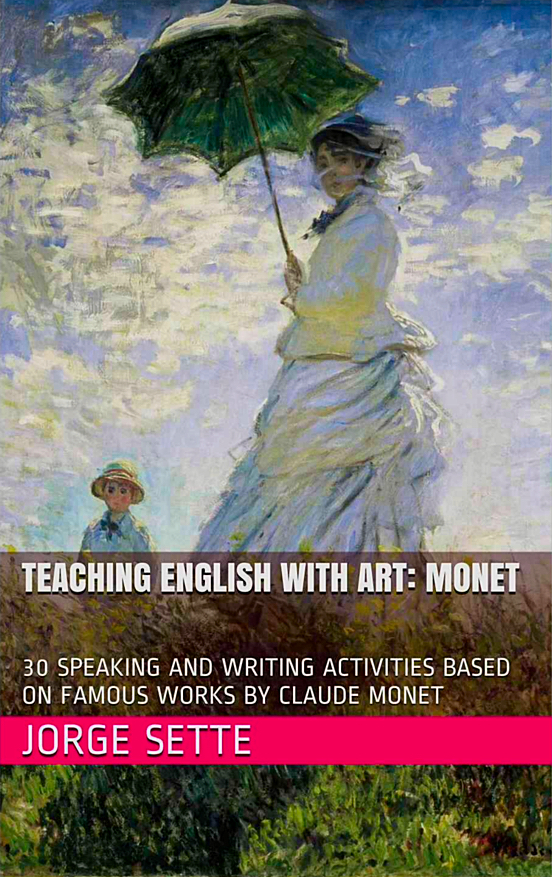
Teaching English with Art: Monet.

Click on the image to download the eBook.

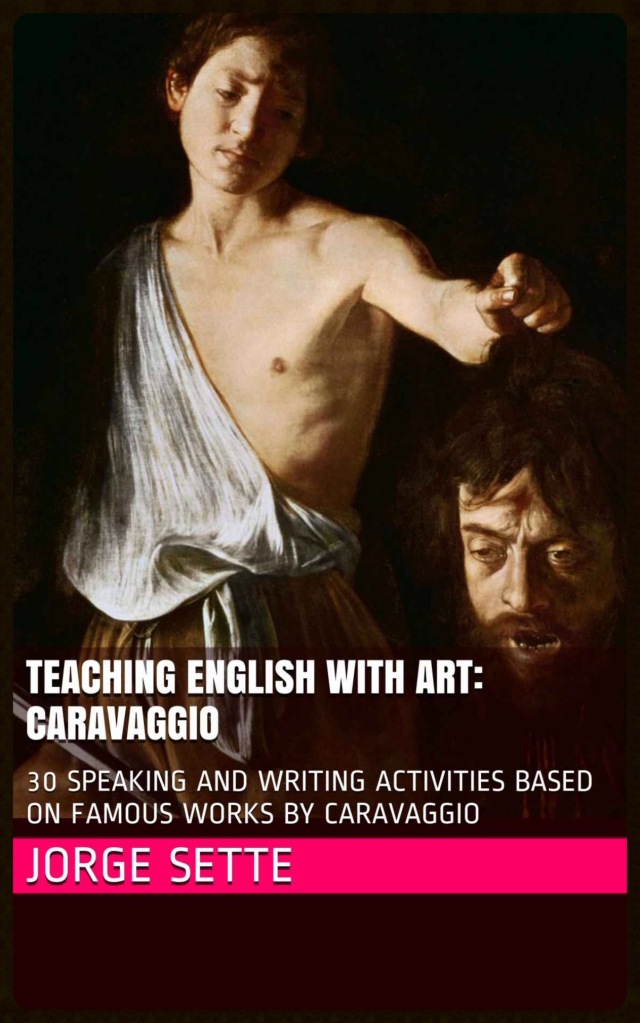
Teaching English with Art is the series for you! This eBook series is a wonderful supplement to any coursebook or extra materials your students may already be using in the English class. Each volume contains 30 speaking and writing activities for classroom use based on some of the most striking works by famous artists: for now we have MATISSE, PICASSO, CARAVAGGIO, MONET, NORMAN ROCKWELL, WINSLOW HOMER, a special three-in-one volume of MONET + PICASSO + MATISSE (90 activities), and we’ve just launched VAN GOGH.

IMPORTANT NOTE:

PERSONALIZATION: if you wish to change the cover of any of the ebooks, add your school logo, negotiate a special price for a determined number of students, or make other suggestions of customization, do not hesitate to talk to us. We are VERY FLEXIBLE. Make your ebook UNIQUE!

The objective of these eBooks is to expose the students to high art while having them practice English, fulfilling, therefore, one of the tenets of effective language acquisition: providing a realistic context for the language to be learned and practiced as a means to an end. Your students will love to practice their English discussing  and doing writing  tasks based on the works of these great artists.  The activities are highly personalized, so the students can express their own opinions and feelings. This is a proven way to make language acquisition fun and effective by creating in the classroom an atmosphere of interest, motivation and personalization. Each activity is clearly correlated to the COMMON EUROPEAN FRAMEWORK OF REFERENCE (CEFR), and the level is stated next to it. Ideally both you and your students should purchase the material.  For heads up activities, project the images on a white wall. Chose your favorite artist and click on the corresponding  image below to go to AMAZON.COM and get your e-book:

If you need more instructions on how to purchase the eBooks, please click here: http://wp.me/p4gEKJ-1Cz

Jorge Sette.

Teaching English with Art: Picasso


Click on the image below to download your book FROM AMAZON.COM

You will never have bored students again.

Teaching English with Art: Picasso

Teaching English with Art: Picasso


For other eBooks of the series TEACHING ENGLISH WITH ART, please click here:

http://wp.me/p4gEKJ-1lS

Check out the video clip  on our eBooks below:

Au revoir

Jorge Sette

Cubism: the most revolutionary art movement of the 20th century


Pioneered by Pablo Picasso and Georges Braque, Cubism is one of the most revolutionary and seminal art movements of the 20th century. It has its origins in the post-impressionist paintings of Paul Cezanne, and aims at depicting reality in a non-naturalistic way, being considered the seed of the abstract paintings developed later on. Cubism in its more innovative and radical form lasted from 1907 to 1914, when the First World War broke out.

The end of the 19th century and the early decades of the 20th century were marked by great technological innovations that cried for an art form that could express these fast changes and new times. Traditional art, based on realistic works, which had been perfecting the use of perspective since the Renaissance, could not compete with the innovations of photography and film. They would be a mere replication of these more accurate methods of showing reality.

Portrait of Fernarde by Picasso, Pablo. 1909

Portrait of Fernande by Picasso, Pablo, 1909

In an attempt to grasp the essence of the times, Picasso started to move towards more simplified depictions of objects and the human form, trying to represent simultaneously the different angles from which they could be seen, not only from a unique perspective. He started to flatten his images, making use of geometric shapes (such as cubes, hence the name of the movement) and deconstructing reality by slashing the image into different planes, producing, thus, an effect which had a more intellectual than sensorial impact on the viewer.

The iconic painting Les Demoiselles d’Avignon is considered the first Cubist work of art. Primitive art, such as African masks and Iberian sculptures, played an influential role in the development of Cubism. This first phase of the movement is usually known as analytic cubism, characterized by the use of dark, almost monochromatic color hues, and growing to a point where the deconstruction of reality became so radical that the viewer could hardly identify the object or person depicted. The second phase, synthetic cubism, was a lot more energetic and colorful, including the technique of collage, where real-life two-dimensional materials, such as colored paper, newspapers or even hair ribbons, were glued to the painting.

Bottle, Guitar, and Pipe by Picasso, Pablo

Bottle, Guitar, and Pipe by Picasso, Pablo. 1912

It’s hard to pinpoint when Cubism really finished, although we usually place it in the historical period between 1907-1914. It actually did not end, but transformed itself and evolved into other styles in the following decades.

Even today we can identify strong influences of Cubism in architecture, design and, of course, the arts in general.

NOTE: If you teach languages, you might want to check out our series of eBooks TEACHING ENGLISH WITH ENGLISH available  from AMAZON.COM: http://wp.me/p4gEKJ-1lS

Teaching English with art

Teaching English with art

Au revoir

Jorge Sette

Teaching English with Art: Matisse


Click on the image below to buy the product from AMAZON.COM

You will never have bored students again.


Teaching English with Art

Click on the image to access the AMAZON.COM page.

Which novels do you wish you had written yourself?


When you are at the stage of brainstorming for a nonfiction blog post or a piece of creative writing, it’s inevitable to remember a couple of articles, books and novels related to the topic you read at some point and enjoyed. They will be a source of inspiration and influence in your writing, making you somehow even slightly jealous, wishing you had thought of that first. But, of course, you would also have needed the right language to encapsulate it. After all, more important than the plot itself is how you say things.

Take the book Life of Pi by Yann Martel, for example, whose original idea some people claim was stolen from our Brazilian writer Moacyr Scliar. Well, plagiarism is hard to establish, there are a lot of gray areas, but one thing I’m sure of: Martel did not write the same story nor, most definitely, used the same language as Scliar. Jorge Luis Borges, in his marvelous piece Pierre Menard, Autor del Quixote, from the book Ficciones takes this idea even further, asserting that a book written with the exact same words by a different author at a different time would be read in a new way, due to the dissimilar historic contexts, and therefore would not be the same book at all. I agree.

After reading a comment on Facebook by a friend saying that she is full of ideas for blog posts but do not find the time to write them (yes, we all know how teachers are busy!), I made a joke saying that all my good ideas had already been stolen by the likes of Shakespeare, Tolstoy or Philip Roth.

Then I though for a moment, and decided to give serious consideration as to which novels I really wished I had written and why. This is my humble list:

Books I wish I had written

Books I wish I had written

1.The Human Stain, by Philp Roth: it’s hard to discuss this book without giving a bit too much away, so apologies for the spoilers. The story of a light-skinned black boy who grabs the opportunity to pass for a Jew in 1950’s America and later becomes a Classics Professor at a small college is a complex account of the choices you make in life and the responsibilities and consequences that come with them. The need to make concessions and compromise basic values to achieve a bigger goal is the central theme of the book. The deep moral dilemma you face when you take such a radical decision, including the necessity to abandon and cut relations with your family and community to start a new life somewhere else as a completely different person, is evaluated by the author from unusual and unexpected angles in this impressive book. As irony is the hallmark of Roth, the book starts with the most paradoxal of incidents: the professor, noticing that two of the students enlisted in his class never seem to be present, asks the class the question which brings about his doom: “do they exist or are they spooks?” The latter being an old loaded word, a racist epithet for blacks. It turns out that the Professor, never having seen those students before, meant spooks in the most common sense of the word, that is, ghosts, and, after all the pressure and hassle he goes through, without support from any of his colleagues and students – for a number of political reasons – he decides to resign and end his career. I would love to have written this story for its universality: any minority can identify with what Coleman, the Jewish/Black professor, goes through, and can easily put themselves in his shoes. Given the opportunity would you do the same? Would you change your race, color, nationality, sexual orientation or gender? Or would you just give up all of your chances of fully growth and spend the rest of your life as a second class citizen in a society that will only offer you the fulfillment of your whole potential if you are the right color?
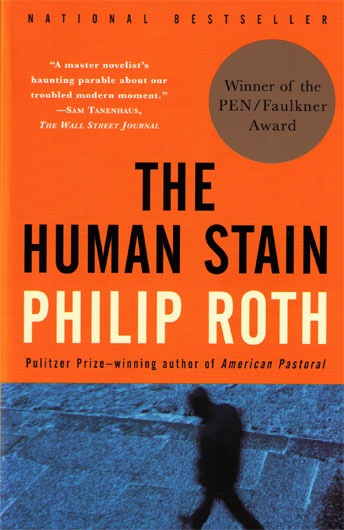
The Human Stain

The Human Stain

2. Dom Casmurro, by Machado de Assis: this must be the book I reread most often in my entire life. I know it almost by heart. What attracts me is the way the characters are so well-rounded and fully developed, leaping out of the page as if you could go for a walk and talk to them. This does not mean, however, that you will know them any better. This is the whole point of the story. The dissimulation, the fact that we never know anyone completely. The impossibility of dealing with only one version of the reality. I can’t get enough of the artistry of the author, who, narrating the story in the first person, never lets the reader be sure about what really happened: was the main character’s wife an adulterer? Is the boy she gives birth to his son or his best friend’s? The doubt will corrupt his marriage and ultimately destroy all the love in his life. He becomes empty and isolated, having chosen the version of reality which will cause him the most pain and damage. Don’t we all choose the latter?

Dom Casmurro

Dom Casmurro

3. We need to talk about Kevin, by Lionel Shriver: a professional woman is in love with her work and her husband. She writes and publishes travel guides, having the chance to go places, tour interesting and remote regions, avoiding getting stuck in a housewife’s rut, being independent most of the time. Yet, she can count on a loving husband to comfort and look after her when she comes back home after a long trip: this is a dream life. She has the best of both worlds. Then, what else is it that society claims will make every woman even happier and more complete: to have a baby. From the birth of Kevin, her firstborn, to the dantesque crime scene at the end of the book, We need to talk about Kevin reads like a nightmare. You can’t put it down. A thriller in every sense of the word. But one that goes way beyond the limitations of the genre. Shriver’s ambitions are a lot more encompassing. She discusses the nature of evil. Is it caused by nurture or nature? How is it created? Has Kevin always been the monster she feared he was or was his low self-esteem caused by his mother’s lack of love and care that turned him into a criminal? Was the mother’s resentment for having to give up all the pleasure and independence of her former life, her pre-baby life, toxic enough to corrupt and undo the little creature? The sense of guilt of a mother for not conforming to the patterns of a society that takes motherly love for granted only contributes to the character’s anguish and mental confusion. Of course, the book will show different perspectives of the scenarios we painted, but the conclusion will be up to the reader.
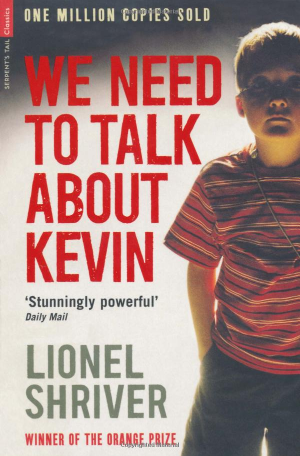
We need to talk about Kevin

We need to talk about Kevin

These are all great themes and I don’t need to tell you how masterfully these concepts and ideas are exploited by those wonderful writers. The angles they illuminate, the perspectives they reveal would hardly have occurred to the average reader. That’s why they are geniuses and we are blog writers. But we can always try to get closer to their art in our writing. According to Malcolm Gladwell, another writer whose books I wish I could have written (although they are nonfictional), all it takes is a dedication of 10,000 hours of work to become a world class master at your craft.

Which books would you like to have written yourself? Let us know.

Au revoir

Jorge Sette.
Five Most Common Misconceptions About Writing


Writing is today more fashionable than it has been in a long time. Perhaps it’s at the peak of its importance ever, with all the blogs, messages, emails and tweets swamping our computer, tablet and smart phone screens every second of the day. Of course, most of the time it’s bad or unclear writing. But everyone is doing it one way or another, and job opportunities are opening up for those who do it well.

Content is the key word in the workplace today. Especially if you are in sales & marketing. The buyer has all the power today and they control when, how and where they will make their next purchase. In this context, writing can be a great asset in educating and persuading prospects, making them see you as the expert, or thought leader in your field. Writing great content and making it available will help you develop a relationship with your potential customers, who will definitely lean towards your offer when the time is right.

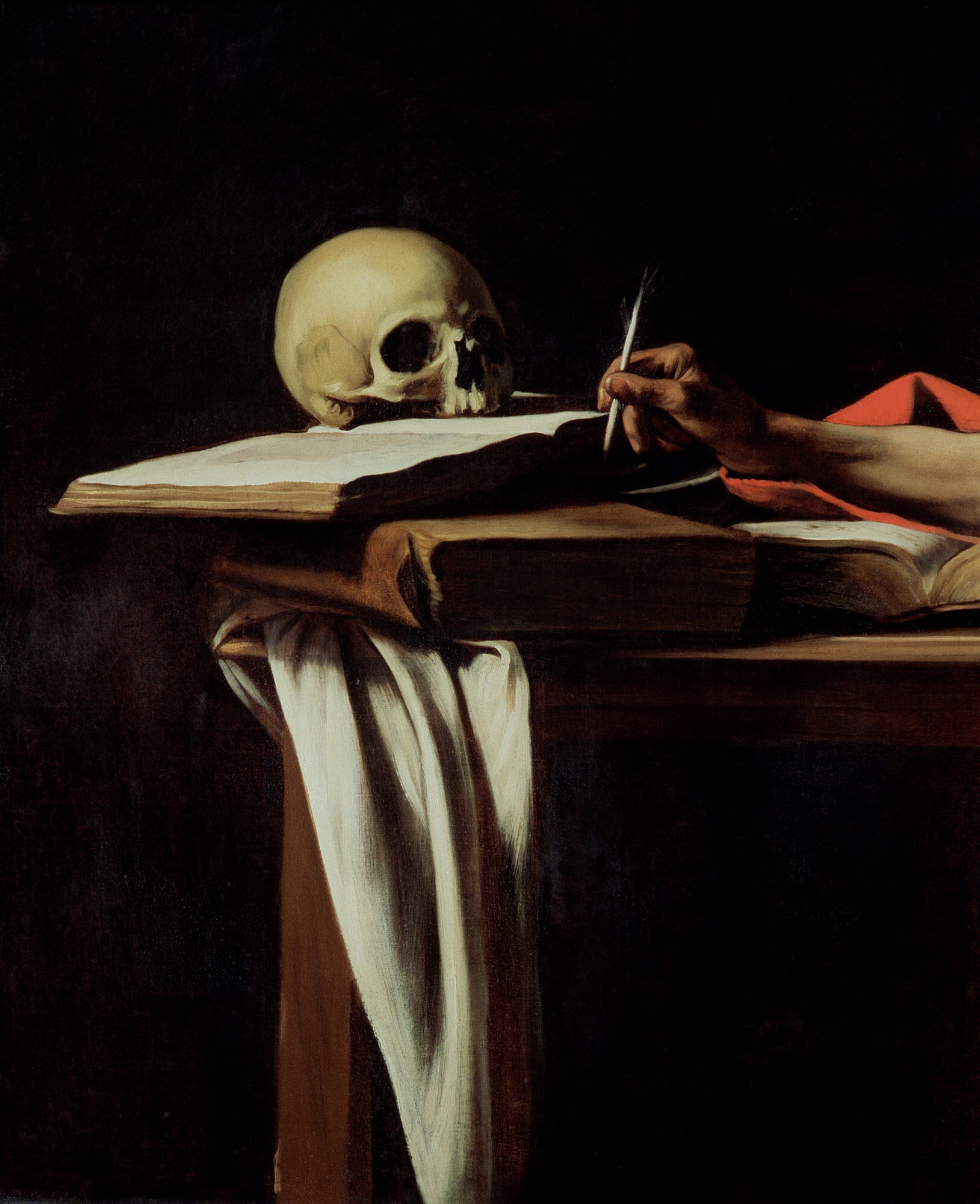
Saint Jerome Writing (detail) by Caravaggio

Saint Jerome Writing (detail) by Caravaggio

As a consequence of its importance, the Internet is full of advice about effective writing, how to put blogs together, the dos and don’ts and best practices of publishing anything. By all means, read all you can, as there is a lot of useful information online. Beware, however, of some of the most common misconceptions about writing: in general most of them were acquired or developed at school and academic settings rather than on the Internet. Here are five of the most common:

1. Writing is about inspiration and waiting for the muse to come down and sit on your keyboard. Well, I’m afraid there’s not enough room for the muse to relax and spread out on such a small space. Also, deadlines have a weird way of not accommodating the muse’s busy schedule, so do not wait to get started. Writing is not necessarily what Hemingway warned us against in his famous quote: “There is nothing to writing. All you do is sit down at a typewriter and bleed.” Make it more active: brainstorm ideas, do some research, check out what is trending online, use automatic topic generators on the Internet, and do not delay. Start the process as soon as you can,

 2. Writing comes out as the masterpiece you usually read in the printed copy of good magazines, newspapers and books. Well, the final draft is not easy to get to. That’s what you see published. But anyone can get the process started and refine it until you achieve a satisfactory result. The saying writing is rewriting, or writing is more about transpiration than inspiration are indeed true. Once you spill out your first ideas and get them more or less outlined on the page, you will start the process of polishing them. And that is the hard part. This will take time, effort and immense patience.

3You cannot self-edit. If we are not talking about your PhD thesis or your fiction masterpiece, do not believe you need a team of copyeditors, researchers and proofreaders ready to work for you. They are expensive and hardly available in enough numbers even for big publishing companies nowadays. So, unless you can count on close friends to help you out with it (remember you can always return the favor), you must learn tactics for self-editing. Do not hesitate to count on every piece of technology available to help you with the task: spell checkers, grammar checkers, dropdown thesaurus, online dictionaries, you name it. There are a lot of very useful tools out there. Read your drafts as many times as you can and carry on refining them. There will be a moment when you’ll get so fed up with reading your piece you will want to throw up. That’s when you take a serious break. I’m not talking about the proverbial coffee time (you have probably been drinking coffee nonstop throughout the whole process anyway). Just abandon your text for a couple of days (I hope you can afford to do that. Factor in those necessary breaks when you plan your timetable to meet the deadline). Next time you get back to the text, you will see it with fresh eyes, and give it the final touches as a Steven Pinker would.

4. Sophisticated writing is good writing. Write as you speak. Content that will help you sell is content that’s simple enough for the majority of readers to understand. So drop the long words and complex sentences. The golden rule of elegance is less is more. Apply this to your writing: precision and simplicity of vocabulary, clarity of ideas, avoidance of overuse of the passive voice, and keeping to what is essential are the tactics that will make you win the reader over. As you read and reread your text, try to leave out everything that is superfluous or redundant. Cut, cut, cut.

5. Not everyone can write. You are write (sorry: right) to think so, if you are using Oscar Wilde or Hemingway as your standard. Artistic and creative writing are not for everyone. It does not need to be for you. But most people can learn to develop and communicate clear, authoritative and persuasive ideas in writing. It takes practice, though. All the content marketing gurus agree on this single point: you need to write everyday if you are in the business. The blog post you will write as soon as you finish reading this text will sound a hundred times better than the one you wrote around the same time last year. They will be both there on the Internet: just read and compare them. You will have improved. So keep working at it and surprise yourself month after month at how much better you are becoming. Good luck!

Would you like to share with us any advice on writing? Please do not hesitate to do so on the comments section of this blog. You might as well rate us so we can improve.

Au revoir

Jorge Sette

What’s so enchanting about THE CATCHER IN THE RYE?


“What really knocks me out is a book that, when you’re all done reading it, you wish the author that wrote it was a terrific friend of yours and you could call him up on the phone whenever you felt like it. That doesn’t happen much, though.” ― J.D. Salinger, The Catcher in the Rye. I beg to disagree with you, Holden. I don’t think writers will make the best friends. My advice is stick to their books and don’t try to get any closer. Writers in general are not the nicest people in the world, or the most social for that matter. There are exceptions, of course, but I believe most of them are quite happy writing in the isolation of their offices or country cabins, when they don’t decide to live romantically in Paris and write at a café. Many of them are also boozers and rude, and would most probably hate to have someone intrude upon their privacy.

Holden Caulfield is the main character of the ultra famous novel The Catcher in the Rye written by J.D. Salinger – a recluse himself –  in 1951. It’s a book hard not to identify with, especially if you are male and is or has been, at some point, 17 years old.

The Catcher In the Rye - Holden Caulfield by MelissaHatford

The Catcher In the Rye – Holden Caulfield by Melissa Hatford

I’ve read this novel three times so far, and the last time, a couple of weeks ago, already as a mature man, I found it even more meaningful and relevant than the first time I laid eyes on its pages a long time ago. Most people know the story. Deceptively simple and direct, it tells of a couple of days in the life of a teenager who gets kicked out of a fancy boarding school for having flunked all the subjects but English, and is sent home for the Christmas holidays. He leaves the school on a Saturday evening – he can’t wait to get out of the place –  although he is only expected at home in Manhattan on the following Wednesday, by which time his parents will have received the formal letter from the dean explaining his situation. Therefore, the reader is taken on a journey following the adventures and ramblings of this charismatic youth around the streets of 1950s’ New York for three whole days.

Despite the simplicity of the plot, written from the perspective and in the language of a typical teenager of the time (see the table at the bottom for some of the slang used in the book and its meaning), the story gets a fascinating and strong  grip on the reader. Holden comes across as a very sensitive, intelligent and generous kid – constantly wearing a stupid hunting hat – who is just going through a rough patch in his life, after the death of a younger brother. He is completely lost, lonely and depressed. Poignant and melancholic at times, the book is never sentimental, and, despite the subject matter, a lot of irony and humor underpins most of the character’s commentary and the events narrated during the time we are allowed to spend with him.

Holden is as a very cool youngster. Funny and sophisticated. A rich New Yorker, chain smoker and heavy drinker. Strangely, still a virgin. One of the funniest passages of the book depicts a meeting between the boy and a prostitute, set up by her pimp, the elevator guy in the hotel he is staying at. The act is not consummated, though.

He is undeniably weird – who isn’t at 17? –  spending, for example, a lot of time worrying about what happens to the ducks in Central Park when the small lake in the south part freezes over during the winter months. Do they remain there like the fish? Where do they go? Are they kept somewhere? He is so obsessed with this that he keeps asking cab drivers, out of nowhere, if they know the answer. These conversations are hilarious, as the drivers couldn’t care less, and don’t understand what this queer boy is hinting at. It occurred to me that there is a clear link between this image and what they used in the plot of the first episode of THE SOPRANOS, the TV show, when Tony’s panic attacks hit right after the ducks which mysteriously landed on his backyard fly away, leaving behind a sense of irreparable loss. I’m sure this was based on the book.

IMG_1811

Holden Caulfield (image created by Chat GPT)

Much of the charisma and warmth Holden exerts on us comes from the fact that he loves his little sister and admires his older brother, who’s a writer, although he thinks that he shouldn’t have gone to Hollywood to prostitute his talent writing for the movies. Holden hates the movies, another thing that makes him peculiar and interesting for a boy his age. The love and care for his sister are shown at different points in the book, and reaches its peak in a wonderful and metaphorical carrousel scene at the end – which I won’t talk about in detail to avoid spoiling it for you, prospective reader.

I enjoyed every page of the book, especially the nuanced way in which the character describes his relationships with dorm mates, colleagues, teachers and girlfriends. He is always either planning or actually calling people in the middle of the night, and these pained passages, emblematic of his loneliness and need for human contact, are paradoxically very funny, which only shows the talent and skill of the writer.

Unlike Holden, when I finished the book, I didn’t feel like calling and befriending Salinger, for the reasons I pointed out in the first paragraph of this text. But if I were still a teenager,  I would surely have loved to have Caulfield as one of my best friends. I would have to ask Tom Swayer and Huck Finn if he could hang out with us, though.

Au revoir

Jorge Sette

Glossary : THE CATCHER IN THE RYE (Wikipedia): “Critical reviews agree that the novel accurately reflected the teenage colloquial speech of the time. Words and phrases that appear frequently include:

  • “Phony” – superficial, hypocritical, and pretentious
  • “That killed me” – I found that hilarious or astonishing
  • “Flit” – homosexual
  • “Crumby” – inadequate, insufficient, and/or disappointing
  • “Snowing” – sweet-talking
  • “I got a bang out of that” – I found it hilarious or exciting
  • “Shoot the bull” – have a conversation containing false elements
  • “Give her the time” – sexual intercourse
  • “Chew the fat” – small-tal

What are your questions about the future of education?


This is going to be an unusual post. We won’t be giving you any solutions, only problems and issues to consider. All of us who work in the field of education, either as teachers, school owners, publishers or booksellers are worried about the future of our business, or should I say, our mission. From the get-go, I would like to state my position regarding education, so it’s clear and can inform the vocabulary I might use throughout this post. I think of education as a business. Not just like any other business, but a very special and interesting one, as it is the source of human development and betterment. However, in a capitalist society, education is regulated by the same principles of supply and demand of all other businesses.

My objective in this post is simply to raise five of the questions I’m sure most of you share with me. I propose we start searching possible answers, reading up on the topics, and begin a debate on each of these issues. You are more than welcome to use this space (my blog LINGUAGEM) to share your views and ideas on the points listed below. My questions concern these following points:

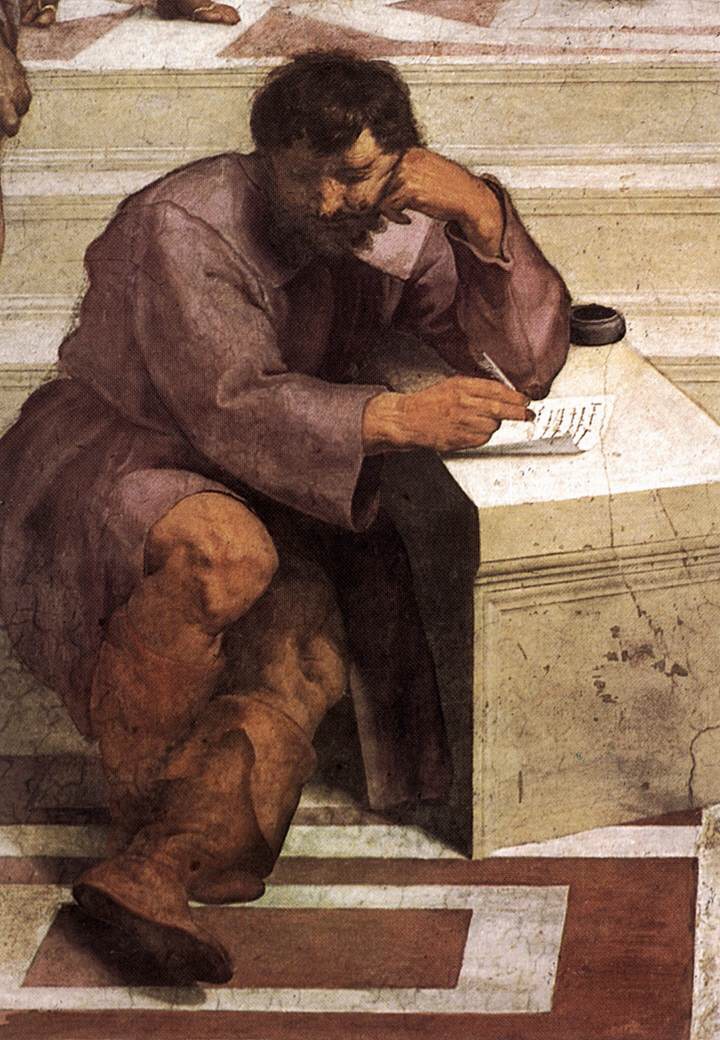
The School of Athens (detail) by Raphael, 1509

The School of Athens (detail) by Raphael, 1509

1. Teachers. My first question is, of course, will we have a job in the future? As teachers, and other professionals of the education business – publishers, school owners and booksellers – I anticipate the answer will be yes (fortunately), but our jobs will change a lot. More and more the ball will be on our clients’ court (students and parents) and, as a consequence, we will have to adapt and try to reach them directly and on their own terms if we want to survive as professionals. They will have a strong say on everything regarding education: the kind of teacher they prefer, the methodology, the learning materials they will use, and how they wish to purchase them.

2. Methodology. What will be the most popular and preferred way of learning? We have always known learners have different leaning styles and are stronger and weaker at different forms of intelligence. One solution fits all will not do. Therefore, I suspect, we will see a lot of blended learning, with great variation on the percentage of online learning versus classroom lessons. Also, how much of this online learning will be self-learning or involve a tutor or teacher helping them out outside the classroom? In what situations will inductive/deductive approaches work best? The importance of learning pace is also another point to be considered: will these students require more individual lessons or profit more from a group learning environment? How much of the class will need to be flipped, when students deal with the theoretical points at home on their own and then come to class to solve practical problems, discuss doubts or simply apply what they learned in a more controlled environment.

 3. Learning Materials. I’m pretty sure print materials are on the way out, as ebooks can offer all the advantages of print ones, and a lot more. If we already prefer to read novels on the Kindle, what to say of the possibilities inbuilt in a multimedia biology or history educational kit, which will allow them to watch a living cell divide itself or a dramatized episode taken place during the Renaissance played out as a video clip at the click of a mouse. Gaming, in addition, will make learning a lot more active and interesting, stimulating parts of the brain a lecture could never achieve to do. However, there is plenty of room for variation within online learning. We need to consider, for example, the best length of video clips to make retention more effective; should each 5-min footage be stopped and followed by a short quiz? What works best: animations or reals actors? Could a simple replication online of an old-fashioned blackboard with a teacher writing on it and explaining the teaching point work? The latter is exactly what Khan Academy does: except that the teacher is exceptionally good and the classes work like magic! Have you ever had trouble with algebra or trig? Try the modules on Khan and you will enjoy the beauty and magic of concepts that seemed arid and boring when you were in high school.

4. Schools/Colleges. What kind of changes will brick-and-mortar schools have to go through to compete with online learning? Blending is the first thing that comes to mind. But if teachers won’t be lecturing and classes are really going to be flipped, what other kinds of special services could schools and colleges provide to attract and retain clients? It’s really exciting to think about this. The moment we understand better how our brains absorb and/or create knowledge, we may need to hire psychologists, speech therapists and neurologists as part of our regular staff to help our learners out and differentiate our schools from the competition.

5. Metrics. Adaptive learning. How are we going to measure and adapt our teaching to the specific needs of students? What international scales, tests and certifications can be created to align consistently the different approaches across different institutions and regions?

These are all very big questions and require a lot of studying and research before we can come up with the right answers. Besides, the process is really dynamic and won’t stop. It will continue evolving and throwing new lights on education and the learning process. These are really exciting times we live in if we are in the field of education.

My recommendation is start reading up and updating yourself as much as you can on what is going on in the field and start experimenting with new forms of teaching, writing, reading, producing and selling learning materials right now. We don’t want you to have to struggle to catch up.The future of education has already started.

I guess this is all for today. Don’t forget to share your views and make your comments about those topics as you leave this page. We’ll be delighted to read them.

Note: you might want to check out our new book TEACHING ENGLISH WITH ART: MATISSE   available  from AMAZON.COM as an ebook.  Click here for more info: 

http://wp.me/p4gEKJ-1kP

Au revoir

Jorge Sette.


Life, Disappointments and Brazilian Football


I’ve just finished reading a very interesting book which tries to investigate all the emotional investment Brazilians put in football and how the game seems to shape our culture and concept of nation (Futebol Nation: A Footballing History of Brazil, by David Goldblatt). The writer chose to leave Futebol written in Portuguese for obvious reasons.

It’s very well written and helps us understand not only how the game affects Brazilians but also discusses the history of the country in the light of the popular game during the more than 100 years since football was brought to São Paulo by Charles Miller at the end of the 19th century.

Futebol Nation: A Footballing History of Brazil, by David Goldblatt

Futebol Nation: A Footballing History of Brazil, by David Goldblatt


Although the English writer could have used a little more sympathy in his analysis of my country and its people, we can’t deny the writing is crisp and precise, despite the lack of warmth. He is visibly not a lover or even an admirer of Brazil, unlike other foreign writers (such as Joseph A. Page, who wrote the fantastic The Brazilians), who, despite reporting on our culture and customs from a distant and objective perspective, showed a lot of understanding and warmth towards our people.

I finished reading the book right before the historic loss of the Brazilian team against Germany last Tuesday, with an astounding result of 7-1, in the semi-finals of the World Cup of 2014, which embarrassed even the polite German players, who sounded uncomfortable explaining their devastating victory in front of the TV cameras.

Despite the catastrophic result, it felt to me nothing like the 3 goals the iconic Italian player Paolo Rossi struck against us in 1982. At that time, I was so desolate I could hardly concentrate on studying for my final exams, which would take place a few days afterwards. This was my lowest point in terms of how I felt about being beaten in football, or even in life for that matter. Just like me, the whole country mourned so deeply you would suspect someone in their families had died. It made me stronger.

What strikes me as weird is the total irrationality of these feelings of loss and even despair most of us still share whenever the Brazilian National Team lose an important match in a World Cup. We, torcedores, have no responsibility whatsoever for the outcome. We did not take part in any decisions; we did not practice or train; most of us never had any personal contact with the players in the field. All we did was invest all the intensity of our emotion and good will in the event, rooting for the team as if they were our sons, brothers or fathers. We did our part, and very well too. And all for free. Worse: some of us even spent little fortunes on all the munitions of war – such as game tickets, horns, T-shirts, confetti, hats and paper streams to celebrate. What else is expected from us? Why do we feel such emptiness, humiliation and guilt?

In the aftermath of every one of these disasters, some of us feel like it’s not possible to carry on living the way we did before. Some young people – obviously the more emotionally unstable ones – even try to hurt or kill themselves.

To make matters worse, it’s not always common to hear comforting words from the players and coach – the only ones responsible for the loss after all. They usually respond defensively and smugly to these mistakes. Yesterday, however, I was pleasantly surprised and moved to hear the player David Luiz express in tears that all he wanted from the Cup was to make his people happy. That sounded really generous and very genuine. Thanks!

Brazilians need to learn not to get so invested and involved in something they have no direct responsibility for. The outcomes of a football match are totally out of the hands of the audience, so why care so much? We need to learn to watch it more like a show. A very exciting one, I should concede, but nothing more than that.

I also felt deeply embarrassed when Britney Spears showed up overweight and disoriented, singing an dancing in the MTV awards ceremony of 2007, during a bad spell in her career. Similarly, James Franco, an actor who I deeply admire for his performances, talent and strong political positions, did not escape from making a fool of himself in front of an audience of millions as one of the hosts in the ACADEMY AWARDS a couple of years ago. Brazilians need to learn to watch football matches with the same kind of detachment and coldness, appreciating the game for its art and deployment of physical skills.

Brazil should not be a synonym for football. We are not Felipão, Julio César, Fred or even the sympathetic David Luiz. They do not represent us. They are artists and athletes who should be putting on better and more professional performances out of respect for their public, given the astronomic salaries they receive to entertain us.

Forget about the World Cup, get on with your life and, if possible, turn the spotlight onto you. Shine on.

Au revoir

Jorge Sette.