A Brief History of Caravaggio


Michelangelo Merise was born in Milan in 1571 and grew up in a town nearby called Caravaggio, hence his artistic name.

He grew up in times of severe religiosity, brought about by the Counter-Reformation, whose objective was to stop the advance of Protestantism, having Catholics return to a more austere and simpler form of Christianity, based on the cult of Jesus, Mary, the saints and martyrs of earlier times. They tried to accomplish these objectives through repression (the Inquisition) and propaganda (buildings and works of art). The austere values of the Counter-Reformation deeply impregnated and influenced Caravaggio’s paintings.

Caravaggio

Caravaggio


After a couple of years as an apprentice in Milan, Caravaggio moved to Rome in his early 20s, where, alone, hungry and penniless, he had to compete with a great number of other artists who flocked to what was considered the center of the world to make it as a famous painter. His career really took off when he fell under the protection of a very well-connected patron, Cardinal del Monte, who changed his life.

It didn’t take long for Caravaggio to acquire fame. Boosted by his patron’s connections, his network grew steadily. Endowed with a very original and unique artistic style, he was soon considered the best painter in Italy. He became famous mainly for his dramatic use of light and shadows, in a style known as tenebrism (chiaroscuro), in which he painted biblical, mythological and everyday scenes in a very naturalistic way. The mission of a painter, according to Caravaggio, was to represent real life with all its flaws, ugliness, and occasional beauty.

Conversion of Saint Paul on the Road to Damascus, 1601.

Conversion of Saint Paul on the Road to Damascus, 1601.


Caravaggio, however, had a very difficult personality. Short-tempered and with a violent streak, he was wild. Roaming the mean streets of Rome after nightfall, he would very often get into fights and brawls. He frequented taverns and brothels, always carrying his sword, which was illegal, and he did not hesitate to use it whenever provoked. Those were hard times and he was the object of much jealousy and envy.

Extremely volatile and abrasive, Caravaggio was eventually involved in murder. He got into a fight over a tennis match and ended up killing his opponent. This probably makes him the only great artist ever to commit murder. Banished from Rome, he fled to Naples, where he started a new life and was soon given commissions by important people to paint again.

From there, he moved to Malta, hoping to become one of the famous Knights of Malta, a combination of military and religious order which was formed to defend Christianity against its enemies. Difficult as it was for most people to enter the order, his powerful connections were at work again here and he managed to be accepted. This was meant to be the first step to get him a papal pardon, which would allow him to return to Rome.
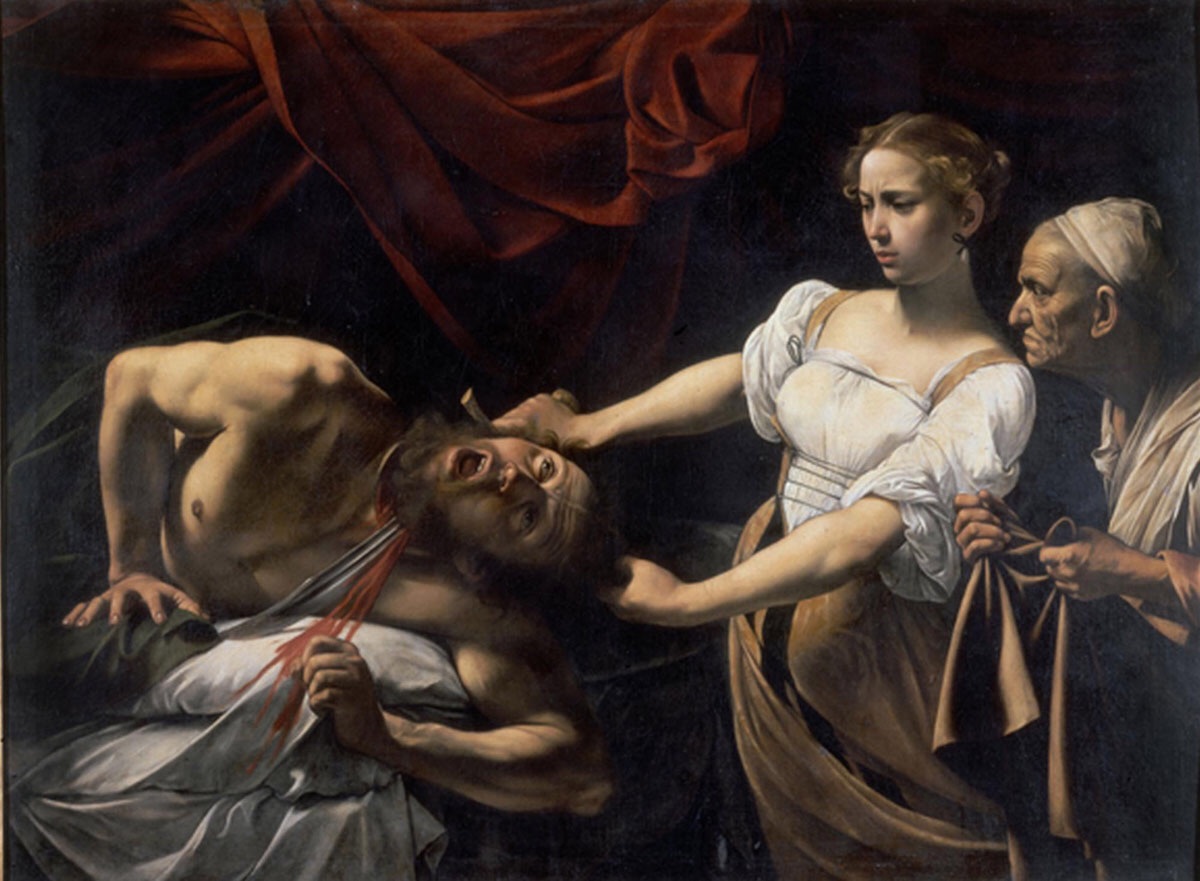
Judith beheading Holofernes, 1598/99

Judith beheading Holofernes, 1598/99

However, the circumstances and his harsh personality again hindered his plans. He got in trouble in Malta, and from then on, lived in the run for over 2 years, moving constantly to places such as Syracuse and Palermo in Sicily, and again back to Naples, where more trouble awaited. Finally he seems to have been stricken by a fever and died alone on a beach in Porto Ercole, supposedly on his way back to Rome. His body was never found.

If you are interested in Caravaggio, please check out our eBook series TEACHING ENGLISH WITH ART: http://wp.me/p4gEKJ-1lS

Check out the video on Caravaggio’s eBook below:

Au revoir

Jorge Sette


A Brief History of Claude Monet


The quintessential Impressionist, Claude Monet was born in Paris in 1840 but grew up on a beach town in Normandy, Le Havre. His father was a grocer and his mother was a singer.

From an early age he was bored with regular school and spent more time drawing sketches on the blue pages on his notebooks than dedicating himself to his lessons. These sketches were caricatures of teachers and famous people, and he was able to sell them easily for a fair price.

Claude Monet

Claude Monet

In 1858, Monet met the seascape painter Eugène Boudin, who would have a huge influence on Monet’s style of painting. Monet began to appreciate nature and wish to paint the effects of light and shadows on water, trees, and flowers. He learned that the ideal way of painting was in the “open air”.

He decided to move to Paris and join the Académie Suisse in 1859. The atmosphere of the Académie was very relaxed, the hours were flexible, and the painters were free to develop their own experiments. Later, Monet joined the studio of Charles Gleyre, where he made friends with the artists Bazille, Renoir and Sisley.

The most important achievement for an artist in those days was to have his paintings accepted and shown at the famous Salón, an official annual exhibition in Paris, sponsored by the government. Despite the fact that Monet had some works accepted there, he soon realized that the kind of painting he was interested in would never be popular in that traditional environment.

The paintings in the Salón were usually idealized works, representing historical or mythological subjects. They were usually perfectly finished with extra coats of paint added to them. Monet, however, had realized very early on that what he enjoyed painting was the real world: landscapes, seascapes and contemporary Paris, applying vibrant colors, representing the way light was reflected on trees, grass, water, flowers and regular people. He was one of the first painters to paint outdoors from the start to the end of a painting. He thought it was essential to capture real light and the way it changed along the day and in different seasons of the year.

In 1874, his group of friends, who also had difficulty having their artworks accepted by the Salón, decided to have an exhibition dedicated to their own works. Of course, it was hard to compete with the Salón, and their exhibition only attracted a fraction of the public who would go to the traditional event, but that was a start, anyway. Their alternative exhibition was repeated every year for the next eight years.

In 1874 exhibition, Monet presented a painting called Impression: Sunrise (see image below). All we saw in it was a solitary boat on the sea in Le Havre with a red sunset reflecting on the water, painted in fast, diffused brushstrokes. An art critic, Louis Leroy, from the magazine Charivari, mocking the title and the style of the picture, wrote that the artists that painted like Monet were mere impressionists. His paintings looked more like sketches rather than finished works of art. Despite the derogatory use of the word, Monet and his friends boldly appropriated the name and started to use it officially to define their revolutionary new style. Impressionism had been born.

Impression, Sunrise, 1876.

Impression, Sunrise, 1876.

Claude Monet had financial problems for most of the first part of his life, but he started to make real money after he turned forty. By then, Impressionism had already become a recognized and important artistic style, admired and sought after by many art dealers.

He married twice. He had two sons by his first wife Camille, and 6 stepchildren from his second wife, Alice. He spent forty years living in a beautiful house with his whole family, painting views from his wonderful garden and artificial pond, carefully put together by himself with the help of 6 gardeners. This house was in Giverny and can still be visited by tourists today.

When he moved to Giverny in 1883, Monet started to paint what is usually known as the series paintings: he would paint the same subject on many canvas at a time, working on each one according to the right time of the day, giving continuation to each of them on the following day. So, as the light changed, he moved to the next painting matching the right time of the day, in a sequence. He started with haystacks, and then moved on to poplar trees, the Rouen Cathedral and, finally, the famous water lilies. He has more than 200 paintings on lilies, including the huge curved panels kept at the Musée de l’Orangerie, near the Louvre.

Blue Water Lilies: 1916-1919

Blue Water Lilies: 1916-1919

It is important to say that, although Monet was the official founder of Impressionism, he had been strongly influenced by the works of Manet and Courbet, who came before him, and, at a later stage, by the works of Turner and Constable, which he was able to get to know when he lived in London with his family, during the Franco-Prussian war. The group of Impressionists consisted of many artists, such as Renoir, Bazille, Sisley, Degas, Cézanne and others, who strengthened the movement with their powerful contributions. Cézanne was the one who took the movement forward, showing the way to the future, heavily influencing iconic artists such as Matisse and Picasso.

A chain smoker, Monet died of lung cancer in 1926, having worked hard on his paintings and his garden to the very end. Claude Monet is one of most famous and loved artists in history, and his paintings sell for millions of dollars today.

If you are interested in Monet, please check out our eBook series TEACHING ENGLISH WITH ART: http://wp.me/p4gEKJ-1lS

Check out the video on Monet’s eBook below:

Au revoir

Jorge Sette.


Monet’s Fun Quiz: How much do You Know about the Artist?


Take que quiz and find out how much you know about Claude Monet:


Poppies at Argenteuil. 1873

Poppies at Argenteuil. 1873


1.  Where was he born? a. Le Havre, b. Naples, c. Paris


2. What was he like? a. Quick-tempered, b. Calm and peaceful, c. Cold and calculating


3. What kind of painting style is he famous for? a. Romantic, b. Impressionist, c. Baroque


4. What was the most original trait of his paintings? a. Bright colors and open-air painting; b. Idealization of reality and the use of myths c. Emulation of the classical models


5. How did he die? a. Of lung cancer, b. Killed in a battle, c. Of old age


6. Was he famous while he was alive? a. Not at all, b. Pretty much c. In the second half of his life


7. Was he ever married? a. Twice, b. Never c. Once


8. What didn’t he paint? a. Landscapes, b. Boats and water, c. Mythology


9. What’s the historical context he lived in? a. The Counter-Reformation, b. The Second Industrial Revolution, c. The Renaissance


10. Which one is not a Monet painting: a. Puppies in Argenteuil b. Blue Nude IV, c. Saint Lazare Station


Caravaggio's quiz


Claude Monet

Claude Monet


You may wish to take a look at our video clip: TEACHING ENGLISH WITH ART: MONET (the eBook)


For further info on the titles of the series TEACHING ENGLISH WITH ART, click here:

http://wp.me/p4gEKJ-1lS


Teaching English with Art

Teaching English with Art

Au revoir

Jorge Sette


Teaching English with Art: Monet


Teaching English with Art! This eBook is a wonderful supplement to any coursebook or extra materials your students may already be using in the English class. It contains 30 speaking and writing activities for classroom use, based on some of the most striking works by French artist CLAUDE MONET, the founder of Impressionismo. The objective of the eBook is to expose the students to high art while teaching English, fulfilling therefore one of the tenets of effective language acquisition: providing a realistic context for the language to be learned and practiced as a means to an end. Your students will love to exercise their English discussing the works of Monet. This is a proven way to make language acquisition fun and effective by creating in the classroom an atmosphere of interest and motivation. Each activity is clearly correlated to the COMMON EUROPEAN FRAMEWORK OF REFERENCE (CEFR), and the level is stated next to it.

CLICK ON THE IMAGE BELOW TO DOWNLOAD THE EBOOK.


Teaching English with Art: Monet.

Click on the image to download the eBook.

Take a moment to watch the video clip of TEACHING ENGLISH WITH ART: MONET

Au revoir

Jorge Sette


How to work with the eBooks of the series TEACHING ENGLISH WITH ART


Teaching English with art has many advantages: it provides an exciting context; it exposes the students to beautiful and powerful images, making the lesson more memorable; it can easily be linked to other subjects in the school curriculum: history, geography, science, philosophy etc; and, as the response of human beings to different artworks is always unique, teachers can tap into that by personalizing speaking and writing activities. Personalization and freer practice are the most important stages in the language acquisition process.

Our eBooks bring photos of paintings of famous artists such as Matisse, Picasso, Caravaggio, Monet, Norman Rockwell,  Vincent van Gogh and Winslow Homer. Based on these paintings, each book brings a series of vocabulary, speaking and writing activities, composing a set of 30 items altogether, each divided in a number of exercises. The students are encouraged to work on both topic-based and task-based types of speaking activities, and explore the steps of process writing. Teachers are free to decide how much time their students should spend on each writing activity. Notice that, while the speaking activities should take place in class, some of the steps of the process writing activities, such as drafting and publishing, can be assigned as homework. For further information on these approaches, please refer to the following articles previously posted on the blog LINGUAGEM:  Topic-Based versus Task-Based Speaking Activities (http://wp.me/p4gEKJ-1nJ) and Writing: Focus on the Process not on the Product (http://wp.me/p4gEKJ-1ot)

Click on the picture above for further info

Click on the picture above for further info

The activities in each book cater for different linguistic levels, ranging from beginner (A1) to  advanced (C2). They are correlated to the COMMON EUROPEAN FRAMEWORK OF REFERENCE, which makes it easy for the teacher to match the eBook exercises to whatever other teaching materials they are already using, providing, therefore, effective and interesting supplementary work on productive skills. These extra activities can be used as a warm-up; whenever the teacher feels the class needs a boost in their motivation during the lesson, through an energizing task; as a filler for a lesson which finished earlier; or as complement or extension to topics already covered in the main coursebook.

Our materials are not meant for self-study. It takes a teacher to monitor and lead the students through the activities, but the eBooks can be used both in traditional classrooms or on online courses. Ideally both teachers and students should have their own practice books – downloaded to the Kindle app on their desktops,  laptops, tablets or smartphones. Whenever the teacher wishes to provide heads-up exercises or have the students focus their attention more effectively, they can project the pages of the eBooks onto a blank wall, and ask the students to switch off their electronic devices.

Most of the speaking activities can be done in pairs or groups. Alternatively, the whole class can be involved. We suggest the teacher give the students some preparation time before they are ready to speak in front of the class. Another important technique would be to have the student repeat the same story, role plays or any other speaking activity with more than one partner, in sequence. He will invariably perform better the second or third time around.

As for the writing activities, we advocate the use of process writing techniques. The student should work on drafts that progressively get more sophisticated and accurate until they reach the final product. Students should be trained to self-correct or peer-correct these drafts. Teachers should establish how many drafts they expect for each activity. The final draft can then be corrected by the teacher before being displayed to the class in some form. Please remember that it’s during the drafting phase that students learn how to write. The final product is only a consequence. The longer they spend on the drafting phase, the better their writing is going to get.

In addition to the exercises, the eBooks bring short biographies of each of the artists featured, the historical context he lived in and the main characteristics of the artistic movement he participated in. The teacher should give the students a brief overview of the artist’s biography, his times, where he lived, and his style. Teachers will not need to go beyond what is written in the eBook, although there is a wealth of information freely available on the Internet if teachers or students wish a more in-depth introduction or to know more about the artist.

Some of the eBooks also contain short texts referring to specific artworks of that particular artist, either because they are prominent in his oeuvre or because they are based on historical or mythological events that, if explained in a more comprehensive way, will enhance the student’s understanding of the painting and help them with their English production.

We are certain these eBooks will prove invaluable in making your lessons stand out and help your students develop their English. For further info on the series TEACHING ENGLISH WITH ART, please click here  http://wp.me/p4gEKJ-1lS and purchase the eBook about your favorite artist right now.

Check out this fun video clip on our CARAVAGGIO eBook:

Au revoir

Jorge Sette

Blog Linguagem: 1st Anniversary. Jan 2015: 100% Growth!


We broke all our records in Jan 2015 with a 100% growth.  Join us now: http://www.jorgesette.com

LINGUAGEM, MARKETING, SALES TRAINING, CULTURE, ART

100% GROWTH

100% GROWTH


Our main customers. Where do they come from?

Our main customers. Where do they come from?


Click on the link below to check out our latest stats in PDF format.

Blog LINGUAGEM- First Anniversary


Au revoir


Jorge Sette.

Caravaggio Fun Quiz: how much do you know about the artist?


How much do you know about Caravaggio, the painter? Take the quiz and find out:


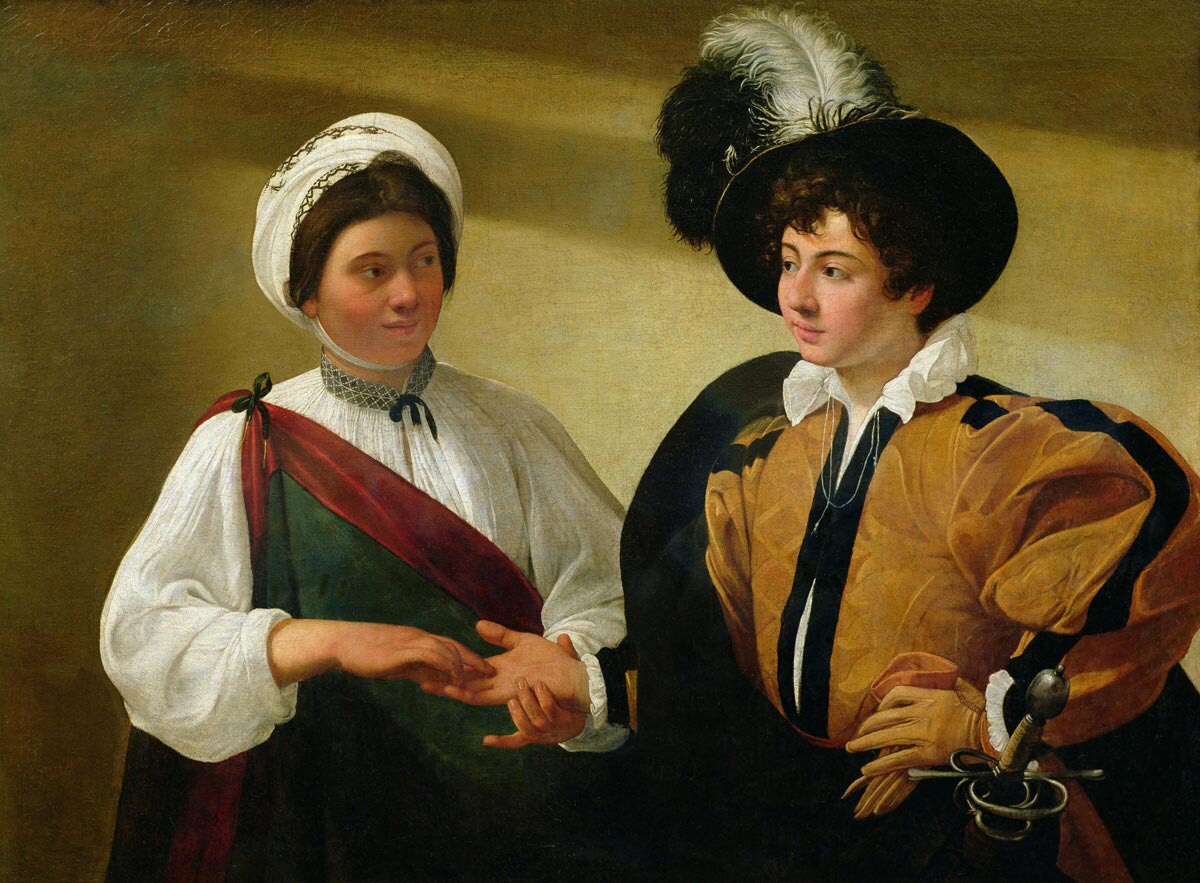
Caravaggio's The Fortune Teller

Caravaggio’s The Fortune Teller


  1. Where was he born? a. Rome, b. Naples, c. Milan


  1. What was he like? a. Volatile and abrasive, b. Calm and peaceful, c. Cold and calculating


  1. What kind of painting style is he famous for? a. Romantic, b. Baroque, c. Impressionist


  1. What was the most original trait of his paintings? a. Tenebrism (chiaroscuro), b. Idealization of reality, c. Emulation of the classical models


  1. How did he die? a. Not clear, b. Hanged in Rome, c. Of old age


  1. Was he famous while he was alive? a. Not at all, b. Only after he turned 70, c. Pretty much


  1. Was he ever married? a. Never, b. Twice,  c. Once, but he became a widower soon


  1. Did he have powerful patrons? a. No,   b. Only near his death,  c. Yes, especially Cardinal del Mondo


  1. What’s the historical context he lived in?  a. The Industrial Revolution, b. The Counter-Reformation,   c. The Renaissance


  1. Which one is not a Caravaggio painting: a. The Death of the Virgin, b. Las Meninas,  c. Young Sick Bacchus


Caravaggio's quiz. Answer key.

Answer key


Note: the quiz above is from the ebook: TEACHING ENGLISH WITH ART: CARAVAGGIO. For further info on the series please CLICK HERE:  http://wp.me/p4gEKJ-1lS

Check out the video:

Au revoir

Jorge Sette

Caravaggio, Oscar Wilde, Salome…and the head of the Baptist!


One of the most famous versions of the myth of Salome is the play written by Oscar Wilde, originally in French, in 1891. In this version, Salome is the daughter of Herodias, wife of Herod Antipas, the tetrarch of Galilee and Peraea.

The prophet John the Baptist has been imprisoned by Herod for criticizing his marriage to Herodias, who had previously been Herod’s brother’s wife. John the Baptist claims the consortium is incestuous.

In Wilde’s play, the action takes place during a party thrown by Herod probably in celebration of his own birthday.

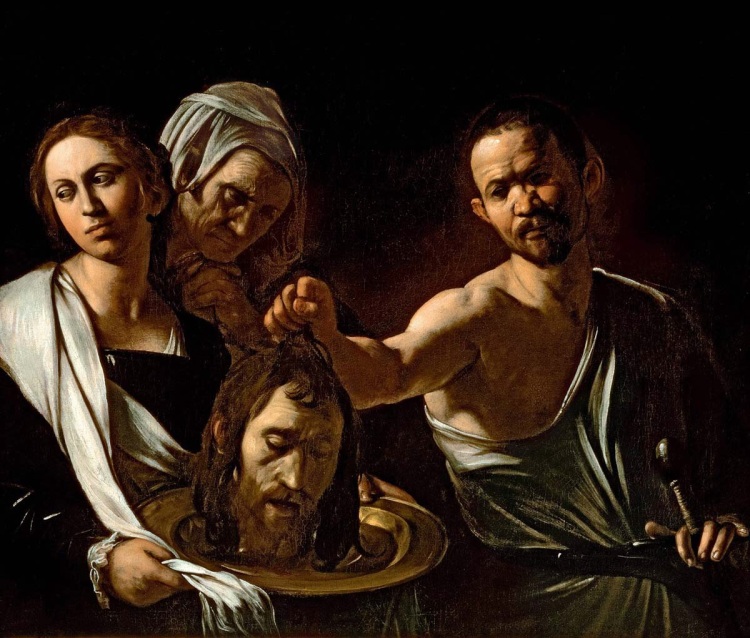
Caravaggio's Salome with the Head of John the Baptist, 1607.

Caravaggio’s Salome and the Head of John the Baptist, 1607

During the party, Salome tries to seduce the prisoner John the Baptist but does not succeed in her intent. A number of signs indicate that tragedy looms ahead: the moon looks strange and ominous; a soldier/servant has just committed suicide; Herod, coming out of the party, slips in a pool of the blood shed by the victim, and hears a sound like the one made by the flapping of giant wings…These are all bad omens. What is going to happen?

Soon afterwards, Herod, drunk on wine, and somewhat infatuated by his stepdaughter Salome, begs her to dance for him. Herodias, her mother, does not think this is appropriate and tries to forbid her, but Salome acquiesces when Herod promises she can have anything she wishes in return.

Salome then dances the famous “dance of the seven veils”, which mesmerizes Herod. Time has come now for her to ask for her reward: she wants it to come on a silver platter. Herod laughs: “sure, she can have it on a silver platter…but what is it that she wants?” Salome demands: “The head of the Baptist”, catching Herod completely off guard. He is horrified by the request.

Her demand is fully appreciated by Herodias, who hates the prophet. She insists that her daughter should get what she wants. Herod tries to make Salome change her mind by offering her lots of alternative gifts, such as jewels and beautiful birds, but she is adamant: all she wants is the prophet’s head on a silver platter.

Her wish is granted: John the Baptist is decapitated. Caravaggio painted in gory detail a gruesome scene based on the myth, almost 300 years before the play was written.

Note: the text above is from the ebook: TEACHING ENGLISH WITH ART: CARAVAGGIO. For further info on the series please CLICK HERE:  http://wp.me/p4gEKJ-1lS

Check out the video:

Au revoir

Jorge Sette

Caravaggio and the Myth of Medusa


Medusa was a beautiful priestess serving at the temple of Athena. Her beauty attracted a number of suitors, but she had to turn them down, as, according to her vows, she was supposed to remain a virgin.

However, Poseidon, God of the Sea, fell in love with Medusa and appeared to her in the shape of a bird. Being a god, it was easy for him to have his way with the poor maid and sleep with her.

As customary in mythological tales, the victim takes the blame for this sort of incident, and Athena, in a fury, turned Medusa into a horrific monster with the skin of a corpse and poisonous snakes for hair. Besides, anyone who dared to look her in the eyes would immediately turn to stone.

Caravaggio's Medusa

Caravaggio’s Medusa

Perseus, son of Jupiter with the mortal Danae, grew up on the Island of Seriphus. For many years he longed to receive a visit from his father, but it did not happen. His mother would tell him to be patient, as time did not work in the same way for gods.

Danae attracted the attention of Polydectes, king of the island, who tried to force her to marry him. She refused, but the King imposed one condition not to marry her: Perseus must bring him the head of Medusa as a gift.

Perseus, although unprepared and young, did not hesitate to accept the challenge. He knew he had first to find the Grey Sisters, horrible old hags who lived in the forest and shared one eye between them. They kept taking turns at using the eye ball. In a moment of distraction, while one of them was passing the eye to another, Perseus snatched it and told them that he would keep the eye unless they told him where the nymphs lived. The nymphs would tell him where to find Medusa and would give him the necessary weapons to fight her. The old hags acquiesced.

Perseus set out to meet the nymphs, who gave him three weapons: the sword of Jupiter, his father; the shield of Athena, the Goddess of Wisdom; and the winged sandals of Hermes, the Messenger of the Olympic Gods. He was also told not to look Medusa in the eye or he’d be turned to stone.

As he approached the lair of the monster, Perseus noticed a number of statues of men scattered in the garden. These were probably men who had tried to get to Medusa before him and were dully petrified. All was rock and desolation around the cave of the monster.

Perseus turned his back to the entrance and walked backwards towards the inner chambers of the cave, looking into the reflection on his polished shield for orientation. This way he would not have to look Medusa in the eyes directly. As he located her, he turned around with his eyes shut and struck her neck with the powerful sword of Jupiter, decapitating the creature.

Using Hermes’ sandals, he flew back to the Island of Seriphus, arriving right at the moment when the wedding between his mother and King Polydectes was about to take place. He shouted: Here’s your gift! And held the head of Medusa in front of the king. The King looked into the eyes of the dead monster and, as a result, was turned immediately to stone. And so Danae was free to go and live with her son again.

Caravaggio’s work, inspired by the myth of Medusa, was painted on an actual shield. It was not meant to be hung, but passed from hand to hand when viewed.

Note: the text above is from the ebook: TEACHING ENGLISH WITH ART: CARAVAGGIO. For further info on the series please CLICK HERE:  http://wp.me/p4gEKJ-1lS

Check out the video:

Au revoir

Jorge Sette


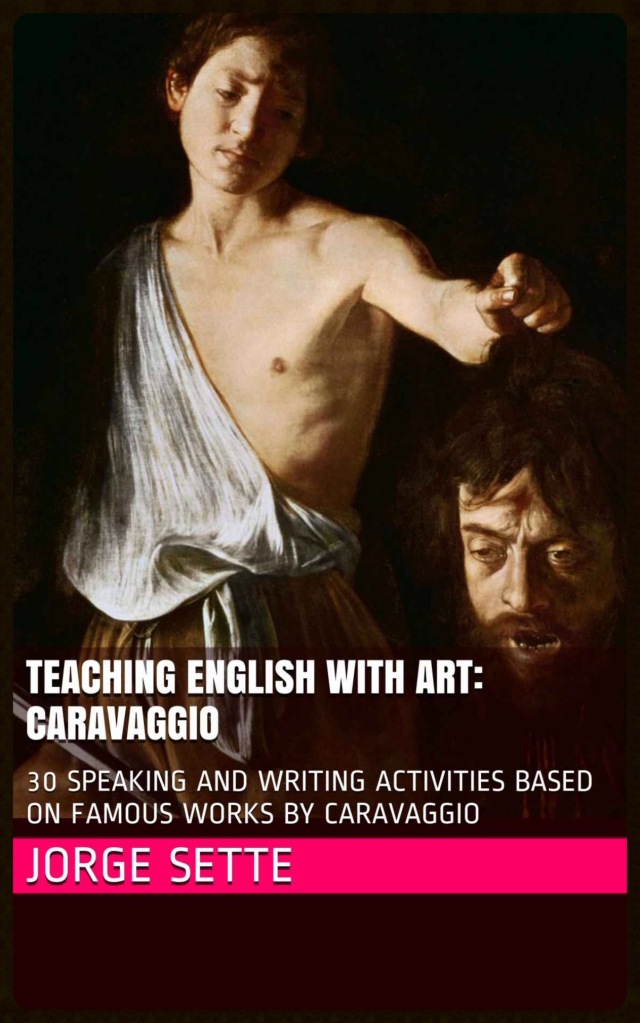
Teaching English with Art: Caravaggio


Click on the image below to download the eBook from AMAZON.COM

You will never have bored students again.

Click on the image to download the eBook

Click on the image to download the eBook

Watch the promo video clip:

http://youtu.be/Evuvs5AouQY