Five Takeaways from the Book TED Talks – The Official TED Guide to Public Speaking


Founded by Richard Saul Wurman and Harry Marks in 1984, the TED conferences originally featured talks focused on Technology, Entertainment, and Design. Under the catchy tagline Ideas Worth Spreading, the range of these talks has since expanded to include academic, scientific and cultural topics.

If you have ever watched any of these talks, you will have noticed that they are not the usual boring PowerPoint-based presentations we get in conferences of all kinds. Storytelling techniques – long a proven method for grasping and keeping listeners’ attention – prevail in most TED talks. Another obvious key to their success in the succinctness; speakers have 18 minutes to tell a compelling narrative.
415cATz+xqL._SX326_BO1,204,203,200_

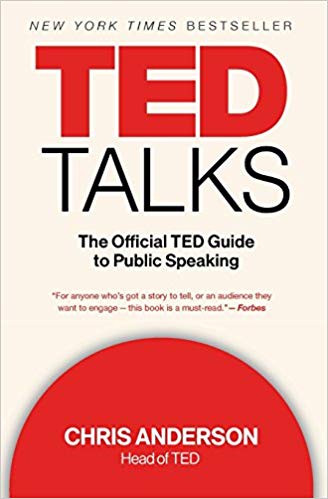
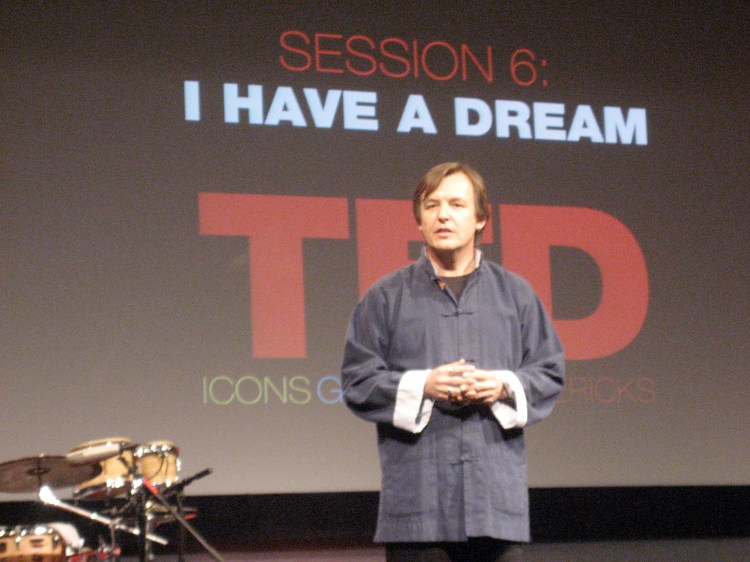
In his engrossing book, TED Talks – The Official TED Guide to Public Speaking, published last year, Chris Anderson, who took over the conferences in the early 2000s, offers the reader a truckload of useful and practical suggestions on how to put together and deliver a memorable presentation. A must-read for everyone who needs to speak in public these days (and who doesn’t?)

To whet your appetite, we have selected five of the most stimulating presentation tips we found in the book. See below.

1.What is the takeaway?

As you organize your talk, decide on what is the point you are trying to make. There must be an overarching theme connecting all the elements of the story. This is called a throughline in movies, plays, and novels. As a planning exercise, make sure you specify a concrete objective in no more than 15 words. What is your goal? What do you want to accomplish? What do you want the audience to do, how do you want them to feel after you leave the stage?
Chris_Anderson_2007-1

2. Get personal

Speakers need to connect to the audience, break the ice and build trust. A talk is much more than mere words. You need to engage the audience on many levels. There are different ways to do that. Making eye contact with the audience, for example, is always effective. Showing some kind of vulnerability, such as admitting that you are nervous, may also work. Using humor at the beginning – through a personal anecdote, presenting funny visuals, or by playing with irony and sarcasm – may do the job. Don’t try to be funny if you are not comfortable with it, though.

3. Visuals

We all know the staggering amount of technology available out there to help public speakers: slides showing graphs, photography, infographics, animations; video, audio, etc. Yet, it may come as a surprise that at least one third of the most viewed TED talks do not make use any of these tools. So maybe you should ask yourself: do I really need to use them? And how much of it is really necessary? Most people are extremely familiar with these so-called innovations by now anyway, so it’s hard to make an impact based only on them. Besides, visuals may distract the audience, taking their attention from you! Then again, great slides may add to the presentation, especially when they do not only repeat and highlight what is being said verbally. Ideally, visuals should reveal (show something that can not be easily described by words); explain (make concepts clearer: a picture is worth a thousand words!); and delight (give the talk aesthetic appeal).

4. To memorize or not to memorize

Although most TED speakers have their presentations scripted out beforehand and memorize them, this approach does not work for everyone. There’s beauty and power in variety. You need to discover your own natural style. Possible options: you can write and memorize your talk; use in-the-moment language to talk about something you are familiar with (it helps to have a mental structure of the points to cover, though); or even read your piece! Whatever makes you more comfortable and confident. However, remember that preparation is essential for any format you choose.
TED_three_letter_logo.svg

5. Traps to avoid

There are some speaking styles TED organizers do not recommend. The sales pitch: trying to sell products or services directly through your talk may damage your reputation as a speaker. The main job of a speaker is to give not to take. So be careful. Find out if this is the kind of talk your audience is expecting. The ramble: to be under-prepared or not to have a set objective is insulting to the audience; the org bore: talks that focus on the greatness of an organization or on how amazing their staff is will probably bore the audience to death – they don’t work there after all. The inspirational performance: despite the fact that great TED talks deeply inspire and move the listeners, this effect cannot be manipulated through tricks and gimmicks. It needs to feel real. So avoid copying the so-called “inspirational” talks, where the speaker is full of self-praise and despicably phony.

For more tips, I strongly recommend you get the book now and make sure your next presentation is a hit.

Au revoir

Jorge Sette
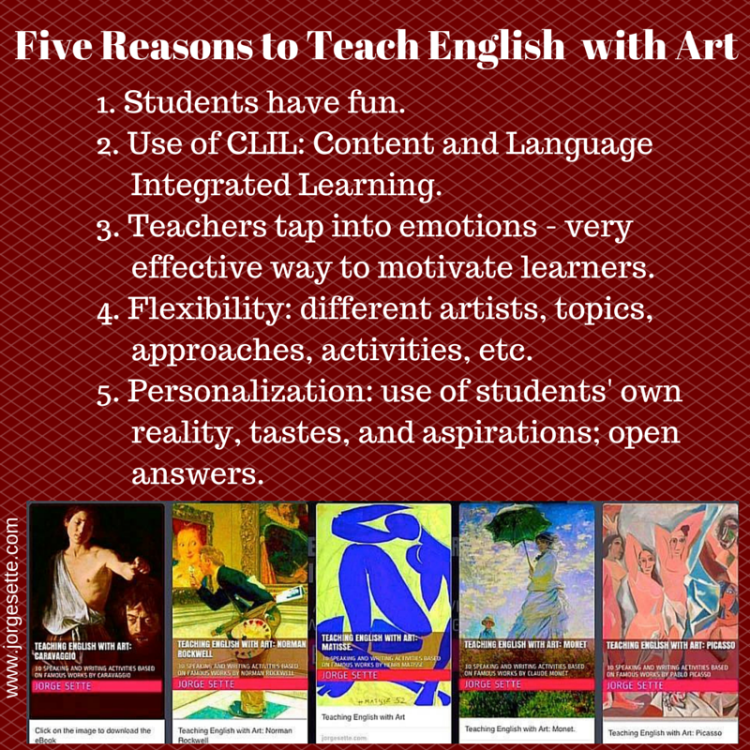
Five Reasons to Teach English Using Art (summary)


To read the full article, click on the image above.

To read the full article, click on the image above.

How beautiful do you need to be in the XXI century?


Do you live in 2015? So you need to start behaving like you do.

Start off  by finding the answer to the question in the title of this post and setting your goals with precision and determination.  Start acting, time is not on your side.  Do you need to look (more) beautiful to keep your job,  to find a new job, for your spouse, for yourself, because of the pressure of  the society to look eternally young and fresh, or maybe do you need a correction for a bodily defect? Take a hard look at yourself in the mirror, go through your thousands of selfies, talk to your therapist and make a decision. Examine every section of your body, it’s not only about faces anymore. Everyone seems to be doing this. You will be feeling isolated and disconnected if you don’t start soon.

Just take a look at the profile  pictures of the list of  your friends on Facebook or dating sites you may use: if you don’t use dating sites or apps,  sign up today, you won’t stand a chance of meeting anybody in the real world anymore.  It won’t take you long  to realize that everyone is scraping off a couple of years from their details, if not decades.  If you are 55 – apparently the end of life to date someone online or get a job –  photoshop yourself and pretend you are 45 or younger.

I watched a program on E!  the other day (“Botched”)  in which,  apparently,  these two renowned plastic surgeons fix botches  or errors made by some of their peers. People, especially  in Los Angeles, the Mecca averyone in our culture seems to be looking up to for the new standards of beauty, fashion, lifestyle and voyerism, will not accept the body they were born with any longer. They treat it  as discardable pieces of clothing to be changed and replaced by a new one every now and then as they wish. Wa have started finding it more and more common to expose as much as we can about our private lives through social media, dating sites and reality shows. Therefore,  we need to fit the bill, make the grade. Look beautiful. In the 90s and before, only giant billboards over Times Square could do that kind of magic, launching careers for the likes of Marky Mark  (Mark Wahlberg, who posed for an explosive Calvin Klein underwear campaign). Now the potential to project yourself internationally and become a celebrity is within everyone’s reach, or at least, we think so.

Mark Wahlberg in CK underwear.

Mark Wahlberg in CK underwear.

I watched the doctors’s show on E! in a state of trance and disbelief, and I’m trying very hard not to sound judgmental and self-righteous here. I  struggled to understand how these people feel, what they suffer, the source of their eternal dissatisfaction  with themselves, which makes them undertake the risk of hundreds of painful surgical procedures to add, cut, move, reposition, enlarge, narrow and change body parts as if they were playing with cartoon characters on a drawing software. Worse: they all looked weird and doll-like in the end, far from beautiful, in the classical sense, but maybe these will be the new standards in the upcoming years. My perspective on beauty may be getting dangerously outdated.

One of the patients on the show had gone through a number of operations to make his face look like Justin Bieber’s, his idol. He looked nothing like the original in the end, but he was happy and kept trying. There were certain things he wanted done – such as shrinking his jaws –  that the doctors would refused to do, though. He said he would consult other doctors instead. A woman  with size DDD cups, who could hardly keep her breasts inside the blouse, was angry because the doctors wouldn’t make them even bigger. Nothing will stop her. If she needs to go to Tijuana to have them enlarged by the local doctors who use ice bars for anesthetics, as told by another patient who was trying to reposition her navel and had this nightmarish experience in Mexico- she will not hesitate. There was also the case of a gay man who will not stop at anything to make himself have Barbie’s or Ken’s looks. At first I thought he meant Ken’s, but then, as the program progressed, I was under the impression he wanted something more radical: an amalgamation of Ken’s and Barbie’s looks in his own body.  He looked totally plastic and robot-like to the naive and unsophisticated eyes of someone like me, who grew up by the beach in Recife, in the northeast of Brazil, where people could not be more natural in the way they looked physically.

Human Ken/Barbie

Human Ken/Barbie

A gay friend showed me a matchmaking app named Grindr, which operates as a virtual shopping catalog, showing parts of the body of strangers – usually toned or heavily worked-out headless torsos of young men –  they may contact and meet at the touch of a button. The people will show up on your device screen if they are geographically near you, which, supposedly, adds to the immediacy of the satisfaction and completely eliminates the concept of delayed  gratification. The guys on the app seem to be all the same: if you don’t look like a porn star (they immediately exchange more explicit photos after the first contact is made, so all the physical info is made known), your chances of having someone continue your attempts at making  conversation are meager. And even if you look like a Greek god, I was told, the real contacts rarely happen, as the parts keep canceling and postponing the actual meetings forever. The fear of the real is palpable and insurmountable.

I don’t mean to be nostalgic about the old ways of flirting and dating. They did not work that well either. And there is no way they can compete with the optimization provided by these new dating apps in some respects.  If you are lucky enough to meet the person you contacted through the app outside the virtual world,  you’ll already be armed with a load of information about him/her (most of it fake or distorted, just like in real life, when people talk about themselves). It saves a lot of time. It’s just the new way of doing things. We will have to get used to it.

People have also always worried about how good they looked. It may be only my impression that things may have gotten a bit out of hand now. I wonder how historians will analyze this period we are living now and how all these changes – which actually started back in the sixties – will reshape the human race and its values and behaviours.

Good luck with your bodily alterations.

Jorge Sette.


Start your blog today: what are you waiting for?


I have some 2000 friends on Facebook.  Of course not all of them are close friends, but also family and business peers. Most of all are in ELT (ENGLISH LANGUAGE TEACHING)  one way or another: as teachers, publishers, writers, distributors or students. Of course, our news feeds are packed with info about methodologies, new materials, suggestions on lessons, and self-congratulatory posts on how great it is to be a teacher. The latter, I must confess, are not among my favorite posts: you didn’t see Steve Jobs talking about how great it was to be a brilliant marketer all the time. He presented us the results of his work in terms of concrete products. Of course, with teaching, not all products are tangible, customers are more likely to talk about the quality of our service. However, if we are teachers, we should be teaching on the Internet: not only languages  – our main job – but other stuff we have fun with, things we like, activities we are good at and we can share with other people.

Sharing your interests and expertise with the world.

Sharing your interests and expertise with the world.

We live in a fascinating age where we can show our work on as many and varied platforms as we care to look for: photos on Instagram; videos on YouTube and Vimeo; pictorial suggestions and ideas on Pinterest; snippets of your expertise on Twitter; blogs on WordPress…. to name just the most common. I’m surprised you guys – the experts in inparting knowledge and sharing strategies in meaningful and structured ways –  are not doing that more often online. Most of you keep posting cat pictures and your latest dinner photo on Facebook. That’s fine: some of the cats are even cute, but you can do so much more.

Everytime I go through my news feed I’m fascinated to find out how my friends know about so many different and interesting things:  pets and how to treat them, unusual recipes, places to go to on vacation, art, suggestions on movies to watch, you name it. Most times, however, they just share a copy of something written by another person they might have come across online and expand  a little bit on that.

Well, do more.

Create a blog on the topic and let us learn from you. I have no idea how to cook, and would love to read a simple cooking blog written by any of my friends and would be glad to share with her the results of my efforts, for example. If, for some reason, you don’t like to write, use pictures, videos, cartoons. The important thing is to come up with a story. Create a thread that can lead us to what you are trying to teach us, the goal you wish us to reach. Make it didactic and systematic, set exercises, answer our questions, help us. Who knows, you may even make money out of it, if it gets great readership.

I myself started a blog (LINGUAGEM: jorgesette.com) a year ago just for fun, discussing not only language, my favorite topic, but other themes I enjoyed (movies, art, books, culture, TV shows,  marketing, sales),  but now the blog is becoming more and more professional, as it’s helping me promote the language eBooks I publish on Amazon.com. As I write in English, I’m easily read all over the world, and it’s really gratifying the sense of pride and accomplishment you get when  I see my humble stuff being read in the US, India, Pakistan, France, etc.  This year (2015) we’ve been getting more than 3000 views per month,  and getting stronger.

So, my recommendation is don’t think about the money first: publish something on the Internet for fun: gather an audience, build a network,  and make new friends. Then, if it works out, turn it into a business.

Don’t waste time: start teaching us today! It’s fun.

On the other hand, for those interested in reading how a professional blog for customers should be written, please refer to my previous article: Should you have a blog as a marketer:

 http://wp.me/p4gEKJ-1bv

Au revoir

Jorge Sette.


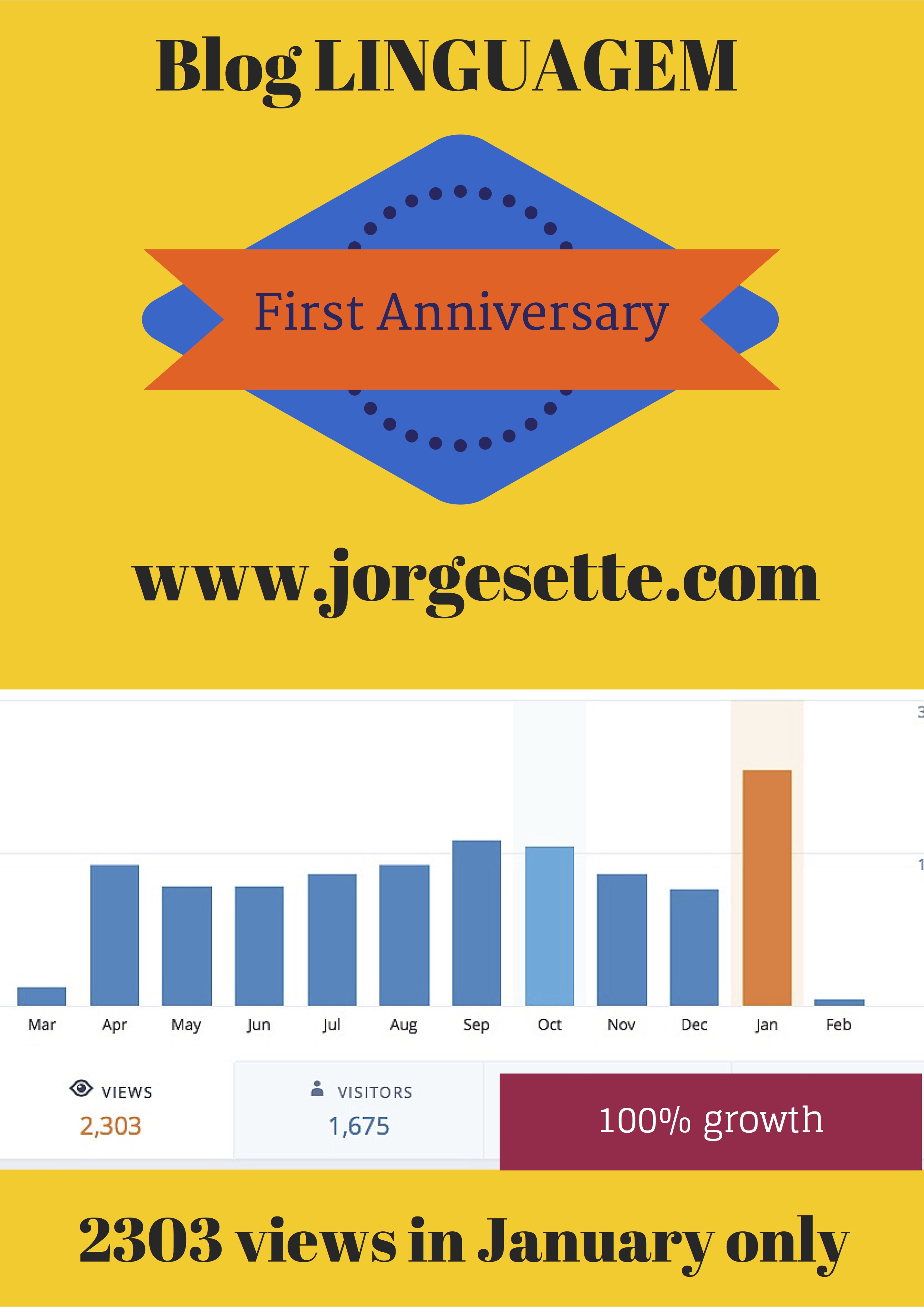
Blog Linguagem: 1st Anniversary. Jan 2015: 100% Growth!


We broke all our records in Jan 2015 with a 100% growth.  Join us now: http://www.jorgesette.com

LINGUAGEM, MARKETING, SALES TRAINING, CULTURE, ART

100% GROWTH

100% GROWTH


Our main customers. Where do they come from?

Our main customers. Where do they come from?


Click on the link below to check out our latest stats in PDF format.

Blog LINGUAGEM- First Anniversary


Au revoir


Jorge Sette.

OUR BLOG “LINGUAGEM” HAS HAD A GREAT FIRST YEAR!


HAPPY NEW YEAR, EVERYONE.

Please find below some official stats sent by wordpress.com on the blog LINGUAGEM. We’ve had a great first year. Thanks for the support and we will back stronger than ever in 2015.

BLOG LINGUAGEM: 2014 official stats

BLOG LINGUAGEM: 2014 official stats


Screen Shot 2014-12-30 at 8.48.34 PM Screen Shot 2014-12-30 at 8.52.35 PM


Au revoir

Jorge Sette.

What’s your social media strategy as a salesperson?


As I have been stating in a number of previous posts in this blog, the barriers between Sales, Marketing and Customer Service need to come down fast, if companies are to become more effective. The upper hand of the relationship between customers and companies has shifted significantly towards the former in today’s market place. Salespeople must focus on the client as an individual and cater for her specific needs at every stage of the buying process. Therefore companies need to adapt and be way more attentive and responsive to be able to move the client along the sales funnel (the steps towards the purchase) and close the deal. Companies need to train their staff to develop sophisticated social media skills if they want to succeed.

Sales, Marketing and Customer Service have to work closer than ever to provide a seamless experience to the client, regardless of the different touch points (email campaign, sales call, the various social media channel communications, print ads, etc) she is exposed to and chooses to use on the path to a purchase.

The old system of departmentalization between Sales, Marketing and Customer Service is becoming obsolete: in the past, sales leads were generated by Marketing, which would qualify them and pass them on to Sales, which, in turn, would hand post-sales issues to Customer Service for support and help. This process does not work so neatly anymore. It has become a lot more complex, not to say messy. Customers are probably exposed to your product through a number of sources and the communication and the responsibility for the process of following up on their requests must be handled together, as a team, by your employees. Software is available to make all the history of this interaction clear to whoever deals with that client.

Selling through social media

Selling through social media

For starters the client is bound to already know a lot about the product even before she first contacts you. She has a number of ways to research and get precise info on what she needs to purchase. The idea is to be fast and prompt in your response, adding to what is already known, whether it be: passing on more specific info on the benefits, clarification on functionality, scheduling a live demonstration, an invitation to a webinar with a specialist, drawing the terms of a contract, the negotiation of a discount, etc.

Let’s focus in this post on how specifically the sales force could use social media more proactively to meet the customer’s needs and move them along the sales funnel towards a successful goal. They can use any or all of the following tools as a supplement to what they already do (such as personal sales calls or phone calls). In many cases, however, you will notice that if they use these online tools properly, parts of the more traditional in person face-to-face sales process might be replaced smoothly by digital communication – which, not rarely, are more likely to yield results.

1. LinkedIn: this is your personal online ID card. Chances are customers will check out your profile immediately after you schedule an appointment to see them. Make sure you live up or surpass their expectations. Choose your profile picture carefully. Only you can decide on the level of formality or informality expected from professionals in your industry. Play by the rules. Fill in as much relevant info about your career as possible, and do not hesitate to ask coworkers, bosses and senior management for recommendations and endorsements. You can always return the favor. Publish only work-related posts on this platform. Avoid jokes and cat photos (you can use other social networks for that, don’t worry). Think twice before you post an update here. Remember that slips may jeopardize your chances of a future job. Nurture and grow your contacts daily. Be courteous and answer communications sent to you as quickly as possible.

2. Facebook: if you are uncomfortable using your personal profile professionally, create a specific professional one (I’ve confronted that dilemma of separating private and public life myself for a couple of years, so I’m totally sympathetic to whoever has the same problem). However, I gave up the on the struggle and unified my profiles. In this day and age, customers expect to deal with genuine human beings, so developing skills to be able to post the right content to the right group of people through a single profile will surely make your life easier and boost your career. If you wish to post photos of your family barbecue, do create a little private group for the only people who would care about this. Besides, as you probably know, you have the option to post to your whole audience of “friends”, to a few chosen people, or to the public in general, by adjusting the platform settings for every post. Just exercise some common sense in your content publishing strategy and you should be OK. This works better than keeping separate profiles. What you can’t do is avoid creating a digital presence for the development of your personal brand on the Internet. Gather as many clients and prospects as your “friends” as possible, and start posting relevant and useful content (not annoying and interrupting ads) on your newsfeed. You will be building what they call “thought leadership”, presenting yourself as an expert in a specific subject, and, naturally, prospects will grow to depend on you when they have a problem that needs the kind of solution you have been discussing or blogging about.

3. Instagram: develop a similar a strategy. Of course, the focus here, however, is on visuals: photos and videos. Publish a balanced mix of personal and work-related content. The personal stuff will make it easy for the customers to relate to you as a person (so the occasional cat pictures are fine, don’t worry), whereas the work-related publications will hopefully help you build a friendly and caring image for your company and for yourself as a professional. You could, for example, post photos of your products and services (a dynamic teacher in action using the latest technology in the classroom, if you sell edtech products, for example). Try not to use fashion models – this is not an ad after all (lose the glitter and fake glamour) – but real life photos of actual happy users of your product instead. Show people you work with. Post pictures of the offices of your company, to make it more relatable to customers. The main thing to keep in mind is you should be providing valuable or fun information, educating your prospects, training your users, not interrupting your audience with a sales pitch. In the meantime, Marketing should be working on building a bank of images, video clips, ebooks, blog posts, white papers and other useful pieces of content to help you pass them on in a more personalized way to your prospects, but there’s nothing wrong in your creating your own content, if you have the skills and the authorization of your boss. Do not rely solely on the Marketing Department’s support for your success, it doesn’t work like that.

4. Twitter: don’t waste time using your Twitter account only for personal interactions. Think of it, as of any other social media channel, as a powerful tool to create an Internet presence and carve a unique personal brand. This may advance your career in unexpected ways. Create or curate as much germane content to your customers as possible. Retweet, for example, your company’s invitations to webinars and events. Indicate and promote useful and complementary websites to the customers. Share relevant information about your industry. Educate the prospects on the benefits of a new product or service. I know you have only 140 characters to use, but you’d be amazed at how much can be accomplished with that. Don’t forget you can use links to more comprehensive information (such as a blog post, a landing page or a how-to video clip), although I wouldn’t recommend you overuse this technique. The recommended balance goes more or less like this: for each 15 new updates, think 10/4/1: 10 posts should be about content from other people you are curating and sharing; 4 posts should direct them to your latest blog post or video clip; 1 post should invite them to a special offer on your company’s landing page. Don’t use this ratio as a straightjacket, though.

The bottom line is nobody has a perfectly safe job in today’s corporate world. Companies will not give you all the support you wish you had to carry out the ideal sales performance everyone expects from you. You need to stand up for yourself and imagine you are an external consultant hired to do the best job you can for a limited period of time. Lay-offs are around the corner. I don’t mean to scare you, but this is the brutal reality of our times. Therefore, you have no choice. Dive into social media, develop a powerful personal brand on the Internet, nourish a healthy and trusting base of clients and feed them all the relevant content you can. The pay off will be the empowering of your personal brand and the resulting sale – when and only when the customers are ready for it. The good news is this method will yield a lot more closings than the more traditional approaches, in which you need to wrestle down the poor customer to the floor and drag her across the room by the hair to force the purchase of the latest edition of your Manual for Reluctant Customers.

For more on the same topic, please refer to my previous post:

https://jorgesette.wordpress.com/2014/05/02/salespeople-need-to-become-marketers/

Please let me know your thoughts about this article. Use the comments section for your reaction.

Au revoir

Jorge Sette

Which novels do you wish you had written yourself?


When you are at the stage of brainstorming for a nonfiction blog post or a piece of creative writing, it’s inevitable to remember a couple of articles, books and novels related to the topic you read at some point and enjoyed. They will be a source of inspiration and influence in your writing, making you somehow even slightly jealous, wishing you had thought of that first. But, of course, you would also have needed the right language to encapsulate it. After all, more important than the plot itself is how you say things.

Take the book Life of Pi by Yann Martel, for example, whose original idea some people claim was stolen from our Brazilian writer Moacyr Scliar. Well, plagiarism is hard to establish, there are a lot of gray areas, but one thing I’m sure of: Martel did not write the same story nor, most definitely, used the same language as Scliar. Jorge Luis Borges, in his marvelous piece Pierre Menard, Autor del Quixote, from the book Ficciones takes this idea even further, asserting that a book written with the exact same words by a different author at a different time would be read in a new way, due to the dissimilar historic contexts, and therefore would not be the same book at all. I agree.

After reading a comment on Facebook by a friend saying that she is full of ideas for blog posts but do not find the time to write them (yes, we all know how teachers are busy!), I made a joke saying that all my good ideas had already been stolen by the likes of Shakespeare, Tolstoy or Philip Roth.

Then I though for a moment, and decided to give serious consideration as to which novels I really wished I had written and why. This is my humble list:

Books I wish I had written

Books I wish I had written

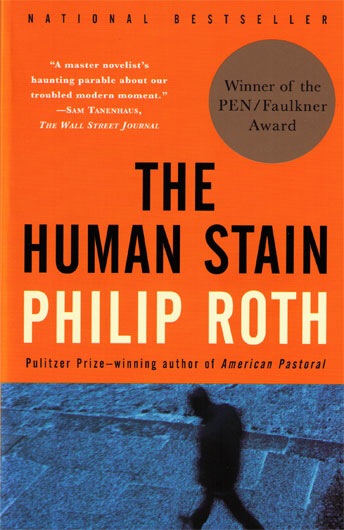
1.The Human Stain, by Philp Roth: it’s hard to discuss this book without giving a bit too much away, so apologies for the spoilers. The story of a light-skinned black boy who grabs the opportunity to pass for a Jew in 1950’s America and later becomes a Classics Professor at a small college is a complex account of the choices you make in life and the responsibilities and consequences that come with them. The need to make concessions and compromise basic values to achieve a bigger goal is the central theme of the book. The deep moral dilemma you face when you take such a radical decision, including the necessity to abandon and cut relations with your family and community to start a new life somewhere else as a completely different person, is evaluated by the author from unusual and unexpected angles in this impressive book. As irony is the hallmark of Roth, the book starts with the most paradoxal of incidents: the professor, noticing that two of the students enlisted in his class never seem to be present, asks the class the question which brings about his doom: “do they exist or are they spooks?” The latter being an old loaded word, a racist epithet for blacks. It turns out that the Professor, never having seen those students before, meant spooks in the most common sense of the word, that is, ghosts, and, after all the pressure and hassle he goes through, without support from any of his colleagues and students – for a number of political reasons – he decides to resign and end his career. I would love to have written this story for its universality: any minority can identify with what Coleman, the Jewish/Black professor, goes through, and can easily put themselves in his shoes. Given the opportunity would you do the same? Would you change your race, color, nationality, sexual orientation or gender? Or would you just give up all of your chances of fully growth and spend the rest of your life as a second class citizen in a society that will only offer you the fulfillment of your whole potential if you are the right color?

The Human Stain

The Human Stain

2. Dom Casmurro, by Machado de Assis: this must be the book I reread most often in my entire life. I know it almost by heart. What attracts me is the way the characters are so well-rounded and fully developed, leaping out of the page as if you could go for a walk and talk to them. This does not mean, however, that you will know them any better. This is the whole point of the story. The dissimulation, the fact that we never know anyone completely. The impossibility of dealing with only one version of the reality. I can’t get enough of the artistry of the author, who, narrating the story in the first person, never lets the reader be sure about what really happened: was the main character’s wife an adulterer? Is the boy she gives birth to his son or his best friend’s? The doubt will corrupt his marriage and ultimately destroy all the love in his life. He becomes empty and isolated, having chosen the version of reality which will cause him the most pain and damage. Don’t we all choose the latter?

Dom Casmurro

Dom Casmurro

3. We need to talk about Kevin, by Lionel Shriver: a professional woman is in love with her work and her husband. She writes and publishes travel guides, having the chance to go places, tour interesting and remote regions, avoiding getting stuck in a housewife’s rut, being independent most of the time. Yet, she can count on a loving husband to comfort and look after her when she comes back home after a long trip: this is a dream life. She has the best of both worlds. Then, what else is it that society claims will make every woman even happier and more complete: to have a baby. From the birth of Kevin, her firstborn, to the dantesque crime scene at the end of the book, We need to talk about Kevin reads like a nightmare. You can’t put it down. A thriller in every sense of the word. But one that goes way beyond the limitations of the genre. Shriver’s ambitions are a lot more encompassing. She discusses the nature of evil. Is it caused by nurture or nature? How is it created? Has Kevin always been the monster she feared he was or was his low self-esteem caused by his mother’s lack of love and care that turned him into a criminal? Was the mother’s resentment for having to give up all the pleasure and independence of her former life, her pre-baby life, toxic enough to corrupt and undo the little creature? The sense of guilt of a mother for not conforming to the patterns of a society that takes motherly love for granted only contributes to the character’s anguish and mental confusion. Of course, the book will show different perspectives of the scenarios we painted, but the conclusion will be up to the reader.

We need to talk about Kevin

We need to talk about Kevin

These are all great themes and I don’t need to tell you how masterfully these concepts and ideas are exploited by those wonderful writers. The angles they illuminate, the perspectives they reveal would hardly have occurred to the average reader. That’s why they are geniuses and we are blog writers. But we can always try to get closer to their art in our writing. According to Malcolm Gladwell, another writer whose books I wish I could have written (although they are nonfictional), all it takes is a dedication of 10,000 hours of work to become a world class master at your craft.

Which books would you like to have written yourself? Let us know.

Au revoir

Jorge Sette.

Five Most Common Misconceptions About Writing


Writing is today more fashionable than it has been in a long time. Perhaps it’s at the peak of its importance ever, with all the blogs, messages, emails and tweets swamping our computer, tablet and smart phone screens every second of the day. Of course, most of the time it’s bad or unclear writing. But everyone is doing it one way or another, and job opportunities are opening up for those who do it well.

Content is the key word in the workplace today. Especially if you are in sales & marketing. The buyer has all the power today and they control when, how and where they will make their next purchase. In this context, writing can be a great asset in educating and persuading prospects, making them see you as the expert, or thought leader in your field. Writing great content and making it available will help you develop a relationship with your potential customers, who will definitely lean towards your offer when the time is right.

Saint Jerome Writing (detail) by Caravaggio

Saint Jerome Writing (detail) by Caravaggio

As a consequence of its importance, the Internet is full of advice about effective writing, how to put blogs together, the dos and don’ts and best practices of publishing anything. By all means, read all you can, as there is a lot of useful information online. Beware, however, of some of the most common misconceptions about writing: in general most of them were acquired or developed at school and academic settings rather than on the Internet. Here are five of the most common:

1. Writing is about inspiration and waiting for the muse to come down and sit on your keyboard. Well, I’m afraid there’s not enough room for the muse to relax and spread out on such a small space. Also, deadlines have a weird way of not accommodating the muse’s busy schedule, so do not wait to get started. Writing is not necessarily what Hemingway warned us against in his famous quote: “There is nothing to writing. All you do is sit down at a typewriter and bleed.” Make it more active: brainstorm ideas, do some research, check out what is trending online, use automatic topic generators on the Internet, and do not delay. Start the process as soon as you can,

 2. Writing comes out as the masterpiece you usually read in the printed copy of good magazines, newspapers and books. Well, the final draft is not easy to get to. That’s what you see published. But anyone can get the process started and refine it until you achieve a satisfactory result. The saying writing is rewriting, or writing is more about transpiration than inspiration are indeed true. Once you spill out your first ideas and get them more or less outlined on the page, you will start the process of polishing them. And that is the hard part. This will take time, effort and immense patience.

3You cannot self-edit. If we are not talking about your PhD thesis or your fiction masterpiece, do not believe you need a team of copyeditors, researchers and proofreaders ready to work for you. They are expensive and hardly available in enough numbers even for big publishing companies nowadays. So, unless you can count on close friends to help you out with it (remember you can always return the favor), you must learn tactics for self-editing. Do not hesitate to count on every piece of technology available to help you with the task: spell checkers, grammar checkers, dropdown thesaurus, online dictionaries, you name it. There are a lot of very useful tools out there. Read your drafts as many times as you can and carry on refining them. There will be a moment when you’ll get so fed up with reading your piece you will want to throw up. That’s when you take a serious break. I’m not talking about the proverbial coffee time (you have probably been drinking coffee nonstop throughout the whole process anyway). Just abandon your text for a couple of days (I hope you can afford to do that. Factor in those necessary breaks when you plan your timetable to meet the deadline). Next time you get back to the text, you will see it with fresh eyes, and give it the final touches as a Steven Pinker would.

4. Sophisticated writing is good writing. Write as you speak. Content that will help you sell is content that’s simple enough for the majority of readers to understand. So drop the long words and complex sentences. The golden rule of elegance is less is more. Apply this to your writing: precision and simplicity of vocabulary, clarity of ideas, avoidance of overuse of the passive voice, and keeping to what is essential are the tactics that will make you win the reader over. As you read and reread your text, try to leave out everything that is superfluous or redundant. Cut, cut, cut.

5. Not everyone can write. You are write (sorry: right) to think so, if you are using Oscar Wilde or Hemingway as your standard. Artistic and creative writing are not for everyone. It does not need to be for you. But most people can learn to develop and communicate clear, authoritative and persuasive ideas in writing. It takes practice, though. All the content marketing gurus agree on this single point: you need to write everyday if you are in the business. The blog post you will write as soon as you finish reading this text will sound a hundred times better than the one you wrote around the same time last year. They will be both there on the Internet: just read and compare them. You will have improved. So keep working at it and surprise yourself month after month at how much better you are becoming. Good luck!

Would you like to share with us any advice on writing? Please do not hesitate to do so on the comments section of this blog. You might as well rate us so we can improve.

Au revoir

Jorge Sette

How to Train Adults Effectively


You may have heard the term ANDRAGOGY. No, it’s not something you need to treat and there’s no need to be scary if you find out your husband is into it. It’s simply the word we use for “pedagogy” when the learners are not children.

Although there are many overlaps between the processes of teaching adults and children – they both love learning through playing, for example – there are some differences too. And those differences must be taken into consideration, if you are designing a course or training session for your employees, or other adult participants.

Some of the differences, established by Malcolm Knowles, an American Adult Educator of the XX century, are, for example, adults need to know why they are learning; adults wish to take responsibility for their learning, so they should contribute and take active part in the process; they have already a wealth of experience to build on and the new items to be learned (knowledge, skills, or attitude) will add to their baggage; the purpose of learning must be objective and perceived as relevant, which is, to help them with their lives or give them pleasure; they are more willing to learn things that meet a specific need or desire; they are more likely to be moved by intrinsic motivation (self-steem, for example) than extrinsic (rise in salary, promotion, relocation, etc).

Having established these basic differences, we must also add that both kids and adults have, individually, different learning styles (visual, auditory, kinesthetic), and some are more likely to use either the more analytical (left) or the more creative (right) side of the brain. These individual differences must also be taken into account when you design and develop a training course. I know, you must be thinking by now that, unless you are a teaching on a one-to-one basis, you can’t possibly cater for all these needs and idiosyncrasies. The good news is yes, you can. Let’s list here the basic steps you should take in putting together an effective training course for a group of adults. I will be using examples from a very successful course I created while I ran a consultancy service called Tutor in the mid-nineties, The course Pronunciation for Brazilian Teachers of English attracted hundreds of teachers every time it was offered at different venues and times all over the country. Sometimes these were open events, for which any teacher could sign up. Other times, these were tailor-made or adapted modules for specific schools as a service for their teachers.

Training adults effectively

Training adults effectively

Obviously, it’s not possible to cover all the details of a well-designed and implemented training course in the space of a blog post. This is not my intention. But I promise to come back to the topic periodically as you ask questions and comments on this overview of the mains steps I give you below:

1. Needs analysis: being a Brazilian teacher myself, I identified very early on that most teachers in the country had a huge gap in the knowledge and practice of pronunciation. They spoke English – some better than others – but very few had actually learned or knew explicitly about the different phonemes of the language or the mechanics of pronunciation. Many were not familiar with concepts such as stress and intonation either. Therefore, most of them, in their classes, tended to skip teaching the coursebook sections that dealt with these areas of the language. The famous English phonemic chart you can find on a number of websites, DVDs, or apps today was not so easy to access back then. So this was a big opportunity for me to start a business and help the teachers. On the other hand, when I gave tailor-made courses at specific schools, I had to unearth the real needs of the teachers and how much they already knew about the subject, so I could adapt the off-the-shelf course I’d already put together. In these cases, you do your research through oral interviews with prospective participants and supervisors, through written questionnaires, through focus groups or by watching some of the teachers at work.

2. Design: now that you know the participants’ needs, you must define how the course is going to be delivered: is it going to be presential, done via a webinar or blended? In addition to that, you need to determine and write down the learning objectives of the course. What is expected from the participants in terms of performance as they finish the training session? What is going to change?  Of course, the clearer you state these objectives, the more effectively you will create and apply the materials you are planning for the course. A typical objective would be, for example, by the time the teachers finish this first module of the course they should be able to recognize and reproduce (orally and in writing) all the individual symbols that represent the phonemes of the English language and use them in clear contexts (as in specific words). You will notice that the objective follows the popular formula S.M.A.R.T (specific, measurable, achievable, relevant and time-bound).

3.  Development: this is the hands-on phase of the process, when you are going to create all the different materials that will compose the course and help you impart the content of the sessions (deductive approach: lectures), or lead the students to discover parts of it by themselves (inductive approach, discovery), and finally practice and discuss the learning points. Remember you are creating a course for a number of individuals with different types of learning styles, tastes and ways to use the brain. So variety is the key. Always start with a relevant icebreaker or energizer to create an atmosphere conducive to learning and give the participants a chance to get to know each other from the beginning. Believe me: these warm-ups will make your job a lot easier later on. Especially if they are thematically linked to the topic of the course. Keep the pace fast (that’s the rhythm most participants are used to in today’s hectic world and keep alternating and using diversified activities: short lectures with the help of visuals such as slides (note: even during these lectures, make the process learner-centered by getting them to participate actively, through questions, for example, or comments); games;  guided note-taking (students fill in the gaps of sentences previously written in the handouts;  physical activities (involving movement), pair work, group work, debates, etc. I know, it can sound a bit overwhelming. But it’s doable. Remember: the longer the course the more variety it requires and you will have more time to apply different activities to suit as many different learning styles as possible. If the course is short, or broken down into modules, you will have to prioritize.

4. Implementation: this is the great moment you and your trainees have been expecting. You are putting all your preparation in practice. if you have the chance to run a small pilot with a group of volunteers before that, fine, but most trainers cannot afford the time to do that. Try and include during the ice-breaker, or before that,  a moment when the participants will be able to express their expectations regarding the training. Of course if you did the needs analysis well, there will be no surprises here. But maybe you’ll have to make small adjustments to fit their unexpected hopes. Flexibility is an important characteristic of good trainers. Try to exercise it. As the session progresses and you get more comfortable with he group, allow for more participation,  become more of a facilitator to the process, call them by their names (name tags or desk tents with their names written on them are a must), and carry on making adjustments whenever needed, especially regarding the time each activity lasts. You may have to shorten an upcoming task if the current one drags for too long. Create a detailed schedule for yourself so you can keep track of how much time each activity should take. In long courses, things may get out of hand if you don’t stick to this timetable. Do not forget to have breaks throughout the course. Most people are fueled by caffeine these days or they need to stretch their legs  and walk around after long hours sitting down.

5.  Closing: at the end, allow time for feedback and final questions. You can devise interesting activities for that too. Ask questions about what they think should be done as a follow-up to the session. Or explain the follow-up plan you have already designed: job aids, individual couching, accompanied visits to clients, lesson-monitoring for feedback, etc.

You will not have to start from scratch every time you design a course. I used some of the materials and activities I created for my initial course for years, with small adaptations now and then, to suit different contexts or to update them. But it’s good to understand and go through the whole creation process a few times to make it fresh.

Training is a field that is growing and more professionals will be needed. If you are interested in it, start educating yourself: read as much as you can on the topic, follow blogs, enroll in training sessions as a learner, and participate in conferences. It’s a very hard and demanding job, yet very exciting and varied. Good luck.

Au revoir

Jorge Sette.