Caravaggio, Oscar Wilde, Salome…and the head of the Baptist!


One of the most famous versions of the myth of Salome is the play written by Oscar Wilde, originally in French, in 1891. In this version, Salome is the daughter of Herodias, wife of Herod Antipas, the tetrarch of Galilee and Peraea.

The prophet John the Baptist has been imprisoned by Herod for criticizing his marriage to Herodias, who had previously been Herod’s brother’s wife. John the Baptist claims the consortium is incestuous.

In Wilde’s play, the action takes place during a party thrown by Herod probably in celebration of his own birthday.

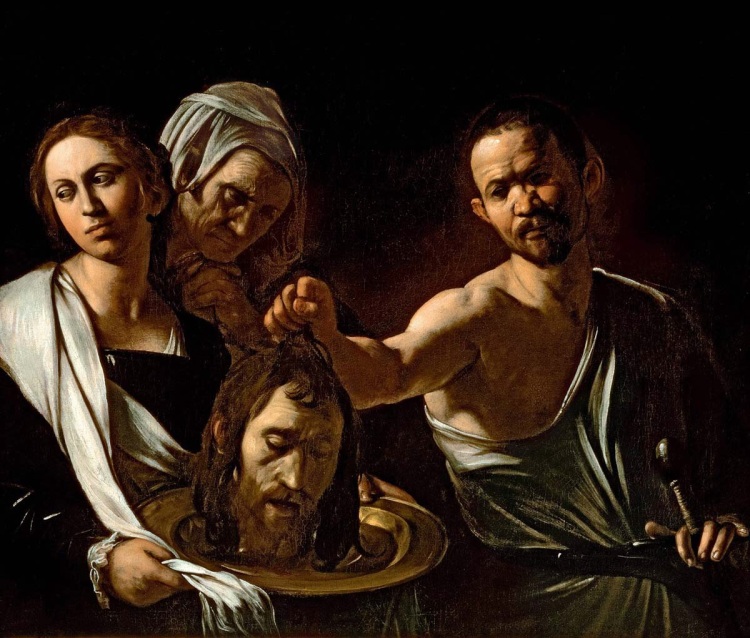
Caravaggio's Salome with the Head of John the Baptist, 1607.

Caravaggio’s Salome and the Head of John the Baptist, 1607

During the party, Salome tries to seduce the prisoner John the Baptist but does not succeed in her intent. A number of signs indicate that tragedy looms ahead: the moon looks strange and ominous; a soldier/servant has just committed suicide; Herod, coming out of the party, slips in a pool of the blood shed by the victim, and hears a sound like the one made by the flapping of giant wings…These are all bad omens. What is going to happen?

Soon afterwards, Herod, drunk on wine, and somewhat infatuated by his stepdaughter Salome, begs her to dance for him. Herodias, her mother, does not think this is appropriate and tries to forbid her, but Salome acquiesces when Herod promises she can have anything she wishes in return.

Salome then dances the famous “dance of the seven veils”, which mesmerizes Herod. Time has come now for her to ask for her reward: she wants it to come on a silver platter. Herod laughs: “sure, she can have it on a silver platter…but what is it that she wants?” Salome demands: “The head of the Baptist”, catching Herod completely off guard. He is horrified by the request.

Her demand is fully appreciated by Herodias, who hates the prophet. She insists that her daughter should get what she wants. Herod tries to make Salome change her mind by offering her lots of alternative gifts, such as jewels and beautiful birds, but she is adamant: all she wants is the prophet’s head on a silver platter.

Her wish is granted: John the Baptist is decapitated. Caravaggio painted in gory detail a gruesome scene based on the myth, almost 300 years before the play was written.

Note: the text above is from the ebook: TEACHING ENGLISH WITH ART: CARAVAGGIO. For further info on the series please CLICK HERE:  http://wp.me/p4gEKJ-1lS

Check out the video:

Au revoir

Jorge Sette

Caravaggio and the Myth of Medusa


Medusa was a beautiful priestess serving at the temple of Athena. Her beauty attracted a number of suitors, but she had to turn them down, as, according to her vows, she was supposed to remain a virgin.

However, Poseidon, God of the Sea, fell in love with Medusa and appeared to her in the shape of a bird. Being a god, it was easy for him to have his way with the poor maid and sleep with her.

As customary in mythological tales, the victim takes the blame for this sort of incident, and Athena, in a fury, turned Medusa into a horrific monster with the skin of a corpse and poisonous snakes for hair. Besides, anyone who dared to look her in the eyes would immediately turn to stone.

Caravaggio's Medusa

Caravaggio’s Medusa

Perseus, son of Jupiter with the mortal Danae, grew up on the Island of Seriphus. For many years he longed to receive a visit from his father, but it did not happen. His mother would tell him to be patient, as time did not work in the same way for gods.

Danae attracted the attention of Polydectes, king of the island, who tried to force her to marry him. She refused, but the King imposed one condition not to marry her: Perseus must bring him the head of Medusa as a gift.

Perseus, although unprepared and young, did not hesitate to accept the challenge. He knew he had first to find the Grey Sisters, horrible old hags who lived in the forest and shared one eye between them. They kept taking turns at using the eye ball. In a moment of distraction, while one of them was passing the eye to another, Perseus snatched it and told them that he would keep the eye unless they told him where the nymphs lived. The nymphs would tell him where to find Medusa and would give him the necessary weapons to fight her. The old hags acquiesced.

Perseus set out to meet the nymphs, who gave him three weapons: the sword of Jupiter, his father; the shield of Athena, the Goddess of Wisdom; and the winged sandals of Hermes, the Messenger of the Olympic Gods. He was also told not to look Medusa in the eye or he’d be turned to stone.

As he approached the lair of the monster, Perseus noticed a number of statues of men scattered in the garden. These were probably men who had tried to get to Medusa before him and were dully petrified. All was rock and desolation around the cave of the monster.

Perseus turned his back to the entrance and walked backwards towards the inner chambers of the cave, looking into the reflection on his polished shield for orientation. This way he would not have to look Medusa in the eyes directly. As he located her, he turned around with his eyes shut and struck her neck with the powerful sword of Jupiter, decapitating the creature.

Using Hermes’ sandals, he flew back to the Island of Seriphus, arriving right at the moment when the wedding between his mother and King Polydectes was about to take place. He shouted: Here’s your gift! And held the head of Medusa in front of the king. The King looked into the eyes of the dead monster and, as a result, was turned immediately to stone. And so Danae was free to go and live with her son again.

Caravaggio’s work, inspired by the myth of Medusa, was painted on an actual shield. It was not meant to be hung, but passed from hand to hand when viewed.

Note: the text above is from the ebook: TEACHING ENGLISH WITH ART: CARAVAGGIO. For further info on the series please CLICK HERE:  http://wp.me/p4gEKJ-1lS

Check out the video:

Au revoir

Jorge Sette


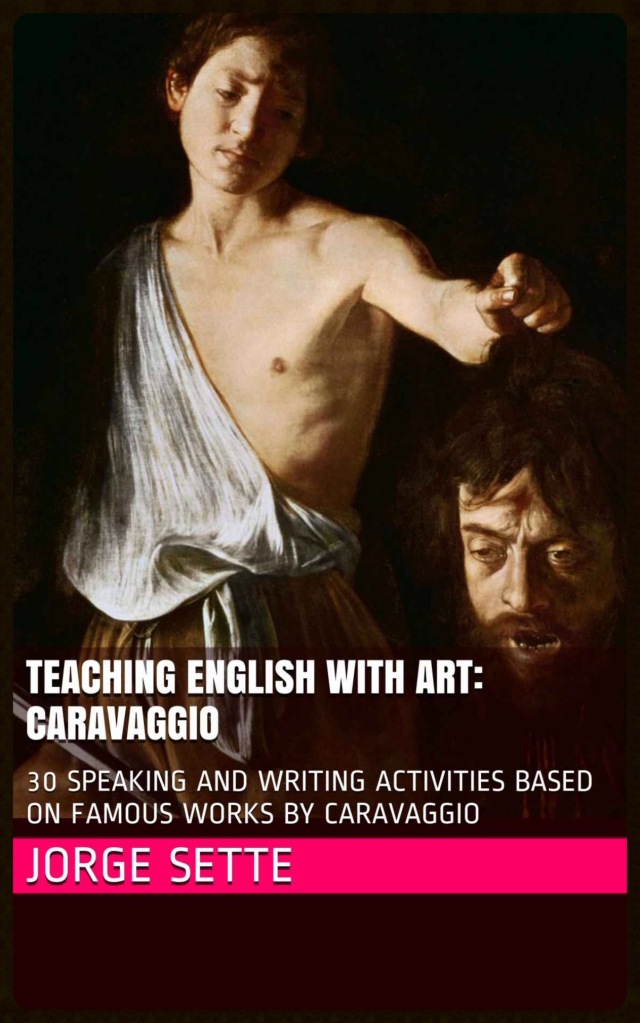
Teaching English with Art: Caravaggio


Click on the image below to download the eBook from AMAZON.COM

You will never have bored students again.

Click on the image to download the eBook

Click on the image to download the eBook

Watch the promo video clip:

http://youtu.be/Evuvs5AouQY

OUR BLOG “LINGUAGEM” HAS HAD A GREAT FIRST YEAR!


HAPPY NEW YEAR, EVERYONE.

Please find below some official stats sent by wordpress.com on the blog LINGUAGEM. We’ve had a great first year. Thanks for the support and we will back stronger than ever in 2015.

BLOG LINGUAGEM: 2014 official stats

BLOG LINGUAGEM: 2014 official stats


Screen Shot 2014-12-30 at 8.48.34 PM Screen Shot 2014-12-30 at 8.52.35 PM


Au revoir

Jorge Sette.

Sample activities from the eBook TEACHING ENGLISH WITH ART: PICASSO


Image 2: Acrobat on a Ball. 1905

Acrobat on a ball, Picasso

Acrobat on a ball, Picasso

Activity 4: speaking. Level A1/A2

  1. Describe the picture. What’s the predominant color?
  2. This is a painting from Picasso’s Rose Period (1904-1906). Everything is kind of pinkish. How was Picasso feeling during this period? Why do you think so?
  3. What does the color pink remind you of?
  4. Who are those people? What’s their relationship? Where do they work?
  5. The girl can stand on a ball. This is difficult to do. What else do you think she can do? Can you do anything difficult? What?


Activity 5: speaking. Level A2

  1. What’s this girl like? Tell us about her personality. What about the man?
  2. Describe the girl physically. Now describe the man.
  3. What do you think she likes doing in her free time? What do you like doing in your free time?
  4. Do you like the circus? What do you usually see in the circus?
  5. Pair work: students are divided into A and B. Student A lists the positive points of a circus. Student B disagrees and says why.
  6. Make a poster of a circus (a drawing or a collage or both) and present it to the class.

Activity 6: writing. Level B1/B2

  1. Write a composition imagining what your life would be like if you worked for a circus. Tell us about your job. What you usually do. The different kinds of people you work with. Do your relatives work there too? Who? (Do some research on the Internet to find out what kind of life circus people live. Use your own words in the composition. 400 – 700 words).
  2. Read your partner’s composition. Help her correct some mistakes and ask questions to help her write a more complete and better composition. Then ask her to help you with yours.

For more info about the series TEACHING ENGLISH WITH ART: Click on the link below to go to AMAZON.COM and get your ebooks: http://wp.me/p4gEKJ-1lS

Click on the image above to access the KINDLE STORE: Teaching English with Art: Matisse, Picasso, Caravaggio, Monet, Norman Rockwell

Click on the image above to access the KINDLE STORE. Teaching English with Art: Matisse, Picasso, Caravaggio, Monet, Norman Rockwell

Au revoir Jorge Sette

Teaching English with Art (video)


Teaching English with Art: the ENGLISH LANGUAGE LEARNING materials you have been waiting for:


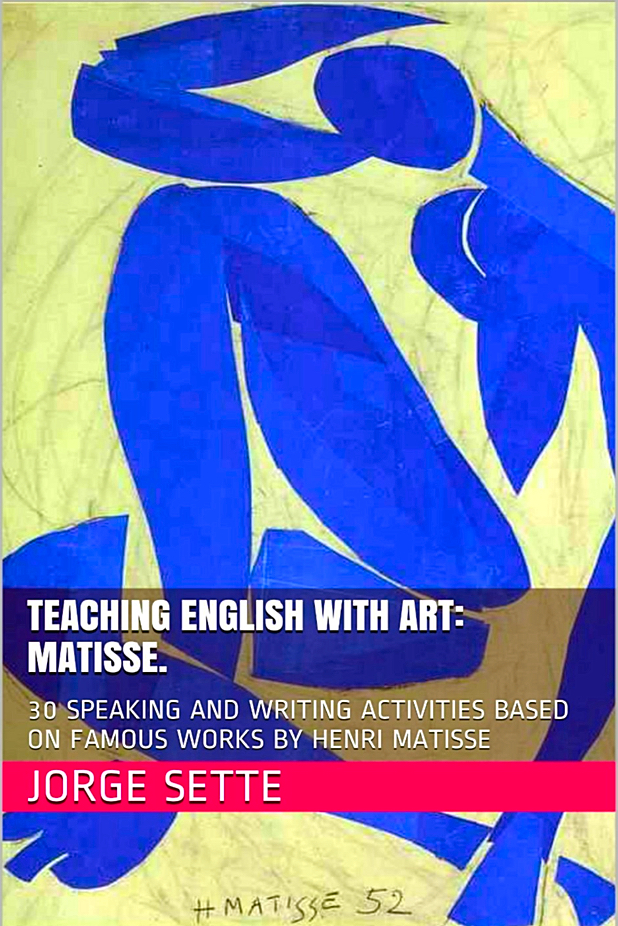
TEACHING ENGLISH WITH ART: MATISSE. Click here for more info: http://wp.me/p4gEKJ-1kP


TEACHING ENGLISH WITH ART: PICASSO. Click here for more info: http://wp.me/p4gEKJ-1lA


‪#‎matisse ‪#‎picasso ‪#‎fauvism ‪#‎cubism ‪#‎moma ‪#‎tate ‪#‎teachingenglish ‪#‎language ‪#‎learningenglish

Teaching English with Art: make your online lessons stand out


Ideal for online lessons!!

If you are having any of the following problems, we can help you…

a. Are your students often bored during the English class? b. Don’t they know what to say when you set up speaking activities? c. Do you spend the weekend correcting writing assignments that don’t seem to help them improve? d. Is it hard to personalize productive skills and link the English lesson to the other subjects in the school curriculum? e. The students know nothing about Art and high culture in general. 

Click on each of the pictures below to get your copy from the KINDLE STORE:

Click on the image above to go to Amazon.com

Click on the image above to go to Amazon.com

Click on the image above to get your copy from the KINDLE STO

Click on the image above to get your copy from the KINDLE STORE.

Click on the picture above to get your copy.

Click on the picture above to get your copy.

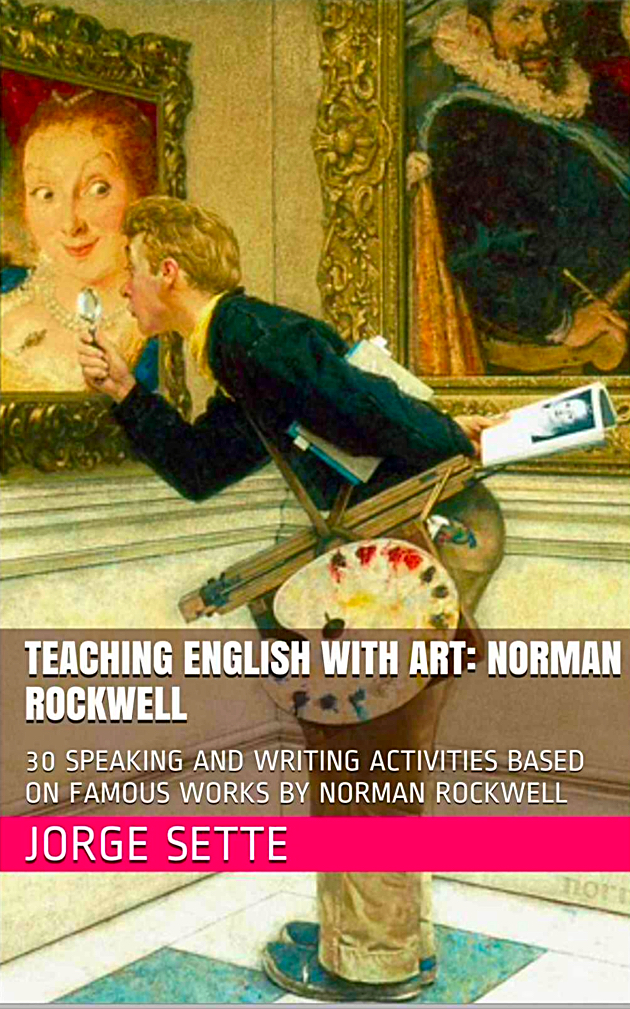
Teaching English with Art: Norman Rockwell

Click on the image above to download the eBook.

Teaching English with Art

Click on the image to download the ebook.

Teaching English with Art: Picasso

Click on the image to download the eBook.

Click on the image to download the eBook

Click on the image to download the eBook

Teaching English with Art: Monet.

Click on the image to download the eBook.

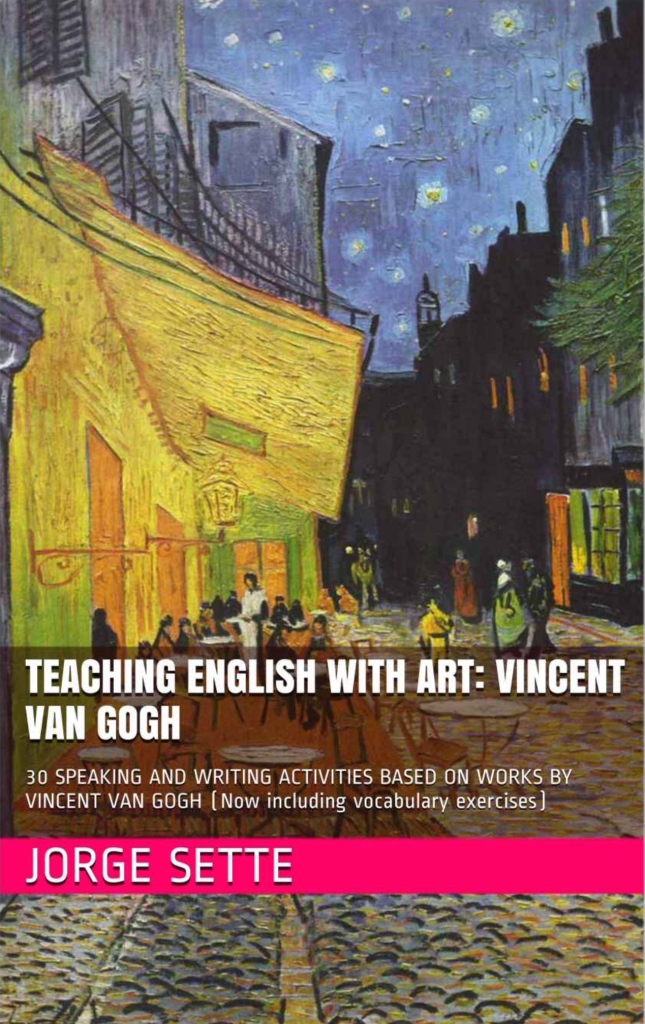
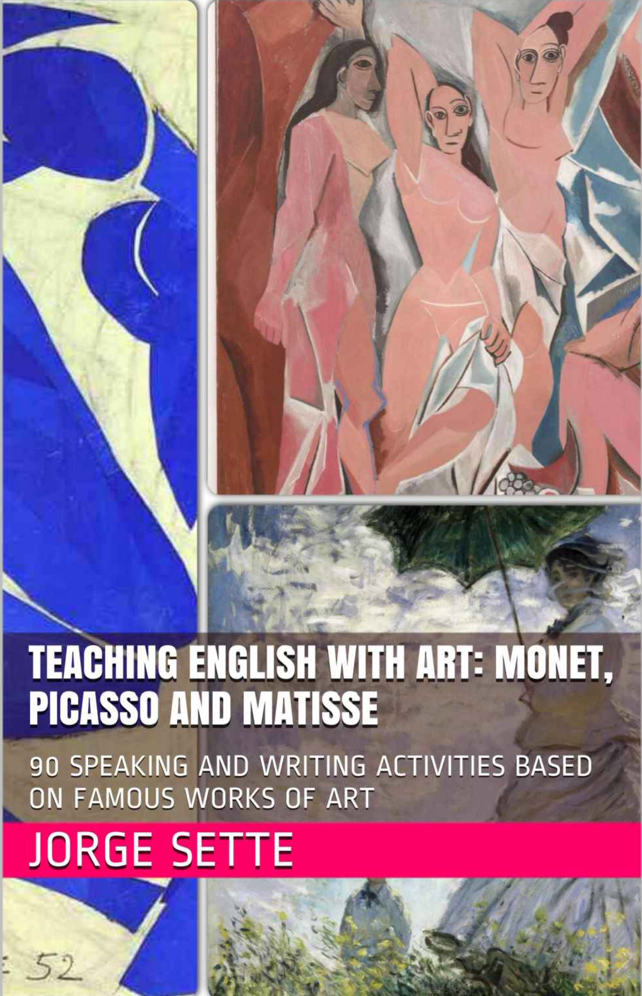
Teaching English with Art is the series for you! This eBook series is a wonderful supplement to any coursebook or extra materials your students may already be using in the English class. Each volume contains 30 speaking and writing activities for classroom use based on some of the most striking works by famous artists: for now we have MATISSE, PICASSO, CARAVAGGIO, MONET, NORMAN ROCKWELL, WINSLOW HOMER, a special three-in-one volume of MONET + PICASSO + MATISSE (90 activities), and we’ve just launched VAN GOGH.

IMPORTANT NOTE:

PERSONALIZATION: if you wish to change the cover of any of the ebooks, add your school logo, negotiate a special price for a determined number of students, or make other suggestions of customization, do not hesitate to talk to us. We are VERY FLEXIBLE. Make your ebook UNIQUE!

The objective of these eBooks is to expose the students to high art while having them practice English, fulfilling, therefore, one of the tenets of effective language acquisition: providing a realistic context for the language to be learned and practiced as a means to an end. Your students will love to practice their English discussing  and doing writing  tasks based on the works of these great artists.  The activities are highly personalized, so the students can express their own opinions and feelings. This is a proven way to make language acquisition fun and effective by creating in the classroom an atmosphere of interest, motivation and personalization. Each activity is clearly correlated to the COMMON EUROPEAN FRAMEWORK OF REFERENCE (CEFR), and the level is stated next to it. Ideally both you and your students should purchase the material.  For heads up activities, project the images on a white wall. Chose your favorite artist and click on the corresponding  image below to go to AMAZON.COM and get your e-book:

If you need more instructions on how to purchase the eBooks, please click here: http://wp.me/p4gEKJ-1Cz

Jorge Sette.

Teaching English with Art: Picasso


Click on the image below to download your book FROM AMAZON.COM

You will never have bored students again.

Teaching English with Art: Picasso

Teaching English with Art: Picasso


For other eBooks of the series TEACHING ENGLISH WITH ART, please click here:

http://wp.me/p4gEKJ-1lS

Check out the video clip  on our eBooks below:

Au revoir

Jorge Sette

Teaching English with Art: Matisse


Click on the image below to buy the product from AMAZON.COM

You will never have bored students again.


Teaching English with Art

Click on the image to access the AMAZON.COM page.

How to improve language learning materials


Having just watched the wonderful documentary Africa on Netflix, I realized it’s both worrying and marvelous to find out how little I know about my own planet. The advantage is this means I will be learning until I die. No chance of running out of subjects. Besides, I don’t even need to be concerned about getting to quantum physics or the theory of relativity, which I’m sure would exert a brutal amount of effort on my limited brain: there’s much more basic stuff for me to absorb and immerse myself into before crossing the great divide.

How wonderful learning is. Especially with the tools we have today: millions of video clips on YouTube, Khan Academy lessons , all the info available on Google, MOOCs, all the ebooks you can instantly download from the Internet for next to nothing, blogs on all kinds of topics, apps, podcasts, to say nothing of the huge amounts of info shared by your friends on social media sites (including the cute cat videos!).

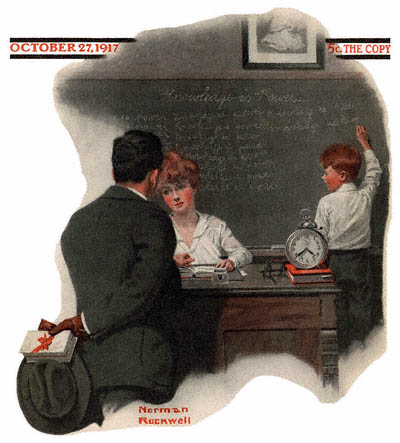
Knowledge Is Power by Rockwell, Norman

Knowledge Is Power by Rockwell, Norman

It saddens me that today’s kids will take all this wealth of knowledge and its tools for granted, and many times will prefer to settle for the silliest and most irrelevant games on the Internet. I consider myself lucky to live in this exciting era where we have all this info at our fingertips. All this change has been happening in the last 25 years and it’s hard to believe how different life was in the 1980s. It’s a blessing that those who want to self-educate and choose their own paths through the intricate jungle of information are able to do so. Of course, guides (teachers, tutors, mentors, collaborators) will always be helpful, but it’s liberating to know you can discard them and plan your own journey of discovery if you wish to.

Considering all these tools available, I started thinking what it is that language learning materials are lacking and how these new tools could help us, publishers and teachers, improve them. I have been in this field for more than 20 years now and it’s undeniable that books and other didactic materials evolved a lot throughout these years. However, they are progressively going in the same direction, looking more and more like one another, to the extent of becoming almost a commodity. You can’t tell significant differences between them on the shelves of a bookstore.

One of the main things that print course books cannot do is personalize the lesson to the extent it should be done to meet the different students’ needs, forms of intelligence, learning styles, and paces of language learning. A simple example is a student should be given the right to pick the genre of text he wants to read for the contextualization of the language point he’s been studying. A course book cannot do that. It would make it clunky and extremely expensive to offer in print alternative choices for all the texts they should comprise. An ebook, on the other hand, could offer this variety of choices in a much simpler and affordable way.

A student, now and then, should also be able to choose how to practice the language of the lesson: does he want to follow up doing a writing exercise, a listening comprehension or a reading activity? Does he want to translate a piece of work? Is he allowed to speak to someone from another country through Skype to practice? We can’t offer that range of choices yet in a coordinated and organized way.

Therefore personalization – or lack thereof – is the main problem of print course books or other more traditional materials for language learning. Some digital platforms are already dealing with this. A lot of personalization can be done as homework and be monitored by the teacher through a number of LMSs (learning managing systems) already available. But a lot more is needed. It would be necessary, for instance, to flip the classroom in a radical way, using the time in class for more relevant and interpersonal activities that would be done better involving a real teacher and a group of learners, while the students would deal with the information acquisition on their own time online, outside the classroom.

One More Week Of School And Then by Rockwell, Norma

One More Week Of School And Then by Rockwell, Norma

Moreover, despite the fact that we all agree that language is more effectively learned embedded in content (CLIL – content and language integrated learning), books for children and teenagers do not normally cover the important areas of personal finance, politics, or economy – a growing need in the diverse and complex society they’re entering. I haven’t seen any language books focusing on Emotional Intelligence as part of the curriculum either. If we all agree that teaching through content is the best way for the students to internalize a language, why not offer them this kind of very useful training: recognition of feelings, how to deal with anger, how to negotiate conflict with their classmates, strategies for incorporating diversity, how to delay or postpone gratification? We already teach social values, which is a great step forward, but we don’t focus on interpersonal relationships as content, an area that could be beautifully and effectively covered through language teaching materials.

Cousin Reginald Spells Peloponesus by Rockwell, Norman

Dealing with conflict. (Cousin Reginald Spells Peloponesus by Rockwell, Norman)

Another ideal way of adapting course books would be to cater more intensely for the students’ different learning styles: visual, auditory, kinesthetic. It would be amazing if the presentation of a language point and the activities following it could be personalized according to the strongest style of each student: do they wish to see a video explaining the point, do they want to read about it, would they rather engage in a hands-on discovery activity and find out the solution for themselves? The new tools of technology all make these options possible. All they need is to be presented in a more coordinated way by teachers and publishers so the students are guided through their personal journey towards learning. In summary, language learning materials need to provide a much more flexible structure and remain the backbone of a process that requires individualization.

You are more than welcome to share your ideas on how to improve language learning materials in the comments section of this blog.

NOTE: You might want to check out our eBooks available  from AMAZON.COM . Click here to know more about our series TEACHING ENGLISH WITH ART: http://wp.me/p4gEKJ-1lS


Teaching English with Art

Teaching English with Art

Au revoir

Jorge Sette.