Four of Brazilian Writer Lima Barreto’s Main Works – As Modern and Relevant as Ever


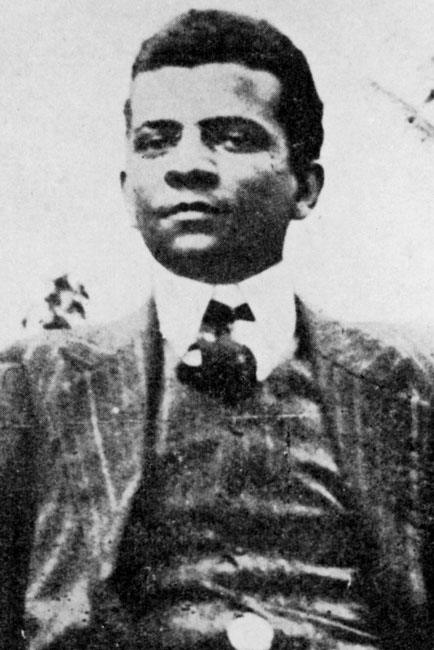
Lima Barreto, the acclaimed journalist and author of the Brazilian Belle Époque, is more popular than ever these days. The author was honored at the FLIP (International Literary Party of Paraty) a couple of years ago and that made him even more well-known.  New editions of his work have been released since then. Along with these, there was also the publication of a very well-researched biography, Lima Barreto – Triste Visionário, by historian Lilia Moritz Schwarcz (Companhia da Letras), available at the main bookstores.
02224_gg

Lima Barreto was born in 1881 in Rio de Janeiro and dedicated his life to writing and literature. His father was a typographer with connections with the powerful Empire Senator Viscount of Ouro Preto, who became Lima Barreto’s godfather. His mother, a freed slave, was a school teacher. She died when the writer was only six.

The key to understanding his artistic work is the overlap between the stories he created and his biography. Dark skinned (a mulato, as we say in Portuguese) and born in the lower echelons of society himself, he understood very well, and experienced first hand the issues discussed in his novels and short stories.

The main themes of his realistic pre-modernist fiction are the problems of the recently founded Brazilian Republic: class and race prejudices; the cynicism, incompetence, and arrogance of academics, journalists, politicians and the police force in general; the oppression women were subjected to. Not surprisingly, many of the problems Brazil had a hundred years ago are still current, making Lima Barreto’s works powerfully modern and still very relevant.

Lima Barreto had a productive but short life. He died at the young age of 41, plagued by alcoholism and related mental illnesses.

The books listed below have not been translated into English yet (except for The Sad End of Policarmo Quaresma), but, if you speak Portuguese, you can easily order them from Bookwitty.

  1. Recordações do Escrivão Isaias Caminha (Memories of the Clerk Isaías Caminha)


85012_gg

Lima Barreto’s debut novel was received coldly by the critics and the literary community of the time. The resentment of the protagonist-narrator and the sarcastic (although disguised) way in which he describes powerful figures of the contemporary society irritated many people who possibly identified themselves with the characters depicted in the novel and felt ridiculed by it. In the novel, Isaías, a boy from the countryside, does exceptionally well in school and is predicted to have a bright future, due to his intelligence and hard work. As a young man, full of hopes and willing to expand his horizons, he leaves his family and hometown, coming to Rio de Janeiro with a letter of recommendation for a congressman. Isaias thought it would not be difficult to find a good job, given his previous scholarly success and this single connection with a powerful politician. It does not take long, though, for his dreams to be crushed. Rio turns out to be a concrete jungle, where the doors are tightly closed to dark-skinned men. The novel tells the story of the deterioration of the young man’s self-esteem and his progressive submission and passive acceptance of the brutal rules that govern Brazilian society.

  1. The Sad End of Policarpo Quaresma

51nCUZicH4L._SX326_BO1,204,203,200_

This novel marks the transition from Realism/Naturalism to the Pre-Modernist literary movement in Brazil.

Policarpo Quaresma, the protagonist, is a methodical civil servant who lives with his spinsterish sister in the suburbs of Rio at the end of the 19th century. He is a naïve and rather optimistic nationalist, who believes that he himself can act as a force to preserve the traditions of Brazil in the face of the fast modernization and internationalization the country is going through.

To accomplish his nationalist objectives, first, he writes a letter to the Parliament proposing that the national language be replaced by Tupi, the indigenous language spoken by the local tribes who lived along the coast of the country before the arrival of the Portuguese. The idea is received with such mockery and disbelief that Quaresma suffers a nervous breakdown, being confined, for a while, to an asylum for the mentally ill.

Recovering from the illness, Quaresma decides to move with his sister to a farm on the outskirts of the city to live a more peaceful life in contact with nature. There, he tries to initiate, again practically single-handedly, an agricultural reform, aiming at setting an example to his countrymen, teaching them how to make the most efficient and rational use of the fertile soil of his beloved fatherland. This results in another failure, as he cannot count on any official help with his endeavour.

Finally, he sides with President Marshal Floriano Peixoto (a real historical figure), joining the military, to fight against the Second Naval Revolt, only to find out that the leader, contrary to Quaresma’s idealization, lacks the brains and military-strategic mind of a Napoleon, being nothing more than an authoritarian and unskilled dictator to a barbaric country in the periphery of civilization and capitalism.

  1. Clara dos Anjos

41dMg-rX03L

Published after Lima Barreto’s death, the novel has a simple and direct plot. It’s the story of a dark-skinned girl from the suburbs (the impoverished neighborhoods on the outskirts of the city of Rio de Janeiro, rarely portrayed in our literature) who gets seduced and abused by the white guitar player Cassi Jones, a notorious crook from a slightly higher social social class. However, the focus of the book is not really the plot. Clara’s sad story is just a pretext for the author to explore important connected issues. The main theme of the novel is the suburbs and its inhabitants: the members of the poorer classes of Brazil. Lima Barreto, with his precise journalistic prose, describes their small and difficult lives, the destitute environment they are forced to live in – despite the high taxes they pay, which are hardly used for their own benefit; the excessive drinking habits of the men; their music and literature; and the repression suffered by their passive and conservative women.

  1. Contos Completos de Lima Barreto (Lima Barreto’s Complete Short Stories)

livro-contos-completos-de-lima-barreto-D_NQ_NP_668299-MLB29809797900_042019-F

Besides journalistic articles and novels, Lima Barreto also left us a great number of short stories. Again, in those works, his main themes are the description of daily life in the city of Rio de Janeiro and its suburbs during the years of the Brazilian Old Republic (the period comprised between the end of 19th century and the beginning of 20th century), written with irony and sharp criticism against the political system of the time, the ingrained racism of our society, the oppression of the lower classes in general and the limitations imposed on women in particular. He also rebuked the mediocrity of the cultural and literary elites of the country. His attempts to mock Brazilian society while denouncing its serious flaws have made a profound mark in our literature.

Would you like to share your opinion about Lima Barreto? Please write your comments below.

Au revoir

Jorge Sette


Velázquez – The Iconic Painter of the Spanish Baroque


Considered the painter’s painter, Diego Rodríguez de Silva y Velázquez was born in Seville in 1599, growing up in the old Jewish quarter of that booming city.

Velázquez was an apprentice to Sevillian artist Francisco Pacheco for 5 years. However, it did not take long for the pupil to surpass the master in technique, which did not bother Pacheco at all. He was very proud of the young artist, who would later become his son-in-law. At the age of 19, Velázquez married Pacheco’s daughter, Juana, and had two daughters by her.

XIR221119

Velázquez

In 1623, he was invited to go to Madrid to paint the portrait of King Philip IV. The king liked the painting so much he commanded Velázquez to became his personal painter. From then on, only Velázquez was allowed to paint the king, and all his other portraits were taken out of circulation. Later on, Velázquez rose in the court to also become the king’s curator (being the person in charge of choosing and purchasing the furniture and paintings that would decorate the king’s palaces). Velázquez served the king for over 40 years, while Philip IV was the most powerful man on Earth.

At the beginning of his career, Velázquez soon distanced himself from the usual religious themes most Spanish painters produced at the time, due to the influence and power of the Catholic Church, and the overwhelming surveillance of the Spanish Inquisition. Instead, he started painting bodegones – kitchen and tavern scenes, involving common people – which, despite being considered a low genre of painting in those days, started to attract the attention of rich purchasers and patrons. Among these paintings, we have, for example, Old Woman Frying Eggs, and the breathtaking Water Seller.

0105vela.big

Old Woman Frying Eggs

His art was clearly influenced by Caravaggio in his use of contemporary, common people as models, and also in the use of the dramatic contrasts of light and shadow (chiaroscuro). Another major influence on Velázquez’s work was the art of Flemish baroque painter Peter Paul Rubens, who spent seven months at the court of King Philip IV on a diplomatic mission. Later, after spending time in Italy on two different occasions, he incorporated elements of both the contemporary local art and features of the Renaissance into his technique.

When he began working for King Philip IV, his main assignments consisted of portraits. He painted the members of the royal family in a great number of portraits, but his most famous ones are his own slave and studio assistant Juan de Pareja’s and the stunning portrait of Pope Innocent X. The realism and strength of these works, in which Velázquez managed to capture not only the physical but also the personality traits of his models, astonished his contemporaries and are a source of awe and inspiration to many artists to this day. Since most of Velázquez’s works were made for the king, they remained unseen for many years, hanging from the private walls of the royal family’s many residences.

Image-1

Pope Innocent X

In addition to the bodegones and portraits, he also produced famous mythological scenes (e.g. The Triumph of Baccus; Vulcan’s Forge; The Spinners; The Rokeby Venus), landscapes (e.g. Philip IV Hunting Wild Boar) and historical scenes (e.g. The Surrender of Breda).

XIR974

Vulcan’s Forge

Velázquez’s technique, draftsmanship and use of color have amazed the general public, critics and other painters for centuries. He’s many people’s candidate for the post of best painter ever. His paintings are included in what is called the Spanish Baroque movement of the XVII century, but they stand out as very personal and unique, the work of a genius.

Velázquez struggled his whole life to become part of the nobility he served so faithfully. His Jewish blood, however, was a constant obstacle for him to achieve such recognition. Only at the very end of his life, in 1658, did he become a knight, receiving the insignia of the Military Order of Santiago, the red cross that features on his chest in his most famous painting Las Meninas.

Velázquez died on August 6th, 1660, at the age of 61.

Au revoir

Jorge Sette


Five Takeaways from the Book TED Talks – The Official TED Guide to Public Speaking


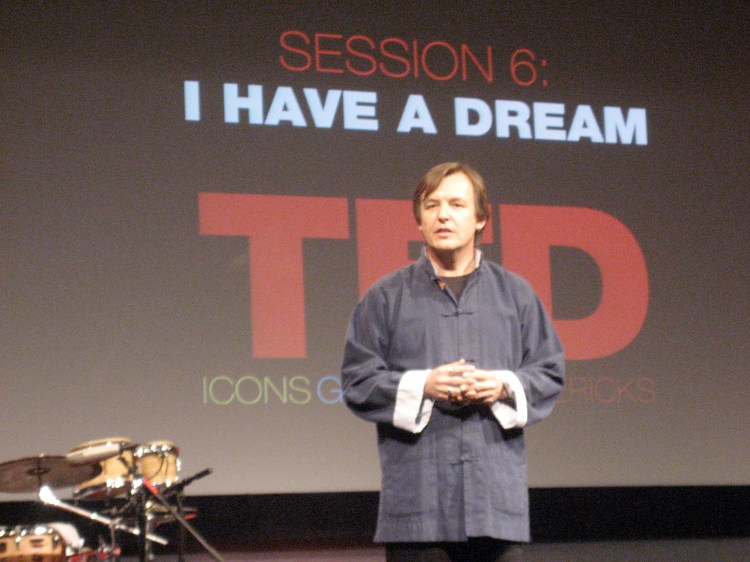
Founded by Richard Saul Wurman and Harry Marks in 1984, the TED conferences originally featured talks focused on Technology, Entertainment, and Design. Under the catchy tagline Ideas Worth Spreading, the range of these talks has since expanded to include academic, scientific and cultural topics.

If you have ever watched any of these talks, you will have noticed that they are not the usual boring PowerPoint-based presentations we get in conferences of all kinds. Storytelling techniques – long a proven method for grasping and keeping listeners’ attention – prevail in most TED talks. Another obvious key to their success in the succinctness; speakers have 18 minutes to tell a compelling narrative.

415cATz+xqL._SX326_BO1,204,203,200_

In his engrossing book, TED Talks – The Official TED Guide to Public Speaking, published last year, Chris Anderson, who took over the conferences in the early 2000s, offers the reader a truckload of useful and practical suggestions on how to put together and deliver a memorable presentation. A must-read for everyone who needs to speak in public these days (and who doesn’t?)

To whet your appetite, we have selected five of the most stimulating presentation tips we found in the book. See below.

1.What is the takeaway?

As you organize your talk, decide on what is the point you are trying to make. There must be an overarching theme connecting all the elements of the story. This is called a throughline in movies, plays, and novels. As a planning exercise, make sure you specify a concrete objective in no more than 15 words. What is your goal? What do you want to accomplish? What do you want the audience to do, how do you want them to feel after you leave the stage?

Chris_Anderson_2007-1

2. Get personal

Speakers need to connect to the audience, break the ice and build trust. A talk is much more than mere words. You need to engage the audience on many levels. There are different ways to do that. Making eye contact with the audience, for example, is always effective. Showing some kind of vulnerability, such as admitting that you are nervous, may also work. Using humor at the beginning – through a personal anecdote, presenting funny visuals, or by playing with irony and sarcasm – may do the job. Don’t try to be funny if you are not comfortable with it, though.

3. Visuals

We all know the staggering amount of technology available out there to help public speakers: slides showing graphs, photography, infographics, animations; video, audio, etc. Yet, it may come as a surprise that at least one third of the most viewed TED talks do not make use any of these tools. So maybe you should ask yourself: do I really need to use them? And how much of it is really necessary? Most people are extremely familiar with these so-called innovations by now anyway, so it’s hard to make an impact based only on them. Besides, visuals may distract the audience, taking their attention from you! Then again, great slides may add to the presentation, especially when they do not only repeat and highlight what is being said verbally. Ideally, visuals should reveal (show something that can not be easily described by words); explain (make concepts clearer: a picture is worth a thousand words!); and delight (give the talk aesthetic appeal).

4. To memorize or not to memorize

Although most TED speakers have their presentations scripted out beforehand and memorize them, this approach does not work for everyone. There’s beauty and power in variety. You need to discover your own natural style. Possible options: you can write and memorize your talk; use in-the-moment language to talk about something you are familiar with (it helps to have a mental structure of the points to cover, though); or even read your piece! Whatever makes you more comfortable and confident. However, remember that preparation is essential for any format you choose.

TED_three_letter_logo.svg

5. Traps to avoid

There are some speaking styles TED organizers do not recommend. The sales pitch: trying to sell products or services directly through your talk may damage your reputation as a speaker. The main job of a speaker is to give not to take. So be careful. Find out if this is the kind of talk your audience is expecting. The ramble: to be under-prepared or not to have a set objective is insulting to the audience; the org bore: talks that focus on the greatness of an organization or on how amazing their staff is will probably bore the audience to death – they don’t work there after all. The inspirational performance: despite the fact that great TED talks deeply inspire and move the listeners, this effect cannot be manipulated through tricks and gimmicks. It needs to feel real. So avoid copying the so-called “inspirational” talks, where the speaker is full of self-praise and despicably phony.

For more tips, I strongly recommend you get the book now and make sure your next presentation is a hit.

Au revoir

Jorge Sette
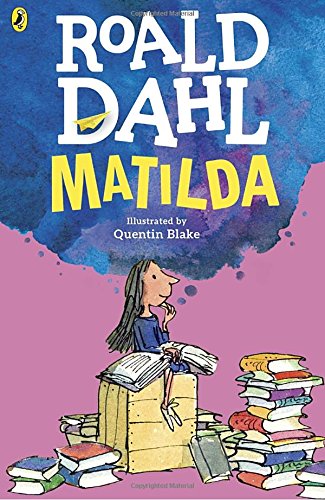
On reading – from Roald Dahl’s Matilda


“Mr Hemingway says a lot of things I don’t understand, Matilda said to her. ‘Especially about men and women. But I loved it all the same. The way he tells it I feel I am right there on the spot watching it all happen.’ ‘A fine writer will always make you feel that,’ Mrs Phelps said . ‘And don’t worry about the bits you can’t understand. Sit back and allow the words to wash around you, like music.”

51p-Bvu0-ML

Almodóvar’s Julieta


The critics are right: Almódovar is not the same. Julieta, his latest movie, is nothing like Women on the Verge of a Nervous Breakdown, which catapulted the Spanish director to international fame almost thirty years ago.

Julieta is more mature, serious and, in many respects, a lot better, reflecting the evolution and progressive refinement of a seasoned maestro. Of course, some fans will miss the raw humor and shock value of his earlier movies, which celebrated la movida madrileña, the cultural movement of the late 70s and early 80s that stood in direct opposition to the values and life style of Franco’s dictatorial years. In those days of la movida, it was necessary to burn the cultural bra to make a point. Those times are over, though. Besides, for more nostalgic viewers, quite a few of his movies of that era are available on Netflix, at your fingertip.

original

 Julieta, on the other hand, belongs to the 2010s. It is allowed – strike that; required is the precise word – to be simpler and more contained. Nevertheless, it has kept the director’s inimitable voice and style: the bright colors, the Madrid touch, and the inscrutable strong women are still there. And even Rossy the Palma, one of the muses of his early years as a filmmaker, makes a comeback; her wondrous nose, uneven eyes and twisted mouth working their magic, in the role of a modern-day Cassandra.

Rossy de Palma La Ley del Deseo

Rossy de Palma in the 1980s.

I find it unbelievable that many critics will say that Almodóvar has never mastered the skills to tell a story. His narrative powers are weak, some say. Obviously, these critics abide by only one model of storytelling: the commercial cinema of Hollywood. Although I respect the claim that some narrative elements and archetypes make themselves present one way or another in every story ever told, they should be rearranged in as many different ways as creative directors can come up with. Almodóvar’s storylines do follow a structure – although an idiosyncratic one. Digression plays a big part in his method.

Without the digression, Julieta would be a simple tale about guilt. It’s the digressions that allow Almodóvar to present the viewer with unique images (an elk running in slow motion alongside a moving train at night; the bluest sea shown though the open windows of a living room in Galicia; the Swiss Alps shot in all their glory); intriguing metaphors: references to Homer’s Odyssey and the power of the sea to entice men like Ulisses and Xoan, pulling them from the safety of their houses and the comfort of their families; and one of the most original transitions between youth and old age in movie history: actress Adrian Ugarte is replaced by Emma Suárez at the sudden removal of a red tower.

23cp_outtakes_pedr_1495105g

Pedro Almodóvar

Julieta is a delight to the eyes. You could just sit back for hours watching these beautiful women move around in fashionable clothes, stepping in and out of fascinating Madrid buildings, walking along its narrow cobblestone streets or just sitting in close-up against the backdrop of stunningly decorated apartments.

With the help of great actors and a stunning musical store by Alberto Iglesias, Almodóvar turns the straightforward story of a family marked by tragedy into a Hitchockian thriller – with echoes of Vertigo. Viewers will be met by twists and little surprises at every turn, relishing the journey. Almodóvar has developed the fearlessness of those who have nothing more to prove. He shoots his movies out of sheer pleasure. Who can blame him?

Au revoir

Jorge.


Famous Greek Quotes


“A man who takes no interest in politics has no business here at all.”


Unknown

Pericles (495 – 429 BCE)

Teaching English with Art: Winslow Homer


Teaching English with Art: Winslow Homer.  This eighth volume of our successful series of eBooks combining ENGLISH TEACHING AND ART is a wonderful supplement to any coursebook or extra materials your students may already be using in the English class. It contains 30 vocabulary,  speaking and writing activities for classroom use, based on some of the most striking works by the best American artist of the XIX century.

The objective of the eBook is to expose the students to art while teaching English, fulfilling therefore one of the tenets of effective language acquisition: providing a realistic context for the language to be learned and practiced as a means to an end. Your students will love to exercise their English discussing the works of Winslow Homer. This is a proven way to make language acquisition fun and effective by creating in the classroom an atmosphere of interest, motivation and emotion. Each activity is clearly correlated to the COMMON EUROPEAN FRAMEWORK OF REFERENCE (CEFR), and the level is stated next to it.

IMPORTANT NOTE. CUSTOMIZATION: if you wish to change the cover of any of the ebooks, add your school logo, negotiate a special price for a determined number of students, or make other suggestions of customization, do not hesitate to talk to us. We are VERY FLEXIBLE. Make your ebook UNIQUE!

Click on the image below to download the ebook:

Click on the image above to get your copy from the Kindle Store.

Click on the image above to get your copy from the Kindle Store.

Check out the video clip on the ebook TEACHING ENGLISH WITH ART: WINSLOW HOMER: https://vimeo.com/142028606

For other books of our series, click here: http://wp.me/p4gEKJ-1lS

Teaching English with Art

Teaching English with Art

Au revoir

Jorge Sette

KINDLE COUNTDOWN DEAL TEACHING ENGLISH WITH ART: VINCENT VAN GOGH


Your students are going to love the activities in this eBook!

Please click on the image below to go to AMAZON.COM


Click on the image above to be redirected to AMAZON.COM

Click on the image above to be redirected to AMAZON.COM

How to Buy Any of the eBooks of the series TEACHING ENGLISH WITH ART


To buy any of the eBooks of the series TEACHING ENGLISH WITH ART, please follow the steps below. Click on the image to be directed to the KINDLE STORE.

Click on the image above to be directed to the KINDLE STORE.

Click on the image above to be directed to the KINDLE STORE.


Vincent van Gogh: meet the man behind the legend


Vincent van Gogh was born in the village of Groot-Zundert, south of the Netherlands on March 30, 1853, to upper middle class parents. His father was a protestant pastor and the family lived in the parsonage near the border with Belgium. His family: father, mother, and five siblings were very important to the artist all his life. He had a love-and-hate relationship with them, especially his father Dorus, breaking up with him a number of times, but always patching things up and trying to reconcile with them. Reliving the peace and harmony of his childhood days in the Zundert parsonage, when the whole family lived together remained an obsession and an impossibility throughout van Gogh’s life.

Before he launched his career as an artist in 1880, van Gogh worked as an art dealer in the business of richer members of his family (Goupil and Cie), a teacher and an evangelist, never quite managing to succeed in any of these jobs. He was not lucky at love either, having been rejected by a cousin, which caused him, heartbroken, to decide to live with a prostitute, Sien, and her son for a couple of years. He claimed it was his duty to rescue her.

Vincent van Gogh, self-portrait

Vincent van Gogh, self-portrait

He considered himself a failure for not being able to find a place in society and to follow a proper career, blaming sometimes himself and other times the lack of support and vision of his family and acquaintances for not finding a professional role. His parents were in fact ashamed of his lonesome and difficult eldest son. In spite of all this, he spent most of his life living off the financial support of his father and, then, his brother Theo, 6 years his junior, with whom he developed a strong bond and carried out an extensive written correspondence. It’s through these letters that we know so much about the convoluted life and inner feelings of this artist.

Vincent van Gogh lacked interpersonal skills, was awkward in society, and full of contradictory feelings. Having trouble getting along with people in general was perhaps the main reason he was not able to keep the many jobs he held. He was eccentric, explosive and reclusive. Under the advice of his brother Theo, he finally found his true path as an artist. But, at the beginning he refused to produce anything commercial, so he could not live off his craft and talent. He focused on painting the human figure, especially members of the lower classes. And he didn’t like to use color. His drawings were mostly in black and white, made with pen or charcoal, or paintings in drab colors. He only drew and painted what he wished, never making any concessions to the market’s taste, which made his financial life very hard.

As we mentioned before, his favorite subject at the time was the human figure, and he was always striving to hire models among the common people of the various towns he lived in: peasants, miners, weavers and prostitutes. Most of them found it very hard to work with him, and he was always requiring more money from Theo to be able to hire more professional models in places like Antwerp, where he lived for a while.

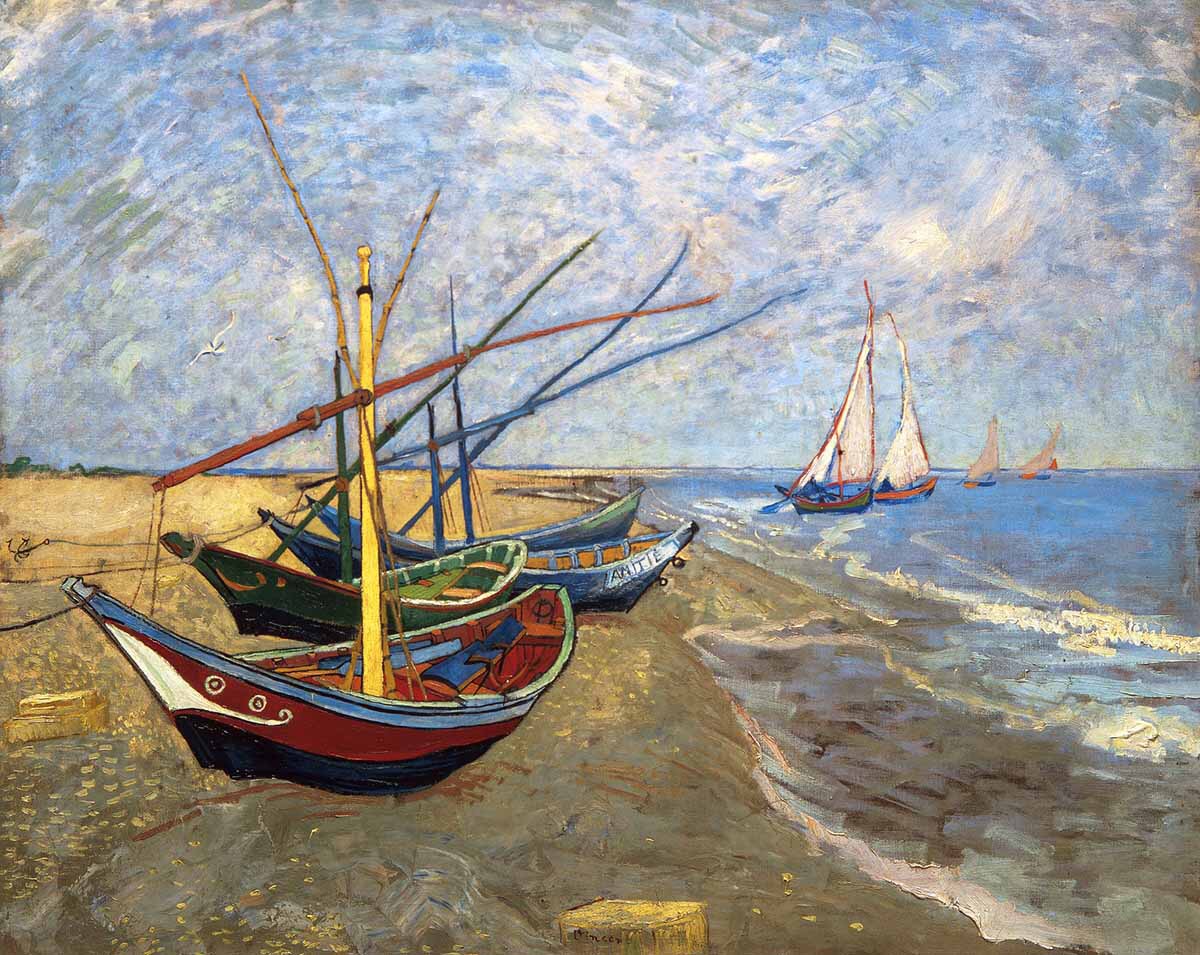
Fishing Boats on the Beach at Saintes-Maries-de-la-Mer by Gogh, Vincent van

Fishing Boats on the Beach at Saintes-Maries-de-la-Mer by Gogh, Vincent van

Only when he moved to Paris in the late years of his short life, sharing a space with Theo, he started to fully develop as an artist, incorporating in his painting traits of the Impressionists – which were becoming very popular at the time – Japanese art, the social works of Manet and Courbet, features of the English landscapist John Constable, the pointillism of Seurat, among other influences. It was then that he started to use bright colors, leaving the drabness and the gloominess of his previous drawings and paintings behind.

In February 1888, he moved to Arles, in the south of France, to make use in his paintings of the bright colors under the Provence sun. There, he rented and lived in what became the famous Yellow House of his biography, initiating one of the most productive periods of his career, painting from day to night, sometimes finishing 3 works a day. Vincent dreamed of turning the place into a utopian community for modern artists – the Studio of the South – where they could work together, exchange ideas and create something unique, based on the strong influences of the past masters and yet innovating painting radically. He aimed for a new Renaissance.

In October 1888 the French painter Paul Gauguin came to Arles to live and work with van Gogh. They had a very tense and tumultuous relationship, though, which ended up with Gauguin leaving the house a couple of months after his arrival. Vincent was left in such an unstable mental state after the quarrel with Paul that he allegedly cut off part of his ear and sent it to a prostitute. He was committed to mental institutions twice after that.

Despite all the external influences van Gogh incorporated in his work, his paintings and drawings remained true to his deep feelings and notions of art. He developed idiosyncratic traits as an artist and imbued his landscapes, portraits, and still lives with his own very unique style, characterized by the use of bright and sometimes unusual combination of colors, large brushstrokes, and fine draftsmanship, which turned his works into effective channels to express his innermost feelings. The seeds of the XX’s century expressionism have been identified in van Gogh’s final and most famous woks.

His most famous paintings were produced during the last two years before his suicide on July 29t, 1890, at age 37. Out of more than 900 pieces of work he put out throughout his short but productive career, only one painting – The Red Vineyards Near Arles – was sold while he was still alive.

He never foresaw how successful he would become, although he was fully aware of how powerful his work was and never doubted his talent and vision as an artist. Today, his paintings sell for tens of millions of dollars, and he’s one of the most famous and beloved artists of Western culture. Among his most recognized paintings, we can list masterpieces such as The Potato Eaters, The Yellow House and Starry Night.

If you wish to a have a chance to discuss and practice English vocabulary, speaking and writing skills based on some of the invaluable works of this unique artist, please check out our series of supplementary materials TEACHING ENGLISH WITH ART, featuring, works not only by van Gogh, but also by Matisse, Picasso, Caravaggio, Monet and Norman Rockwell so far. New materials are scheduled to come out in the near future, watch this space.

Click on the link below to know more about the eBooks: http://wp.me/p4gEKJ-1lS

Teaching English with Art

Teaching English with Art


Watch our promo video on the eBook TEACHING ENGLISH WITH ART: VICENT VAN GOGH:

What’s your favorite artist? Let us know so we can feature him/her in our series.

Au revoir

Jorge Sette