10 Reasons Why Portuguese as a Foreign Language is on the Rise Globally


In recent years, the world has witnessed a significant surge in the number of people learning Portuguese as a foreign language. This trend is not just a passing fad but a reflection of the growing importance of Portuguese on the global stage. Whether it’s for business, travel, or cultural enrichment, there are numerous compelling reasons to take up Portuguese. In this blog post, we will explore ten key reasons why Portuguese is becoming increasingly popular and why you should consider learning it too.

1. Portuguese is a Global Language

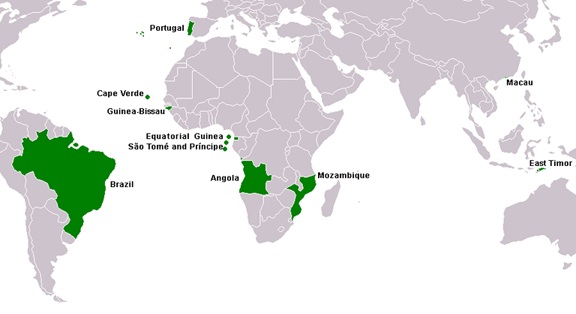
Portuguese is the sixth most spoken language in the world, with over 220 million native speakers. It is the official language of nine countries (plus Macau), including Brazil, Portugal, Mozambique, Angola, and several others. This widespread use makes Portuguese a valuable language for international communication and opens up opportunities in various regions across the globe.

2. Economic Opportunities in Brazil

Brazil, the largest Portuguese-speaking country, boasts one of the world’s largest economies. With its diverse industries, including agriculture, manufacturing, and technology, Brazil offers numerous business opportunities. Learning Portuguese can give you a competitive edge in the job market and help you tap into the economic potential of this vibrant country.

3. Rich Cultural Heritage

Portuguese-speaking countries have a rich cultural heritage that spans literature, music, dance, cinema, and cuisine. From the soulful sounds of Fado music in Portugal to the vibrant Carnival celebrations in Brazil, learning Portuguese allows you to immerse yourself in these unique cultural experiences and gain a deeper appreciation for the traditions and customs of these countries.

4. Travel and Tourism

Portuguese-speaking countries are popular travel destinations, known for their stunning landscapes, historical landmarks, and warm hospitality. Whether you’re exploring the picturesque streets of Lisbon, relaxing on the beautiful beaches of Rio de Janeiro, or embarking on a safari in Mozambique, knowing Portuguese can enhance your travel experiences and help you connect with locals on a more personal level.

Rio de Janeiro, Brazil

5. Academic and Research Opportunities

Portuguese is an important language in academia and research, particularly in fields such as Latin American studies, linguistics, and history. Many universities and research institutions offer programs and scholarships for students who are proficient in Portuguese. By learning the language, you can access a wealth of academic resources and collaborate with scholars from Portuguese-speaking countries.

6. Growing Influence in Africa

Portuguese is an official language in several African countries, including Angola, Mozambique, and Guinea-Bissau. These countries are experiencing rapid economic growth and development, making them attractive destinations for investment and business ventures. Learning Portuguese can help you navigate these emerging markets and build strong connections with local partners.

7. Enhanced Cognitive Skills

Learning a new language has been shown to improve cognitive skills, such as memory, problem-solving, and multitasking. Portuguese, with its unique grammar and vocabulary, can provide a stimulating mental workout and keep your brain sharp. Additionally, being bilingual or multilingual can enhance your overall communication skills and cultural awareness.

8. Access to Portuguese Literature and Media

Portuguese literature is rich and diverse, with renowned authors such as Fernando Pessoa, José Saramago, Machado de Assis and Clarice Lispector. By learning Portuguese, you can read these literary works in their original language and gain a deeper understanding of their nuances and cultural context. Additionally, you can enjoy Portuguese-language films, music, and television shows, further enriching your cultural experience.

9. Strengthening Personal and Professional Relationships

Knowing Portuguese can help you build stronger personal and professional relationships with Portuguese-speaking individuals. Whether you’re working with colleagues from Brazil, making friends in Portugal, or collaborating with partners in Angola, speaking their language can foster trust, respect, and effective communication.

10. A Fun and Rewarding Challenge

Learning Portuguese can be a fun and rewarding challenge. The language has a melodic quality and a rich vocabulary that can be enjoyable to learn and use. As you progress in your language journey, you’ll experience a sense of accomplishment and satisfaction that comes with mastering a new skill.

Conclusion

In conclusion, there are countless reasons to take up Portuguese as a foreign language. From economic opportunities and cultural enrichment to travel and cognitive benefits, learning Portuguese can open up a world of possibilities. So why not embark on this exciting linguistic adventure? Whether you’re a student, a professional, or simply a language enthusiast, Portuguese is a valuable and rewarding language to learn. Start your journey today and discover the many benefits of speaking Portuguese!

Note: Jorge Sette, M.A. in Applied Linguistics offers lessons of Brazilian Portuguese online. The number of spots is limited. Hurry up! Don’t hesitate to reach out to him at: jorge.sette@terra.com.br

10 Fascinating Facts About the Portuguese Language


Portuguese is one of the world’s most widely spoken languages, but there’s so much more to it than meets the eye. Here are ten intriguing facts about this beautiful and versatile language:

1. Portuguese Is the Official Language of 10 Countries

Portuguese is the official language of: Portugal, Brazil, Angola, Mozambique, Cape Verde, Guinea-Bissa, São Tomé and Príncipe, East Timor, Equatorial Guinea, Macau (the latter is not a sovereign country, but it recognizes Portuguese as an official language).

Together, these nations and regions form the Community of Portuguese Language Countries (CPLP).

2. Brazil Has the Largest Portuguese-Speaking Population

With over 220 million of the world’s Portuguese speakers, Brazil is the largest Portuguese-speaking country. As a matter of fact, Brazil accounts for more than 80% of all Portuguese speakers worldwide.

3. Portuguese Is the Fastest-Growing European Language

Portuguese is the fastest-growing European language after English. Its spread in Africa and its increasing relevance in global trade contribute to its rising prominence.

4. It Has Influenced Other Languages

Portuguese has left its mark on several languages, especially in Asia. For example, words like chá (tea) entered Japanese, Cantonese, and even English via Portuguese traders.

5. It’s a Romance Language

Portuguese evolved from Latin, just like Spanish, French, and Italian. Its closest linguistic relative is Galician, spoken in the Galicia region of Spain.

6. Portuguese Is the Sixth Most Spoken Language Worldwide

Portuguese has 265 million speakers, ranking as the sixth most spoken language in the world, following Mandarin Chinese, Spanish, English, Hindi, and Arabic.

Soccer – Ipanema Beach, Rio.

7. It’s One of the Most Phonetic Languages

Although Portuguese pronunciation may seem tricky at first, the language is relatively phonetic. Once you learn the rules, it’s often possible to pronounce words correctly by reading them.

8. Many Portuguese Words Have Arabic Origins

When the Moors ruled the Iberian Peninsula, they introduced many Arabic words into Portuguese. Common examples include açúcar (sugar), alface (lettuce), álcool (alcohol), alfazema (lavender) almofada (pillow), marfim (ivory), azeite de oliva (olive oil), and algodão (cotton).

9. There Are Unique Portuguese Sounds

Portuguese has sounds that are rare in other Romance languages. For instance, nasal vowels (marked by a tilde, like in ocupação) are a distinctive feature that can be challenging, and, yet, interesting to learners.

10. It’s One of the Oldest Modern Languages

Portuguese was officially recognized as a language in 1290 by King Denis of Portugal. He founded the first Portuguese university and declared that the Vulgar Language (spoken Portuguese) should replace Latin as the official language in legal documents.

Conclusion

Portuguese is a rich and fascinating language with a global footprint. Whether you’re learning it for travel, business, or cultural appreciation, these facts highlight its historical and linguistic significance. Did any of these surprise you? Let us know in the comments!

NOTE: I give online classes of Brazilian Portuguese for foreigners. If you are interested, don’t hesitate to reach out: jorge.sette@terra.com.br

Jorge Sette


Why study Brazilian Portuguese?


Here are five compelling reasons to study Brazilian Portuguese:

1. Cultural Richness

Brazil is home to a vibrant culture that includes music (samba, bossa nova, MPB, rock and funk), dance, literature, cinema, art, and cuisine. Learning Portuguese allows you to immerse yourself fully in this rich cultural heritage.

2. Professional Opportunities

Brazil has the largest economy in Latin America and is a key player in industries like agriculture, energy, and technology. Speaking Portuguese can open doors for careers in international business, tourism, and diplomacy.

3. Communication with Over 220 Million Speakers

Portuguese is the official language of Brazil, the largest Portuguese-speaking country in the world. Learning the language allows you to connect with millions of people across the globe.

4. Travel and Exploration

Brazil is a diverse and breathtakingly beautiful country, offering destinations like the Amazon Rainforest, stunning beaches, Rio de Janeiro, Iguaçu Falls, Salvador and São Paulo. Speaking Portuguese enhances travel experiences by helping you connect with locals and navigate the country with ease.

Ipanema and Leblon

5. Linguistic Enrichment

Studying Brazilian Portuguese provides insights into the evolution of Romance languages and strengthens your understanding of grammar and vocabulary, particularly if you already know another Romance language like Spanish or French.

Would you like additional reasons or guidance on resources for learning?

I’m offering one-to-one lessons of Brazilian Portuguese for foreigners. The lessons are online but the spots are limited. Join today! Don’t hesitate to reach out to us at: jorge.sette@terra.com.br

Jorge Sette.

Philip Roth on Love (The Dying Animal)


“The only obsession everyone wants: ‘love.’ People think that in falling in love they make themselves whole? The Platonic union of souls? I think otherwise. I think you’re whole before you begin. And the love fractures you. You’re whole, and then you’re cracked open. ”


philip-roth_wide-e08158b825c8ee12ea3f56b15636ea3f4a320417

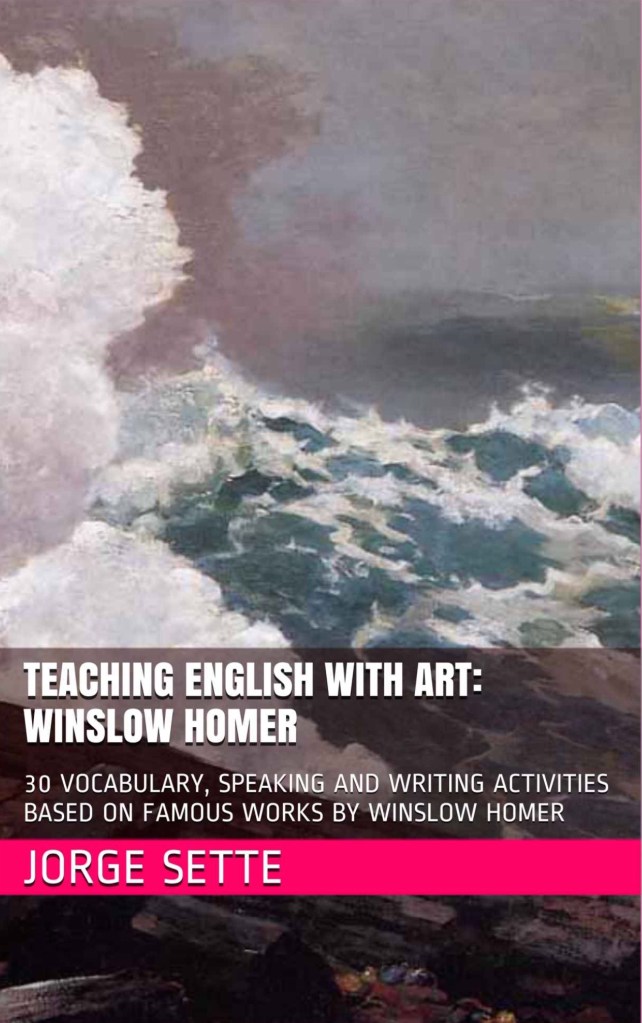
Teaching English with Art: Winslow Homer


Teaching English with Art: Winslow Homer.  This eighth volume of our successful series of eBooks combining ENGLISH TEACHING AND ART is a wonderful supplement to any coursebook or extra materials your students may already be using in the English class. It contains 30 vocabulary,  speaking and writing activities for classroom use, based on some of the most striking works by the best American artist of the XIX century.

The objective of the eBook is to expose the students to art while teaching English, fulfilling therefore one of the tenets of effective language acquisition: providing a realistic context for the language to be learned and practiced as a means to an end. Your students will love to exercise their English discussing the works of Winslow Homer. This is a proven way to make language acquisition fun and effective by creating in the classroom an atmosphere of interest, motivation and emotion. Each activity is clearly correlated to the COMMON EUROPEAN FRAMEWORK OF REFERENCE (CEFR), and the level is stated next to it.

IMPORTANT NOTE. CUSTOMIZATION: if you wish to change the cover of any of the ebooks, add your school logo, negotiate a special price for a determined number of students, or make other suggestions of customization, do not hesitate to talk to us. We are VERY FLEXIBLE. Make your ebook UNIQUE!

Click on the image below to download the ebook:

Click on the image above to get your copy from the Kindle Store.

Click on the image above to get your copy from the Kindle Store.

Check out the video clip on the ebook TEACHING ENGLISH WITH ART: WINSLOW HOMER: https://vimeo.com/142028606

For other books of our series, click here: http://wp.me/p4gEKJ-1lS

Teaching English with Art

Teaching English with Art

Au revoir

Jorge Sette

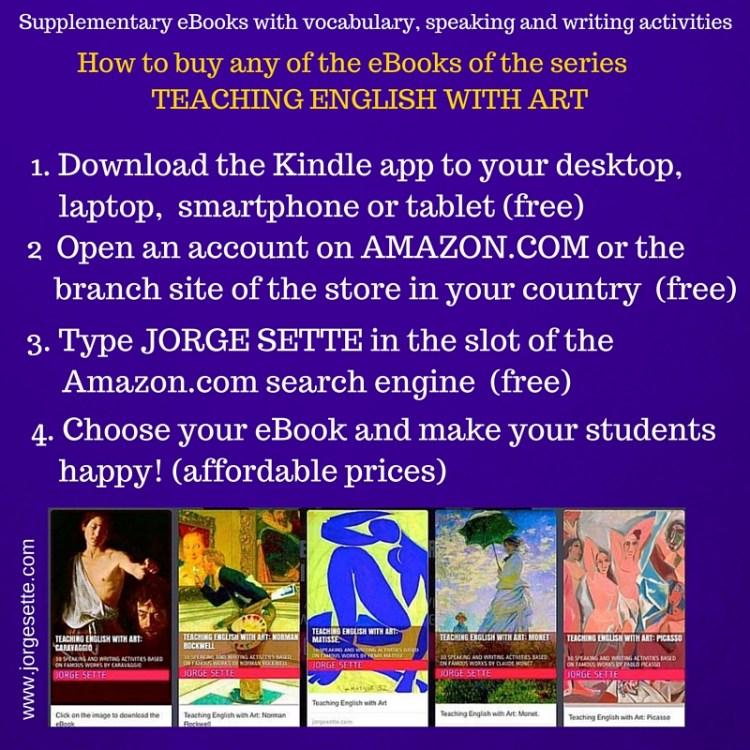
How to Buy Any of the eBooks of the series TEACHING ENGLISH WITH ART


To buy any of the eBooks of the series TEACHING ENGLISH WITH ART, please follow the steps below. Click on the image to be directed to the KINDLE STORE.

Click on the image above to be directed to the KINDLE STORE.

Click on the image above to be directed to the KINDLE STORE.


Vincent van Gogh: meet the man behind the legend


Vincent van Gogh was born in the village of Groot-Zundert, south of the Netherlands on March 30, 1853, to upper middle class parents. His father was a protestant pastor and the family lived in the parsonage near the border with Belgium. His family: father, mother, and five siblings were very important to the artist all his life. He had a love-and-hate relationship with them, especially his father Dorus, breaking up with him a number of times, but always patching things up and trying to reconcile with them. Reliving the peace and harmony of his childhood days in the Zundert parsonage, when the whole family lived together remained an obsession and an impossibility throughout van Gogh’s life.

Before he launched his career as an artist in 1880, van Gogh worked as an art dealer in the business of richer members of his family (Goupil and Cie), a teacher and an evangelist, never quite managing to succeed in any of these jobs. He was not lucky at love either, having been rejected by a cousin, which caused him, heartbroken, to decide to live with a prostitute, Sien, and her son for a couple of years. He claimed it was his duty to rescue her.

Vincent van Gogh, self-portrait

Vincent van Gogh, self-portrait

He considered himself a failure for not being able to find a place in society and to follow a proper career, blaming sometimes himself and other times the lack of support and vision of his family and acquaintances for not finding a professional role. His parents were in fact ashamed of his lonesome and difficult eldest son. In spite of all this, he spent most of his life living off the financial support of his father and, then, his brother Theo, 6 years his junior, with whom he developed a strong bond and carried out an extensive written correspondence. It’s through these letters that we know so much about the convoluted life and inner feelings of this artist.

Vincent van Gogh lacked interpersonal skills, was awkward in society, and full of contradictory feelings. Having trouble getting along with people in general was perhaps the main reason he was not able to keep the many jobs he held. He was eccentric, explosive and reclusive. Under the advice of his brother Theo, he finally found his true path as an artist. But, at the beginning he refused to produce anything commercial, so he could not live off his craft and talent. He focused on painting the human figure, especially members of the lower classes. And he didn’t like to use color. His drawings were mostly in black and white, made with pen or charcoal, or paintings in drab colors. He only drew and painted what he wished, never making any concessions to the market’s taste, which made his financial life very hard.

As we mentioned before, his favorite subject at the time was the human figure, and he was always striving to hire models among the common people of the various towns he lived in: peasants, miners, weavers and prostitutes. Most of them found it very hard to work with him, and he was always requiring more money from Theo to be able to hire more professional models in places like Antwerp, where he lived for a while.

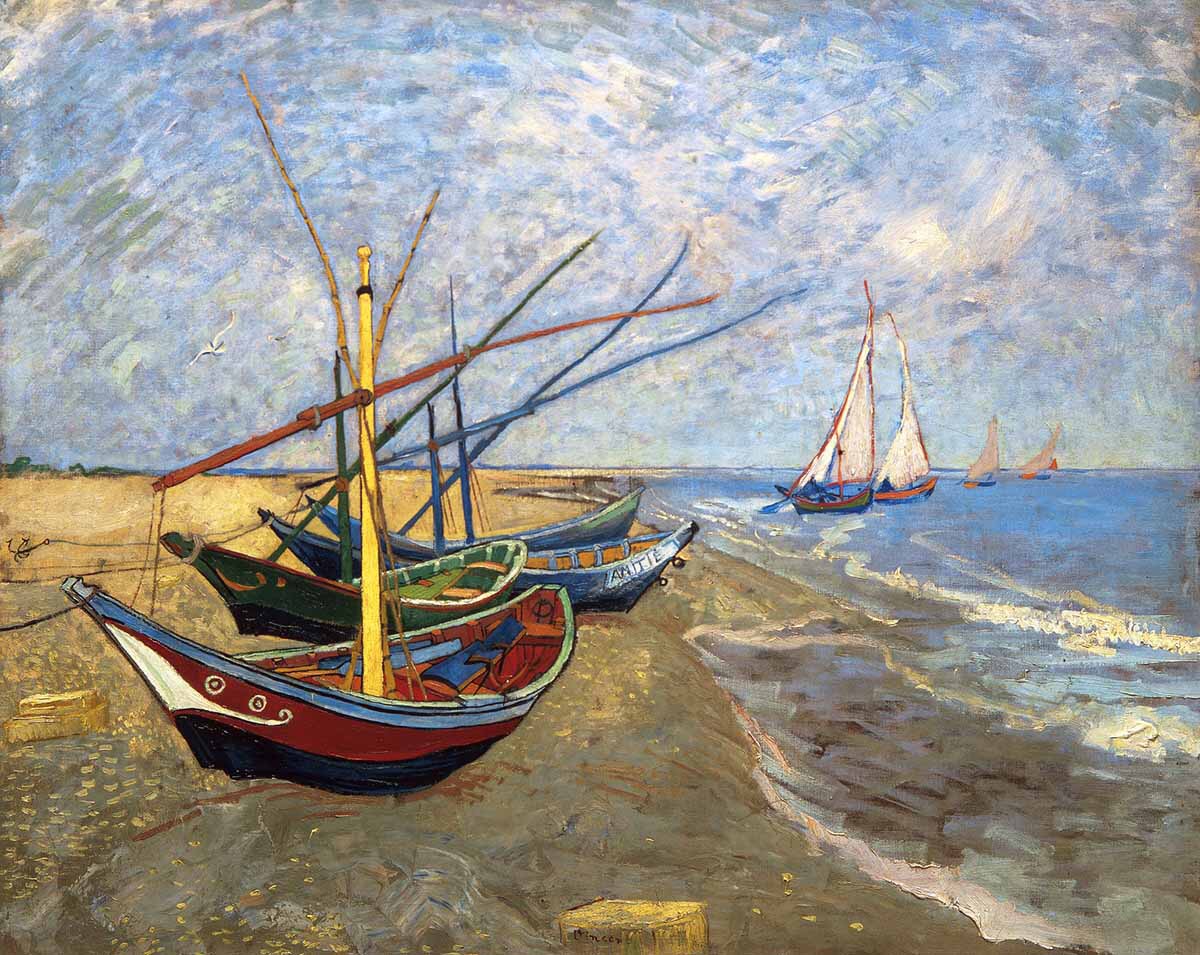
Fishing Boats on the Beach at Saintes-Maries-de-la-Mer by Gogh, Vincent van

Fishing Boats on the Beach at Saintes-Maries-de-la-Mer by Gogh, Vincent van

Only when he moved to Paris in the late years of his short life, sharing a space with Theo, he started to fully develop as an artist, incorporating in his painting traits of the Impressionists – which were becoming very popular at the time – Japanese art, the social works of Manet and Courbet, features of the English landscapist John Constable, the pointillism of Seurat, among other influences. It was then that he started to use bright colors, leaving the drabness and the gloominess of his previous drawings and paintings behind.

In February 1888, he moved to Arles, in the south of France, to make use in his paintings of the bright colors under the Provence sun. There, he rented and lived in what became the famous Yellow House of his biography, initiating one of the most productive periods of his career, painting from day to night, sometimes finishing 3 works a day. Vincent dreamed of turning the place into a utopian community for modern artists – the Studio of the South – where they could work together, exchange ideas and create something unique, based on the strong influences of the past masters and yet innovating painting radically. He aimed for a new Renaissance.

In October 1888 the French painter Paul Gauguin came to Arles to live and work with van Gogh. They had a very tense and tumultuous relationship, though, which ended up with Gauguin leaving the house a couple of months after his arrival. Vincent was left in such an unstable mental state after the quarrel with Paul that he allegedly cut off part of his ear and sent it to a prostitute. He was committed to mental institutions twice after that.

Despite all the external influences van Gogh incorporated in his work, his paintings and drawings remained true to his deep feelings and notions of art. He developed idiosyncratic traits as an artist and imbued his landscapes, portraits, and still lives with his own very unique style, characterized by the use of bright and sometimes unusual combination of colors, large brushstrokes, and fine draftsmanship, which turned his works into effective channels to express his innermost feelings. The seeds of the XX’s century expressionism have been identified in van Gogh’s final and most famous woks.

His most famous paintings were produced during the last two years before his suicide on July 29t, 1890, at age 37. Out of more than 900 pieces of work he put out throughout his short but productive career, only one painting – The Red Vineyards Near Arles – was sold while he was still alive.

He never foresaw how successful he would become, although he was fully aware of how powerful his work was and never doubted his talent and vision as an artist. Today, his paintings sell for tens of millions of dollars, and he’s one of the most famous and beloved artists of Western culture. Among his most recognized paintings, we can list masterpieces such as The Potato Eaters, The Yellow House and Starry Night.

If you wish to a have a chance to discuss and practice English vocabulary, speaking and writing skills based on some of the invaluable works of this unique artist, please check out our series of supplementary materials TEACHING ENGLISH WITH ART, featuring, works not only by van Gogh, but also by Matisse, Picasso, Caravaggio, Monet and Norman Rockwell so far. New materials are scheduled to come out in the near future, watch this space.

Click on the link below to know more about the eBooks: http://wp.me/p4gEKJ-1lS

Teaching English with Art

Teaching English with Art


Watch our promo video on the eBook TEACHING ENGLISH WITH ART: VICENT VAN GOGH:

What’s your favorite artist? Let us know so we can feature him/her in our series.

Au revoir

Jorge Sette


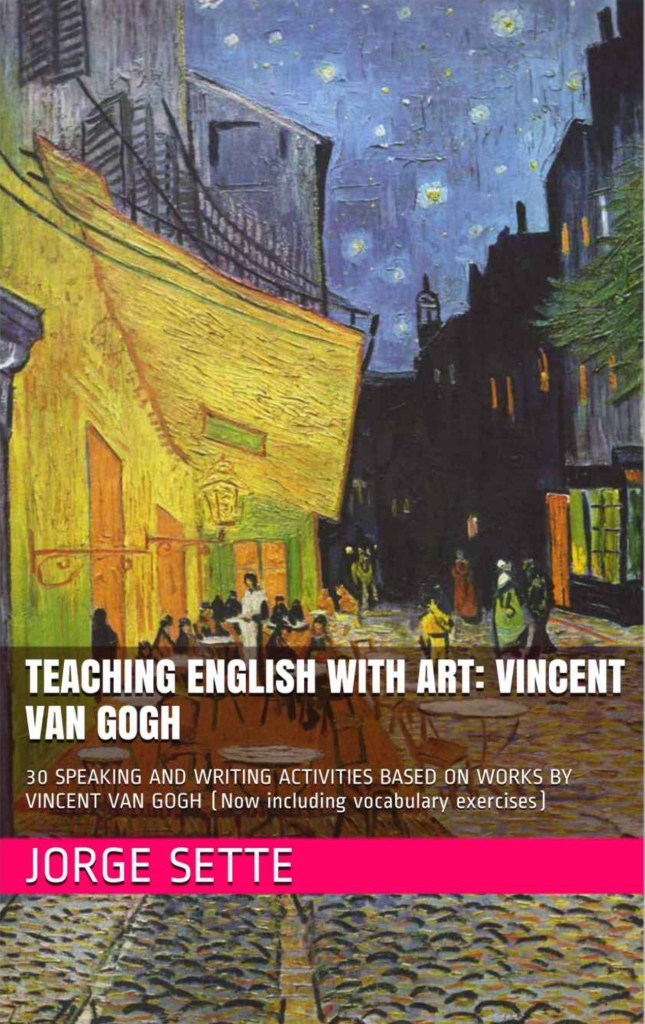
Teaching English with Art: Vincent van Gogh


Teaching English with Art: Vincent van Gogh.  This seventh volume of our successful series of eBooks combining ENGLISH TEACHING AND ART is a wonderful supplement to any coursebook or extra materials your students may already be using in the English class. It contains 30 speaking and writing activities (now including specific vocabulary exercises) for classroom use, based on some of the most striking works by one of the most beloved  and controversial  artists of Western Culture, VINCENT VAN GOGH.

The objective of the eBook is to expose the students to art while teaching English, fulfilling therefore one of the tenets of effective language acquisition: providing a realistic context for the language to be learned and practiced as a means to an end. Your students will love to exercise their English discussing the works of van Gogh. This is a proven way to make language acquisition fun and effective by creating in the classroom an atmosphere of interest, motivation and emotion. Each activity is clearly correlated to the COMMON EUROPEAN FRAMEWORK OF REFERENCE (CEFR), and the level is stated next to it.

Click on the image below to download the ebook:

Click on the image above to get your copy from the KINDLE STO

Click on the image above to get your copy from the KINDLE STORE.

Check out the video clip on the ebook TEACHING ENGLISH WITH ART: VINCENT VAN GOGH

For other books of our series, click here: http://wp.me/p4gEKJ-1lS

Teaching English with art

Teaching English with art

5 Books Kids Used to Love Reading


I was lucky to grow up in a house packed with books. Both my mother and father loved reading. However, a dear aunt who lived with us for the most part of our lives was the real family bookworm. She wouldn’t stop buying books. This is the kind of environment that fosters the taste for reading in a kid. We wanted to know what the fuss was all about. Why do these grown-ups keep their eyes glued to those pages when the rest of us are having such a great time in front of the television watching Lost in Space? I had to find out.

My Mom decided to buy a collection of juvenile books which had just come out. Each volume came out quarterly and was sold from newsstands. It was basically through this collection that I made the acquaintance of some of the  great storytellers of all time: Dickens, R. L. Stevenson, Jules Verne, Mark Twain, Victor Hugo and Jack London to name just a few. J. K Rowling was not among them, but I must confess I find Harry Potter’s The Prisoner of Azkaban a very sophisticated and clever book. The dementors, strange creatures that look after the magic prison featured in the story, are prone to inspire all kinds of psychological metaphors which can be disturbing even to adult readers.

In this post I’m going to list some of the books I loved when I read them as a child or a teenager and try to explain the power they exerted on my imagination, making me become an avid reader for life.

The Bookworm by Spitzweg, Carl 1850

The Bookworm by Spitzweg, Carl 1850

1. Treasure Island by R. L. Stevenson: this was probably the first “real” book I’ve ever read (as opposed to the toy-books and comics I read before). It had a hard cover and it was thick by a 11-year-old’s standards. My brother and I read it around the same time and we couldn’t stop talking about Jim, the kid hero, who finds a map to a hidden treasure, after a mysterious captain dies at his parents’ inn by the sea. This is basically a coming-of-age tale, as Jim embarks on a perilous journey to find the treasure. Of course it has all the clichés  we associate with pirate tales today.  But I believe it must have been among the very first books to create and develop those same clichés in the first place.  Whenever my brother and I would go to desert beaches for a day or the weekend – they’re a lot more common on the northeastern coast of Brazil, where we lived,  than in the rest of the country – we relived in our imagination, as we ran up and down dunes and rocks,  Jim’s adventures and challenges. We were Jim ourselves.

2. The Adventures of  Tom Swayer by Mark Twain: who can forget Tom and Huck, best buddies, having fun, playing games and pranks in a small town by the Mississipi river in the early 1840s? Tom lived with a little bother, Sid, and a cousin, Mary, under the strict surveillance of Aunt Polly, who was always harassing the poor boy on matters of religion, cleanliness and good manners. Huck, on the other hand, was a boy of the streets, son of a drunk hobo, free to do whatever he pleased. Tom was the leader of the gang of the boys in the area, playing pirates and robbers, traveling to islands and exploring caves. The book is also about a boy’s first love and, although for most of us this was not so interesting, Twain made us care a lot about Becky, Tom’s sweetheart, by having them get lost in a maze-like cave, persecuted by a wanted criminal in the thrilling climax of the book. Unforgettable. This book is continued on a much more sophisticated work, The Adventures of Huckleberry Finn, considered Twain’s masterpiece. But I only got to read that a lot later in life.

3. The Call of the Wild by Jack London: the progressive inner journey of Buck – a domesticated dog kidnapped by an unscrupulous farmer employee, and sold to work as a sled dog in Alaska- into his wild self is beautiful and liberating. The story is boldly told from the point of view of the animal itself, so we get a whole new perspective. The story is so powerful that makes one wonder whether we ourselves should not follow a similar path in the search of our truest soul, shedding all the masks and disguises imposed by a false concept of civilization.

4. Oliver Twist by Charles Dickens: of course the possibility of losing my mother was the worst nightmare I had growing up. My father died in an accident when I was very young, so I grew up in constant fear that my Mom might leave me too. Reading Oliver Twist was a great cathartic way to put myself in the character’s shoes and deal with the horrible situations I feared the most, with the relief that, whenever I put the book down, all the horrors I had been through remained pure fantasy and my Mom would still be safely living with me. It was reassuring to realize I’d never had to beg for food as the poor hero after being served a meager meal in one of the most heart-wrenching passages of the book: “Please, sir, I want some more.”

5. Journey to the Center of the Earth by Jules Verne: if you read it today, it will feel a bit dated and definitely unbelievable. But at the time I first read it, I was fascinated by the trip to Iceland to reach the right volcano crater which would lead the characters down to the center of the planet. Some of the images branded forever in my brain by the powerful storytelling are, for example, the huge lake in the depths of the earth where we watch a fascinating fight between aquatic Cambrian monsters; the enormous caves jammed with stalagmites and  stalactites (I bet you don’t know the difference between them!)  the characters had to walk across on their way down, or the narrow halls and passageways along which they crawled down on their mission to get to the center of our planet.  However, it was hard to keep the suspence of disbelief during the passage at the end of the book, when the characters are implausibly ejected to the surface of the planet by riding a flimsy raft on rising boiling magma, traveling up a volcano channel. No way!

The books mentioned above are commonly associated with boys’ taste for challenge, danger, violence and adventure. I suspect, however, that girls might derive the same pleasure from them. What do you think? Please leave your comment and rate this post as you leave the page. Don’t forget to tell us about your favorite books too.

Au revoir

Jorge Sette.


6 Myths about Art Most People Share


Art tends to be surrounded by awe and respect. Museums resemble cathedrals in the way people move around the halls speaking in hushed tones and looking humbly at the works on display. Art or Hight Art – as it’s sometimes called – should be regarded in a more natural and intimate way by the viewers. The lack of great museums in the region makes the contact with art a particularly formal  experience for us Latin Americans. But things are changing as more and more people go abroad, frequent museums, and substitute pleasure and fun for the old sense of respect infused in them when they stood in front of a famous painting or sculpture not many years ago. The myths we are outlining below concern more that kind of art you find in museums and galleries: the visual art produced by the great masters.

1. Art is usually spontaneous and organic. The legend says the talent lies dormant in the artist until it’s suddenly awaken by the muses. In fact, the development of artistic skills is a long and hard path, involving a lot of academic learning, Of course, there are more or less intuitive artists, and mentors may sometimes replace art schools. Formal learning, however, is integral to the process and only practice makes perfect.

2. The best art has idealized versions of  mythology, history or biblical themes as its subject matter. This tradition started being disputed around the time the pre-Impressionists, such as Manet with his mundane and realistic nudes, and the social art of Courbet. Their fight against tradition and academicism was taken to a whole new level by the Impressionists, especially by Monet, who understood art as the apprehension of fleeting moments in time such as the effects of light bouncing off trees, water and plain people in everyday situations. That was what mattered and deserved registering.Colors became bright and more vibrant.

Argenteuil, c. 1872-1875, by Monet.

Argenteuil, c. 1872-1875, by Monet.

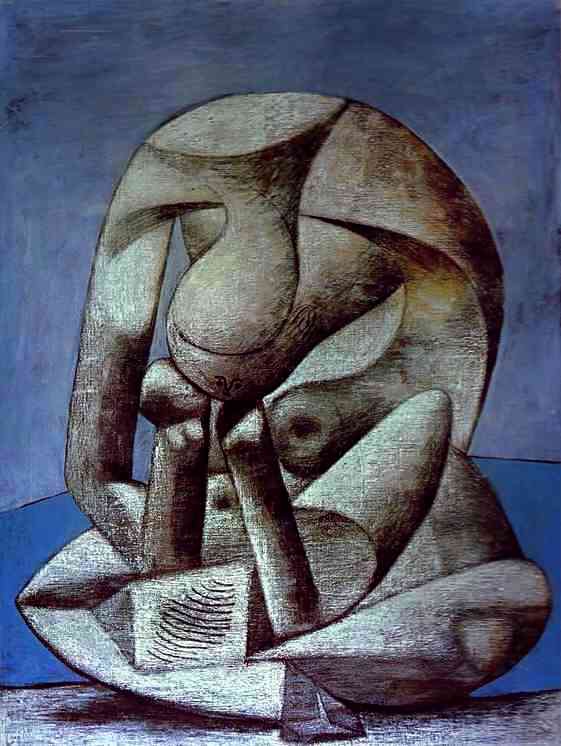
3.  The best art is realistic. Fauvism, Cubism and Modern Art in general showed that there was not much point in replicating what film and photography had  started doing so well as of the XIX century. Art couldn’t and shouldn’t compete with them. So art needed to change. It should remain an expression of what is human, including reality, but as seen through the eyes, emotions, neuroses, and obsessions of the artistic self. Art was a personal way to express the artist’s inner world. Unlike previous painters,  the sense of perspective developed since the Renaissance and the concepts of beauty and balance taken as tenets by the artistic community underwent an earthquake which  shattered those ideals to pieces. This is still going on.

Young Girl Reading a Book on the Beach, by Picasso.

Young Girl Reading a Book on the Beach, by Picasso.

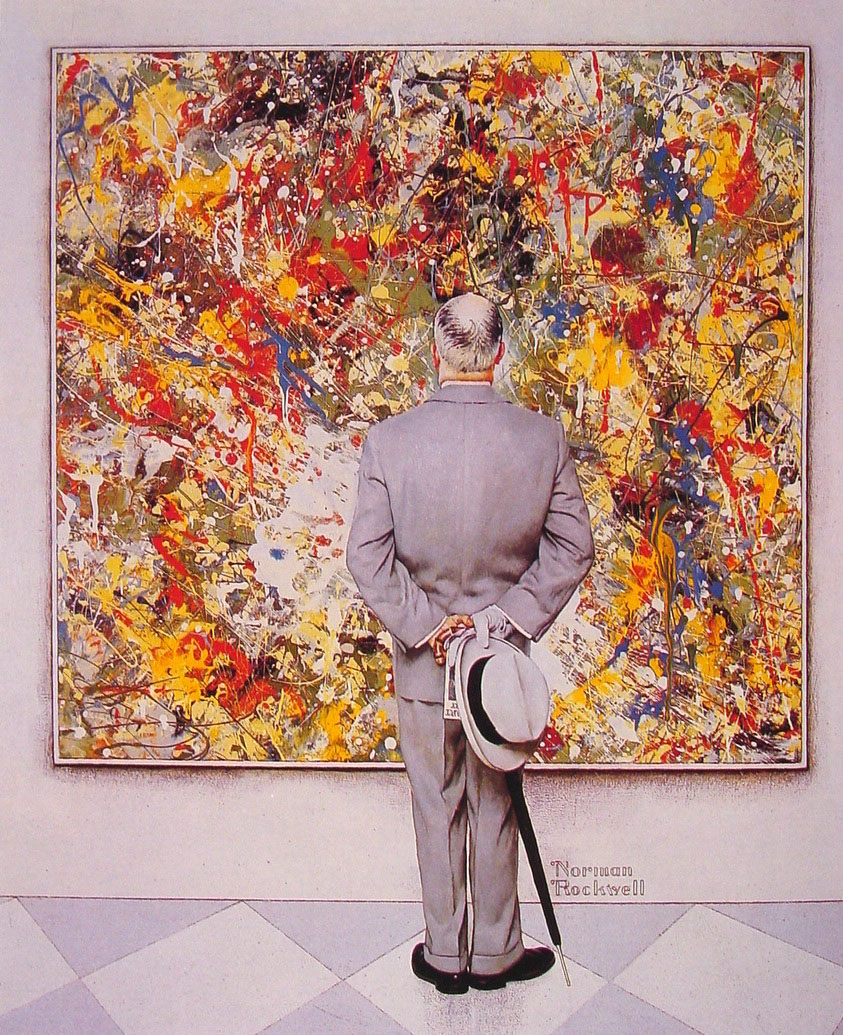
4. Art dealers and critics are the experts and they know it all about good and bad taste. We all know how the Impressionist group struggled to have their works exhibited in the tradition-dominated Salón in XIX century Paris. There are no absolutes in art and if you read Tom Wolf’s iconoclastic The Painted Word – which I strongly recommend – you will laugh widely and be infused by  a sense of liberation as he dissects and analyses ironically the American art of the XX century. There is also a hilarious chapter in  his latest book, Back to Blood,   which mocks merciless the Modern Art World of contemporary Miami, with its dealers, experts, artists and stupid billionaire clients. A must-read.

The Connoisseur: Rockwell's sarcastic take on Modern Art used as the cover for Tom Wolfe's THE PAINTED WORD.

The Connoisseur: Rockwell’s sarcastic take on Modern Art used as the cover for Tom Wolfe’s THE PAINTED WORD.

5. You have an innate predisposition to love, hate or be totally indifferent to art. Not so simple. Just like marmite – for those who have had a chance, like me, to live in he UK for a while and see this initially disgusting jam-like spread sitting on the breakfast table every morning,  or even Japanese food,  whose ever-present ripe odor coming out of restaurants may put you off getting in at first – art is an acquired taste. You don’t have to like it right away, but you may grow to love it by exposure. There is no need to enjoy every famous artist either.  Be selective. Art grows in people. And I strongly defend that by offering  history of art as a subject in the secondary and high school – not very common in most schools in South America –  or by parents exposing their kids to art books at home or visiting museums, young people’s taste will get more refined and we will see a growth in art appreciation over time.

6. Art is for older people. The younger you are the more appealing iconoclastic  and unconventional art will look to you, especially if you have a rebel streak (who doesn’t?) in you. Therefore your initial interest for the drama and violence in Caravaggio,  as you grow more mature,  may be replaced by calmer Monets or a more contained Velàzquez later on in life.  Their beauty and absence of direct conflict can be refreshing as you grow more mature. I still love Janis Joplin, The Stones, Jim Morrison and Sid Vicious. Sometimes it was not even the quality of their music but their life style, perfomances and stage persona – some of them very short-lived, by the way – which captivated me. However,  as I grew more mature,  classical music started to show its charms and take over my musical taste.

We will be talking more about art in the next post. Watch this space.

If you are a language teacher and interested in art you may want to check out our new series of ebooks TEACHING ENGLISH WITH ART, available for download from the Kindle Store. We focus on vocabulary learning, speaking and writing skills in the series. Check it out by clicking here: : http://wp.me/p4gEKJ-1lS

Teaching English with Art, the series.

Teaching English with Art, the series.

Au revoir

Jorge Sette