5 features that make a movie or TV show great


In this day and age of superhero movies, I’m going to dare to give you guidelines on how to judge the quality of a movie. Great movies don’t make money, this is a fact. The reason commonly given is the populace is too dumb and unsophisticated to appreciate their merits. I don’t want to go into this discussion as it spills way beyond the scope of this humble post. However, the opposite is not true either: don’t think that just because a movie delivered a poor box office it deserves any praise. It may be simply because…well…it’s crap. Good movies usually:

1. Focus on character not on plot. Despite the well-known structure of storytelling dug out by mythologist Joseph Campbell and turned into a simplified manual for Hollywood scriptwriters, spelling out all the steps that need to be present in the hero’s journey for a story to resonate with the audience, writers and directors still need to highlight characters. The plot needs to be there, its phases followed in new and  creative ways, but strong characters are what we remember about the best films we see. We may not remember details of the story, but Marlon Brando’s Vito Corleone in the Godfather, Robert De Niro’s Trevis Bickle in Taxi Driver or Robin Wright’s Claire Underwood in House of Cards  are unforgettable.

Marlon Brando as Vito Corleone

Marlon Brando as Vito Corleone

2. Have complex characters. These great characters have the following common characteristics: they don’t comply to black and white codes of ethics, they tend to develop their own morality and follow it consistently; they show either superior intelligence, or charisma or beauty. Or all of them together. Understatement is their main weapon. They do not say everything: a lot needs to be inferred by their eyes, their turn of head, they way their mouths hang open for slightly longer than necessary. They are subtle and complex. We never get to understand their inner agenda to the full.

3. Have scenes played against the grain. Great movies catch the audience off guard, surprise them. They use, for example, as the commentary for a acene, a song  or piece of music that means its exact opposite or that does not belong to the historic period or place the story takes place. The use of LA CUMPARCITA in Woody Allen’s  Alice,  which takes place in contemporary Manhattan – the music plays as Mia Farrow’s and Joe Mantegna’s characters, after taking a magic potion that makes them invisible, pay the taxi driver and the doors of the car open for them to leave completely unseen; the voice over quips: “nothing shocks NYC cab drivers”  – enhances and adds to the humor and oddity of the situation.
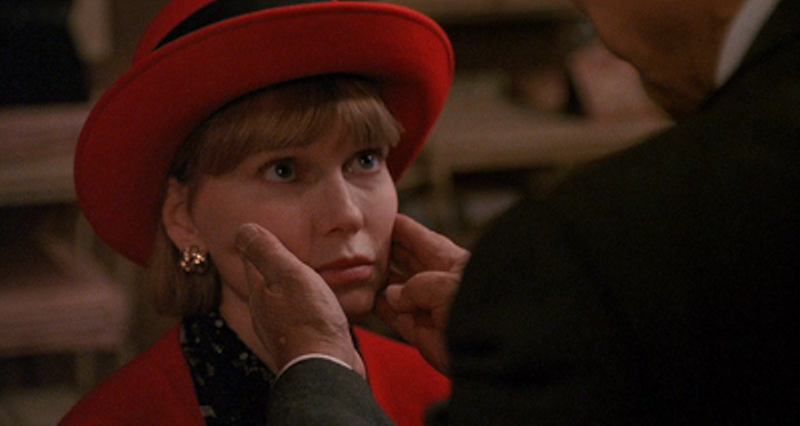
Mia Farow as Woody Allen's Alice

Mia Farow as Woody Allen’s Alice

4. Let emotions emerge naturally. These movies do not manipulate their audience to make them weep. Sentimentality makes films that could otherwise be great syrupy and corny. Emotions must reflect real life and its poignancy to work as art. Think of the scene in Walter Salles’s Central Station in  which the character played by Fernanda Montenegro is shown, in a montage, writing a series of letters to relatives of people who are illiterate and therefore can’t write themselves. They are real people in this particular case  – but might as well be actors – from a small city in the northeast of Brazil, and the succession of short scenes showing these people dictating their messages breaks ones’ heart with their truth, simplicity and beauty.
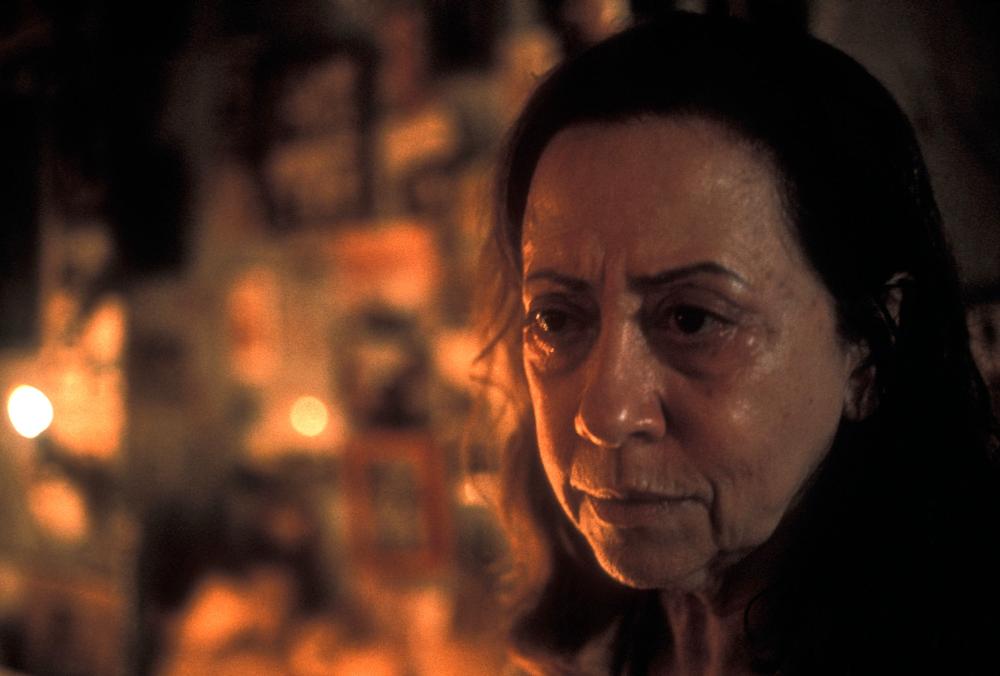
Fernanda Montenegro in  Walter Salles's Central Station

Fernanda Montenegro in Walter Salles’s Central Station

5. Don’t show or say everything.  Life is not neat. Great movies reflect life yet show it through a more interesting angle. But not all must be solved in those two hours a movie lasts. Life is a flow and conflicts are rarely resolved in their entirety. There is no need to explain every character’s motives or reactions or  tie all the loose ends of the story by the conclusion of the movie or TV show. Let the audience wonder. Give them opportunity to use their imagination. Take the typical end of the iconic 2001 a Space Odyssey. If you haven’t read the book, and there’s no need to (it was written to go with the movie), the last 15 min of the movie are all up to you. What is going on? What does that trip to Saturn really mean metaphysically? What’s this guy shown in progressive stages of aging. Who’s this fetus in the intergalactic womb? The viewer will keep those images for a long time in their minds (in my case,  for decades!) and neve stop trying to figure them out.

2001 A Space Odissey

2001 A Space Odissey

Well, great movies are not supposed to follow recipes. So now throw all I said before out of the window and make your own rules.

Good luck

Jorge Sette.
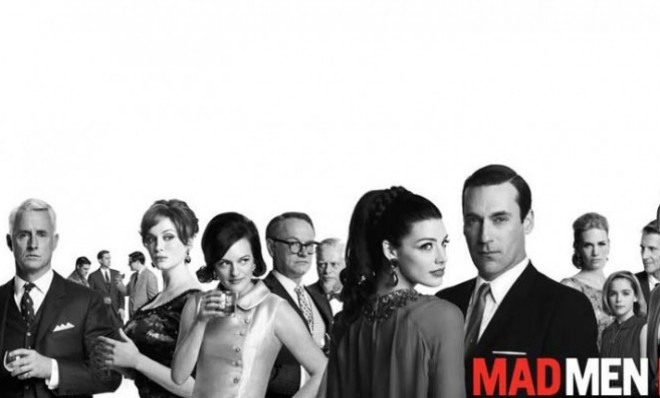
Mad Men: the end of an era


No, I’m not making any references to the famous John Lennon phrase in the beginning at of the seventies (“the dream is over”), although this historical  period will coincide – I suppose  – with the historical time in the series when the storyline will be over.

I have not seen the second half of the last season of MAD MEN yet (it’s currently on). I’m in fact talking about the imminent end of one of the best and most revolutionaries TV shows of all time.

Mad Men

Mad Men

I clearly remember the first episode  of MAD MEN – it was already more than 10 min into the show when I switched on the TV, and, already in the armchair, took a punch in the stomach by what I saw: I had no idea what I was seeing. Could not label or classify it in any of the common categories we use for TV shows and movies.  Could it be the rerun of a famous movie of the nineteen sixties (the image looked too crispy and glossy for that, though), a soap opera, a miniseries? It all looked so strange and new.  Regardless of what it was, I was immediately hooked by the vivid colors on the screen,  the nuanced dialogue, the strange and depreciative way the women characters  were treated in the workplace, the out-of-place boyish and silly behavior of grown men in what seemed to be the setting of an advertising agency, the glamour of the characters’ wardrobe. What was going on?

I remember clearly that the first scene I saw showed the character Peggy Olson (Elisabeth Moss) in the process of  being hired for a job as a secretary (what else were women allowed to do back then?), but the atmosphere of the workplace seemed totally weird: men were being rude and sarcastic to women to their faces (some still do that today, but usually behind that backs), employees were chain-smoking at the office and nobody bothered. All the offices themselves seemed to have a fully stocked bar for whoever wanted to get smashed during work hours. Sexually inappropriate jokes were being thrown right and left among the male employees.

After hired, Peggy was given pointers by one tough Joan Holloway (Christina Hendricks) who seemed to be the personification of a sixties beauty – when women were supposed to be curvaceous, have a huge bust and impossibly narrow waistlines. Joan enhanced her looks by wearing stunningly colorful dresses for work, topped by a shiny updo of red hair, carrying an authoritarian  dominatrix look about herself, exuding sexuality and power: I had just met one of the most original and nuanced characters on TV history.

Then enter Dan Draper (Jon Hamm), from a classic stock of handsome movie stars from yesteryear, not very fashionable nowadays, incredibly seductive with his square chiseled jaw and deep dark eyes, a man’s man, who seemed to seduce all the women around. With eyes glued to the TV and ears attentive to every bit of non-naturalistic but expertly crafted dialogue, which exuded excellence, humor, insight, and irony, I wondered if that was one of the Oscar-winning movies I might have missed from previous years,

The last scene of this first episode was very eloquent, and gave away this was a new TV show I was not allowed to miss: Don Draper gets home. Despite all the unashamed flirting he exercised  during the office hours, he comes to a serene household in the suburbs, where a loving wife and two kids await. The spouse is blond and almost a caricature of a fifties housewife in the bland and domesticated way she looks, except you can immediatey tell from those eyes that Betty Draper (January Jones) is in reality a lot more complex psychologically than she lets on at first sight and more fitting for a jaded woman of the XXI century. Don walks up the stairs heading to the kids’ bedroom, tucks them in,  and kisses them good night in their sleep, as we hear the beginning of the beautifully evocative chords of My Fair Lady’s song ON THE STREET THAT YOU LIVE. We immediately sense  something is awfully off in that supposedly peaceful household. The credits begin to roll.

For the next 8 years or so,  I haven’t missed one single episode of MAD MEN (I tend to buy the DVD sets with the complete season, and spend wonderful weekends binging on it, never ceasing to be amused, surprised, awed and moved by the beauty, sophistication, elagance of dialogue, pathos, superp acting and general charisma of Mathew Weiner’s show.

Well, all good things come to an end. Let’s just hope that in the near future American producers and writers will fight hard to put out modestly successful shows, by the standards of American movies and TV anyway – like MAD MEN, and THE SOPRANOS, which preceded it – undeniably too refined to be appreciated by the barbaric masses who crowd the theaters with their stinking huge bags of  popcorn for the next installment of THE AVENGERS. In the case of Brazil, let’s hope TV people learn and try to shake and shape the sensibility of tired workers who get home after hours in the traffic to nagging wives and whining kids, and, beer in hand, can do nothing but resign themselves to watch catatonically  the pathetic episodes of the latest prime time soap opera or Reality TV show.

Streaming TV (Netflix and Amazon) is the future – we need more shows that push the envelope and, through fiction and documentaries, provide us with unusual angles and insights into life, which, for now, only good literature can impart.

Mad Men

Mad Men

I say goodbye to Don, Peggy, Roger, Joan, Betty,  Sally (the extraordinary child actor who plays the Draper daughter) and all the exceptional ensemble of the show with a deep pain in my heart. They will live in my mind forever, like characters of a Philip Roth novel.

Au revoir

Jorge Sette.

Rockwell…well…rocks!


Norman Rockwell was born in New York City in 1894. Growing up in a middle-class family in the Upper West side of Manhattan, Rockwell was never comfortable being a city boy. Although he spent the first years of his life in this urban environment, he thrived whenever he and his brother were allowed to spend some time in the countryside.

From a very early age, Norman knew he wanted to be an illustrator. He was hired as art director of Boy’s Life, the scouts’ official magazine, when he was still in his teens. However, he became nationally known after he started his 47-seven-year collaboration with The Saturday Evening Post, having painted more than 300 illustrations mostly for the cover of that popular magazine.

Triple Self-Portrait, 1960.

Triple Self-Portrait, 1960.

Rockwell can be considered a family man in the sense that he was married 3 times and had 3 kids from his second wife, but most of his time he was dedicated to his work: 7 days a week, 12 hours a day. There was never much time for his wives and kids. Many say he was a detached and distant husband and father. He also travelled a lot, within the US and all over the world, always carrying on painting during these trips.

Rockwell never considered himself an artist, but an illustrator, specializing in genre scenes, depicting life in small-town America. His illustrations always have an element of humor, but you never fail to sense the pathos injected in the narrative as well. He was one of few popular realists in the world of modernist art of the XX century, where abstract painting ruled.

Before painting his models, he tended to have them photographed by a professional in the specific positions he wanted them to pose. His studio was full of props and costumes available to the models in the sessions. He was very particular about the way he wanted people to pose for him. In New York he used professional models, but when he moved to Stockbridge, Massachusetts (from Arlington, Virginia) he started to choose models from the members of his own community: his relatives, friends and neighbors. He always had a photographer with him. He would paint afterwards based on these photos.

The paintings of Rockwell are usually regarded as the best representation of simple, pure and strong American values. As a matter of fact, he helped create these values and the American identity itself, in a land packed with immigrants from the most different cultural backgrounds and without much cohesion among themselves in the early 1900s. His illustrations – although not always depicting scenes of an accompanying written narrative – are one-frame stories in themselves. His art is all about visual storytelling. You can infer a whole narrative just by looking at one of his illustrations. No wonder, George Lucas and Steven Spielberg – two of the most popular storytellers of the last decades of XX century American cinema – are among his greatest admirers and owners of important collections of his works.

Rockwell was the opposite of the common stereotype of a bohemian Greenwich Village artist. His friends say he was polite, funny and meticulous. Some claim he was a neat freak, who would spend hours cleaning his studio and washing his brushes many times a day. He was a bit of a loner as well.

Together with Walt Disney, Rockwell is the most beloved American artist of the twentieth century. Of course, their work had a lot in common: they were both visual storytellers, capable of charming and mesmerizing their viewers with wonderful drawings, colors and movement. The animation in Rockwell’s work was obviously only suggested, as he dealt in illustrations, but they are never static. His brush lent them an inner life and dynamism that completely won over his audience. The triple self-portrait illustration (1960) we see above is an example of the charismatic paintings he could produce.

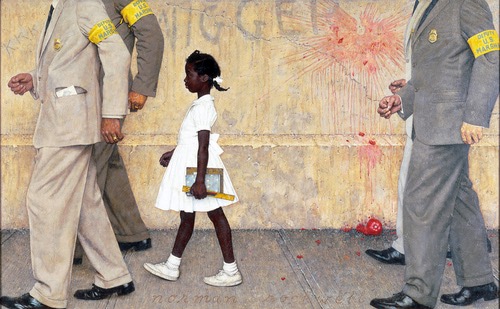
After working for almost 50 years as the main illustrator for the conservative Saturday Evening Post, Rockwell transitioned to the more liberal Life Magazine, where he could explore themes more relevant to the tumultuous times he was living in: the sixties. There, he could produce illustrations that talked to the main issues of the era: racial segregation, women’s liberation and the spacial program. In this post, we show one his most important works of this period: The Problem We All Live With, from 1964, where he depicts the first Afro-American child – a girl – to go to a desegregated school in New Orleans in 1961, facing all kinds of bullying, mainly from white mothers and teenagers on her way to class. She needed to be escorted by US marshals to be able to get into the school. Her name was Ruby Bridges and Rockwell’s illustration became an icon of the Civil Rights Movement.

The Problem with All Live with, 1964.

The Problem with All Live with, 1964.

On November 8th, 1978, at the age of 84, Norman Rockwell died peacefully in his sleep, due to emphysema. He had already begun to show symptoms of dementia in his final years.

The Norman Rockwell Museum in Stockbridge, Massachusetts, was founded in 1969 and houses the world’s largest collection of his works.

Norman Rockwell is the 5th volume of our successful series of eBooks TEACHING ENGLISH WITH ART. If you wish to know more about the series, please click here: http://wp.me/p4gEKJ-1lS

Take a moment to watch the video clip of TEACHING ENGLISH WITH ART: NORMAN ROCKWELL

Au revoir

Jorge Sette


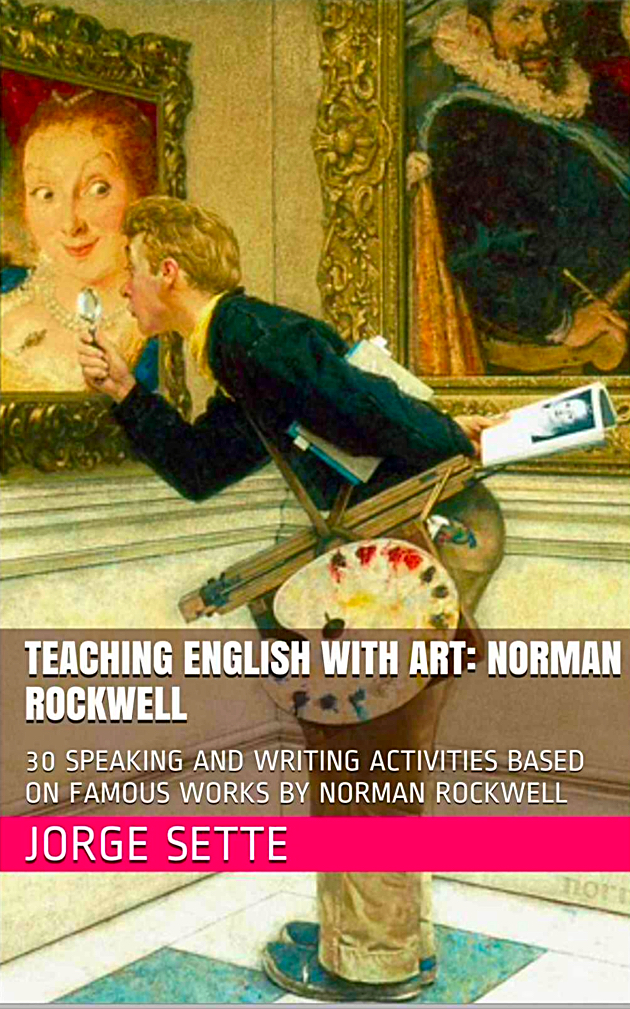
Teaching English with Art: Norman Rockwell


Teaching English with Art! This ebook is a wonderful supplement to any coursebook or extra materials your students may already be using in the English class. It contains 30 speaking and writing activities for classroom use, based on some of the most striking works by one of the most loved American artists of the XX century, NORMAN ROCKWELL, famous for his illustrations. The objective of the ebook is to expose the students to art while teaching English, fulfilling therefore one of the tenets of effective language acquisition: providing a realistic context for the language to be learned and practiced as a means to an end. Your students will love to exercise their English discussing the works of Rockwell This is a proven way to make language acquisition fun and effective by creating in the classroom an atmosphere of interest and motivation. Each activity is clearly correlated to the COMMON EUROPEAN FRAMEWORK OF REFERENCE (CEFR), and the level is stated next to it.

Click on the image below to download the ebook:

Teaching English with Art: Norman Rockwell

Click to the image above to download the eBook.

Take a moment to watch the video clip of TEACHING ENGLISH WITH ART: NORMAN ROCKWELL

Au revoir

Jorge Sette

Getting your students to speak in the language class


Despite  Steven Krashen’s famous methodology of language acquisition, in which he claims students must go through a silent period before they can speak, we know how anxious our students are to start producing the target language from day 1.  This silent period is the time learners need to be exposed to enough comprehensible input so they can absorb the language and be able to speak it. It emulates what happens when kids acquire their first language. Having said that, it’s a fact that motivation also plays a key part in language learning, and setting up speaking activities from the very beginning of the language course will not, in my opinion, have any negative effect on the students’ development: they will not be able to do much, though, but that is OK. Motivation will work wonders. The elementary level, which is usually known as A2 in the Common European Framework benchmark, would be the ideal moment to start with speaking activities, but don’t worry too much if you have to do it earlier to please your students.

Teachers usually complain about the same problems when they set up speaking activities: students might not know what to say, they are shy to speak in public, they don’t know enough about the topic, they are not that interested in the topic.

Students don't know what to say.

Your students don’t know what to say.

So, as a teacher and teacher trainer, with many years of experience, and with the help of a number of methodology books I have read throughout my career, I would humbly suggest a few tips to get your speaking activities going smoothly in the language class. See the main points below:

1. Decide whether the activity will be task or topic-based: a task-based activity typically  involves the use of language as a means to an end. The students, for example, are given a problem (e.g. give each pair of students a list of 10 objects and ask them to discuss and negotiate the following problem: you are stranded on a desert island, if you could pick 5 of these 10 objects to have with you on the island, which ones would you both pick?). To pick the objects, they will have to justify their choices.  On the other hand, a topic-based activity requires the students to discuss or talk about a specific subject (e.g. what’s your country’s situation concerning racism?) The more they are able to personalize the topic, contributing their own opinions and experiences, the more they will have to say about it. If you wish to read more on this, please refer to my previous post “Topic-Based versus Task-Based Speaking Activities”: http://wp.me/p4gEKJ-1nJ

2. Give them context (input):  Before setting up an activity, expose the students to some linguistic or visual context, so they can rely on some form of scaffold to help them structure their output. The stimulus can be established through a text, a picture, a video clip or a listening passage, for example. But it’s important that the teacher introduce the topic, or brainstorm some vocabulary and ideas about it before having the students talk about it.

3. Brainstorm: depending on the input the teacher chooses to use in the step above, the brainstorm will be more or less controlled. If the students have been given a written text, for example, the teacher should work on it and exploit some ideas and related vocabulary and grammar. If the teacher starts by showing a painting by a famous artist,  the brainstorming will have to be longer and less controlled. The students will probably have to learn some new vocabulary as well, get to know something about the artist and his times, or even his style and technique. Always elicit info from the students before spoon-feeding them with ready-made answers: you might be surprised about the vocabulary they already have or their knowledge about the topic.

4. Get them to work in pairs and/or small groups as often as possible: do not put the students in the awkward position of speaking in front of the whole class right at the beginning of the exercise. Give them time to prepare their answers. The best way to do that is, of course, to put them in pairs or little groups, so they can participate more and not feel intimidated by a big audience. Many times they won’t even have to speak to the whole class at the end, or you could ask only for volunteers to share their work. During the activity, however, make sure you go around not only monitoring the different groups but also lending them a hand.

5. Focus on fluency: the aim of the speaking activities we are discussing in this post is not to drill grammar points or practice vocabulary,  or even pronunciation, in a controlled way. As the students produce their utterances, make a mental note or write down discreetly some of the most common mistakes made, especially the ones that involve grammar or vocabulary already taught in previous lessons. Do not interrupt the students for correction, unless you don’t understand what is being said. Decide on what you are going to focus on for correction in each activity, then, at the end, or in a future lesson, list the mistakes on a handout and pass them to the learners, so they can correct the mistakes in pairs, without  necessarily naming the perpetrators.

6. Personalize the activity:  people like to talk about their own experiences. Design questions that allow them to talk about their own tastes, aspirations, experiences and life in general.

7. Make the questions as opened-ended as possible: to make this personalization possible, try to design questions that allow for open-ended answers, do not look for right/wrong answers, but for opinions and suggestions.

8. Make the activity as relevant as possible:  choose topics or direct the discussion towards a path that is relevant to the group of students you have. The same speaking activity can be slightly changed to reflect the reality and interests of a different group of students. The closer they feel to the topic being discussed or the task being proposed the more productive the result will be.

Some speaking activities will go better than others, as you know. Don’t give up on a well-prepared exercise if it does not work well with a particular group of students. Try it a number of times with other students: it might work better. The important thing to remember is the more the students are exposed to linguistic input, by either reading or listening, the more fluent and accurate their delivery will be eventually. So make sure you focus on receptive skills especially at the earlier levels of the course your are teaching before worrying too much about the success of the speaking activities.

If you need help with materials, we have an excellent series of eBooks with ready-made vocabulary, speaking and writing activities to make your life easier. It’s called TEACHING ENGLISH WITH ART, with 8 books so far. It features f works by famous artists, such as Matisse, Picasso, Caravaggio, Monet, Norman Rockwell, van Gogh and Winslow Homer which will function as a springboard  to contextualize topic and task-based activities, as well a process writing practice. For further info, please click here http://wp.me/p4gEKJ-1lS

Au revoir

Jorge Sette

A Brief History of Caravaggio


Michelangelo Merise was born in Milan in 1571 and grew up in a town nearby called Caravaggio, hence his artistic name.

He grew up in times of severe religiosity, brought about by the Counter-Reformation, whose objective was to stop the advance of Protestantism, having Catholics return to a more austere and simpler form of Christianity, based on the cult of Jesus, Mary, the saints and martyrs of earlier times. They tried to accomplish these objectives through repression (the Inquisition) and propaganda (buildings and works of art). The austere values of the Counter-Reformation deeply impregnated and influenced Caravaggio’s paintings.

Caravaggio

Caravaggio


After a couple of years as an apprentice in Milan, Caravaggio moved to Rome in his early 20s, where, alone, hungry and penniless, he had to compete with a great number of other artists who flocked to what was considered the center of the world to make it as a famous painter. His career really took off when he fell under the protection of a very well-connected patron, Cardinal del Monte, who changed his life.

It didn’t take long for Caravaggio to acquire fame. Boosted by his patron’s connections, his network grew steadily. Endowed with a very original and unique artistic style, he was soon considered the best painter in Italy. He became famous mainly for his dramatic use of light and shadows, in a style known as tenebrism (chiaroscuro), in which he painted biblical, mythological and everyday scenes in a very naturalistic way. The mission of a painter, according to Caravaggio, was to represent real life with all its flaws, ugliness, and occasional beauty.

Conversion of Saint Paul on the Road to Damascus, 1601.

Conversion of Saint Paul on the Road to Damascus, 1601.


Caravaggio, however, had a very difficult personality. Short-tempered and with a violent streak, he was wild. Roaming the mean streets of Rome after nightfall, he would very often get into fights and brawls. He frequented taverns and brothels, always carrying his sword, which was illegal, and he did not hesitate to use it whenever provoked. Those were hard times and he was the object of much jealousy and envy.

Extremely volatile and abrasive, Caravaggio was eventually involved in murder. He got into a fight over a tennis match and ended up killing his opponent. This probably makes him the only great artist ever to commit murder. Banished from Rome, he fled to Naples, where he started a new life and was soon given commissions by important people to paint again.

From there, he moved to Malta, hoping to become one of the famous Knights of Malta, a combination of military and religious order which was formed to defend Christianity against its enemies. Difficult as it was for most people to enter the order, his powerful connections were at work again here and he managed to be accepted. This was meant to be the first step to get him a papal pardon, which would allow him to return to Rome.

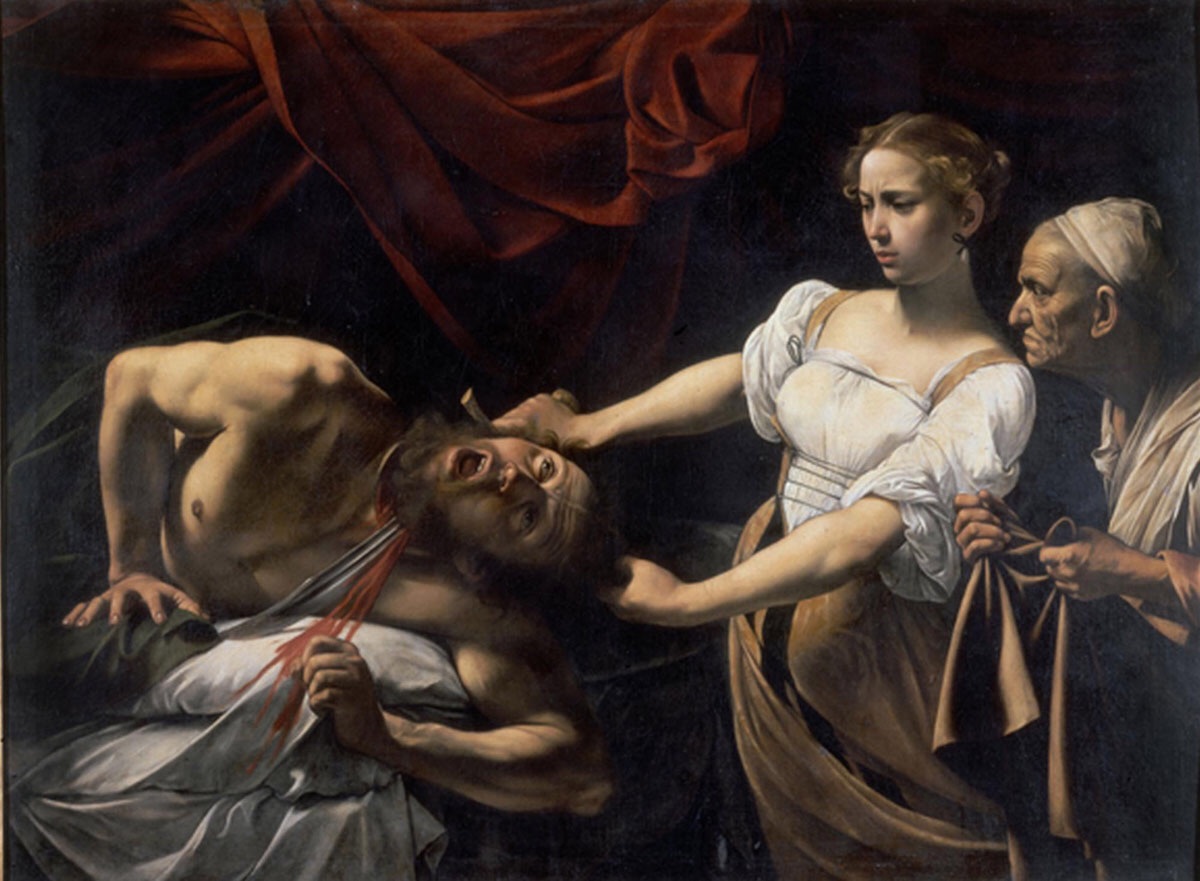
Judith beheading Holofernes, 1598/99

Judith beheading Holofernes, 1598/99

However, the circumstances and his harsh personality again hindered his plans. He got in trouble in Malta, and from then on, lived in the run for over 2 years, moving constantly to places such as Syracuse and Palermo in Sicily, and again back to Naples, where more trouble awaited. Finally he seems to have been stricken by a fever and died alone on a beach in Porto Ercole, supposedly on his way back to Rome. His body was never found.

If you are interested in Caravaggio, please check out our eBook series TEACHING ENGLISH WITH ART: http://wp.me/p4gEKJ-1lS

Check out the video on Caravaggio’s eBook below:

Au revoir

Jorge Sette


A Brief History of Claude Monet


The quintessential Impressionist, Claude Monet was born in Paris in 1840 but grew up on a beach town in Normandy, Le Havre. His father was a grocer and his mother was a singer.

From an early age he was bored with regular school and spent more time drawing sketches on the blue pages on his notebooks than dedicating himself to his lessons. These sketches were caricatures of teachers and famous people, and he was able to sell them easily for a fair price.

Claude Monet

Claude Monet

In 1858, Monet met the seascape painter Eugène Boudin, who would have a huge influence on Monet’s style of painting. Monet began to appreciate nature and wish to paint the effects of light and shadows on water, trees, and flowers. He learned that the ideal way of painting was in the “open air”.

He decided to move to Paris and join the Académie Suisse in 1859. The atmosphere of the Académie was very relaxed, the hours were flexible, and the painters were free to develop their own experiments. Later, Monet joined the studio of Charles Gleyre, where he made friends with the artists Bazille, Renoir and Sisley.

The most important achievement for an artist in those days was to have his paintings accepted and shown at the famous Salón, an official annual exhibition in Paris, sponsored by the government. Despite the fact that Monet had some works accepted there, he soon realized that the kind of painting he was interested in would never be popular in that traditional environment.

The paintings in the Salón were usually idealized works, representing historical or mythological subjects. They were usually perfectly finished with extra coats of paint added to them. Monet, however, had realized very early on that what he enjoyed painting was the real world: landscapes, seascapes and contemporary Paris, applying vibrant colors, representing the way light was reflected on trees, grass, water, flowers and regular people. He was one of the first painters to paint outdoors from the start to the end of a painting. He thought it was essential to capture real light and the way it changed along the day and in different seasons of the year.

In 1874, his group of friends, who also had difficulty having their artworks accepted by the Salón, decided to have an exhibition dedicated to their own works. Of course, it was hard to compete with the Salón, and their exhibition only attracted a fraction of the public who would go to the traditional event, but that was a start, anyway. Their alternative exhibition was repeated every year for the next eight years.

In 1874 exhibition, Monet presented a painting called Impression: Sunrise (see image below). All we saw in it was a solitary boat on the sea in Le Havre with a red sunset reflecting on the water, painted in fast, diffused brushstrokes. An art critic, Louis Leroy, from the magazine Charivari, mocking the title and the style of the picture, wrote that the artists that painted like Monet were mere impressionists. His paintings looked more like sketches rather than finished works of art. Despite the derogatory use of the word, Monet and his friends boldly appropriated the name and started to use it officially to define their revolutionary new style. Impressionism had been born.

Impression, Sunrise, 1876.

Impression, Sunrise, 1876.

Claude Monet had financial problems for most of the first part of his life, but he started to make real money after he turned forty. By then, Impressionism had already become a recognized and important artistic style, admired and sought after by many art dealers.

He married twice. He had two sons by his first wife Camille, and 6 stepchildren from his second wife, Alice. He spent forty years living in a beautiful house with his whole family, painting views from his wonderful garden and artificial pond, carefully put together by himself with the help of 6 gardeners. This house was in Giverny and can still be visited by tourists today.

When he moved to Giverny in 1883, Monet started to paint what is usually known as the series paintings: he would paint the same subject on many canvas at a time, working on each one according to the right time of the day, giving continuation to each of them on the following day. So, as the light changed, he moved to the next painting matching the right time of the day, in a sequence. He started with haystacks, and then moved on to poplar trees, the Rouen Cathedral and, finally, the famous water lilies. He has more than 200 paintings on lilies, including the huge curved panels kept at the Musée de l’Orangerie, near the Louvre.

Blue Water Lilies: 1916-1919

Blue Water Lilies: 1916-1919

It is important to say that, although Monet was the official founder of Impressionism, he had been strongly influenced by the works of Manet and Courbet, who came before him, and, at a later stage, by the works of Turner and Constable, which he was able to get to know when he lived in London with his family, during the Franco-Prussian war. The group of Impressionists consisted of many artists, such as Renoir, Bazille, Sisley, Degas, Cézanne and others, who strengthened the movement with their powerful contributions. Cézanne was the one who took the movement forward, showing the way to the future, heavily influencing iconic artists such as Matisse and Picasso.

A chain smoker, Monet died of lung cancer in 1926, having worked hard on his paintings and his garden to the very end. Claude Monet is one of most famous and loved artists in history, and his paintings sell for millions of dollars today.

If you are interested in Monet, please check out our eBook series TEACHING ENGLISH WITH ART: http://wp.me/p4gEKJ-1lS

Check out the video on Monet’s eBook below:

Au revoir

Jorge Sette.


Monet’s Fun Quiz: How much do You Know about the Artist?


Take que quiz and find out how much you know about Claude Monet:


Poppies at Argenteuil. 1873

Poppies at Argenteuil. 1873


1.  Where was he born? a. Le Havre, b. Naples, c. Paris


2. What was he like? a. Quick-tempered, b. Calm and peaceful, c. Cold and calculating


3. What kind of painting style is he famous for? a. Romantic, b. Impressionist, c. Baroque


4. What was the most original trait of his paintings? a. Bright colors and open-air painting; b. Idealization of reality and the use of myths c. Emulation of the classical models


5. How did he die? a. Of lung cancer, b. Killed in a battle, c. Of old age


6. Was he famous while he was alive? a. Not at all, b. Pretty much c. In the second half of his life


7. Was he ever married? a. Twice, b. Never c. Once


8. What didn’t he paint? a. Landscapes, b. Boats and water, c. Mythology


9. What’s the historical context he lived in? a. The Counter-Reformation, b. The Second Industrial Revolution, c. The Renaissance


10. Which one is not a Monet painting: a. Puppies in Argenteuil b. Blue Nude IV, c. Saint Lazare Station


Caravaggio's quiz


Claude Monet

Claude Monet


You may wish to take a look at our video clip: TEACHING ENGLISH WITH ART: MONET (the eBook)


For further info on the titles of the series TEACHING ENGLISH WITH ART, click here:

http://wp.me/p4gEKJ-1lS


Teaching English with Art

Teaching English with Art

Au revoir

Jorge Sette


Teaching English with Art: Monet


Teaching English with Art! This eBook is a wonderful supplement to any coursebook or extra materials your students may already be using in the English class. It contains 30 speaking and writing activities for classroom use, based on some of the most striking works by French artist CLAUDE MONET, the founder of Impressionismo. The objective of the eBook is to expose the students to high art while teaching English, fulfilling therefore one of the tenets of effective language acquisition: providing a realistic context for the language to be learned and practiced as a means to an end. Your students will love to exercise their English discussing the works of Monet. This is a proven way to make language acquisition fun and effective by creating in the classroom an atmosphere of interest and motivation. Each activity is clearly correlated to the COMMON EUROPEAN FRAMEWORK OF REFERENCE (CEFR), and the level is stated next to it.

CLICK ON THE IMAGE BELOW TO DOWNLOAD THE EBOOK.


Teaching English with Art: Monet.

Click on the image to download the eBook.

Take a moment to watch the video clip of TEACHING ENGLISH WITH ART: MONET

Au revoir

Jorge Sette


How to work with the eBooks of the series TEACHING ENGLISH WITH ART


Teaching English with art has many advantages: it provides an exciting context; it exposes the students to beautiful and powerful images, making the lesson more memorable; it can easily be linked to other subjects in the school curriculum: history, geography, science, philosophy etc; and, as the response of human beings to different artworks is always unique, teachers can tap into that by personalizing speaking and writing activities. Personalization and freer practice are the most important stages in the language acquisition process.

Our eBooks bring photos of paintings of famous artists such as Matisse, Picasso, Caravaggio, Monet, Norman Rockwell,  Vincent van Gogh and Winslow Homer. Based on these paintings, each book brings a series of vocabulary, speaking and writing activities, composing a set of 30 items altogether, each divided in a number of exercises. The students are encouraged to work on both topic-based and task-based types of speaking activities, and explore the steps of process writing. Teachers are free to decide how much time their students should spend on each writing activity. Notice that, while the speaking activities should take place in class, some of the steps of the process writing activities, such as drafting and publishing, can be assigned as homework. For further information on these approaches, please refer to the following articles previously posted on the blog LINGUAGEM:  Topic-Based versus Task-Based Speaking Activities (http://wp.me/p4gEKJ-1nJ) and Writing: Focus on the Process not on the Product (http://wp.me/p4gEKJ-1ot)

Click on the picture above for further info

Click on the picture above for further info

The activities in each book cater for different linguistic levels, ranging from beginner (A1) to  advanced (C2). They are correlated to the COMMON EUROPEAN FRAMEWORK OF REFERENCE, which makes it easy for the teacher to match the eBook exercises to whatever other teaching materials they are already using, providing, therefore, effective and interesting supplementary work on productive skills. These extra activities can be used as a warm-up; whenever the teacher feels the class needs a boost in their motivation during the lesson, through an energizing task; as a filler for a lesson which finished earlier; or as complement or extension to topics already covered in the main coursebook.

Our materials are not meant for self-study. It takes a teacher to monitor and lead the students through the activities, but the eBooks can be used both in traditional classrooms or on online courses. Ideally both teachers and students should have their own practice books – downloaded to the Kindle app on their desktops,  laptops, tablets or smartphones. Whenever the teacher wishes to provide heads-up exercises or have the students focus their attention more effectively, they can project the pages of the eBooks onto a blank wall, and ask the students to switch off their electronic devices.

Most of the speaking activities can be done in pairs or groups. Alternatively, the whole class can be involved. We suggest the teacher give the students some preparation time before they are ready to speak in front of the class. Another important technique would be to have the student repeat the same story, role plays or any other speaking activity with more than one partner, in sequence. He will invariably perform better the second or third time around.

As for the writing activities, we advocate the use of process writing techniques. The student should work on drafts that progressively get more sophisticated and accurate until they reach the final product. Students should be trained to self-correct or peer-correct these drafts. Teachers should establish how many drafts they expect for each activity. The final draft can then be corrected by the teacher before being displayed to the class in some form. Please remember that it’s during the drafting phase that students learn how to write. The final product is only a consequence. The longer they spend on the drafting phase, the better their writing is going to get.

In addition to the exercises, the eBooks bring short biographies of each of the artists featured, the historical context he lived in and the main characteristics of the artistic movement he participated in. The teacher should give the students a brief overview of the artist’s biography, his times, where he lived, and his style. Teachers will not need to go beyond what is written in the eBook, although there is a wealth of information freely available on the Internet if teachers or students wish a more in-depth introduction or to know more about the artist.

Some of the eBooks also contain short texts referring to specific artworks of that particular artist, either because they are prominent in his oeuvre or because they are based on historical or mythological events that, if explained in a more comprehensive way, will enhance the student’s understanding of the painting and help them with their English production.

We are certain these eBooks will prove invaluable in making your lessons stand out and help your students develop their English. For further info on the series TEACHING ENGLISH WITH ART, please click here  http://wp.me/p4gEKJ-1lS and purchase the eBook about your favorite artist right now.

Check out this fun video clip on our CARAVAGGIO eBook:

Au revoir

Jorge Sette