Portuguese is one of the world’s most widely spoken languages, but there’s so much more to it than meets the eye. Here are ten intriguing facts about this beautiful and versatile language:
1. Portuguese Is the Official Language of 10 Countries
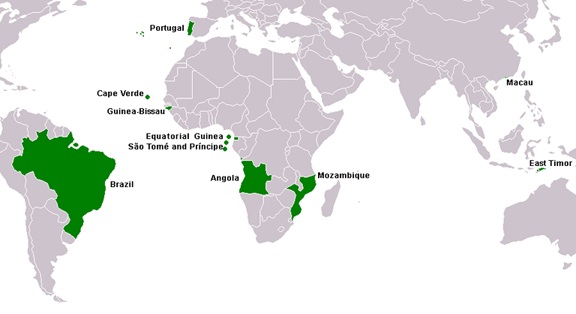
Portuguese is the official language of: Portugal, Brazil, Angola, Mozambique, Cape Verde, Guinea-Bissa, São Tomé and Príncipe, East Timor, Equatorial Guinea, Macau (the latter is not a sovereign country, but it recognizes Portuguese as an official language).
Together, these nations and regions form the Community of Portuguese Language Countries (CPLP).
2. Brazil Has the Largest Portuguese-Speaking Population
With over 220 million of the world’s Portuguese speakers, Brazil is the largest Portuguese-speaking country. As a matter of fact, Brazil accounts for more than 80% of all Portuguese speakers worldwide.
3. Portuguese Is the Fastest-Growing European Language
Portuguese is the fastest-growing European language after English. Its spread in Africa and its increasing relevance in global trade contribute to its rising prominence.
4. It Has Influenced Other Languages
Portuguese has left its mark on several languages, especially in Asia. For example, words like chá (tea) entered Japanese, Cantonese, and even English via Portuguese traders.
5. It’s a Romance Language
Portuguese evolved from Latin, just like Spanish, French, and Italian. Its closest linguistic relative is Galician, spoken in the Galicia region of Spain.
6. Portuguese Is the Sixth Most Spoken Language Worldwide
Portuguese has 265 million speakers, ranking as the sixth most spoken language in the world, following Mandarin Chinese, Spanish, English, Hindi, and Arabic.
Soccer – Ipanema Beach, Rio.
7. It’s One of the Most Phonetic Languages
Although Portuguese pronunciation may seem tricky at first, the language is relatively phonetic. Once you learn the rules, it’s often possible to pronounce words correctly by reading them.
8. Many Portuguese Words Have Arabic Origins
When the Moors ruled the Iberian Peninsula, they introduced many Arabic words into Portuguese. Common examples include açúcar (sugar), alface (lettuce), álcool (alcohol), alfazema (lavender) almofada (pillow), marfim (ivory), azeite de oliva (olive oil), and algodão (cotton).
9. There Are Unique Portuguese Sounds
Portuguese has sounds that are rare in other Romance languages. For instance, nasal vowels (marked by a tilde, like in ocupação) are a distinctive feature that can be challenging, and, yet, interesting to learners.
10. It’s One of the Oldest Modern Languages
Portuguese was officially recognized as a language in 1290 by King Denis of Portugal. He founded the first Portuguese university and declared that the Vulgar Language (spoken Portuguese) should replace Latin as the official language in legal documents.
Conclusion
Portuguese is a rich and fascinating language with a global footprint. Whether you’re learning it for travel, business, or cultural appreciation, these facts highlight its historical and linguistic significance. Did any of these surprise you? Let us know in the comments!
NOTE: I give online classes of Brazilian Portuguese for foreigners. If you are interested, don’t hesitate to reach out: jorge.sette@terra.com.br
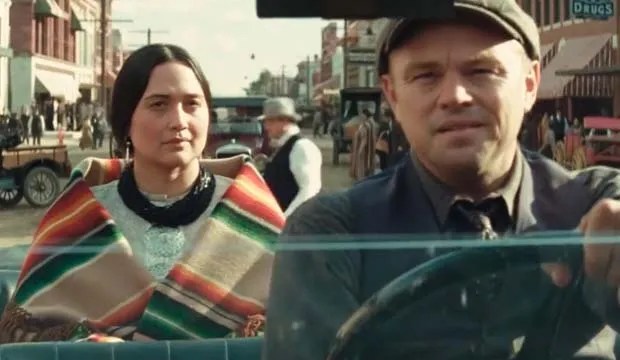
Having seen Scorsese’s wonderful latest movie (Killers of the Flower Moon), I was tempted to get the book it was based on – written by David Grann.
I finished the book in 3 days, couldn’t put it down. It’s a factual account of brutal events I had never heard of and that gives us a totally different perspective on the mythical cowboys and westerns fabricated by Hollywood.
It tells the story of the Osage tribe of indigenous people forced to relocate from Kansas to a new reservation in Oklahoma (with a rocky and arid terrain) at the end of the 19th century. It turned out the soil was rich in oil, which turned the tribe into one to the richest nations on earth.
Of course, it didn’t take long for the ambitious “whites” to do everything they could to rob those people – considered second-class citizens, or even animals – of their wealth, starting a ”reign of terror“: Corruption, murders, and all kinds of fraudulent schemes took place, with the complicity of the highest authorities of the land.
The book, of course, offers a lot more details and also tells the reader about the creation of the FBI, which is also a great story.
The best thing is that now I found a new favorite writer: I have just started reading David Grann’s latest book: The WAGER.
Let’s us know if you have read the book (or seen the movie) and what you think about it.
Why would a Brazilian, without a drop of British blood flowing through his veins, choose to read “Spare”? Well, stories of privileged but unhappy people managing to escape their gilded cages, spreading their wings and flying, as sings Elton John – one of Lady Di’s closest friends – in the song Skyline Pigeon, has always fascinated me. Rebels are my kind of hero. Besides, I couldn’t miss all the buzz surrounding the launch of the book.
I lived in the UK for almost two years, ages ago (a very happy time in my life). It shouldn’t come as a surprise for those who know me that I simply love the English language (in all its variants), its literature, movies, and music. I also learned to like Marmite – an acquired taste! The National Gallery, Saint Paul’s Cathedral, and the Tube are also very close to my heart, as are the London parks and the colors of the land: green and gray. I paid three visits to Salisbury, just to experience Stonehenge in different seasons. Cornwall is a dream: The place I would love to grow old in.
Stonehenge
As for the British Monarchy, I never considered that institution something relevant to my life – I felt it was just an alien and outdated British cultural trait (although we did have something similar in Brazil for almost 400 years too). It fits into the same category of rugby, cricket, or EastEnders, the soap opera which had been running for centuries when I lived there.
I only began paying attention to the dysfunctional royal family, when Netflix’s The Crown started streaming – and, being told time and again by people who feel very strongly about it that it’s mostly fiction – I watch it as mere entertainment.
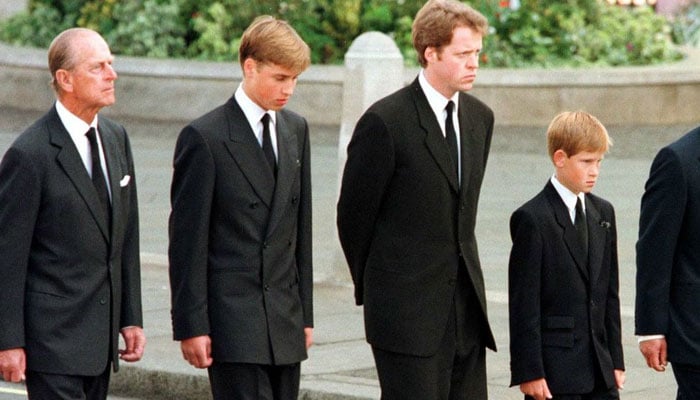
Years after I had come back to Brazil, the death of Lady Diana Spencer woke me up to the fact that the British Press was a weird and dangerous animal, but it did not really affect me – after all, I had never bought or even read a single page of a tabloid while I lived there, so did not even feel guilty. On the other hand, the image of a young Prince Harry walking behind his mother’s coffin left a painful and lasting impression: Actually, I never forgot it. As he grew up before the world’s eyes, contrary to what was portrayed in the media, I always considered him a normal boy, doing average stuff and making the same stupid mistakes we all did when we were young. Besides, he seemed rather lonely. I decided I liked him.
This long introduction is just to say that, Spare, his memoir, is a lot less whiny than I thought it would be. As a matter of fact, there’s quite a lot of humor, and I did enjoy it. The third and last part of the book is less exciting. After all, we all have heard about “When Harry met Meghan” – minus the hilarious fake orgasm scene in the restaurant, an iconic moment performed by Billy Crystal and Meg Ryan in the 80s movie with a similar title – more than we cared. However, I found it quite illuminating and sobering to know more about Harry’s education at Eton, the various palaces and estates the family owns, how the houses of the different members are distributed and allocated, his years in the Army (especially the boot camp passages), his trips to Africa and to both poles, and how the death of his mother traumatized him. The closeness and friendship that Harry seemed to share with his “granny”, the deceased Queen Elizabeth II, was also moving and unexpected.
It was also juicy gossip to find out how Charles, Camilla, and even his brother William, and their respective staff, are engaged in fiercely backstabbing each other to gain popularity in the media. The rivalry is so brutal that each camp gets to the point of leaking fake stories to the press to be seen as the good guys in the family.
Even if it’s all fiction, it’s well-written fiction, and makes for compelling reading. I recommend it.
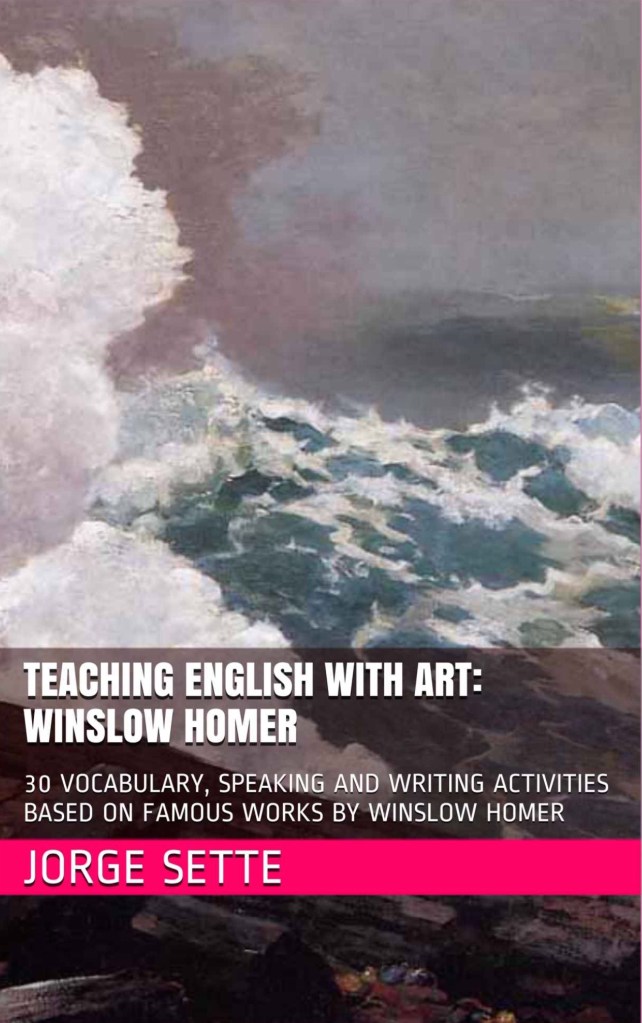
Teaching English with Art: Winslow Homer. This eighth volume of our successful series of eBooks combining ENGLISH TEACHING AND ART is a wonderful supplement to any coursebook or extra materials your students may already be using in the English class. It contains 30 vocabulary, speaking and writing activities for classroom use, based on some of the most striking works by the best American artist of the XIX century.
The objective of the eBook is to expose the students to art while teaching English, fulfilling therefore one of the tenets of effective language acquisition: providing a realistic context for the language to be learned and practiced as a means to an end. Your students will love to exercise their English discussing the works of Winslow Homer. This is a proven way to make language acquisition fun and effective by creating in the classroom an atmosphere of interest, motivation and emotion. Each activity is clearly correlated to the COMMON EUROPEAN FRAMEWORK OF REFERENCE (CEFR), and the level is stated next to it.
IMPORTANT NOTE. CUSTOMIZATION: if you wish to change the cover of any of the ebooks, add your school logo, negotiate a special price for a determined number of students, or make other suggestions of customization, do not hesitate to talk to us. We are VERY FLEXIBLE. Make your ebook UNIQUE!
Click on the image below to download the ebook:
Click on the image above to get your copy from the Kindle Store.
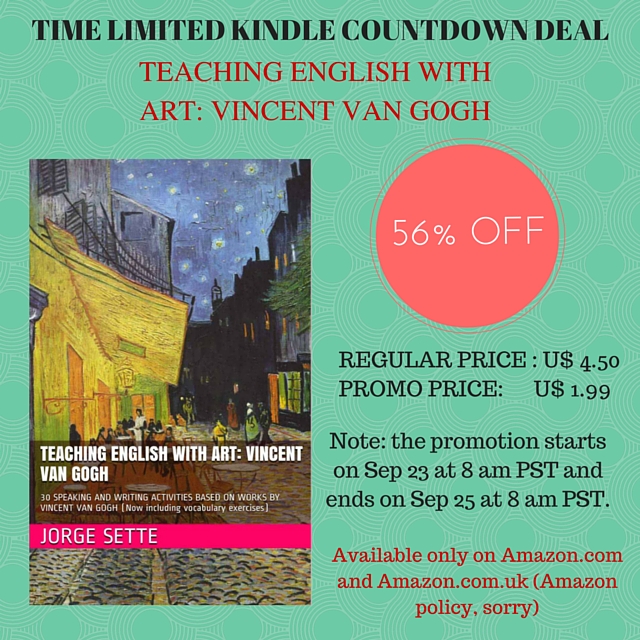
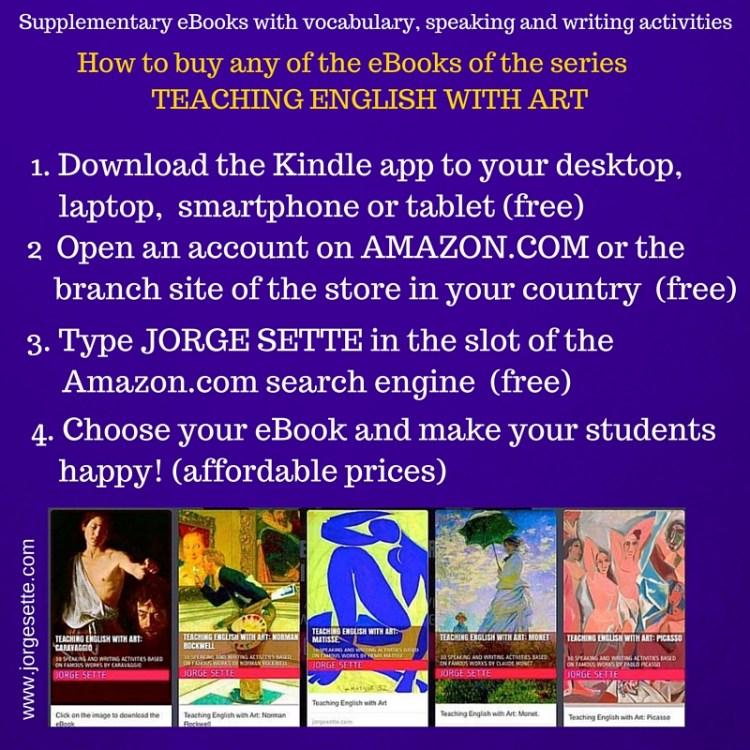
To buy any of the eBooks of the series TEACHING ENGLISH WITH ART, please follow the steps below. Click on the image to be directed to the KINDLE STORE.
Click on the image above to be directed to the KINDLE STORE.
Vincent van Gogh was born in the village of Groot-Zundert, south of the Netherlands on March 30, 1853, to upper middle class parents. His father was a protestant pastor and the family lived in the parsonage near the border with Belgium. His family: father, mother, and five siblings were very important to the artist all his life. He had a love-and-hate relationship with them, especially his father Dorus, breaking up with him a number of times, but always patching things up and trying to reconcile with them. Reliving the peace and harmony of his childhood days in the Zundert parsonage, when the whole family lived together remained an obsession and an impossibility throughout van Gogh’s life.
Before he launched his career as an artist in 1880, van Gogh worked as an art dealer in the business of richer members of his family (Goupil and Cie), a teacher and an evangelist, never quite managing to succeed in any of these jobs. He was not lucky at love either, having been rejected by a cousin, which caused him, heartbroken, to decide to live with a prostitute, Sien, and her son for a couple of years. He claimed it was his duty to rescue her.
Vincent van Gogh, self-portrait
He considered himself a failure for not being able to find a place in society and to follow a proper career, blaming sometimes himself and other times the lack of support and vision of his family and acquaintances for not finding a professional role. His parents were in fact ashamed of his lonesome and difficult eldest son. In spite of all this, he spent most of his life living off the financial support of his father and, then, his brother Theo, 6 years his junior, with whom he developed a strong bond and carried out an extensive written correspondence. It’s through these letters that we know so much about the convoluted life and inner feelings of this artist.
Vincent van Gogh lacked interpersonal skills, was awkward in society, and full of contradictory feelings. Having trouble getting along with people in general was perhaps the main reason he was not able to keep the many jobs he held. He was eccentric, explosive and reclusive. Under the advice of his brother Theo, he finally found his true path as an artist. But, at the beginning he refused to produce anything commercial, so he could not live off his craft and talent. He focused on painting the human figure, especially members of the lower classes. And he didn’t like to use color. His drawings were mostly in black and white, made with pen or charcoal, or paintings in drab colors. He only drew and painted what he wished, never making any concessions to the market’s taste, which made his financial life very hard.
As we mentioned before, his favorite subject at the time was the human figure, and he was always striving to hire models among the common people of the various towns he lived in: peasants, miners, weavers and prostitutes. Most of them found it very hard to work with him, and he was always requiring more money from Theo to be able to hire more professional models in places like Antwerp, where he lived for a while.
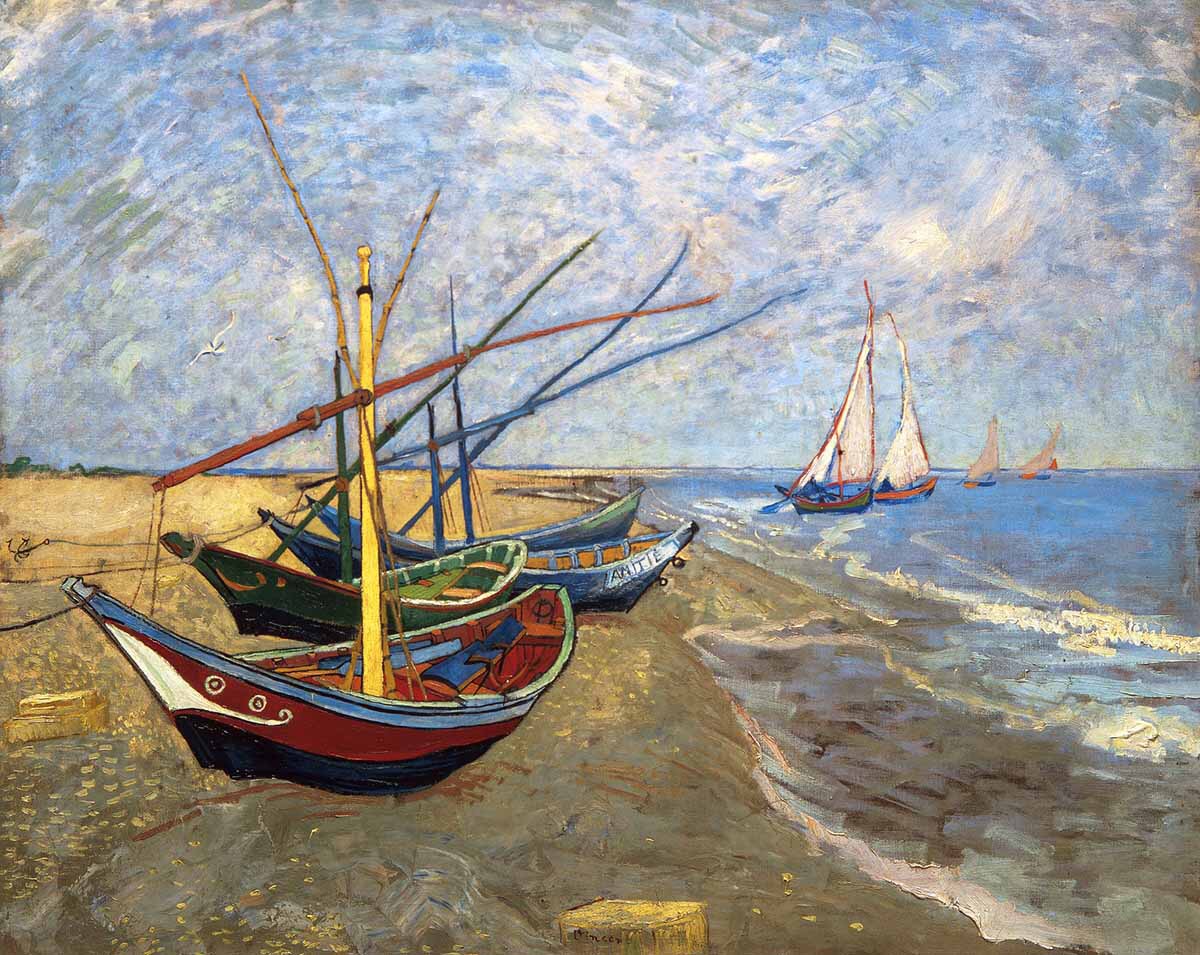
Fishing Boats on the Beach at Saintes-Maries-de-la-Mer by Gogh, Vincent van
Only when he moved to Paris in the late years of his short life, sharing a space with Theo, he started to fully develop as an artist, incorporating in his painting traits of the Impressionists – which were becoming very popular at the time – Japanese art, the social works of Manet and Courbet, features of the English landscapist John Constable, the pointillism of Seurat, among other influences. It was then that he started to use bright colors, leaving the drabness and the gloominess of his previous drawings and paintings behind.
In February 1888, he moved to Arles, in the south of France, to make use in his paintings of the bright colors under the Provence sun. There, he rented and lived in what became the famous Yellow House of his biography, initiating one of the most productive periods of his career, painting from day to night, sometimes finishing 3 works a day. Vincent dreamed of turning the place into a utopian community for modern artists – the Studio of the South – where they could work together, exchange ideas and create something unique, based on the strong influences of the past masters and yet innovating painting radically. He aimed for a new Renaissance.
In October 1888 the French painter Paul Gauguin came to Arles to live and work with van Gogh. They had a very tense and tumultuous relationship, though, which ended up with Gauguin leaving the house a couple of months after his arrival. Vincent was left in such an unstable mental state after the quarrel with Paul that he allegedly cut off part of his ear and sent it to a prostitute. He was committed to mental institutions twice after that.
Despite all the external influences van Gogh incorporated in his work, his paintings and drawings remained true to his deep feelings and notions of art. He developed idiosyncratic traits as an artist and imbued his landscapes, portraits, and still lives with his own very unique style, characterized by the use of bright and sometimes unusual combination of colors, large brushstrokes, and fine draftsmanship, which turned his works into effective channels to express his innermost feelings. The seeds of the XX’s century expressionism have been identified in van Gogh’s final and most famous woks.
His most famous paintings were produced during the last two years before his suicide on July 29t, 1890, at age 37. Out of more than 900 pieces of work he put out throughout his short but productive career, only one painting – The Red Vineyards Near Arles – was sold while he was still alive.
He never foresaw how successful he would become, although he was fully aware of how powerful his work was and never doubted his talent and vision as an artist. Today, his paintings sell for tens of millions of dollars, and he’s one of the most famous and beloved artists of Western culture. Among his most recognized paintings, we can list masterpieces such as The Potato Eaters, The Yellow House and Starry Night.
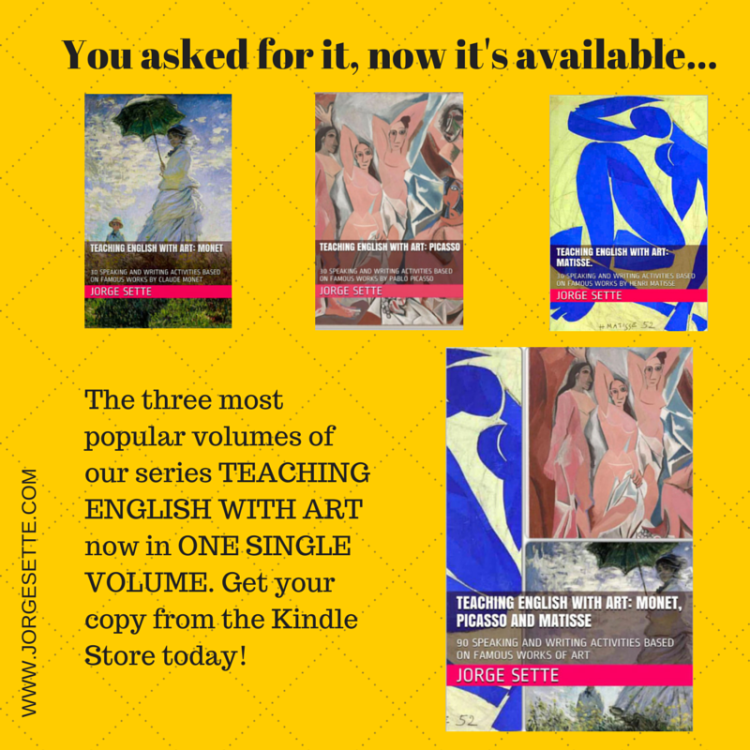
If you wish to a have a chance to discuss and practice English vocabulary, speaking and writing skills based on some of the invaluable works of this unique artist, please check out our series of supplementary materials TEACHING ENGLISH WITH ART, featuring, works not only by van Gogh, but also by Matisse, Picasso, Caravaggio, Monet and Norman Rockwell so far. New materials are scheduled to come out in the near future, watch this space.
Find our how much you know about one of the most famous artists of Western Culture.
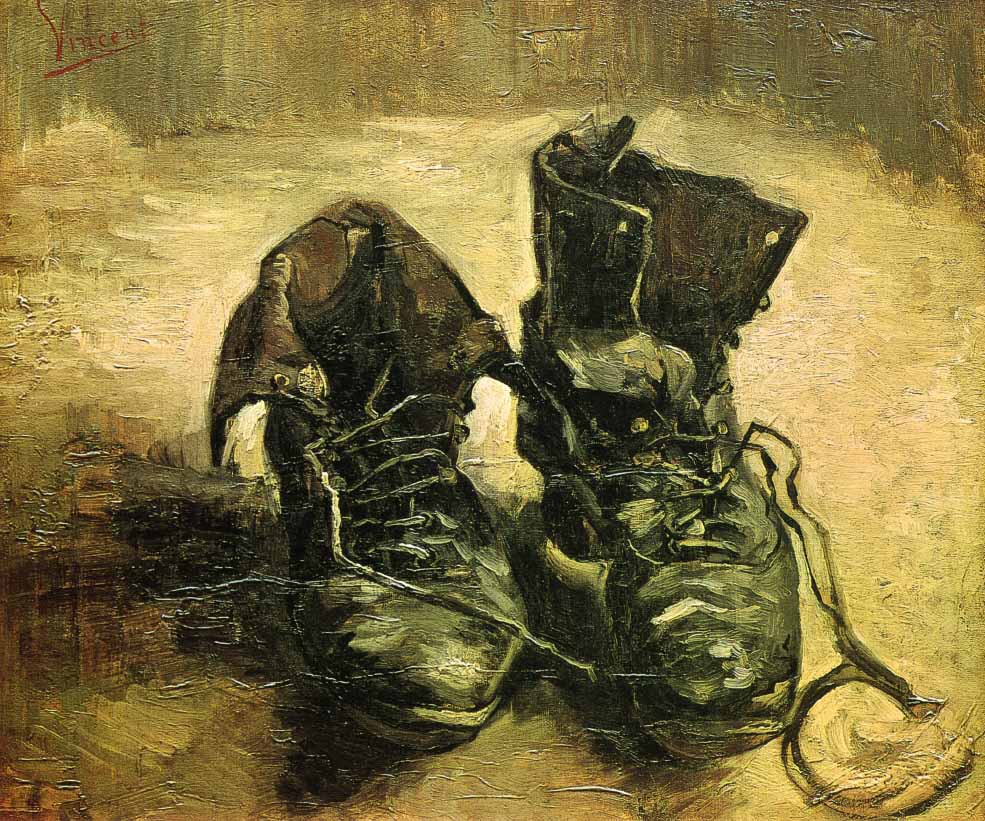
A Pair of Shoes. 1886, by Vincent van Gogh
Where was he born? a. France, b. Austria, c. The Netherlands
What was he like? a. Eccentric and antisocial, b. Fashion conscious, c. Joyful and carefree
What kind of painting style is he famous for? a. Impressionism b. Post-Impressionism, c. Cubism
What were the most characteristic traits of his famous paintings? a. Bright colors, movement and expression of feelings; b. Use of Greek myths, c. Emulation of the classical models
How many paintings did he sell while he was alive? a. Just one, b. A couple of hundreds, c. Ten
Was he a famous painter while he was alive? a. From a very early age, b. Became famous right before he met Gauguin, c. Not at all
Was he ever married? a. Never, b. Twice, c. Once
How did he die? a. Of old age, b. Cancer, c. He shot himself allegedly
What’s the historical context he lived in? a. The Counter-Reformation, b. The second half of the XIX century, c. The First World War
Which one is not a van Gogh painting: a. Starry Night b. The raft of the Medusa c. The Potato Eaters
Vincent van Gogh
Check out the video clip on the ebook TEACHING ENGLISH WITH ART: VINCENT VAN GOGH
If you are interested in TEACHING ENGLISH WITH ART, you might want to check out our successful series of eBooks available from the KINDLE STORE. Just click on the picture below for further info:
Teaching English with Art. Click on the picture above for further info on the eBooks.
Art tends to be surrounded by awe and respect. Museums resemble cathedrals in the way people move around the halls speaking in hushed tones and looking humbly at the works on display. Art or Hight Art – as it’s sometimes called – should be regarded in a more natural and intimate way by the viewers. The lack of great museums in the region makes the contact with art a particularly formal experience for us Latin Americans. But things are changing as more and more people go abroad, frequent museums, and substitute pleasure and fun for the old sense of respect infused in them when they stood in front of a famous painting or sculpture not many years ago. The myths we are outlining below concern more that kind of art you find in museums and galleries: the visual art produced by the great masters.
1. Art is usually spontaneous and organic. The legend says the talent lies dormant in the artist until it’s suddenly awaken by the muses. In fact, the development of artistic skills is a long and hard path, involving a lot of academic learning, Of course, there are more or less intuitive artists, and mentors may sometimes replace art schools. Formal learning, however, is integral to the process and only practice makes perfect.
2. The best art has idealized versions of mythology, history or biblical themes as its subject matter. This tradition started being disputed around the time the pre-Impressionists, such as Manet with his mundane and realistic nudes, and the social art of Courbet. Their fight against tradition and academicism was taken to a whole new level by the Impressionists, especially by Monet, who understood art as the apprehension of fleeting moments in time such as the effects of light bouncing off trees, water and plain people in everyday situations. That was what mattered and deserved registering.Colors became bright and more vibrant.
Argenteuil, c. 1872-1875, by Monet.
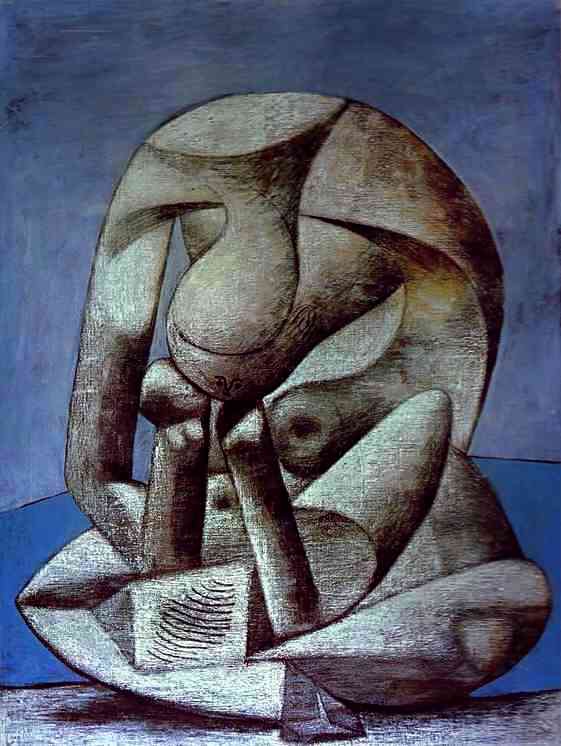
3. The best art is realistic. Fauvism, Cubism and Modern Art in general showed that there was not much point in replicating what film and photography had started doing so well as of the XIX century. Art couldn’t and shouldn’t compete with them. So art needed to change. It should remain an expression of what is human, including reality, but as seen through the eyes, emotions, neuroses, and obsessions of the artistic self. Art was a personal way to express the artist’s inner world. Unlike previous painters, the sense of perspective developed since the Renaissance and the concepts of beauty and balance taken as tenets by the artistic community underwent an earthquake which shattered those ideals to pieces. This is still going on.
Young Girl Reading a Book on the Beach, by Picasso.
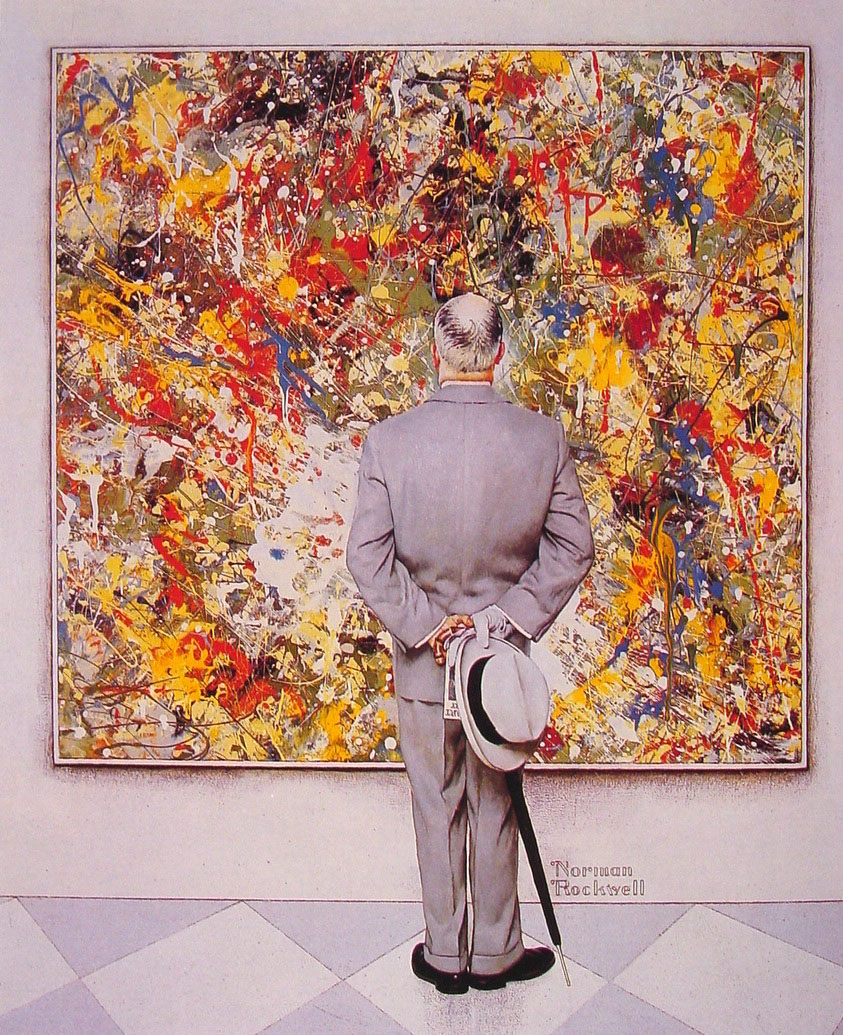
4. Art dealers and critics are the experts and they know it all about good and bad taste. We all know how the Impressionist group struggled to have their works exhibited in the tradition-dominated Salón in XIX century Paris. There are no absolutes in art and if you read Tom Wolf’s iconoclastic The Painted Word – which I strongly recommend – you will laugh widely and be infused by a sense of liberation as he dissects and analyses ironically the American art of the XX century. There is also a hilarious chapter in his latest book, Back to Blood, which mocks merciless the Modern Art World of contemporary Miami, with its dealers, experts, artists and stupid billionaire clients. A must-read.
The Connoisseur: Rockwell’s sarcastic take on Modern Art used as the cover for Tom Wolfe’s THE PAINTED WORD.
5. You have an innate predisposition to love, hate or be totally indifferent to art. Not so simple. Just like marmite – for those who have had a chance, like me, to live in he UK for a while and see this initially disgusting jam-like spread sitting on the breakfast table every morning, or even Japanese food, whose ever-present ripe odor coming out of restaurants may put you off getting in at first – art is an acquired taste. You don’t have to like it right away, but you may grow to love it by exposure. There is no need to enjoy every famous artist either. Be selective. Art grows in people. And I strongly defend that by offering history of art as a subject in the secondary and high school – not very common in most schools in South America – or by parents exposing their kids to art books at home or visiting museums, young people’s taste will get more refined and we will see a growth in art appreciation over time.
6. Art is for older people. The younger you are the more appealing iconoclastic and unconventional art will look to you, especially if you have a rebel streak (who doesn’t?) in you. Therefore your initial interest for the drama and violence in Caravaggio, as you grow more mature, may be replaced by calmer Monets or a more contained Velàzquez later on in life. Their beauty and absence of direct conflict can be refreshing as you grow more mature. I still love Janis Joplin, The Stones, Jim Morrison and Sid Vicious. Sometimes it was not even the quality of their music but their life style, perfomances and stage persona – some of them very short-lived, by the way – which captivated me. However, as I grew more mature, classical music started to show its charms and take over my musical taste.
We will be talking more about art in the next post. Watch this space.
If you are a language teacher and interested in art you may want to check out our new series of ebooks TEACHING ENGLISH WITH ART, available for download from the Kindle Store. We focus on vocabulary learning, speaking and writing skills in the series. Check it out by clicking here: : http://wp.me/p4gEKJ-1lS
In the early 1940s, Matisse underwent a serious and invasive surgery as part of treatment for intestinal cancer. After the operation, he was a very different person, lacking the energy and strength to be on his feet for long stretches of time at the easel painting on a canvas.
However, he was about to start a revolutionary new phase in his artistic life. Despite his physical weakness, his mind seemed to be ablaze with creativity and many say he was given a second life. This resurrection manifested itself mainly through a new art form he began to develop at the time: his famous cut-outs. Instead of painting, Matisse would now spend his days in bed or in a wheelchair, cutting out, with huge tailor scissors, abstract forms directly from gouache-painted sheets of paper, and then, with the help of assistants, pin them against a white background in striking and original compositions.
He would constantly move the pieces around until he was fully satisfied with the final result of these “collage-like” designs. The colors were vibrant and pure, lending the composition a life-affirming quality. Icarus is one of the most famous works from this period.
Icarus. 1947. Illustration for the book Jazz.
The Legend of Icarus
In Greek mythology, Icarus and his father Daedalus, a master craftsman from ancient Athens, were made prisoners on the island of Crete after helping Ariadne and Theseus escape from the Minotaur’s labyrinth, which Daedalus himself had designed for King Minus.
The Minotaur was a creature with the head of a bull and the body of a man who lived in the center of the labyrinth
Daedalus plotted to escape from his prison by making wings of feather and wax for himself and his son. However, he warned Icarus against flying too close to the sun because his wings would melt. Icarus, in the typical fashion of bold young men, disobeyed his father’s instructions and soared to the heights, coming dangerously close to the sun. His wings melted and he plunged to the sea, drowning. The story of Icarus is usually used as a cautionary tale against excessive ambition.
Many critics and viewers suspect that there is an alternative source of inspiration to the Icarus cut-out. What do you think it might be? What may this work represent if not necessarily the legend of Icarus?
Imagine that this work is about the horrors of war instead. After all, Matisse put it together soon after the end of the Second World War. In this case, what do you think each element of the cut-out stands for? Think about this interpretation and try to see the elements of the work in the light of this new context. It will add a lot to it.
If you wish to read more about Matisse’s cut-outs, please refer to our previous blog post: http://wp.me/p4gEKJ-1kq
For those of you who are English Teachers and love Matisse and art in general, we offer a wonderful collection of didactic eBooks for the students to practice vocabulary, speaking and writing, based on the works of famous painters: TEACHING ENGLISH WITH ART. The series is comprised of 7 books so far, and features works by Matisse, Picasso, Caravaggio, Monet, Norman Rockwell and Vincent van Gogh. For further information on how to download the materials, please click here: http://wp.me/p4gEKJ-1lS
Click on the image above to learn more about the advantages of TEACHING ENGLISH WITH ART.












 Jorge Sette "Linguagem"