Jorge Sette Interviews Philip Roth


Based on some of my previous posts on Facebook, Twitter and this blog, many of you will already know that Philip Roth is one of my favorite writers. At 81, he is considered by many the greatest living American writer. I can’t get enough of his books. They usually investigate the depths of the human soul, are packed with painful truths, but also convey a dark sense of humor, which makes them irresistible.

Although I have already reread many of his novels, the good news is he’s so prolific that I haven’t been able to cover his complete works yet. So there is a lot to look forward to. I don’t think I will ever have an opportunity to talk to him in person, as he is very reclusive and private. And, to be quite honest, I would not like that to happen, as I want to preserve the idealized image I have of him.

So I decided to imagine and share with you, dear reader, an interview I could have had with Mr. Roth.  Of course all the answers are true, since they are quotes of his or his characters.  Let’s find out more about Philip Roth then:

philip-roth-3

Philip Roth: author of NEMESIS, AMERICAN PASTORAL, THE PLOT AGAINST AMERICA, THE HUMAN STAIN…

(J stands for Jorge, and R stands for Roth)

J: Mr Roth, most of your books feel very autobiographical although they are supposed to be fictional. Do you plan to write more non-fiction in the future? Don’t you think you should have a blog or even a Twitter account like everyone else nowadays so people could get to know you better?

R: “Everybody else is working to change, persuade, tempt and control them. The best readers come to fiction to be free of all that noise.”

J: I understand you live alone now. Any romantic interest in your life at this moment?

R: “The only obsession everyone wants: ‘love.’ People think that in falling in love they make themselves whole? The Platonic union of souls? I think otherwise. I think you’re whole before you begin. And the love fractures you. You’re whole, and then you’re cracked open. ”

J: You are not young anymore, don’t you ever feel lonely and wish there was someone sharing your life? I think I would.

R: “Stop worrying about growing old. And think about growing up.”

J: Sure. Can you tell us a little about your creative process? What’s your writing routine?

R: “I don’t ask writers about their work habits. I really don’t care. Joyce Carol Oates says somewhere that when writers ask each other what time they start working and when they finish and how much time they take for lunch, they’re actually trying to find out, “Is he as crazy as I am?” I don’t need that question answered.”

J: Well, let’s turn to current events then. What do you think of the present situation in Syria and Ukraine? Don’t you think diplomacy should have worked more effectively by now?

R: “You put too much stock in human intelligence, it doesn’t annihilate human nature.”

J: I see. New Jersey and New York always remind me of you and your books.

R: “I came to New York and in only hours, New York did what it does to people: awakened the possibilities. Hope breaks out.” 

J: Mr Roth, thanks for agreeing to meet with me, but I must make a confession. I feel it’s easier to know writers by reading their books rather than interviewing them. What do you think is the best way to get to know someone and understand their motives?

R: You get them wrong before you meet them, while you’re anticipating meeting them; you get them wrong while you’re with them; and then you go home to tell somebody else about the meeting and you get them all wrong again. Since the same generally goes for them with you, the whole thing is really a dazzling illusion. … The fact remains that getting people right is not what living is all about anyway. It’s getting them wrong that is living, getting them wrong and wrong and wrong and then, on careful reconsideration, getting them wrong again. That’s how we know we’re alive: we’re wrong. Maybe the best thing would be to forget being right or wrong about people and just go along for the ride. But if you can do that — well, lucky you.”

J: Thanks, Mr Roth, that’s very reassuring. Can I ask you a final question? I’ve started this little blog and I’m very proud of it. I love writing, although I’m just starting. Would you give me some advice as an experienced and famous writer?

R: “Yeah, this is great. But I would quit while you’re ahead. Really, it’s an awful field. Just torture. Awful. You write and write, and you have to throw almost all of it away because it’s not any good. I would say just stop now. You don’t want to do this to yourself. That’s my advice to you.”

J: Hmmmm. Well,  thank you, I guess. This will be posted online. I will let you know when. Take care.

Au revoir

Jorge Sette.

Which mythical creature are you?


I have just taken a quiz on the Internet to find out which mythological creature I might be. The quiz consisted of answering some questions on my preferred kind of food, ideal location to live, who I considered to be a hero, my favorite book, among other things. The options were given, a multiple-choice kind of quiz.

I found out I’m a unicorn.

I can’t say I’m entirely happy with the result, but I guess things could be worse. Fortunately, I’m not a hydra. So I decided to search the internet for more information on my newly-found self hoping to reconcile it with the image I have had of myself so far. Were there any consistencies between the two? Indeed there were.

foto

I learned for example that although present in the mythologies of many peoples, including a reference to it in the Bible, a unicorn is not an element of the Greek mythology, but a creature referenced in their natural sciences instead.  Therefore I was very happy to realize that, at least to some people, I might feel more real. Also, the picture I had  in my mind of a unicorn as a white horse with a horn in the middle of the forehead is not entirely correct, this is more of a concept born in the Middle Ages. Before then, the unicorn was actually considered a darker figure, more of a monster really, a cross between a horse and a goat, and could come in different colors. Key words: cross, goat and and a variety of colors (like the iPod Mini). Good! Now these are more familiar, as I’m a Capricorn (usually represented by a goat), and a typical Brazilian crossbreed, with all races and colors mixed into the pot. Things are getting more consistent, the pieces of the puzzle are falling together.

I also enjoyed to know that the unicorn is usually thought of as a graceful and peaceful creature, and that the horn is supposed to work as an antidote against all kinds of poison. Yes, I do see myself as a problem-solver and a healer of other people’s wounds. It’s all going great so far.

Towards the end of my research, however, it came as a bit of a shock to find out that a unicorn can also be a metaphor for a woman’s orgasm: a lot harder to come by than a man’s! I guess the lesson is I need to see myself, from now on, as a refined pleasure, and not always available.

I hope I will learn to live with the discovery of my real nature going forward. It will take some time to get fully used to it, but I’m sure I will settle down eventually.

What about you? Find out what mythical creature you are by taking this quiz:

http://www.buzzfeed.com/keelyflaherty/which-mythical-creature-are-you

Don’t forget to let us know the answer.

Au revoir,

Jorge Sette.

“You’re so vain” (Books I think are about me)


I got a funny reaction to my blog post on Wuthering Heights (http://wp.me/p4gEKJ-j0) from an anonymous reader. He or she wrote to me saying: “You are so vain, you probably think Wuthering Heights is about you”. I suspect this is an adaptation of a line of an old Carly Simon song, who allegedly was referring to Mick Jagger. In a way, I found the comment rather amusing, and, to be quite honest, remarkably true. Even more worrying: I tend to think that every single book I love is about me! As a matter of fact, it only interests me if I can somehow relate to it. And I guess this is what happens to every reader, at least the more romantic ones, like me. So, yes, you got it right, dear anonymous e-mail writer.

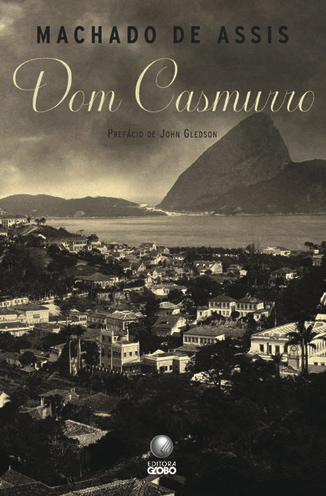
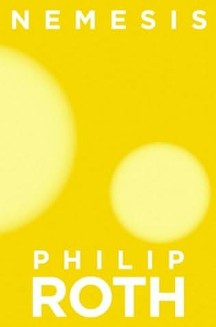
Take for example some of the best books I have read (and often reread) : Dom Casmurro (by Machado de Assis), Nemesis (by Philip Roth) and The Bonfire of the Vanities (by Tom Wolfe). They are really all about me.

cover_35e51c11-6ac1-4399-be38-98245079bc22

Dom Casmurro, by Machado de Assis.

The first time I read Dom Casmurro I was still in high school, and totally fell in love with Capitu. The kiss she and Bentinho exchange while he is combing her hair and she drops her head back, making their faces align in opposite directions, is  one of the most romantic scenes I remember as a teenager. Imagine my surprise when I saw a repeat of that scene decades later in the movie SPIDER MAN! This time he was hanging upside down from a wire fence while Mary Jane was looking up.  The same kind of kiss. Also, like Bentinho, the main character in Dom Casmurro, I can be quite jealous in a relationship and totally understand how paranoid it must feel to have your kid grow up to look like your best male friend. And the best thing is, every time I read the book again, I find new clues that indicate that Capitu must have been unfaithful, although we can never be one hundred per cent sure, as the story is very cleverly told from the point of view of the narrator only, who happens to be Bentinho, the husband.

NemesisRoth

Nemesis, by Philip Roth

Nemesis by Philip Roth is a very universal story, and if you can’t identify with it, I’m afraid you have a problem. Although I’m not Jewish and am fortunate enough not to be physically disabled (the story is about the terrible consequences of the outbreak of a polio epidemic in the mid-1940s New Jersey), I fully identify with the book’s themes. The main message, as I see it, is, if you are struck by tragedy, if you have a disability of any kind, or anything else people may look down upon or reject you for (and that probably applies to all of us), there is no point in blaming God or the Universe for it. Get on with your life, it’s your responsibility to make the most of it and restore or construe your own meaning for happiness. Or fight back. This is something everyone needs to hear: take full ownership of your failures and problems, and deal with them. No one else will care as much. Tough, but real.

Bonfire-of-the-Vanities

The Bonfire of the Vanities, by Tom Wolfe

The Bonfire of the Vanities: the main character finds himself in a kafkaesque situation: he gets lost in a dangerous part of  the city while driving back from the airport with his mistress, and accidently seems to strike a young black man he was sure was trying to mug them.  What a nightmare!  Was it a hit-and-run accident? Should they tell the police straightaway? But the wife will find out about the mistress then. Was the kid really hit, all they heard was a little noise (“thok”) after all. Surely the boy was OK. What decisions do they need to make? Mistakes are inevitably made along the way and there are terrible consequences. Moreover, there are many third parties (journalists, community leaders, attorneys, politicians, etc) trying to profit politically from the situation. Nothing is as morally simple as it first looks. Interesting questions. The reader gets deeply involved in the plot and its turns. “Unputdownable”. Besides, it’s very tempting to picture myself living the good life of a succesful Wall Street yuppie in a huge two-story apartment off Park Avenue in Manhattan…without the tragedy! Another book that COULD be about me.

So I’m really sorry if the anonymous e-mail writer intended to hurt my feelings accusing me of believing that Wuthering Heights is about me. Catherine, one of the book’s main characters, says at one of the most important plot points in the story: “I am Heathcliff!”  Well, so am I!

Au revoir

Jorge Sette.

Ignorance, prejudice and the fact that a chimpanzee’s skin is white!


In a scene of the Academy award-winning movie “12 YEARS A SLAVE”, the character played by Michael Fassbender says that one can easily see that his black slaves are nothing more than “baboons”. Actually, this association of black people with monkeys and apes are very commonly made by bigots and racists throughout the world. For some reason, they seem to think that black humans are closer to these cousins of ours than caucasians or asians.

chimpanzee-animals-13168191-1001-1001

I’m white, dude!

I have just come across a very interesting article in last week’s  issue of THE ECONOMIST  (“The skinny on skin colour”) where they explain the reason early humans in Africa developed dark skins was to protect it from cancer, since their bodily hair had somehow been shed – the reason why we substituted melanin for a hair coat is still not completely understood.  Some people’s skins only became fairer as they moved and lived in more northern regions of the globe. But what really struck me as ironic and very sobering  is that, as they state in the article, the color of a chimpanzee’s skin is white, once you shave all that hair!

This only proves that bigotry and ignorance go hand in hand, and brave are the ones who, despite their not understanding completely a new phenomena, try to see through the surface and get to the core and truth of it, rather than reject things and ostracize people they don’t know anything about. Difference is always a source of fear and prejudice. I admit it may even be natural to feel afraid or cautious when confronted with something new and unfamiliar. But this is where the human mind – and spirit – need to impose itself and guide our consciousness and behavior.  The senses and our own experience can lie, or at least, may not tell the whole story.

Empathy: I keep getting back to this word in every article I write. The reason is I think  it’s even more effective than “supercalifragilisticexpialidocious” from the movie Mary Poppins – whose 50th anniversary is being celebrated this year, by the way – in the sense that it makes people not only feel better as they say it, but it can have a huge effect towards accommodating and living with diversity when applied to real life.

The ignorance about chimpanzees’ skins being white can be equated with the lack of knowledge that gays DON’T choose their sexual orientation (the choice is either to hide it from others and live a repressed or duplicitous life, or come out of the closet and deal with it) or the myth that Latin Americans are not as hardworking as their counterparts in North America, Europe or Asia. To say nothing of men’s fear that women are their equal in all intellectual respects.

Wake up: chimps’ skins are white!

NOTE: You might want to check out our eBooks available  from AMAZON.COM. Click here: http://wp.me/p4gEKJ-1lS

Teaching English with Art

Au revoir

Jorge Sette


Como (não) escrever como Oscar Wilde (PDF – presentation)


Como (não) escrever como Oscar Wilde (PDF - presentation)

Os passos para criação de textos baseados no processo da escrita. Esta apresentação resume um artigo completo de mesmo título que pode ser lido no blog LINGUAGEM: http://www.jorgesette.wordpress.com

CLIQUE NA IMAGEM PARA ACESSAR A APRESENTAÇÃO EM SLIDESHARE.