10 Fascinating Facts About the Portuguese Language


Portuguese is one of the world’s most widely spoken languages, but there’s so much more to it than meets the eye. Here are ten intriguing facts about this beautiful and versatile language:

1. Portuguese Is the Official Language of 10 Countries

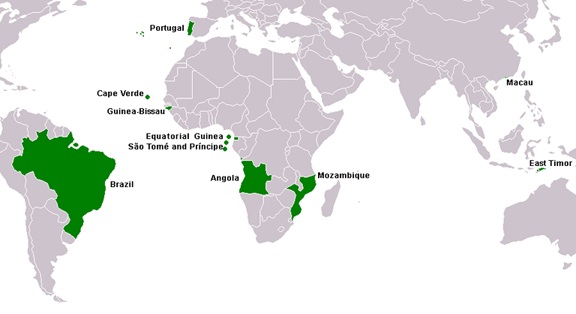
Portuguese is the official language of: Portugal, Brazil, Angola, Mozambique, Cape Verde, Guinea-Bissa, São Tomé and Príncipe, East Timor, Equatorial Guinea, Macau (the latter is not a sovereign country, but it recognizes Portuguese as an official language).

Together, these nations and regions form the Community of Portuguese Language Countries (CPLP).

2. Brazil Has the Largest Portuguese-Speaking Population

With over 220 million of the world’s Portuguese speakers, Brazil is the largest Portuguese-speaking country. As a matter of fact, Brazil accounts for more than 80% of all Portuguese speakers worldwide.

3. Portuguese Is the Fastest-Growing European Language

Portuguese is the fastest-growing European language after English. Its spread in Africa and its increasing relevance in global trade contribute to its rising prominence.

4. It Has Influenced Other Languages

Portuguese has left its mark on several languages, especially in Asia. For example, words like chá (tea) entered Japanese, Cantonese, and even English via Portuguese traders.

5. It’s a Romance Language

Portuguese evolved from Latin, just like Spanish, French, and Italian. Its closest linguistic relative is Galician, spoken in the Galicia region of Spain.

6. Portuguese Is the Sixth Most Spoken Language Worldwide

Portuguese has 265 million speakers, ranking as the sixth most spoken language in the world, following Mandarin Chinese, Spanish, English, Hindi, and Arabic.

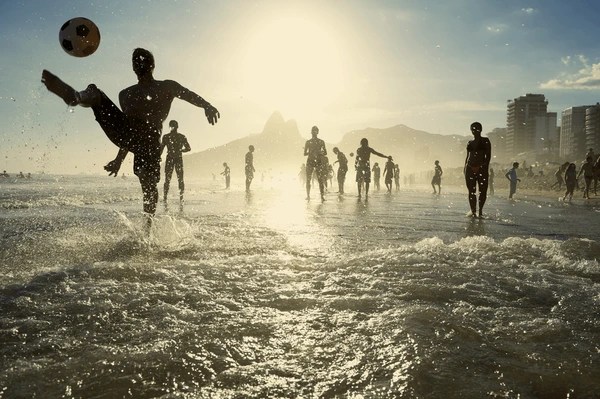
Soccer – Ipanema Beach, Rio.

7. It’s One of the Most Phonetic Languages

Although Portuguese pronunciation may seem tricky at first, the language is relatively phonetic. Once you learn the rules, it’s often possible to pronounce words correctly by reading them.

8. Many Portuguese Words Have Arabic Origins

When the Moors ruled the Iberian Peninsula, they introduced many Arabic words into Portuguese. Common examples include açúcar (sugar), alface (lettuce), álcool (alcohol), alfazema (lavender) almofada (pillow), marfim (ivory), azeite de oliva (olive oil), and algodão (cotton).

9. There Are Unique Portuguese Sounds

Portuguese has sounds that are rare in other Romance languages. For instance, nasal vowels (marked by a tilde, like in ocupação) are a distinctive feature that can be challenging, and, yet, interesting to learners.

10. It’s One of the Oldest Modern Languages

Portuguese was officially recognized as a language in 1290 by King Denis of Portugal. He founded the first Portuguese university and declared that the Vulgar Language (spoken Portuguese) should replace Latin as the official language in legal documents.

Conclusion

Portuguese is a rich and fascinating language with a global footprint. Whether you’re learning it for travel, business, or cultural appreciation, these facts highlight its historical and linguistic significance. Did any of these surprise you? Let us know in the comments!

NOTE: I give online classes of Brazilian Portuguese for foreigners. If you are interested, don’t hesitate to reach out: jorge.sette@terra.com.br

Jorge Sette


Dom – The First Brazilian Series of Amazon Prime (Review)


The first Brazilian series on Amazon Prime, based on Tony Belloto’s novel (2020) and on the biographical account The Witch’s Kiss (2009), written by Victor Lomba – Pedro Dom’s father in real life – doesn’t disappoint.

Dom – Amazon Prime series

Against the backdrop of the military dictatorship, the beginning of the war against drugs, and the origins of the dissemination of cocaine in Brazil (in the early 1970s), we first meet Victor Dantas (Dom’s father, played by Filipe Bragança in the 1970s scenes of the series ), a naive and idealistic young man who gives up scuba diving and joins the police to fight the drug traffic.

Then, the series, in the course of three seasons, covers the development of Victor’s activities as a police agent, his marriage, the birth and raising of his kids, and the overall vicissitudes of the family until 2005.

The story of a middle-class family dealing with the addiction of one of their members, Victor’s son, Pedro Dom, a bright and energetic teenager, who starts snorting coke at the age of fourteen, and then rises to become one of the most feared and famous criminals in Rio, will keep you glued to the screen.

Gabriel Leone as Pedro Dom.

Since the movie City of God, Rio‘s complex environment (inequality, favelas, drugs, political corruption, and the destruction that chemical addiction inflicts within loving families) has never been shown with such brutality and realism.

Unlike City of God, though, the series’s producers don’t shrink from showing Rio de Janeiro in all its glorious beauty. So, scenes depicting the extreme poverty of life in the favelas are contrasted with stunning views of Copacabana Beach.

Copacabana Beach – Rio

The cast is fantastic across the board.

The love and bond between the father, Victor (played in his maturity by the excellent Flávio Tolezani), and the problematic son, Dom (Gabriel Leone‘s charismatic performance makes the character rather likable, a glamorous antihero) feels very real and moving.

The close bond between a father and his drug addicted son.

Dom and Victor are played by different actors at different ages – all of them do a wonderful job!

Don’t miss it.

If you saw the show and read any of the books about Pedro Dom, please leave your comment in the section below.

Jorge Sette

Killers of the Flower Moon (Book Review)


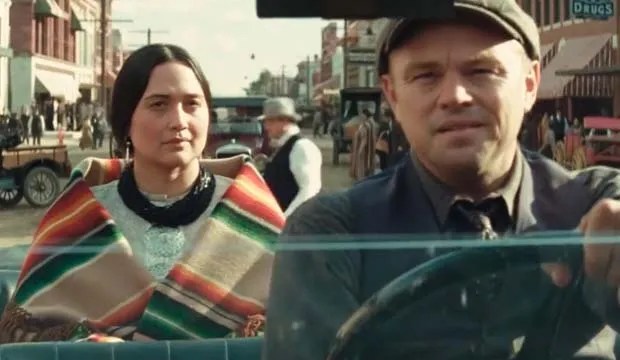
Having seen Scorsese’s wonderful latest movie (Killers of the Flower Moon), I was tempted to get the book it was based on – written by David Grann.

I finished the book in 3 days, couldn’t put it down. It’s a factual account of brutal events I had never heard of and that gives us a totally different perspective on the mythical cowboys and westerns fabricated by Hollywood.

It tells the story of the Osage tribe of indigenous people forced to relocate from Kansas to a new reservation in Oklahoma (with a rocky and arid terrain) at the end of the 19th century. It turned out the soil was rich in oil, which turned the tribe into one to the richest nations on earth.

Of course, it didn’t take long for the ambitious “whites” to do everything they could to rob those people – considered second-class citizens, or even animals – of their wealth, starting a ”reign of terror“: Corruption, murders, and all kinds of fraudulent schemes took place, with the complicity of the highest authorities of the land.

The book, of course, offers a lot more details and also tells the reader about the creation of the FBI, which is also a great story.

The best thing is that now I found a new favorite writer: I have just started reading David Grann’s latest book: The WAGER.

Let’s us know if you have read the book (or seen the movie) and what you think about it.

Jorge Sette

Reviewing SPARE: PRINCE HARRY’S MEMOIR – A Brazilian Perspective


Why would a Brazilian, without a drop of British blood flowing through his veins, choose to read “Spare”? Well, stories of privileged but unhappy people managing to escape their gilded cages, spreading their wings and flying, as sings Elton John – one of Lady Di’s closest friends – in the song Skyline Pigeon, has always fascinated me. Rebels are my kind of hero. Besides, I couldn’t miss all the buzz surrounding the launch of the book.

I lived in the UK for almost two years, ages ago (a very happy time in my life). It shouldn’t come as a surprise for those who know me that I simply love the English language (in all its variants), its literature, movies, and music. I also learned to like Marmite – an acquired taste! The National Gallery, Saint Paul’s Cathedral, and the Tube are also very close to my heart, as are the London parks and the colors of the land: green and gray. I paid three visits to Salisbury, just to experience Stonehenge in different seasons. Cornwall is a dream: The place I would love to grow old in. 

Stonehenge

As for the British Monarchy, I never considered that institution something relevant to my life – I felt it was just an alien and outdated British cultural trait (although we did have something similar in Brazil for almost 400 years too). It fits into the same category of rugby, cricket, or EastEnders, the soap opera which had been running for centuries when I lived there.

I only began paying attention to the dysfunctional royal family, when Netflix’s The Crown started streaming – and, being told time and again by people who feel very strongly about it that it’s mostly fiction – I watch it as mere entertainment.

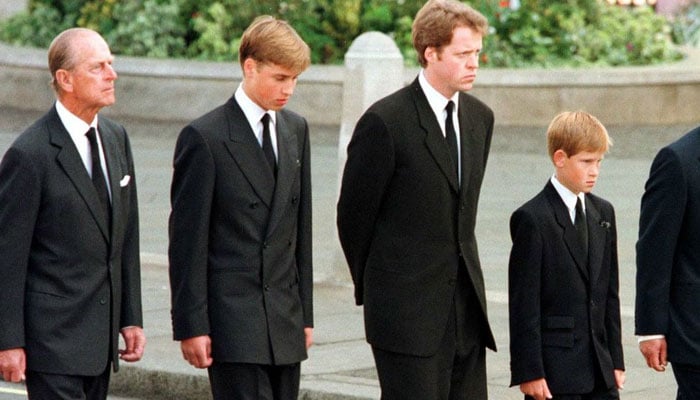
Years after I had come back to Brazil, the death of Lady Diana Spencer woke me up to the fact that the British Press was a weird and dangerous animal, but it did not really affect me – after all, I had never bought or even read a single page of a tabloid while I lived there, so did not even feel guilty. On the other hand, the image of a young Prince Harry walking behind his mother’s coffin left a painful and lasting impression: Actually, I never forgot it. As he grew up before the world’s eyes, contrary to what was portrayed in the media, I always considered him a normal boy, doing average stuff and making the same stupid mistakes we all did when we were young. Besides, he seemed rather lonely. I decided I liked him. 

This long introduction is just to say that, Spare, his memoir, is a lot less whiny than I thought it would be. As a matter of fact, there’s quite a lot of humor, and I did enjoy it. The third and last part of the book is less exciting. After all, we all have heard about “When Harry met Meghan” – minus the hilarious fake orgasm scene in the restaurant,  an iconic moment performed by Billy Crystal and Meg Ryan in the 80s movie with a similar title – more than we cared. However, I found it quite illuminating and sobering to know more about Harry’s education at Eton, the various palaces and estates the family owns, how the houses of the different members are distributed and allocated, his years in the Army (especially the boot camp passages), his trips to Africa and to both poles, and how the death of his mother traumatized him. The closeness and friendship that Harry seemed to share with his “granny”, the deceased Queen Elizabeth II, was also moving and unexpected. 

It was also juicy gossip to find out how Charles, Camilla, and even his brother William, and their respective staff, are engaged in fiercely backstabbing each other to gain popularity in the media. The rivalry is so brutal that each camp gets to the point of leaking fake stories to the press to be seen as the good guys in the family. 

Even if it’s all fiction, it’s well-written fiction, and makes for compelling reading. I recommend it.

Jorge Sette

Capitalism versus Communism – according to Philip Roth


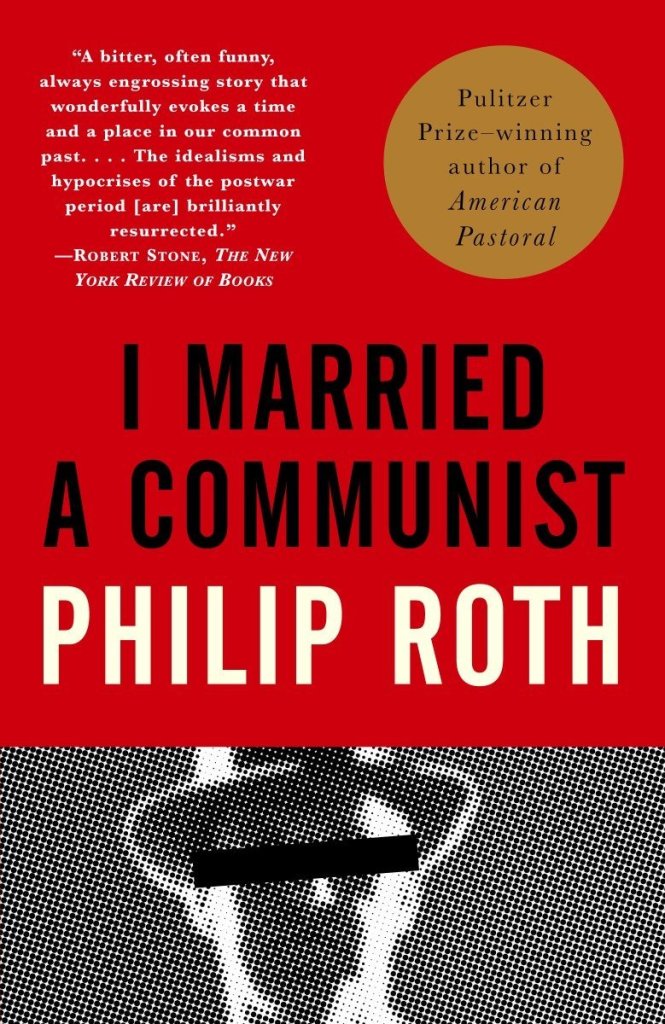
“Look, everything the Communists say about capitalism is true, and everything the capitalists say about Communism is true. The difference is, our system works because it’s based on the truth about people’s selfishness, and theirs doesn’t because it’s based on a fairy tale about people’s brotherhood. It’s such a crazy fairy tale they’ve got to take people and put them in Siberia in order to get them to believe it.” 

― Philip Roth, I Married a Communist

10 Books You Should Read to Understand Brazil Better


Congratulations, you got a new job. You will be relocated to Rio? How exciting. How did you manage to grab such an interesting post? You must know a lot about Brazil and speak good Portuguese. Or maybe you are just the only person who had the availability to move to this country. Whatever the reason, or despite how much you might already know about Brazil, I would strongly recommend you read the books listed below to get a crash course in the country. They are all fun to read and will contribute in their own way a small piece of understanding to complete the puzzle.

I’m Brazilian myself, spent most of my life here, and still profited a lot from reading these texts. Here they are:

1. The Brazilians, by Joseph Page.

510O0emLBRL._SX331_BO1,204,203,200_

This is one of my favorite books about Brazil. It’s visibly written by someone who loves the country, and despite its very objective, and sometimes hurtful, analysis, makes you feel appreciated and liked as a local. Besides, it covers many different aspects of the culture and history of the country, including the national religions and the nuances of the current power structure, all written in a light and pleasant language. I particularly liked the way it analyzes the way the different social classes interact with each other in Brazil, with all the hypocrisy and paternalism that underlies these brutal relationships. However, the book was written way before the passing of a new set of Constitutional amendments (PEC 478 – known as PEC das Domésticas) in 2013, regulating the working  life of the “empregadas domésticas” (Live-in maids; a very typical Brazilian institution), and therefore broadening the professional rights of these underpaid and exploited workers more than 100 years after the abolition of slavery took place in the country.

2. Brazil on the Rise, The Story of a Country Transformed, by Larry Rother.

5153cEwXJ+L

Written around the time when the now infamous cover of the magazine THE ECONOMIST showed an illustration of the statue of Christ the Redeemer in Rio taking off to the skies as a potent rocket on its way to a future of fully developmental glory and economic power, the book gives us the historical and economic background necessary to understand how we got to where we were by the end of the two mandates of the Labor Party, under president Luís Inácio da Silva (Lula). It focuses on the economic and political aspects and the obstacles the country had to overcome on its path towards democracy and to arrive at the reasonable level of economic stability we had some 6 years ago. Of course, things are not looking now as great as when that issue of THE ECONOMIST came out, but corrections are being made along the way and I firmly believe we will realize the bright potential we have been predicting for the past 500 years.

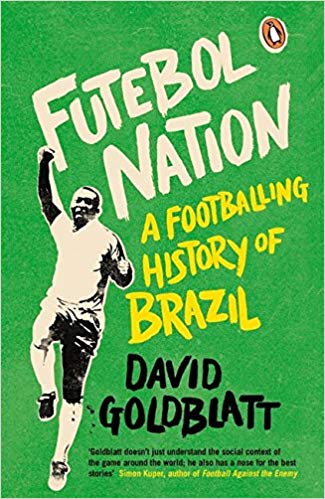
3. Futebol Nation: A Footballing History of Brazil, by David Goldblatt.
510bwbxTBGL._SX323_BO1,204,203,200_

The English writer does not sound very sympathetic to the country and its people. The writing is a cold and dispassionate account of the importance football gained in Brazil since its introduction in the early years of the 20th century and its ramifications through the history of the country. Although it became clear after the World Cup (2014) that football seems to have lost a lot of its importance to Brazilians – given the sense and irony most of the population demonstrated after the historic loss to Germany with a scoreline of 7×1, the book makes it clear that, especially from the 1950s to the 1990s, football was Brazilians’ greatest source of pride. It is also evident how strongly we identified the values of the nation with this foreign sport, allowing and making it easy for politicians to tap into its people’s naive passion to advance their own agendas. Although the book does not take into account the World Cup of 2014, it covers the June 2013 social unrest and popular demonstrations directed mainly against the realization of the over-budgeted upcoming event. All in all, it’s a very interesting read, even for those who are not really into the sport.

4. Backlands: The Canudos Campaign, by Euclides da Cunha.

9780143106074-1

Considered one of the most important books of the Brazilian canon, this text is a journalistic account of the conflict of Canudos – supposedly a civil war between monarchists and republicans at the end of the nineteenth century – which took place in the arid and difficult geographic region known as the backlands in the interior of Bahia. The official story says that a group of backlanders (sertanejos), led by a religious fanatic, Antônio Conselheiro, the Counselor, built up a settlement constituted of thousands of huts forming a kind of overcrowded slum, spreading over the valleys and hills of the region. The book reads like a novel, once you manage to get through the slow and dragging geological, topographical and climactic minutiae used to describe the region in the first couple of chapters. Then it finally gets to the action, depicting with cinematographic vigor the 4 military incursions into the settlement of Canudos, defended fiercely by the backlanders (sertanejos and jagunços, the latter considered bandits infiltrated in the community).

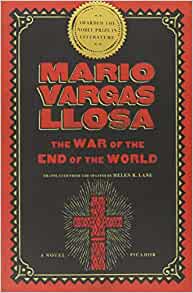
5. The War at the End of the World, by Mario Vargas Llosa.
Unknown

While Backlands was meant to be an objective report of the Canudos War in Brazil, this book by Peruvian writer Llosa is a fictionalized version of the events. It tells the same story, but as novels go, adding the thrill and emotional twists of the format. The book depicts characters on both sides of the war, offering a balanced perspective of what happened. It’s considered one of the author’s best books. Llosa himself considers it his most accomplished novel, and it features in Harold Bloom’s The Western Canon.

6. A Death in Brazil, by Peter Robb.

51wRrAw-XyL

A thrilling account of 500 hundreds years of Brazilian history, Australian writer Peter Robb’s book also reads like a novel. The writer lived in Brazil and offers authentic and knowledgeable insights into the country, its people and culture. He also talks very candidly and passionately about the country’s serious problems and inequalities. The death of the title is the mysterious assassination of PC Faria’s, fixer and bagman to corrupt President Collor in the early 1990s, but the book does not focus on this. It covers, among other things, the brutal slavery system we had in the country until 1888 (longer than anywhere else in the Western world), the destruction of the fugitive slave settlement of Palmares, the Canudos war, Brazilian cuisine and literature. A must-read.

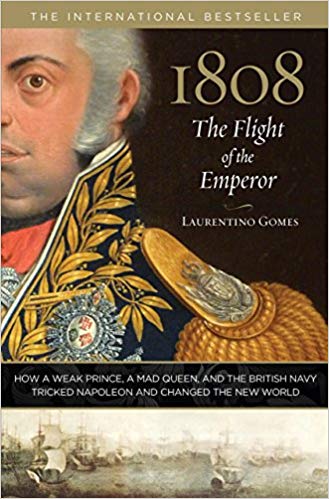
7. 1808 – How a mad queen, a coward prince and a corrupt court fooled Napoleon and changed the History of Portugal and Brazil, by Laurentino Gomes.
517MnMhRr7L._SX327_BO1,204,203,200_

Written by one of the most influential journalists of Brazil, this is the first installment of a trilogy that covers the history of the country from the transfer of the Portuguese royal court to Rio de Janeiro in 1808, in a maneuver to escape the Napoleonic wars, to the events surrounding the Proclamation of the Republic in 1889.

It took 10 years of research for the first volume to come to light. It’s a well- written, direct and very readable account of the story of the arrival in Brazil of D. Joao VI, his wife, Carlota Joaquina, and their entourage, changing the destiny of the colony forever by paving the way for the declaration of independence 14 years later. Mixing the personal anecdotes of these characters – some of them very funny – with important historical events, Gomes offers the reader a sprawling overview of those times in the colony.

1808 was awarded two Jabuti Prizes, in the categories of best reportage-book and non-fiction book of the year.

Screen Shot 2020-02-16 at 8.18.00 AM

8. 1822 – How a wise man, a sad princess and a money crazy Scotsman helped D. Pedro create Brazil, a country that had everything to go wrong, by Laurentino Gomes.

This is the second volume of the trilogy we mentioned above. Now we are focusing on the story of D. Joao VI’s son, Prince Pedro, and the role he played in the declaration of the independence of the country, culminating in the historic Cry of Ipiranga, and then becoming the first Emperor of Brazil. The book reads like a thriller, depicting the highly charged political events, the confronting factions and the many different interests that led Pedro to decide to stay in the country and cut its ties with Portugal. It portrays D. Pedro I as a wild, sensual and determined young man, who did not refrain from playing the role history reserved for him. 1822 added two other Jabuti Prizes (the third and fourth) to Laurentino Gomes’s collection, again in the categories of best reportage-book and non-fiction book of the year.

9. 1889 – How a tired emperor, a vain marshal and a wronged teacher collaborated for the end of the Monarchy and the Proclamation of the Republic in Brazil, by Laurentino Gomes.

The third volume of Gomes’s acclaimed trilogy revolves around the Proclamation of the Republic in Brazil, bringing down the Empire, which had been the most stable and solid government in the region for 67 years. Emperor D. Pedro II – 0ne of the most educated man of his time – was banned from Brazil with his family, being exiled in Europe. Marshal Deodoro da Fonseca, a former anarchist and a friend of the deposed emperor’s, was in charge now, despite his old age and debilitated health.

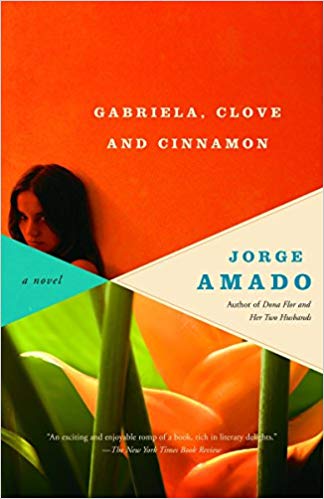
10. Gabriella, Clove and Cinammon, by Jorge Amado.
416OrtEBdpL._SX322_BO1,204,203,200_

Besides The War at the End of the World, this is the only other novel I included on our list of top 10 choices for the reader who wishes to understand Brazil. Written by Jorge Amado, Gabriella takes place in the small town of Ilheus, in the state of Bahia, during the economic boom of the cacao in the 1920s. The book consists of two intertwined stories: the first is the romance between the bar-owner Nacib, of Syrian origin, and the drought immigrant worker Gabriella, who becomes his cook and mistress; the second story is the confrontation between the conservative plantation colonels (powerful heads of landowner families) and the wealthy young man Mundinho Falcão, who represents the arrival of modernity, efficacy and urban values in the rural underdeveloped and backward region. Readers will be delighted to have all their senses and intellect arrested, as they immerse in the world of Gabriella: Amado describes the tastes, smells, and texture of the local foods; the funny, and sometimes violent, local customs; the hypocrisy of a narrow-minded and provincial society; the brutality of machismo; and the bright colors of what is supposed to be a microcosm of Brazil and Latin America.

I guess these 10 books will give newcomers enough introductory background and information on the beautiful, challenging and diverse country I’m lucky to live in. Welcome, good luck with your new job, and don’t forget to rate and comment on this post.

Au revoir

Jorge Sette.
 

Velázquez – The Iconic Painter of the Spanish Baroque


Considered the painter’s painter, Diego Rodríguez de Silva y Velázquez was born in Seville in 1599, growing up in the old Jewish quarter of that booming city.

Velázquez was an apprentice to Sevillian artist Francisco Pacheco for 5 years. However, it did not take long for the pupil to surpass the master in technique, which did not bother Pacheco at all. He was very proud of the young artist, who would later become his son-in-law. At the age of 19, Velázquez married Pacheco’s daughter, Juana, and had two daughters by her.

XIR221119

Velázquez

In 1623, he was invited to go to Madrid to paint the portrait of King Philip IV. The king liked the painting so much he commanded Velázquez to became his personal painter. From then on, only Velázquez was allowed to paint the king, and all his other portraits were taken out of circulation. Later on, Velázquez rose in the court to also become the king’s curator (being the person in charge of choosing and purchasing the furniture and paintings that would decorate the king’s palaces). Velázquez served the king for over 40 years, while Philip IV was the most powerful man on Earth.

At the beginning of his career, Velázquez soon distanced himself from the usual religious themes most Spanish painters produced at the time, due to the influence and power of the Catholic Church, and the overwhelming surveillance of the Spanish Inquisition. Instead, he started painting bodegones – kitchen and tavern scenes, involving common people – which, despite being considered a low genre of painting in those days, started to attract the attention of rich purchasers and patrons. Among these paintings, we have, for example, Old Woman Frying Eggs, and the breathtaking Water Seller.

0105vela.big

Old Woman Frying Eggs

His art was clearly influenced by Caravaggio in his use of contemporary, common people as models, and also in the use of the dramatic contrasts of light and shadow (chiaroscuro). Another major influence on Velázquez’s work was the art of Flemish baroque painter Peter Paul Rubens, who spent seven months at the court of King Philip IV on a diplomatic mission. Later, after spending time in Italy on two different occasions, he incorporated elements of both the contemporary local art and features of the Renaissance into his technique.

When he began working for King Philip IV, his main assignments consisted of portraits. He painted the members of the royal family in a great number of portraits, but his most famous ones are his own slave and studio assistant Juan de Pareja’s and the stunning portrait of Pope Innocent X. The realism and strength of these works, in which Velázquez managed to capture not only the physical but also the personality traits of his models, astonished his contemporaries and are a source of awe and inspiration to many artists to this day. Since most of Velázquez’s works were made for the king, they remained unseen for many years, hanging from the private walls of the royal family’s many residences.

Image-1

Pope Innocent X

In addition to the bodegones and portraits, he also produced famous mythological scenes (e.g. The Triumph of Baccus; Vulcan’s Forge; The Spinners; The Rokeby Venus), landscapes (e.g. Philip IV Hunting Wild Boar) and historical scenes (e.g. The Surrender of Breda).

XIR974

Vulcan’s Forge

Velázquez’s technique, draftsmanship and use of color have amazed the general public, critics and other painters for centuries. He’s many people’s candidate for the post of best painter ever. His paintings are included in what is called the Spanish Baroque movement of the XVII century, but they stand out as very personal and unique, the work of a genius.

Velázquez struggled his whole life to become part of the nobility he served so faithfully. His Jewish blood, however, was a constant obstacle for him to achieve such recognition. Only at the very end of his life, in 1658, did he become a knight, receiving the insignia of the Military Order of Santiago, the red cross that features on his chest in his most famous painting Las Meninas.

Velázquez died on August 6th, 1660, at the age of 61.

Au revoir

Jorge Sette


Famous Greek Quotes


“A man who takes no interest in politics has no business here at all.”


Unknown

Pericles (495 – 429 BCE)