My 5 favorite TV villains and why I love them


Television is changing. Its shows, especially after the advent of HBO, Netflix and Showtime, are becoming more and more sophisticated and nuanced. I would  even dare to say that TV shows in general are a lot more fun than the average Hollywood movie, one reason being that they are shorter and therefore able to pack a lot more punch into their compressed 30 or 60 min length. Of course, you can, and probably will,  binge watch whole seasons of Breaking Bad on a single weekend, but the experience is usually more satisfying than spending 3 hours at the movie theater. I know, I’ve done it.

That’s why I’ve decided to narrow my choices and include only TV villains in this post. Maybe in the future I will have another go at it, and focus on the big screen baddies.

Here’s the list of my favorite TV villains. They are NOT listed in order of preference. All of them are contemporary, so the reader will hopefully know who I’m talking about. I also understand that my choices may not be terribly original, but I’m sure some of my reasons might surprise you.

1. Dexter Morgan (from Dexter): strong organizational skills, love of kids, sense of humor and irony are some of Dexter’s virtues I respect and relate to. He also cleans after himself and has an elegant method of avoiding leaving behind a messy crime scene. We could easily be flatmates. I also really like the cool thermal shirt he wears when he goes on killing jobs. I’ve been looking to buy one. I will have to lose a few pounds to fit into them though. Quote: “People fake a lot of human interactions, but I feel like I fake them all, and I fake them very well. That’s my burden, I guess.”

Dexter Morgan

Dexter Morgan

2. Frank Underwood (from House of Cards): yes, you love him too, I know. But I even love his wife better, she’s next on the list. Single-mindedness, strong sense of purpose, ability to focus and to design well thought-out strategies, in addition to a very keen sense of politics are all enviable treats of  Francis’s (as his wife calls him) personality. He is also a great reader of peoples’s feelings and emotions. He knows when to back off. Excellent at prioritizing his battles. Quote: “There are two kinds of pain. The sort of pain that makes you strong, or useless pain. The sort of pain that’s only suffering. I have no patience for useless things.”

Frank Underwood

Frank Underwood

3. Claire Underwood (from House of Cards): extremely beautiful, proving that you can still be stunning in maturity, Claire has a great sense of fashion and style. She also has total control over her feelings. Like Frank, she picks her battles carefully, has strategic vision, and doesn’t mind  being upstaged by her husband, as she knows she is really the boss. Besides, she goes jogging regularly: I wish I had that kind of determination. Quote: “Now tell me, am I really the sort of enemy you want to make?”

Claire Underwood

Claire Underwood

4. Walter White (from Breaking Bad): fearless trend-setter: he’s fifty years old and looks cool wearing only a long-sleeved green shirt, white underwear, socks and leather shoes. The ultimate entrepreneur.  Manages his business like a proper CEO. Highly intelligent. A perfectionist in every sense of the word: he is very proud of the purity of the the blueish product he puts out with the utmost care and dedication. I’ve read somewhere that watching the whole Breaking Bad series is equivalent to taking a business course at Harvard. I got my degree last month! Quote: “What I came to realize is that fear, that’s the worst of it. That’s the real enemy. So, get up, get out in the real world and you kick that bastard as hard you can right in the teeth.”

Walter White

Walter White

5. Bart Simpson (from The Simpsons): you may not even realize he’s a villain, but don’t be deceived by his innocent looks and strange feminine voice. Bart Simpson is evil. However, I like the fact that he is very cold in his decision making process, when necessary. Outcomes are what really matters for him. He’s great at practicing his calligraphy (at the beginning of every show you will always see him writing the same sentence – a different one per episode- on the blackboard hundreds of times). Take Steve Jobs, for instance: didn’t he study calligraphy and allegedly applied his knowledge in the making of the beautiful fonts available on the first Mac computers? So, Bart deserves brownie points for his efforts too. Another career option for Bart would obviously be teaching, given all this expertise handling the chalk (not sure if this will be a widely sought-after skill in the profession in the near future, though). Finally, he’s one of  the few major TV characters who tries to speak Spanish: ¡Ay, caramba! Quote: (to his sister Lisa) “You got the brains and talent to go as far as you want and when you do I’ll be right there to borrow money.

Bart Simpson

Bart Simpson

Well, I hope I’ve been persuasive in explaining why I love these guys. Now it’s your turn. Share with us the list of baddies you care about.

Au revoir

Jorge Sette

I luv Rio


Cartoon version of my previous post “E O RIO, HEIN?” (http://wp.me/p4gEKJ-rD). I want to express my love for this beautiful city.

E o Rio, hein?


Expressing my love for this wonderful city. Based on a previous article of the same name written for this blog.

7 Reasons I Prefer e-Books to Print Ones.


I know, paper book lover, you are offended even before you start reading this post. And, believe me, I completely understand your love for this dear old object that dates back to the 1500s, following the development of the movable types by Gutenberg  (although in Asia this happened even before). I even share that warm feeling towards the smell of newly-acquired books. Just like you, I’m also awed by its amazing endurance, after all it’s been around for more than 500 years with little variation.

However, I’m sorry to herald the news that its days are numbered. And the process of replacement will be faster than you think. Print books will always be valued, but more and more they will become a relic, used more as an ornament, a piece of decoration, having the status we give to contemporary coffee-table books. They will be regarded as a beautiful, yet a bit funny, object of a previous era, very much like the clay tablet, papyrus scrolls and parchments we respectfully admire in museums today. I don’t remember seeing anyone reading the latest Paulo Coelho on a papyrus scroll on the subway recently! Print books will represent something antique and valuable, but I doubt people will use it practically. E-books will progressively replace them.  Starting from school materials.

Screen Shot 2014-03-14 at 9.11.55 AM

The evolution of reading

At the risk of sounding pretentious, I honestly believe that I may have been among the first Brazilians to have a Kindle. I know that because I ordered the hardware the minute it was available to Brazil, meaning that the  download of  books would work here without the need for any hacking or tricks. That happened two years after its launch in the US. However, I had been reading digitally even before that, as I owned an e-reader account in the medieval days of Palm PDAs.

But let me tell you the reasons I have loved e-books from the first moment I heard about them.

1. Availability of titles in English

If you couldn’t read in English, there was no point in having a Kindle at its inception, as most books available were in this language. I’ve always read more in English than in Portuguese (despite the fact that the latter is my native language), and it was always a bit frustrating not to have access to some of the books I wanted hot off the press. Whenever I traveled to the US,  I would come back with a huge load of these Gutenberguian objects, which made my backpack really heavy and uncomfortable. To this day I can’t get over the fact that any content is now just a mouse click away to be ordered, whenever and wherever you are.

2. Portability

I’m  always reading three or four books at the same time (sometimes more). I get easily bored, and like to move from one topic to another very quickly. How can you do that with print books when you are away from home? I must confess that this volatility of mine got even worse now that I’m able to carry my library around on my iPhone. Print books begin to feel awkward to carry and even to read from, once you get used to tablets and smart phones. Try accessing the left-hand page of a thick paperback!

3. Samples

Whenever I come across an interesting mention about a book, I instantly access Amazon.com and download a sample. I must admit I tend to purchase it later, which makes me  a very easy prey for these kinds of ultra-smart marketing tactics.

4. Speed

There is a lot out there to catch up with and I have only a lifetime. Somehow you move faster on digital text, there are many reasons why, one being the very fact that you avoid  losing seconds – that add up – turning pages. All you have to do at the end of a digital page is to tap on it and you are instantly taken to the next one. I have just read about a new speed reading app, called Spritz (http://www.spritzinc.com), and tried it out. I realized it’s pretty addictive and I’m sure I will be moving on to it as soon as it’s available. Yes, I know about the Woody Allen joke: he speed read through War and Peace and all he remembered  at the end was that it may have been about some kind of war in Russia. If it gets this bad, I will quit trying to increase my pace, promise.

5. The size of the font

One is not twenty years old forever, and the eyesight suffers with time. Even with glasses, very small fonts are irritating. So, to be able to choose and control the size of the font you are reading in is a great advantage.

6. Instant access to a dictionary

I love words, and the process of making new acquaintances, stumbling upon prospective friends and identifying them is made a lot simpler and quicker on a e-book. Click on the word and the definition  pops up.

7. The fact that you can highlight, bookmark and annotate orderly and beautifully

These are  some of  the things that always comes up whenever I listen to someone defending print books. They say they can’t move on to digital books as they love to highlight and comment on passages. Obviously, they are unaware that these have always been features of e-books, since their dawn. And you can do it in different colors, without ever having the problem of your marker running out of ink.

I’m sure that, by now, you, print book lover, are hating me even more, if you ever got to this point in the text, and certainly will want to hit me in the head with one of the heaviest of these outdated objects you might have at hand: The Complete Works of Shakespeare? I will duck and try to run away, carrying with me not only a similar copy in my e-library, but also, the Complete Works of Lewis Carroll, Oscar Wilde, and Edgar Allan Poe…plus the Bible! Ah, and, classics as they are,  they cost me nothing, or only a couple of dollars on Amazon!

NOTE: You might want to check out our eBooks available  from AMAZON.COM. Just click here to know more about the series TEACHING ENGLISH WITH ART:  http://wp.me/p4gEKJ-1lS

Teaching English with art

Teaching English with art

Au revoir

Jorge Sette.

More words are needed…


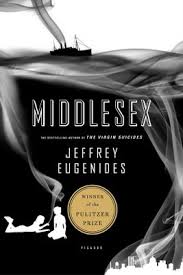
Emotions, in my experience, aren’t covered by single words. I don’t believe in “sadness,” “joy,” or “regret.” UnknownMaybe the best proof that the language is patriarchal is that it oversimplifies feeling. I’d like to have at my disposal complicated hybrid emotions, Germanic train-car constructions like, say, “the happiness that attends disaster.” Or: “the disappointment of sleeping with one’s fantasy.” I’d like to show how “intimations of mortality brought on by aging family members” connects with “the hatred of mirrors that begins in middle age.” I’d like to have a word for “the sadness inspired by failing restaurants” as well as for “the excitement of getting a room with a minibar.” I’ve never had the right words to describe my life, and now that I’ve entered my story, I need them more than ever.”

― Jeffrey Eugenides, Middlesex

“You’re so vain” (Books I think are about me)


I got a funny reaction to my blog post on Wuthering Heights (http://wp.me/p4gEKJ-j0) from an anonymous reader. He or she wrote to me saying: “You are so vain, you probably think Wuthering Heights is about you”. I suspect this is an adaptation of a line of an old Carly Simon song, who allegedly was referring to Mick Jagger. In a way, I found the comment rather amusing, and, to be quite honest, remarkably true. Even more worrying: I tend to think that every single book I love is about me! As a matter of fact, it only interests me if I can somehow relate to it. And I guess this is what happens to every reader, at least the more romantic ones, like me. So, yes, you got it right, dear anonymous e-mail writer.

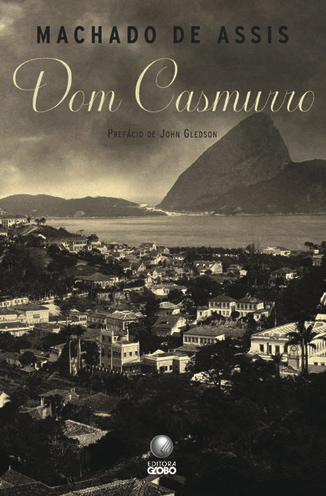
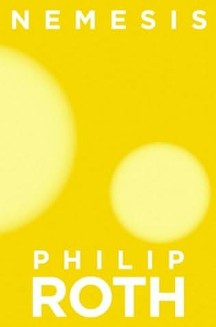
Take for example some of the best books I have read (and often reread) : Dom Casmurro (by Machado de Assis), Nemesis (by Philip Roth) and The Bonfire of the Vanities (by Tom Wolfe). They are really all about me.

cover_35e51c11-6ac1-4399-be38-98245079bc22

Dom Casmurro, by Machado de Assis.

The first time I read Dom Casmurro I was still in high school, and totally fell in love with Capitu. The kiss she and Bentinho exchange while he is combing her hair and she drops her head back, making their faces align in opposite directions, is  one of the most romantic scenes I remember as a teenager. Imagine my surprise when I saw a repeat of that scene decades later in the movie SPIDER MAN! This time he was hanging upside down from a wire fence while Mary Jane was looking up.  The same kind of kiss. Also, like Bentinho, the main character in Dom Casmurro, I can be quite jealous in a relationship and totally understand how paranoid it must feel to have your kid grow up to look like your best male friend. And the best thing is, every time I read the book again, I find new clues that indicate that Capitu must have been unfaithful, although we can never be one hundred per cent sure, as the story is very cleverly told from the point of view of the narrator only, who happens to be Bentinho, the husband.

NemesisRoth

Nemesis, by Philip Roth

Nemesis by Philip Roth is a very universal story, and if you can’t identify with it, I’m afraid you have a problem. Although I’m not Jewish and am fortunate enough not to be physically disabled (the story is about the terrible consequences of the outbreak of a polio epidemic in the mid-1940s New Jersey), I fully identify with the book’s themes. The main message, as I see it, is, if you are struck by tragedy, if you have a disability of any kind, or anything else people may look down upon or reject you for (and that probably applies to all of us), there is no point in blaming God or the Universe for it. Get on with your life, it’s your responsibility to make the most of it and restore or construe your own meaning for happiness. Or fight back. This is something everyone needs to hear: take full ownership of your failures and problems, and deal with them. No one else will care as much. Tough, but real.

Bonfire-of-the-Vanities

The Bonfire of the Vanities, by Tom Wolfe

The Bonfire of the Vanities: the main character finds himself in a kafkaesque situation: he gets lost in a dangerous part of  the city while driving back from the airport with his mistress, and accidently seems to strike a young black man he was sure was trying to mug them.  What a nightmare!  Was it a hit-and-run accident? Should they tell the police straightaway? But the wife will find out about the mistress then. Was the kid really hit, all they heard was a little noise (“thok”) after all. Surely the boy was OK. What decisions do they need to make? Mistakes are inevitably made along the way and there are terrible consequences. Moreover, there are many third parties (journalists, community leaders, attorneys, politicians, etc) trying to profit politically from the situation. Nothing is as morally simple as it first looks. Interesting questions. The reader gets deeply involved in the plot and its turns. “Unputdownable”. Besides, it’s very tempting to picture myself living the good life of a succesful Wall Street yuppie in a huge two-story apartment off Park Avenue in Manhattan…without the tragedy! Another book that COULD be about me.

So I’m really sorry if the anonymous e-mail writer intended to hurt my feelings accusing me of believing that Wuthering Heights is about me. Catherine, one of the book’s main characters, says at one of the most important plot points in the story: “I am Heathcliff!”  Well, so am I!

http://youtu.be/lEitYKa6DIQ

Au revoir

Jorge Sette.

Ignorance, prejudice and the fact that a chimpanzee’s skin is white!


In a scene of the Academy award-winning movie “12 YEARS A SLAVE”, the character played by Michael Fassbender says that one can easily see that his black slaves are nothing more than “baboons”. Actually, this association of black people with monkeys and apes are very commonly made by bigots and racists throughout the world. For some reason, they seem to think that black humans are closer to these cousins of ours than caucasians or asians.

chimpanzee-animals-13168191-1001-1001

I’m white, dude!

I have just come across a very interesting article in last week’s  issue of THE ECONOMIST  (“The skinny on skin colour”) where they explain the reason early humans in Africa developed dark skins was to protect it from cancer, since their bodily hair had somehow been shed – the reason why we substituted melanin for a hair coat is still not completely understood.  Some people’s skins only became fairer as they moved and lived in more northern regions of the globe. But what really struck me as ironic and very sobering  is that, as they state in the article, the color of a chimpanzee’s skin is white, once you shave all that hair!

This only proves that bigotry and ignorance go hand in hand, and brave are the ones who, despite their not understanding completely a new phenomena, try to see through the surface and get to the core and truth of it, rather than reject things and ostracize people they don’t know anything about. Difference is always a source of fear and prejudice. I admit it may even be natural to feel afraid or cautious when confronted with something new and unfamiliar. But this is where the human mind – and spirit – need to impose itself and guide our consciousness and behavior.  The senses and our own experience can lie, or at least, may not tell the whole story.

Empathy: I keep getting back to this word in every article I write. The reason is I think  it’s even more effective than “supercalifragilisticexpialidocious” from the movie Mary Poppins – whose 50th anniversary is being celebrated this year, by the way – in the sense that it makes people not only feel better as they say it, but it can have a huge effect towards accommodating and living with diversity when applied to real life.

The ignorance about chimpanzees’ skins being white can be equated with the lack of knowledge that gays DON’T choose their sexual orientation (the choice is either to hide it from others and live a repressed or duplicitous life, or come out of the closet and deal with it) or the myth that Latin Americans are not as hardworking as their counterparts in North America, Europe or Asia. To say nothing of men’s fear that women are their equal in all intellectual respects.

Wake up: chimps’ skins are white!

NOTE: You might want to check out our eBooks available  from AMAZON.COM. Click here: http://wp.me/p4gEKJ-1lS

Teaching English with Art

Au revoir

Jorge Sette


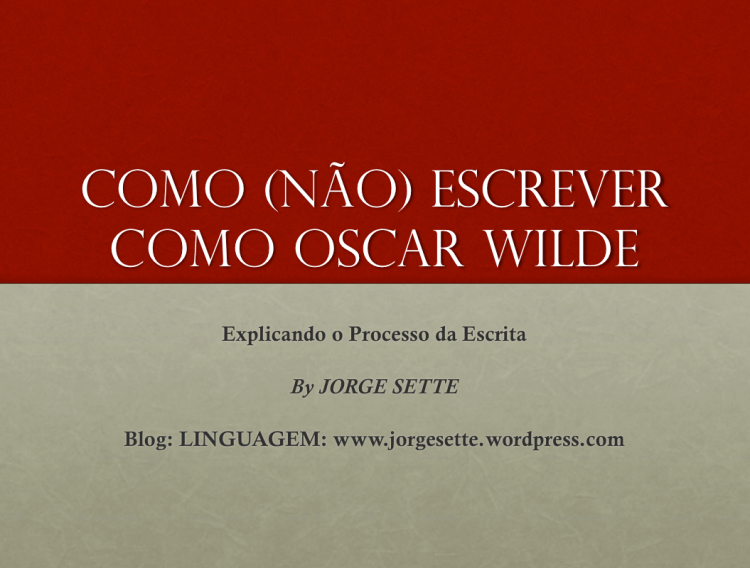
Como (não) escrever como Oscar Wilde (PDF – presentation)


Como (não) escrever como Oscar Wilde (PDF - presentation)

Os passos para criação de textos baseados no processo da escrita. Esta apresentação resume um artigo completo de mesmo título que pode ser lido no blog LINGUAGEM: http://www.jorgesette.wordpress.com

CLIQUE NA IMAGEM PARA ACESSAR A APRESENTAÇÃO EM SLIDESHARE.

Carnaval, Baco e Aprendizagem de línguas


Os que acompanham meus posts neste blog, meus amigos de Facebook e seguidores de Twitter já devem ter notado que tenho uma certa queda por pinturas, esculturas e design de forma geral. Fui também professor de línguas e teacher trainer por muitos anos. Portanto, nada mais natural do que conjugar paixões e habilidades num veículo educativo impactante e prazeroso. Bem, essas são minhas razões e motivos pessoais para combinar arte e ensino de línguas em instrumentos e objetos didáticos específicos: tenho no momento três ebooks publicados na AMAZON sobre o tema com atividades suplementares para professores de inglês envolvendo obras de Matisse, Picasso e Caravaggio.

Havendo exposto meu prazer na produção desses instrumentos, como acho que isso possa ser relevante para alunos e professores? A citação abaixo pode começar a ajudar a explicar meus objetivos:

georgia-okeeffe-1

Georgia O’Keeffe

“I found I could say things with color and shapes that I couldn’t say any other way – things I had no words for”Georgia O’Keeffe.

Ou seja, as artes visuais são uma complementação da expressão verbal. Se não consigo comunicar pela fala ou escrita, mostro. E assim, meu trabalho como professor  de línguas, e, num âmbito maior, como educador,  se completa. E a aprendizagem do aluno de línguas se enriquece com algo que está fora do universo linguístico, mas que se integra a ele, acrescentando-lhe novas dimensões.

Entre as possibilidades de expressar o não verbal, está a capacidade da Arte de inspirar emoções, através de luzes, cores e formas.  É capaz de traduzir a beleza de uma forma diferente da língua.

Outro aspecto interessante é que, usando arte, estamos acrescentando conteúdo ao ensino de língua. Faço parte da corrente dos que acreditam plenamente no poder de CLIL  (“content and language integrated learning”) para a eficácia da aprendizagem. Ou seja, exceto no caso da poesia e da literatura, a língua não é um fim em si mesma, mas um canal para veicularmos toda sorte de assuntos, tópicos, e conteúdos de forma geral. O aluno de inglês em geral quer a língua como ferramenta para uso em sua área específica de atuação profissional ou acadêmica. Poucos se tornarão escritores ou poetas. Portanto, o uso da arte visual pode nos ajudar de forma criativa a discutir assuntos como mitologia, história, profissões, geografia, política, violência, religião, ou qualquer outro tópico do interesse do seu público. Tudo isso com um poderoso invólucro de emoção, força expressiva e beleza. A arte visual é interdisciplinar por sua própria natureza. Tudo que você precisa fazer é escolher o artista mais adequado para um certo tema.

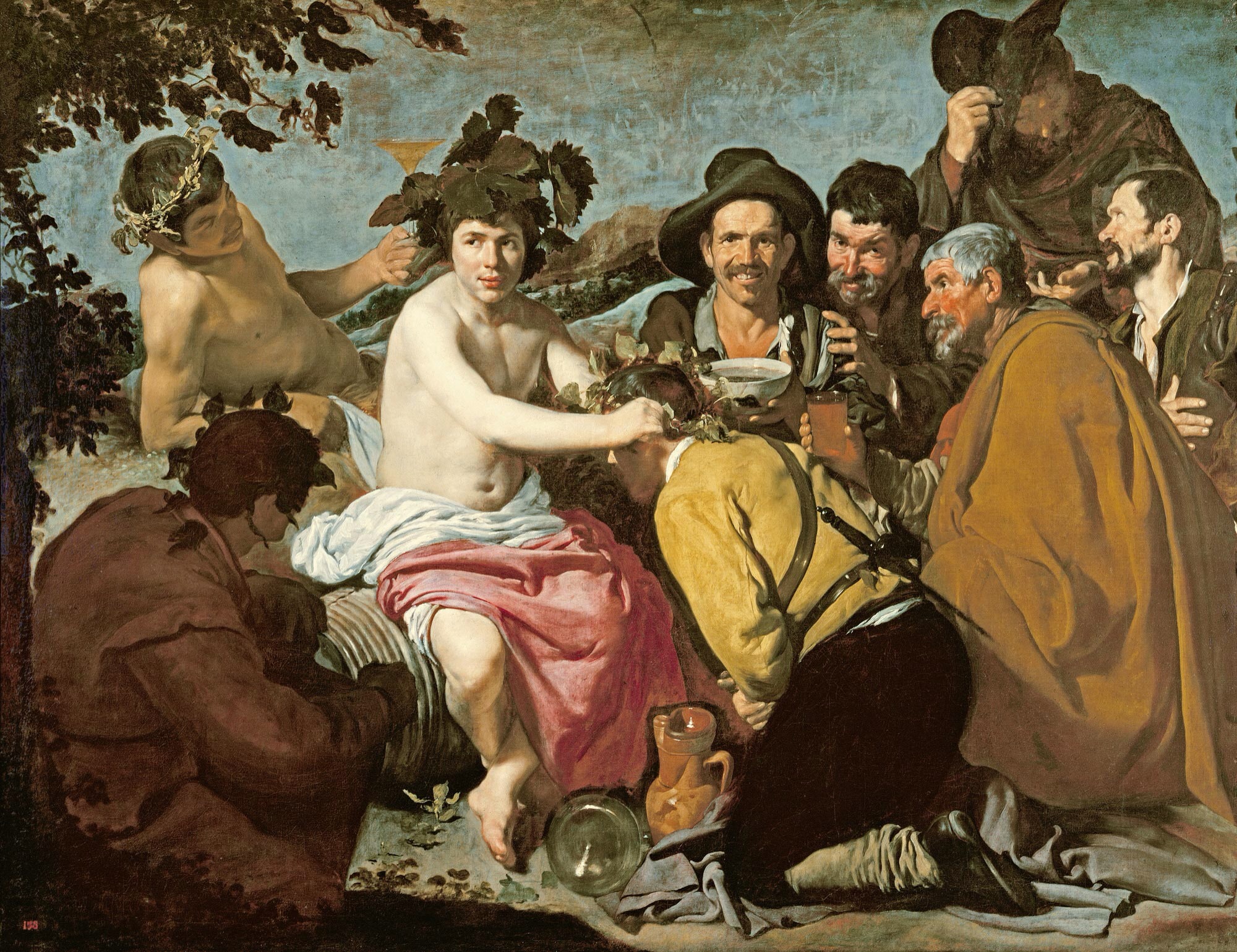
Para concluir, gostaria apenas de contar uma experiência pessoal, que é bem pertinente neste sábado momesco em que escrevo este texto.  Era aluno de Letras na Universidade Católica de Recife na época, e tinha uma dedicada professora de Literatura Portuguesa. Não preciso dizer que suas bem preparadas aulas não eram as mais populares entre os alunos,  que mal podiam esperar  pelo toque da campainha indicando o final da sessão e o ínicio dos prazeres da sexta-feira à noite (que se resumiam  para quase todos a cerveja barata e serenata pelas ladeiras de Olinda). Um dia, porém, a professora entrou na sala portando um projetor de slides (nada de “data show” naqueles tempos medievais), e, para contextualizar o período barroco da literatura, que estudávamos, decidiu inovar, deixando os áridos textos e enfocando a pintura da época. Assim,  nos apresentou Velázquez, explicando em detalhes o que deveríamos observar nas pinturas. Os alunos se quedaram em choque. A aula se prolongou por muito além dos 50 min de praxe. Todos ignoraram o toque da campainha, e permacerem imóveis, extáticos e atentos, enquanto Irene discorria elegantemente sobre Baco cercado por bêbados de dentes estragados pelo vinho. É a única aula dela de que consigo me lembrar.

IMG_0401

The Triumph of Bacchus (Los Borrachos, The Topers), 1628-1629. Velázques. Diego. (Clique na imagem para vê-la ampliada)

Bom carnaval!

NOTE: If you are into art, you may consider checking out our eBook series TEACHING ENGLISH WITH ART:

Click on the links below to go to AMAZON.COM and buy your ebooks:

1. Teaching English with Art: Matisse  http://wp.me/p4gEKJ-1kP

 (30 speaking and writing activities based on famous works by Henri Matisse)

2. Teaching English with Art: Picasso  http://wp.me/p4gEKJ-1lA

(30 speaking and writing activities based on famous works by Pablo Picasso)

3. Teaching English with Art: Caravaggio  http://wp.me/p4gEKJ-1mL

(30 speaking and writing activities based on famous works by Caravaggio)


Jorge Sette

TEACHING ENGLISH WITH MATISSE


TEACHING ENGLISH WITH MATISSE

SPEAKING ACTIVITIES FOR THE LANGUAGE CLASS – FULLY CORRELATED TO THE COMMON EUROPEAN FRAMEWORK OF REFERENCE  (Click on the image to access the PDF presentation on SlideShare).