Portuguese is among the top 10 most spoken languages in the world, and it should not come as a surprise that some world-famous celebrities have learned to speak it fluently. Whether through personal connections, professional reasons, or sheer curiosity, these celebrities have embraced the Portuguese language and culture. Here are some notable names:
Shakira
Shakira, the world-famous singer and dancer, learned to speak Portuguese because of her connection with Brazil. Early in her career, she worked extensively in Brazil and developed a love for the country and its language. Shakira’s dedication to learning Portuguese has paid off, and she is now quite fluent in it.
Annabelle Wallis
Annabelle Wallis, an English actress known for her roles in “The Tudors,” “Annabelle 2,” and “Peaky Blinders,” speaks Portuguese fluently. During her childhood, Annabelle lived in Portugal with her family for several years. Although she attended an international school, she picked up a lot of the Portuguese language and can speak it quite well.
J.K. Rowling
J.K. Rowling, the renowned author of the Harry Potter series, speaks Portuguese due to her time living in Portugal. From 1991 to 1993, Rowling lived in Portugal and married a Portuguese journalist, Jorge Arantes. This experience gave her ample opportunity to learn and practice the language. Rowling often replies to Portuguese fans in their native language.
Nelly Furtado
Nelly Furtado, a Canadian singer and songwriter, has Portuguese roots. Both of her parents are from the Azores, Portugal, and they emigrated to Canada when she was very young. Despite growing up in Canada, her parents ensured that she learned and spoke Portuguese fluently.
Ricky Martin
Ricky Martin, the Puerto Rican singer and actor, learned Portuguese due to his love for Brazil. With a significant fanbase in Brazil, Ricky Martin visited the country multiple times and made an effort to learn Portuguese to communicate directly with his fans..
Chris Hemsworth
Chris Hemsworth, the actor known for his role as Thor in the Marvel movies, is Australian. However, he picked up Portuguese through his travels and connections with Portuguese-speaking people.
Mira Sorvino
Mira Sorvino is an Oscar-winning American actress – for her performance in Woody Allen’s Mighty Aphrodite. She speaks Portuguese fluently, having learned the language during her time at Harvard University, where she pursued East Asian studies.
Ben Affleck
Ben Affleck, the American actor and filmmaker, also speaks Portuguese fluently. The reason is that he spent a year traveling around Portugal with his family. In addition to that, he briefly studied the language at the University of Vermont.
These celebrities have shown that learning a new language can be a rewarding and enriching experience. Whether for personal or professional reasons, their dedication to mastering Portuguese is commendable. Their ability to speak Portuguese fluently not only enhances their connection with Portuguese-speaking fans but also showcases their appreciation for the language and culture.
How about you? Interested in learning Brazilian Portuguese? Check out the ad below and reach out to us TODAY at: jorge.sette@terra.com.br
In recent years, the world has witnessed a significant surge in the number of people learning Portuguese as a foreign language. This trend is not just a passing fad but a reflection of the growing importance of Portuguese on the global stage. Whether it’s for business, travel, or cultural enrichment, there are numerous compelling reasons to take up Portuguese. In this blog post, we will explore ten key reasons why Portuguese is becoming increasingly popular and why you should consider learning it too.
1. Portuguese is a Global Language
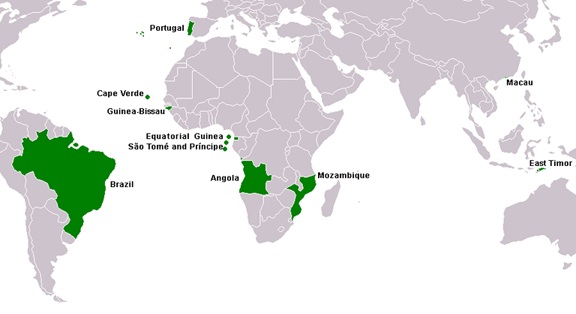
Portuguese is the sixth most spoken language in the world, with over 220 million native speakers. It is the official language of nine countries (plus Macau), including Brazil, Portugal, Mozambique, Angola, and several others. This widespread use makes Portuguese a valuable language for international communication and opens up opportunities in various regions across the globe.
2. Economic Opportunities in Brazil
Brazil, the largest Portuguese-speaking country, boasts one of the world’s largest economies. With its diverse industries, including agriculture, manufacturing, and technology, Brazil offers numerous business opportunities. Learning Portuguese can give you a competitive edge in the job market and help you tap into the economic potential of this vibrant country.
3. Rich Cultural Heritage
Portuguese-speaking countries have a rich cultural heritage that spans literature, music, dance, cinema, and cuisine. From the soulful sounds of Fado music in Portugal to the vibrant Carnival celebrations in Brazil, learning Portuguese allows you to immerse yourself in these unique cultural experiences and gain a deeper appreciation for the traditions and customs of these countries.
4. Travel and Tourism
Portuguese-speaking countries are popular travel destinations, known for their stunning landscapes, historical landmarks, and warm hospitality. Whether you’re exploring the picturesque streets of Lisbon, relaxing on the beautiful beaches of Rio de Janeiro, or embarking on a safari in Mozambique, knowing Portuguese can enhance your travel experiences and help you connect with locals on a more personal level.
Rio de Janeiro, Brazil
5. Academic and Research Opportunities
Portuguese is an important language in academia and research, particularly in fields such as Latin American studies, linguistics, and history. Many universities and research institutions offer programs and scholarships for students who are proficient in Portuguese. By learning the language, you can access a wealth of academic resources and collaborate with scholars from Portuguese-speaking countries.
6. Growing Influence in Africa
Portuguese is an official language in several African countries, including Angola, Mozambique, and Guinea-Bissau. These countries are experiencing rapid economic growth and development, making them attractive destinations for investment and business ventures. Learning Portuguese can help you navigate these emerging markets and build strong connections with local partners.
7. Enhanced Cognitive Skills
Learning a new language has been shown to improve cognitive skills, such as memory, problem-solving, and multitasking. Portuguese, with its unique grammar and vocabulary, can provide a stimulating mental workout and keep your brain sharp. Additionally, being bilingual or multilingual can enhance your overall communication skills and cultural awareness.
8. Access to Portuguese Literature and Media
Portuguese literature is rich and diverse, with renowned authors such as Fernando Pessoa, José Saramago, Machado de Assis and Clarice Lispector. By learning Portuguese, you can read these literary works in their original language and gain a deeper understanding of their nuances and cultural context. Additionally, you can enjoy Portuguese-language films, music, and television shows, further enriching your cultural experience.
9. Strengthening Personal and Professional Relationships
Knowing Portuguese can help you build stronger personal and professional relationships with Portuguese-speaking individuals. Whether you’re working with colleagues from Brazil, making friends in Portugal, or collaborating with partners in Angola, speaking their language can foster trust, respect, and effective communication.
10. A Fun and Rewarding Challenge
Learning Portuguese can be a fun and rewarding challenge. The language has a melodic quality and a rich vocabulary that can be enjoyable to learn and use. As you progress in your language journey, you’ll experience a sense of accomplishment and satisfaction that comes with mastering a new skill.
Conclusion
In conclusion, there are countless reasons to take up Portuguese as a foreign language. From economic opportunities and cultural enrichment to travel and cognitive benefits, learning Portuguese can open up a world of possibilities. So why not embark on this exciting linguistic adventure? Whether you’re a student, a professional, or simply a language enthusiast, Portuguese is a valuable and rewarding language to learn. Start your journey today and discover the many benefits of speaking Portuguese!
Note: Jorge Sette, M.A. in Applied Linguistics offers lessons of Brazilian Portuguese online. The number of spots is limited. Hurry up! Don’t hesitate to reach out to him at: jorge.sette@terra.com.br
Portuguese is one of the world’s most widely spoken languages, but there’s so much more to it than meets the eye. Here are ten intriguing facts about this beautiful and versatile language:
1. Portuguese Is the Official Language of 10 Countries
Portuguese is the official language of: Portugal, Brazil, Angola, Mozambique, Cape Verde, Guinea-Bissa, São Tomé and Príncipe, East Timor, Equatorial Guinea, Macau (the latter is not a sovereign country, but it recognizes Portuguese as an official language).
Together, these nations and regions form the Community of Portuguese Language Countries (CPLP).
2. Brazil Has the Largest Portuguese-Speaking Population
With over 220 million of the world’s Portuguese speakers, Brazil is the largest Portuguese-speaking country. As a matter of fact, Brazil accounts for more than 80% of all Portuguese speakers worldwide.
3. Portuguese Is the Fastest-Growing European Language
Portuguese is the fastest-growing European language after English. Its spread in Africa and its increasing relevance in global trade contribute to its rising prominence.
4. It Has Influenced Other Languages
Portuguese has left its mark on several languages, especially in Asia. For example, words like chá (tea) entered Japanese, Cantonese, and even English via Portuguese traders.
5. It’s a Romance Language
Portuguese evolved from Latin, just like Spanish, French, and Italian. Its closest linguistic relative is Galician, spoken in the Galicia region of Spain.
6. Portuguese Is the Sixth Most Spoken Language Worldwide
Portuguese has 265 million speakers, ranking as the sixth most spoken language in the world, following Mandarin Chinese, Spanish, English, Hindi, and Arabic.
Soccer – Ipanema Beach, Rio.
7. It’s One of the Most Phonetic Languages
Although Portuguese pronunciation may seem tricky at first, the language is relatively phonetic. Once you learn the rules, it’s often possible to pronounce words correctly by reading them.
8. Many Portuguese Words Have Arabic Origins
When the Moors ruled the Iberian Peninsula, they introduced many Arabic words into Portuguese. Common examples include açúcar (sugar), alface (lettuce), álcool (alcohol), alfazema (lavender) almofada (pillow), marfim (ivory), azeite de oliva (olive oil), and algodão (cotton).
9. There Are Unique Portuguese Sounds
Portuguese has sounds that are rare in other Romance languages. For instance, nasal vowels (marked by a tilde, like in ocupação) are a distinctive feature that can be challenging, and, yet, interesting to learners.
10. It’s One of the Oldest Modern Languages
Portuguese was officially recognized as a language in 1290 by King Denis of Portugal. He founded the first Portuguese university and declared that the Vulgar Language (spoken Portuguese) should replace Latin as the official language in legal documents.
Conclusion
Portuguese is a rich and fascinating language with a global footprint. Whether you’re learning it for travel, business, or cultural appreciation, these facts highlight its historical and linguistic significance. Did any of these surprise you? Let us know in the comments!
NOTE: I give online classes of Brazilian Portuguese for foreigners. If you are interested, don’t hesitate to reach out: jorge.sette@terra.com.br
Here are five compelling reasons to study Brazilian Portuguese:
1. Cultural Richness
Brazil is home to a vibrant culture that includes music (samba, bossa nova, MPB, rock and funk), dance, literature, cinema, art, and cuisine. Learning Portuguese allows you to immerse yourself fully in this rich cultural heritage.
2. Professional Opportunities
Brazil has the largest economy in Latin America and is a key player in industries like agriculture, energy, and technology. Speaking Portuguese can open doors for careers in international business, tourism, and diplomacy.
3. Communication with Over 220 Million Speakers
Portuguese is the official language of Brazil, the largest Portuguese-speaking country in the world. Learning the language allows you to connect with millions of people across the globe.
4. Travel and Exploration
Brazil is a diverse and breathtakingly beautiful country, offering destinations like the Amazon Rainforest, stunning beaches, Rio de Janeiro, Iguaçu Falls, Salvador and São Paulo. Speaking Portuguese enhances travel experiences by helping you connect with locals and navigate the country with ease.
Ipanema and Leblon
5. Linguistic Enrichment
Studying Brazilian Portuguese provides insights into the evolution of Romance languages and strengthens your understanding of grammar and vocabulary, particularly if you already know another Romance language like Spanish or French.
Would you like additional reasons or guidance on resources for learning?
I’m offering one-to-one lessons of Brazilian Portuguese for foreigners. The lessons are online but the spots are limited. Join today! Don’t hesitate to reach out to us at: jorge.sette@terra.com.br
World Book Day is a holiday founded by UNESCO that celebrates authors, books, and publishers. It was first commemorated on April 23, 1995, to honor author Miguel de Cervantes, who died on that same day, almost 400 years prior. It also marks the date of the death of another universally recognized author, William Shakespeare.
World Book Day isn’t quite as popular as other holidays, but the event is beginning to gain traction. With this in mind, we have decided to help our dear teachers organize a few activities at their schools to celebrate this great event. Here are some tips:
1. Organize a costume contest
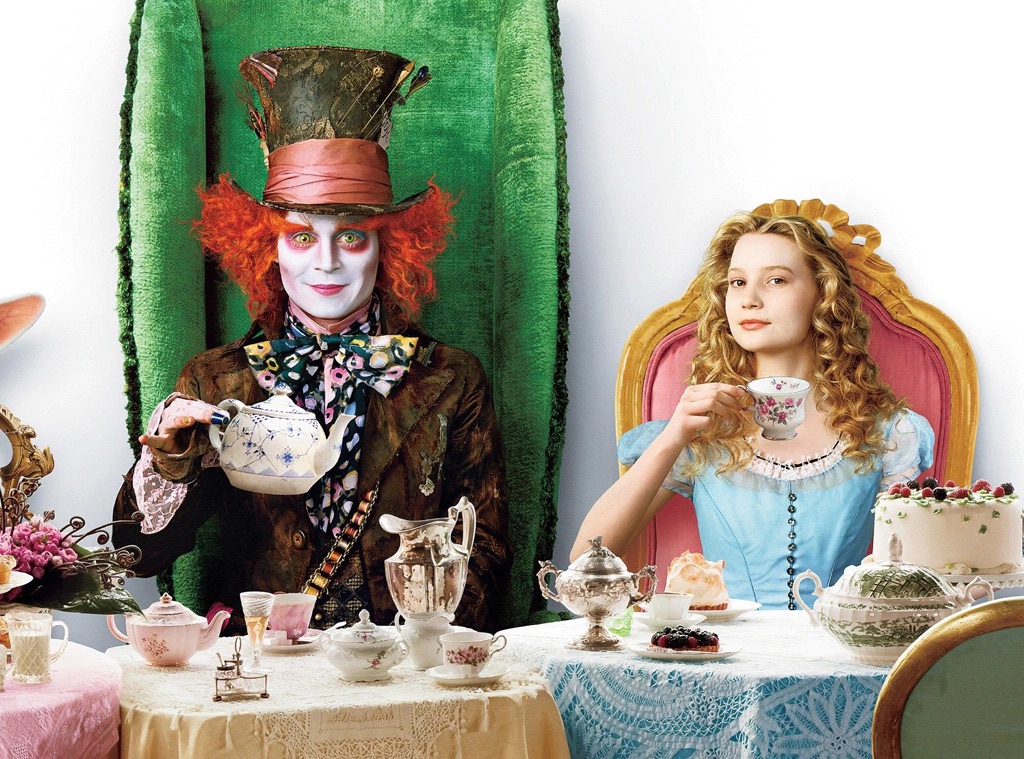
Ask your students to dress as their favorite book character (characters from Harry Potter, The Hunger Games, The Lord of the Rings, and Alice in Wonderland are very popular) and have a contest where students and teachers vote for the best costume. The prize? A book, of course!
The Harry Potter series by J.K.Rowling
2. Name the Character
Have pictures of popular or obscure book characters displayed on the school walls, each with a number on them. Students go around with a notepad and write the name of each character next to the number. The winner is the student who gets the most names right.
3. Book Quotes
Have quotes from books displayed on posters all over the school. Students pick their favorite quote and write a short essay explaining the relevance of that quote in their lives. Alternatively, students prepare their own posters with a quote, illustrate them, and explain to the class why they chose that particular quote.
4. Book Theatre
Help the students organize a play where different characters from different books interact with each other and explain to the audience why they live in the best book ever written.
Alice in Wonderland by Lewis Carrol
5. Interview a Character
Have a couple of teachers dress as very popular characters from novels and have them interviewed by the students. Students should ask them questions about what cannot be found in the books. A great way to encourage critical thinking!
6. Infographics
Students (individually, in pairs, or in groups) prepare an infographic (find an online app to help!) about their favorite book. They should add illustrations, information about the author, the plot, themes covered in the book, characters, a list of prizes the book may have won, info on whether there’s a movie based on the book, etc.
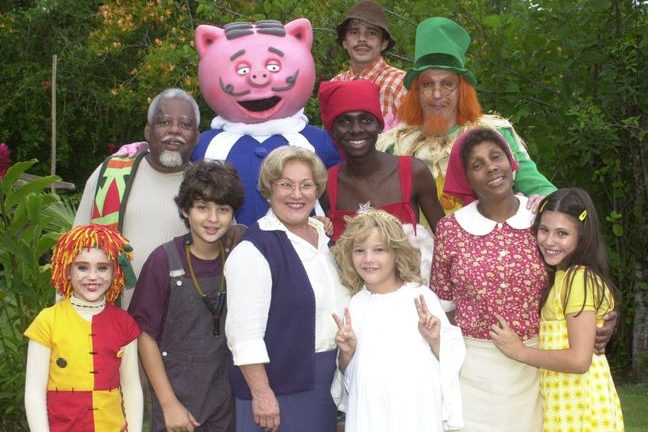
O Sítio do Picapau Amerelo by Monteiro Lobato
7. Library Contributions
Ask each student to contribute a book to the school library (used or new), with a note attached saying who contributed it. Students decide if they wish to leave the book at the library permanently as a gift to the school, or just for a couple of months. Raffle a new book amongst all the contributors.
A happy World Book Day to you! Don’t forget to let us know how you celebrated in the comments below.
Lima Barreto, the acclaimed journalist and author of the Brazilian Belle Époque, is more popular than ever these days. The author was honored at the FLIP (International Literary Party of Paraty) a couple of years ago and that made him even more well-known. New editions of his work have been released since then. Along with these, there was also the publication of a very well-researched biography, Lima Barreto – Triste Visionário, by historian Lilia Moritz Schwarcz (Companhia da Letras), available at the main bookstores.
Lima Barreto was born in 1881 in Rio de Janeiro and dedicated his life to writing and literature. His father was a typographer with connections with the powerful Empire Senator Viscount of Ouro Preto, who became Lima Barreto’s godfather. His mother, a freed slave, was a school teacher. She died when the writer was only six.
The key to understanding his artistic work is the overlap between the stories he created and his biography. Dark skinned (a mulato, as we say in Portuguese) and born in the lower echelons of society himself, he understood very well, and experienced first hand the issues discussed in his novels and short stories.
The main themes of his realistic pre-modernist fiction are the problems of the recently founded Brazilian Republic: class and race prejudices; the cynicism, incompetence, and arrogance of academics, journalists, politicians and the police force in general; the oppression women were subjected to. Not surprisingly, many of the problems Brazil had a hundred years ago are still current, making Lima Barreto’s works powerfully modern and still very relevant.
Lima Barreto had a productive but short life. He died at the young age of 41, plagued by alcoholism and related mental illnesses.
The books listed below have not been translated into English yet (except for The Sad End of Policarmo Quaresma), but, if you speak Portuguese, you can easily order them from Bookwitty.
Recordações do Escrivão Isaias Caminha (Memories of the Clerk Isaías Caminha)
Lima Barreto’s debut novel was received coldly by the critics and the literary community of the time. The resentment of the protagonist-narrator and the sarcastic (although disguised) way in which he describes powerful figures of the contemporary society irritated many people who possibly identified themselves with the characters depicted in the novel and felt ridiculed by it. In the novel, Isaías, a boy from the countryside, does exceptionally well in school and is predicted to have a bright future, due to his intelligence and hard work. As a young man, full of hopes and willing to expand his horizons, he leaves his family and hometown, coming to Rio de Janeiro with a letter of recommendation for a congressman. Isaias thought it would not be difficult to find a good job, given his previous scholarly success and this single connection with a powerful politician. It does not take long, though, for his dreams to be crushed. Rio turns out to be a concrete jungle, where the doors are tightly closed to dark-skinned men. The novel tells the story of the deterioration of the young man’s self-esteem and his progressive submission and passive acceptance of the brutal rules that govern Brazilian society.
The Sad End of Policarpo Quaresma
This novel marks the transition from Realism/Naturalism to the Pre-Modernist literary movement in Brazil.
Policarpo Quaresma, the protagonist, is a methodical civil servant who lives with his spinsterish sister in the suburbs of Rio at the end of the 19th century. He is a naïve and rather optimistic nationalist, who believes that he himself can act as a force to preserve the traditions of Brazil in the face of the fast modernization and internationalization the country is going through.
To accomplish his nationalist objectives, first, he writes a letter to the Parliament proposing that the national language be replaced by Tupi, the indigenous language spoken by the local tribes who lived along the coast of the country before the arrival of the Portuguese. The idea is received with such mockery and disbelief that Quaresma suffers a nervous breakdown, being confined, for a while, to an asylum for the mentally ill.
Recovering from the illness, Quaresma decides to move with his sister to a farm on the outskirts of the city to live a more peaceful life in contact with nature. There, he tries to initiate, again practically single-handedly, an agricultural reform, aiming at setting an example to his countrymen, teaching them how to make the most efficient and rational use of the fertile soil of his beloved fatherland. This results in another failure, as he cannot count on any official help with his endeavour.
Finally, he sides with President Marshal Floriano Peixoto (a real historical figure), joining the military, to fight against the Second Naval Revolt, only to find out that the leader, contrary to Quaresma’s idealization, lacks the brains and military-strategic mind of a Napoleon, being nothing more than an authoritarian and unskilled dictator to a barbaric country in the periphery of civilization and capitalism.
Clara dos Anjos
Published after Lima Barreto’s death, the novel has a simple and direct plot. It’s the story of a dark-skinned girl from the suburbs (the impoverished neighborhoods on the outskirts of the city of Rio de Janeiro, rarely portrayed in our literature) who gets seduced and abused by the white guitar player Cassi Jones, a notorious crook from a slightly higher social social class. However, the focus of the book is not really the plot. Clara’s sad story is just a pretext for the author to explore important connected issues. The main theme of the novel is the suburbs and its inhabitants: the members of the poorer classes of Brazil. Lima Barreto, with his precise journalistic prose, describes their small and difficult lives, the destitute environment they are forced to live in – despite the high taxes they pay, which are hardly used for their own benefit; the excessive drinking habits of the men; their music and literature; and the repression suffered by their passive and conservative women.
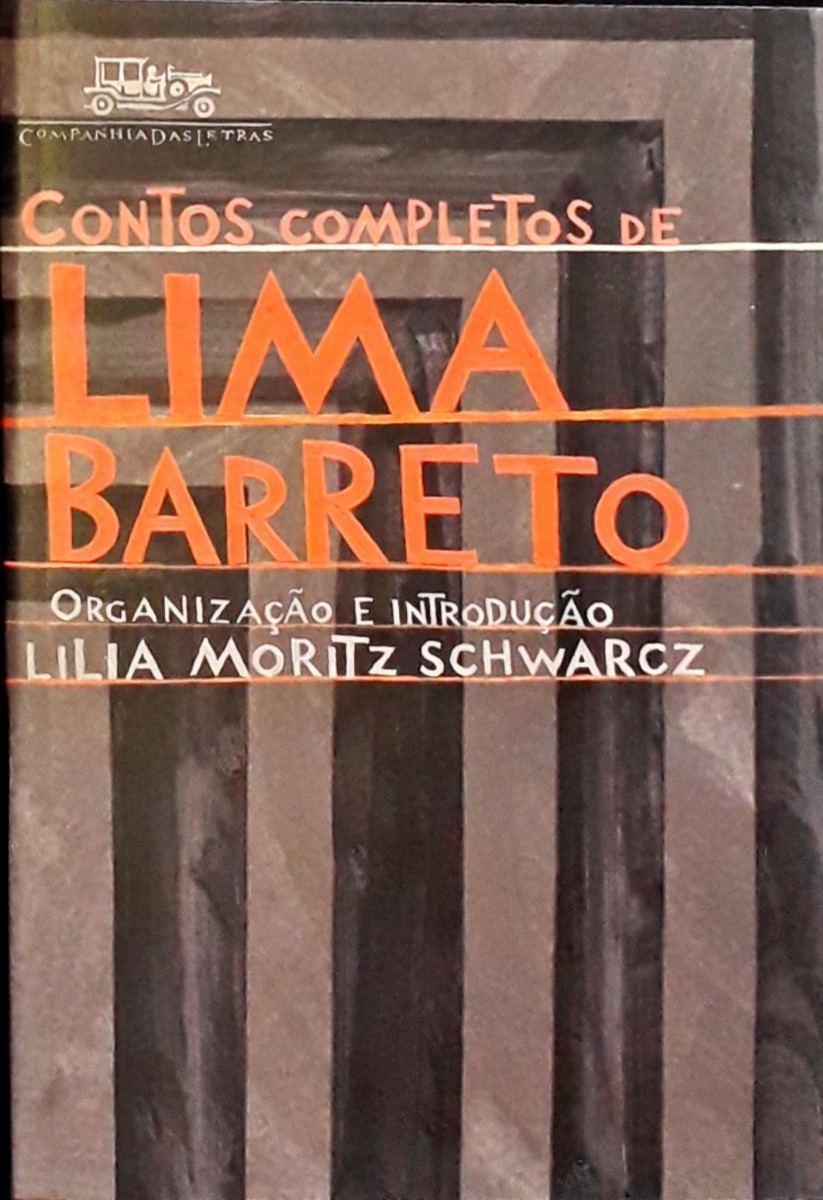
Contos Completos de Lima Barreto (Lima Barreto’s Complete Short Stories)
Besides journalistic articles and novels, Lima Barreto also left us a great number of short stories. Again, in those works, his main themes are the description of daily life in the city of Rio de Janeiro and its suburbs during the years of the Brazilian Old Republic (the period comprised between the end of 19th century and the beginning of 20th century), written with irony and sharp criticism against the political system of the time, the ingrained racism of our society, the oppression of the lower classes in general and the limitations imposed on women in particular. He also rebuked the mediocrity of the cultural and literary elites of the country. His attempts to mock Brazilian society while denouncing its serious flaws have made a profound mark in our literature.
Would you like to share your opinion about Lima Barreto? Please write your comments below.
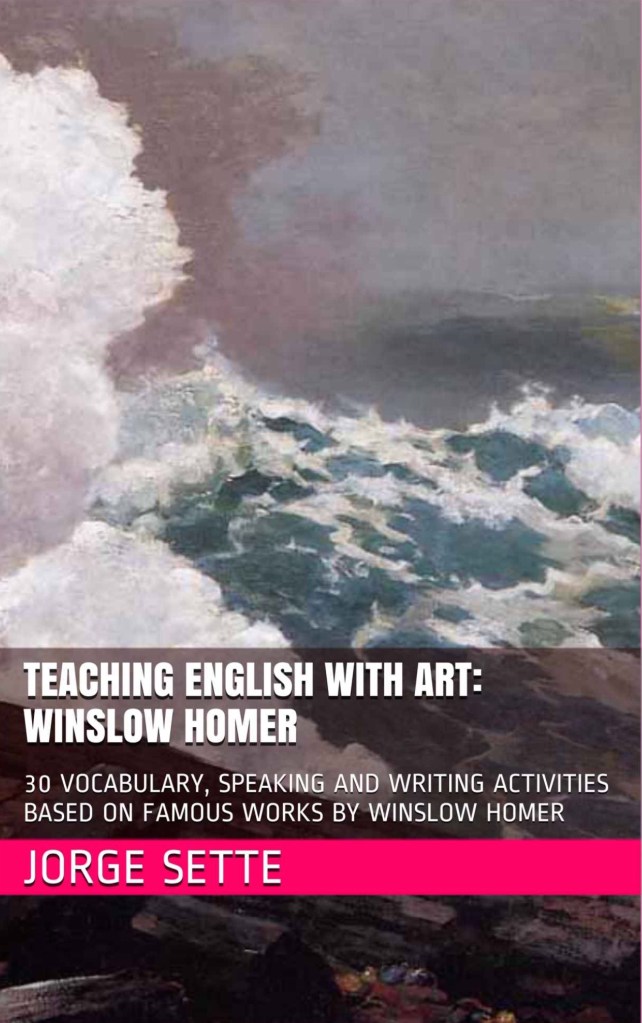
Teaching English with Art: Winslow Homer. This eighth volume of our successful series of eBooks combining ENGLISH TEACHING AND ART is a wonderful supplement to any coursebook or extra materials your students may already be using in the English class. It contains 30 vocabulary, speaking and writing activities for classroom use, based on some of the most striking works by the best American artist of the XIX century.
The objective of the eBook is to expose the students to art while teaching English, fulfilling therefore one of the tenets of effective language acquisition: providing a realistic context for the language to be learned and practiced as a means to an end. Your students will love to exercise their English discussing the works of Winslow Homer. This is a proven way to make language acquisition fun and effective by creating in the classroom an atmosphere of interest, motivation and emotion. Each activity is clearly correlated to the COMMON EUROPEAN FRAMEWORK OF REFERENCE (CEFR), and the level is stated next to it.
IMPORTANT NOTE. CUSTOMIZATION: if you wish to change the cover of any of the ebooks, add your school logo, negotiate a special price for a determined number of students, or make other suggestions of customization, do not hesitate to talk to us. We are VERY FLEXIBLE. Make your ebook UNIQUE!
Click on the image below to download the ebook:
Click on the image above to get your copy from the Kindle Store.
Despite Steven Krashen’s famous methodology of language acquisition, in which he claims students must go through a silent period before they can speak, we know how anxious our students are to start producing the target language from day 1. This silent period is the time learners need to be exposed to enough comprehensible input so they can absorb the language and be able to speak it. It emulates what happens when kids acquire their first language. Having said that, it’s a fact that motivation also plays a key part in language learning, and setting up speaking activities from the very beginning of the language course will not, in my opinion, have any negative effect on the students’ development: they will not be able to do much, though, but that is OK. Motivation will work wonders. The elementary level, which is usually known as A2 in the Common European Framework benchmark, would be the ideal moment to start with speaking activities, but don’t worry too much if you have to do it earlier to please your students.
Teachers usually complain about the same problems when they set up speaking activities: students might not know what to say, they are shy to speak in public, they don’t know enough about the topic, they are not that interested in the topic.
Your students don’t know what to say.
So, as a teacher and teacher trainer, with many years of experience, and with the help of a number of methodology books I have read throughout my career, I would humbly suggest a few tips to get your speaking activities going smoothly in the language class. See the main points below:
1. Decide whether the activity will be task or topic-based: a task-based activity typically involves the use of language as a means to an end. The students, for example, are given a problem (e.g. give each pair of students a list of 10 objects and ask them to discuss and negotiate the following problem: you are stranded on a desert island, if you could pick 5 of these 10 objects to have with you on the island, which ones would you both pick?). To pick the objects, they will have to justify their choices. On the other hand, a topic-based activity requires the students to discuss or talk about a specific subject (e.g. what’s your country’s situation concerning racism?) The more they are able to personalize the topic, contributing their own opinions and experiences, the more they will have to say about it. If you wish to read more on this, please refer to my previous post “Topic-Based versus Task-Based Speaking Activities”: http://wp.me/p4gEKJ-1nJ
2. Give them context (input): Before setting up an activity, expose the students to some linguistic or visual context, so they can rely on some form of scaffold to help them structure their output. The stimulus can be established through a text, a picture, a video clip or a listening passage, for example. But it’s important that the teacher introduce the topic, or brainstorm some vocabulary and ideas about it before having the students talk about it.
3. Brainstorm: depending on the input the teacher chooses to use in the step above, the brainstorm will be more or less controlled. If the students have been given a written text, for example, the teacher should work on it and exploit some ideas and related vocabulary and grammar. If the teacher starts by showing a painting by a famous artist, the brainstorming will have to be longer and less controlled. The students will probably have to learn some new vocabulary as well, get to know something about the artist and his times, or even his style and technique. Always elicit info from the students before spoon-feeding them with ready-made answers: you might be surprised about the vocabulary they already have or their knowledge about the topic.
4. Get them to work in pairs and/or small groups as often as possible: do not put the students in the awkward position of speaking in front of the whole class right at the beginning of the exercise. Give them time to prepare their answers. The best way to do that is, of course, to put them in pairs or little groups, so they can participate more and not feel intimidated by a big audience. Many times they won’t even have to speak to the whole class at the end, or you could ask only for volunteers to share their work. During the activity, however, make sure you go around not only monitoring the different groups but also lending them a hand.
5. Focus on fluency: the aim of the speaking activities we are discussing in this post is not to drill grammar points or practice vocabulary, or even pronunciation, in a controlled way. As the students produce their utterances, make a mental note or write down discreetly some of the most common mistakes made, especially the ones that involve grammar or vocabulary already taught in previous lessons. Do not interrupt the students for correction, unless you don’t understand what is being said. Decide on what you are going to focus on for correction in each activity, then, at the end, or in a future lesson, list the mistakes on a handout and pass them to the learners, so they can correct the mistakes in pairs, without necessarily naming the perpetrators.
6. Personalize the activity: people like to talk about their own experiences. Design questions that allow them to talk about their own tastes, aspirations, experiences and life in general.
7. Make the questions as opened-ended as possible: to make this personalization possible, try to design questions that allow for open-ended answers, do not look for right/wrong answers, but for opinions and suggestions.
8. Make the activity as relevant as possible: choose topics or direct the discussion towards a path that is relevant to the group of students you have. The same speaking activity can be slightly changed to reflect the reality and interests of a different group of students. The closer they feel to the topic being discussed or the task being proposed the more productive the result will be.
Some speaking activities will go better than others, as you know. Don’t give up on a well-prepared exercise if it does not work well with a particular group of students. Try it a number of times with other students: it might work better. The important thing to remember is the more the students are exposed to linguistic input, by either reading or listening, the more fluent and accurate their delivery will be eventually. So make sure you focus on receptive skills especially at the earlier levels of the course your are teaching before worrying too much about the success of the speaking activities.
If you need help with materials, we have an excellent series of eBooks with ready-made vocabulary, speaking and writing activities to make your life easier. It’s called TEACHING ENGLISH WITH ART, with 8 books so far. It features f works by famous artists, such as Matisse, Picasso, Caravaggio, Monet, Norman Rockwell, van Gogh and Winslow Homer which will function as a springboard to contextualize topic and task-based activities, as well a process writing practice. For further info, please click here http://wp.me/p4gEKJ-1lS
When you read a piece of good writing in The Economist, Folha de São Paulo or The New Yorker, you will probably wonder about the special powers of the writer. How is it possible to sit in front of a laptop and, in one go, come up with such a refined and polished text. The writer must have counted on a potent muse sitting by his side, you conclude. But, for anybody who has attempted the hard task of putting a piece of writing together, the recognition that the path is a little harder will soon dawn on him. Hemingway defined the process in the most dramatic way: “There is nothing to writing. All you do is sit down at a typewriter and bleed.
Of course, the Hemingway process would not be very popular in most of our schools and online courses today. As we are concerned mainly about writing in the language class in this post, we need to draw a line. After all, chances are teachers and coordinators would be charged with abuse and put in jail if they expected or encouraged the students to follow anything like the method proposed by the great author of THE OLD MAN AND THE SEA.
Luckily, there is a third way: fire the muse and follow a step-by-step process to your writing activities. Writing is a skill students must master. We have never written so much as in today’s world. Most of our communication on the Internet occurs in the form of writing, one way or another.
Following the 5-step process we’ll be outlining below is probably the most effective way to come up with a good text. Of course, if you have the privilege of counting on good professional editors, the process becomes a lot easier, but not many people – least of all language students – can afford this luxury on a day-to-day basis, so we must rely on ourselves, and, if we are lucky, on some of our friends and classmates for aid.
Process Writing
Therefore, what we are advocating here is that writing should not be a solitary activity: pairs or groups of students should take part in it, although, ideally, each one should be working on his own individual piece. There are very clear steps to follow in what is generally know as process writing. This is, in our opinion, the best approach to teach and practice this productive skill in the language classroom. Let’s cover each of the phases in the sections below.
1. Brainstorming (generating ideas). When you are given a writing assignment, get together with a colleague and think of all the ideas the topic might generate. Don’t censor yourself at this stage, anything goes. If there’s no given topic, your freedom is even greater, and you will have fun imagining all possible topics, points-of-view, arguments or characters that may go into your piece. This is more fun when done with another person or in a small group. Then, each one can follow their own thread of thoughts, after this initial kicking off of ideas, and get down to writing their first draft.
2. Drafting. Now it’s time to prioritize all the wonderful ideas you generated in the step above. Consider the physical space you need for the text: is it a blog post, a story, an essay, an infographics design, a tweet? How many words are you supposed to use in your assignment? Don’t even consider using all your ideas. Pre-select, choose, discard, adjust, change. Cut, cut, cut. Establish what should go into each paragraph, which sentence you will pick as the topic one. Draft and redraft as many times as you feel you should. The more, the better. Change sentences to a different part of the text for stronger impact or more consistency. Decide what should be the beginning, the middle and the end of the piece. It’s always easier to start with the end. Remember the clever words of the Cheshire Cat to Alice, in Alice in Wonderland, by Lewis Carroll:
“Would you tell me, please, which way I ought to go from here?”
“That depends a good deal on where you want to get to,” said the Cat.
“I don’t much care where” said Alice.
“Then it doesn’t matter which way you go,” said the Cat.
3. Revising. Now, possibly with the help of a friend, you are going to begin refining and polishing your text. Your colleague will read the text, ask questions whose answers he would expect to find in it, but does not. He will probably make suggestions. There’s no need to take everything he says into consideration. Your are the writer after all, so the final decision is yours, but try and incorporate some of his feedback. Apply your own critical thinking skills to decide if the text is coherent, well thought out, convincing, logical.
4. Editing. This next step involves going deeper in the process started in the previous step. Time to check for grammar, vocabulary and syntax mistakes. Make sure collocations and register (formal and informal) are adequate. Have the spellcheck on your computer on. Consult a thesaurus, dictionaries, and grammar guides. Read aloud to make sure your text sounds good, to make sure it sounds English. Enter phrases and idioms you wish to use into Google to see if they appear in other texts and really mean what you wish to say. Again, get help from your friends.
5. Publishing. This is the last phase of your work. You will be deciding on the images to use, the layout, the kind of font you find appropriate. This part is a lot of fun, in general. Reread it one more time. Any more changes? If you are using a digital device, be brave and push the button PUBLISH. Next time you write something it will be even easier.
The Steps of Process Writing
Sometimes these steps may occur in a different order. Writing is messy. Moreover, the number of drafts cannot be stipulated: the more the better. But we all know there are time constraints to be taken into account, and the final product needs to be presented at some point. So let’s use common sense, and work on your piece within a time frame that suits your teacher’s expectations. In a language lesson, of course, it is the drafting that counts: the more you focus on polishing and making your piece more impactful and error-free, by adding ideas, deciding on the best location of sentences, breaking paragraphs in more consistent ways, and finally asking your friends for help to identify grammar and vocabulary problems, the more you will be learning. That’s when learning is really taking place. The final product is only the logical consequence of the hardest possible work you put into the project.
And remember, the final product does not need to be a masterpiece. The secret to fine writing has been repeated countless times by the experts – although both students and teachers seem to resist it: good writing is rewriting. Besides, writing improves over time, and the more you practice, the better results you will get. Good luck.
NOTE: If you are interested in process writing, you may consider checking out our eBook series TEACHING ENGLISH WITH ART. Click here for further info on the series: http://wp.me/p4gEKJ-1lS
Check out this fun video clip on our CARAVAGGIO eBook:
I’m fascinated by the game of mirrors and metalinguistic reflections reverberating from the use of art inside art inside art inside art, and all the implications and possible interpretations that result from this spiraling labyrinth. More precisely, this post is about famous paintings that feature in movies either as a direct element of the plot, or, more subtly, as an aid to help compose the fabric of the subtext. I’ll cover 3 interesting instances of clever uses of famous works of art and artistic style in the movies, which always cause a jolt of pleasure in the viewer who recognizes them, and, as a consequence, is able to connect the dots and understand the references.
1. The Skin I live In, by Pedro Almodovar, 2011. Let’s start with this brilliant Almodovar classic, which was heavily criticized when it first came out for its alleged shift of style from what the director had been famous for. Well, if these critics meant the movie adds layers of complexity to Almodovar’s previous works, I couldn’t agree more. However, if they are implying the movie was not funny, I don’t think they got it. It’s hilarious, although in a somewhat dark way. In addition to the humor, one important aspect of the movie is the theme of the contrast between culture and nature, between what is innate and what is fabricated and handed down by civilization; how far can one go to change what is considered natural? Without going into too much detail about the plot of the movie, let’s just say it’s about a surgeon who thinks it’s OK to recreate the human skin in order to improve it. And he tests his theory on an unlikely guinea pig: the man who allegedly abused his daughter, and whom he has turned into a woman, through an unauthorized gender reassignment surgery! Too weird? Maybe. But the point here is to discuss the symbolic meaning of the painting that decorates the surgeon’s mansion in Toledo, and keeps popping up in the scenes where he goes up and down the elaborate staircase: The Venus of Urbino, by Titian, 1538. This painting summarizes the main theme of the movie: the idealization and beautification of the real world. In this case, a beautiful goddess, with flawless white skin, concocted by an artist, conveys the impossibility that she could be recreated outside of this imaginary world. She will not leap off the painting and exist in real life.
The Venus of Urbino, by Titian, 1538
2. Skyfall, by Sam Mendes, 2012. By far my favorite 007 movie. Everything works perfectly to make this a classic: action-packed opening scene, dreamlike credit sequence showcasing Adele’s song, a lot of fighting and shooting throughout, stunning locations (London, Istanbul, Shanghai), sophisticated dialogue, superb acting. And, as the underlying theme, we are to led to confront the universal and always worrying issue of the inexorable passage of time and how human beings cope with it. The main theme is made explicit in an anthological scene (see video clip below) where an aging 007 meets his new and young quartermaster: Q. They are both at the National Gallery in London contemplating Turner’s The Fighting Temeraire, 1838, which depicts an old ship being tugged somewhere to be destroyed. These are the best lines of the blistering dialogue that ensues:
Q: Old age is no guarantee of efficiency.
007: And youth is no guarantee of innovation.
Do I need to explain anything else?
Turner’s The Fighting Temeraire, 1838.
Q meets James Bond:
3. Mean Streets, Martin Scorsese, 1973. In this movie the symbolism does not come from showing a specific artwork. However, you can tell the cinematography and art direction are heavily influenced by the style of Caravaggio. You seem to be watching the application in movies of Caravaggio’s artistic principles: Scorsese, just like his baroque predecessor, depicts the contemporary world (1973 New York) of the Italian Mob, shown in beautifully staged scenes where the technique of chiaroscuro or tenebrism predominates. Every scene seems to have the lighting coming from a single or, sometimes, two naked light bulbs carefully placed to focus on the foreground, where the action is taking place. The background is dimmed or blackened in shadows. The characters seem to behave as modern versions of Caravaggio and his mates themselves, rambling through the dark streets of VII century Rome (represented by 1973 New York) after nightfall, going to taverns (bars, and pool joints) and whorehouses (stripclubs). They are constantly gambling, getting involved in brawls and fights, some of those – in the movie – nicely choreographed to the Rolling Stones or the Beatles songs. In addition to that, you hardly ever see a shot without an element of the Catholic iconography featuring prominently in the setting: images of Christ, the Virgin Mary, crucifixes, photos of the pope and the interior of churches themselves. What would we call this? Post-modern baroque?
Caravaggio’s Cardsharps, 1596.
Let us know what you thought of this post: write your feedback on the comments section of the blog.
NOTE: If you are into art, you may consider checking out our eBook series TEACHING ENGLISH WITH ART: http://wp.me/p4gEKJ-1lS


































 Jorge Sette "Linguagem"