Teaching English with Art (video)


Teaching English with Art: the ENGLISH LANGUAGE LEARNING materials you have been waiting for:


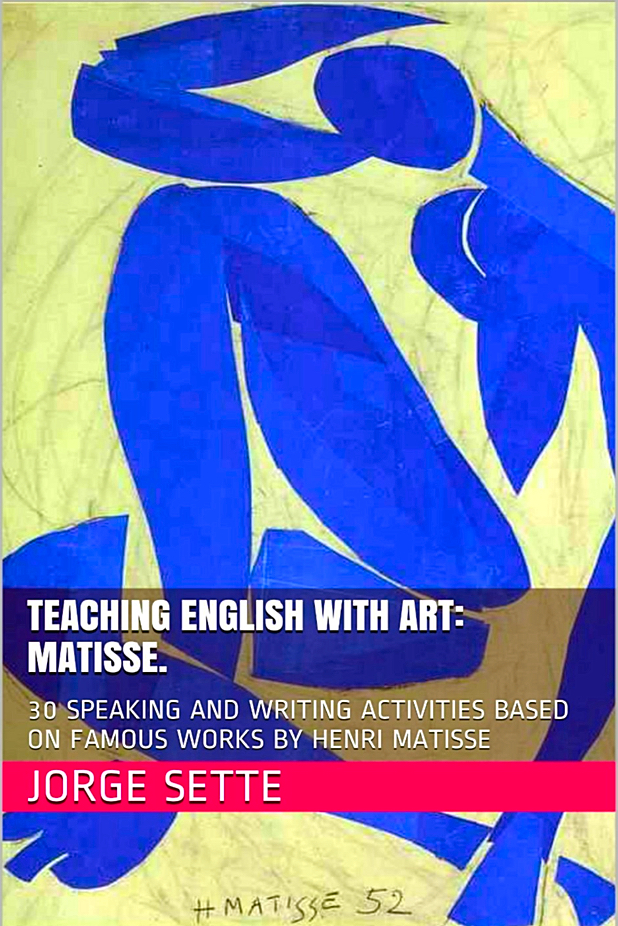
TEACHING ENGLISH WITH ART: MATISSE. Click here for more info: http://wp.me/p4gEKJ-1kP


TEACHING ENGLISH WITH ART: PICASSO. Click here for more info: http://wp.me/p4gEKJ-1lA


‪#‎matisse ‪#‎picasso ‪#‎fauvism ‪#‎cubism ‪#‎moma ‪#‎tate ‪#‎teachingenglish ‪#‎language ‪#‎learningenglish

Teaching English with Art: make your online lessons stand out


Ideal for online lessons!!

If you are having any of the following problems, we can help you…

a. Are your students often bored during the English class? b. Don’t they know what to say when you set up speaking activities? c. Do you spend the weekend correcting writing assignments that don’t seem to help them improve? d. Is it hard to personalize productive skills and link the English lesson to the other subjects in the school curriculum? e. The students know nothing about Art and high culture in general. 

Click on each of the pictures below to get your copy from the KINDLE STORE:

Click on the image above to go to Amazon.com

Click on the image above to go to Amazon.com

Click on the image above to get your copy from the KINDLE STO

Click on the image above to get your copy from the KINDLE STORE.

Click on the picture above to get your copy.

Click on the picture above to get your copy.

Teaching English with Art: Norman Rockwell

Click on the image above to download the eBook.

Teaching English with Art

Click on the image to download the ebook.

Teaching English with Art: Picasso

Click on the image to download the eBook.

Click on the image to download the eBook

Click on the image to download the eBook

Teaching English with Art: Monet.

Click on the image to download the eBook.

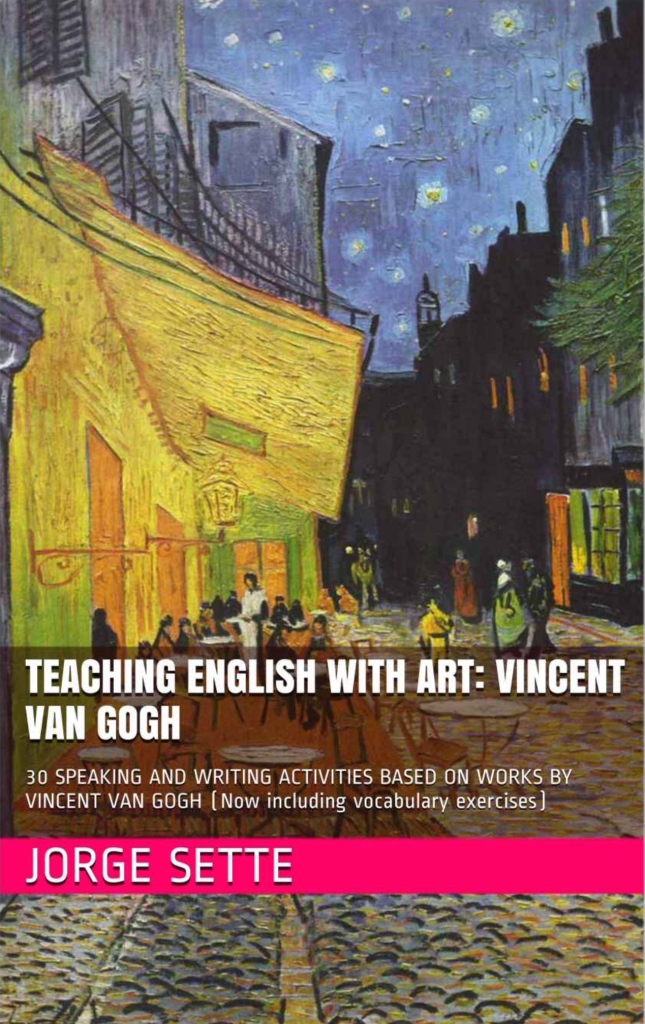
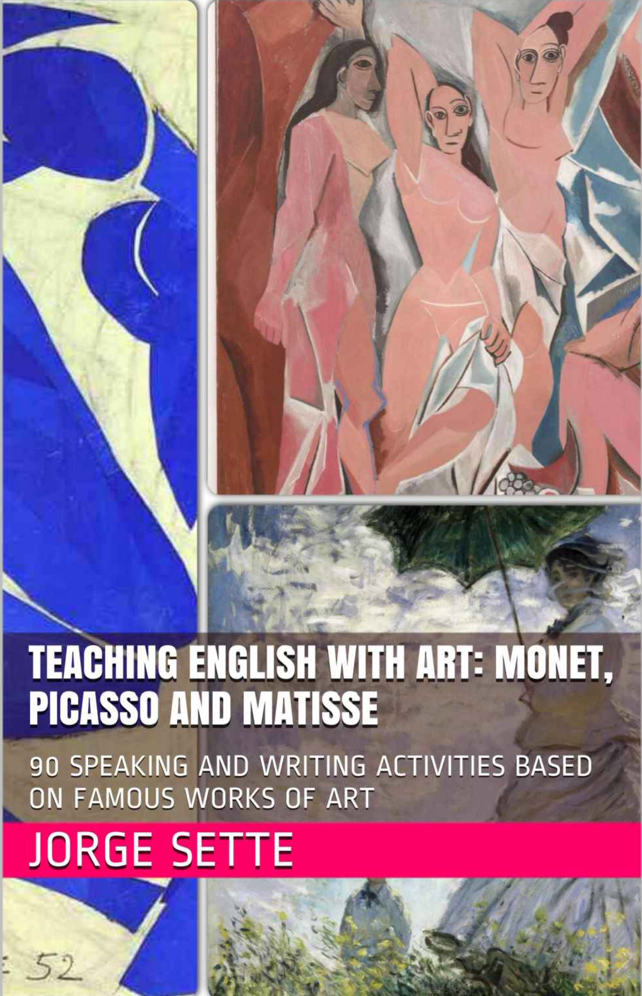
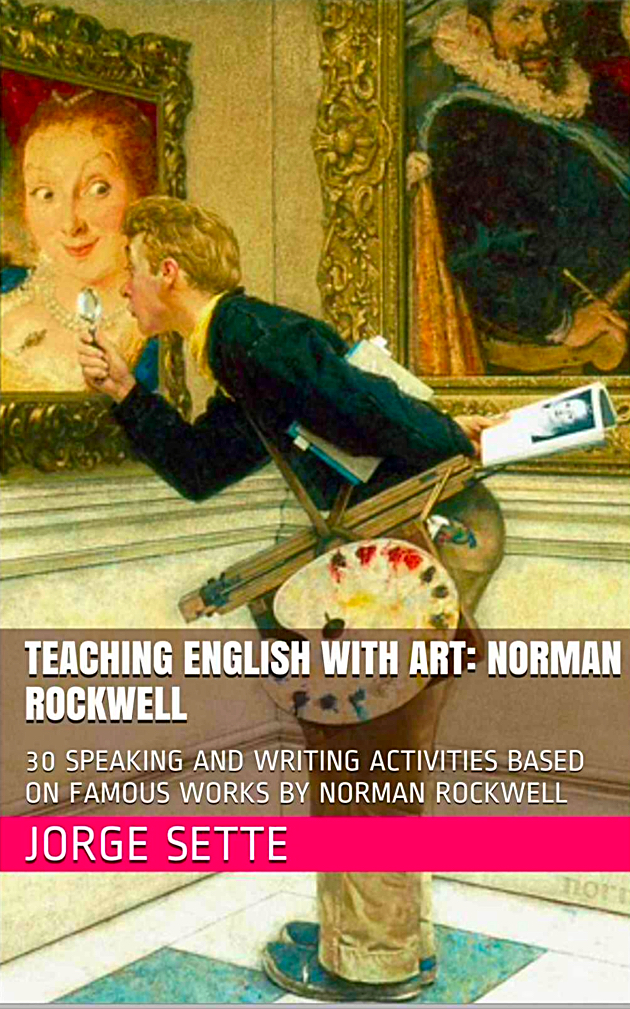
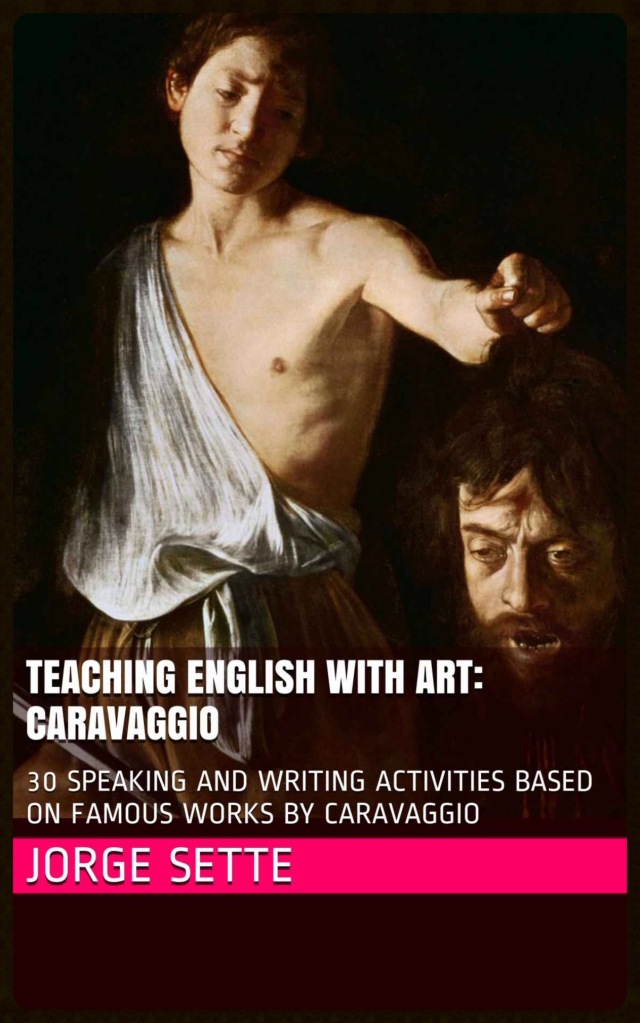
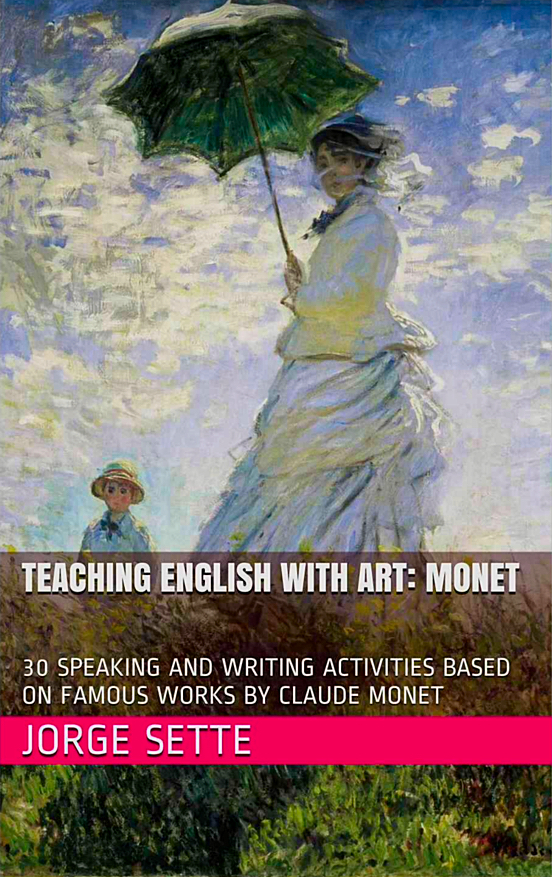
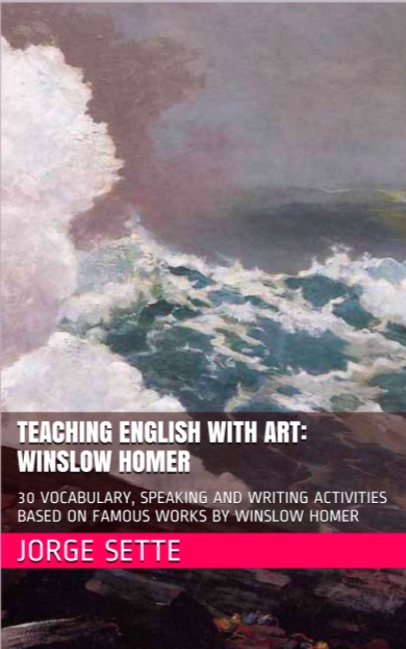
Teaching English with Art is the series for you! This eBook series is a wonderful supplement to any coursebook or extra materials your students may already be using in the English class. Each volume contains 30 speaking and writing activities for classroom use based on some of the most striking works by famous artists: for now we have MATISSE, PICASSO, CARAVAGGIO, MONET, NORMAN ROCKWELL, WINSLOW HOMER, a special three-in-one volume of MONET + PICASSO + MATISSE (90 activities), and we’ve just launched VAN GOGH.

IMPORTANT NOTE:

PERSONALIZATION: if you wish to change the cover of any of the ebooks, add your school logo, negotiate a special price for a determined number of students, or make other suggestions of customization, do not hesitate to talk to us. We are VERY FLEXIBLE. Make your ebook UNIQUE!

The objective of these eBooks is to expose the students to high art while having them practice English, fulfilling, therefore, one of the tenets of effective language acquisition: providing a realistic context for the language to be learned and practiced as a means to an end. Your students will love to practice their English discussing  and doing writing  tasks based on the works of these great artists.  The activities are highly personalized, so the students can express their own opinions and feelings. This is a proven way to make language acquisition fun and effective by creating in the classroom an atmosphere of interest, motivation and personalization. Each activity is clearly correlated to the COMMON EUROPEAN FRAMEWORK OF REFERENCE (CEFR), and the level is stated next to it. Ideally both you and your students should purchase the material.  For heads up activities, project the images on a white wall. Chose your favorite artist and click on the corresponding  image below to go to AMAZON.COM and get your e-book:

If you need more instructions on how to purchase the eBooks, please click here: http://wp.me/p4gEKJ-1Cz

Jorge Sette.

Teaching English with Art: Picasso


Click on the image below to download your book FROM AMAZON.COM

You will never have bored students again.

Teaching English with Art: Picasso

Teaching English with Art: Picasso


For other eBooks of the series TEACHING ENGLISH WITH ART, please click here:

http://wp.me/p4gEKJ-1lS

Check out the video clip  on our eBooks below:

Au revoir

Jorge Sette

Cubism: the most revolutionary art movement of the 20th century


Pioneered by Pablo Picasso and Georges Braque, Cubism is one of the most revolutionary and seminal art movements of the 20th century. It has its origins in the post-impressionist paintings of Paul Cezanne, and aims at depicting reality in a non-naturalistic way, being considered the seed of the abstract paintings developed later on. Cubism in its more innovative and radical form lasted from 1907 to 1914, when the First World War broke out.

The end of the 19th century and the early decades of the 20th century were marked by great technological innovations that cried for an art form that could express these fast changes and new times. Traditional art, based on realistic works, which had been perfecting the use of perspective since the Renaissance, could not compete with the innovations of photography and film. They would be a mere replication of these more accurate methods of showing reality.

Portrait of Fernarde by Picasso, Pablo. 1909

Portrait of Fernande by Picasso, Pablo, 1909

In an attempt to grasp the essence of the times, Picasso started to move towards more simplified depictions of objects and the human form, trying to represent simultaneously the different angles from which they could be seen, not only from a unique perspective. He started to flatten his images, making use of geometric shapes (such as cubes, hence the name of the movement) and deconstructing reality by slashing the image into different planes, producing, thus, an effect which had a more intellectual than sensorial impact on the viewer.

The iconic painting Les Demoiselles d’Avignon is considered the first Cubist work of art. Primitive art, such as African masks and Iberian sculptures, played an influential role in the development of Cubism. This first phase of the movement is usually known as analytic cubism, characterized by the use of dark, almost monochromatic color hues, and growing to a point where the deconstruction of reality became so radical that the viewer could hardly identify the object or person depicted. The second phase, synthetic cubism, was a lot more energetic and colorful, including the technique of collage, where real-life two-dimensional materials, such as colored paper, newspapers or even hair ribbons, were glued to the painting.

Bottle, Guitar, and Pipe by Picasso, Pablo

Bottle, Guitar, and Pipe by Picasso, Pablo. 1912

It’s hard to pinpoint when Cubism really finished, although we usually place it in the historical period between 1907-1914. It actually did not end, but transformed itself and evolved into other styles in the following decades.

Even today we can identify strong influences of Cubism in architecture, design and, of course, the arts in general.

NOTE: If you teach languages, you might want to check out our series of eBooks TEACHING ENGLISH WITH ENGLISH available  from AMAZON.COM: http://wp.me/p4gEKJ-1lS

Teaching English with art

Teaching English with art

Au revoir

Jorge Sette

Teaching English with Art: Matisse


Click on the image below to buy the product from AMAZON.COM

You will never have bored students again.


Teaching English with Art

Click on the image to access the AMAZON.COM page.

How to Train Adults Effectively


You may have heard the term ANDRAGOGY. No, it’s not something you need to treat and there’s no need to be scary if you find out your husband is into it. It’s simply the word we use for “pedagogy” when the learners are not children.

Although there are many overlaps between the processes of teaching adults and children – they both love learning through playing, for example – there are some differences too. And those differences must be taken into consideration, if you are designing a course or training session for your employees, or other adult participants.

Some of the differences, established by Malcolm Knowles, an American Adult Educator of the XX century, are, for example, adults need to know why they are learning; adults wish to take responsibility for their learning, so they should contribute and take active part in the process; they have already a wealth of experience to build on and the new items to be learned (knowledge, skills, or attitude) will add to their baggage; the purpose of learning must be objective and perceived as relevant, which is, to help them with their lives or give them pleasure; they are more willing to learn things that meet a specific need or desire; they are more likely to be moved by intrinsic motivation (self-steem, for example) than extrinsic (rise in salary, promotion, relocation, etc).

Having established these basic differences, we must also add that both kids and adults have, individually, different learning styles (visual, auditory, kinesthetic), and some are more likely to use either the more analytical (left) or the more creative (right) side of the brain. These individual differences must also be taken into account when you design and develop a training course. I know, you must be thinking by now that, unless you are a teaching on a one-to-one basis, you can’t possibly cater for all these needs and idiosyncrasies. The good news is yes, you can. Let’s list here the basic steps you should take in putting together an effective training course for a group of adults. I will be using examples from a very successful course I created while I ran a consultancy service called Tutor in the mid-nineties, The course Pronunciation for Brazilian Teachers of English attracted hundreds of teachers every time it was offered at different venues and times all over the country. Sometimes these were open events, for which any teacher could sign up. Other times, these were tailor-made or adapted modules for specific schools as a service for their teachers.

Training adults effectively

Training adults effectively

Obviously, it’s not possible to cover all the details of a well-designed and implemented training course in the space of a blog post. This is not my intention. But I promise to come back to the topic periodically as you ask questions and comments on this overview of the mains steps I give you below:

1. Needs analysis: being a Brazilian teacher myself, I identified very early on that most teachers in the country had a huge gap in the knowledge and practice of pronunciation. They spoke English – some better than others – but very few had actually learned or knew explicitly about the different phonemes of the language or the mechanics of pronunciation. Many were not familiar with concepts such as stress and intonation either. Therefore, most of them, in their classes, tended to skip teaching the coursebook sections that dealt with these areas of the language. The famous English phonemic chart you can find on a number of websites, DVDs, or apps today was not so easy to access back then. So this was a big opportunity for me to start a business and help the teachers. On the other hand, when I gave tailor-made courses at specific schools, I had to unearth the real needs of the teachers and how much they already knew about the subject, so I could adapt the off-the-shelf course I’d already put together. In these cases, you do your research through oral interviews with prospective participants and supervisors, through written questionnaires, through focus groups or by watching some of the teachers at work.

2. Design: now that you know the participants’ needs, you must define how the course is going to be delivered: is it going to be presential, done via a webinar or blended? In addition to that, you need to determine and write down the learning objectives of the course. What is expected from the participants in terms of performance as they finish the training session? What is going to change?  Of course, the clearer you state these objectives, the more effectively you will create and apply the materials you are planning for the course. A typical objective would be, for example, by the time the teachers finish this first module of the course they should be able to recognize and reproduce (orally and in writing) all the individual symbols that represent the phonemes of the English language and use them in clear contexts (as in specific words). You will notice that the objective follows the popular formula S.M.A.R.T (specific, measurable, achievable, relevant and time-bound).

3.  Development: this is the hands-on phase of the process, when you are going to create all the different materials that will compose the course and help you impart the content of the sessions (deductive approach: lectures), or lead the students to discover parts of it by themselves (inductive approach, discovery), and finally practice and discuss the learning points. Remember you are creating a course for a number of individuals with different types of learning styles, tastes and ways to use the brain. So variety is the key. Always start with a relevant icebreaker or energizer to create an atmosphere conducive to learning and give the participants a chance to get to know each other from the beginning. Believe me: these warm-ups will make your job a lot easier later on. Especially if they are thematically linked to the topic of the course. Keep the pace fast (that’s the rhythm most participants are used to in today’s hectic world and keep alternating and using diversified activities: short lectures with the help of visuals such as slides (note: even during these lectures, make the process learner-centered by getting them to participate actively, through questions, for example, or comments); games;  guided note-taking (students fill in the gaps of sentences previously written in the handouts;  physical activities (involving movement), pair work, group work, debates, etc. I know, it can sound a bit overwhelming. But it’s doable. Remember: the longer the course the more variety it requires and you will have more time to apply different activities to suit as many different learning styles as possible. If the course is short, or broken down into modules, you will have to prioritize.

4. Implementation: this is the great moment you and your trainees have been expecting. You are putting all your preparation in practice. if you have the chance to run a small pilot with a group of volunteers before that, fine, but most trainers cannot afford the time to do that. Try and include during the ice-breaker, or before that,  a moment when the participants will be able to express their expectations regarding the training. Of course if you did the needs analysis well, there will be no surprises here. But maybe you’ll have to make small adjustments to fit their unexpected hopes. Flexibility is an important characteristic of good trainers. Try to exercise it. As the session progresses and you get more comfortable with he group, allow for more participation,  become more of a facilitator to the process, call them by their names (name tags or desk tents with their names written on them are a must), and carry on making adjustments whenever needed, especially regarding the time each activity lasts. You may have to shorten an upcoming task if the current one drags for too long. Create a detailed schedule for yourself so you can keep track of how much time each activity should take. In long courses, things may get out of hand if you don’t stick to this timetable. Do not forget to have breaks throughout the course. Most people are fueled by caffeine these days or they need to stretch their legs  and walk around after long hours sitting down.

5.  Closing: at the end, allow time for feedback and final questions. You can devise interesting activities for that too. Ask questions about what they think should be done as a follow-up to the session. Or explain the follow-up plan you have already designed: job aids, individual couching, accompanied visits to clients, lesson-monitoring for feedback, etc.

You will not have to start from scratch every time you design a course. I used some of the materials and activities I created for my initial course for years, with small adaptations now and then, to suit different contexts or to update them. But it’s good to understand and go through the whole creation process a few times to make it fresh.

Training is a field that is growing and more professionals will be needed. If you are interested in it, start educating yourself: read as much as you can on the topic, follow blogs, enroll in training sessions as a learner, and participate in conferences. It’s a very hard and demanding job, yet very exciting and varied. Good luck.

Au revoir

Jorge Sette.
What’s so enchanting about THE CATCHER IN THE RYE?


“What really knocks me out is a book that, when you’re all done reading it, you wish the author that wrote it was a terrific friend of yours and you could call him up on the phone whenever you felt like it. That doesn’t happen much, though.” ― J.D. Salinger, The Catcher in the Rye. I beg to disagree with you, Holden. I don’t think writers will make the best friends. My advice is stick to their books and don’t try to get any closer. Writers in general are not the nicest people in the world, or the most social for that matter. There are exceptions, of course, but I believe most of them are quite happy writing in the isolation of their offices or country cabins, when they don’t decide to live romantically in Paris and write at a café. Many of them are also boozers and rude, and would most probably hate to have someone intrude upon their privacy.

Holden Caulfield is the main character of the ultra famous novel The Catcher in the Rye written by J.D. Salinger – a recluse himself –  in 1951. It’s a book hard not to identify with, especially if you are male and is or has been, at some point, 17 years old.

The Catcher In the Rye - Holden Caulfield by MelissaHatford

The Catcher In the Rye – Holden Caulfield by Melissa Hatford

I’ve read this novel three times so far, and the last time, a couple of weeks ago, already as a mature man, I found it even more meaningful and relevant than the first time I laid eyes on its pages a long time ago. Most people know the story. Deceptively simple and direct, it tells of a couple of days in the life of a teenager who gets kicked out of a fancy boarding school for having flunked all the subjects but English, and is sent home for the Christmas holidays. He leaves the school on a Saturday evening – he can’t wait to get out of the place –  although he is only expected at home in Manhattan on the following Wednesday, by which time his parents will have received the formal letter from the dean explaining his situation. Therefore, the reader is taken on a journey following the adventures and ramblings of this charismatic youth around the streets of 1950s’ New York for three whole days.

Despite the simplicity of the plot, written from the perspective and in the language of a typical teenager of the time (see the table at the bottom for some of the slang used in the book and its meaning), the story gets a fascinating and strong  grip on the reader. Holden comes across as a very sensitive, intelligent and generous kid – constantly wearing a stupid hunting hat – who is just going through a rough patch in his life, after the death of a younger brother. He is completely lost, lonely and depressed. Poignant and melancholic at times, the book is never sentimental, and, despite the subject matter, a lot of irony and humor underpins most of the character’s commentary and the events narrated during the time we are allowed to spend with him.

Holden is as a very cool youngster. Funny and sophisticated. A rich New Yorker, chain smoker and heavy drinker. Strangely, still a virgin. One of the funniest passages of the book depicts a meeting between the boy and a prostitute, set up by her pimp, the elevator guy in the hotel he is staying at. The act is not consummated, though.

He is undeniably weird – who isn’t at 17? –  spending, for example, a lot of time worrying about what happens to the ducks in Central Park when the small lake in the south part freezes over during the winter months. Do they remain there like the fish? Where do they go? Are they kept somewhere? He is so obsessed with this that he keeps asking cab drivers, out of nowhere, if they know the answer. These conversations are hilarious, as the drivers couldn’t care less, and don’t understand what this queer boy is hinting at. It occurred to me that there is a clear link between this image and what they used in the plot of the first episode of THE SOPRANOS, the TV show, when Tony’s panic attacks hit right after the ducks which mysteriously landed on his backyard fly away, leaving behind a sense of irreparable loss. I’m sure this was based on the book.

IMG_1811

Holden Caulfield (image created by Chat GPT)

Much of the charisma and warmth Holden exerts on us comes from the fact that he loves his little sister and admires his older brother, who’s a writer, although he thinks that he shouldn’t have gone to Hollywood to prostitute his talent writing for the movies. Holden hates the movies, another thing that makes him peculiar and interesting for a boy his age. The love and care for his sister are shown at different points in the book, and reaches its peak in a wonderful and metaphorical carrousel scene at the end – which I won’t talk about in detail to avoid spoiling it for you, prospective reader.

I enjoyed every page of the book, especially the nuanced way in which the character describes his relationships with dorm mates, colleagues, teachers and girlfriends. He is always either planning or actually calling people in the middle of the night, and these pained passages, emblematic of his loneliness and need for human contact, are paradoxically very funny, which only shows the talent and skill of the writer.

Unlike Holden, when I finished the book, I didn’t feel like calling and befriending Salinger, for the reasons I pointed out in the first paragraph of this text. But if I were still a teenager,  I would surely have loved to have Caulfield as one of my best friends. I would have to ask Tom Swayer and Huck Finn if he could hang out with us, though.

Au revoir

Jorge Sette

Glossary : THE CATCHER IN THE RYE (Wikipedia): “Critical reviews agree that the novel accurately reflected the teenage colloquial speech of the time. Words and phrases that appear frequently include:

  • “Phony” – superficial, hypocritical, and pretentious
  • “That killed me” – I found that hilarious or astonishing
  • “Flit” – homosexual
  • “Crumby” – inadequate, insufficient, and/or disappointing
  • “Snowing” – sweet-talking
  • “I got a bang out of that” – I found it hilarious or exciting
  • “Shoot the bull” – have a conversation containing false elements
  • “Give her the time” – sexual intercourse
  • “Chew the fat” – small-tal

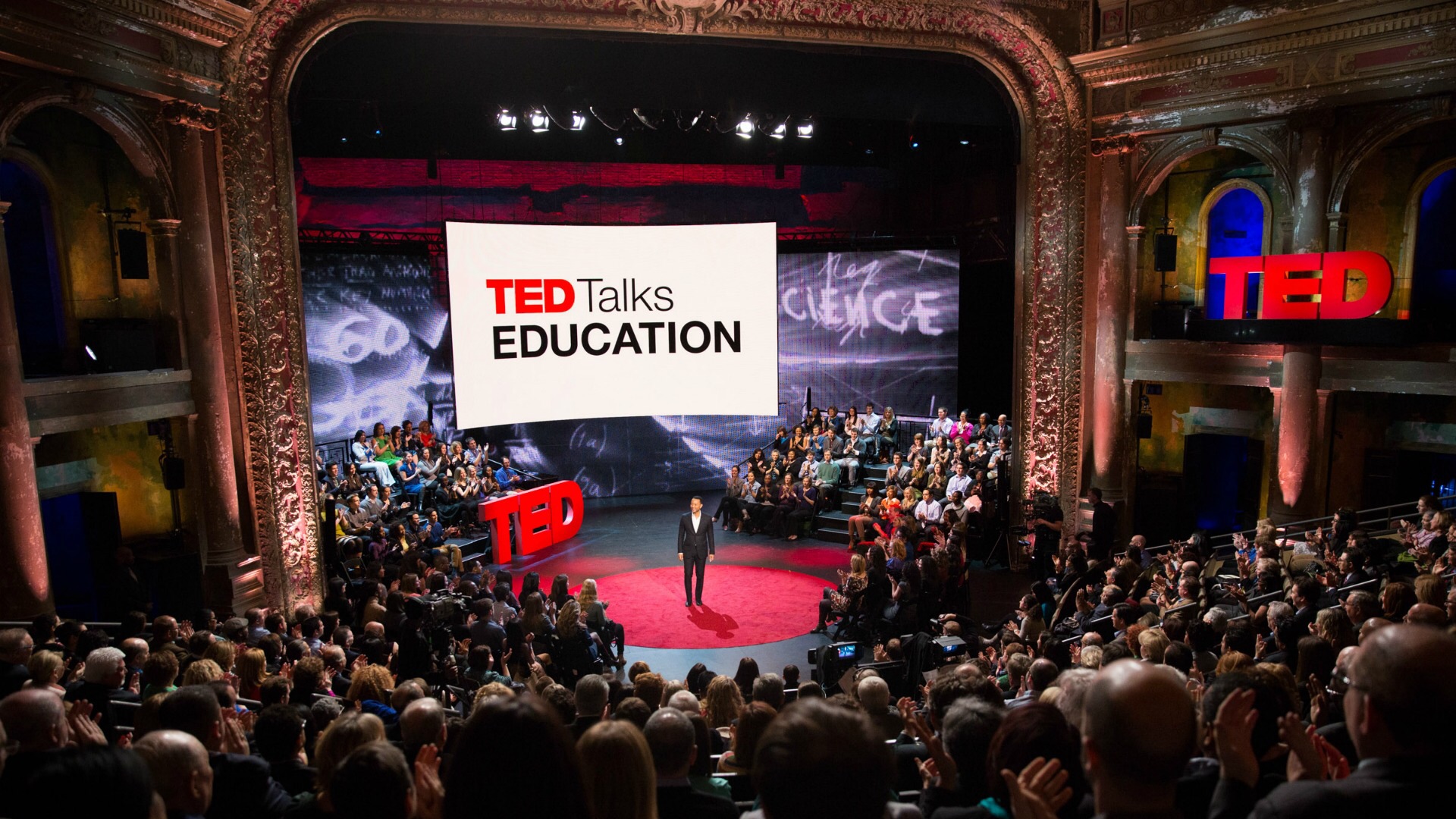
Four Amazing Ideas from TED talks on Education.


If you are a regular reader of this blog you probably love the TED talks as much as I do. I make a point of watching at least one a day. There is always something to learn from them. Even if you don’t find the content that interesting, you can always profit from the speakers’s way of getting her points across, and copy some of the techniques to hone your own presentation skills.

This weekend I needed a break from binge watching Netflix’s THE KILLING – which I did last weekend – and, as consequence, must have put on a couple of kilos, having raised my consumption level of popcorn and ice-cream considerably, while following detective Linden (Mireille Enos) drive relentlessly in the rain along the streets of Seattle. So I chose, instead, to raise my usual share of TEDs’ intake, which was very sensible of me, since they feed the mind and soul rather than the body: I usually take notes while watching them, which stops me from grabbing the popcorn or digging into the ice-cream.

This is a list of 5 interesting takeaways I collected from some talks I’ve recently watched. They are all on education. The summaries are not quotes but my own interpretation and wording of the ideas. I strongly recommend you watch the clips as a way to contextualize my comments better.

Here is the list:

TED Talks

TED Talks


1. From “A 30-year History of the Future” (by MIT Media Lab founder Nicholas Negromonte).

In 30 year’s time you will be learning English by taking a pill. It will travel though your blood stream and reach you brain, formatting your neural connections accordingly. Well, based on Negromonte’s strong track record of predictions that were eventually realized, I would not discard the possibility.

2. From “Let’s Teach Kids to Code” (by Mitch Resnick, Director of the Lifelong Kindergarten group at MIT Media Lab).

There’s not much difference between the so-called digital natives and the rest of us. They are very fluent in gaming and using apps, but not in creating them. Their attitude to technology is overall very passive. They need to learn how to code to really be able to fully express themselves through technology and make use of all that is available. He compares technology to a natural foreign language: kids at this point are fluent at reading it but not at writing. He proposes we start teaching kids to code immediately to make a difference. Besides, coding will teach them not only this new “language” but a whole lot of content that can be expressed through it: just like the Content and Language Integrate Learning (CLIL) approach some of us use to teach English.

3. From: ‘Want to Innovate? Become a ‘now-ist’ “ (by Joi Ito, Director of the MIT Media Lab)

According to the speaker, learning is not education. The former is discovering things for yourself actively, the latter is about passing on knowledge to someone else who’s passively at the receiving end of the channel. Learning is what really matters today, if you want to become an innovator. To engage in learning you have to be connected, pro-active and very rooted in the moment (a now-ist). You must be alert and strive to be aware of everything that is going on around you. It’s necessary to seek collaboration from peers online, developing skills on how to get useful people together on your network to make your ideas happen as soon as possible. Not much planning is required to put out your innovative ideas. Don’t waste time overthinking what the outcome will be like. Adjust and learn as you move along. “Demo or die” (quote from Nicholas Negroponte he uses in his talk): ship your concept as fast as you can.

4. From “How the worst moments of our lives make us who we are” (by writer Andrew Solomon).

This is about education in its broader sense. The speaker, in a beautiful and moving talk, much in the vein of Oscar Wilde’s De Profundis and Philip Roth’s Nemesis, claims that the key to happiness is to “forge meaning and build an identity” for yoursef out of the worst adversities that may have struck you in life: be it imprisonment and ostracism in the case of Wilde at the end of the 19th century; contamination by polio in the early 1940s for the characters of Nemesis; or, as in Solomon’s personal account, exposure to cruel bullying at school and prejudice at large in today’s American society for being a homosexual. Meaning is not out there to be found, it’s a narrative you have to build from within and then invite others into. Just like Wilde and Roth, Solomon proposes you take full ownership and responsibility for your failures and falls and, maybe through love and art, re-create yourself to grow and be complete. Don’t miss this one!

I guess this is it for now. Enjoy you TED talks and please suggest some as you rate and comment on this post.

NOTE: You might want to check out our my series of eBooks TEACHING ENGLISH WITH ART,  available  from AMAZON.COM 

Click here for more info: http://wp.me/p4gEKJ-1lS

Au revoir

Jorge Sette.
Let’s corrupt the youth!


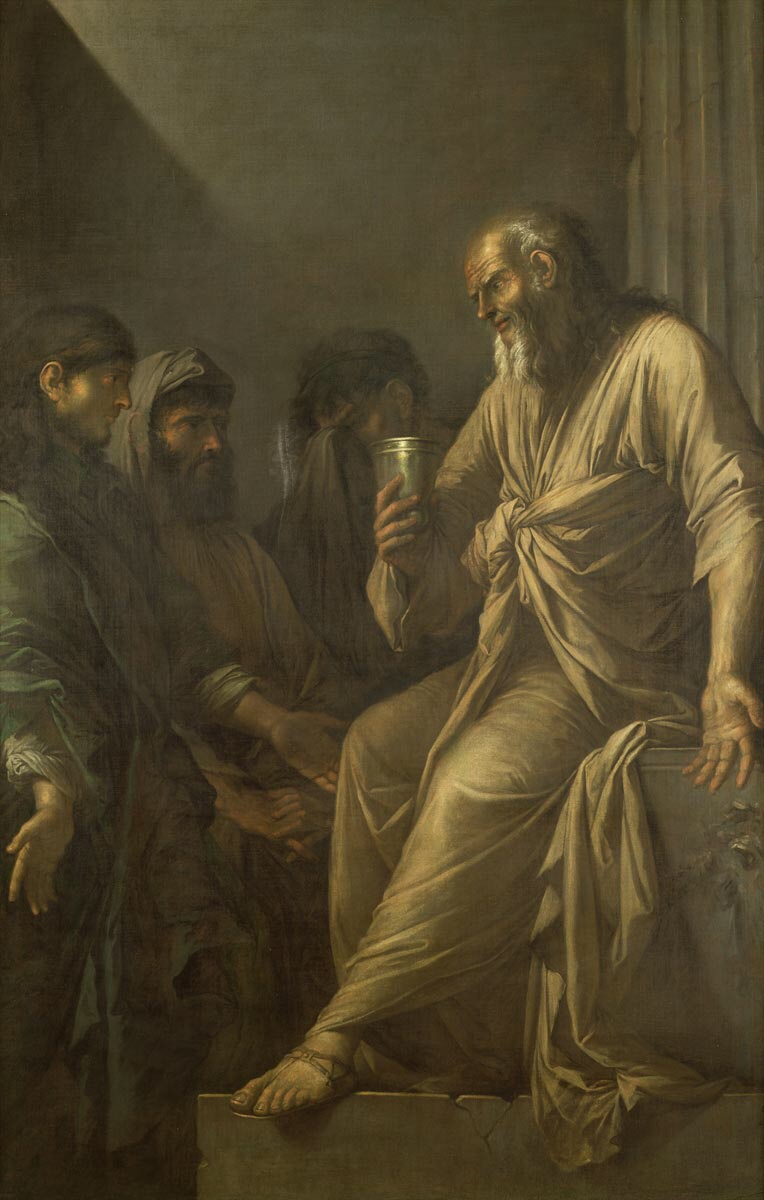
They were right after all. We are seeing a comeback (were they ever really gone anywhere?) of some of the old theories about learning and how teachers should conduct their lessons. Edtech is making possible the practical application of the Socratic method, of Paulo Freire’s pedagogy, of Vygostky’s studies and experiments. All the other pedagogues who have advocated more direct involvement and participation from the students in their own learning are being vindicated and having their theories confirmed and validated.

Some of the methodologies we see in use today are becoming possible because of the realization of individualized learning. It boils down to a student facing her app alone in her bedroom to start with. And from there we can exploit the use of questions (Socrates) to lead that student further and further on the path to the right answer, or, even better, to her own answer in the case of a more abstract problem (such as moral, ethical or political issues); we can personalize teaching to make the context more relevant for each of the students, and therefore resonate with them (Paulo Freire); and we can flip our lessons, having students reconvene in class afterwards to cooperate in solving problems (Vygotsky), after having spent time alone in their homes doing research, reading, watching TEDs or other relevant videos on YouTube.

The Death of Socrates. Rosa, Salvator.

The Death of Socrates. Rosa, Salvator.

We have always known that personalization, cooperation and inductive approaches worked fine.  They have the power of grabbing the students’ interest and attention, keeping the findings longer in their memory. We’re clever teachers after all, we do our homework as well, we went to college and were fascinated by Plato and his dialogues, we felt invigorated by the potential and possibilities of the pedagogy of Freire; and we could easily see that pairing off weaker students with strong ones who would pull them along zones of proximal development made total sense.

But we lacked the means to make it happen. How to apply these exciting methods to classes of more than 30 students (or even more sometimes)? How can a single teacher dedicate enough time to the needs of individual students in these conditions? How much time is there outside the class for teachers to mark essays and homework, to create interesting lessons, to prepare the long  – and possibly very boring (for the students) – lecture to present on the following day?

The good news is things are changing. More and more, the new technology being created will allow us to go back to the masters and make the most of their wise insights and theories. Few teachers doubt that learning is up to the student. It’s their direct responsibility. Teachers are important channels and organizers of the different methods students will have to use actively themselves on their way to discoveries.

Let’s not be afraid of using apps, audience response systems, flipped classrooms and LMSs  in our schools to recreate the necessary conditions to hand learning back to where it belongs: the students! Socrates was sentenced to death for doing exactly that. They called it “corrupting the youth” back then. Well, “Toto, I’ve a feeling we are not in Kansas any more”. Let’s corrupt them!

NOTE: You might want to check out our eBooks available  from AMAZON.COM: 

TEACHING ENGLISH WITH ART: MATISSE.    Click here for more info: http://wp.me/p4gEKJ-1kP

TEACHING ENGLISH WITH ART: PICASSO.    Click here for more info: http://wp.me/p4gEKJ-1lA

Au revoir,

Jorge Sette.

BuzzFeed Quizzes are driving me crazy


I’m getting awfully confused with all these BuzzFeed quizzes I’ve been taking: it looks like I’m an Audrey Hepburn version of a unicorn, living in New York, commuting everyday (or should I say galloping) to Barcelona, while honing my Shakesperean skills as a writer to be read as a self-published $ 0.99 e-book on Amazon. I need more from life.

BuzzFeed quizzes

Au revoir

Jorge Sette