4 Elements to Consider to Strengthen your Brand


In a scene of MAD MEN (6th season), Don Draper (the protagonist) and his business partners are sitting around a dinner table socializing with clients from General Motors. Libations and jokes are going around, drunken laughter and merry faces are all we see. Then, Don, unexpectedly, brings up the story of the son of one of his friends (whose wife he has been sleeping with, in typical Draper fashion) who has been drafted to Vietnam. Don is hoping GM will volunteer to help get the boy off the hook, through one of the many contacts the huge corporation must have in Washington. The mood at the table changes immediately to gloom and doom. Don’s partners look at him in disbelief: how dare he introduce a note of sadness and discomfort, when the only goal of this meeting is to entertain the clients and keep them happy? Is he trying to jeopardize the future of the account?

foto

Don Draper, Mad Men

This is how business was done in the late 1960s. And today.  In a previous post, I mentioned that the campaigns conducted by Madison Avenue marketers as shown in this brilliant TV series would not have much change of succeeding in today’s digital environment. However, one thing remains the same and is not likely to change any time soon: clients are emotional beings and their choices rely much more on feeling and intuition than on reason. Of course, after the choice is made, they will work hard to rationalize it and will possibly come up with a lot of “objective” reasons to justify their decisions. So, the lesson is let’s keep the customer happy.

With this in mind, clever marketers will never stray away from the emotional channel to reach and start a conversation with their prospects, or keep a solid relationship with their loyal base going smoothly. And what are the main tools available to aid marketers reach clients on an emotional level?

1. Storytelling: this is the biggest umbrella word that encompasses the whole tool kit to engage the client, as it resonates strongly with humans on different emotional levels. Your brand needs to describe itself to the customer in a very simple and yet effective way. By using the typical elements of storytelling (which we have discussed in previous posts: http://wp.me/p4gEKJ-F2, and http://wp.me/p4gEKJ-UK), make sure it’s easy for the customers to understand where you are coming from, your journey and quest. If they eventually become advocates of your brand (which is ultimately every marketer’s dream) make it easy for them be able to share your story with everyone in their network.

2. Coherence: this is fundamental to the success of your marketing strategy. The story needs to be coherent in every touch-point with the client. Every contact of the client with your brand should add or reinforce a piece to the bigger picture. Your story should make a solid promise, set up a strong positioning and create a relatable personality that needs to permeate all your communication with customers. This story is supposed to make the customers associate your brand with positive feelings and traits: family values (Disney), coolness (Apple), sophistication (Tiffany), efficiency and innovation (Amazon), usefulness and reliability (Google), high self-esteem and style (Rolex), vigor and energy (Nike), etc. Pick the emotion you want to emphasize through the use of your product/service and stick with it.

3. Colors: these are very important in communicating and generating the right emotion. There are many articles on the Internet that make suggestions and describe how different colors create and stress different moods. Based on the kind of story you choose to tell your customers, be careful matching the colors of your logo, for example, to the positive emotion you are willing to generate. Blue, for example, stands for depth and stability; red for excitement and passion; yellow for happiness and warmth; green for environment-friendly brands, peacefulness and health; black communicates tradition and sophistication.

4. Design: most products are becoming commodities in terms of their functionality and performance. Today it does not really matter, for example, what kind of TV set you buy, they are basically all the same, and equally reliable. That’s where look and feel play an essential part. Your brand needs to integrate the design that fitfully tells your story. This involves your logo, the format of your communication, the choice of your business card and the product itself. Of course, Apple is everyone’s benchmark in this department.  Also, keep consistency throughout your collateral, display banners, the layout of your office, your blog and website appearance.

I hope the reader understands that we are not endorsing ways of cheaply manipulating the customers by pressing their buttons. As long as your brand delivers on the promise made, marketers don’t need to feel guilty about trying to entice the client. That’s obviously their job. Besides, just like in a good movie or book – and in storytelling in general – the more subtly emotions are played out, the more effective they are in satisfying today’s increasingly sophisticated audience. Tell a powerful and genuine story, and deliver on your contract: that’s all.

Au revoir

Jorge Sette.


More storytelling tips for marketers


You may already know that the new buzz word in marketing is storytelling. You may also wonder why it took the marketing gurus so long to realize that stories resonate strongly with humans beings, and therefore, with clients. Brands must tell a story to the customers, and good marketers should, therefore, learn as much as possible about the craft of storytelling to be able to create and project a more impactful and relevant positioning in the minds of their audience.

We already started discussing the mythological structure of storytelling in a previous post (please refer to “The Power of Storytelling, the Mythological Structure”- http://wp.me/p4gEKJ-F2  – you may want to read it before you continue). Now we pick up where we left off, and begin to cover the kinds of characters we come across in muscular and enduring stories.

The renowned psychoanalyst Carl Jung put forward the theory that the elements (themes, topics, characters, plot) commonly found in dreams are the same ones present in the mythologies of all peoples at different times. He called them archetypes.

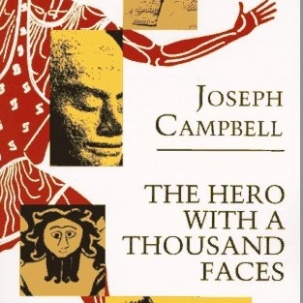
Joseph Campbell, the famous American mythologist, went further to propose that all stories have basically the same structure. In his seminal book THE HERO WITH A THOUSAND FACES, he identifies and explains the phases that a typical hero or protagonist goes through.

Hollywood was quick to capitalize on Campbell’s powerful ideas and created a simplified memo for scriptwriters spelling out the stages of the hero’s journey and the typical characters found in mythological stories. When used with creativity and originality, these phases are hardly noticeable on the surface of a good movie, and the characters may take on many different forms, but the closer the deep structure of the plot remains to its mythological backbone the stronger it will resonate with the viewers.

Image-1

Antonio Canova’s Theseus and the Centaur

We covered the stages of the story in a previous post. Now, who are the usual characters in powerful stories? Here’s the list, and its implications for marketing:

The hero: this is the protagonist or the representation of  your customer. He will have to overcome problems and bypass obstacles to get to his goal. He has a strong need that must be met – by your solution or product.

The shadow: this usually represents the hero’s opponent or dark side. In marketing, we may think of it as our competition, or any flaws our products may have that must be corrected or features that need to be enhanced.

The mentor: in stories, they appear as older and wiser men or women, whose job is to guide and aid the hero along the path to accomplishing his goal. Marketers may use this concept in their messages and positioning. Think of the communications with your customers as ways of mentoring them.

The herald: this is the character that announces to the hero that he will need to act upon his needs and desires to have them sorted out. He pushed the hero forward. What better metaphor for a CALL TO ACTION? Your “call to action” needs to be included in all the communications with the client, your hero. It’s your job to tell them what to do next. Clarify the path.

The threshold guardians: these are people who hinder the hero’s progress at different plot points. They are not necessarily evil, but they will be obstacles to overcome. Think of them metaphorically as any obstruction on the client’s path to the micro or macro conversions you set up: faulty or unhelpful landing pages, redirect errors, unclear info about the product, interruptions or problems on the shopping cart path, etc. Be an ally to the hero and help him overcome these difficulties.

The trickster: that is a character that provides comic relief in stories. Also, these pranksters may provide useful information through their jokes. As a marketer, keep in mind that what people need, through your messages (you blog posts, for example), is to have info, develop their knowledge or to have fun. Don’t underestimate the power of comedy. This is a powerful way to win the customers’ hearts and minds.

The shapeshifter: usually someone who keeps changing their form or intentions. We never know if he’s an ally or an enemy. Or he may start off as an enemy and become an ally eventually. As a marketer, I think it’s very useful to see testimonials and comments on social media sites as typical shapeshifters.  They will sometimes align with your intentions in helping the hero get to his (and your) goal, but they can also badmouth you to the point of putting the whole journey in jeopardy. Shapeshifters need to me monitored closely on the Internet and responded to immediately. This is a huge part of your job as a marketer.

We hope this analysis of the main archetypes will help you structure the story of your brand more effectively. In future posts, we will carry on imparting more tips to help you hone your skills as a storyteller and marketer.

Au revoir

Jorge Sette.


21 thoughts that might cross your mind while you’re sitting on the beach in Ipanema


Cheer up, you are in Rio. Thoughts…

1. Why didn’t I go to the gym more regularly for at least six months before I decided to come here?

2. Oh my God, can this water get any icier? Impossible to swim here.

3. I’d love to have two bags of these GLOBO chips.

4. I’ll have the açaí with muesli and banana.

5. Why is everybody running away while these dark-skinned boys are chasing after them?

6. I’ll ask the nice lady sitting to my right if she would mind looking after my stuff while I go for a quick swim.

7. Don’t they mind my overhearing their private conversation about how they’re cheating on their wives? Turn it down.

8. Has marijuana been legalized in Brazil? I can’t see anyone NOT smoking.

9. What a view they must have from Vidigal.

10. Those three must be from São Paulo.

11. Isn’t that Chico Buarque walking along the sidewalk?

12. I have never seen these gringos this happy when they are at home.

13. I must stop after this one. I believe this is my fourth caipirinha.

14. Maybe I will get the beach towel with the Christ the Redeemer on it.

15. Jesus, they should get a room.

16. OMG, that wave was a little tsunami and washed all that guy’s clothes and belongings away.

17. Are they really going to try on the speedos right here on the beach before buying them?

18. Wow, it looks like we are going to have a beautiful sunset today. Will be standing on Pedra do Arpoador in 30 min.

19. Will go ITAU biking later on.

20. Time to shift position and stare at the Two Brothers now.

21. How many more years do I still have to teach English to be able to buy that penthouse over there?

IMG_1178

Ipanema, Rio.


Storytelling with Winslow Homer, the famous American Painter


Storytelling with Winslow Homer, the famous American Painter

Winslow Homer.  Click on the picture to access the SlideShare presentation. You might want to check  out our post on the mythological structure of storytelling as well:  http://wp.me/p4gEKJ-F2

Note: you might want to check out our new book TEACHING ENGLISH WITH ART: MATISSE   available  from AMAZON.COM as an ebook.  Click here for more info: 

http://wp.me/p4gEKJ-1kP


Six influential Marketing Books you should read


Everyone needs marketing. We are all marketers one way or another.

Most people seem to think that marketing is something done by a restricted group of people in a specific department of big companies, whose job consists mainly of yelling silly slogans at you, hoping they will stick, and perhaps make you stop in your tracks to buy something you don’t really need.

Marketing as a strategy, however, is something much deeper, scientific and even artistic, I should say. It’s sad that many companies and professionals fail to understand this concept. Marketing is needed to acquire, grow and maintain clients not only for companies but also for you as a professional. We are all selling something to someone: the product of the company we work for or our professional value, our time and dedication.

Nevertheless, let’s keep in mind that marketing has undergone a radical change in the past two decades. Digital marketing completely changed the landscape. I would say that it leveled the playing field for small companies and autonomous professionals, allowing both to compete worldwide with bigger corporations for an audience on the Internet. Since I have worked in this area for most of my professional life, and really love the subject,  I thought I could use this post to make a humble contribution, sharing with you the best marketing books I have ever read.

Photo

1. Marketing Management, by Philip Kotler. This is considered the bible of the field. If you take any marketing course, you will surely be referred to it. It covers the basics, and it’s an essential tool for anyone interested in the subject. It will dedicate specific chapters to each of the four traditional Ps of marketing (product, price, promotion, and place), analyze consumer markets and buyer behavior, will give you tips on how to deal with the competition, discuss segmentation, etc. It is a lot of information, and some readers will complain that the topics are not exploited in depth. The text will, however, give you a general, if a bit superficial, overview of marketing as a whole.

2. Positioning,  the Battle for Your Mind, by Al Ries and Jack Trout. One of the most seminal books in the area. It explains the fundamental concept of differentiation. How to plant the concept of your brand in the clients’ minds, making them see you in a specific and unique way. As a marketer, you need to look for a space that has not been occupied yet and fill it. It is necessary to make your brand mean something special to your target audience. As a private teacher of English in Brazil, for example, how do you want to position yourself? As a cool native speaker from Australia who would appeal to a young and and adventurous audience (You need to be Australian to pull that off, remember.)?  As an experienced Brazilian who had to learn the second language fluently yourself and therefore will understand the needs of your students better? Do you want to be seen as the best business English teacher available in São Paulo? These are options. Work to your strenghts and pick a suitable, convincing positioning and a niche to exploit.

3. Permission Marketing, by Seth Godin. This book will forever change your views on how to promote your product. If you are a fan of Mad Men, the famous TV show featuring these clever guys from Madison Avenue, you will understand that the way they conducted a marketing campaign back in the 60s would have very little chance to succeed today. For at least 40 years, from the time the show is set, marketing was all about interrupting people to make them listen to your call (ads broadcast through TV and radio, billboards, flashy ads in magazines…) With today’s noise, when clients are bombarded with thousands of promo messages every minute, it would be impossible to break through the clutter with traditional marketing. Ideally, customers will now come looking for you instead, if you apply the strategy suggested in the book (which is also known as inbound marketing). You will still interrupt them once, probably (maybe by luring them with a display ad on the website they’re browsing), but, then, the conversation will need to continue with their permission (or opt-in), and most certainly they will be the ones in charge.

4. The New Rules of Marketing & PR, by David Meerman Scott. This book summarizes in a very simple and direct way all the contemporary trends in marketing. It will show you the spectrum of tactics you can use to reach your client in this digital age: how to keep the conversation going with your target audience;  how to position yourself as a “thought leader” (expert) in your industry, through blogging, podcasting, video-blogging, and social media interaction; it also covers tactics on search engine marketing.  D. M. Scott explains the useful concept of buying personas, which is a method of breaking down the different segments of your market to create a clear personality for each one, so you can have a more relevant conversation with the customer, through the messages you send out and the feedback you get in response.

5. Advanced Web Metrics with Google Analytics, by Brian Clifton. One of the most remarkable changes in marketing is the shift towards more accountability expected from practitioners. Metrics is the key word in today’s marketing. If you don’t measure and demonstrate objectively that you can improve the ROI (return on investment) of your campaigns,  you won’t keep your job for very long. Not every company has changed yet, though, and some still seem to value marketers who are famed only for their creativity, even if they do not show proven results for their interesting ideas. I firmly believe their days are numbered. Clifton’s book will teach you in a very thorough way how to operate and benefit from Google Analytics, one of the most widely used services on the Web. The book offers invaluable insights on how to crunch the numbers and improve your marketing efforts.

6. Steve Jobs, by Walter Isaacson. Since the visionary depicted in this biography is one of the most inspiring people ever in my humble opinion, I must admit to being partial including this book on the list, as it’s not really a marketing book but a book about an extremely effective and successful marketer. The main lesson here is the product is the marketing. In the words of Seth Godin, who also preached this approach, you need a PURPLE COW – a very special and original product – to win in the ultra competitive market place of today. All promotional tactics will feel gimmicky and deceitful if you can’t deliver the iPhone or iPad of your industry. Another lesson is the importance that design has acquired in the making of any product in recent years. It goes without saying that function has not lost any of its importance, but if not integrated seamlessly with extraordinary design, your product will be in trouble.

Remember that the new marketing is very dynamic: Tactics, apps, methodologies (automation) and a great variety of tools are being created every moment in the marketing landscape.  Therefore, to keep up with this ever-evolving environment, besides reading the fundamental and seminal books of the field, you are advised to sign up and follow a number of blogs on the subject. It can feel a bit overwhelming at first, but, eventually, you will learn to filter the information and focus on a couple of the best blogs in the field. I strongly recommend, for example, Occam’s Razor, by metrics evangelist Avinash Kaushik and the Hubspot blog on inbound marketing.

Now it’s your turn. Could you please recommend any good marketing books to us?

Jorge Sette.

My worst flying experience


With the sad news of the doomed fate of flight MH370, I could not help but remember one of the most frightening experiences I’ve ever had flying.

I had spent 15 days vacationing in London in the interval between the Olympic and Paralympic Games of 2012. Everything went well, London had been sunny and warm for the most part of my stay. I had spent a lot of time sitting in green parks, visiting galleries and museums,  and walking up and down along the Thames riverside from Tate Modern to the Tower Bridge.  I had had such a great time that was even considering going back the following year.

But now I was ready to come home. It was a Friday evening and I was feeling relaxed and with my energies fully restored to resume work on Monday. My flight to São Paulo, Brazil, would leave from Paris. As you probably know, when you try to redeem the miles accumulated over months or even years of paid flights, when time has finally come for you to claim your reward, the airlines will give you the worst choices of flight plans they can possibly put together, short of making you take a route around the world to be able to get to the point on Earth you are aiming for.

So I needed to get to Paris first – a 90 min flight – before facing the uncomfortable and long journey back home in coach: although I fly all the time for work, the experience is far from enjoyable for me.

ToonCamera

Horrible flight

Armed with a bunch of newly-bought crossword puzzles, I took my preferred seat on the isle, next to a  good-looking young couple, who seemed to be still in love with each other. “They can’t have been together for long”, I thought, by the way they looked lovingly into each other’s eyes with a silly grin on their faces. They were both dressed like business people and I wondered about their luck being able to travel together for work. Or they might have just met on the plane and fallen in love. I know this can happen. Good for them. I was distracted by these fantasies as the plane took off.

As soon as the plane reached the right altitude, taking a horizontal position, I proceeded to take out my puzzles, pulled down the food tray in front of me, and started working furiously on solving the crossword problems. After a couple of minutes, I came across a tough one: 10 letters: synonym for commotion; unruliness; insubordination; rioting… I bit my pen in deep thought.

Then it started.

It was first felt as a sudden plunge into the void, which made some of the passengers cry out in fright. I was one of them. Then the plane stabilized for a moment, a couple of seconds maybe, and then a full-fledged turbulence broke out. The vessel shook like we were a cocktail being made by one of the cool bartenders in the Soho pub I had been to the night before. I was in terror. Stealing a glance at the couple sitting next to me, I noticed they were tense but totally silent. The smiles had been wiped off their faces but their hands remained held tight. I wondered if they would mind if I intermingled my cold and trembling fingers with theirs. With much effort, I refrained from trying this approach.

The plane seemed to steady and flew smoothly for a couple of minutes. I sighed. Peace did not last long, though. Soon the shaking and bouncing started again. Some middle-aged Spanish-speaking ladies, probably members of some tourist package holiday group, had seats a couple of rows ahead of me, to the right, and I could jealously see them laughing and screaming at the same time, while holding each others hands in support. Meanwhile, I was on my own, firmly gripping both arms of my seat and murmuring repeatedly DEAR GOD, DEAR GOD, DEAR GOD. I only noticed I was voicing these words out loud when I took another look at the couple – maybe to see if any of them would offer to hug me or hold my hand – only to find them staring at me with a despising look on their faces. I shut up and closed my eyes.

Another big mistake. The moment I shut my eyes, images of all the “plane crash” disaster movies I had ever seen came rushing back in waves, reminding me of the horrors of AIRPORT 1,2,3,4,5…, the beginning of the TV show LOST, and a memorable graphic crash scene from the 90s movie FEARLESS. The latter, however,  gave me some hope, as Jeff Bridges’s character survived the crash after all, and decided he was invincible from then on. I might be the lucky one this time.

The turbulence never let up. It lasted the whole flight. Getting worse and worse, till we were told that we should start landing procedures. Never had I experienced anything like that before. I was shaken to my core when we arrived in Paris, and almost missed my flight to Brazil, having totally forgotten to adjust my watch to account for the one-hour time difference between London and Paris. My lips felt dry and white.

My heart goes out to the passengers on board any doomed flight. I deeply sympathize with how they may have felt in the final moments, as I believe I’m a survivor.

On the peaceful 12-hour flight back home from Paris, I resumed the crossword puzzle I had abandoned when chaos took over the flight from London to Paris. The 10-letter word I was looking for was obviously TURBULENCE.

Au revoir

Jorge Sette.

The power of storytelling (the mythological structure)


“There is no doubt fiction makes a better job of the truth.” 
 Doris Lessing

Those who have seen the film LIFE OF PI will have no problem relating the quote above to the movie’s main theme. At the end of the movie, we understand that the narrative may as well have been a metaphorical one, and we are asked to choose which version of the truth we would prefer: the one told through analogies and mythology or a raw sequence of facts. I have made my choice. You will have to make yours.

Like all great movies, Life of Pi lends itself to a number of interpretations, has layers and layers of meanings, and covers many different themes. The one that resonated the most with me, however, was its acclaim of the power of storytelling.

Image

Carl Jung, the renowned psychoanalyst, pointed out that the characters (archetypes) and motifs we find in mythological stories are the same we generate in dreams. Joseph Campbell, the famous mythologist and writer, in his seminal book THE HERO WITH A THOUSAND FACES, took Jung’s ideas further and proposed that all stories involving the myth of a hero have the same deep structure and feature the same archetypes, although they appear in different shapes and forms: the myth of the hero wears a thousand faces after all. In his book, he analyzes a great number of mythological stories from different cultures at different times to prove his point. He is very persuasive, I must admit.

In the 1980s, Christopher Vogler, a Hollywood development executive, adapted and simplified the ideas of Joseph Campbell to be applied in scriptwriting and moviemaking. He compiled a seven-page memo for the big shots in Hollywood that revolutionized the industry. Later this memo was turned into a book (The Writer’s Journey) which, to this day, is considered a bible for scriptwriters in the business. After all, important directors such as George Lucas, Steven Spielberg, and Francis Ford Coppola had all drunk from the fountain of Campbell’s ideas to produce some of their most brilliant works.

Without getting too technical, let’s just cover the main steps of a typical hero’s journey to give you an idea of the phases of stories that deeply resonate with us, basically because they find an echo in the depths of our psyche. Then, if you are interested, you can expand your knowledge by referring to the original and more complete sources. A typical mythological hero follows this path:

Ordinary World: at the beginning of the story, the hero is shown in his natural habitat, living his normal life, but we can already sense that he does not really fit in, there’s something missing, he may not be totally adapted to the context.

Call to Adventure: at some point afterward, the hero is called upon action. Something happens that affects or changes his life. The news that prompts the change is usually brought to him by an archetype we call the herald. Unless the hero does something about the novel situation, his life or the lives of his friends and loved ones will be in danger.

Refusal of the call: but the hero resists the call. He comes up with all kinds of excuses not to embark on this journey. He is afraid.

Meeting with the mentor: at this point an older man or woman, usually grumpy or funny, shows up and intervenes, lending the hero guidance and support, goading him to take the bait and start his adventure.

Crossing the first threshold: that’s when the story gets really started, the hero accepts the challenge and will confront his first problems. An enemy will try to prevent him from entering the world of the adventure. The hero will somehow manage to bypass this entity and move on.

Tests, allies and enemies: now, for a long stretch of the story, the hero will be going through a series of trials and obstacles on the journey towards his goal. He will meet supportive characters but also many foes, of all kinds, will cross his path.

Approach to the innermost cave: all the obstacles will lead him to the biggest of them all. The hero and his allies prepare for it.

Ordeal: arriving at this climactic point, the hero will face death or an almost insurmountable problem.  He deals with it as bravely as he can.

Reward (seizing the Sword): he survives the ordeal and gets a prize (a metaphorical “sword”), which will help him get  through the rest of his mission.

The Road Back: now, with the mission almost accomplished, the hero will try to get back home. He’s already transformed  somehow by the experience, but will still have to confront a lot of opposition (usually represented by a “chase scene” in modern movies) before he gets back home.

Resurrection: this is the hero’s final problem, occurring right before he’s able to cross the threshold back home. Another climactic moment. The hero struggles courageously and is rewarded with the “elixir” (something that he will take back to the community he came from to help the others get to a more elevated stage)

Return with the Elixir: the elixir is passed on to the community. End of the story.

images

Joseph Campbell

If you pay close attention to the movies you like the most, you will be able to identify this structure. Of course, this framework should lend itself to all kinds of variations. It’s not supposed to be a formula. Some of the steps may be missed or shuffled around, the circumstances and situations the hero finds himself in can be very diverse. This is what makes movies and stories magical. But the firmer the skeleton of the narrative, the closer it gets to the steps of the myth of the hero, the more it will resonate with an audience.

Nevertheless, to really understand how stories are built, we would still need to discuss the archetypical nature of the characters in narratives in more detail (remember we mentioned the herald and the mentor in passing?),  but that is beyond the scope of this post. We will resume this topic in a future post.

Also, storytelling is a great tool for language learning and we will discuss how it can be used in the classroom on another occasion.

For now, that is all.

(you may way now to read my post MORE STORYTELLING TIPS FOR MARKETERS: http://wp.me/p4gEKJ-UK )

Au revoir

Jorge Sette.

What it takes to be Michael Jackson


I’ve never been a huge fan of Michael Jackson’s music, although his gift as a performer and dancer has always impressed me. I grew up hearing his songs, like many of the readers, so he felt like a distance cousin, far away but still part of my life.

Despite the fact that THRILLER (1982), his second solo album after he left The Jackson 5, sold more than a 100 million copies, making it the best-selling album of all time, I was never really interested in mimicking the steps and choreography of the promo video clip, and was left sitting alone with my rum and coke at the parties of that era, while all my zombie friends took over the dance floor.

In the early 90s, before the advent of cable television in Brazil, when regular TV still had the power of unifying people, making most of us watch the same shows and discuss them at the water cooler the following day, I waited excitedly for the release of every new computerized video clip featuring a Michel Jackson hit, just like everyone else at the time. To say nothing of the fact that, in Brazil,  a lot of kids from the generation after mine were named by their parents MAICON, in honor of the King of Pop. They couldn’t get it right.

Obviously, I was shocked by his untimely death and saddened by all the allegations of child abuse he had to confront (hoping that the verdict of not guilty was fair and right after all). The Oscar-winning Danish movie THE HUNT presents us with a nightmarish scenario of what it must feel like to be accused of this sort of crime if you are innocent. Once the doubt is planted in people’s minds, it will not be uprooted.

This evening, however, I watched a documentary about Michael Jackson on Netflix, and it was fascinating to be reminded of how talented and mature he was at the age of 10, an old soul. Nevertheless, in a scene in the film, someone comments that whatever he missed in childhood due to his extreme professionalism, he made up in adulthood. Of course, he was referring to the toys he got as an adult, to Neverland, and to the obsession of physically transforming his body through plastic surgery, rather than only in his imagination, like most kids do.

But what really resonated with me was all the evidence that, besides being a naturally gifted person, he was a workaholic, and added much to his innate talent through a lot of studying and dedication. It was said that even after his voice changed in adolescence he could still carry on being a great singer, as he had learned what to do technically with his voice when rendering a song, from analyzing famous singers from the past. So, what does that teach us about how to become a Michael Jackson, or a John Lennon, or a Bill Gates? Or, in other words, an extremely successful person in our career.

Image

Michael Jackson

Work and drive

I’m a great believer that hard word and dedication are the most important levers for success in life – whichever standards you choose to measure success by. Malcolm Gladwell, in a book called OUTLIERS (which I strongly recommend) speaks of the magical number 10,000, as the minimum amount of hours necessary for someone to dedicate to a specific task if they are to excel in it. Not all of us had or will ever have the opportunity and drive to do this, let’s face it.

Of course, being endowed by nature with a special talent, such as a higher than average IQ, amazing kinesthetic intelligence, or the looks of Scarlett Johansonn, will already place you ahead of the pack. But you cannot dismiss the effort that all real celebrities – as opposed to the Paris Hilton type – must have put into building their careers. There are odds working for them, that is undeniable, but in general, this is accompanied  by unusual amounts of time and effort invested in accomplishing their endeavors.

A Mentor and team work

Also, in all interviews I read and documentaries I watch about people who have done amazing things, there is a strong element of team work and mentoring involved. You just can’t make it on your own. Talent needs coaching, support and help with the hard decisions to be made along the way. Surround yourself with friendly and supportive people, who maybe complement your skills, and get yourself a mentor. Today.

Persistence

I know a lot of talented people who do not advance further in their career for lack of resilience and toughness. They shy away and quit at the prospect of every obstacle (and there will be many) they face. If you ever have the chance to watch a couple of episodes of the popular series HOUSE OF CARDS, you will understand that it is impossible to get ahead without single-mindedness and a very thick skin.

Emotional intelligence

This is what hindered Michael Jackon’s success in terms of longevity and balance. His instability, due mainly to growing up under an overbearing and controlling father – whom he never called Dad, but Joseph, his Christian name. Besides, the pressures of living and working in an unbelievably competitive environment must have played a strong role in his unravelling. Also, he never developed sophisticated interpersonal skills, such as being able to read people beyond their words and superficial behavior – he is said to have been naively trusting of everyone.

Basically, I should say that, in a very simplified way, the characteristics listed above translate into success. In the sense that they get you where you want to be in the corporate world, in show business, academia or politics.

Let’s continue the discussion later. In the meantime, please let me know what your views are on this post.

Au revoir

Jorge Sette.

Interviewing Philip Roth – the movie


Based on some of my previous posts on Facebook, Twitter and this blog, many of you will already know that Philip Roth is one of my favorite writers. At 81, he is considered by many the greatest living American writer. I can’t get enough of his books. They usually investigate the depths of the human soul, are packed with painful truths, but also convey a dark sense of humor, which makes them irresistible.

Although I have already reread many of his novels, the good news is he’s so prolific that I haven’t been able to cover the whole list yet. So there is a lot to look forward to. I don’t think I will ever have an opportunity to talk to him in person, as he is very reclusive and private. And, to be quite honest, I would not like that to happen, as I want to preserve the idealized image I have of him – so I imagined what an interview with him would be like. His answers are known quotes.

Interviewing Philip Roth


Interviewing Philip Roth

Click on the picture to access the SlideShare presentation