Exciting times to be a marketer: you are in show business!


You may have heard this before: everyone is in marketing nowadays. To make a living, you need to promote and sell something: your image as an ideal employee; your qualifications as the perfect fit for an advertised professional position; the product or service the company you already work for specializes in; or your own business. Everything is a brand, from products and ideas to people and causes. Non-profits, as you know, need as much promotion as any other business.

Moreover, marketing has changed radically in the last ten years or so. It has become a lot more exciting. As a marketer, you are not allowed to interrupt your audience with a loud selling message or by yelling a silly slogan at them any longer. You may even try, but it will not be very effective. Now things got a lot more complex, genuine, interactive, and, I dare say, even more artistic. Marketing needs to excel at beauty, creativity, usefulness, and the ability to keep a conversation going with the customer for as long as necessary. After all, we are aiming to keep them for life.

Content marketing

As a consequence, we all need to turn our marketing departments into media companies or publishers to be able to promote effectively in this new landscape: whether your are selling language learning courses,  ebooks or cars. Gone are the days of the proverbial pushy second-hand car salesmen we still see in movies. To turn our marketing team into a media company, we must become content creation machines, spilling out entertainment, compelling stories, clear explanations and timely info about your product or service to build a loyal audience on and off line. Only then are we allowed to sell to this community we worked so hard to attract and shape. Build the community first, gain its trust, give away lots of free and relevant content, and afterwards, you will own the right to offer them your “purple cow” (borrowing the expression from marketing guru Seth Godin): the very compelling product they can’t wait to buy from you.

Take for example the need to create a personality and specify the values your brand stands for. Storytelling is the keyword here. Every time you get in touch with your audience you have an opportunity to add a new piece of your corporate narrative by reinforcing the values and personality of your brand. This must be done through different social media channels, using the right tone of voice. Companies that invest in marketing will assign different people to manage distinct social media channels and the kind of content feeding they require. Besides, they need a marketing coordinator/manager to oversee the whole operation, analyze the metrics,  and make sure the conversation with the client remains consistent.

Marketing in the business of language learning – my speciality

What I find really exciting as a marketer in the language learning line of business is how easy it is to produce content that will captivate your target audience, turning them into leads and then customers. If you sell LANGUAGE, which is a vehicle, you have a lot more elbow room to play with content. Language can be used to talk about anything. So there can be a lot of variety in your communication. And what can be more exhilarating than the possibility of creating blogs, podcasts, videos, PowerPoint presentations, ebooks, webinars, etc. to express your passion for language teaching/learning through a wealth of rich content?  Marketers are given a unique chance to become writers, video makers, newsreaders and designers: we’ve been given the opportunity to be in show business after all! Few people would turn this opportunity down.

3862439287_0ac8632eb9

Show business


Start now!

Of course, you may not feel excited about every piece of content you will have to create to attract customers, especially because it needs to cater for the community’s needs and interests, not yours. The more you get to know your prospects, the easier it will be to publish the right kind of content for them. But assuming  you like or identify with the product your are selling, there will always be room to express your passion.

Hubspot, the inbound marketing software company, is the benchmark  for content creation, attracting clients to their community by giving tonnes of excellent content away for free. Well, there is obviously no need to get to their level of sophistication and productivity, but if you do not start creating compelling content right now, you will not be in business for very long. Believe me, creating content is key. And it can be a lot of fun.

Au revoir

Jorge Sette
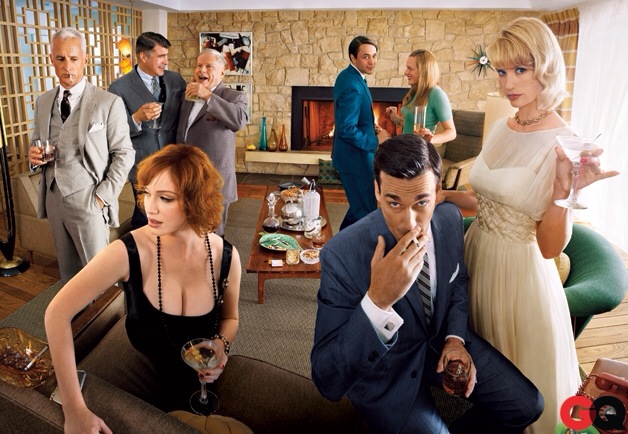
10 Marketing Lessons from Mad Men, the TV Show


This is what it takes to succeed in advertising in Madison Avenue:

IMG_0946

Mad Men

1. All work and no play makes Jack a dull boy (this could have come from Kubrick’s The Shining as well).

2. Clients need to be wined and dined to the point of stupor to close a deal.

3. As an employee – especially a secretary – you will get in trouble resisting the sexual advances of superiors or VIP clients. Give in. Homosexual advances must be turned down, however, and the proponent is allowed to be called a pervert.

4. Count on Don Draper to save any campaign presentation at the last minute by changing his tone of voice. It gets lower, and the speed of his delivery slows down. He will also look deeply and meaningfully into the clients’ fascinated eyes. It helps if the musical score rises at the climactic moment.

5. Getting stoned and drunk at the office makes creative work a lot more productive, although most of it turns out crappy in the end.

6. Chain smoking or coping stoically with second-hand smoking is a strong indication that you are on your way to stardom. Wives of marketing executives will not hesitate to reward their thirteen-year-old daughters with a cigarette to celebrate school accomplishments.

7. Get a good-looking wife or husband if you are in the business of advertising and be unfaithful to them. A necessary step to further your career.

8. Take 4-year-olds to watch Planet of the Apes and don’t worry if they start having constant nightmares afterwards and wish to get rid of the family dog because they can’t stand getting near fur any longer. These little family problems should not concern a senior executive any way.

9. Back-stabbing is a very normal and acceptable part of the business. You will have your chance to get back at your ex-best friend eventually.

10. The most important question to ask about an applicant if you have not seen them yet is: is she black or white?

Well, we are in the sixties after all. Jokes apart, the show is brilliantly written and should be watched.

Au revoir

Jorge Sette.


4 Elements to Consider to Strengthen your Brand


In a scene of MAD MEN (6th season), Don Draper (the protagonist) and his business partners are sitting around a dinner table socializing with clients from General Motors. Libations and jokes are going around, drunken laughter and merry faces are all we see. Then, Don, unexpectedly, brings up the story of the son of one of his friends (whose wife he has been sleeping with, in typical Draper fashion) who has been drafted to Vietnam. Don is hoping GM will volunteer to help get the boy off the hook, through one of the many contacts the huge corporation must have in Washington. The mood at the table changes immediately to gloom and doom. Don’s partners look at him in disbelief: how dare he introduce a note of sadness and discomfort, when the only goal of this meeting is to entertain the clients and keep them happy? Is he trying to jeopardize the future of the account?

foto

Don Draper, Mad Men

This is how business was done in the late 1960s. And today.  In a previous post, I mentioned that the campaigns conducted by Madison Avenue marketers as shown in this brilliant TV series would not have much change of succeeding in today’s digital environment. However, one thing remains the same and is not likely to change any time soon: clients are emotional beings and their choices rely much more on feeling and intuition than on reason. Of course, after the choice is made, they will work hard to rationalize it and will possibly come up with a lot of “objective” reasons to justify their decisions. So, the lesson is let’s keep the customer happy.

With this in mind, clever marketers will never stray away from the emotional channel to reach and start a conversation with their prospects, or keep a solid relationship with their loyal base going smoothly. And what are the main tools available to aid marketers reach clients on an emotional level?

1. Storytelling: this is the biggest umbrella word that encompasses the whole tool kit to engage the client, as it resonates strongly with humans on different emotional levels. Your brand needs to describe itself to the customer in a very simple and yet effective way. By using the typical elements of storytelling (which we have discussed in previous posts: http://wp.me/p4gEKJ-F2, and http://wp.me/p4gEKJ-UK), make sure it’s easy for the customers to understand where you are coming from, your journey and quest. If they eventually become advocates of your brand (which is ultimately every marketer’s dream) make it easy for them be able to share your story with everyone in their network.

2. Coherence: this is fundamental to the success of your marketing strategy. The story needs to be coherent in every touch-point with the client. Every contact of the client with your brand should add or reinforce a piece to the bigger picture. Your story should make a solid promise, set up a strong positioning and create a relatable personality that needs to permeate all your communication with customers. This story is supposed to make the customers associate your brand with positive feelings and traits: family values (Disney), coolness (Apple), sophistication (Tiffany), efficiency and innovation (Amazon), usefulness and reliability (Google), high self-esteem and style (Rolex), vigor and energy (Nike), etc. Pick the emotion you want to emphasize through the use of your product/service and stick with it.

3. Colors: these are very important in communicating and generating the right emotion. There are many articles on the Internet that make suggestions and describe how different colors create and stress different moods. Based on the kind of story you choose to tell your customers, be careful matching the colors of your logo, for example, to the positive emotion you are willing to generate. Blue, for example, stands for depth and stability; red for excitement and passion; yellow for happiness and warmth; green for environment-friendly brands, peacefulness and health; black communicates tradition and sophistication.

4. Design: most products are becoming commodities in terms of their functionality and performance. Today it does not really matter, for example, what kind of TV set you buy, they are basically all the same, and equally reliable. That’s where look and feel play an essential part. Your brand needs to integrate the design that fitfully tells your story. This involves your logo, the format of your communication, the choice of your business card and the product itself. Of course, Apple is everyone’s benchmark in this department.  Also, keep consistency throughout your collateral, display banners, the layout of your office, your blog and website appearance.

I hope the reader understands that we are not endorsing ways of cheaply manipulating the customers by pressing their buttons. As long as your brand delivers on the promise made, marketers don’t need to feel guilty about trying to entice the client. That’s obviously their job. Besides, just like in a good movie or book – and in storytelling in general – the more subtly emotions are played out, the more effective they are in satisfying today’s increasingly sophisticated audience. Tell a powerful and genuine story, and deliver on your contract: that’s all.

Au revoir

Jorge Sette.


More storytelling tips for marketers


You may already know that the new buzz word in marketing is storytelling. You may also wonder why it took the marketing gurus so long to realize that stories resonate strongly with humans beings, and therefore, with clients. Brands must tell a story to the customers, and good marketers should, therefore, learn as much as possible about the craft of storytelling to be able to create and project a more impactful and relevant positioning in the minds of their audience.

We already started discussing the mythological structure of storytelling in a previous post (please refer to “The Power of Storytelling, the Mythological Structure”- http://wp.me/p4gEKJ-F2  – you may want to read it before you continue). Now we pick up where we left off, and begin to cover the kinds of characters we come across in muscular and enduring stories.

The renowned psychoanalyst Carl Jung put forward the theory that the elements (themes, topics, characters, plot) commonly found in dreams are the same ones present in the mythologies of all peoples at different times. He called them archetypes.

Joseph Campbell, the famous American mythologist, went further to propose that all stories have basically the same structure. In his seminal book THE HERO WITH A THOUSAND FACES, he identifies and explains the phases that a typical hero or protagonist goes through.

Hollywood was quick to capitalize on Campbell’s powerful ideas and created a simplified memo for scriptwriters spelling out the stages of the hero’s journey and the typical characters found in mythological stories. When used with creativity and originality, these phases are hardly noticeable on the surface of a good movie, and the characters may take on many different forms, but the closer the deep structure of the plot remains to its mythological backbone the stronger it will resonate with the viewers.

Image-1

Antonio Canova’s Theseus and the Centaur

We covered the stages of the story in a previous post. Now, who are the usual characters in powerful stories? Here’s the list, and its implications for marketing:

The hero: this is the protagonist or the representation of  your customer. He will have to overcome problems and bypass obstacles to get to his goal. He has a strong need that must be met – by your solution or product.

The shadow: this usually represents the hero’s opponent or dark side. In marketing, we may think of it as our competition, or any flaws our products may have that must be corrected or features that need to be enhanced.

The mentor: in stories, they appear as older and wiser men or women, whose job is to guide and aid the hero along the path to accomplishing his goal. Marketers may use this concept in their messages and positioning. Think of the communications with your customers as ways of mentoring them.

The herald: this is the character that announces to the hero that he will need to act upon his needs and desires to have them sorted out. He pushed the hero forward. What better metaphor for a CALL TO ACTION? Your “call to action” needs to be included in all the communications with the client, your hero. It’s your job to tell them what to do next. Clarify the path.

The threshold guardians: these are people who hinder the hero’s progress at different plot points. They are not necessarily evil, but they will be obstacles to overcome. Think of them metaphorically as any obstruction on the client’s path to the micro or macro conversions you set up: faulty or unhelpful landing pages, redirect errors, unclear info about the product, interruptions or problems on the shopping cart path, etc. Be an ally to the hero and help him overcome these difficulties.

The trickster: that is a character that provides comic relief in stories. Also, these pranksters may provide useful information through their jokes. As a marketer, keep in mind that what people need, through your messages (you blog posts, for example), is to have info, develop their knowledge or to have fun. Don’t underestimate the power of comedy. This is a powerful way to win the customers’ hearts and minds.

The shapeshifter: usually someone who keeps changing their form or intentions. We never know if he’s an ally or an enemy. Or he may start off as an enemy and become an ally eventually. As a marketer, I think it’s very useful to see testimonials and comments on social media sites as typical shapeshifters.  They will sometimes align with your intentions in helping the hero get to his (and your) goal, but they can also badmouth you to the point of putting the whole journey in jeopardy. Shapeshifters need to me monitored closely on the Internet and responded to immediately. This is a huge part of your job as a marketer.

We hope this analysis of the main archetypes will help you structure the story of your brand more effectively. In future posts, we will carry on imparting more tips to help you hone your skills as a storyteller and marketer.

Au revoir

Jorge Sette.


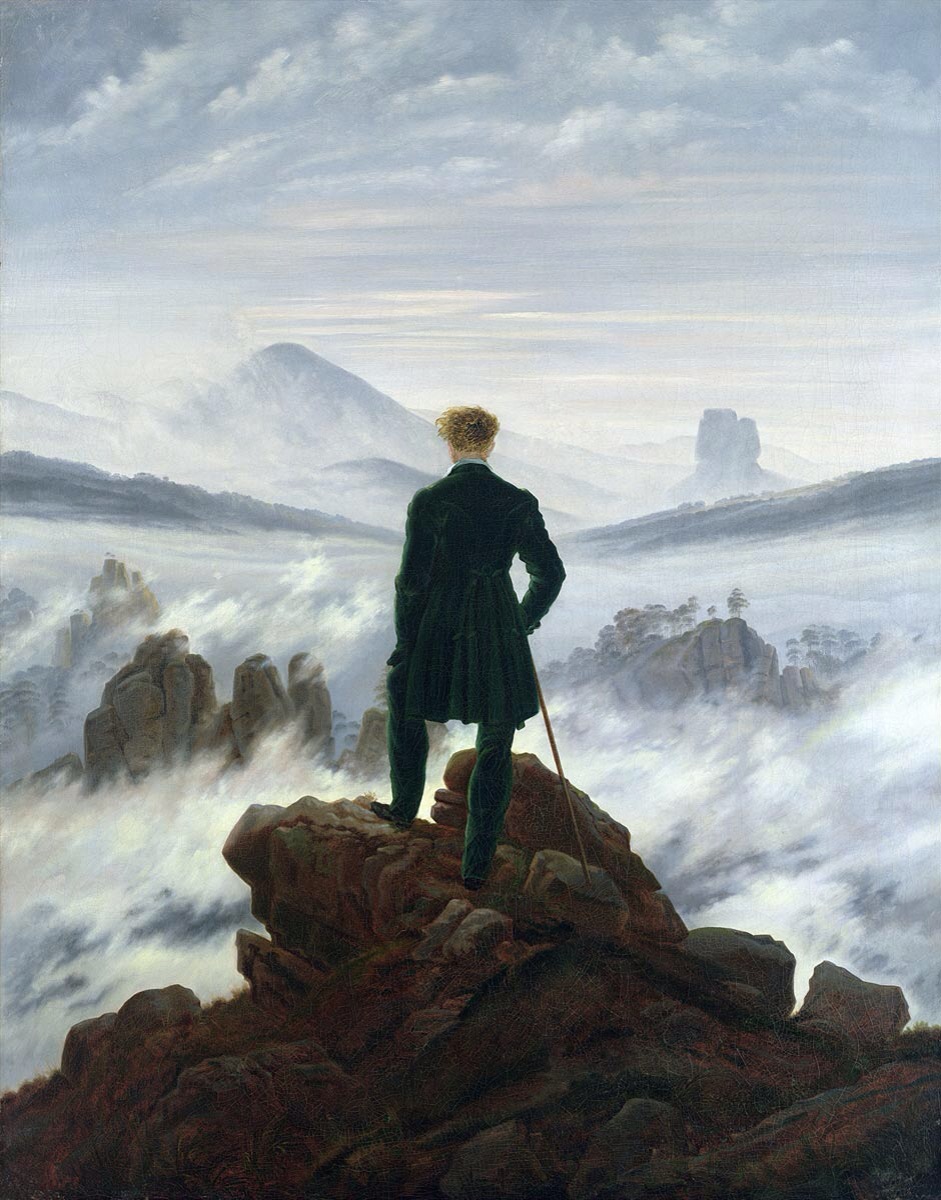
Storytelling with Casper David Friedrich, the famous Romantic painter


Storytelling with Casper David Friedrich, the famous Romantic painter

Click on the picture to access the SlideShare presentation. You might want to check out our post on the mythological structure of storytelling as well: http://wp.me/p4gEKJ-F2

The pleasures and horrors of wearing “OCULUS”


The future looks bright. Or not. It also looks very individualistic, but not lonely. Like all new things, the amalgamation of Facebook, this powerful social media platform counting more than 1 billion people as members, and the new Oculus Rift 3D gaming tool (even the latin name imbues the product with an aura of respectability and awe) bringing the possibility of adding a virtual reality touch to basically all its social pages, is, at one time, breathtaking, humbling, inspiring and terrifying.

ToonCamera

I’m sure you are already sensing Orwellian connotations everywhere. You are not alone, but let’s give it some time before we judge. Oculus may indeed sound a bit ominous, but the dual nature of things is ubiquitous (good and evil are in all things and people, but let’s not get too philosophical on a blog post)

Oculus is already great news for couch potatoes. Besides, this will surely push couchpotatoness to a whole new level, inspiring and attracting hordes of newcomers. As you will be able to do almost everything without leaving your living-room, shy of maybe having to deal with the call of nature now and then, your life will be restricted by the boundaries of your sofa. As for bodily functions, if you take your tablet to the toilet, the problem is solved. You will rule the world from the porcelain throne.

As cities like São Paulo get increasingly violent and uncomfortable – traffic jams, heat, overcrowded subway, etc –  you may wish to put on your glasses (cross that out, Google may charge me for using this word), Oculus, for things like:

1. Shopping for groceries: being able not only to see what the fruit and vegetables look like that day, but also maybe feel them with your hands for texture and softness before sending them to the shopping cart for delivery by the 2:00 pm drone.

2. Visit museums and galleries: now you don’t need to line up before getting to the latest exhibition at MASP, simply take it from the comfort of your bathroom. Walk around, get as close as possible to the paintings, touch them, go around 3D volumes like sculptures, stare at their bottoms closely, if you are that kind of person.

3. Bored in the middle of the work day at the dreary office downtown? Click on the Facebook page of any beautiful Northearstern beach of Brazil,  and go for a long virtual walk along the sea, let’s say, in Porto de Galinhas. At some point in the near future I’m sure you will even be able to feel the warm waves licking at your feet. Then click out of the page and start the video conference call with the sales team with renewed vigor and energy.

4. Shopping for clothes: no more cluttered and disheveled fitting rooms to gain access to. Try everything and anything on for hours on end without being disturbed, and then pick only a t-shirt on your way out, or nothing at all, without even being frowned at by the shop assistant, who has been waiting on you for the whole morning. She is probably only a bot, anyway, without any civil rights – for now! Chances are, however, you will be chased after by their re-marketing ads and notifications for the rest of your life.

For number 5, I was going to add you may even create and live with your own virtual family – and shut them down or click out of their page whenever you feel you deserve a night out (well, not really OUT, but on a different website) with the guys. But I don’t want to sound too iconoclastic at this point.

The possibilities are endless. The fun and the horrors incalculable. Let’s just wait.

Au revoir

Jorge Sette.


21 thoughts that might cross your mind while you’re sitting on the beach in Ipanema


Cheer up, you are in Rio. Thoughts…

1. Why didn’t I go to the gym more regularly for at least six months before I decided to come here?

2. Oh my God, can this water get any icier? Impossible to swim here.

3. I’d love to have two bags of these GLOBO chips.

4. I’ll have the açaí with muesli and banana.

5. Why is everybody running away while these dark-skinned boys are chasing after them?

6. I’ll ask the nice lady sitting to my right if she would mind looking after my stuff while I go for a quick swim.

7. Don’t they mind my overhearing their private conversation about how they’re cheating on their wives? Turn it down.

8. Has marijuana been legalized in Brazil? I can’t see anyone NOT smoking.

9. What a view they must have from Vidigal.

10. Those three must be from São Paulo.

11. Isn’t that Chico Buarque walking along the sidewalk?

12. I have never seen these gringos this happy when they are at home.

13. I must stop after this one. I believe this is my fourth caipirinha.

14. Maybe I will get the beach towel with the Christ the Redeemer on it.

15. Jesus, they should get a room.

16. OMG, that wave was a little tsunami and washed all that guy’s clothes and belongings away.

17. Are they really going to try on the speedos right here on the beach before buying them?

18. Wow, it looks like we are going to have a beautiful sunset today. Will be standing on Pedra do Arpoador in 30 min.

19. Will go ITAU biking later on.

20. Time to shift position and stare at the Two Brothers now.

21. How many more years do I still have to teach English to be able to buy that penthouse over there?

IMG_1178

Ipanema, Rio.


Storytelling with Winslow Homer, the famous American Painter


Storytelling with Winslow Homer, the famous American Painter

Winslow Homer.  Click on the picture to access the SlideShare presentation. You might want to check  out our post on the mythological structure of storytelling as well:  http://wp.me/p4gEKJ-F2

Note: you might want to check out our new book TEACHING ENGLISH WITH ART: MATISSE   available  from AMAZON.COM as an ebook.  Click here for more info: 

http://wp.me/p4gEKJ-1kP


Six influential Marketing Books you should read


Everyone needs marketing. We are all marketers one way or another.

Most people seem to think that marketing is something done by a restricted group of people in a specific department of big companies, whose job consists mainly of yelling silly slogans at you, hoping they will stick, and perhaps make you stop in your tracks to buy something you don’t really need.

Marketing as a strategy, however, is something much deeper, scientific and even artistic, I should say. It’s sad that many companies and professionals fail to understand this concept. Marketing is needed to acquire, grow and maintain clients not only for companies but also for you as a professional. We are all selling something to someone: the product of the company we work for or our professional value, our time and dedication.

Nevertheless, let’s keep in mind that marketing has undergone a radical change in the past two decades. Digital marketing completely changed the landscape. I would say that it leveled the playing field for small companies and autonomous professionals, allowing both to compete worldwide with bigger corporations for an audience on the Internet. Since I have worked in this area for most of my professional life, and really love the subject,  I thought I could use this post to make a humble contribution, sharing with you the best marketing books I have ever read.

Photo

1. Marketing Management, by Philip Kotler. This is considered the bible of the field. If you take any marketing course, you will surely be referred to it. It covers the basics, and it’s an essential tool for anyone interested in the subject. It will dedicate specific chapters to each of the four traditional Ps of marketing (product, price, promotion, and place), analyze consumer markets and buyer behavior, will give you tips on how to deal with the competition, discuss segmentation, etc. It is a lot of information, and some readers will complain that the topics are not exploited in depth. The text will, however, give you a general, if a bit superficial, overview of marketing as a whole.

2. Positioning,  the Battle for Your Mind, by Al Ries and Jack Trout. One of the most seminal books in the area. It explains the fundamental concept of differentiation. How to plant the concept of your brand in the clients’ minds, making them see you in a specific and unique way. As a marketer, you need to look for a space that has not been occupied yet and fill it. It is necessary to make your brand mean something special to your target audience. As a private teacher of English in Brazil, for example, how do you want to position yourself? As a cool native speaker from Australia who would appeal to a young and and adventurous audience (You need to be Australian to pull that off, remember.)?  As an experienced Brazilian who had to learn the second language fluently yourself and therefore will understand the needs of your students better? Do you want to be seen as the best business English teacher available in São Paulo? These are options. Work to your strenghts and pick a suitable, convincing positioning and a niche to exploit.

3. Permission Marketing, by Seth Godin. This book will forever change your views on how to promote your product. If you are a fan of Mad Men, the famous TV show featuring these clever guys from Madison Avenue, you will understand that the way they conducted a marketing campaign back in the 60s would have very little chance to succeed today. For at least 40 years, from the time the show is set, marketing was all about interrupting people to make them listen to your call (ads broadcast through TV and radio, billboards, flashy ads in magazines…) With today’s noise, when clients are bombarded with thousands of promo messages every minute, it would be impossible to break through the clutter with traditional marketing. Ideally, customers will now come looking for you instead, if you apply the strategy suggested in the book (which is also known as inbound marketing). You will still interrupt them once, probably (maybe by luring them with a display ad on the website they’re browsing), but, then, the conversation will need to continue with their permission (or opt-in), and most certainly they will be the ones in charge.

4. The New Rules of Marketing & PR, by David Meerman Scott. This book summarizes in a very simple and direct way all the contemporary trends in marketing. It will show you the spectrum of tactics you can use to reach your client in this digital age: how to keep the conversation going with your target audience;  how to position yourself as a “thought leader” (expert) in your industry, through blogging, podcasting, video-blogging, and social media interaction; it also covers tactics on search engine marketing.  D. M. Scott explains the useful concept of buying personas, which is a method of breaking down the different segments of your market to create a clear personality for each one, so you can have a more relevant conversation with the customer, through the messages you send out and the feedback you get in response.

5. Advanced Web Metrics with Google Analytics, by Brian Clifton. One of the most remarkable changes in marketing is the shift towards more accountability expected from practitioners. Metrics is the key word in today’s marketing. If you don’t measure and demonstrate objectively that you can improve the ROI (return on investment) of your campaigns,  you won’t keep your job for very long. Not every company has changed yet, though, and some still seem to value marketers who are famed only for their creativity, even if they do not show proven results for their interesting ideas. I firmly believe their days are numbered. Clifton’s book will teach you in a very thorough way how to operate and benefit from Google Analytics, one of the most widely used services on the Web. The book offers invaluable insights on how to crunch the numbers and improve your marketing efforts.

6. Steve Jobs, by Walter Isaacson. Since the visionary depicted in this biography is one of the most inspiring people ever in my humble opinion, I must admit to being partial including this book on the list, as it’s not really a marketing book but a book about an extremely effective and successful marketer. The main lesson here is the product is the marketing. In the words of Seth Godin, who also preached this approach, you need a PURPLE COW – a very special and original product – to win in the ultra competitive market place of today. All promotional tactics will feel gimmicky and deceitful if you can’t deliver the iPhone or iPad of your industry. Another lesson is the importance that design has acquired in the making of any product in recent years. It goes without saying that function has not lost any of its importance, but if not integrated seamlessly with extraordinary design, your product will be in trouble.

Remember that the new marketing is very dynamic: Tactics, apps, methodologies (automation) and a great variety of tools are being created every moment in the marketing landscape.  Therefore, to keep up with this ever-evolving environment, besides reading the fundamental and seminal books of the field, you are advised to sign up and follow a number of blogs on the subject. It can feel a bit overwhelming at first, but, eventually, you will learn to filter the information and focus on a couple of the best blogs in the field. I strongly recommend, for example, Occam’s Razor, by metrics evangelist Avinash Kaushik and the Hubspot blog on inbound marketing.

Now it’s your turn. Could you please recommend any good marketing books to us?

Jorge Sette.