Jorge Amado’s Novels: Marxism, Humor and the Beauty of the African-Brazilian Culture


Jorge Amado (August 10, 2012 – August 6, 2001) was a very prolific Brazilian author, having written more than 30 novels, translated into some 49 languages. Most of his stories are set in the state of Bahia, the region where he was born. His works highlight the brutal economic inequality of the society and the richness of his state’s Afro-Brazilian culture: the empowering traits of the religious cult of Candomblé, the beauty and creativity of its mestizo people, the spicy flavors of the delicious local cuisine, and the rhythms of its music and local dance/martial art (capoeira).

IMG_1233

Salvador, the capital of Bahia, the state Jorge Amado was born in. Photo: April, 2019. Jorge Sette.

Through Amado’s characters, we get to hear the voice of the lower classes, the poor, the fallen and the discriminated against. We also hear the voices of the strong women of Brazil. Despite the fact that his early books were derogatorily characterized as sentimental Marxism, Jorge Amado matured as a writer, as of the late 1950s. With the publication of Gabriela, Clove and Cinammon (1958), his novels became a lot more sophisticated, funny and authentic. Satire became a strong element of his style. The main themes of Jorge Amado’s books, however, remained the same: the lives of the poor people of Bahia, their traditions, the religious syncretism between Catholicism and the African cults, the prejudice and discrimination against the mixed-raced (mestizo) people of Brazil (which, ironically, comprises most of the population!) and open criticism of the hypocritical moral values of the Brazilian upper and middle classes.

Jorge Amado was a member of the Brazilian Academy of Letters from 1961 until his death in 2001. Here’s a list of his most popular works.

1.  Captains of the Sands (Capitães da Areia, 1937)
6EFE2FA8-3D2D-4AAA-A227-C1C98FEA18C2_4_5005_c

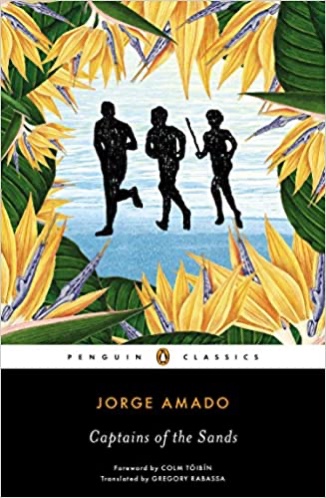
Captains of the Sands, a rather romanticized account of the lives of a gang of abandoned street kids in the city of Salvador (called the city of Bahia in the book), whose crimes terrorize the local population, may sound a bit tame by today’s standards. After all, the level of real juvenile violence experienced in the big cities of Brazil (exposed in books such as City of God by Paulo Lins, for example) surpass by far what we read in this novel, which takes place in the 1930s.

However, the reader can still be moved and relate to the thesis of how the social-economic context deprives these kids of their innocence and childhood and is ultimately responsible for their corruption and lack of choice. Reminiscent of Charles Dickens and Mark Twain, the book focuses on the adventures of the leader of the gang, Pedro Bala (bullet), and five of his closest allies, living off theft and petty crimes, and sleeping in a shack by the sea. We follow their early years as members of the feared gang of the Captains of the Sands and the different paths taken by each of them as they grow older and leave.

2. Dona Flor and Her Two Husbands (Dona Flor e Seus Dois Maridos, 1966)
FB71F3CD-6CD7-4091-A504-B58F9521AB07_4_5005_c


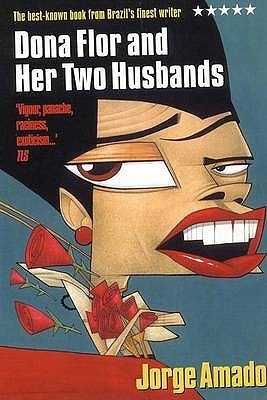
It’s surely inconceivable for most Latin American males to accept that it may take more than one man – at one given time – to completely satisfy the many facets of a woman’s life. In this widely successful novel (turned into a hugely popular movie in the 1970s), Jorge Amado adopts a very liberal and perhaps feminist point of view in this respect.

Flor, an adorable young woman in the Bahia of the 1920s, is an expert in the local cuisine. Her recipes are so popular that she decides to open a cooking school for girls. Soon afterwards, she meets and falls in love with the irresistible Vadinho, a typical “malandro” (a bohemian ruffian), an incorrigible rogue who spends most nights gambling and drinking in the company of prostitutes. The marriage takes place against her family’s wishes, as the whole conservative society of the time seems to foresee that it’s doomed. The couple is perfectly matched sexually, though. Vadinho fulfills Flor’s every fantasy and surpasses all her expectations in the bedroom. When he suddenly dies, celebrating Carnival, Flor is left inconsolable.

After a year of mourning, the widow finally marries the local pharmacist, a very decent man called Dr. Teodoro, who has nothing of the passion for life that Vadinho did. Teodoro stands for respectability, tender love, a reliable routine and financial safety. For a while, Flor seems happy and grateful for the arrangement, but it does not take long for her typical ardor to flourish again; she deeply misses Vadinho’s passionate lovemaking. After a couple of months living in this torture, her desire for Vadinho becomes so strong, that it brings him back from the dead. Only Flor can see him, when he appears, always naked, at the most unexpected times. He is invisible to everyone else. What will Flor do about this?

3. The War of the Saints (O Sumiço da Santa, 1988)

22235CA3-A806-4A8C-BAFC-CE538AE58A7B_4_5005_c


The holy icon of Saint Barbara (or Yansan, the goddess of thunder and lightning, as she is known in the Afro-Brazilian religion of Candomblé) is taken by boat from her original site, at the Church of Santo Amaro, to be part of a religious art exhibition in Salvador. When the boat docks, the saint miraculously comes to life, smiles, and winks at her fellow passengers and simply walks off through the market quay, raising Cain in the city of Salvador. Her mission is to liberate the young and beautiful Manela from the repressive grip of her aunt and guardian Adalgisa.

The plot, however, is only a pretext for the author to take the reader on an unforgettable and hilarious 48-hour tour of the city of Bahia during the oppressive years of the military dictatorship, introducing us to a series of colorful characters, savory foods and sensual religious rites. Mixing fact and fiction, where references to real musicians, singers, artists and political figures of the time abound, the narrator makes hilarious digressions, discussing, among other things, the nature of his narrative and making self-deprecating comments about his writing in a delicious conversation with the reader. This is undoubtedly one of the most accomplished and subversive books ever written by the author.

4. The Two Deaths of Quincas Wateryell  (A Morte e a Morte de Quincas Berro D’Água, 1959)

24EF29BB-E4A6-4AC3-B2E5-81E7FA5C49DD_4_5005_c


This novella tells the strange and hilarious story of a man who, getting fed up with the tyranny of a bossy and nagging wife and the pettiness of the codes of respectability of the lower bourgeoisie, suddenly decides to say goodbye to all that and start a new life as a drunk vagrant in the streets of Bahia. He leaves his family and dedicates himself to the most unthinkable hedonism: getting drunk every night, having sex with prostitutes and becoming the king of the bohemians of Bahia. He craves total freedom, has a legion of loyal followers and admirers, pledging that his tomb will be the endless sea.

When he suddenly dies, however, and faces the danger of having his corpse go through a respectable and catholic wake and burial, four of his closest friends show up to pay his respects and – in a sequence of scenes filled with humor and poetry – steal the corpse (or the living-dead man – as the reader is never quite sure how dead he really is) to take him for a last night of celebration in the city, before his second and final death.

On a deeper level, the story investigates the creation of popular myths and the distortion of reality prompted by the ingrained custom of gossiping, so typical of Brazil and Bahia, in particular.

Have you ever read any of Jorge Amado’s novels? How do you like his books? Please leave a comment below.

Au revoir

Jorge Sette.


Las Meninas by Velázquez – under the magnifying glass


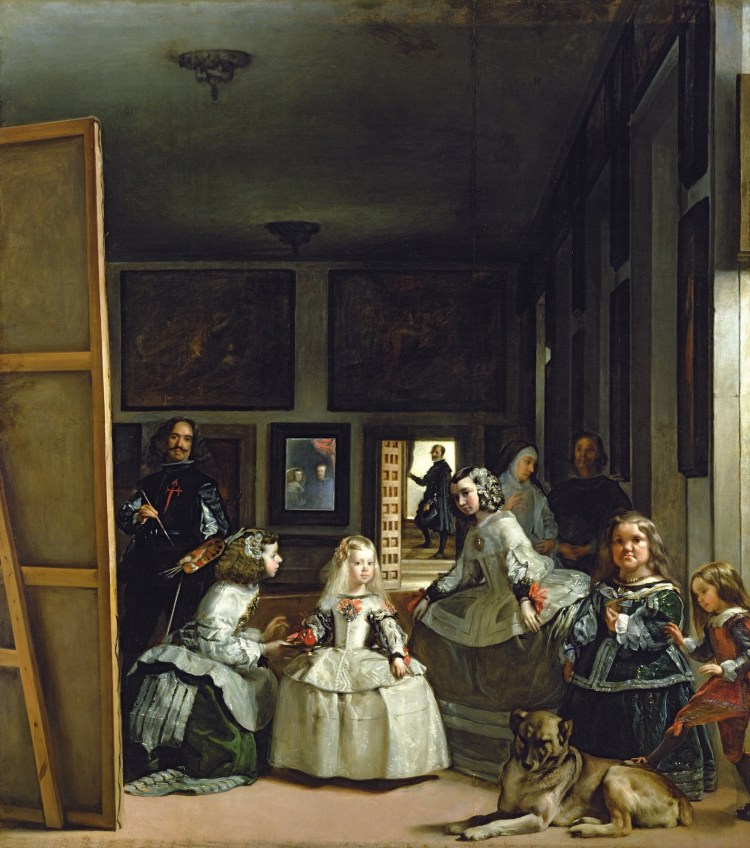
One of the most controversial paintings in Western Art History is Velázquez’s intriguing The Maids of Honor (Las Meninas). Painted in 1656, it’s considered the Sevillian artist’s masterpiece. Critics and specialists have been debating how best to interpret this work for centuries, and of course, no analysis is conclusive.

5E6049CA-98C5-4A51-A6F2-4B80677E1F38

Las Meninas  (The Maids of Honor) by Velázquez, Diego.

The first question seems to be what Velázquez, who’s depicted on the left of the scene, in front of a huge canvas, is painting on it. Is he working on the very painting we see? This seems to be suggested by the palette in his left hand, whose blurred and mixed colors appear to replicate the image in front of us. However, how and why would he include himself in it?

Others, on the other hand, point out that there’s a mirror in the center background, reflecting the images of the king and queen of Spain at the time, Phillip IV and his second wife, Mariana de Austria, who would occupy the same position as the viewer as we look at the painting. This would explain why everyone seems to be gazing outward from the picture. They are actually staring at the royal couple, who would be the subject of Velazquez’s canvas within the painting. Complicated? Wait, it gets even more complex.

A third theory says that Velázquez is painting in front of a mirror (the clue is the way the parting of the hair of the Infanta Margarita, the blond girl in the center foreground, is reversed from what it would look like in reality). This would explain how the artist managed to include himself in the painting. This would also mean that everything we see is also flipped.

More interesting facts about the picture:

The central figure of the scene is the Princess or Infanta Margarita, who was about 5 years old at the time. Who are the other ten people represented in the painting? We can identify all of them historically, except for one. Flanking the Infanta, who’s at the center of the painting, we see the maids of honor. To the right of the Infanta, bowing – possibly due to the arrival of the king and the queen – we see Isabel de Velasco, and to the left, kneeling, as she offers the princess a glass of water or some kind of grease for the princess to dip her fingers in, as she seemed to have had some kind of disease, we have Doña Maria Augustina Sarmiento. On the right, we see the dwarfs Maria Barbola and Nicolas Pertusato, who is playing with the dog. The job of the dwarfs was to entertain the court members.

Behind the dwarfs, obscured by the lack of lighting, we notice Doña Marcela de Ulloa, the princess’s chaperone, and next to her, the only unrecognized figure in the painting, possibly a bodyguard. At the back, going up the stairs and opening the door, the queen’s chamberlain, José Nieto Velázquez, can be identified. The other three people are Velázquez himself and the reflections of the king and the queen in the mirror.

Another question is what kind of painting is this? It does not seem to be a portrait of Princess Margarita, due to its informality. Velázquez was a great portraitist and we have plenty of examples of what a portrait of the higher members of the court of Philip IV should look like: formal, pompous, rigid, authoritarian, exuding power. This depiction of Princess Margarida is nothing like that, resembling more a genre painting, like the bodegones (kitchen and tavern paintings Velázquez produced at the beginning of his career): this could be a snapshot of a regular day in the painter’s studio, known as “el cuarto del prince”.

Ultimately, Las Meninas could be a very personal statement of the artist about his own social status. A self-promoting artwork, to show his intimacy with the higher members of the court. The red cross painted on the left of his chest, which represents the Order of Santiago, seems to indicate this, although some critics guarantee this cross was painted only after the death of the artist, as a way of honoring him for his work under the king.

Now, all this complexity only adds to the attraction of this unique work of art, which not only shows masterful draftsmanship and use of color (the brushstrokes that make up the dresses of the ladies and their decorations seem to anticipate the Impressionist movement in some 250 years), but also to establish the concept of the painter as an intellectual.

If you ever go to Madrid, don’t even think of skipping a visit to The Prado, the museum in which this artwork hangs in all its majesty.

Jorge Sette

10 Books You Should Read to Understand Brazil Better


Congratulations, you got a new job. You will be relocated to Rio? How exciting. How did you manage to grab such an interesting post? You must know a lot about Brazil and speak good Portuguese. Or maybe you are just the only person who had the availability to move to this country. Whatever the reason, or despite how much you might already know about Brazil, I would strongly recommend you read the books listed below to get a crash course in the country. They are all fun to read and will contribute in their own way a small piece of understanding to complete the puzzle.

I’m Brazilian myself, spent most of my life here, and still profited a lot from reading these texts. Here they are:

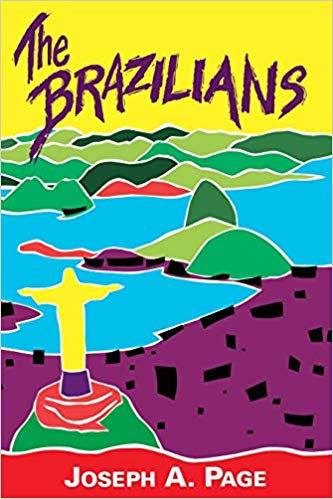
1. The Brazilians, by Joseph Page.

510O0emLBRL._SX331_BO1,204,203,200_

This is one of my favorite books about Brazil. It’s visibly written by someone who loves the country, and despite its very objective, and sometimes hurtful, analysis, makes you feel appreciated and liked as a local. Besides, it covers many different aspects of the culture and history of the country, including the national religions and the nuances of the current power structure, all written in a light and pleasant language. I particularly liked the way it analyzes the way the different social classes interact with each other in Brazil, with all the hypocrisy and paternalism that underlies these brutal relationships. However, the book was written way before the passing of a new set of Constitutional amendments (PEC 478 – known as PEC das Domésticas) in 2013, regulating the working  life of the “empregadas domésticas” (Live-in maids; a very typical Brazilian institution), and therefore broadening the professional rights of these underpaid and exploited workers more than 100 years after the abolition of slavery took place in the country.

2. Brazil on the Rise, The Story of a Country Transformed, by Larry Rother.

5153cEwXJ+L

Written around the time when the now infamous cover of the magazine THE ECONOMIST showed an illustration of the statue of Christ the Redeemer in Rio taking off to the skies as a potent rocket on its way to a future of fully developmental glory and economic power, the book gives us the historical and economic background necessary to understand how we got to where we were by the end of the two mandates of the Labor Party, under president Luís Inácio da Silva (Lula). It focuses on the economic and political aspects and the obstacles the country had to overcome on its path towards democracy and to arrive at the reasonable level of economic stability we had some 6 years ago. Of course, things are not looking now as great as when that issue of THE ECONOMIST came out, but corrections are being made along the way and I firmly believe we will realize the bright potential we have been predicting for the past 500 years.

3. Futebol Nation: A Footballing History of Brazil, by David Goldblatt.

510bwbxTBGL._SX323_BO1,204,203,200_

The English writer does not sound very sympathetic to the country and its people. The writing is a cold and dispassionate account of the importance football gained in Brazil since its introduction in the early years of the 20th century and its ramifications through the history of the country. Although it became clear after the World Cup (2014) that football seems to have lost a lot of its importance to Brazilians – given the sense and irony most of the population demonstrated after the historic loss to Germany with a scoreline of 7×1, the book makes it clear that, especially from the 1950s to the 1990s, football was Brazilians’ greatest source of pride. It is also evident how strongly we identified the values of the nation with this foreign sport, allowing and making it easy for politicians to tap into its people’s naive passion to advance their own agendas. Although the book does not take into account the World Cup of 2014, it covers the June 2013 social unrest and popular demonstrations directed mainly against the realization of the over-budgeted upcoming event. All in all, it’s a very interesting read, even for those who are not really into the sport.

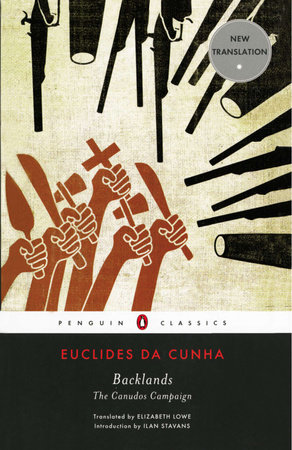
4. Backlands: The Canudos Campaign, by Euclides da Cunha.

9780143106074-1

Considered one of the most important books of the Brazilian canon, this text is a journalistic account of the conflict of Canudos – supposedly a civil war between monarchists and republicans at the end of the nineteenth century – which took place in the arid and difficult geographic region known as the backlands in the interior of Bahia. The official story says that a group of backlanders (sertanejos), led by a religious fanatic, Antônio Conselheiro, the Counselor, built up a settlement constituted of thousands of huts forming a kind of overcrowded slum, spreading over the valleys and hills of the region. The book reads like a novel, once you manage to get through the slow and dragging geological, topographical and climactic minutiae used to describe the region in the first couple of chapters. Then it finally gets to the action, depicting with cinematographic vigor the 4 military incursions into the settlement of Canudos, defended fiercely by the backlanders (sertanejos and jagunços, the latter considered bandits infiltrated in the community).

5. The War at the End of the World, by Mario Vargas Llosa.

Unknown

While Backlands was meant to be an objective report of the Canudos War in Brazil, this book by Peruvian writer Llosa is a fictionalized version of the events. It tells the same story, but as novels go, adding the thrill and emotional twists of the format. The book depicts characters on both sides of the war, offering a balanced perspective of what happened. It’s considered one of the author’s best books. Llosa himself considers it his most accomplished novel, and it features in Harold Bloom’s The Western Canon.

6. A Death in Brazil, by Peter Robb.

51wRrAw-XyL

A thrilling account of 500 hundreds years of Brazilian history, Australian writer Peter Robb’s book also reads like a novel. The writer lived in Brazil and offers authentic and knowledgeable insights into the country, its people and culture. He also talks very candidly and passionately about the country’s serious problems and inequalities. The death of the title is the mysterious assassination of PC Faria’s, fixer and bagman to corrupt President Collor in the early 1990s, but the book does not focus on this. It covers, among other things, the brutal slavery system we had in the country until 1888 (longer than anywhere else in the Western world), the destruction of the fugitive slave settlement of Palmares, the Canudos war, Brazilian cuisine and literature. A must-read.

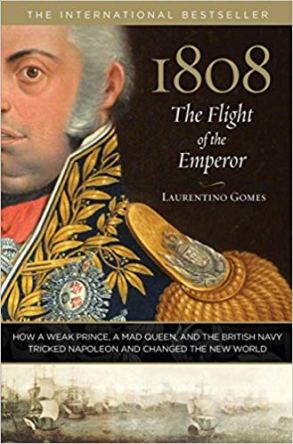
7. 1808 – How a mad queen, a coward prince and a corrupt court fooled Napoleon and changed the History of Portugal and Brazil, by Laurentino Gomes.

517MnMhRr7L._SX327_BO1,204,203,200_

Written by one of the most influential journalists of Brazil, this is the first installment of a trilogy that covers the history of the country from the transfer of the Portuguese royal court to Rio de Janeiro in 1808, in a maneuver to escape the Napoleonic wars, to the events surrounding the Proclamation of the Republic in 1889.

It took 10 years of research for the first volume to come to light. It’s a well- written, direct and very readable account of the story of the arrival in Brazil of D. Joao VI, his wife, Carlota Joaquina, and their entourage, changing the destiny of the colony forever by paving the way for the declaration of independence 14 years later. Mixing the personal anecdotes of these characters – some of them very funny – with important historical events, Gomes offers the reader a sprawling overview of those times in the colony.

1808 was awarded two Jabuti Prizes, in the categories of best reportage-book and non-fiction book of the year.

Screen Shot 2020-02-16 at 8.18.00 AM

8. 1822 – How a wise man, a sad princess and a money crazy Scotsman helped D. Pedro create Brazil, a country that had everything to go wrong, by Laurentino Gomes.

This is the second volume of the trilogy we mentioned above. Now we are focusing on the story of D. Joao VI’s son, Prince Pedro, and the role he played in the declaration of the independence of the country, culminating in the historic Cry of Ipiranga, and then becoming the first Emperor of Brazil. The book reads like a thriller, depicting the highly charged political events, the confronting factions and the many different interests that led Pedro to decide to stay in the country and cut its ties with Portugal. It portrays D. Pedro I as a wild, sensual and determined young man, who did not refrain from playing the role history reserved for him. 1822 added two other Jabuti Prizes (the third and fourth) to Laurentino Gomes’s collection, again in the categories of best reportage-book and non-fiction book of the year.

9. 1889 – How a tired emperor, a vain marshal and a wronged teacher collaborated for the end of the Monarchy and the Proclamation of the Republic in Brazil, by Laurentino Gomes.

The third volume of Gomes’s acclaimed trilogy revolves around the Proclamation of the Republic in Brazil, bringing down the Empire, which had been the most stable and solid government in the region for 67 years. Emperor D. Pedro II – 0ne of the most educated man of his time – was banned from Brazil with his family, being exiled in Europe. Marshal Deodoro da Fonseca, a former anarchist and a friend of the deposed emperor’s, was in charge now, despite his old age and debilitated health.

10. Gabriella, Clove and Cinammon, by Jorge Amado.

416OrtEBdpL._SX322_BO1,204,203,200_

Besides The War at the End of the World, this is the only other novel I included on our list of top 10 choices for the reader who wishes to understand Brazil. Written by Jorge Amado, Gabriella takes place in the small town of Ilheus, in the state of Bahia, during the economic boom of the cacao in the 1920s. The book consists of two intertwined stories: the first is the romance between the bar-owner Nacib, of Syrian origin, and the drought immigrant worker Gabriella, who becomes his cook and mistress; the second story is the confrontation between the conservative plantation colonels (powerful heads of landowner families) and the wealthy young man Mundinho Falcão, who represents the arrival of modernity, efficacy and urban values in the rural underdeveloped and backward region. Readers will be delighted to have all their senses and intellect arrested, as they immerse in the world of Gabriella: Amado describes the tastes, smells, and texture of the local foods; the funny, and sometimes violent, local customs; the hypocrisy of a narrow-minded and provincial society; the brutality of machismo; and the bright colors of what is supposed to be a microcosm of Brazil and Latin America.

I guess these 10 books will give newcomers enough introductory background and information on the beautiful, challenging and diverse country I’m lucky to live in. Welcome, good luck with your new job, and don’t forget to rate and comment on this post.

Au revoir

Jorge Sette.
 

Four of Brazilian Writer Lima Barreto’s Main Works – As Modern and Relevant as Ever


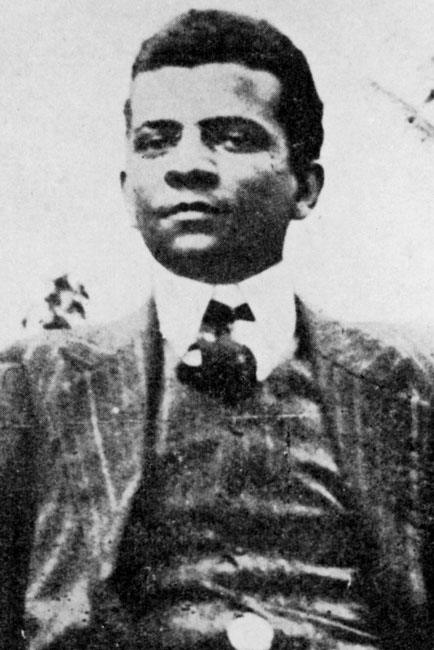
Lima Barreto, the acclaimed journalist and author of the Brazilian Belle Époque, is more popular than ever these days. The author was honored at the FLIP (International Literary Party of Paraty) a couple of years ago and that made him even more well-known.  New editions of his work have been released since then. Along with these, there was also the publication of a very well-researched biography, Lima Barreto – Triste Visionário, by historian Lilia Moritz Schwarcz (Companhia da Letras), available at the main bookstores.

02224_gg

Lima Barreto was born in 1881 in Rio de Janeiro and dedicated his life to writing and literature. His father was a typographer with connections with the powerful Empire Senator Viscount of Ouro Preto, who became Lima Barreto’s godfather. His mother, a freed slave, was a school teacher. She died when the writer was only six.

The key to understanding his artistic work is the overlap between the stories he created and his biography. Dark skinned (a mulato, as we say in Portuguese) and born in the lower echelons of society himself, he understood very well, and experienced first hand the issues discussed in his novels and short stories.

The main themes of his realistic pre-modernist fiction are the problems of the recently founded Brazilian Republic: class and race prejudices; the cynicism, incompetence, and arrogance of academics, journalists, politicians and the police force in general; the oppression women were subjected to. Not surprisingly, many of the problems Brazil had a hundred years ago are still current, making Lima Barreto’s works powerfully modern and still very relevant.

Lima Barreto had a productive but short life. He died at the young age of 41, plagued by alcoholism and related mental illnesses.

The books listed below have not been translated into English yet (except for The Sad End of Policarmo Quaresma), but, if you speak Portuguese, you can easily order them from Bookwitty.

  1. Recordações do Escrivão Isaias Caminha (Memories of the Clerk Isaías Caminha)


85012_gg

Lima Barreto’s debut novel was received coldly by the critics and the literary community of the time. The resentment of the protagonist-narrator and the sarcastic (although disguised) way in which he describes powerful figures of the contemporary society irritated many people who possibly identified themselves with the characters depicted in the novel and felt ridiculed by it. In the novel, Isaías, a boy from the countryside, does exceptionally well in school and is predicted to have a bright future, due to his intelligence and hard work. As a young man, full of hopes and willing to expand his horizons, he leaves his family and hometown, coming to Rio de Janeiro with a letter of recommendation for a congressman. Isaias thought it would not be difficult to find a good job, given his previous scholarly success and this single connection with a powerful politician. It does not take long, though, for his dreams to be crushed. Rio turns out to be a concrete jungle, where the doors are tightly closed to dark-skinned men. The novel tells the story of the deterioration of the young man’s self-esteem and his progressive submission and passive acceptance of the brutal rules that govern Brazilian society.

  1. The Sad End of Policarpo Quaresma

51nCUZicH4L._SX326_BO1,204,203,200_

This novel marks the transition from Realism/Naturalism to the Pre-Modernist literary movement in Brazil.

Policarpo Quaresma, the protagonist, is a methodical civil servant who lives with his spinsterish sister in the suburbs of Rio at the end of the 19th century. He is a naïve and rather optimistic nationalist, who believes that he himself can act as a force to preserve the traditions of Brazil in the face of the fast modernization and internationalization the country is going through.

To accomplish his nationalist objectives, first, he writes a letter to the Parliament proposing that the national language be replaced by Tupi, the indigenous language spoken by the local tribes who lived along the coast of the country before the arrival of the Portuguese. The idea is received with such mockery and disbelief that Quaresma suffers a nervous breakdown, being confined, for a while, to an asylum for the mentally ill.

Recovering from the illness, Quaresma decides to move with his sister to a farm on the outskirts of the city to live a more peaceful life in contact with nature. There, he tries to initiate, again practically single-handedly, an agricultural reform, aiming at setting an example to his countrymen, teaching them how to make the most efficient and rational use of the fertile soil of his beloved fatherland. This results in another failure, as he cannot count on any official help with his endeavour.

Finally, he sides with President Marshal Floriano Peixoto (a real historical figure), joining the military, to fight against the Second Naval Revolt, only to find out that the leader, contrary to Quaresma’s idealization, lacks the brains and military-strategic mind of a Napoleon, being nothing more than an authoritarian and unskilled dictator to a barbaric country in the periphery of civilization and capitalism.

  1. Clara dos Anjos

41dMg-rX03L

Published after Lima Barreto’s death, the novel has a simple and direct plot. It’s the story of a dark-skinned girl from the suburbs (the impoverished neighborhoods on the outskirts of the city of Rio de Janeiro, rarely portrayed in our literature) who gets seduced and abused by the white guitar player Cassi Jones, a notorious crook from a slightly higher social social class. However, the focus of the book is not really the plot. Clara’s sad story is just a pretext for the author to explore important connected issues. The main theme of the novel is the suburbs and its inhabitants: the members of the poorer classes of Brazil. Lima Barreto, with his precise journalistic prose, describes their small and difficult lives, the destitute environment they are forced to live in – despite the high taxes they pay, which are hardly used for their own benefit; the excessive drinking habits of the men; their music and literature; and the repression suffered by their passive and conservative women.

  1. Contos Completos de Lima Barreto (Lima Barreto’s Complete Short Stories)

livro-contos-completos-de-lima-barreto-D_NQ_NP_668299-MLB29809797900_042019-F

Besides journalistic articles and novels, Lima Barreto also left us a great number of short stories. Again, in those works, his main themes are the description of daily life in the city of Rio de Janeiro and its suburbs during the years of the Brazilian Old Republic (the period comprised between the end of 19th century and the beginning of 20th century), written with irony and sharp criticism against the political system of the time, the ingrained racism of our society, the oppression of the lower classes in general and the limitations imposed on women in particular. He also rebuked the mediocrity of the cultural and literary elites of the country. His attempts to mock Brazilian society while denouncing its serious flaws have made a profound mark in our literature.

Would you like to share your opinion about Lima Barreto? Please write your comments below.

Au revoir

Jorge Sette


Six of Batman’s Most Dangerous Enemies


Batman, The Dark Knight, is one of the most iconic graphic novel characters of all time. Created by artist Bob Kane and writer Bill finger in 1939, Batman’s secret identity is Bruce Wayne, an American billionaire whose parents were murdered when he was only a boy. As a consequence, Bruce Wayne swore revenge on all the criminals of the corrupt-ridden Gotham, the fictitious city he lives in.

14298522208_42235e75c3_b-1

This world-famous DC Comics’s superhero has had his adventures turned into a popular TV show in the 1960s and numerous successful movies ever since. Bats, as he’s oftentimes called by some of his friends and foes, is up against a huge gallery of rogues – most of them mentally-disturbed individuals who develop idiosyncratic theme-related personas with corresponding crime styles.

We have selected six of Batman’s most dangerous enemies to discuss in this post. We cover their main personality traits, objectives and modus operandi, highlighting a couple of prominent quotes and naming famous actors who have portrayed them in movies or television.

Joker: one of the Cape Crusader’s scariest villains. A sadistic clown, with a disturbing grin, Joker was responsible for the murder of Jason Todd, Batman’s sidekick Robin, and for crippling Barbara Gordon, Batgirl, who became a paraplegic. In the movies, Joker has been played by great actors such as Heath Ledger, Jack Nicholson and Cesar Romero. Joaquin Phoenix, in the movie Joker, has given one of the most original and dazzling performances of the villain. One of Joker’s quotes: “In my dream, the world had suffered a terrible disaster. A black haze shut out the sun, and the darkness was alive with the moans and screams of wounded people. Suddenly, a small light glowed. A candle flickered into life, symbol of hope for millions. A single tiny candle, shining in the ugly dark. I laughed and blew it out.”

15995631702_f2e7d2c65c_b

The Riddler: Edward Nigma wants, more than anything else, to prove his intellectual superiority over Batman. He challenges the Bat by throwing in riddles, puzzles and word games as clues to the crimes he’s either planning or is already executing. The Riddler has been played on the big screen by Jim Carrey (Batman Forever, 1995). Two of his riddles:

Q: What is the beginning of eternity, the end of time and space, the beginning of every end and the end of every race?

A: The letter ‘E’

Q: What belongs to you, but is used by others?

A: Your name

the_riddler-1

Two-Face: Harvey Dent was a close friend of Bruce Wayne’s and a former district attorney, defending Gotham City against its criminals. His life changed radically after being assaulted by Gotham City’s infamous mobster Sal Maroni, who cast acid into Dent’s face, disfiguring half of it. The incident heavily affected Harvey Dent’s mental health, causing him to develop an obsession with duality and the number two. Of course, this makes for a very interesting and sophisticated character, always torn between good and evil. Two-Face has the habit of flipping a one-dollar coin, with one of its sides suitably defaced, to make decisions about the conclusion of his crimes: eg. to kill a victim or not. Actor Aaron Eckhart offered a very convincing rendition of the rogue in the 2008 movie The Dark Knight. A quote by this fascinating villain: You have broken into our hideout. You have violated the sanctity of our lair. For this we should crush your bones into POWDER. However, you do pose a very interesting proposition: therefore, heads, we accept, and tails, we blow your damned head off!

harvey_dent_two_face_by_gingerleonie-d4xkpej

Poison-Ivy: Pamela Isley, a student of advanced botanical biochemistry, is an eco-terrorist. Her aim is to protect plants at all costs. She won’t hesitate to kill humans to protect nature, using all her knowledge of poisons and toxins to achieve her goals. Pamela has a love/hate relationship with Batman. Actress Uma Thurman portrayed the hot red-head in the 1997 movie Batman and Robin. A couple of quotes by the villain:

  1. So many people to kill… so little time.
  1. It took God seven days to create paradise. Let’s see if I can do better.

NIKON D700, AF VR Zoom 70-200mm f/2.8G IF-ED f/9, 1/200, ISO , 185mm

Catwoman: Selina Kyle is a lover of felines and their protector. She is sometimes portrayed as a burglar and jewel thief. In most stories, however, she is more of an antihero than a typical villain, as her love/hate relationship with Batman tends to blur the lines. Actress Michele Pfeiffer infused the role of Catwoman with a powerful dose of sensuality in the movie Batman Returns (1992). Julie Newmar (below) played the most popular and beloved Catwoman in seasons 1 and 2 of the 1960s TV show. A quote: Meow!

catwoman_lee_meriwether_1966

The Penguin: Oswald Cobblepot uses his nightclub, the Iceberg Lounge, as a front for his criminal activities. His ultimate goal is financial gain, as it suits a businessman. Always smartly dressed in a tuxedo and top hat, the Penguin makes use of his collection of umbrellas as deadly weapons. The character has been unforgettably portrayed by actor Burgess Meredith (below) in the iconic TV series of the 1960s. One of the man-bird’s quote: [to Catwoman] You’re Beauty and the Beast in one luscious Christmas gift pack.

burgess_meredith_penguin_batman_1967

In the comments section below, please share with us your thoughts on Batman and his rogue gallery.

By Jorge Sette

Toxic Relationships Between Parents and Kids in Fiction


Parenting is hard work. This most intimate relationship between human beings is fraught with danger; it can be emotionally draining and has every chance of going wrong. It’s an incredibly difficult juggling act, where the pieces at play are as fragile as glasswork.  The books selected below are all stories about dysfunctional families, whose members are involved in highly toxic relations.

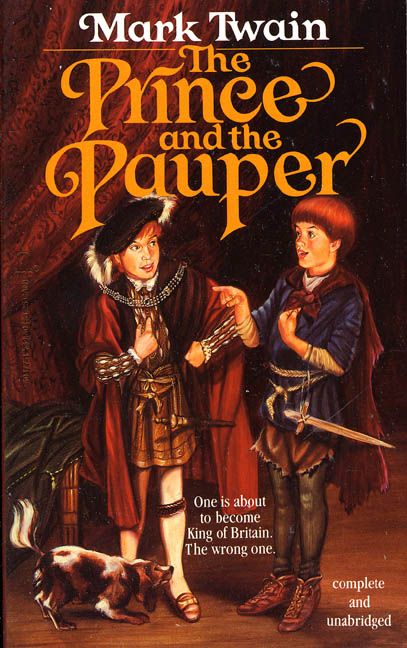
1. The Prince and the Pauper – by Mark Twain

1749b5af55cb2c2efb751e61abce0f1d

In this moving and entertaining classic story – Mark Twain’s first attempt at historical fiction – the young Prince Edward VI, son of Henry VIII, is given the unique opportunity to trade places with the pauper Tom Canty – a boy from Offal Court off Pudding Lane who bears an uncanny physical resemblance to the prince. Edward’s plan is to experience the freedom of a normal life and to get to know firsthand the reality of his future Kingdom. However, as he drifts along the squalid streets of XVI century London, fleeing from the brutal hands of the thieving alcoholic John Canty, Tom’s abusive father, he will have to deal with problems and learn harder lessons than he ever bargained for. Great quote:

“A full belly is little worth where the mind is starved.”

2. American Pastoral – by Philip Roth

71--XcbyBEL

Seymour “Swede”  Levov was the beloved blond-haired, blue-eyed Jewish athlete at Newark’s Weequahic High School. Levov was the object of envy and admiration of every boy in the community, a local hero. He grew up to become a successful businessman and to live the American Dream to the full, with a perfect wife and a loving daughter, owning a bucolic estate in the suburbs. But this is a Philip Roth novel, and reality has its ways of catching up. The times are changing; we are in the turbulent late 1960s now. From a sweet, good-looking little girl, Levov’s daughter Merry has slowly turned into a stammering, overweight teenager: a radicalized leftist terrorist, who detonates a bomb at the local post office to protest the Vietnam War. A bystander gets killed in the process, and Merry goes into hiding, but her father will never give up on her. There signs, however, that maybe Levov is somehow flawed, like a tragic Greek hero, bringing this catastrophe upon himself. What could have happened between Swede Levov and his daughter to change her so profoundly? Let’s look back at a small incident that took place on the beach a long time ago… American Pastoral is considered by many Roth’s masterpiece. The novel was awarded the Pulitzer Prize in 1998. I will leave you with a chilling quote from this stunning book:

“The fact remains that getting people right is not what living is all about anyway. It’s getting them wrong that is living, getting them wrong and wrong and wrong and then, on careful reconsideration, getting them wrong again. That’s how we know we’re alive: we’re wrong.” 

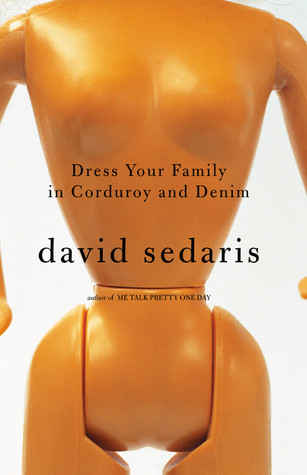
3. Dress Your Family in Corduroy and Denim – by David Sedaris

10176

David Sedaris is one of the funniest contemporary writers in America. Growing up gay in a family of four sisters and a younger brother, under a traditional middle-class father of Greek descent, and a chain-smoking and alcoholic mother, the obsessive-compulsive author focuses, in his stories, on the hilarious experiences of his severely dysfunctional family. His self-deprecating kind of humor and singular perspective on the various facets of family life will make the reader roar with laughter. Among his works, I would especially recommend Dress My Family in Corduroy and Denim, where you will find some of his funniest stories.

“She’s afraid to tell me anything important, knowing I’ll only turn around and write about it. In my mind, I’m like a friendly junkman, building things from the little pieces of scrap I find here and there, but my family’s started to see things differently. Their personal lives are the so-called pieces of scrap I so casually pick up, and they’re sick of it. More and more often their stories begin with the line “You have to swear you’ll never repeat this.” I always promise, but it’s generally understood that my word means nothing.” 

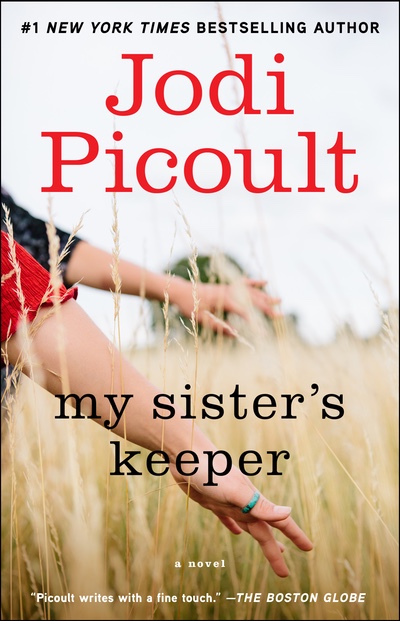
4. My Sister’s Keeper – by Jodi Picoult

400-keeper-9780743454537

This is the unsettling story of Anna Fitzgerald, who, unlike most of us, was deliberately conceived by her parents to fulfill a specific purpose. Anna was born to provide genetically suitable material for her older sister Kate, who has been diagnosed with promyelocytic leukemia. On the various occasions when Kate relapses, she needs to rely on Anna’s donations of leukocytes, stem cells, and bone marrow to survive. We meet Anna when she is already thirteen and beginning to resent and question her role in life. But when her parents expect her to give Kate one of her kidneys, Anna decides she’s had enough and looks for legal help to sue them for rights to her own body. From the book:

“In the English language there are orphans and widows, but there is no word for the parents who lose a child.” 

Have you read any of these books? Share your views with us.

Au revoir

Jorge Sette

10 Cool Questions about Peter Carey’s Oscar and Lucinda – A great love story (for your book club)


Oscar and Lucinda is one of those books that grow in the reader’s mind over time. The unforgettable and powerfully written novel by Peter Carey, winner of the 1988 Man Booker Prize, tells the improbable love story between a religiously obsessed English young man and a compulsive Australian heiress.

c7bfa1c130de93e81d6d2be25a84aeee

Oscar has a gambling problem. He loves horse races. Lucinda, on the other hand, adores glassworks and cannot resist a game of cards.

Lucinda purchases the oldest Glass Factory in Sydney. The story takes place in the 19th century and culminates with the couple’s joining forces on the biggest (and strangest) bet of their lives: gambling on the transportation of a glass church across the Outback from Sydney to the remote Bellingen, 400 km up the coast of New South Wales. This is certainly one of the most outlandish and beautiful literary visions I’ve come across as a reader in a long, long time.

In 1997, the novel was made into an acclaimed movie directed by Gillian Armstrong, starring Cate Blanchett and Ralph Fiennes.


Cate_Blanchett_Cannes_2015-1

Cate Blanchett – who plays Lucinda in the movie version.


The questions below are fairly open-ended. They are intended to be incorporated into the list of others you are possibly already using during your book club’s sessions. It helps to have a mediator to conduct the discussions. There are no absolute right or wrong answers, so I would recommend the members of the group be flexible, welcoming and respectful of other people’s opinions and interpretations. Enjoy:

1. Where did Oscar live as a child (country, region, city)? Where did Lucinda live as a child (country, region, city)?

2. Why did Oscar start moving away from his father’s religion to become an Anglican?

3. What did Oscar do for a living? What about Lucinda?

4. Where/When did Oscar and Lucinda first meet? And what was Oscar’s greatest fear at that point?

5. What feelings developed when they decided to play cards for the first time, and how did the storm change the situation?

6. How did Oscar morally reconcile religion and gambling?

7. How does a Glassworks or glass factory reflect Lucinda’s own personality?

8. Would you consider Lucinda a feminist ahead of her time? Give us three examples of her behavior in the story that would justify this idea.

9. What is the passage (or passages) in the novel that will probably linger in the readers’ minds after they’ve finished it?

10. If you were Peter Carey, the author, list three things you would have changed about the novel before it was published. Your answer can be about the characters, the plot, the location, the times or the ending.

Choose a couple of the questions above and answer them in writing in the comments space below, if you wish.

Au revoir

Jorge Sette.



Velázquez – The Iconic Painter of the Spanish Baroque


Considered the painter’s painter, Diego Rodríguez de Silva y Velázquez was born in Seville in 1599, growing up in the old Jewish quarter of that booming city.

Velázquez was an apprentice to Sevillian artist Francisco Pacheco for 5 years. However, it did not take long for the pupil to surpass the master in technique, which did not bother Pacheco at all. He was very proud of the young artist, who would later become his son-in-law. At the age of 19, Velázquez married Pacheco’s daughter, Juana, and had two daughters by her.

XIR221119

Velázquez

In 1623, he was invited to go to Madrid to paint the portrait of King Philip IV. The king liked the painting so much he commanded Velázquez to became his personal painter. From then on, only Velázquez was allowed to paint the king, and all his other portraits were taken out of circulation. Later on, Velázquez rose in the court to also become the king’s curator (being the person in charge of choosing and purchasing the furniture and paintings that would decorate the king’s palaces). Velázquez served the king for over 40 years, while Philip IV was the most powerful man on Earth.

At the beginning of his career, Velázquez soon distanced himself from the usual religious themes most Spanish painters produced at the time, due to the influence and power of the Catholic Church, and the overwhelming surveillance of the Spanish Inquisition. Instead, he started painting bodegones – kitchen and tavern scenes, involving common people – which, despite being considered a low genre of painting in those days, started to attract the attention of rich purchasers and patrons. Among these paintings, we have, for example, Old Woman Frying Eggs, and the breathtaking Water Seller.

0105vela.big

Old Woman Frying Eggs

His art was clearly influenced by Caravaggio in his use of contemporary, common people as models, and also in the use of the dramatic contrasts of light and shadow (chiaroscuro). Another major influence on Velázquez’s work was the art of Flemish baroque painter Peter Paul Rubens, who spent seven months at the court of King Philip IV on a diplomatic mission. Later, after spending time in Italy on two different occasions, he incorporated elements of both the contemporary local art and features of the Renaissance into his technique.

When he began working for King Philip IV, his main assignments consisted of portraits. He painted the members of the royal family in a great number of portraits, but his most famous ones are his own slave and studio assistant Juan de Pareja’s and the stunning portrait of Pope Innocent X. The realism and strength of these works, in which Velázquez managed to capture not only the physical but also the personality traits of his models, astonished his contemporaries and are a source of awe and inspiration to many artists to this day. Since most of Velázquez’s works were made for the king, they remained unseen for many years, hanging from the private walls of the royal family’s many residences.

Image-1

Pope Innocent X

In addition to the bodegones and portraits, he also produced famous mythological scenes (e.g. The Triumph of Baccus; Vulcan’s Forge; The Spinners; The Rokeby Venus), landscapes (e.g. Philip IV Hunting Wild Boar) and historical scenes (e.g. The Surrender of Breda).

XIR974

Vulcan’s Forge

Velázquez’s technique, draftsmanship and use of color have amazed the general public, critics and other painters for centuries. He’s many people’s candidate for the post of best painter ever. His paintings are included in what is called the Spanish Baroque movement of the XVII century, but they stand out as very personal and unique, the work of a genius.

Velázquez struggled his whole life to become part of the nobility he served so faithfully. His Jewish blood, however, was a constant obstacle for him to achieve such recognition. Only at the very end of his life, in 1658, did he become a knight, receiving the insignia of the Military Order of Santiago, the red cross that features on his chest in his most famous painting Las Meninas.

Velázquez died on August 6th, 1660, at the age of 61.

Au revoir

Jorge Sette


Five Takeaways from the Book TED Talks – The Official TED Guide to Public Speaking


Founded by Richard Saul Wurman and Harry Marks in 1984, the TED conferences originally featured talks focused on Technology, Entertainment, and Design. Under the catchy tagline Ideas Worth Spreading, the range of these talks has since expanded to include academic, scientific and cultural topics.

If you have ever watched any of these talks, you will have noticed that they are not the usual boring PowerPoint-based presentations we get in conferences of all kinds. Storytelling techniques – long a proven method for grasping and keeping listeners’ attention – prevail in most TED talks. Another obvious key to their success in the succinctness; speakers have 18 minutes to tell a compelling narrative.

415cATz+xqL._SX326_BO1,204,203,200_

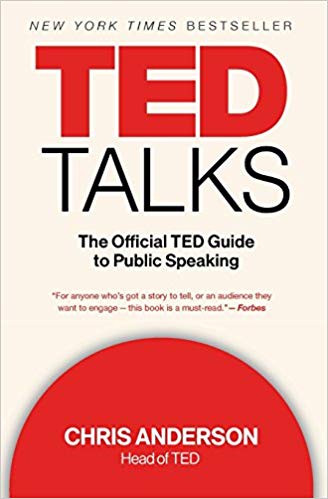
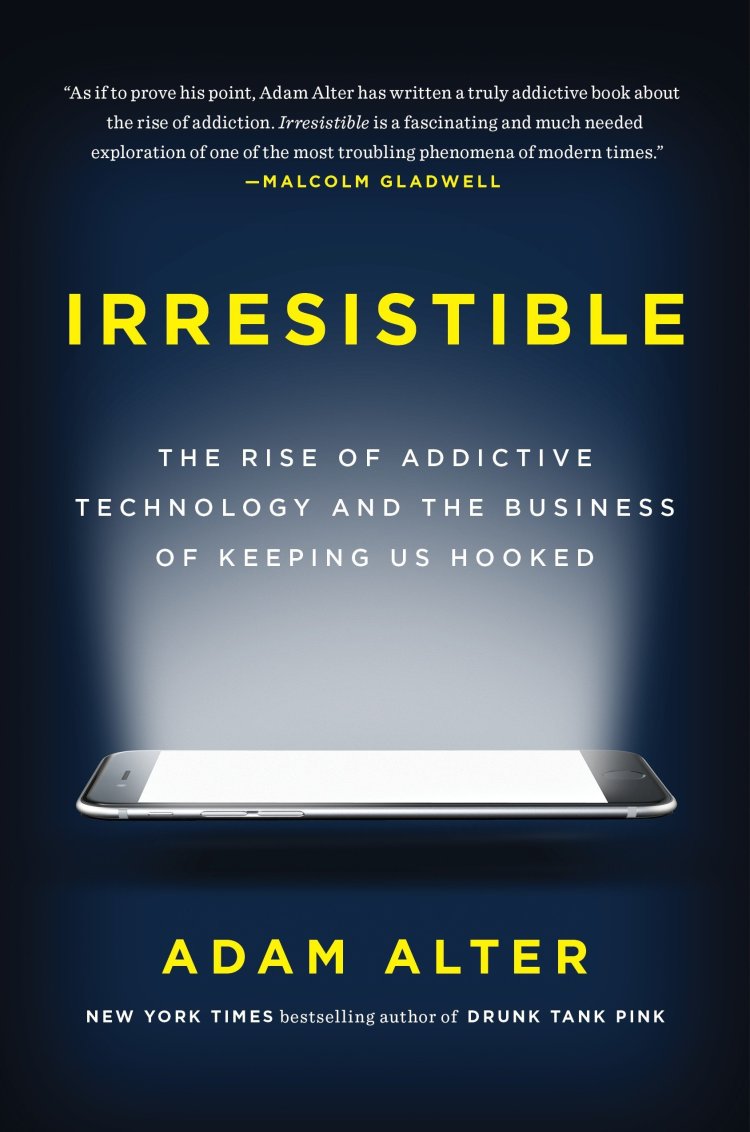
In his engrossing book, TED Talks – The Official TED Guide to Public Speaking, published last year, Chris Anderson, who took over the conferences in the early 2000s, offers the reader a truckload of useful and practical suggestions on how to put together and deliver a memorable presentation. A must-read for everyone who needs to speak in public these days (and who doesn’t?)

To whet your appetite, we have selected five of the most stimulating presentation tips we found in the book. See below.

1.What is the takeaway?

As you organize your talk, decide on what is the point you are trying to make. There must be an overarching theme connecting all the elements of the story. This is called a throughline in movies, plays, and novels. As a planning exercise, make sure you specify a concrete objective in no more than 15 words. What is your goal? What do you want to accomplish? What do you want the audience to do, how do you want them to feel after you leave the stage?

Chris_Anderson_2007-1

2. Get personal

Speakers need to connect to the audience, break the ice and build trust. A talk is much more than mere words. You need to engage the audience on many levels. There are different ways to do that. Making eye contact with the audience, for example, is always effective. Showing some kind of vulnerability, such as admitting that you are nervous, may also work. Using humor at the beginning – through a personal anecdote, presenting funny visuals, or by playing with irony and sarcasm – may do the job. Don’t try to be funny if you are not comfortable with it, though.

3. Visuals

We all know the staggering amount of technology available out there to help public speakers: slides showing graphs, photography, infographics, animations; video, audio, etc. Yet, it may come as a surprise that at least one third of the most viewed TED talks do not make use any of these tools. So maybe you should ask yourself: do I really need to use them? And how much of it is really necessary? Most people are extremely familiar with these so-called innovations by now anyway, so it’s hard to make an impact based only on them. Besides, visuals may distract the audience, taking their attention from you! Then again, great slides may add to the presentation, especially when they do not only repeat and highlight what is being said verbally. Ideally, visuals should reveal (show something that can not be easily described by words); explain (make concepts clearer: a picture is worth a thousand words!); and delight (give the talk aesthetic appeal).

4. To memorize or not to memorize

Although most TED speakers have their presentations scripted out beforehand and memorize them, this approach does not work for everyone. There’s beauty and power in variety. You need to discover your own natural style. Possible options: you can write and memorize your talk; use in-the-moment language to talk about something you are familiar with (it helps to have a mental structure of the points to cover, though); or even read your piece! Whatever makes you more comfortable and confident. However, remember that preparation is essential for any format you choose.

TED_three_letter_logo.svg

5. Traps to avoid

There are some speaking styles TED organizers do not recommend. The sales pitch: trying to sell products or services directly through your talk may damage your reputation as a speaker. The main job of a speaker is to give not to take. So be careful. Find out if this is the kind of talk your audience is expecting. The ramble: to be under-prepared or not to have a set objective is insulting to the audience; the org bore: talks that focus on the greatness of an organization or on how amazing their staff is will probably bore the audience to death – they don’t work there after all. The inspirational performance: despite the fact that great TED talks deeply inspire and move the listeners, this effect cannot be manipulated through tricks and gimmicks. It needs to feel real. So avoid copying the so-called “inspirational” talks, where the speaker is full of self-praise and despicably phony.

For more tips, I strongly recommend you get the book now and make sure your next presentation is a hit.

Au revoir

Jorge Sette

How addicted are you to Internet-based technology?


How often do you look at your cell phone screen? How many times have you checked your email in the last hour? How many hours a day do you spend on computer games? When did you last post a photo on Instagram and how often do you keep counting your LIKES?

In his sobering book, Irresistible: The Rise of The Addictive Technology and The Business of Keeping Us Hooked, published in 2017,  Associate Professor of Marketing at New York University’s Stern School of Business Adam Alter argues that compulsive behavior involving the use of new Internet-based technologies has become a widespread phenomenon in the contemporary world – and it’s growing. Studies indicate that a whopping 40% of the global population suffer from some kind of tech-stimulated behavioral addiction.

812wo5o2CWL

Using dozens of fascinating stories and case studies to expose the traits and hidden mechanisms applied by social media, exercise apps, video streaming services, gambling and shopping sites, computer games, and all kinds of devices to hook customers, the author carefully examines the sources of addictive behaviors, their designers, and what makes them so alluring. At the same time, he tries to offer possible solutions to the problem, ways of minimizing its dangerous effects and how we can tap into the same compelling ideas and features for more beneficial ends.

Among the most interesting (and the scariest) points made in the book, we would highlight the following.

Behaviors can be as addictive as substance abuse.

The same areas of the brain are triggered by either. These neurons similarly get soaked in dopamine, a chemical that, when attached to receptors, produces intense feelings of pleasure. Perhaps the only difference would be that the intensity of the experience is far stronger when induced by drugs. As tolerance develops eventually, though, the same outcomes are seen; users keep trying to repeat the highs by consuming the substance in larger doses or by indulging in the same kind of behavior more often. They end up losing control of their lives; isolating themselves from family and friends; giving up on the real world; neglecting basic principles of hygiene; underperforming at work; compromising their financial stability; getting depressed. They ruin their lives.

facebook-2387089_960_720

Never get high on your own supply.

Steve Jobs, co-founder of Apple and the creative mind behind highly compelling devices such as the iPhone, would not allow his kids near an iPad. Chris Anderson, former editor of Wired magazine, strictly controlled the use of electronic devices by his family members – never allowing the use of screens in the kids’ bedrooms, for example. Evan Williams, a founder of Blogger, Twitter, and Medium would get books for his sons, but never an iPad. It looks like, having seen the consequences of addiction to technology first hand, they were extra careful about it.

The ingredients of addictive behavior. 

The DNA of behavioral addiction carries one or more of these characteristics: “compelling goals that are just beyond reach; irresistible and unpredictable positive feedback; a sense of incremental progress and improvement; tasks that slowly become more and more difficult over time; unresolved tensions that demand resolution; and strong social connections”.

Declining levels of empathy and attention span.

Significant plunges in levels of empathy and attention span among children and teenagers can be traced to the rise of Internet addiction. Girls can be meaner on social networks and boys won’t stop playing video games, relying on their online cohorts for emotional support. Sleep deprivation also seems to be on the increase, especially in the last decade, due to overuse of electronic devices at night, which tend to emit a bluish light that (as opposed to the reddish-yellow light from candles and wood fires) interferes with the production of melatonin, in turn impairing sleep.

computer-1106899_960_720-2

Dangerous computer games.

Popular games such as World of Warcraft and Flappy Bird are highly addictive and can foster destructive behavior; gamers will spend hours or even days playing compulsively, neglecting social life, work, school and even personal hygiene habits. Some game manufacturers have even decided to pull products from the market, possibly remorseful for the damage they have inflicted.

Obsessive goal-setting.

The metrification of everything we do and the need to constantly overcome obstacles that get progressively more challenging are very much part of the fabric of the internet and its many alluring apps and websites. We constantly crave more followers or friends on Facebook, more likes on Instagram; more calories burnt or more steps taken on our gym app… Even worse: we tend to compete not only with ourselves, but with others. This is an impossible game to win. This insatiable longing for society’s validation is not healthy.

How can we alleviate the problem?

Most readers will come to the conclusion that being aware of the problem is obviously the first step. Books like Irresistible certainly help in that respect. Setting boundaries for the use of Internet-based tech by kids and offering them attractive alternatives in the real world would certainly aid in the prevention of addiction.

woman-1733881_960_720

Innovative support programs and institutions, such as reSTART in Washington State, the first treatment center for game addicts, will need to become more widespread and respected. A strong concern, however, is that, unlike substance abuse, abstinence is not an option if you consider addiction to email, social media, smartphones or the general use of the internet, as they a part of the very fabric of today’s social and professional world.

Regulations imposing limits on companies, preventing them from fostering addiction by refining research, tests, and studies into alluring features to incorporate into their products are definitely required. Those traits must stop short of leading customers towards abusive behaviors.

Au revoir

Jorge Sette