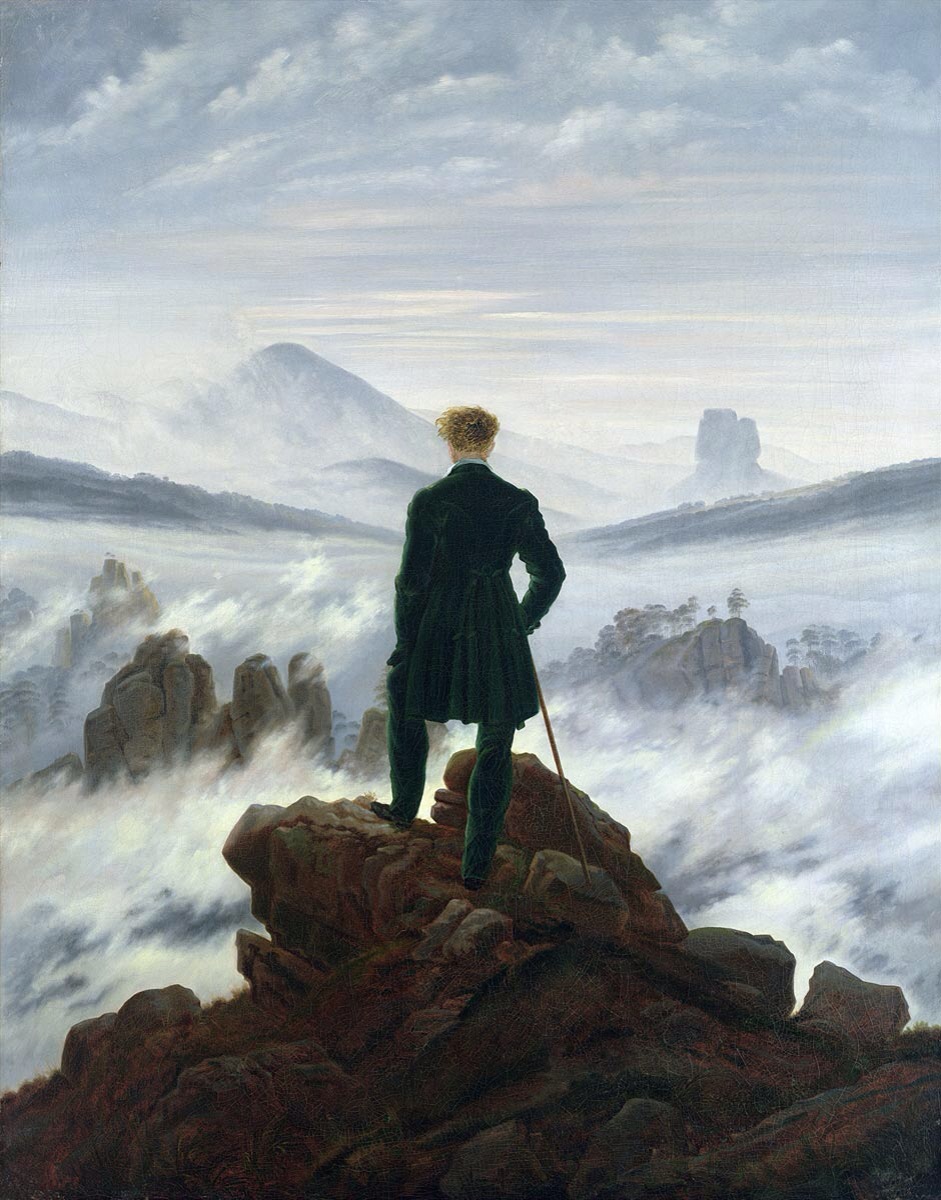
Click on the picture to access the SlideShare presentation. You might want to check out our post on the mythological structure of storytelling as well: http://wp.me/p4gEKJ-F2
Click on the picture to access the SlideShare presentation. You might want to check out our post on the mythological structure of storytelling as well: http://wp.me/p4gEKJ-F2

Winslow Homer. Click on the picture to access the SlideShare presentation. You might want to check out our post on the mythological structure of storytelling as well: http://wp.me/p4gEKJ-F2
Note: you might want to check out our new book TEACHING ENGLISH WITH ART: MATISSE available from AMAZON.COM as an ebook. Click here for more info:
Television is changing. Its shows, especially after the advent of HBO, Netflix and Showtime, are becoming more and more sophisticated and nuanced. I would even dare to say that TV shows in general are a lot more fun than the average Hollywood movie, one reason being that they are shorter and therefore able to pack a lot more punch into their compressed 30 or 60 min length. Of course, you can, and probably will, binge watch whole seasons of Breaking Bad on a single weekend, but the experience is usually more satisfying than spending 3 hours at the movie theater. I know, I’ve done it.
That’s why I’ve decided to narrow my choices and include only TV villains in this post. Maybe in the future I will have another go at it, and focus on the big screen baddies.
Here’s the list of my favorite TV villains. They are NOT listed in order of preference. All of them are contemporary, so the reader will hopefully know who I’m talking about. I also understand that my choices may not be terribly original, but I’m sure some of my reasons might surprise you.
1. Dexter Morgan (from Dexter): strong organizational skills, love of kids, sense of humor and irony are some of Dexter’s virtues I respect and relate to. He also cleans after himself and has an elegant method of avoiding leaving behind a messy crime scene. We could easily be flatmates. I also really like the cool thermal shirt he wears when he goes on killing jobs. I’ve been looking to buy one. I will have to lose a few pounds to fit into them though. Quote: “People fake a lot of human interactions, but I feel like I fake them all, and I fake them very well. That’s my burden, I guess.”

Dexter Morgan
2. Frank Underwood (from House of Cards): yes, you love him too, I know. But I even love his wife better, she’s next on the list. Single-mindedness, strong sense of purpose, ability to focus and to design well thought-out strategies, in addition to a very keen sense of politics are all enviable treats of Francis’s (as his wife calls him) personality. He is also a great reader of peoples’s feelings and emotions. He knows when to back off. Excellent at prioritizing his battles. Quote: “There are two kinds of pain. The sort of pain that makes you strong, or useless pain. The sort of pain that’s only suffering. I have no patience for useless things.”

Frank Underwood
3. Claire Underwood (from House of Cards): extremely beautiful, proving that you can still be stunning in maturity, Claire has a great sense of fashion and style. She also has total control over her feelings. Like Frank, she picks her battles carefully, has strategic vision, and doesn’t mind being upstaged by her husband, as she knows she is really the boss. Besides, she goes jogging regularly: I wish I had that kind of determination. Quote: “Now tell me, am I really the sort of enemy you want to make?”

Claire Underwood
4. Walter White (from Breaking Bad): fearless trend-setter: he’s fifty years old and looks cool wearing only a long-sleeved green shirt, white underwear, socks and leather shoes. The ultimate entrepreneur. Manages his business like a proper CEO. Highly intelligent. A perfectionist in every sense of the word: he is very proud of the purity of the the blueish product he puts out with the utmost care and dedication. I’ve read somewhere that watching the whole Breaking Bad series is equivalent to taking a business course at Harvard. I got my degree last month! Quote: “What I came to realize is that fear, that’s the worst of it. That’s the real enemy. So, get up, get out in the real world and you kick that bastard as hard you can right in the teeth.”

Walter White
5. Bart Simpson (from The Simpsons): you may not even realize he’s a villain, but don’t be deceived by his innocent looks and strange feminine voice. Bart Simpson is evil. However, I like the fact that he is very cold in his decision making process, when necessary. Outcomes are what really matters for him. He’s great at practicing his calligraphy (at the beginning of every show you will always see him writing the same sentence – a different one per episode- on the blackboard hundreds of times). Take Steve Jobs, for instance: didn’t he study calligraphy and allegedly applied his knowledge in the making of the beautiful fonts available on the first Mac computers? So, Bart deserves brownie points for his efforts too. Another career option for Bart would obviously be teaching, given all this expertise handling the chalk (not sure if this will be a widely sought-after skill in the profession in the near future, though). Finally, he’s one of the few major TV characters who tries to speak Spanish: ¡Ay, caramba! Quote: (to his sister Lisa) “You got the brains and talent to go as far as you want and when you do I’ll be right there to borrow money.”

Bart Simpson
Well, I hope I’ve been persuasive in explaining why I love these guys. Now it’s your turn. Share with us the list of baddies you care about.
Au revoir
Jorge Sette
“There is no doubt fiction makes a better job of the truth.”
Doris Lessing
Those who have seen the film LIFE OF PI will have no problem relating the quote above to the movie’s main theme. At the end of the movie, we understand that the narrative may as well have been a metaphorical one, and we are asked to choose which version of the truth we would prefer: the one told through analogies and mythology or a raw sequence of facts. I have made my choice. You will have to make yours.
Like all great movies, Life of Pi lends itself to a number of interpretations, has layers and layers of meanings, and covers many different themes. The one that resonated the most with me, however, was its acclaim of the power of storytelling.
Carl Jung, the renowned psychoanalyst, pointed out that the characters (archetypes) and motifs we find in mythological stories are the same we generate in dreams. Joseph Campbell, the famous mythologist and writer, in his seminal book THE HERO WITH A THOUSAND FACES, took Jung’s ideas further and proposed that all stories involving the myth of a hero have the same deep structure and feature the same archetypes, although they appear in different shapes and forms: the myth of the hero wears a thousand faces after all. In his book, he analyzes a great number of mythological stories from different cultures at different times to prove his point. He is very persuasive, I must admit.
In the 1980s, Christopher Vogler, a Hollywood development executive, adapted and simplified the ideas of Joseph Campbell to be applied in scriptwriting and moviemaking. He compiled a seven-page memo for the big shots in Hollywood that revolutionized the industry. Later this memo was turned into a book (The Writer’s Journey) which, to this day, is considered a bible for scriptwriters in the business. After all, important directors such as George Lucas, Steven Spielberg, and Francis Ford Coppola had all drunk from the fountain of Campbell’s ideas to produce some of their most brilliant works.
Without getting too technical, let’s just cover the main steps of a typical hero’s journey to give you an idea of the phases of stories that deeply resonate with us, basically because they find an echo in the depths of our psyche. Then, if you are interested, you can expand your knowledge by referring to the original and more complete sources. A typical mythological hero follows this path:
Ordinary World: at the beginning of the story, the hero is shown in his natural habitat, living his normal life, but we can already sense that he does not really fit in, there’s something missing, he may not be totally adapted to the context.
Call to Adventure: at some point afterward, the hero is called upon action. Something happens that affects or changes his life. The news that prompts the change is usually brought to him by an archetype we call the herald. Unless the hero does something about the novel situation, his life or the lives of his friends and loved ones will be in danger.
Refusal of the call: but the hero resists the call. He comes up with all kinds of excuses not to embark on this journey. He is afraid.
Meeting with the mentor: at this point an older man or woman, usually grumpy or funny, shows up and intervenes, lending the hero guidance and support, goading him to take the bait and start his adventure.
Crossing the first threshold: that’s when the story gets really started, the hero accepts the challenge and will confront his first problems. An enemy will try to prevent him from entering the world of the adventure. The hero will somehow manage to bypass this entity and move on.
Tests, allies and enemies: now, for a long stretch of the story, the hero will be going through a series of trials and obstacles on the journey towards his goal. He will meet supportive characters but also many foes, of all kinds, will cross his path.
Approach to the innermost cave: all the obstacles will lead him to the biggest of them all. The hero and his allies prepare for it.
Ordeal: arriving at this climactic point, the hero will face death or an almost insurmountable problem. He deals with it as bravely as he can.
Reward (seizing the Sword): he survives the ordeal and gets a prize (a metaphorical “sword”), which will help him get through the rest of his mission.
The Road Back: now, with the mission almost accomplished, the hero will try to get back home. He’s already transformed somehow by the experience, but will still have to confront a lot of opposition (usually represented by a “chase scene” in modern movies) before he gets back home.
Resurrection: this is the hero’s final problem, occurring right before he’s able to cross the threshold back home. Another climactic moment. The hero struggles courageously and is rewarded with the “elixir” (something that he will take back to the community he came from to help the others get to a more elevated stage)
Return with the Elixir: the elixir is passed on to the community. End of the story.

Joseph Campbell
If you pay close attention to the movies you like the most, you will be able to identify this structure. Of course, this framework should lend itself to all kinds of variations. It’s not supposed to be a formula. Some of the steps may be missed or shuffled around, the circumstances and situations the hero finds himself in can be very diverse. This is what makes movies and stories magical. But the firmer the skeleton of the narrative, the closer it gets to the steps of the myth of the hero, the more it will resonate with an audience.
Nevertheless, to really understand how stories are built, we would still need to discuss the archetypical nature of the characters in narratives in more detail (remember we mentioned the herald and the mentor in passing?), but that is beyond the scope of this post. We will resume this topic in a future post.
Also, storytelling is a great tool for language learning and we will discuss how it can be used in the classroom on another occasion.
For now, that is all.
(you may way now to read my post MORE STORYTELLING TIPS FOR MARKETERS: http://wp.me/p4gEKJ-UK )
Au revoir
Jorge Sette.
Cartoon version of my previous post “E O RIO, HEIN?” (http://wp.me/p4gEKJ-rD). I want to express my love for this beautiful city.
Expressing my love for this wonderful city. Based on a previous article of the same name written for this blog.

Click on the picture to access the SlideShare presentation
I got a funny reaction to my blog post on Wuthering Heights (http://wp.me/p4gEKJ-j0) from an anonymous reader. He or she wrote to me saying: “You are so vain, you probably think Wuthering Heights is about you”. I suspect this is an adaptation of a line of an old Carly Simon song, who allegedly was referring to Mick Jagger. In a way, I found the comment rather amusing, and, to be quite honest, remarkably true. Even more worrying: I tend to think that every single book I love is about me! As a matter of fact, it only interests me if I can somehow relate to it. And I guess this is what happens to every reader, at least the more romantic ones, like me. So, yes, you got it right, dear anonymous e-mail writer.
Take for example some of the best books I have read (and often reread) : Dom Casmurro (by Machado de Assis), Nemesis (by Philip Roth) and The Bonfire of the Vanities (by Tom Wolfe). They are really all about me.
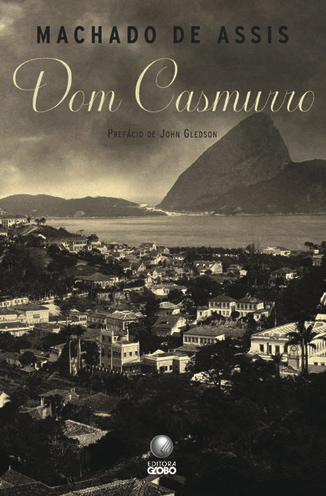
Dom Casmurro, by Machado de Assis.
The first time I read Dom Casmurro I was still in high school, and totally fell in love with Capitu. The kiss she and Bentinho exchange while he is combing her hair and she drops her head back, making their faces align in opposite directions, is one of the most romantic scenes I remember as a teenager. Imagine my surprise when I saw a repeat of that scene decades later in the movie SPIDER MAN! This time he was hanging upside down from a wire fence while Mary Jane was looking up. The same kind of kiss. Also, like Bentinho, the main character in Dom Casmurro, I can be quite jealous in a relationship and totally understand how paranoid it must feel to have your kid grow up to look like your best male friend. And the best thing is, every time I read the book again, I find new clues that indicate that Capitu must have been unfaithful, although we can never be one hundred per cent sure, as the story is very cleverly told from the point of view of the narrator only, who happens to be Bentinho, the husband.
Nemesis, by Philip Roth
Nemesis by Philip Roth is a very universal story, and if you can’t identify with it, I’m afraid you have a problem. Although I’m not Jewish and am fortunate enough not to be physically disabled (the story is about the terrible consequences of the outbreak of a polio epidemic in the mid-1940s New Jersey), I fully identify with the book’s themes. The main message, as I see it, is, if you are struck by tragedy, if you have a disability of any kind, or anything else people may look down upon or reject you for (and that probably applies to all of us), there is no point in blaming God or the Universe for it. Get on with your life, it’s your responsibility to make the most of it and restore or construe your own meaning for happiness. Or fight back. This is something everyone needs to hear: take full ownership of your failures and problems, and deal with them. No one else will care as much. Tough, but real.

The Bonfire of the Vanities, by Tom Wolfe
The Bonfire of the Vanities: the main character finds himself in a kafkaesque situation: he gets lost in a dangerous part of the city while driving back from the airport with his mistress, and accidently seems to strike a young black man he was sure was trying to mug them. What a nightmare! Was it a hit-and-run accident? Should they tell the police straightaway? But the wife will find out about the mistress then. Was the kid really hit, all they heard was a little noise (“thok”) after all. Surely the boy was OK. What decisions do they need to make? Mistakes are inevitably made along the way and there are terrible consequences. Moreover, there are many third parties (journalists, community leaders, attorneys, politicians, etc) trying to profit politically from the situation. Nothing is as morally simple as it first looks. Interesting questions. The reader gets deeply involved in the plot and its turns. “Unputdownable”. Besides, it’s very tempting to picture myself living the good life of a succesful Wall Street yuppie in a huge two-story apartment off Park Avenue in Manhattan…without the tragedy! Another book that COULD be about me.
So I’m really sorry if the anonymous e-mail writer intended to hurt my feelings accusing me of believing that Wuthering Heights is about me. Catherine, one of the book’s main characters, says at one of the most important plot points in the story: “I am Heathcliff!” Well, so am I!
Au revoir
Jorge Sette.
In a scene of the Academy award-winning movie “12 YEARS A SLAVE”, the character played by Michael Fassbender says that one can easily see that his black slaves are nothing more than “baboons”. Actually, this association of black people with monkeys and apes are very commonly made by bigots and racists throughout the world. For some reason, they seem to think that black humans are closer to these cousins of ours than caucasians or asians.

I’m white, dude!
I have just come across a very interesting article in last week’s issue of THE ECONOMIST (“The skinny on skin colour”) where they explain the reason early humans in Africa developed dark skins was to protect it from cancer, since their bodily hair had somehow been shed – the reason why we substituted melanin for a hair coat is still not completely understood. Some people’s skins only became fairer as they moved and lived in more northern regions of the globe. But what really struck me as ironic and very sobering is that, as they state in the article, the color of a chimpanzee’s skin is white, once you shave all that hair!
This only proves that bigotry and ignorance go hand in hand, and brave are the ones who, despite their not understanding completely a new phenomena, try to see through the surface and get to the core and truth of it, rather than reject things and ostracize people they don’t know anything about. Difference is always a source of fear and prejudice. I admit it may even be natural to feel afraid or cautious when confronted with something new and unfamiliar. But this is where the human mind – and spirit – need to impose itself and guide our consciousness and behavior. The senses and our own experience can lie, or at least, may not tell the whole story.
Empathy: I keep getting back to this word in every article I write. The reason is I think it’s even more effective than “supercalifragilisticexpialidocious” from the movie Mary Poppins – whose 50th anniversary is being celebrated this year, by the way – in the sense that it makes people not only feel better as they say it, but it can have a huge effect towards accommodating and living with diversity when applied to real life.
The ignorance about chimpanzees’ skins being white can be equated with the lack of knowledge that gays DON’T choose their sexual orientation (the choice is either to hide it from others and live a repressed or duplicitous life, or come out of the closet and deal with it) or the myth that Latin Americans are not as hardworking as their counterparts in North America, Europe or Asia. To say nothing of men’s fear that women are their equal in all intellectual respects.
Wake up: chimps’ skins are white!
NOTE: You might want to check out our eBooks available from AMAZON.COM. Click here: http://wp.me/p4gEKJ-1lS

Au revoir
Jorge Sette
Suggested writing activities based on these Picasso paintings are meant as a guideline for revision of grammar, vocabulary and functions, and also as practice of Process Writing. We indicate the language level based on the Common European Framework of Reference (CEFR).
CLICK ON THE IMAGE TO ACCESS THE SLIDESHARE PRESENTATION.
 Jorge Sette "Linguagem"