Let’s corrupt the youth!


They were right after all. We are seeing a comeback (were they ever really gone anywhere?) of some of the old theories about learning and how teachers should conduct their lessons. Edtech is making possible the practical application of the Socratic method, of Paulo Freire’s pedagogy, of Vygostky’s studies and experiments. All the other pedagogues who have advocated more direct involvement and participation from the students in their own learning are being vindicated and having their theories confirmed and validated.

Some of the methodologies we see in use today are becoming possible because of the realization of individualized learning. It boils down to a student facing her app alone in her bedroom to start with. And from there we can exploit the use of questions (Socrates) to lead that student further and further on the path to the right answer, or, even better, to her own answer in the case of a more abstract problem (such as moral, ethical or political issues); we can personalize teaching to make the context more relevant for each of the students, and therefore resonate with them (Paulo Freire); and we can flip our lessons, having students reconvene in class afterwards to cooperate in solving problems (Vygotsky), after having spent time alone in their homes doing research, reading, watching TEDs or other relevant videos on YouTube.
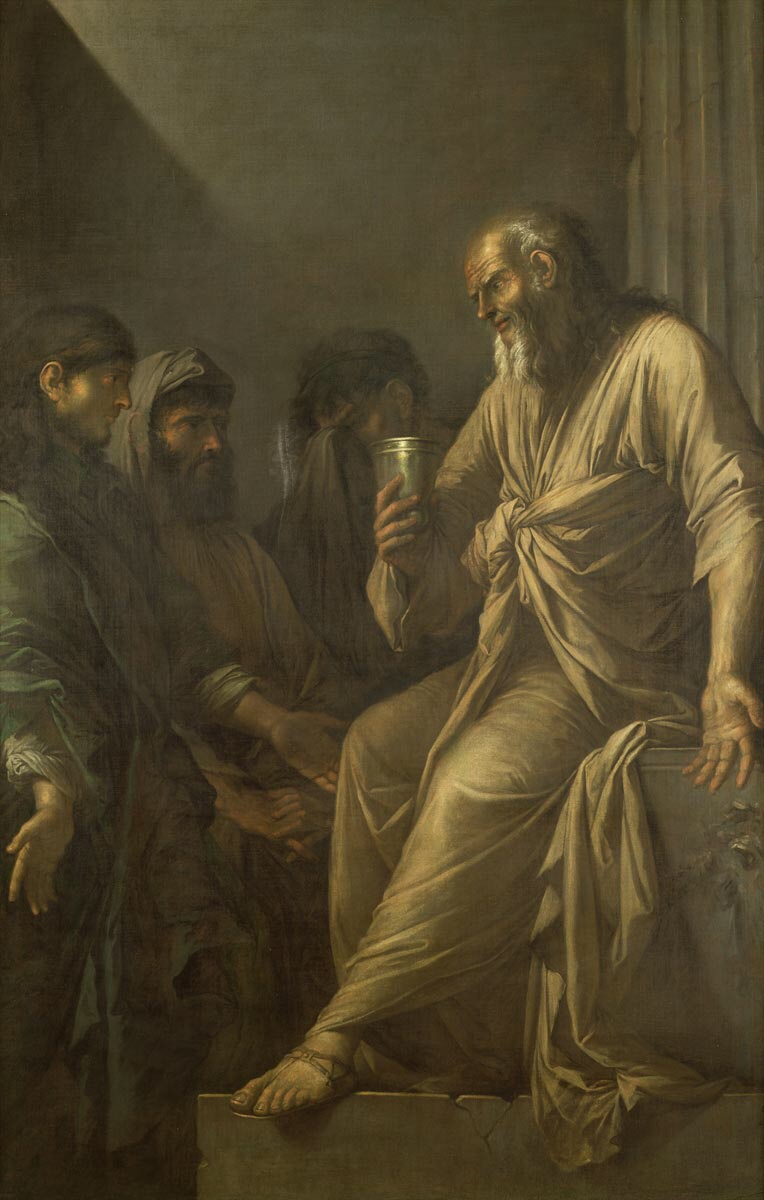
The Death of Socrates. Rosa, Salvator.

The Death of Socrates. Rosa, Salvator.

We have always known that personalization, cooperation and inductive approaches worked fine.  They have the power of grabbing the students’ interest and attention, keeping the findings longer in their memory. We’re clever teachers after all, we do our homework as well, we went to college and were fascinated by Plato and his dialogues, we felt invigorated by the potential and possibilities of the pedagogy of Freire; and we could easily see that pairing off weaker students with strong ones who would pull them along zones of proximal development made total sense.

But we lacked the means to make it happen. How to apply these exciting methods to classes of more than 30 students (or even more sometimes)? How can a single teacher dedicate enough time to the needs of individual students in these conditions? How much time is there outside the class for teachers to mark essays and homework, to create interesting lessons, to prepare the long  – and possibly very boring (for the students) – lecture to present on the following day?

The good news is things are changing. More and more, the new technology being created will allow us to go back to the masters and make the most of their wise insights and theories. Few teachers doubt that learning is up to the student. It’s their direct responsibility. Teachers are important channels and organizers of the different methods students will have to use actively themselves on their way to discoveries.

Let’s not be afraid of using apps, audience response systems, flipped classrooms and LMSs  in our schools to recreate the necessary conditions to hand learning back to where it belongs: the students! Socrates was sentenced to death for doing exactly that. They called it “corrupting the youth” back then. Well, “Toto, I’ve a feeling we are not in Kansas any more”. Let’s corrupt them!

NOTE: You might want to check out our eBooks available  from AMAZON.COM: 

TEACHING ENGLISH WITH ART: MATISSE.    Click here for more info: http://wp.me/p4gEKJ-1kP

TEACHING ENGLISH WITH ART: PICASSO.    Click here for more info: http://wp.me/p4gEKJ-1lA

Au revoir,

Jorge Sette.

Is Marketing Art?


According to the site http://www.oxforddictionaries.com, Art is “the expression or application of human creative skill and imagination, typically in a visual form such as painting or sculpture, producing works to be appreciated primarily for their beauty or emotional power”. Marketing, on the other hand, is responding to people’s needs and desires with a unique offer that will sweep them off their feet. Is it only me or is there a parallel here? How is marketing close to art? Let me give you four reasons.

The  KThe King's Sadness, Matisse.1952

The King’s Sadness, Matisse.1952

1. Visual:  today’s promotion relies on images more than anything else. Text is powerful, but images are processed much faster by the human brain. So to grab the client’s attention and really engage with them at the deep level marketers need to do to break through the clutter, only compelling images and the right combination of colors and shapes will do the job. The marketing tools for reaching the client today are basically what can be channeled through social media, and social media is mainly about visual communication: Instagram, Pinterest, Facebook, Twitter and LinkedIn, to name just the most popular. It may not be long before Pinterest Search, for example, beats Google, as sometimes you might not even know how to express in words what you are looking for. SEO and keywords will need to readapt to the new reality.

2. Design: Both the product and its promotion will rely heavily on design. Shape, colors, texture, coordination: products need to look and feel awesome, especially if they are to be worn by clients. Very soon fashion trends will dictate how wearables are supposed to look for the right season, I would imagine. Marketers should be ready for the catwalk. Dazzling is what we are all looking for.

3. Emotions: it’s hard to explain how some paintings and sculptures resonate so deeply with us. They just strike the right chord. Human beings will prioritize and choose based on emotion and then rationalize their choices. Marketers need to work based on this premise. Just like artists, their communication must draw people to them. Marketers need to churn out compelling content that will get customers to come for more again and again.

4. Skill: good art may seem spontaneous and natural, but I’m sure you know the amount of technique that needs to be put into it. You can only break academic norms and achieve effective and revolutionary results in Art after understanding deeply how the traditional rules work. In the same way, marketers need a lot of training to get to the top of their craft. And they need to test and measure the effectiveness of their communication endlessly to be able to keep refining it. Again, all this science is art.

As a marketer, it feels very exciting to know that more art and technique will be expected from me in the near future. Creativity and craft make us even more human, which, in a way, allows us to communicate with customers in a truly genuine voice.

NOTE: If you are into art, you may consider checking out our eBook series TEACHING ENGLISH WITH ART:

Click on the links below to go to AMAZON.COM and buy your ebooks:

1. Teaching English with Art: Matisse  http://wp.me/p4gEKJ-1kP

 (30 speaking and writing activities based on famous works by Henri Matisse)

2. Teaching English with Art: Picasso  http://wp.me/p4gEKJ-1lA

(30 speaking and writing activities based on famous works by Pablo Picasso)

3. Teaching English with Art: Caravaggio  http://wp.me/p4gEKJ-1mL

(30 speaking and writing activities based on famous works by Caravaggio)

Au revoir

Jorge Sette

Storytelling with Norman Rockwell


Storytelling with Norman Rockwell

Click on the picture to access the SlideShare presentation.

Note: you might want to check out our new book TEACHING ENGLISH WITH ART: MATISSE   available  from AMAZON.COM as an ebook.  Click here for more info: 

http://wp.me/p4gEKJ-1kP

4 Elements to Consider to Strengthen your Brand


In a scene of MAD MEN (6th season), Don Draper (the protagonist) and his business partners are sitting around a dinner table socializing with clients from General Motors. Libations and jokes are going around, drunken laughter and merry faces are all we see. Then, Don, unexpectedly, brings up the story of the son of one of his friends (whose wife he has been sleeping with, in typical Draper fashion) who has been drafted to Vietnam. Don is hoping GM will volunteer to help get the boy off the hook, through one of the many contacts the huge corporation must have in Washington. The mood at the table changes immediately to gloom and doom. Don’s partners look at him in disbelief: how dare he introduce a note of sadness and discomfort, when the only goal of this meeting is to entertain the clients and keep them happy? Is he trying to jeopardize the future of the account?

foto

Don Draper, Mad Men

This is how business was done in the late 1960s. And today.  In a previous post, I mentioned that the campaigns conducted by Madison Avenue marketers as shown in this brilliant TV series would not have much change of succeeding in today’s digital environment. However, one thing remains the same and is not likely to change any time soon: clients are emotional beings and their choices rely much more on feeling and intuition than on reason. Of course, after the choice is made, they will work hard to rationalize it and will possibly come up with a lot of “objective” reasons to justify their decisions. So, the lesson is let’s keep the customer happy.

With this in mind, clever marketers will never stray away from the emotional channel to reach and start a conversation with their prospects, or keep a solid relationship with their loyal base going smoothly. And what are the main tools available to aid marketers reach clients on an emotional level?

1. Storytelling: this is the biggest umbrella word that encompasses the whole tool kit to engage the client, as it resonates strongly with humans on different emotional levels. Your brand needs to describe itself to the customer in a very simple and yet effective way. By using the typical elements of storytelling (which we have discussed in previous posts: http://wp.me/p4gEKJ-F2, and http://wp.me/p4gEKJ-UK), make sure it’s easy for the customers to understand where you are coming from, your journey and quest. If they eventually become advocates of your brand (which is ultimately every marketer’s dream) make it easy for them be able to share your story with everyone in their network.

2. Coherence: this is fundamental to the success of your marketing strategy. The story needs to be coherent in every touch-point with the client. Every contact of the client with your brand should add or reinforce a piece to the bigger picture. Your story should make a solid promise, set up a strong positioning and create a relatable personality that needs to permeate all your communication with customers. This story is supposed to make the customers associate your brand with positive feelings and traits: family values (Disney), coolness (Apple), sophistication (Tiffany), efficiency and innovation (Amazon), usefulness and reliability (Google), high self-esteem and style (Rolex), vigor and energy (Nike), etc. Pick the emotion you want to emphasize through the use of your product/service and stick with it.

3. Colors: these are very important in communicating and generating the right emotion. There are many articles on the Internet that make suggestions and describe how different colors create and stress different moods. Based on the kind of story you choose to tell your customers, be careful matching the colors of your logo, for example, to the positive emotion you are willing to generate. Blue, for example, stands for depth and stability; red for excitement and passion; yellow for happiness and warmth; green for environment-friendly brands, peacefulness and health; black communicates tradition and sophistication.

4. Design: most products are becoming commodities in terms of their functionality and performance. Today it does not really matter, for example, what kind of TV set you buy, they are basically all the same, and equally reliable. That’s where look and feel play an essential part. Your brand needs to integrate the design that fitfully tells your story. This involves your logo, the format of your communication, the choice of your business card and the product itself. Of course, Apple is everyone’s benchmark in this department.  Also, keep consistency throughout your collateral, display banners, the layout of your office, your blog and website appearance.

I hope the reader understands that we are not endorsing ways of cheaply manipulating the customers by pressing their buttons. As long as your brand delivers on the promise made, marketers don’t need to feel guilty about trying to entice the client. That’s obviously their job. Besides, just like in a good movie or book – and in storytelling in general – the more subtly emotions are played out, the more effective they are in satisfying today’s increasingly sophisticated audience. Tell a powerful and genuine story, and deliver on your contract: that’s all.

Au revoir

Jorge Sette.


More storytelling tips for marketers


You may already know that the new buzz word in marketing is storytelling. You may also wonder why it took the marketing gurus so long to realize that stories resonate strongly with humans beings, and therefore, with clients. Brands must tell a story to the customers, and good marketers should, therefore, learn as much as possible about the craft of storytelling to be able to create and project a more impactful and relevant positioning in the minds of their audience.

We already started discussing the mythological structure of storytelling in a previous post (please refer to “The Power of Storytelling, the Mythological Structure”- http://wp.me/p4gEKJ-F2  – you may want to read it before you continue). Now we pick up where we left off, and begin to cover the kinds of characters we come across in muscular and enduring stories.

The renowned psychoanalyst Carl Jung put forward the theory that the elements (themes, topics, characters, plot) commonly found in dreams are the same ones present in the mythologies of all peoples at different times. He called them archetypes.

Joseph Campbell, the famous American mythologist, went further to propose that all stories have basically the same structure. In his seminal book THE HERO WITH A THOUSAND FACES, he identifies and explains the phases that a typical hero or protagonist goes through.

Hollywood was quick to capitalize on Campbell’s powerful ideas and created a simplified memo for scriptwriters spelling out the stages of the hero’s journey and the typical characters found in mythological stories. When used with creativity and originality, these phases are hardly noticeable on the surface of a good movie, and the characters may take on many different forms, but the closer the deep structure of the plot remains to its mythological backbone the stronger it will resonate with the viewers.

Image-1

Antonio Canova’s Theseus and the Centaur

We covered the stages of the story in a previous post. Now, who are the usual characters in powerful stories? Here’s the list, and its implications for marketing:

The hero: this is the protagonist or the representation of  your customer. He will have to overcome problems and bypass obstacles to get to his goal. He has a strong need that must be met – by your solution or product.

The shadow: this usually represents the hero’s opponent or dark side. In marketing, we may think of it as our competition, or any flaws our products may have that must be corrected or features that need to be enhanced.

The mentor: in stories, they appear as older and wiser men or women, whose job is to guide and aid the hero along the path to accomplishing his goal. Marketers may use this concept in their messages and positioning. Think of the communications with your customers as ways of mentoring them.

The herald: this is the character that announces to the hero that he will need to act upon his needs and desires to have them sorted out. He pushed the hero forward. What better metaphor for a CALL TO ACTION? Your “call to action” needs to be included in all the communications with the client, your hero. It’s your job to tell them what to do next. Clarify the path.

The threshold guardians: these are people who hinder the hero’s progress at different plot points. They are not necessarily evil, but they will be obstacles to overcome. Think of them metaphorically as any obstruction on the client’s path to the micro or macro conversions you set up: faulty or unhelpful landing pages, redirect errors, unclear info about the product, interruptions or problems on the shopping cart path, etc. Be an ally to the hero and help him overcome these difficulties.

The trickster: that is a character that provides comic relief in stories. Also, these pranksters may provide useful information through their jokes. As a marketer, keep in mind that what people need, through your messages (you blog posts, for example), is to have info, develop their knowledge or to have fun. Don’t underestimate the power of comedy. This is a powerful way to win the customers’ hearts and minds.

The shapeshifter: usually someone who keeps changing their form or intentions. We never know if he’s an ally or an enemy. Or he may start off as an enemy and become an ally eventually. As a marketer, I think it’s very useful to see testimonials and comments on social media sites as typical shapeshifters.  They will sometimes align with your intentions in helping the hero get to his (and your) goal, but they can also badmouth you to the point of putting the whole journey in jeopardy. Shapeshifters need to me monitored closely on the Internet and responded to immediately. This is a huge part of your job as a marketer.

We hope this analysis of the main archetypes will help you structure the story of your brand more effectively. In future posts, we will carry on imparting more tips to help you hone your skills as a storyteller and marketer.

Au revoir

Jorge Sette.


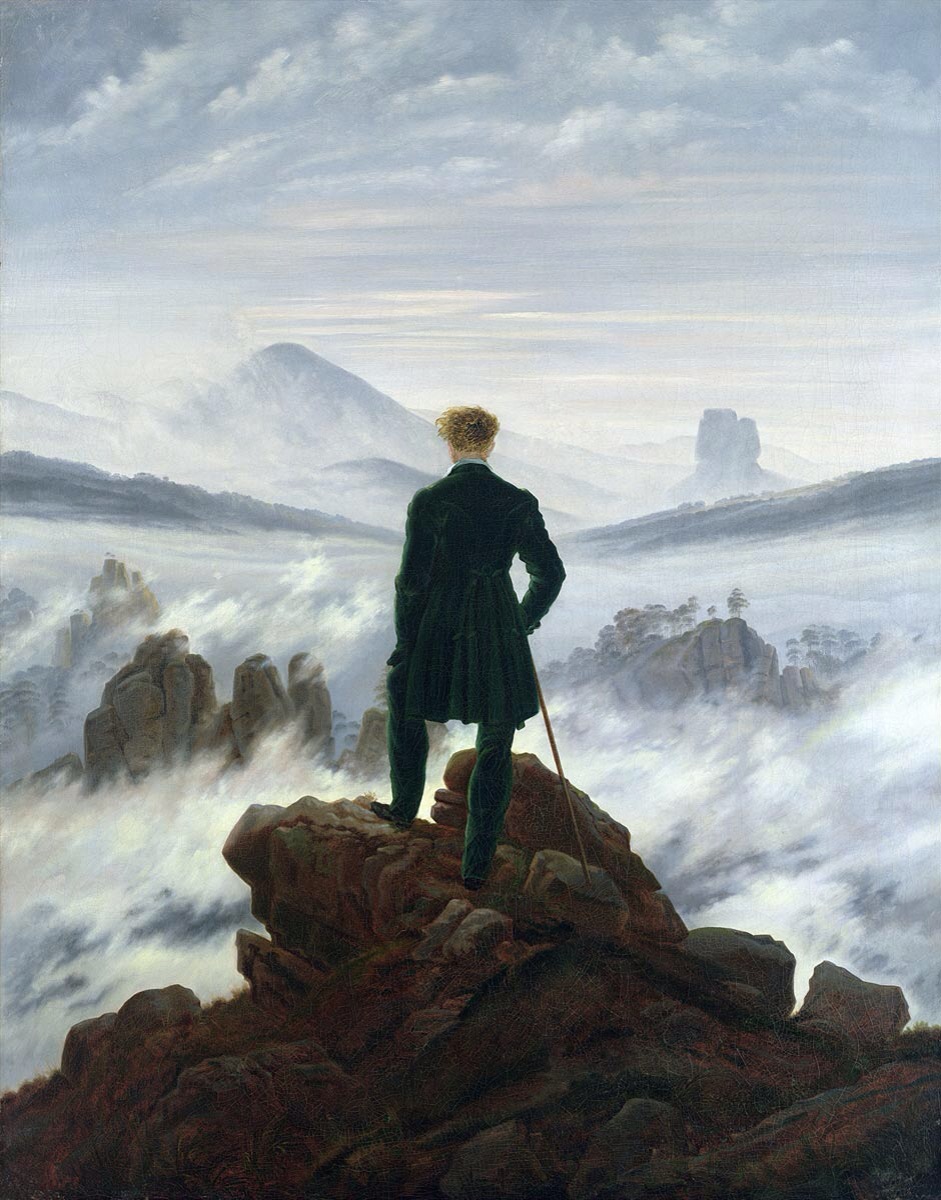
Storytelling with Casper David Friedrich, the famous Romantic painter


Storytelling with Casper David Friedrich, the famous Romantic painter

Click on the picture to access the SlideShare presentation. You might want to check out our post on the mythological structure of storytelling as well: http://wp.me/p4gEKJ-F2

The pleasures and horrors of wearing “OCULUS”


The future looks bright. Or not. It also looks very individualistic, but not lonely. Like all new things, the amalgamation of Facebook, this powerful social media platform counting more than 1 billion people as members, and the new Oculus Rift 3D gaming tool (even the latin name imbues the product with an aura of respectability and awe) bringing the possibility of adding a virtual reality touch to basically all its social pages, is, at one time, breathtaking, humbling, inspiring and terrifying.

ToonCamera

I’m sure you are already sensing Orwellian connotations everywhere. You are not alone, but let’s give it some time before we judge. Oculus may indeed sound a bit ominous, but the dual nature of things is ubiquitous (good and evil are in all things and people, but let’s not get too philosophical on a blog post)

Oculus is already great news for couch potatoes. Besides, this will surely push couchpotatoness to a whole new level, inspiring and attracting hordes of newcomers. As you will be able to do almost everything without leaving your living-room, shy of maybe having to deal with the call of nature now and then, your life will be restricted by the boundaries of your sofa. As for bodily functions, if you take your tablet to the toilet, the problem is solved. You will rule the world from the porcelain throne.

As cities like São Paulo get increasingly violent and uncomfortable – traffic jams, heat, overcrowded subway, etc –  you may wish to put on your glasses (cross that out, Google may charge me for using this word), Oculus, for things like:

1. Shopping for groceries: being able not only to see what the fruit and vegetables look like that day, but also maybe feel them with your hands for texture and softness before sending them to the shopping cart for delivery by the 2:00 pm drone.

2. Visit museums and galleries: now you don’t need to line up before getting to the latest exhibition at MASP, simply take it from the comfort of your bathroom. Walk around, get as close as possible to the paintings, touch them, go around 3D volumes like sculptures, stare at their bottoms closely, if you are that kind of person.

3. Bored in the middle of the work day at the dreary office downtown? Click on the Facebook page of any beautiful Northearstern beach of Brazil,  and go for a long virtual walk along the sea, let’s say, in Porto de Galinhas. At some point in the near future I’m sure you will even be able to feel the warm waves licking at your feet. Then click out of the page and start the video conference call with the sales team with renewed vigor and energy.

4. Shopping for clothes: no more cluttered and disheveled fitting rooms to gain access to. Try everything and anything on for hours on end without being disturbed, and then pick only a t-shirt on your way out, or nothing at all, without even being frowned at by the shop assistant, who has been waiting on you for the whole morning. She is probably only a bot, anyway, without any civil rights – for now! Chances are, however, you will be chased after by their re-marketing ads and notifications for the rest of your life.

For number 5, I was going to add you may even create and live with your own virtual family – and shut them down or click out of their page whenever you feel you deserve a night out (well, not really OUT, but on a different website) with the guys. But I don’t want to sound too iconoclastic at this point.

The possibilities are endless. The fun and the horrors incalculable. Let’s just wait.

Au revoir

Jorge Sette.


Storytelling with Winslow Homer, the famous American Painter


Storytelling with Winslow Homer, the famous American Painter

Winslow Homer.  Click on the picture to access the SlideShare presentation. You might want to check  out our post on the mythological structure of storytelling as well:  http://wp.me/p4gEKJ-F2

Note: you might want to check out our new book TEACHING ENGLISH WITH ART: MATISSE   available  from AMAZON.COM as an ebook.  Click here for more info: 

http://wp.me/p4gEKJ-1kP


My 5 favorite TV villains and why I love them


Television is changing. Its shows, especially after the advent of HBO, Netflix and Showtime, are becoming more and more sophisticated and nuanced. I would  even dare to say that TV shows in general are a lot more fun than the average Hollywood movie, one reason being that they are shorter and therefore able to pack a lot more punch into their compressed 30 or 60 min length. Of course, you can, and probably will,  binge watch whole seasons of Breaking Bad on a single weekend, but the experience is usually more satisfying than spending 3 hours at the movie theater. I know, I’ve done it.

That’s why I’ve decided to narrow my choices and include only TV villains in this post. Maybe in the future I will have another go at it, and focus on the big screen baddies.

Here’s the list of my favorite TV villains. They are NOT listed in order of preference. All of them are contemporary, so the reader will hopefully know who I’m talking about. I also understand that my choices may not be terribly original, but I’m sure some of my reasons might surprise you.

1. Dexter Morgan (from Dexter): strong organizational skills, love of kids, sense of humor and irony are some of Dexter’s virtues I respect and relate to. He also cleans after himself and has an elegant method of avoiding leaving behind a messy crime scene. We could easily be flatmates. I also really like the cool thermal shirt he wears when he goes on killing jobs. I’ve been looking to buy one. I will have to lose a few pounds to fit into them though. Quote: “People fake a lot of human interactions, but I feel like I fake them all, and I fake them very well. That’s my burden, I guess.”

Dexter Morgan

Dexter Morgan

2. Frank Underwood (from House of Cards): yes, you love him too, I know. But I even love his wife better, she’s next on the list. Single-mindedness, strong sense of purpose, ability to focus and to design well thought-out strategies, in addition to a very keen sense of politics are all enviable treats of  Francis’s (as his wife calls him) personality. He is also a great reader of peoples’s feelings and emotions. He knows when to back off. Excellent at prioritizing his battles. Quote: “There are two kinds of pain. The sort of pain that makes you strong, or useless pain. The sort of pain that’s only suffering. I have no patience for useless things.”

Frank Underwood

Frank Underwood

3. Claire Underwood (from House of Cards): extremely beautiful, proving that you can still be stunning in maturity, Claire has a great sense of fashion and style. She also has total control over her feelings. Like Frank, she picks her battles carefully, has strategic vision, and doesn’t mind  being upstaged by her husband, as she knows she is really the boss. Besides, she goes jogging regularly: I wish I had that kind of determination. Quote: “Now tell me, am I really the sort of enemy you want to make?”

Claire Underwood

Claire Underwood

4. Walter White (from Breaking Bad): fearless trend-setter: he’s fifty years old and looks cool wearing only a long-sleeved green shirt, white underwear, socks and leather shoes. The ultimate entrepreneur.  Manages his business like a proper CEO. Highly intelligent. A perfectionist in every sense of the word: he is very proud of the purity of the the blueish product he puts out with the utmost care and dedication. I’ve read somewhere that watching the whole Breaking Bad series is equivalent to taking a business course at Harvard. I got my degree last month! Quote: “What I came to realize is that fear, that’s the worst of it. That’s the real enemy. So, get up, get out in the real world and you kick that bastard as hard you can right in the teeth.”

Walter White

Walter White

5. Bart Simpson (from The Simpsons): you may not even realize he’s a villain, but don’t be deceived by his innocent looks and strange feminine voice. Bart Simpson is evil. However, I like the fact that he is very cold in his decision making process, when necessary. Outcomes are what really matters for him. He’s great at practicing his calligraphy (at the beginning of every show you will always see him writing the same sentence – a different one per episode- on the blackboard hundreds of times). Take Steve Jobs, for instance: didn’t he study calligraphy and allegedly applied his knowledge in the making of the beautiful fonts available on the first Mac computers? So, Bart deserves brownie points for his efforts too. Another career option for Bart would obviously be teaching, given all this expertise handling the chalk (not sure if this will be a widely sought-after skill in the profession in the near future, though). Finally, he’s one of  the few major TV characters who tries to speak Spanish: ¡Ay, caramba! Quote: (to his sister Lisa) “You got the brains and talent to go as far as you want and when you do I’ll be right there to borrow money.

Bart Simpson

Bart Simpson

Well, I hope I’ve been persuasive in explaining why I love these guys. Now it’s your turn. Share with us the list of baddies you care about.

Au revoir

Jorge Sette

The power of storytelling (the mythological structure)


“There is no doubt fiction makes a better job of the truth.” 
 Doris Lessing

Those who have seen the film LIFE OF PI will have no problem relating the quote above to the movie’s main theme. At the end of the movie, we understand that the narrative may as well have been a metaphorical one, and we are asked to choose which version of the truth we would prefer: the one told through analogies and mythology or a raw sequence of facts. I have made my choice. You will have to make yours.

Like all great movies, Life of Pi lends itself to a number of interpretations, has layers and layers of meanings, and covers many different themes. The one that resonated the most with me, however, was its acclaim of the power of storytelling.

Image

Carl Jung, the renowned psychoanalyst, pointed out that the characters (archetypes) and motifs we find in mythological stories are the same we generate in dreams. Joseph Campbell, the famous mythologist and writer, in his seminal book THE HERO WITH A THOUSAND FACES, took Jung’s ideas further and proposed that all stories involving the myth of a hero have the same deep structure and feature the same archetypes, although they appear in different shapes and forms: the myth of the hero wears a thousand faces after all. In his book, he analyzes a great number of mythological stories from different cultures at different times to prove his point. He is very persuasive, I must admit.

In the 1980s, Christopher Vogler, a Hollywood development executive, adapted and simplified the ideas of Joseph Campbell to be applied in scriptwriting and moviemaking. He compiled a seven-page memo for the big shots in Hollywood that revolutionized the industry. Later this memo was turned into a book (The Writer’s Journey) which, to this day, is considered a bible for scriptwriters in the business. After all, important directors such as George Lucas, Steven Spielberg, and Francis Ford Coppola had all drunk from the fountain of Campbell’s ideas to produce some of their most brilliant works.

Without getting too technical, let’s just cover the main steps of a typical hero’s journey to give you an idea of the phases of stories that deeply resonate with us, basically because they find an echo in the depths of our psyche. Then, if you are interested, you can expand your knowledge by referring to the original and more complete sources. A typical mythological hero follows this path:

Ordinary World: at the beginning of the story, the hero is shown in his natural habitat, living his normal life, but we can already sense that he does not really fit in, there’s something missing, he may not be totally adapted to the context.

Call to Adventure: at some point afterward, the hero is called upon action. Something happens that affects or changes his life. The news that prompts the change is usually brought to him by an archetype we call the herald. Unless the hero does something about the novel situation, his life or the lives of his friends and loved ones will be in danger.

Refusal of the call: but the hero resists the call. He comes up with all kinds of excuses not to embark on this journey. He is afraid.

Meeting with the mentor: at this point an older man or woman, usually grumpy or funny, shows up and intervenes, lending the hero guidance and support, goading him to take the bait and start his adventure.

Crossing the first threshold: that’s when the story gets really started, the hero accepts the challenge and will confront his first problems. An enemy will try to prevent him from entering the world of the adventure. The hero will somehow manage to bypass this entity and move on.

Tests, allies and enemies: now, for a long stretch of the story, the hero will be going through a series of trials and obstacles on the journey towards his goal. He will meet supportive characters but also many foes, of all kinds, will cross his path.

Approach to the innermost cave: all the obstacles will lead him to the biggest of them all. The hero and his allies prepare for it.

Ordeal: arriving at this climactic point, the hero will face death or an almost insurmountable problem.  He deals with it as bravely as he can.

Reward (seizing the Sword): he survives the ordeal and gets a prize (a metaphorical “sword”), which will help him get  through the rest of his mission.

The Road Back: now, with the mission almost accomplished, the hero will try to get back home. He’s already transformed  somehow by the experience, but will still have to confront a lot of opposition (usually represented by a “chase scene” in modern movies) before he gets back home.

Resurrection: this is the hero’s final problem, occurring right before he’s able to cross the threshold back home. Another climactic moment. The hero struggles courageously and is rewarded with the “elixir” (something that he will take back to the community he came from to help the others get to a more elevated stage)

Return with the Elixir: the elixir is passed on to the community. End of the story.

images

Joseph Campbell

If you pay close attention to the movies you like the most, you will be able to identify this structure. Of course, this framework should lend itself to all kinds of variations. It’s not supposed to be a formula. Some of the steps may be missed or shuffled around, the circumstances and situations the hero finds himself in can be very diverse. This is what makes movies and stories magical. But the firmer the skeleton of the narrative, the closer it gets to the steps of the myth of the hero, the more it will resonate with an audience.

Nevertheless, to really understand how stories are built, we would still need to discuss the archetypical nature of the characters in narratives in more detail (remember we mentioned the herald and the mentor in passing?),  but that is beyond the scope of this post. We will resume this topic in a future post.

Also, storytelling is a great tool for language learning and we will discuss how it can be used in the classroom on another occasion.

For now, that is all.

(you may way now to read my post MORE STORYTELLING TIPS FOR MARKETERS: http://wp.me/p4gEKJ-UK )

Au revoir

Jorge Sette.