10 Marketing Lessons from Mad Men, the TV Show


This is what it takes to succeed in advertising in Madison Avenue:

IMG_0946

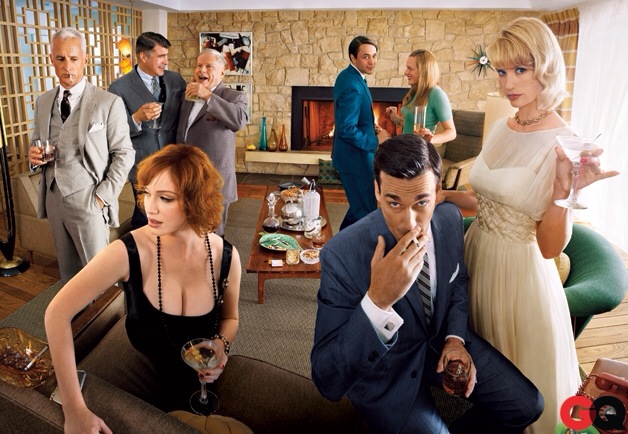
Mad Men

1. All work and no play makes Jack a dull boy (this could have come from Kubrick’s The Shining as well).

2. Clients need to be wined and dined to the point of stupor to close a deal.

3. As an employee – especially a secretary – you will get in trouble resisting the sexual advances of superiors or VIP clients. Give in. Homosexual advances must be turned down, however, and the proponent is allowed to be called a pervert.

4. Count on Don Draper to save any campaign presentation at the last minute by changing his tone of voice. It gets lower, and the speed of his delivery slows down. He will also look deeply and meaningfully into the clients’ fascinated eyes. It helps if the musical score rises at the climactic moment.

5. Getting stoned and drunk at the office makes creative work a lot more productive, although most of it turns out crappy in the end.

6. Chain smoking or coping stoically with second-hand smoking is a strong indication that you are on your way to stardom. Wives of marketing executives will not hesitate to reward their thirteen-year-old daughters with a cigarette to celebrate school accomplishments.

7. Get a good-looking wife or husband if you are in the business of advertising and be unfaithful to them. A necessary step to further your career.

8. Take 4-year-olds to watch Planet of the Apes and don’t worry if they start having constant nightmares afterwards and wish to get rid of the family dog because they can’t stand getting near fur any longer. These little family problems should not concern a senior executive any way.

9. Back-stabbing is a very normal and acceptable part of the business. You will have your chance to get back at your ex-best friend eventually.

10. The most important question to ask about an applicant if you have not seen them yet is: is she black or white?

Well, we are in the sixties after all. Jokes apart, the show is brilliantly written and should be watched.

Au revoir

Jorge Sette.


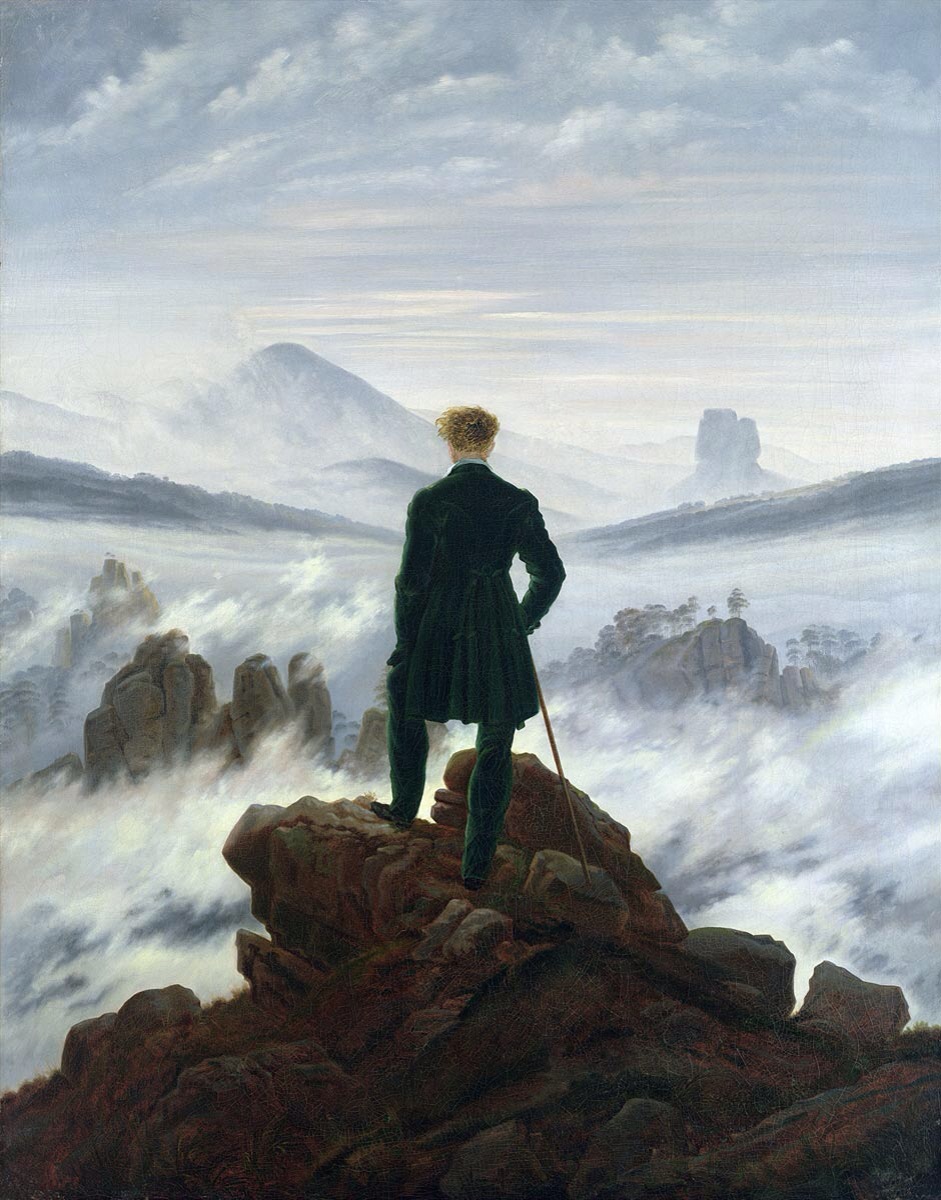
Storytelling with Casper David Friedrich, the famous Romantic painter


Storytelling with Casper David Friedrich, the famous Romantic painter

Click on the picture to access the SlideShare presentation. You might want to check out our post on the mythological structure of storytelling as well: http://wp.me/p4gEKJ-F2

The pleasures and horrors of wearing “OCULUS”


The future looks bright. Or not. It also looks very individualistic, but not lonely. Like all new things, the amalgamation of Facebook, this powerful social media platform counting more than 1 billion people as members, and the new Oculus Rift 3D gaming tool (even the latin name imbues the product with an aura of respectability and awe) bringing the possibility of adding a virtual reality touch to basically all its social pages, is, at one time, breathtaking, humbling, inspiring and terrifying.

ToonCamera

I’m sure you are already sensing Orwellian connotations everywhere. You are not alone, but let’s give it some time before we judge. Oculus may indeed sound a bit ominous, but the dual nature of things is ubiquitous (good and evil are in all things and people, but let’s not get too philosophical on a blog post)

Oculus is already great news for couch potatoes. Besides, this will surely push couchpotatoness to a whole new level, inspiring and attracting hordes of newcomers. As you will be able to do almost everything without leaving your living-room, shy of maybe having to deal with the call of nature now and then, your life will be restricted by the boundaries of your sofa. As for bodily functions, if you take your tablet to the toilet, the problem is solved. You will rule the world from the porcelain throne.

As cities like São Paulo get increasingly violent and uncomfortable – traffic jams, heat, overcrowded subway, etc –  you may wish to put on your glasses (cross that out, Google may charge me for using this word), Oculus, for things like:

1. Shopping for groceries: being able not only to see what the fruit and vegetables look like that day, but also maybe feel them with your hands for texture and softness before sending them to the shopping cart for delivery by the 2:00 pm drone.

2. Visit museums and galleries: now you don’t need to line up before getting to the latest exhibition at MASP, simply take it from the comfort of your bathroom. Walk around, get as close as possible to the paintings, touch them, go around 3D volumes like sculptures, stare at their bottoms closely, if you are that kind of person.

3. Bored in the middle of the work day at the dreary office downtown? Click on the Facebook page of any beautiful Northearstern beach of Brazil,  and go for a long virtual walk along the sea, let’s say, in Porto de Galinhas. At some point in the near future I’m sure you will even be able to feel the warm waves licking at your feet. Then click out of the page and start the video conference call with the sales team with renewed vigor and energy.

4. Shopping for clothes: no more cluttered and disheveled fitting rooms to gain access to. Try everything and anything on for hours on end without being disturbed, and then pick only a t-shirt on your way out, or nothing at all, without even being frowned at by the shop assistant, who has been waiting on you for the whole morning. She is probably only a bot, anyway, without any civil rights – for now! Chances are, however, you will be chased after by their re-marketing ads and notifications for the rest of your life.

For number 5, I was going to add you may even create and live with your own virtual family – and shut them down or click out of their page whenever you feel you deserve a night out (well, not really OUT, but on a different website) with the guys. But I don’t want to sound too iconoclastic at this point.

The possibilities are endless. The fun and the horrors incalculable. Let’s just wait.

Au revoir

Jorge Sette.


21 thoughts that might cross your mind while you’re sitting on the beach in Ipanema


Cheer up, you are in Rio. Thoughts…

1. Why didn’t I go to the gym more regularly for at least six months before I decided to come here?

2. Oh my God, can this water get any icier? Impossible to swim here.

3. I’d love to have two bags of these GLOBO chips.

4. I’ll have the açaí with muesli and banana.

5. Why is everybody running away while these dark-skinned boys are chasing after them?

6. I’ll ask the nice lady sitting to my right if she would mind looking after my stuff while I go for a quick swim.

7. Don’t they mind my overhearing their private conversation about how they’re cheating on their wives? Turn it down.

8. Has marijuana been legalized in Brazil? I can’t see anyone NOT smoking.

9. What a view they must have from Vidigal.

10. Those three must be from São Paulo.

11. Isn’t that Chico Buarque walking along the sidewalk?

12. I have never seen these gringos this happy when they are at home.

13. I must stop after this one. I believe this is my fourth caipirinha.

14. Maybe I will get the beach towel with the Christ the Redeemer on it.

15. Jesus, they should get a room.

16. OMG, that wave was a little tsunami and washed all that guy’s clothes and belongings away.

17. Are they really going to try on the speedos right here on the beach before buying them?

18. Wow, it looks like we are going to have a beautiful sunset today. Will be standing on Pedra do Arpoador in 30 min.

19. Will go ITAU biking later on.

20. Time to shift position and stare at the Two Brothers now.

21. How many more years do I still have to teach English to be able to buy that penthouse over there?

IMG_1178

Ipanema, Rio.


Storytelling with Winslow Homer, the famous American Painter


Storytelling with Winslow Homer, the famous American Painter

Winslow Homer.  Click on the picture to access the SlideShare presentation. You might want to check  out our post on the mythological structure of storytelling as well:  http://wp.me/p4gEKJ-F2

Note: you might want to check out our new book TEACHING ENGLISH WITH ART: MATISSE   available  from AMAZON.COM as an ebook.  Click here for more info: 

http://wp.me/p4gEKJ-1kP


My worst flying experience


With the sad news of the doomed fate of flight MH370, I could not help but remember one of the most frightening experiences I’ve ever had flying.

I had spent 15 days vacationing in London in the interval between the Olympic and Paralympic Games of 2012. Everything went well, London had been sunny and warm for the most part of my stay. I had spent a lot of time sitting in green parks, visiting galleries and museums,  and walking up and down along the Thames riverside from Tate Modern to the Tower Bridge.  I had had such a great time that was even considering going back the following year.

But now I was ready to come home. It was a Friday evening and I was feeling relaxed and with my energies fully restored to resume work on Monday. My flight to São Paulo, Brazil, would leave from Paris. As you probably know, when you try to redeem the miles accumulated over months or even years of paid flights, when time has finally come for you to claim your reward, the airlines will give you the worst choices of flight plans they can possibly put together, short of making you take a route around the world to be able to get to the point on Earth you are aiming for.

So I needed to get to Paris first – a 90 min flight – before facing the uncomfortable and long journey back home in coach: although I fly all the time for work, the experience is far from enjoyable for me.

ToonCamera

Horrible flight

Armed with a bunch of newly-bought crossword puzzles, I took my preferred seat on the isle, next to a  good-looking young couple, who seemed to be still in love with each other. “They can’t have been together for long”, I thought, by the way they looked lovingly into each other’s eyes with a silly grin on their faces. They were both dressed like business people and I wondered about their luck being able to travel together for work. Or they might have just met on the plane and fallen in love. I know this can happen. Good for them. I was distracted by these fantasies as the plane took off.

As soon as the plane reached the right altitude, taking a horizontal position, I proceeded to take out my puzzles, pulled down the food tray in front of me, and started working furiously on solving the crossword problems. After a couple of minutes, I came across a tough one: 10 letters: synonym for commotion; unruliness; insubordination; rioting… I bit my pen in deep thought.

Then it started.

It was first felt as a sudden plunge into the void, which made some of the passengers cry out in fright. I was one of them. Then the plane stabilized for a moment, a couple of seconds maybe, and then a full-fledged turbulence broke out. The vessel shook like we were a cocktail being made by one of the cool bartenders in the Soho pub I had been to the night before. I was in terror. Stealing a glance at the couple sitting next to me, I noticed they were tense but totally silent. The smiles had been wiped off their faces but their hands remained held tight. I wondered if they would mind if I intermingled my cold and trembling fingers with theirs. With much effort, I refrained from trying this approach.

The plane seemed to steady and flew smoothly for a couple of minutes. I sighed. Peace did not last long, though. Soon the shaking and bouncing started again. Some middle-aged Spanish-speaking ladies, probably members of some tourist package holiday group, had seats a couple of rows ahead of me, to the right, and I could jealously see them laughing and screaming at the same time, while holding each others hands in support. Meanwhile, I was on my own, firmly gripping both arms of my seat and murmuring repeatedly DEAR GOD, DEAR GOD, DEAR GOD. I only noticed I was voicing these words out loud when I took another look at the couple – maybe to see if any of them would offer to hug me or hold my hand – only to find them staring at me with a despising look on their faces. I shut up and closed my eyes.

Another big mistake. The moment I shut my eyes, images of all the “plane crash” disaster movies I had ever seen came rushing back in waves, reminding me of the horrors of AIRPORT 1,2,3,4,5…, the beginning of the TV show LOST, and a memorable graphic crash scene from the 90s movie FEARLESS. The latter, however,  gave me some hope, as Jeff Bridges’s character survived the crash after all, and decided he was invincible from then on. I might be the lucky one this time.

http://youtu.be/Pdc6Vsi4ToY

The turbulence never let up. It lasted the whole flight. Getting worse and worse, till we were told that we should start landing procedures. Never had I experienced anything like that before. I was shaken to my core when we arrived in Paris, and almost missed my flight to Brazil, having totally forgotten to adjust my watch to account for the one-hour time difference between London and Paris. My lips felt dry and white.

My heart goes out to the passengers on board any doomed flight. I deeply sympathize with how they may have felt in the final moments, as I believe I’m a survivor.

On the peaceful 12-hour flight back home from Paris, I resumed the crossword puzzle I had abandoned when chaos took over the flight from London to Paris. The 10-letter word I was looking for was obviously TURBULENCE.

Au revoir

Jorge Sette.

My 5 favorite TV villains and why I love them


Television is changing. Its shows, especially after the advent of HBO, Netflix and Showtime, are becoming more and more sophisticated and nuanced. I would  even dare to say that TV shows in general are a lot more fun than the average Hollywood movie, one reason being that they are shorter and therefore able to pack a lot more punch into their compressed 30 or 60 min length. Of course, you can, and probably will,  binge watch whole seasons of Breaking Bad on a single weekend, but the experience is usually more satisfying than spending 3 hours at the movie theater. I know, I’ve done it.

That’s why I’ve decided to narrow my choices and include only TV villains in this post. Maybe in the future I will have another go at it, and focus on the big screen baddies.

Here’s the list of my favorite TV villains. They are NOT listed in order of preference. All of them are contemporary, so the reader will hopefully know who I’m talking about. I also understand that my choices may not be terribly original, but I’m sure some of my reasons might surprise you.

1. Dexter Morgan (from Dexter): strong organizational skills, love of kids, sense of humor and irony are some of Dexter’s virtues I respect and relate to. He also cleans after himself and has an elegant method of avoiding leaving behind a messy crime scene. We could easily be flatmates. I also really like the cool thermal shirt he wears when he goes on killing jobs. I’ve been looking to buy one. I will have to lose a few pounds to fit into them though. Quote: “People fake a lot of human interactions, but I feel like I fake them all, and I fake them very well. That’s my burden, I guess.”

Dexter Morgan

Dexter Morgan

2. Frank Underwood (from House of Cards): yes, you love him too, I know. But I even love his wife better, she’s next on the list. Single-mindedness, strong sense of purpose, ability to focus and to design well thought-out strategies, in addition to a very keen sense of politics are all enviable treats of  Francis’s (as his wife calls him) personality. He is also a great reader of peoples’s feelings and emotions. He knows when to back off. Excellent at prioritizing his battles. Quote: “There are two kinds of pain. The sort of pain that makes you strong, or useless pain. The sort of pain that’s only suffering. I have no patience for useless things.”

Frank Underwood

Frank Underwood

3. Claire Underwood (from House of Cards): extremely beautiful, proving that you can still be stunning in maturity, Claire has a great sense of fashion and style. She also has total control over her feelings. Like Frank, she picks her battles carefully, has strategic vision, and doesn’t mind  being upstaged by her husband, as she knows she is really the boss. Besides, she goes jogging regularly: I wish I had that kind of determination. Quote: “Now tell me, am I really the sort of enemy you want to make?”

Claire Underwood

Claire Underwood

4. Walter White (from Breaking Bad): fearless trend-setter: he’s fifty years old and looks cool wearing only a long-sleeved green shirt, white underwear, socks and leather shoes. The ultimate entrepreneur.  Manages his business like a proper CEO. Highly intelligent. A perfectionist in every sense of the word: he is very proud of the purity of the the blueish product he puts out with the utmost care and dedication. I’ve read somewhere that watching the whole Breaking Bad series is equivalent to taking a business course at Harvard. I got my degree last month! Quote: “What I came to realize is that fear, that’s the worst of it. That’s the real enemy. So, get up, get out in the real world and you kick that bastard as hard you can right in the teeth.”

Walter White

Walter White

5. Bart Simpson (from The Simpsons): you may not even realize he’s a villain, but don’t be deceived by his innocent looks and strange feminine voice. Bart Simpson is evil. However, I like the fact that he is very cold in his decision making process, when necessary. Outcomes are what really matters for him. He’s great at practicing his calligraphy (at the beginning of every show you will always see him writing the same sentence – a different one per episode- on the blackboard hundreds of times). Take Steve Jobs, for instance: didn’t he study calligraphy and allegedly applied his knowledge in the making of the beautiful fonts available on the first Mac computers? So, Bart deserves brownie points for his efforts too. Another career option for Bart would obviously be teaching, given all this expertise handling the chalk (not sure if this will be a widely sought-after skill in the profession in the near future, though). Finally, he’s one of  the few major TV characters who tries to speak Spanish: ¡Ay, caramba! Quote: (to his sister Lisa) “You got the brains and talent to go as far as you want and when you do I’ll be right there to borrow money.

Bart Simpson

Bart Simpson

Well, I hope I’ve been persuasive in explaining why I love these guys. Now it’s your turn. Share with us the list of baddies you care about.

Au revoir

Jorge Sette

The power of storytelling (the mythological structure)


“There is no doubt fiction makes a better job of the truth.” 
 Doris Lessing

Those who have seen the film LIFE OF PI will have no problem relating the quote above to the movie’s main theme. At the end of the movie, we understand that the narrative may as well have been a metaphorical one, and we are asked to choose which version of the truth we would prefer: the one told through analogies and mythology or a raw sequence of facts. I have made my choice. You will have to make yours.

Like all great movies, Life of Pi lends itself to a number of interpretations, has layers and layers of meanings, and covers many different themes. The one that resonated the most with me, however, was its acclaim of the power of storytelling.
Image

Carl Jung, the renowned psychoanalyst, pointed out that the characters (archetypes) and motifs we find in mythological stories are the same we generate in dreams. Joseph Campbell, the famous mythologist and writer, in his seminal book THE HERO WITH A THOUSAND FACES, took Jung’s ideas further and proposed that all stories involving the myth of a hero have the same deep structure and feature the same archetypes, although they appear in different shapes and forms: the myth of the hero wears a thousand faces after all. In his book, he analyzes a great number of mythological stories from different cultures at different times to prove his point. He is very persuasive, I must admit.

In the 1980s, Christopher Vogler, a Hollywood development executive, adapted and simplified the ideas of Joseph Campbell to be applied in scriptwriting and moviemaking. He compiled a seven-page memo for the big shots in Hollywood that revolutionized the industry. Later this memo was turned into a book (The Writer’s Journey) which, to this day, is considered a bible for scriptwriters in the business. After all, important directors such as George Lucas, Steven Spielberg, and Francis Ford Coppola had all drunk from the fountain of Campbell’s ideas to produce some of their most brilliant works.

Without getting too technical, let’s just cover the main steps of a typical hero’s journey to give you an idea of the phases of stories that deeply resonate with us, basically because they find an echo in the depths of our psyche. Then, if you are interested, you can expand your knowledge by referring to the original and more complete sources. A typical mythological hero follows this path:

Ordinary World: at the beginning of the story, the hero is shown in his natural habitat, living his normal life, but we can already sense that he does not really fit in, there’s something missing, he may not be totally adapted to the context.

Call to Adventure: at some point afterward, the hero is called upon action. Something happens that affects or changes his life. The news that prompts the change is usually brought to him by an archetype we call the herald. Unless the hero does something about the novel situation, his life or the lives of his friends and loved ones will be in danger.

Refusal of the call: but the hero resists the call. He comes up with all kinds of excuses not to embark on this journey. He is afraid.

Meeting with the mentor: at this point an older man or woman, usually grumpy or funny, shows up and intervenes, lending the hero guidance and support, goading him to take the bait and start his adventure.

Crossing the first threshold: that’s when the story gets really started, the hero accepts the challenge and will confront his first problems. An enemy will try to prevent him from entering the world of the adventure. The hero will somehow manage to bypass this entity and move on.

Tests, allies and enemies: now, for a long stretch of the story, the hero will be going through a series of trials and obstacles on the journey towards his goal. He will meet supportive characters but also many foes, of all kinds, will cross his path.

Approach to the innermost cave: all the obstacles will lead him to the biggest of them all. The hero and his allies prepare for it.

Ordeal: arriving at this climactic point, the hero will face death or an almost insurmountable problem.  He deals with it as bravely as he can.

Reward (seizing the Sword): he survives the ordeal and gets a prize (a metaphorical “sword”), which will help him get  through the rest of his mission.

The Road Back: now, with the mission almost accomplished, the hero will try to get back home. He’s already transformed  somehow by the experience, but will still have to confront a lot of opposition (usually represented by a “chase scene” in modern movies) before he gets back home.

Resurrection: this is the hero’s final problem, occurring right before he’s able to cross the threshold back home. Another climactic moment. The hero struggles courageously and is rewarded with the “elixir” (something that he will take back to the community he came from to help the others get to a more elevated stage)

Return with the Elixir: the elixir is passed on to the community. End of the story.

images

Joseph Campbell

If you pay close attention to the movies you like the most, you will be able to identify this structure. Of course, this framework should lend itself to all kinds of variations. It’s not supposed to be a formula. Some of the steps may be missed or shuffled around, the circumstances and situations the hero finds himself in can be very diverse. This is what makes movies and stories magical. But the firmer the skeleton of the narrative, the closer it gets to the steps of the myth of the hero, the more it will resonate with an audience.

Nevertheless, to really understand how stories are built, we would still need to discuss the archetypical nature of the characters in narratives in more detail (remember we mentioned the herald and the mentor in passing?),  but that is beyond the scope of this post. We will resume this topic in a future post.

Also, storytelling is a great tool for language learning and we will discuss how it can be used in the classroom on another occasion.

For now, that is all.

(you may way now to read my post MORE STORYTELLING TIPS FOR MARKETERS: http://wp.me/p4gEKJ-UK )

Au revoir

Jorge Sette.
I luv Rio


Cartoon version of my previous post “E O RIO, HEIN?” (http://wp.me/p4gEKJ-rD). I want to express my love for this beautiful city.

Are you coming to São Paulo for the World Cup?


This video expands on my blog post (Se você vem a São Paulo para a Copa do Mundo..: http://wp.me/p4gEKJ-od).

Check out the other articles in this blog.