I have just finished one of the most fascinating books I’ve ever read. I can’t wrap my head around it, though. I don’t really know what it meant. One can interpret it in a number of ways, and I have been doing that for the past few days. The meaning the author wanted to convey can be as elusive as the book’s subject matter: SCENT.
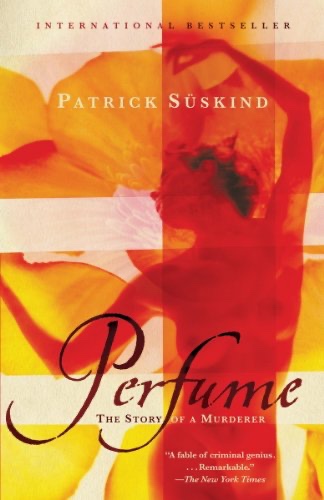
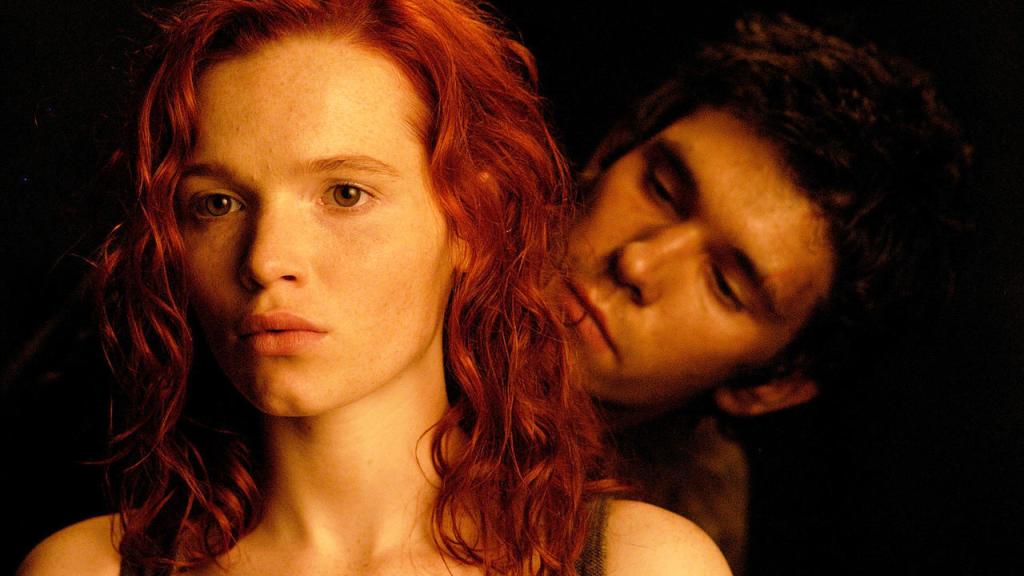
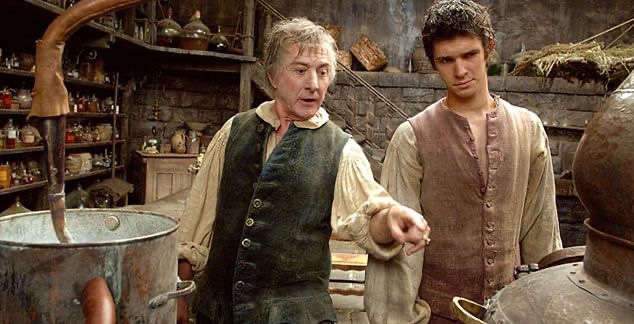
There was a copy of Perfume: The Story of a Murderer, by Patrick Süskind, at my mother’s house when I was in college. I never touched it. I’m glad I didn’t, as I’m sure I wouldn’t have liked it then, being too young to deal with its abstractions. Now I read the English translation from the German by John E. Woods: The language is amazing, a pleasure in its own right. I wonder what it sounds likes in the original. There’s a movie based on the book, but most of my friends told me it wasn’t nearly as good as the novel. So I guess I won’t see it.
The content of the book wafts from the page in its mixture of aromatic words, fragrant images, perfumed beauty, pungent corruption, and putrid evil. What does it mean to be human? What can satisfy a person? This is what the story seems to ask. Read this masterpiece and let’s discuss it.
However, after reading the book, you will never think of scent, odor, perfume, and stench – or France in the 18th century for that matter – in the same way again.
Have you read the book? What are your thoughts about it? Let us know.
I have always been fascinated by certain houses in novels. They exert a strange power over me, especially if they are part of gothic stories. Maybe because I have been living in apartments for more than half of my life now, I am somewhat jealous of the large spaces, yards, porches, gardens, the lack of noisy neighbors, and maybe the safety of the proximity of the ground those houses provide – despite the fact that I was never in an earthquake, and, as a consequence, never experienced the trauma caused by these events, which causes most people who have been through them to wish not to live far from the ground.
I lived in a house for some time growing up in Recife, and those were some of the best years of my life. Of course, living there as a distracted child, then as a sullen and hormone-crazed teenager, and finally as an ultra-busy college student, I never fully appreciated what I had back then. I took it for granted. Then, I left the city, came to live in São Paulo, and, presently, my mother sold it and bought a huge apartment, which I fell in love with too, while I went there on vacation.
Well, all this is beyond the point, however. What I want to do in this post is just to list book houses that I felt particularly close to or fell in love with. Not all these books are classics, but they have always been popular and famous.
The houses in this post are not listed in order of preference. The list is random to a certain extent, as I wouldn’t be able to actually rank them in terms of the impact they had in my imagination. Here they are:
Wuthering Heights (Wuthering Heights, by Emily Brontë): Rustic, uncomfortable, subjected to the rough weather conditions of the Yorkshire moors, this was the house that brought Cathy and Heathcliff together – two of most beloved and passionate characters in literature. Becoming orphans at an early age, they grew up like savages, free and wild, running and playing around the dreary surroundings of the house, and eventually falling in love with each other. Cathy was the daughter of the place’s owner, Mr. Earnshaw, who died when she was still a child, and Heathcliff was a gypsy boy her father found in the streets of Liverpool on one of his business trips, and brought home to live with the family. The house mirrors all the brutality and violence of the novel’s plot. In addition to that, Cathy became the ghost that, in the future, would haunt Wuthering Heights forever, driving Heathcliff crazy.
2. Manderley (Rebecca, by Daphne Du Maurier): Owned by the wealthy Mr. Maximilian de Winter, the house is described in all its beauty. I love houses by the sea and this, located in breathtaking Cornwall, is one of them. Besides, there’s the mystery surrounding the widowed owner’s first wife, Rebecca, who seems to have drowned. She was rumored to have been on top of her game, beautiful, sophisticated, well-connected, adored by the sinister housekeeper, Mrs. Denvers, who would later give Max’s second wife (who remains nameless to the reader throughout the novel) a hard time. However, signs abound that there was something off about all that perfection during the first marriage. Did Rebecca’s personality really match the architectural magnificence of landscaped Manderley?
3. Thornfield Hall (Jane Eyre, by Charlotte Brontë): This is a different case altogether from the houses listed before. The main attraction is the mystery that involves the place. I lived in the UK for almost two years, but never had the chance to visit Yorkshire or see heathers. However, both Wuthering Heights and Jane Eyre, novels written by two sisters, fascinate me. Who wouldn’t become excited reading about a house with a mysterious attic, hiding a crazy woman? That’s the most important thing about gothic Thornfield Hall: Mr. Rochester, the romantic lead, has his first wife locked up in the attic, mad as a March Hare, while Jane knew nothing about it.
4. Gatsby’s mansion in Long Island (The Great Gatsby, by Scott Fitzgerald): The green light at Daisy’s dock, which Gatsby stares endlessly, signaling how close and yet so far the woman he has always loved lives with her wealthy husband Tom Buchanan, makes one of the attractions of the book. The green light is a powerful metaphor for ambition, desire and the struggle for great accomplishments at any cost. Gatsby, the man, personifies the American dream: from a poor background, he rose to acquire a mansion, expensive cars, and a glamorous lifestyle. He also constantly gives popular and orgiastic parties, but he still needs to get the ultimate prize: Daisy herself. The parties were the means he used to call attention to himself and attract her, but only when he befriends her cousin, Nick Carraway, the story’s narrator, and persuades him to orchestrate a meeting between him and Daisy, does he have a chance to try to rekindle her love. In the novel, the house is described as a nouveau-rich paradise, with all the extravagances and bad taste of these kinds of places,. Yet, it does not lack its allure. The green light, seen from his side of the bay, is the strong symbol that stays with the reader long after he finishes the novel.
5. The Dakota Building (Rosemary’s Baby, by Ira Levin): This is an exception, as it’s a condo and not a proper house. The building itself is the setting of one of the most disturbing movies I have ever seen, Rosemary’s Baby, directed by Roman Polanski. Later, it was the place where John Lennon and Yoko Ono had an apartment and lived, at the time he was shot and killed right in front of it in 1980. As for Rosemary’s Baby, neither in the movie nor in the novella that inspired it, the Dakota building is mentioned by name. In the book, the location is not even where it’s seen and recognized in the movie by those who are familiar with the Upper West side of Manhattan. However, most people who both read the book and saw the movie agree that the power of the story is Polanski’s credit. He turned what could pass for a simple and not very sophisticated thriller into one of the most successful movies of the 1960s, catapulting actress Mia Farrow, who played the main character, into worldwide fame. One interesting comment I read somewhere was that Polanski, a non-believer in religion, did not want to make it clear that the baby was the devil (or his son). He claimed that this would go against his beliefs. After all, if you don’t believe in God, you can’t believe in the Devil. So, he turned the plot into a more ambiguous and interesting story – there’s the possibility that Rosemary could be delusional and paranoid, imagining that she was in the clutches of a coven whose leaders are her neighbors in the dark building, and that her own husband and her trusted gynecologist were in on the conspiracy.
6. The House on Matacavalos Street (Dom Casmurro, Machado de Assis): That is the setting of one of my favorite Brazilian novels. Today, this street, in the district of Santa Teresa, has the name of Riachuelo. When the main character, Bentinho, starts narrating the story of his life, already a middle-aged man, resentful and a recluse, the house he spent his childhood in had already been demolished, but it held such a symbolic reference to him that he had it rebuilt, in exactly the same way, only in another neighborhood. And that’s where he lives in the present, nursing his traumas and pains. The original house was next door to Capitu’s, the main female character of the novel, and the love of his life. Those neighboring houses witnessed the birth and blossoming of a sweet and romantic love story between teenagers growing up together. The story is told subjectively from the point of view of an unreliable character, Bentinho, so, as a result, the reader can never be sure whether his estranged wife Capitu was really unfaithful to him, having had an affair and got pregnant by his best friend, Escobar.
What are your favorite book houses? Let us know by leaving your choices in the comments section below.
Now that Zendaya won a Best Actress Emmy for the role of the drug addict Rue in the successful HBO series Euphoria, I’m rewatching the second season. I want to check out her performance and decide if the show is as good as I thought it was when I first saw it.
The series is definitely not for the faint of heart. The story, set in the fictitious town of East Highland in California, is about a group of High School teenagers, most of them still living with their highly dysfunctional middle-class families.
Drugs, sex, and cell phones abound. These characters are portrayed in all their rawness, brutality, and emptiness by an extraordinary cast of young and mature actors.
The highlight of the second season is a play within the show (“Our Lives”), created and directed by one of the students, Lexi, who seems to act as the moral center of the story. The play – stunning in itself for us, the home audience – helps the characters sitting in the school theater see themselves as they really are, with all their flaws and inconsistencies (rather than the fake personas they try to create and project), therefore stirring strong emotions, and leading to a huge unscripted fight on the stage. “Art should be dangerous”, says an assistant to the devastated director to soothe her. But the show must go on.
Most of the relevant current themes are discussed in Euphoria, to some extent: friendship, loyalty, love, the opioid crisis, fluid sexuality, transsexualism, pedophilia, toxic masculinity, feminism, sexual orientation, the breakdown of the traditional family and its values, the difficulty to communicate real feelings or develop an authentic personality.
There’s a lot of physical and verbal violence too. Keeping in mind that the objective of ambitious shows is not only to entertain but also to discuss controversial issues and provoke change, Euphoria is a great show, if you can manage to watch the frequent uncomfortable scenes.
Have you had a chance to watch the show? Please leave your comments in the section below.
I read Euclides da Cunha’s The Backlands (Os Sertões), a brilliant journalistic account of the War of Canudos, a couple of years ago. The report is extremely well-written, precise, and exciting – to the extent that non-fictional pieces of writing can afford to be, even when they incorporate techniques more typically used in fiction. However, regular readers will agree that nothing can be more thrilling, more stimulating to the imagination, than great novels.
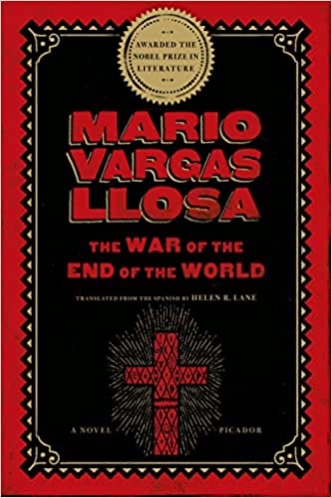
Therefore, even if you loved The Backlands, which I certainly did, don’t miss reading Peruvian writer Vargas Llosa’s The War of the End of the World, the novel based on the same event – a war waged between the official powers of the recently proclaimed Brazilian Republic and a gathering of some 30,000 jagunços (the name given to the impoverished and undernourished inhabitants of the backlands), who built a community, Canudos, in the northeast of Bahia at the end of the nineteenth century.
First of all, I was impressed by how much Llosa knows about Brazil. He must have undertaken extensive and in-depth research about this period of our history. As a consequence, he is quite familiar with the different groups of people who lived in the region, their customs and physical characteristics, the regional names they gave to the native vegetation and geographic locations of the backlands, an area of the interior of the northeast of Brazil punished by constant droughts, leading to poverty, scarcity of all kinds of resources and, as a result, illness, ignorance, and predisposition to all kinds of superstitions and fanaticism.
The War of Canudos is a very complex conflict, involving clashes between opposing political interests, different economic classes, idiosyncratic religious views, and diverse cosmologies to sum it all up. It was a war between myths, in the broadest sense of the word. The military sent to the region claim they were defending the interests of the Brazilian Republic against heavily armed conservationists backed up by the English and local aristocrats who were trying to revert the country to a monarchy. Nevertheless, the jagunços who came in droves to put together and live in the community of Canudos were mostly Catholics who followed the somewhat peculiar doctrine of the charismatic religious guru Antônio Conselheiro, the Counselor. This religious leader had, with the mere strength of his words and personal example, the power to persuade the simple-minded people of the backlands to turn their violent and empty lives into something more peaceful and meaningful; he gave them loftier aspirations.
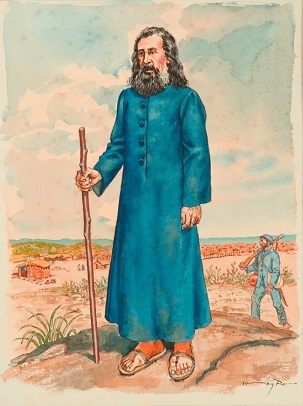
Antônio Conselheiro
The War of Canudos needs to be interpreted from different angles and perspectives. The lines separating right and wrong as far as the confronting ideologies went are not clear-cut. Lots of gray areas. The horror, however, made itself rather concrete and clear, through the brutality and violence that took place in those forgotten and distant dry lands of the interior of Brazil during the conflict. Llosa’s novel is not for the faint of heart, by the way. The explicit descriptions of shots, throat slashes, decapitations, stabbings, bombardments, disfigurement of faces, bayonet perforations, dismembering of body parts, causing corpses to accumulate in piles or lie strewn around, exposed to the voracity of famished vultures, dogs and rats, disputing the remains, are nauseating and shocking.
On the other hand, a strange beauty permeates the novel, when it shifts to the narration of the resilience, bravery, abnegation, cooperation, and empathy shown by the jagunços toward each other. It also emerges in the description of the cold star-studded skies at night that alternate with orange moonlit landscapes lacking in water and vegetation – only cacti, mandacarus, and shrubs could survive in such hostile climate – or, also, in the rare and quick passages portraying the sudden and brief storms that brought hope and happiness to the fighters.
The War of the End of the World is a hard book to read, with many different themes to take into consideration and reflect on. Although, at a more superficial level, it seems to be simply the fictionalized account of a real conflict that took place more than 100 years ago, the novel encapsulates relevant and current themes, especially for Brazil, a country whose stark economic inequality and cruelty toward the lower classes are still a sad reality.
Have you read any of the books mentioned in this article? Did you like them? Please leave your comments below.
The Booker Prize or The Man Booker Prize for Fiction – initially called the Booker-McConnell Prize, due to the company which sponsored it – is an English literary prize created in 1968. It is awarded to the best novel of the year. At first, only Commonwealth, Irish, and Zimbabwean writers were eligible, but as of 2013, the eligibility was extended to any novel written in English and published in the UK. Being awarded, or even shortlisted for it, is a great honor, as the prize warrants success and fame for every writer who’s associated with it.
As a voracious reader, I can assure you that, whenever you finish a novel and are left with that familiar void, yearning for another great book to come your way, taking a look at the Booker Prize list of winners or shortlisted books is a great way to begin your search. You will hardly be disappointed.
The list below is my personal choice of great Booker Prize Winners. I’m sure they will stay with you long after you finished reading them, as the language is stunning and the plots are both original and gripping. The books below are listed according to the year they received the prize:
Paddy Clark Ha Ha Ha by Roddy Doyle (winner of the 1993 Booker Prize)
Funny, moving and poignant, this novel is told from the perspective of a 10-year-old Irish boy growing up in the 1960s. As he narrates his experiences – using the logic and language of childhood – we get to know his discoveries, games and adventures with his little brother, the relationship between his parents and the daily routine of his family. Despite the cheerful tone of the book, at some point, readers begin to suspect they are being misled by the unreliable narrative of a child: not everything is going well at home, the truth is his parents are drifting apart and about to break up.
Amsterdam by Ian McEwan (winner of the 1998 Booker Prize)
Three former lovers cross paths at the cremation of their common mistress, Molly Lane, without realizing that the meeting will be a turning point in their lives. Their careers and personal lives will be cleverly manipulated by the woman’s jealous and resentful widower, George, who will set them on a collision course with one another, crafting a spiderweb of blackmails, mutual blames and lies, tabloid stories, debauched cross-dressing photographs, sinister euthanasia doctors and, ultimately, violence and tragedy. Clive Linley, one of the lovers, is a musician who, after attending the cremation, embarks on a depressive behavior, worried that he may get sick and die as young and unexpectedly as Molly. As a consequence, he is having a mental block, which prevents him from finishing up the Millennium symphony he was assigned to compose. Fame and recognition are at stake here and he is frantic (the language used by the author to describe the composer’s creative process and its drawbacks is already a good reason to make you love the book); Molly’s second lover, Vernon Halliday, is a mediocre editor of a serious and conventional newspaper whose circulation and readership are going seriously down. He is suddenly given the chance to resort to dirty and cheap tabloid tactics to try to reverse the process, publishing intimate photographs which are likely to destroy the family life and career plans of the third lover, Julian Garmony, a foreign secretary with aspirations of becoming prime minister.
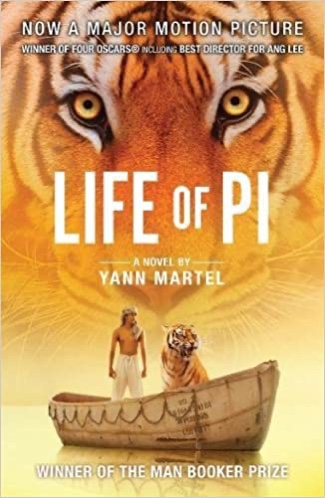
Life of Pi by Yann Martel (winner of the 2002 Booker Prize)
A hymn to religious tolerance, a celebration of life in all its forms, and the recognition of the power of storytelling make Life of Pi an unforgettable novel. The story contrasts myth and reason, religion and science, asking the reader to compare the effectiveness of simply narrating the factual sequence of events of a journey with the alternative of fictionalizing it through the use of allegories. Which version would you choose as the more insightful and helpful way to understand the world? A Canadian writer in search of ideas for his new book is promised the opportunity to hear a story that will make him believe in God. With this aim, he agrees to meet and listen to the life story of an Indian man who spent 227 days adrift in the Pacific Ocean, sharing a lifeboat with none other than a Bengal tiger, after the shipwreck of the Japanese cargo ship which would take his family to Canada. Brutal, scatological, philosophic, funny and poetic, Life of Pi saddens, cheers and inspires the reader, who will certainly come out of the experience loving tales and metaphors even more than when he started the book.
Wolf Hall by Hilary Mantel (winner of the 2009 Booker Prize)
The first part of this trilogy tells the known story of the marriage of Henry Tudor and Anne Boleyn and all the political, religious and social upheavals involved in making it happen. The novelty is the choice of perspective chosen by the author, who decides to focus the novel on a lesser historical character, whose life details are not very well-known: Thomas Cromwell. Choosing Cromwell – who rises from being the son of a Putney blacksmith to Master Secretary of the kingdom, due to his intelligence and cunning – as the protagonist of the story allows the author to fill in the blanks of history books with her fertile imagination, transporting and placing the reader smack in the middle the exciting events that happened more than 500 years ago.
Bring up the Bodies by Hilary Mantel (winner of the 2012 Booker Prize)
This is the second volume of the Cromwell trilogy, and, in my opinion, better written and even more exciting than the first – to me, it sounds like the author finally found the best way to tell the story. Despite all the efforts and machinations of the court to bring Anne Boleyn and Henry Tudor together, causing England to sever links with the Catholic Church, and antagonizing its powerful neighbors in Europe by appointing Henry VIII the head of the Church of England, the queen fails to deliver a male heir and will have to be ousted. Craftily paving the way to Henry’s new marriage to Jane Seymore, Cromwell will become Anne’s main nemesis, ruthlessly plotting the annulment of her marriage and driving her to a thunderous fall, which will bring many others down with her. Terrific reading.
Have you read any of these books? Share your comments with us. Also, watch this space for further suggestions on the wonderful books out there you may not have heard about.
Readers know the importance of compelling settings in novels – we hope writers do too. Some people would claim that character and plot are king. However, it’s not unusual for readers to first recall a certain region, a piece of geography, a neighborhood or city depicted in a novel when they think of it. While these settings may be the context for the whole story, sometimes, they are the backdrop against which only a number of important or climatic scenes develop.
The Cliffs of Insanity – From The Princess Bride
Well-written settings create atmosphere; they may drive the plot, and even become as important as a main character. Often, readers are so enraptured by book settings (although the story will most certainly take place in a different time or era), they will wish to visit some of them. Yours truly, for example, is a stickler for visiting places depicted in books – or in their movie adaptations for that matter – when my travels take me anywhere near them.
In this post I’m sharing with the reader some of my favorite settings in novels. Please let me know how you feel about them. Also, if you wish, list and describe your favorite settings in the comments section below.
The Curious incident of the Dog in the Night-Time, by Mark Haddon. The London Underground.
After seeing the London Tube through the eyes of the highly functioning – yet socially inadequate – autistic 15-year-old Christopher Boone, the charismatic narrator of this stunning novel, readers will agree the Underground is the perfect metaphor for the lair of imaginary or real monsters we all need to fight and overcome in the course of our lives. The Tube, with its vibrant atmosphere, train noises, buskers and the multitudes of daily travelers rushing down its corridors. can certainly be an overwhelming experience for someone like Chris, or readers who are not entirely comfortable with crowds and frenzy.
Wuthering Heights, by Emily Bronte.Yorkshire.
This region of northern England, swept by winds and storms, as depicted by Emily Bronte, is the ultimate expression of a romantic and dramatic landscape: wild, visceral, and passionate. This remarkable setting, of course, matches the personalities of the novel’s unforgettable characters, Cathy and Heathcliff, who roam the region’s bleak moors – alive and dead! The historic county of Yorkshire is, by the way, the largest and one of the greenest in the UK.
The Bonfire of the Vanities, by Tom Wolfe. New York City.
Wall Street, Park Avenue and the Bronx are forever linked in many readers’ minds to the fate of naïve bond trader Sherman McCoy, one of the masters of the universe – in his own egocentric and distorted self-assessment. At a key plot point, Sherman misses the exit into Manhattan on his way back from Kennedy Airport, where he drove to pick up his mistress Maria. The journey ends up in a nightmare, when the couple gets involved in a hit-and-run accident, killing a black young man in the Bronx. Sherman, the superrich yuppie, becomes the perfect target: he will be used as a scapegoat and brought down by the petty political interests of the various ethnical and professional lobbying groups of 1980s New York.
The Princess Bride, by William Goldman.The Cliffs of Insanity.
The first image that crosses my mind whenever I hear someone mention The Princess Bride are the Cliffs of Insanity (gosh, do I love this silly name!). Although this is a fictitious setting, the movie version – which was the first contact most of us had with this incredibly entertaining post-modern fairy tale – uses the real breathtaking Cliffs of Moher, in County Clare, Ireland, as the location. Facing the Atlantic, those rugged imposing cliffs are among Ireland’s most spectacular natural sights.
Middlesex, by Jeffrey Eugenides. Detroit, Michigan. USA.
“I was born twice: first, as a baby girl, on a remarkably smogless Detroit day in January of 1960; and then again, as a teenage boy, in an emergency room near Petoskey, Michigan, in August of 1974”. This is one of the most intriguing opening lines in contemporary fiction. Middlesex is not only a powerful and moving journey into human sexuality, gender issues and identity, but also the three-generation saga of a Greek-American family, the Stephanides, migrating from a small village overlooking Mount Olympus all the way to Detroit, Muchigan – an improbable destination, where readers experience the story of the city from the Prohibition days, moving through its glorious days as the Motor City, and witnessing the race riots at the end of the 1960s – and beyond. An American epic.
The critics are right: Almódovar is not the same. Julieta, his latest movie, is nothing like Women on the Verge of a Nervous Breakdown, which catapulted the Spanish director to international fame almost thirty years ago.
Julieta is more mature, serious and, in many respects, a lot better, reflecting the evolution and progressive refinement of a seasoned maestro. Of course, some fans will miss the raw humor and shock value of his earlier movies, which celebrated la movida madrileña, the cultural movement of the late 70s and early 80s that stood in direct opposition to the values and life style of Franco’s dictatorial years. In those days of la movida, it was necessary to burn the cultural bra to make a point. Those times are over, though. Besides, for more nostalgic viewers, quite a few of his movies of that era are available on Netflix, at your fingertip.
Julieta, on the other hand, belongs to the 2010s. It is allowed – strike that; required is the precise word – to be simpler and more contained. Nevertheless, it has kept the director’s inimitable voice and style: the bright colors, the Madrid touch, and the inscrutable strong women are still there. And even Rossy the Palma, one of the muses of his early years as a filmmaker, makes a comeback; her wondrous nose, uneven eyes and twisted mouth working their magic, in the role of a modern-day Cassandra.
Rossy de Palma in the 1980s.
I find it unbelievable that many critics will say that Almodóvar has never mastered the skills to tell a story. His narrative powers are weak, some say. Obviously, these critics abide by only one model of storytelling: the commercial cinema of Hollywood. Although I respect the claim that some narrative elements and archetypes make themselves present one way or another in every story ever told, they should be rearranged in as many different ways as creative directors can come up with. Almodóvar’s storylines do follow a structure – although an idiosyncratic one. Digression plays a big part in his method.
Without the digression, Julieta would be a simple tale about guilt. It’s the digressions that allow Almodóvar to present the viewer with unique images (an elk running in slow motion alongside a moving train at night; the bluest sea shown though the open windows of a living room in Galicia; the Swiss Alps shot in all their glory); intriguing metaphors: references to Homer’s Odyssey and the power of the sea to entice men like Ulisses and Xoan, pulling them from the safety of their houses and the comfort of their families; and one of the most original transitions between youth and old age in movie history: actress Adrian Ugarte is replaced by Emma Suárez at the sudden removal of a red tower.
Pedro Almodóvar
Julieta is a delight to the eyes. You could just sit back for hours watching these beautiful women move around in fashionable clothes, stepping in and out of fascinating Madrid buildings, walking along its narrow cobblestone streets or just sitting in close-up against the backdrop of stunningly decorated apartments.
With the help of great actors and a stunning musical store by Alberto Iglesias, Almodóvar turns the straightforward story of a family marked by tragedy into a Hitchockian thriller – with echoes of Vertigo. Viewers will be met by twists and little surprises at every turn, relishing the journey. Almodóvar has developed the fearlessness of those who have nothing more to prove. He shoots his movies out of sheer pleasure. Who can blame him?
On the warm summer night of August 9th, 1969, a man and three women, riding an old Ford, pulled up to the sidewalk near the entrance of one of the mansions of the affluent neighborhood of Bel-Air, Los Angeles, stepped out and broke into the house, brutally stabbing and beating to death five people who were unlucky to be there.
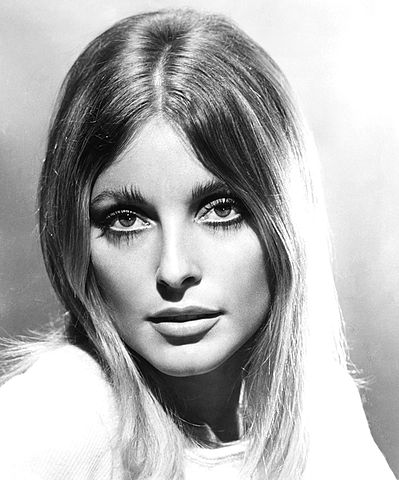
One of the victims was budding actress Sharon Tate, wife of Polish movie director Roman Polanski, who was out of the country on a business trip. Eight-month pregnant Sharon was stabbed to death sixteen times and her blood was used to paint the word pig on the outside of the front door.
Actress Sharon Tate
This was one of a series of similar murders that happened around the same place and time.
Charles Manson’s Philosophy
The gruesome crime shocked not only the residents of LA, putting the fear of god in many of the Hollywood celebrities that lived in the area – since everyone first thought it had to do with their fame and fortune – but it was also widely publicized all over the world.
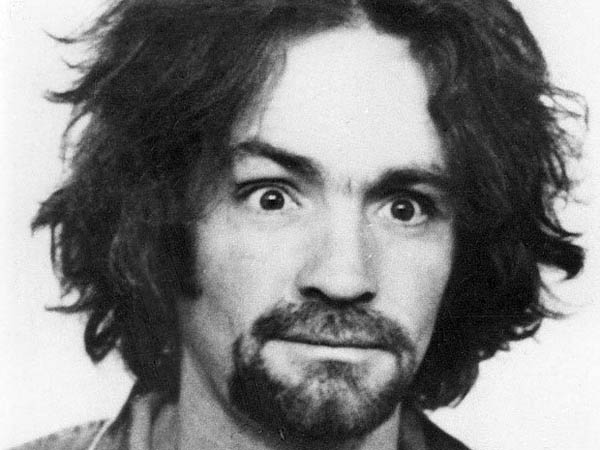
It turned out that the reason behind the horrific murders was a combination of white supremacy concepts, Beatles songs and effective knowledge of how to manipulate people under the effect of hallucinatory drugs such as LSD. This amalgamation informed the insane philosophy conceived and passed on by of one of the most charismatic and dangerous leaders to appear in the recent history of the US: Charles Manson. He was the mentor of the killings, inducing the members of his close group of followers to perpetrate them.
Charles Manson
Helter Skelter – The Book
The thrilling story of the investigation, arrest and prosecution of Charles Manson and his “family” is told in meticulous detail in the book HELTER SKELTER, written by Vincent Bugliosi (who prosecuted Manson in 1970) and Curt Gentry.
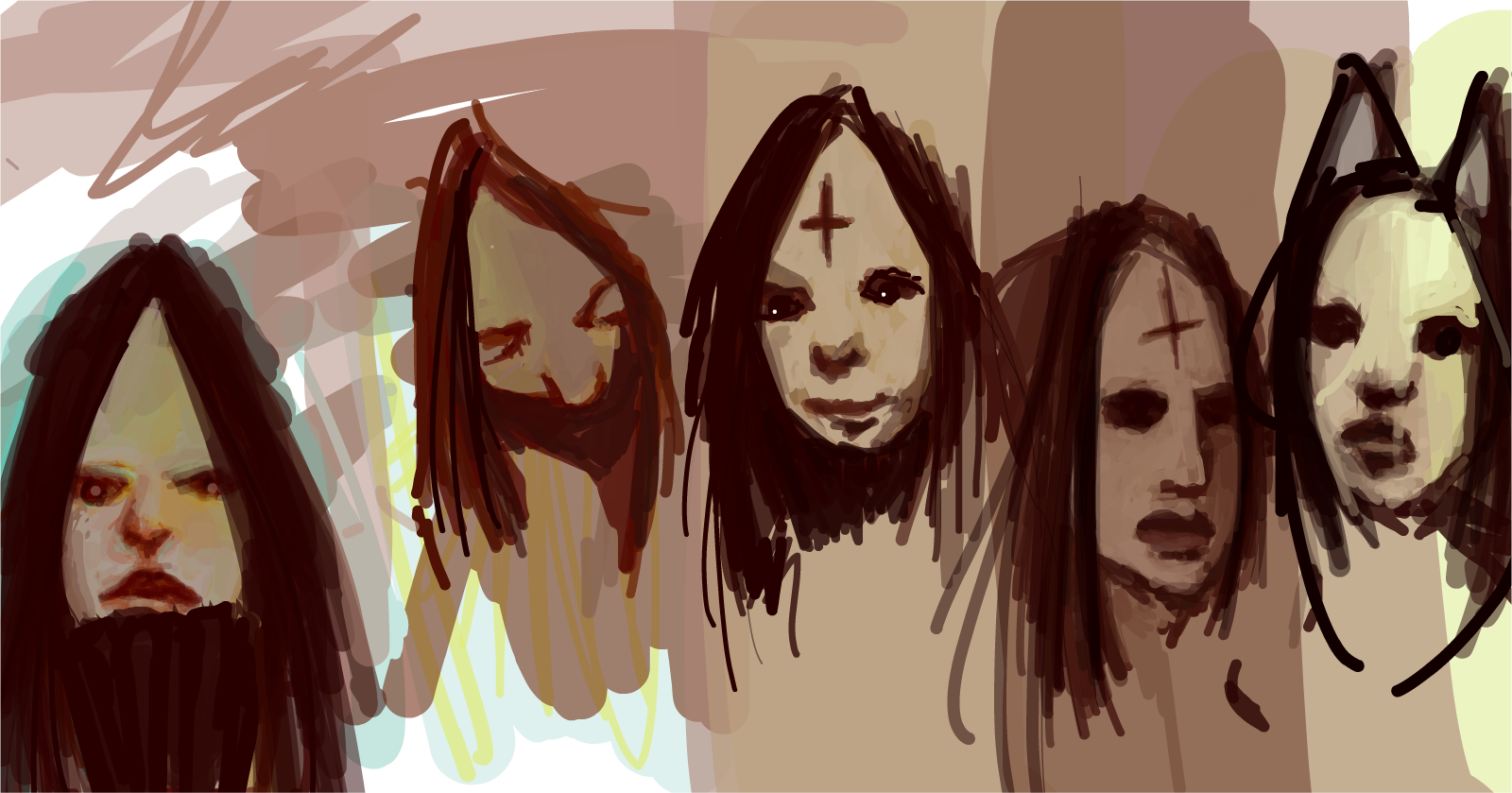
The investigation revealed that back in the mid 1960s, this strange man – who claimed to be Jesus Christ reincarnated – started to recruit dozens of very young outcasts, hippie-like types and school drop-outs – most of them heavy drug users – to live in a community in the outskirts of Los Angeles, California, in the proximity of the Death Valley desert, originating what became later known as the infamous Manson Family.
The Manson Family
So powerful was the influence of Charles Manson over his suggestionable LSD-abusing acolytes that he was capable of monitoring their every move and ultimately managed to persuade them to commit a series of savage murders. He was their indisputable leader: they even tried to assume all the responsibility for the crimes to avoid incriminating him.
Of course, it’s impossible to summarize a 700-page book in the small space of a blog post. Especially as the book is packed with the details of the inquiries, the behavior of the press and the defense lawyers, the different phases of the trial, besides gifting the reader with a very thorough examination of the complex personalities, characters and motivation of the individuals involved in the murders. Written in the same vein of Truman Capote’s IN COLD BLOOD (which holds the second post of most popular crime account), incorporating fiction techniques into a journalistic report, the book is a must-read for those interested in the analysis of how the psychopathic brain works.
The Cultural Context
Hippies in the 1960s
The most important takeaway of the story of Charles Manson is to never underestimate the dangerous power of an intelligent and charismatic individual. The book is also great in the sense that not only does it tell in detail the story of the Manson Family, its origins and demise, but also contextualizes the facts within all the cultural changes – the flower power movement in particular – the US was undergoing at the time. It illuminates aspects of the youth culture of the 1960s few of us are aware of. In addition to that, the story provides an in-depth analysis of the methods Manson applied to turn human beings into automatons, robbing them of all the moral awareness and respect for other people’s life most human beings share, regardless of the culture they are a part of.
If you have read Helter Sketer too, please share your opinion about the book in the comments section below.
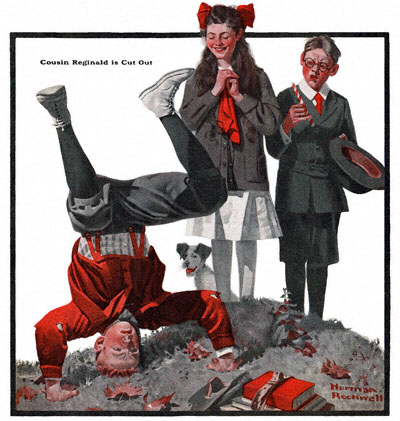
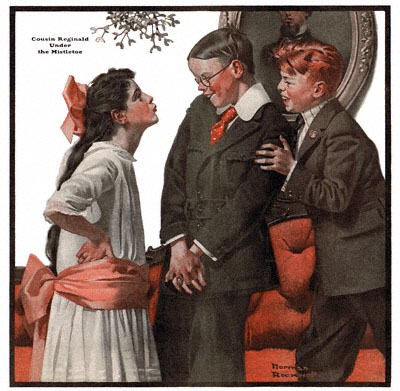
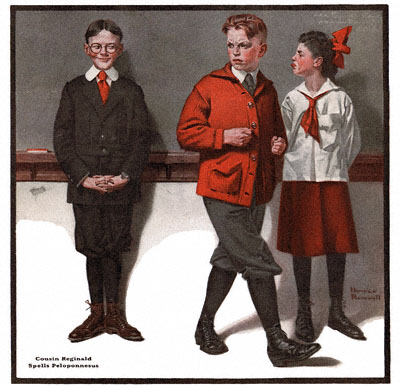
Together with Walt Disney, Rockwell is the most beloved American artist of the twentieth century. Of course, their work had a lot in common: they were both visual storytellers, capable of charming and mesmerizing their viewers with wonderful drawings, colors and movement. The animation in Rockwell’s work was obviously only suggested, as he dealt in illustrations, but they are never static. His brush lent them an inner life and dynamism that completely won over his audience.
From a very early age, Norman knew he wanted to be an illustrator. He was hired as art director of Boy’s Life, the scouts’ official magazine, when he was still in his teens. However, he became nationally known after he started his 47-seven-year collaboration with The Saturday Evening Post, having painted more than 300 illustrations mostly for the cover of that popular magazine.
Here are 10 of his best contributions to The Saturday Evening Post. Enjoy.
Boy With Baby Carriage, 1916
Gramps at the Plate, 1916
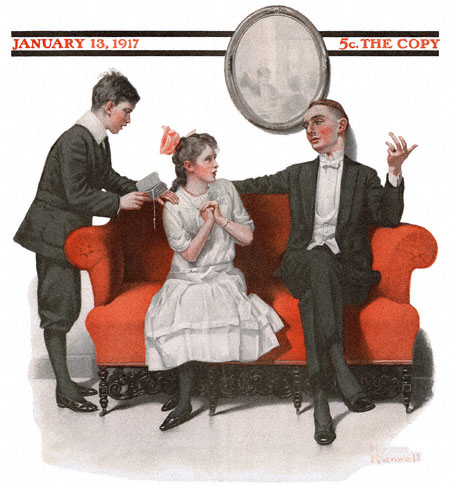
Two Men Courting Girls Favor, 1917
Cousin Reginald in Cut Out, 1917
Cousin Reginald Catches the Thanksgiving Turkey, 1917
Cousin Reginald Under the Mistletoe, 1917
Boy and Clown, 1918
Children Dancing, 1918
Cousin Reginald Spells Peloponesus, 1918
The Party Favor, 1919
Norman Rockwell is the 5th volume of our successful series of eBooks TEACHING ENGLISH WITH ART. If you wish to know more about the series, please click here: http://wp.me/p4gEKJ-1lS
Take a moment to watch the video clip of TEACHING ENGLISH WITH ART: NORMAN ROCKWELL
The beginning of summer is a very exciting time for Netflix viewers, as a bunch of new seasons of great shows opens. In the past month only, we’ve had the launches of Bloodline (season 2); Orange is the New Black (season 4) and Bates Motel (season 3).
When the latter first came out, three years ago, many critics had serious reservations about it. They wondered what they were going to see after all. What was pitched to the press sounded like an easy, unnecessary and, more than anything else, disrespectful product to the memory of the great Hitchcock. Why write a prequel to one of his most famous and popular movies – Psycho – made more than 50 years ago?
The critics were in for a pleasant surprise, though. The show turned out to be great fun. One of the most entertaining and well-written horror shows currently available on the streaming service.
Bates Motel
The actors
Of course, the main actors, Vera Farmiga (Up in the Air) and Freddy Highmore (Finding Neverland), who play, respectively, the domineering Mother (with a capital letter!) Norma, and her tormented younger son, Norman, deserve most of the credit for the show’s success. The near-incestuous relationship between Mother and son – which the writers have been tasteful enough not to make explicit so far – is the throughline from which a number of interesting subplots branch out every season.
Vera Farmiga’s performance is nothing less than dazzling. She portrays every possible nuance of this plagued woman with a terrible past, trying to make a fresh start after her husband’s accidental death, by moving to a small town in Oregon and opening a motel. The town, however, and the strange guests that keep popping up at the hotel seem determined not to give her a break.
British Actor Freddy Highmore
Highmore’s Norman, the son – who has probably become mentally unstable not only for sharing the experiences his mother went through, but also because of her obsessive love – is portrayed very sensitively, giving us a very convincing idea of what the original Norman Bates, played by Anthony Perkins in the iconic movie, must have been like in his youth.
The subplots
Despite being a prequel to Psycho, the story takes place in modern day America. Through seasons 1-3, we have followed, among other things, the busting of hidden plantations of weed – whose commerce is the staple of the town’s economy; the mysterious murder of a high-school teacher who had tender feelings for the sweet Norman; and the return of Norma’s estranged brother – who fathered her oldest child. There seems to be a lot more in store.
More than the dark and, sometimes openly weird, storylines, however, what seems to draw viewers to the show is the constant atmosphere of suspense maintained in each episode, the stunning photography, and the charismatic supporting cast.
Writers versus producers
Shows like Bates Motel, which do not play safe, are, of course, the realm of great writers, not producers. Their freedom to take risks makes all the difference, constantly raising the bar for TV/Streaming products, which seem to be on an irreversible course towards excellence, unlike what has been happening to Hollywood movies. The viewers are grateful!











 The Curious incident of the Dog in the Night-Time, by Mark Haddon. The London Underground.
 Wuthering Heights, by Emily Bronte. Yorkshire.
 The Bonfire of the Vanities, by Tom Wolfe. New York City.
 The Princess Bride, by William Goldman. The Cliffs of Insanity.
 Middlesex, by Jeffrey Eugenides. Detroit, Michigan. USA.










 Jorge Sette "Linguagem"