The War of the End of the World, by Vargas Llosa – Book Review


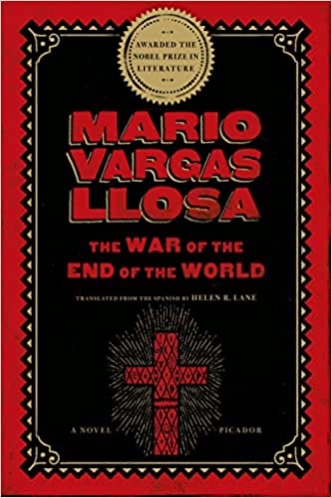
I read Euclides da Cunha’s The Backlands (Os Sertões), a brilliant journalistic account of the War of Canudos, a couple of years ago. The report is extremely well-written, precise, and exciting – to the extent that non-fictional pieces of writing can afford to be, even when they incorporate techniques more typically used in fiction. However, regular readers will agree that nothing can be more thrilling, more stimulating to the imagination, than great novels.

Therefore, even if you loved The Backlands, which I certainly did, don’t miss reading Peruvian writer Vargas Llosa’s The War of the End of the World, the novel based on the same event – a war waged between the official powers of the recently proclaimed Brazilian Republic and a gathering of some 30,000 jagunços (the name given to the impoverished and undernourished inhabitants of the backlands), who built a community, Canudos, in the northeast of Bahia at the end of the nineteenth century.

First of all, I was impressed by how much Llosa knows about Brazil. He must have undertaken extensive and in-depth research about this period of our history. As a consequence, he is quite familiar with the different groups of people who lived in the region, their customs and physical characteristics, the regional names they gave to the native vegetation and geographic locations of the backlands, an area of the interior of the northeast of Brazil punished by constant droughts, leading to poverty, scarcity of all kinds of resources and, as a result, illness, ignorance, and predisposition to all kinds of superstitions and fanaticism.

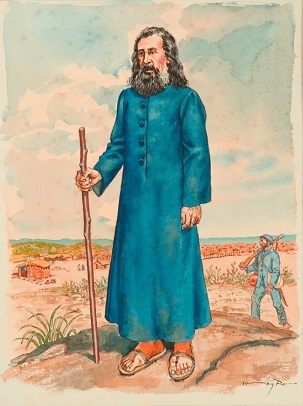
The War of Canudos is a very complex conflict, involving clashes between opposing political interests,  different economic classes, idiosyncratic religious views, and diverse cosmologies to sum it all up. It was a war between myths, in the broadest sense of the word. The military sent to the region claim they were defending the interests of the Brazilian Republic against heavily armed conservationists backed up by the English and local aristocrats who were trying to revert the country to a monarchy. Nevertheless, the jagunços who came in droves to put together and live in the community of Canudos were mostly Catholics who followed the somewhat peculiar doctrine of the charismatic religious guru Antônio Conselheiro, the Counselor. This religious leader had, with the mere strength of his words and personal example, the power to persuade the simple-minded people of the backlands to turn their violent and empty lives into something more peaceful and meaningful; he gave them loftier aspirations.

Antônio Conselheiro

The War of Canudos needs to be interpreted from different angles and perspectives. The lines separating right and wrong as far as the confronting ideologies went are not clear-cut. Lots of gray areas. The horror, however, made itself rather concrete and clear, through the brutality and violence that took place in those forgotten and distant dry lands of the interior of Brazil during the conflict. Llosa’s novel is not for the faint of heart, by the way. The explicit descriptions of shots, throat slashes, decapitations, stabbings, bombardments, disfigurement of faces, bayonet perforations, dismembering of body parts, causing corpses to accumulate in piles or lie strewn around, exposed to the voracity of famished vultures, dogs and rats, disputing the remains, are nauseating and shocking.

On the other hand, a strange beauty permeates the novel, when it shifts to the narration of the resilience, bravery, abnegation, cooperation, and empathy shown by the jagunços toward each other. It also emerges in the description of the cold star-studded skies at night that alternate with orange moonlit landscapes lacking in water and vegetation – only cacti, mandacarus, and shrubs could survive in such hostile climate – or, also, in the rare and quick passages portraying the sudden and brief storms that brought hope and happiness to the fighters.

The War of the End of the World is a hard book to read, with many different themes to take into consideration and reflect on. Although, at a more superficial level, it seems to be simply the fictionalized account of a real conflict that took place more than 100 years ago, the novel encapsulates relevant and current themes, especially for Brazil, a country whose stark economic inequality and cruelty toward the lower classes are still a sad reality.

Have you read any of the books mentioned in this article? Did you like them? Please leave your comments below.

Jorge Sette

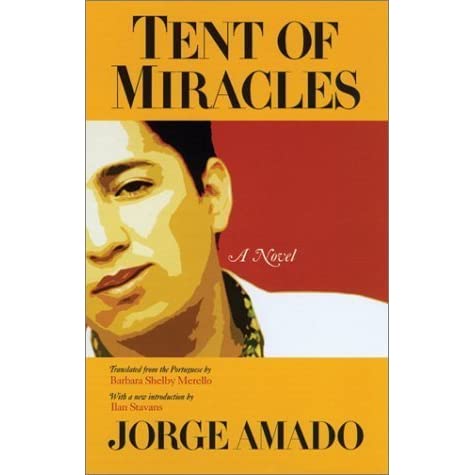
Tent of Miracles, by Jorge Amado: Racism and Parochialism Against the Backdrop of a Mythic Bahia


Jorge Amado (1912-2001), one of the most popular and internationally known Brazilian authors, started his career writing realistic books that carried a biting criticism of the economic elites and their exploitation of the working classes and the poor. This Marxist phase characterized the first of his works. After the publication of Gabriela, Clove and Cinnamon in 1958, however, his novels became more populist and satirical, with a stronger focus on the sensuality and picturesque aspects of the afro-Brazilian culture of the author’s native state of Bahia, located in the northeast of the country. The author was harshly criticized by many for having changed his tone.

With Tent of Miracles, first published in 1969, one could say that Amado managed to strike a fine balance, providing a serious examination of Brazilian socio-economic issues and highlighting the hedonism and colorfulness of the Bahian culture, with its stunningly beautiful mulatto women, the freewheeling sensuality of its people, their lively songs, and dances and the prevalence of African-originated religions and cults.

The Themes

Tent of Miracles is a strong satire on the parochialism of the Brazilian intelligentsia – which needs validation from developed countries, especially from the US, before appreciating local talents in all areas of art and knowledge. The novel is also an inspired ode against racism, praising the power and beauty of miscegenation. In that respect, we can say that the themes of the book are more relevant than ever in today’s global context of generalized xenophobia, racism, and prejudice against diversity.

The Plot

The story kicks off when a Nobel Prize-winning North-American scholar, D.J. Levinson, comes across some forgotten books in the library of Columbia University and decides that their author is one of the best anthropologists he’s ever read. The racial considerations and the detailed description of the customs and “folkways” of the racially-mixed people of Bahia found in those four dusty volumes deserve to be known and discussed by the global academic community. The author, a black Brazilian called Pedro Archanjo, lived in Bahia for 75 years (1868 -1943), doing menial work in the streets of the city of Salvador (called Bahia at the time), destitute and unrecognized by his upper-class contemporaries. Levinson then comes to Brazil to experience first hand the theories put forward in the books and to promote their author.

Of course, the announcement of the arrival of the US luminary makes headlines in the biggest newspapers of Brazil. This arouses the interest and greed of the local authorities, intellectuals, and politicians, who wish to advance their own personal agendas, tapping into the newly-elevated status of Pedro Archanjo to scientific prodigy. It’s decided that the centenary of Pedro Archanjo’s birth – about to take place at the end of the year – deserves a fitting and official celebration in the city after all.

At this point, the lesser writer and poet Fausto Pena is hired by Professor Levinson to do research into the life and times of Pedro Archanjo, spanning more than 70 decades. In reality, Levinson’s main objective is to get Pena out of they way so that he can enjoy the pleasant company of the poet’s girlfriend, the journalist Ana Mercedes, an unashamedly social climbing mulatto beauty.

As a result, it is through Fausto Pena’s eyes that we get to know the story of Pedro Archanjo, despite all the gaps, incongruences and half-truths he gathers in his notes. We learn about Archanjo’s popularity among women, the innumerable children he fathered out of wedlock, his work as a runner for the School of Medicine and, finally, his rising awareness of the social conditions of the underprivileged people of Bahia, subject to all kinds of oppression, violence, and prejudice. Archanjo then decides to self-educate, write about race relations, and become a political militant.

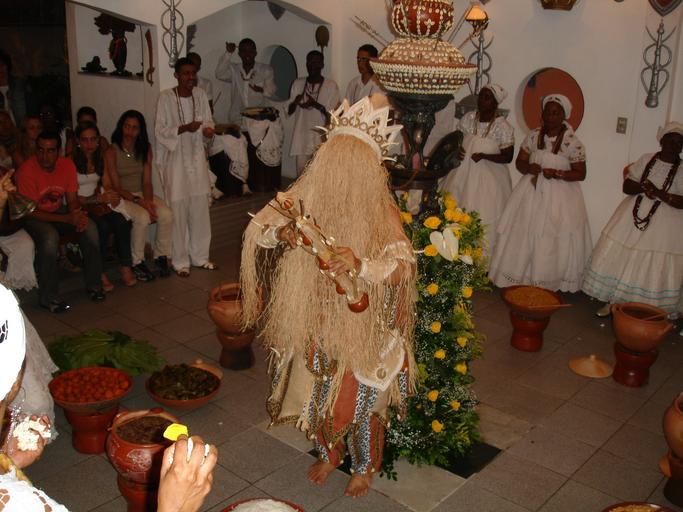
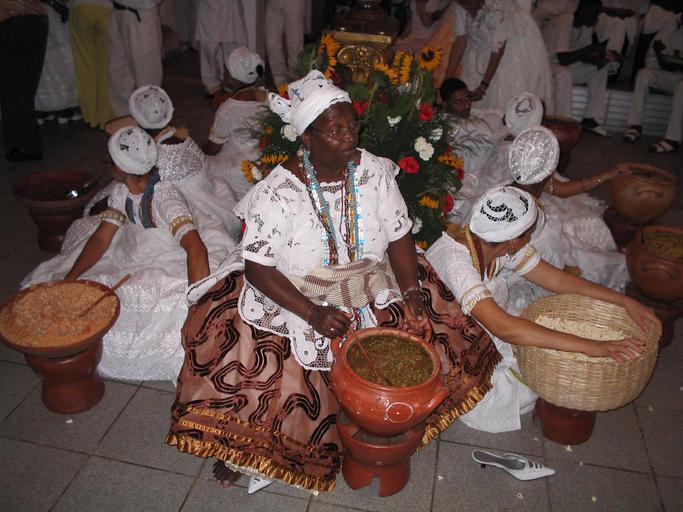
Despite its important and political undertones, the story, of course, unfurls against the backdrop of a poetic and colorful Bahia, with humorous anecdotes and detailed descriptions of the rituals of the local afro-influenced religions, the local foods and spices, the dance and music. Jorge Amado kept many original African words in these passages – wisely kept in the translation into English – presenting a complete glossary in the back of the book.

The Characters

The characters of Tent of Miracles are not entirely realistic, but ironic representations of specific types that populate the Brazilian collective imagination. We can split them into the powerful (corrupt politicians, controlling newspaper editors, arrogant college professors) and the disenfranchised (the malandros, bon vivants, ruffians, drunks, gorgeous mulatto women, old wise men, and gold-hearted prostitutes). 

Most of them, however, come across as a bit underwritten; they are not fully rounded characters. Pedro Archanjo, of course, personifies all the contradictions of a typical popular hero, as all his facets are praised in the Carnival celebration held in his honor at the end of the book: minor candomblé priest, vagabond, striker, runner of the School of Medicine (where he started his more formal education), heavy drinker, womanizer, teacher, sorcerer and writer! 

The Style

Although the book has strong elements of magical realism, especially in the scenes that take place in the candomblé terreiros, the space where the afro-religions and cults have their rituals (devotees embarking in trances; divinities taking possession of their bodies; supernatural events occurring; myth and reality getting intertwined), most of the plot develops in a fairly realistic and straightforward way.

The Relevance of Tent of Miracles Today

Jorge Amado

Written during the first years of the Brazilian military dictatorship, the passages depicting the brutal repression by the police of the Afro-Catholic cults, the bloody raids against the terreiros, and the beating or killing of their members – which happened especially during the 1920s and 30s – can be interpreted as a fitful metaphor of the times.

The novel, however, does not feel dated at all, as its themes are still universal and very concrete. The irony made explicit in the story is that miscegenation deeply permeates the whole of Brazilian society, and, thus, the bigotry and racism of people whose mixed-race blood is either carefully hidden in the family past or even naively ignored are laughable and hypocritical. It’s time for Brazil – and other countries in the world – to bury the myth of white supremacy and come to terms with the fact that we’ll carry on living in an irreversibly multicultural, mixed and diverse society.

Jorge Sette

5 Booker Prize Winners that will Rock your World


The Booker Prize or The Man Booker Prize for Fiction – initially called the Booker-McConnell Prize, due to the company which sponsored it – is an English literary prize created in 1968. It is awarded to the best novel of the year. At first, only Commonwealth, Irish, and Zimbabwean writers were eligible, but as of 2013, the eligibility was extended to any novel written in English and published in the UK. Being awarded, or even shortlisted for it, is a great honor, as the prize warrants success and fame for every writer who’s associated with it.

0370F7A4-E9C4-4DBB-BDFE-DECD608E0582


As a voracious reader, I can assure you that, whenever you finish a novel and are left with that familiar void, yearning for another great book to come your way, taking a look at the Booker Prize list of winners or shortlisted books is a great way to begin your search. You will hardly be disappointed.

The list below is my personal choice of great Booker Prize Winners. I’m sure they will stay with you long after you finished reading them, as the language is stunning and the plots are both original and gripping. The books below are listed according to the year they received the prize:

  1. Paddy Clark Ha Ha Ha by Roddy Doyle (winner of the 1993 Booker Prize)

Funny, moving and poignant, this novel is told from the perspective of a 10-year-old Irish boy growing up in the 1960s. As he narrates his experiences – using the logic and language of childhood – we get to know his discoveries, games and adventures with his little brother, the relationship between his parents and the daily routine of his family. Despite the cheerful tone of the book, at some point, readers begin to suspect they are being misled by the unreliable narrative of a child: not everything is going well at home, the truth is his parents are drifting apart and about to break up.

02ABD8EB-5C9A-4D14-9F13-D3ECCA4D753E_4_5005_c

  1. Amsterdam by Ian McEwan (winner of the 1998 Booker Prize)

Three former lovers cross paths at the cremation of their common mistress, Molly Lane, without realizing that the meeting will be a turning point in their lives. Their careers and personal lives will be cleverly manipulated by the woman’s jealous and resentful widower, George, who will set them on a collision course with one another, crafting a spiderweb of blackmails, mutual blames and lies, tabloid stories, debauched cross-dressing photographs, sinister euthanasia doctors and, ultimately, violence and tragedy. Clive Linley, one of the lovers, is a musician who, after attending the cremation, embarks on a depressive behavior, worried that he may get sick and die as young and unexpectedly as Molly. As a consequence, he is having a mental block, which prevents him from finishing up the Millennium symphony he was assigned to compose. Fame and recognition are at stake here and he is frantic (the language used by the author to describe the composer’s creative process and its drawbacks is already a good reason to make you love the book); Molly’s second lover, Vernon Halliday, is a mediocre editor of a serious and conventional newspaper whose circulation and readership are going seriously down. He is suddenly given the chance to resort to dirty and cheap tabloid tactics to try to reverse the process, publishing intimate photographs which are likely to destroy the family life and career plans of the third lover, Julian Garmony, a foreign secretary with aspirations of becoming prime minister.

D0DD3A38-1BB2-4A1A-B890-E64F5B575E87

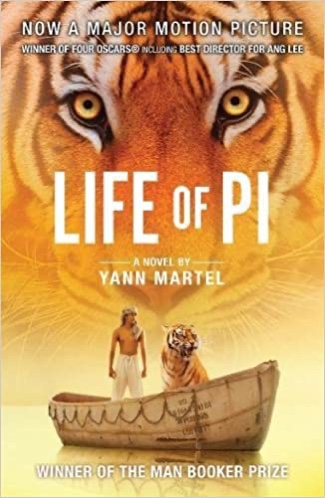
  1. Life of Pi by Yann Martel (winner of the 2002 Booker Prize)

A hymn to religious tolerance, a celebration of life in all its forms, and the recognition of the power of storytelling make Life of Pi an unforgettable novel. The story contrasts myth and reason, religion and science, asking the reader to compare the effectiveness of simply narrating the factual sequence of events of a journey with the alternative of fictionalizing it through the use of allegories. Which version would you choose as the more insightful and helpful way to understand the world? A Canadian writer in search of ideas for his new book is promised the opportunity to hear a story that will make him believe in God. With this aim, he agrees to meet and listen to the life story of an Indian man who spent 227 days adrift in the Pacific Ocean, sharing a lifeboat with none other than a Bengal tiger, after the shipwreck of the Japanese cargo ship which would take his family to Canada. Brutal, scatological, philosophic, funny and poetic, Life of Pi saddens, cheers and inspires the reader, who will certainly come out of the experience loving tales and metaphors even more than when he started the book.

D108C970-DBD2-43C4-A62B-B4A810470BF7_4_5005_c

  1. Wolf Hall by Hilary Mantel (winner of the 2009 Booker Prize)

The first part of this trilogy tells the known story of the marriage of Henry Tudor and Anne Boleyn and all the political, religious and social upheavals involved in making it happen. The novelty is the choice of perspective chosen by the author, who decides to focus the novel on a lesser historical character, whose life details are not very well-known: Thomas Cromwell. Choosing Cromwell – who rises from being the son of a Putney blacksmith to Master Secretary of the kingdom, due to his intelligence and cunning – as the protagonist of the story allows the author to fill in the blanks of history books with her fertile imagination, transporting and placing the reader smack in the middle the exciting events that happened more than 500 years ago.

A21F84FD-CFA8-4B15-9EC7-F13900DF9E9D_4_5005_c

  1. Bring up the Bodies by Hilary Mantel (winner of the 2012 Booker Prize)

This is the second volume of the Cromwell trilogy, and, in my opinion, better written and even more exciting than the first – to me, it sounds like the author finally found the best way to tell the story. Despite all the efforts and machinations of the court to bring Anne Boleyn and Henry Tudor together, causing England to sever links with the Catholic Church, and antagonizing its powerful neighbors in Europe by appointing Henry VIII the head of the Church of England, the queen fails to deliver a male heir and will have to be ousted. Craftily paving the way to Henry’s new marriage to Jane Seymore, Cromwell will become Anne’s main nemesis, ruthlessly plotting the annulment of her marriage and driving her to a thunderous fall, which will bring many others down with her. Terrific reading.

8F6B6A9D-735E-4E32-97EC-FF679A8EAF24_4_5005_c

Have you read any of these books? Share your comments with us. Also, watch this space for further suggestions on the wonderful books out there you may not have heard about.

Au revoir

Jorge Sette

10 Books You Should Read to Understand Brazil Better


Congratulations, you got a new job. You will be relocated to Rio? How exciting. How did you manage to grab such an interesting post? You must know a lot about Brazil and speak good Portuguese. Or maybe you are just the only person who had the availability to move to this country. Whatever the reason, or despite how much you might already know about Brazil, I would strongly recommend you read the books listed below to get a crash course in the country. They are all fun to read and will contribute in their own way a small piece of understanding to complete the puzzle.

I’m Brazilian myself, spent most of my life here, and still profited a lot from reading these texts. Here they are:

1. The Brazilians, by Joseph Page.

510O0emLBRL._SX331_BO1,204,203,200_

This is one of my favorite books about Brazil. It’s visibly written by someone who loves the country, and despite its very objective, and sometimes hurtful, analysis, makes you feel appreciated and liked as a local. Besides, it covers many different aspects of the culture and history of the country, including the national religions and the nuances of the current power structure, all written in a light and pleasant language. I particularly liked the way it analyzes the way the different social classes interact with each other in Brazil, with all the hypocrisy and paternalism that underlies these brutal relationships. However, the book was written way before the passing of a new set of Constitutional amendments (PEC 478 – known as PEC das Domésticas) in 2013, regulating the working  life of the “empregadas domésticas” (Live-in maids; a very typical Brazilian institution), and therefore broadening the professional rights of these underpaid and exploited workers more than 100 years after the abolition of slavery took place in the country.

2. Brazil on the Rise, The Story of a Country Transformed, by Larry Rother.

5153cEwXJ+L

Written around the time when the now infamous cover of the magazine THE ECONOMIST showed an illustration of the statue of Christ the Redeemer in Rio taking off to the skies as a potent rocket on its way to a future of fully developmental glory and economic power, the book gives us the historical and economic background necessary to understand how we got to where we were by the end of the two mandates of the Labor Party, under president Luís Inácio da Silva (Lula). It focuses on the economic and political aspects and the obstacles the country had to overcome on its path towards democracy and to arrive at the reasonable level of economic stability we had some 6 years ago. Of course, things are not looking now as great as when that issue of THE ECONOMIST came out, but corrections are being made along the way and I firmly believe we will realize the bright potential we have been predicting for the past 500 years.

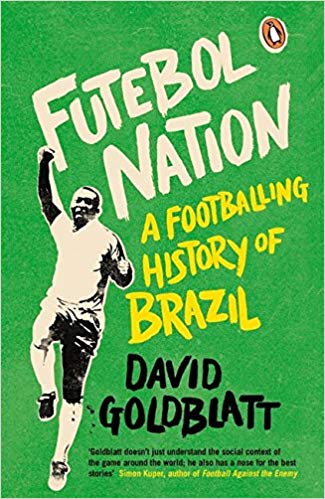
3. Futebol Nation: A Footballing History of Brazil, by David Goldblatt.
510bwbxTBGL._SX323_BO1,204,203,200_

The English writer does not sound very sympathetic to the country and its people. The writing is a cold and dispassionate account of the importance football gained in Brazil since its introduction in the early years of the 20th century and its ramifications through the history of the country. Although it became clear after the World Cup (2014) that football seems to have lost a lot of its importance to Brazilians – given the sense and irony most of the population demonstrated after the historic loss to Germany with a scoreline of 7×1, the book makes it clear that, especially from the 1950s to the 1990s, football was Brazilians’ greatest source of pride. It is also evident how strongly we identified the values of the nation with this foreign sport, allowing and making it easy for politicians to tap into its people’s naive passion to advance their own agendas. Although the book does not take into account the World Cup of 2014, it covers the June 2013 social unrest and popular demonstrations directed mainly against the realization of the over-budgeted upcoming event. All in all, it’s a very interesting read, even for those who are not really into the sport.

4. Backlands: The Canudos Campaign, by Euclides da Cunha.

9780143106074-1

Considered one of the most important books of the Brazilian canon, this text is a journalistic account of the conflict of Canudos – supposedly a civil war between monarchists and republicans at the end of the nineteenth century – which took place in the arid and difficult geographic region known as the backlands in the interior of Bahia. The official story says that a group of backlanders (sertanejos), led by a religious fanatic, Antônio Conselheiro, the Counselor, built up a settlement constituted of thousands of huts forming a kind of overcrowded slum, spreading over the valleys and hills of the region. The book reads like a novel, once you manage to get through the slow and dragging geological, topographical and climactic minutiae used to describe the region in the first couple of chapters. Then it finally gets to the action, depicting with cinematographic vigor the 4 military incursions into the settlement of Canudos, defended fiercely by the backlanders (sertanejos and jagunços, the latter considered bandits infiltrated in the community).

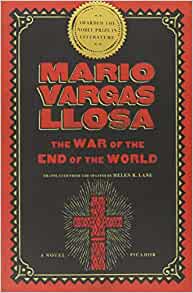
5. The War at the End of the World, by Mario Vargas Llosa.
Unknown

While Backlands was meant to be an objective report of the Canudos War in Brazil, this book by Peruvian writer Llosa is a fictionalized version of the events. It tells the same story, but as novels go, adding the thrill and emotional twists of the format. The book depicts characters on both sides of the war, offering a balanced perspective of what happened. It’s considered one of the author’s best books. Llosa himself considers it his most accomplished novel, and it features in Harold Bloom’s The Western Canon.

6. A Death in Brazil, by Peter Robb.

51wRrAw-XyL

A thrilling account of 500 hundreds years of Brazilian history, Australian writer Peter Robb’s book also reads like a novel. The writer lived in Brazil and offers authentic and knowledgeable insights into the country, its people and culture. He also talks very candidly and passionately about the country’s serious problems and inequalities. The death of the title is the mysterious assassination of PC Faria’s, fixer and bagman to corrupt President Collor in the early 1990s, but the book does not focus on this. It covers, among other things, the brutal slavery system we had in the country until 1888 (longer than anywhere else in the Western world), the destruction of the fugitive slave settlement of Palmares, the Canudos war, Brazilian cuisine and literature. A must-read.

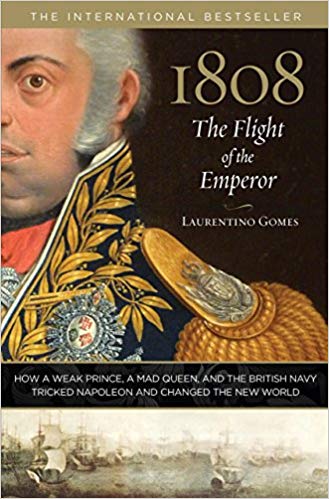
7. 1808 – How a mad queen, a coward prince and a corrupt court fooled Napoleon and changed the History of Portugal and Brazil, by Laurentino Gomes.
517MnMhRr7L._SX327_BO1,204,203,200_

Written by one of the most influential journalists of Brazil, this is the first installment of a trilogy that covers the history of the country from the transfer of the Portuguese royal court to Rio de Janeiro in 1808, in a maneuver to escape the Napoleonic wars, to the events surrounding the Proclamation of the Republic in 1889.

It took 10 years of research for the first volume to come to light. It’s a well- written, direct and very readable account of the story of the arrival in Brazil of D. Joao VI, his wife, Carlota Joaquina, and their entourage, changing the destiny of the colony forever by paving the way for the declaration of independence 14 years later. Mixing the personal anecdotes of these characters – some of them very funny – with important historical events, Gomes offers the reader a sprawling overview of those times in the colony.

1808 was awarded two Jabuti Prizes, in the categories of best reportage-book and non-fiction book of the year.

Screen Shot 2020-02-16 at 8.18.00 AM

8. 1822 – How a wise man, a sad princess and a money crazy Scotsman helped D. Pedro create Brazil, a country that had everything to go wrong, by Laurentino Gomes.

This is the second volume of the trilogy we mentioned above. Now we are focusing on the story of D. Joao VI’s son, Prince Pedro, and the role he played in the declaration of the independence of the country, culminating in the historic Cry of Ipiranga, and then becoming the first Emperor of Brazil. The book reads like a thriller, depicting the highly charged political events, the confronting factions and the many different interests that led Pedro to decide to stay in the country and cut its ties with Portugal. It portrays D. Pedro I as a wild, sensual and determined young man, who did not refrain from playing the role history reserved for him. 1822 added two other Jabuti Prizes (the third and fourth) to Laurentino Gomes’s collection, again in the categories of best reportage-book and non-fiction book of the year.

9. 1889 – How a tired emperor, a vain marshal and a wronged teacher collaborated for the end of the Monarchy and the Proclamation of the Republic in Brazil, by Laurentino Gomes.

The third volume of Gomes’s acclaimed trilogy revolves around the Proclamation of the Republic in Brazil, bringing down the Empire, which had been the most stable and solid government in the region for 67 years. Emperor D. Pedro II – 0ne of the most educated man of his time – was banned from Brazil with his family, being exiled in Europe. Marshal Deodoro da Fonseca, a former anarchist and a friend of the deposed emperor’s, was in charge now, despite his old age and debilitated health.

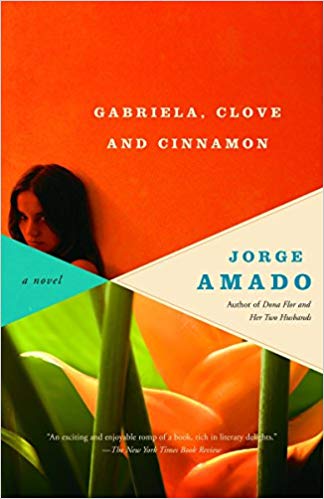
10. Gabriella, Clove and Cinammon, by Jorge Amado.
416OrtEBdpL._SX322_BO1,204,203,200_

Besides The War at the End of the World, this is the only other novel I included on our list of top 10 choices for the reader who wishes to understand Brazil. Written by Jorge Amado, Gabriella takes place in the small town of Ilheus, in the state of Bahia, during the economic boom of the cacao in the 1920s. The book consists of two intertwined stories: the first is the romance between the bar-owner Nacib, of Syrian origin, and the drought immigrant worker Gabriella, who becomes his cook and mistress; the second story is the confrontation between the conservative plantation colonels (powerful heads of landowner families) and the wealthy young man Mundinho Falcão, who represents the arrival of modernity, efficacy and urban values in the rural underdeveloped and backward region. Readers will be delighted to have all their senses and intellect arrested, as they immerse in the world of Gabriella: Amado describes the tastes, smells, and texture of the local foods; the funny, and sometimes violent, local customs; the hypocrisy of a narrow-minded and provincial society; the brutality of machismo; and the bright colors of what is supposed to be a microcosm of Brazil and Latin America.

I guess these 10 books will give newcomers enough introductory background and information on the beautiful, challenging and diverse country I’m lucky to live in. Welcome, good luck with your new job, and don’t forget to rate and comment on this post.

Au revoir

Jorge Sette.
 

Four of Brazilian Writer Lima Barreto’s Main Works – As Modern and Relevant as Ever


Lima Barreto, the acclaimed journalist and author of the Brazilian Belle Époque, is more popular than ever these days. The author was honored at the FLIP (International Literary Party of Paraty) a couple of years ago and that made him even more well-known.  New editions of his work have been released since then. Along with these, there was also the publication of a very well-researched biography, Lima Barreto – Triste Visionário, by historian Lilia Moritz Schwarcz (Companhia da Letras), available at the main bookstores.

02224_gg

Lima Barreto was born in 1881 in Rio de Janeiro and dedicated his life to writing and literature. His father was a typographer with connections with the powerful Empire Senator Viscount of Ouro Preto, who became Lima Barreto’s godfather. His mother, a freed slave, was a school teacher. She died when the writer was only six.

The key to understanding his artistic work is the overlap between the stories he created and his biography. Dark skinned (a mulato, as we say in Portuguese) and born in the lower echelons of society himself, he understood very well, and experienced first hand the issues discussed in his novels and short stories.

The main themes of his realistic pre-modernist fiction are the problems of the recently founded Brazilian Republic: class and race prejudices; the cynicism, incompetence, and arrogance of academics, journalists, politicians and the police force in general; the oppression women were subjected to. Not surprisingly, many of the problems Brazil had a hundred years ago are still current, making Lima Barreto’s works powerfully modern and still very relevant.

Lima Barreto had a productive but short life. He died at the young age of 41, plagued by alcoholism and related mental illnesses.

The books listed below have not been translated into English yet (except for The Sad End of Policarmo Quaresma), but, if you speak Portuguese, you can easily order them from Bookwitty.

  1. Recordações do Escrivão Isaias Caminha (Memories of the Clerk Isaías Caminha)


85012_gg

Lima Barreto’s debut novel was received coldly by the critics and the literary community of the time. The resentment of the protagonist-narrator and the sarcastic (although disguised) way in which he describes powerful figures of the contemporary society irritated many people who possibly identified themselves with the characters depicted in the novel and felt ridiculed by it. In the novel, Isaías, a boy from the countryside, does exceptionally well in school and is predicted to have a bright future, due to his intelligence and hard work. As a young man, full of hopes and willing to expand his horizons, he leaves his family and hometown, coming to Rio de Janeiro with a letter of recommendation for a congressman. Isaias thought it would not be difficult to find a good job, given his previous scholarly success and this single connection with a powerful politician. It does not take long, though, for his dreams to be crushed. Rio turns out to be a concrete jungle, where the doors are tightly closed to dark-skinned men. The novel tells the story of the deterioration of the young man’s self-esteem and his progressive submission and passive acceptance of the brutal rules that govern Brazilian society.

  1. The Sad End of Policarpo Quaresma

51nCUZicH4L._SX326_BO1,204,203,200_

This novel marks the transition from Realism/Naturalism to the Pre-Modernist literary movement in Brazil.

Policarpo Quaresma, the protagonist, is a methodical civil servant who lives with his spinsterish sister in the suburbs of Rio at the end of the 19th century. He is a naïve and rather optimistic nationalist, who believes that he himself can act as a force to preserve the traditions of Brazil in the face of the fast modernization and internationalization the country is going through.

To accomplish his nationalist objectives, first, he writes a letter to the Parliament proposing that the national language be replaced by Tupi, the indigenous language spoken by the local tribes who lived along the coast of the country before the arrival of the Portuguese. The idea is received with such mockery and disbelief that Quaresma suffers a nervous breakdown, being confined, for a while, to an asylum for the mentally ill.

Recovering from the illness, Quaresma decides to move with his sister to a farm on the outskirts of the city to live a more peaceful life in contact with nature. There, he tries to initiate, again practically single-handedly, an agricultural reform, aiming at setting an example to his countrymen, teaching them how to make the most efficient and rational use of the fertile soil of his beloved fatherland. This results in another failure, as he cannot count on any official help with his endeavour.

Finally, he sides with President Marshal Floriano Peixoto (a real historical figure), joining the military, to fight against the Second Naval Revolt, only to find out that the leader, contrary to Quaresma’s idealization, lacks the brains and military-strategic mind of a Napoleon, being nothing more than an authoritarian and unskilled dictator to a barbaric country in the periphery of civilization and capitalism.

  1. Clara dos Anjos

41dMg-rX03L

Published after Lima Barreto’s death, the novel has a simple and direct plot. It’s the story of a dark-skinned girl from the suburbs (the impoverished neighborhoods on the outskirts of the city of Rio de Janeiro, rarely portrayed in our literature) who gets seduced and abused by the white guitar player Cassi Jones, a notorious crook from a slightly higher social social class. However, the focus of the book is not really the plot. Clara’s sad story is just a pretext for the author to explore important connected issues. The main theme of the novel is the suburbs and its inhabitants: the members of the poorer classes of Brazil. Lima Barreto, with his precise journalistic prose, describes their small and difficult lives, the destitute environment they are forced to live in – despite the high taxes they pay, which are hardly used for their own benefit; the excessive drinking habits of the men; their music and literature; and the repression suffered by their passive and conservative women.

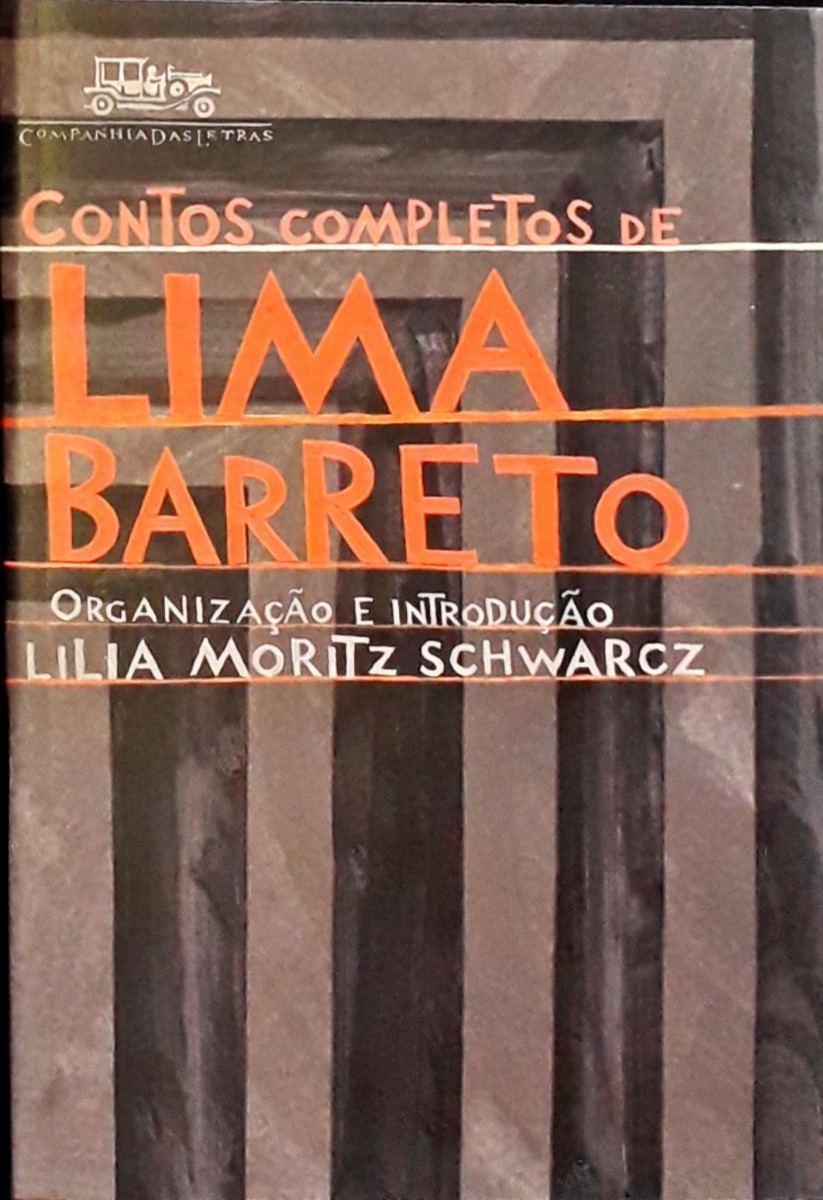
  1. Contos Completos de Lima Barreto (Lima Barreto’s Complete Short Stories)

livro-contos-completos-de-lima-barreto-D_NQ_NP_668299-MLB29809797900_042019-F

Besides journalistic articles and novels, Lima Barreto also left us a great number of short stories. Again, in those works, his main themes are the description of daily life in the city of Rio de Janeiro and its suburbs during the years of the Brazilian Old Republic (the period comprised between the end of 19th century and the beginning of 20th century), written with irony and sharp criticism against the political system of the time, the ingrained racism of our society, the oppression of the lower classes in general and the limitations imposed on women in particular. He also rebuked the mediocrity of the cultural and literary elites of the country. His attempts to mock Brazilian society while denouncing its serious flaws have made a profound mark in our literature.

Would you like to share your opinion about Lima Barreto? Please write your comments below.

Au revoir

Jorge Sette


Toxic Relationships Between Parents and Kids in Fiction


Parenting is hard work. This most intimate relationship between human beings is fraught with danger; it can be emotionally draining and has every chance of going wrong. It’s an incredibly difficult juggling act, where the pieces at play are as fragile as glasswork.  The books selected below are all stories about dysfunctional families, whose members are involved in highly toxic relations.

1. The Prince and the Pauper – by Mark Twain

1749b5af55cb2c2efb751e61abce0f1d

In this moving and entertaining classic story – Mark Twain’s first attempt at historical fiction – the young Prince Edward VI, son of Henry VIII, is given the unique opportunity to trade places with the pauper Tom Canty – a boy from Offal Court off Pudding Lane who bears an uncanny physical resemblance to the prince. Edward’s plan is to experience the freedom of a normal life and to get to know firsthand the reality of his future Kingdom. However, as he drifts along the squalid streets of XVI century London, fleeing from the brutal hands of the thieving alcoholic John Canty, Tom’s abusive father, he will have to deal with problems and learn harder lessons than he ever bargained for. Great quote:

“A full belly is little worth where the mind is starved.”

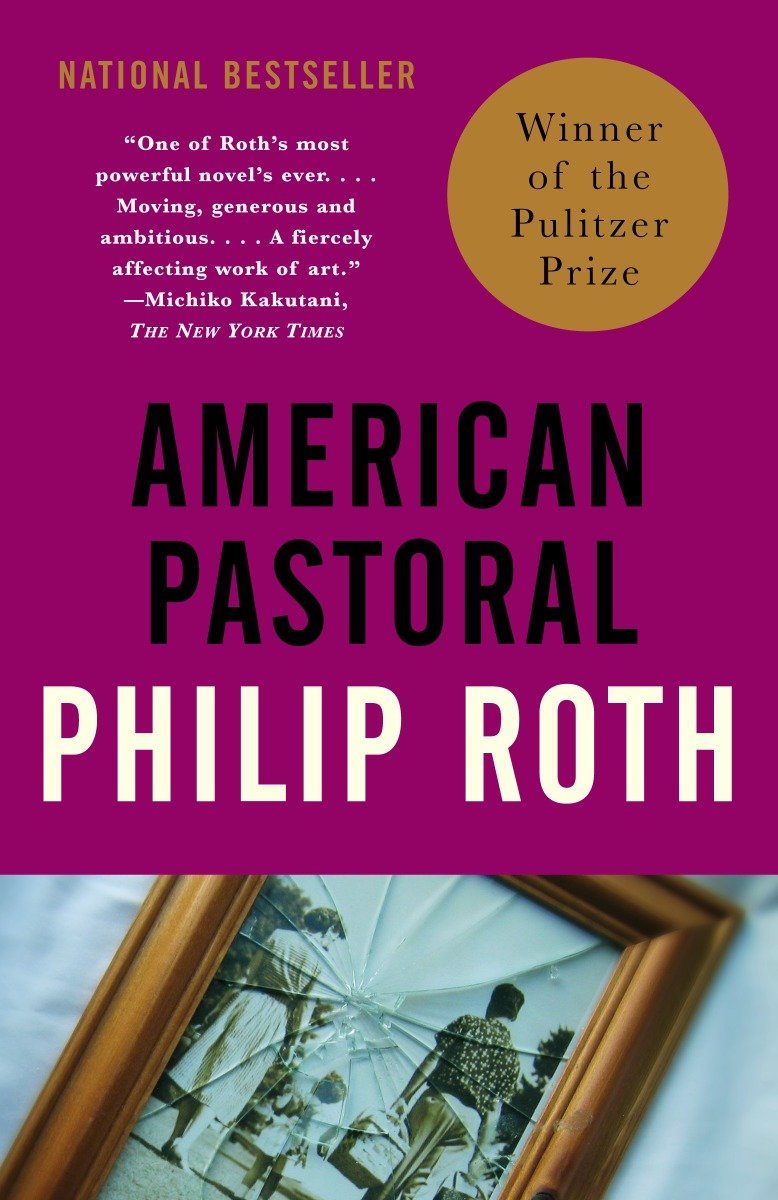
2. American Pastoral – by Philip Roth

71--XcbyBEL

Seymour “Swede”  Levov was the beloved blond-haired, blue-eyed Jewish athlete at Newark’s Weequahic High School. Levov was the object of envy and admiration of every boy in the community, a local hero. He grew up to become a successful businessman and to live the American Dream to the full, with a perfect wife and a loving daughter, owning a bucolic estate in the suburbs. But this is a Philip Roth novel, and reality has its ways of catching up. The times are changing; we are in the turbulent late 1960s now. From a sweet, good-looking little girl, Levov’s daughter Merry has slowly turned into a stammering, overweight teenager: a radicalized leftist terrorist, who detonates a bomb at the local post office to protest the Vietnam War. A bystander gets killed in the process, and Merry goes into hiding, but her father will never give up on her. There signs, however, that maybe Levov is somehow flawed, like a tragic Greek hero, bringing this catastrophe upon himself. What could have happened between Swede Levov and his daughter to change her so profoundly? Let’s look back at a small incident that took place on the beach a long time ago… American Pastoral is considered by many Roth’s masterpiece. The novel was awarded the Pulitzer Prize in 1998. I will leave you with a chilling quote from this stunning book:

“The fact remains that getting people right is not what living is all about anyway. It’s getting them wrong that is living, getting them wrong and wrong and wrong and then, on careful reconsideration, getting them wrong again. That’s how we know we’re alive: we’re wrong.” 

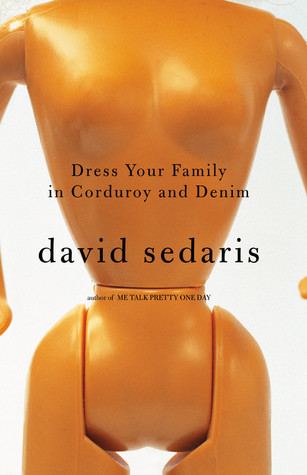
3. Dress Your Family in Corduroy and Denim – by David Sedaris

10176

David Sedaris is one of the funniest contemporary writers in America. Growing up gay in a family of four sisters and a younger brother, under a traditional middle-class father of Greek descent, and a chain-smoking and alcoholic mother, the obsessive-compulsive author focuses, in his stories, on the hilarious experiences of his severely dysfunctional family. His self-deprecating kind of humor and singular perspective on the various facets of family life will make the reader roar with laughter. Among his works, I would especially recommend Dress My Family in Corduroy and Denim, where you will find some of his funniest stories.

“She’s afraid to tell me anything important, knowing I’ll only turn around and write about it. In my mind, I’m like a friendly junkman, building things from the little pieces of scrap I find here and there, but my family’s started to see things differently. Their personal lives are the so-called pieces of scrap I so casually pick up, and they’re sick of it. More and more often their stories begin with the line “You have to swear you’ll never repeat this.” I always promise, but it’s generally understood that my word means nothing.” 

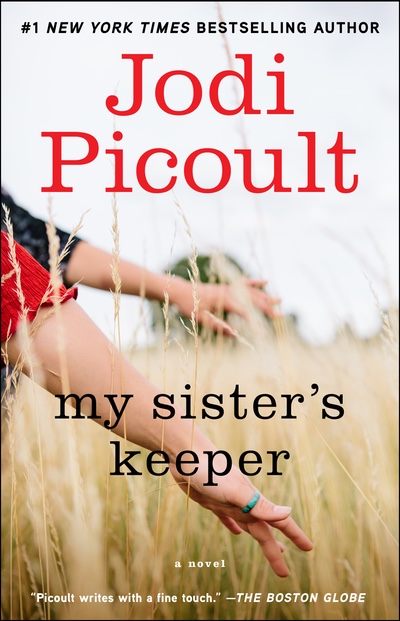
4. My Sister’s Keeper – by Jodi Picoult

400-keeper-9780743454537

This is the unsettling story of Anna Fitzgerald, who, unlike most of us, was deliberately conceived by her parents to fulfill a specific purpose. Anna was born to provide genetically suitable material for her older sister Kate, who has been diagnosed with promyelocytic leukemia. On the various occasions when Kate relapses, she needs to rely on Anna’s donations of leukocytes, stem cells, and bone marrow to survive. We meet Anna when she is already thirteen and beginning to resent and question her role in life. But when her parents expect her to give Kate one of her kidneys, Anna decides she’s had enough and looks for legal help to sue them for rights to her own body. From the book:

“In the English language there are orphans and widows, but there is no word for the parents who lose a child.” 

Have you read any of these books? Share your views with us.

Au revoir

Jorge Sette

10 Cool Questions about Peter Carey’s Oscar and Lucinda – A great love story (for your book club)


Oscar and Lucinda is one of those books that grow in the reader’s mind over time. The unforgettable and powerfully written novel by Peter Carey, winner of the 1988 Man Booker Prize, tells the improbable love story between a religiously obsessed English young man and a compulsive Australian heiress.

c7bfa1c130de93e81d6d2be25a84aeee

Oscar has a gambling problem. He loves horse races. Lucinda, on the other hand, adores glassworks and cannot resist a game of cards.

Lucinda purchases the oldest Glass Factory in Sydney. The story takes place in the 19th century and culminates with the couple’s joining forces on the biggest (and strangest) bet of their lives: gambling on the transportation of a glass church across the Outback from Sydney to the remote Bellingen, 400 km up the coast of New South Wales. This is certainly one of the most outlandish and beautiful literary visions I’ve come across as a reader in a long, long time.

In 1997, the novel was made into an acclaimed movie directed by Gillian Armstrong, starring Cate Blanchett and Ralph Fiennes.


Cate_Blanchett_Cannes_2015-1

Cate Blanchett – who plays Lucinda in the movie version.


The questions below are fairly open-ended. They are intended to be incorporated into the list of others you are possibly already using during your book club’s sessions. It helps to have a mediator to conduct the discussions. There are no absolute right or wrong answers, so I would recommend the members of the group be flexible, welcoming and respectful of other people’s opinions and interpretations. Enjoy:

1. Where did Oscar live as a child (country, region, city)? Where did Lucinda live as a child (country, region, city)?

2. Why did Oscar start moving away from his father’s religion to become an Anglican?

3. What did Oscar do for a living? What about Lucinda?

4. Where/When did Oscar and Lucinda first meet? And what was Oscar’s greatest fear at that point?

5. What feelings developed when they decided to play cards for the first time, and how did the storm change the situation?

6. How did Oscar morally reconcile religion and gambling?

7. How does a Glassworks or glass factory reflect Lucinda’s own personality?

8. Would you consider Lucinda a feminist ahead of her time? Give us three examples of her behavior in the story that would justify this idea.

9. What is the passage (or passages) in the novel that will probably linger in the readers’ minds after they’ve finished it?

10. If you were Peter Carey, the author, list three things you would have changed about the novel before it was published. Your answer can be about the characters, the plot, the location, the times or the ending.

Choose a couple of the questions above and answer them in writing in the comments space below, if you wish.

Au revoir

Jorge Sette.


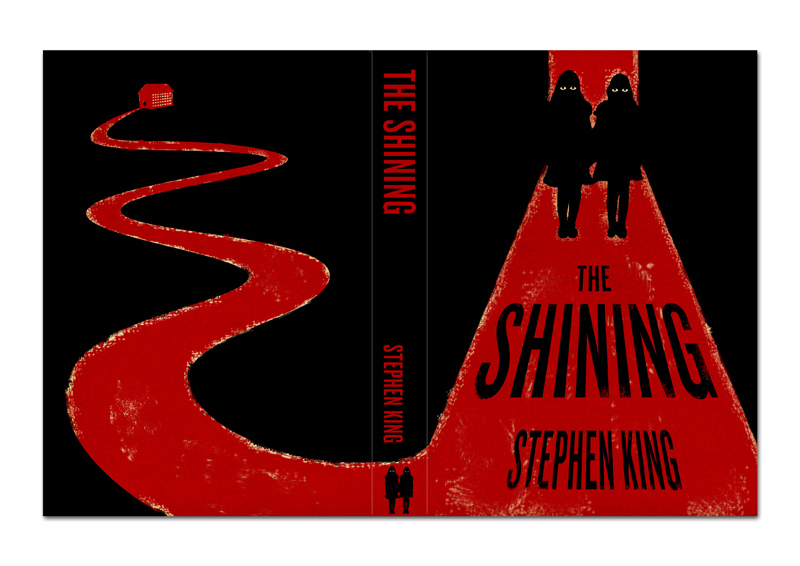
Stephen King’s The Shining: Like Father, Like Son.


Looking for the perfect book to read on Father’s Day? The Shining by Stephen King is a classic: one of the scariest books ever written. One reason for its popularity is the novel was turned into a celebrated movie directed by Stanley Kubrick, starring Jack Nicholson and Shelley Duval in the main roles, back in the 1980s.

Rumor has it that King himself was not entirely happy with the movie adaptation. If you read the book, you will probably understand why. Although the movie is heavily inspired by the book, it takes a lot of detours from the original plot and skips important themes that play an essential subtext.

5802698618_c2fbf5eefe_b

In broad strokes, the novel tells the story of Jack Torrance, a recovering alcoholic with a short temper, who – unable to find a job anywhere else, after beating up a student at the school he used to work as a writing teacher – is hired, with the help of a friend, as the caretaker of the sinister Overlook hotel for the winter months, taking his young wife, Wendy, and their 5-year-old son, Danny, with him.

The hotel is completely empty and isolated. To spice things up, Danny has the gift of precognition, popularly known, among the initiated, as the shining: he can read people’s thoughts, foresee the future, and have glimpses of violent incidents that took place a long time ago. Weird things start happening at the hotel. The family, especially the father and the son, are haunted by ghosts and unusual experiences.

Among the strange ocurrences that contribute to its sense of horror, the novel depicts a topiary – bushes and trees trimmed in the form of a rabbit, two lions and a dog – that seems to come to life occasionally; a dead woman who rises from a bathtub in room 217 (to this day, guests in many real hotels are said to turn down the offer to occupy the room with this number because of the novel); images of a mob murder that happened years before materialize in vivid form in front of the kid; in addition, mufffled sounds of a mask ball from the past are heard continually at night.images-2

Could all this be a metaphor for a darker link between father and son? The symptoms of something terrible lurking inside the boy and ready to blossom?

As the months go by and the winter becomes harsher, the claustrophobic atmosphere of the hotel inevitably starts to unhinge Jack Torrance, whose madness slowly sets in. He becomes a deadly menace to his own family.

(Watch the clip of one of the best scenes of the movie below. Warning: strong language is used)

Stephen King is not only a bestselling and prolific author, but he’s also really talented. His books are not just airport thrillers made out of a schematic formula meant to provide a couple of hours  of entertainement before being thrown out in the trash can at the end of your flight. The Shining, for example, can be read on at least two different levels. On a simpler, more straightforward level, we have the chilling mystery tale of a family stranded by heavy snow and lack of telecommunications, living alone in a more than 50-year-old luxurious hotel up in the mountains of Colorado.

An even more disturbing way of interpreting The Shining, however, is to read it as a vigorous metaphor for alcoholism, its genetic origins and terrible consequences: the story would consist of hyperbolic images translating the symptoms of that powerful disease that can be handed down from father to son to grandson, causing extreme anxiety, cravings, hallucinations, madness, violence, and, ultimately, death.

As backstory, the reader learns that Jack’s own father was an alcoholic. He would come home from his job as a nurse, smelling of booze and abusing his wife and kids. Despite being very fond of his father, Jack’s love wears out, as he witnesses a vicious beating his Dad administers to his Mom, for no reason at all.

Danny and Jack, for their turn, are quite close too. As a matter of fact, the bond between father and son is so strong that Wendy sometimes feels left out of their peculiar masculine world, and, as a result, even gets a bit jealous.

In an alternative interpretation of the novel, therefore, the closeness between father and son, Jack’s increasing madness at the hotel and Danny’s precognition gift can be easily understood as the addictive genetic inheritance handed down to the next generation, the beginning of what will become for Danny a full-blown disease in the future.

untitled

Steven King himself was an alcoholic at the time he wrote the novel and the theme in The Shining reflects his own worries and unhappiness about the problem. Writing, after all, has always been a potent way of purging one’s own demons.

Whatever layer of the story you choose, rest assured it will scare the living daylights out of you, which is why the book is such a great thriller in all respects.The book sustains a very oppressive atmosphere, making it rather dark. Perhaps you should put off the experience until Halloween rather than reading it now, on Father’s Day! The tension in the story grows progressively unbearable, culminating in a gruesome climactic sequence. Not to be missed.

Jorge Sette.

The Best-Selling True Crime Book in History


On the warm summer night of August 9th, 1969, a man and three women, riding an old Ford, pulled up to the sidewalk near the entrance of one of the mansions of the affluent neighborhood of Bel-Air, Los Angeles, stepped out and broke into the house, brutally stabbing and beating to death five people who were unlucky to be there.

One of the victims was budding actress Sharon Tate, wife of Polish movie director Roman Polanski, who was out of the country on a business trip. Eight-month pregnant Sharon was stabbed to death sixteen times and her blood was used to paint the word pig on the outside of the front door.

Sharon_Tate_Valley_of_the_Dolls_1967

Actress Sharon Tate

This was one of a series of similar murders that happened around the same place and time.

Charles Manson’s Philosophy

The gruesome crime shocked not only the residents of LA, putting the fear of god in many of the Hollywood celebrities that lived in the area – since everyone first thought it had to do with their fame and fortune – but it was also widely publicized all over the world.

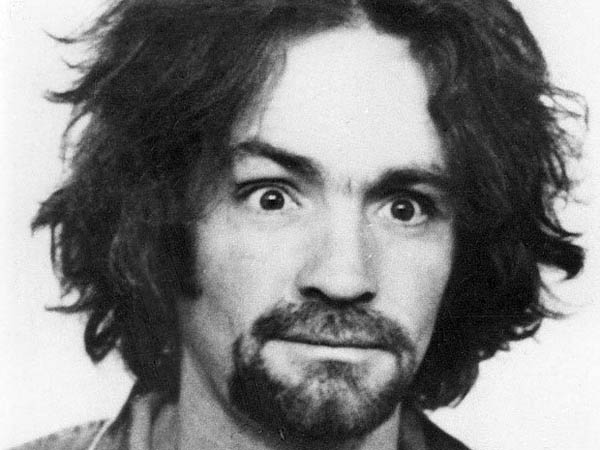
It turned out that the reason behind the horrific murders was a combination of white supremacy concepts, Beatles songs and effective knowledge of how to manipulate people under the effect of hallucinatory drugs such as LSD. This amalgamation informed the insane philosophy conceived and passed on by of one of the most charismatic and dangerous leaders to appear in the recent history of the US: Charles Manson. He was the mentor of the killings, inducing the members of his close group of followers to perpetrate them.

pic-6-3

Charles Manson


Helter Skelter – The Book

The thrilling story of the investigation, arrest and prosecution of Charles Manson and his “family” is told in meticulous detail in the book HELTER SKELTER, written by Vincent Bugliosi (who prosecuted Manson in 1970) and Curt Gentry.

The investigation revealed that back in the mid 1960s, this strange man – who claimed to be Jesus Christ reincarnated – started to recruit dozens of very young outcasts, hippie-like types and school drop-outs – most of them heavy drug users – to live in a community in the outskirts of Los Angeles, California, in the proximity of the Death Valley desert, originating what became later known as the infamous Manson Family.

unnamed

The Manson Family

So powerful was the influence of Charles Manson over his suggestionable LSD-abusing acolytes that he was capable of monitoring their every move and ultimately managed to persuade them to commit a series of savage murders. He was their indisputable leader: they even tried to assume all the responsibility for the crimes to avoid incriminating him.

Of course, it’s impossible to summarize a 700-page book in the small space of a blog post. Especially as the book is packed with the details of the inquiries, the behavior of the press and the defense lawyers, the different phases of the trial, besides gifting the reader with a very thorough examination of the complex personalities, characters and motivation of the individuals involved in the murders. Written in the same vein of Truman Capote’s IN COLD BLOOD (which holds the second post of most popular crime account), incorporating fiction techniques into a journalistic report, the book is a must-read for those interested in the analysis of how the psychopathic brain works.

The Cultural Context

hippie-487037_960_720

Hippies in the 1960s

The most important takeaway of the story of Charles Manson is to never underestimate the dangerous power of an intelligent and charismatic individual. The book is also great in the sense that not only does it tell in detail the story of the Manson Family, its origins and demise, but also contextualizes the facts within all the cultural changes – the flower power movement in particular – the US was undergoing at the time. It illuminates aspects of the youth culture of the 1960s few of us are aware of. In addition to that, the story provides an in-depth analysis of the methods Manson applied to turn human beings into automatons, robbing them of all the moral awareness and respect for other people’s life most human beings share, regardless of the culture they are a part of.

If you have read Helter Sketer too, please share your opinion about the book in the comments section below.

Au revoir

Jorge Sette.