Dom – The First Brazilian Series of Amazon Prime (Review)


The first Brazilian series on Amazon Prime, based on Tony Belloto’s novel (2020) and on the biographical account The Witch’s Kiss (2009), written by Victor Lomba – Pedro Dom’s father in real life – doesn’t disappoint.

Dom – Amazon Prime series

Against the backdrop of the military dictatorship, the beginning of the war against drugs, and the origins of the dissemination of cocaine in Brazil (in the early 1970s), we first meet Victor Dantas (Dom’s father, played by Filipe Bragança in the 1970s scenes of the series ), a naive and idealistic young man who gives up scuba diving and joins the police to fight the drug traffic.

Then, the series, in the course of three seasons, covers the development of Victor’s activities as a police agent, his marriage, the birth and raising of his kids, and the overall vicissitudes of the family until 2005.

The story of a middle-class family dealing with the addiction of one of their members, Victor’s son, Pedro Dom, a bright and energetic teenager, who starts snorting coke at the age of fourteen, and then rises to become one of the most feared and famous criminals in Rio, will keep you glued to the screen.

Gabriel Leone as Pedro Dom.

Since the movie City of God, Rio‘s complex environment (inequality, favelas, drugs, political corruption, and the destruction that chemical addiction inflicts within loving families) has never been shown with such brutality and realism.

Unlike City of God, though, the series’s producers don’t shrink from showing Rio de Janeiro in all its glorious beauty. So, scenes depicting the extreme poverty of life in the favelas are contrasted with stunning views of Copacabana Beach.

Copacabana Beach – Rio

The cast is fantastic across the board.

The love and bond between the father, Victor (played in his maturity by the excellent Flávio Tolezani), and the problematic son, Dom (Gabriel Leone‘s charismatic performance makes the character rather likable, a glamorous antihero) feels very real and moving.

The close bond between a father and his drug addicted son.

Dom and Victor are played by different actors at different ages – all of them do a wonderful job!

Don’t miss it.

If you saw the show and read any of the books about Pedro Dom, please leave your comment in the section below.

Jorge Sette

7 Creative Ideas For Teachers to Celebrate World Book Day


World Book Day is a holiday founded by UNESCO that celebrates authors, books, and publishers. It was first commemorated on April 23, 1995, to honor author Miguel de Cervantes, who died on that same day, almost 400 years prior. It also marks the date of the death of another universally recognized author, William Shakespeare.

World Book Day isn’t quite as popular as other holidays, but the event is beginning to gain traction. With this in mind, we have decided to help our dear teachers organize a few activities at their schools to celebrate this great event. Here are some tips:

1. Organize a costume contest

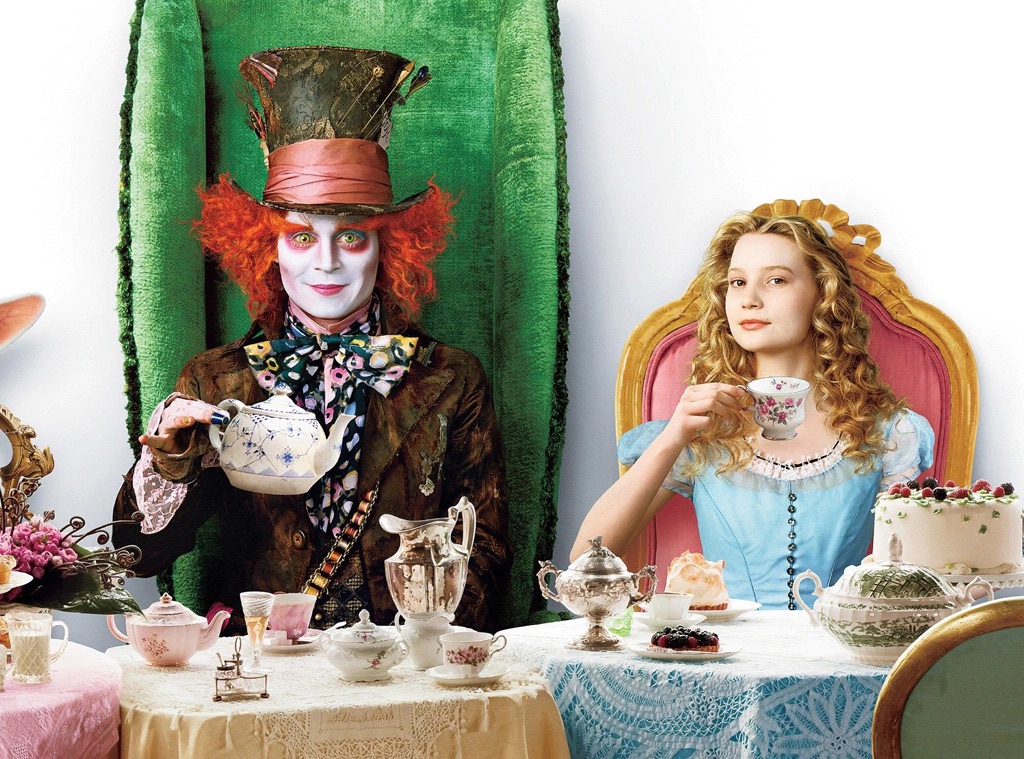
Ask your students to dress as their favorite book character (characters from Harry Potter, The Hunger Games, The Lord of the Rings, and Alice in Wonderland are very popular) and have a contest where students and teachers vote for the best costume. The prize? A book, of course!

The Harry Potter series by J.K.Rowling

2. Name the Character

Have pictures of popular or obscure book characters displayed on the school walls, each with a number on them. Students go around with a notepad and write the name of each character next to the number. The winner is the student who gets the most names right.

3. Book Quotes

Have quotes from books displayed on posters all over the school. Students pick their favorite quote and write a short essay explaining the relevance of that quote in their lives. Alternatively, students prepare their own posters with a quote, illustrate them, and explain to the class why they chose that particular quote.

4. Book Theatre

Help the students organize a play where different characters from different books interact with each other and explain to the audience why they live in the best book ever written. 

Alice in Wonderland by Lewis Carrol

5. Interview a Character

Have a couple of teachers dress as very popular characters from novels and have them interviewed by the students. Students should ask them questions about what cannot be found in the books. A great way to encourage critical thinking!

6. Infographics 

Students (individually, in pairs, or in groups) prepare an infographic (find an online app to help!) about their favorite book. They should add illustrations, information about the author, the plot, themes covered in the book, characters, a list of prizes the book may have won, info on whether there’s a movie based on the book, etc.

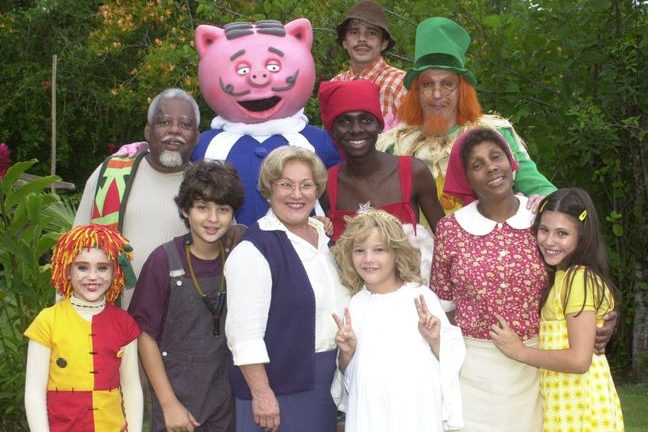
O Sítio do Picapau Amerelo by Monteiro Lobato

7. Library Contributions

Ask each student to contribute a book to the school library (used or new), with a note attached saying who contributed it. Students decide if they wish to leave the book at the library permanently as a gift to the school, or just for a couple of months. Raffle a new book amongst all the contributors.

A happy World Book Day to you! Don’t forget to let us know how you celebrated in the comments below.

Jorge Sette

Six Stunning Houses in Literature


I have always been fascinated by certain houses in novels. They exert a strange power over me, especially if they are part of gothic stories. Maybe because I have been living in apartments for more than half of my life now, I am somewhat jealous of the large spaces, yards, porches, gardens, the lack of noisy neighbors, and maybe the safety of the proximity of the ground those houses provide – despite the fact that I was never in an earthquake, and, as a consequence, never experienced the trauma caused by these events, which causes most people who have been through them to wish not to live far from the ground.

I lived in a house for some time growing up in Recife, and those were some of the best years of my life. Of course, living there as a distracted child, then as a sullen and hormone-crazed teenager, and finally as an ultra-busy college student, I never fully appreciated what I had back then. I took it for granted. Then, I left the city, came to live in São Paulo, and, presently, my mother sold it and bought a huge apartment, which I fell in love with too, while I went there on vacation. 

Well, all this is beyond the point, however. What I want to do in this post is just to list book houses that I felt particularly close to or fell in love with. Not all these books are classics, but they have always been popular and famous.

The houses in this post are not listed in order of preference. The list is random to a certain extent, as I wouldn’t be able to actually rank them in terms of the impact they had in my imagination. Here they are:

  1. Wuthering Heights (Wuthering Heights, by Emily Brontë): Rustic, uncomfortable, subjected to the rough weather conditions of the Yorkshire moors, this was the house that brought Cathy and Heathcliff together – two of most beloved and passionate characters in literature. Becoming orphans at an early age, they grew up like savages, free and wild, running and playing around the dreary surroundings of the house, and eventually falling in love with each other. Cathy was the daughter of the place’s owner, Mr. Earnshaw,  who died when she was still a child, and Heathcliff was a gypsy boy her father found in the streets of Liverpool on one of his business trips, and brought home to live with the family. The house mirrors all the brutality and violence of the novel’s plot. In addition to that, Cathy became the ghost that, in the future, would haunt Wuthering Heights forever, driving Heathcliff crazy.

2. Manderley (Rebecca, by Daphne Du Maurier): Owned by the wealthy Mr. Maximilian de Winter, the house is described in all its beauty. I love houses by the sea and this, located in breathtaking Cornwall, is one of them. Besides, there’s the mystery surrounding the widowed owner’s first wife, Rebecca, who seems to have drowned. She was rumored to have been on top of her game, beautiful, sophisticated, well-connected, adored by the sinister housekeeper, Mrs. Denvers,  who would later give Max’s second wife (who remains nameless to the reader throughout the novel) a hard time. However, signs abound that there was something off about all that perfection during the first marriage. Did Rebecca’s personality really match the architectural magnificence of landscaped Manderley?

3. Thornfield Hall (Jane Eyre, by Charlotte Brontë): This is a different case altogether from the houses listed before. The main attraction is the mystery that involves the place. I lived in the UK for almost two years, but never had the chance to visit Yorkshire or see heathers. However, both Wuthering Heights  and Jane Eyre, novels written by two sisters, fascinate me. Who wouldn’t become excited reading about a house with a mysterious attic, hiding a crazy woman? That’s the most important thing about gothic Thornfield Hall: Mr. Rochester, the romantic lead, has his first wife locked up in the attic, mad as a March Hare, while Jane knew nothing about it.

4. Gatsby’s mansion in Long Island (The Great Gatsby, by Scott Fitzgerald): The green light at Daisy’s dock, which Gatsby stares endlessly, signaling how close and yet so far the woman he has always loved lives with her wealthy husband Tom Buchanan, makes one of the attractions of the book. The green light is a powerful metaphor for ambition, desire and the struggle for great accomplishments at any cost. Gatsby, the man, personifies the American dream: from a poor background, he rose to acquire a mansion, expensive cars, and a glamorous lifestyle. He also constantly gives popular and orgiastic parties, but he still needs to get the ultimate prize: Daisy herself. The parties were the means he used to call attention to himself and attract her, but only when he befriends her cousin, Nick Carraway, the story’s narrator, and persuades him to orchestrate a meeting between him and Daisy, does he have a chance to try to rekindle her love. In the novel, the house is described as a nouveau-rich paradise,  with all the extravagances and bad taste of these kinds of places,. Yet,  it does not lack its allure. The green light, seen from his side of the bay, is the strong symbol that stays with the reader long after he finishes the novel.

5. The Dakota Building (Rosemary’s Baby, by Ira Levin): This is an exception, as it’s a condo and not a proper house. The building itself is the setting of one of the most disturbing movies I have ever seen, Rosemary’s Baby, directed by Roman Polanski. Later, it was the place where John Lennon and Yoko Ono had an apartment and lived, at the time he was shot and killed right in front of it in 1980. As for Rosemary’s Baby, neither in the movie nor in the novella that inspired it, the Dakota building is mentioned by name. In the book, the location is not even where it’s seen and recognized in the movie by those who are familiar with the Upper West side of Manhattan. However, most people who both read the book and saw the movie agree that the power of the story is Polanski’s credit. He turned what could pass for a simple and not very sophisticated thriller into one of the most successful movies of the 1960s, catapulting actress Mia Farrow, who played the main character, into worldwide fame. One interesting comment I read somewhere was that Polanski, a non-believer in religion, did not want to make it clear that the baby was the devil (or his son). He claimed that this would go against his beliefs. After all, if you don’t believe in God, you can’t believe in the Devil. So, he turned the plot into a more ambiguous and interesting story –  there’s the possibility that Rosemary could be delusional and paranoid, imagining that she was in the clutches of a coven whose leaders are her neighbors in the dark building, and that her own husband and her trusted gynecologist were in on the conspiracy. 

6. The House on Matacavalos Street (Dom Casmurro, Machado de Assis): That is the setting of one of my favorite Brazilian novels. Today, this street, in the district of Santa Teresa, has the name of Riachuelo. When the main character, Bentinho, starts narrating the story of his life, already a middle-aged man, resentful and a recluse, the house he spent his childhood in had already been demolished, but it held such a symbolic reference to him that he had it rebuilt, in exactly the same way, only in another neighborhood. And that’s where he lives in the present, nursing his traumas and pains. The original house was next door to Capitu’s, the main female character of the novel, and the love of his life.  Those neighboring houses witnessed the birth and blossoming of a sweet and romantic love story between teenagers  growing up together. The story is told subjectively from the point of view of an unreliable character, Bentinho, so, as a result, the reader can never be sure whether his estranged wife Capitu was really unfaithful to him, having had an affair and got pregnant by his best friend, Escobar.

What are your favorite book houses? Let us know by leaving your choices in the comments section below.

Jorge Sette

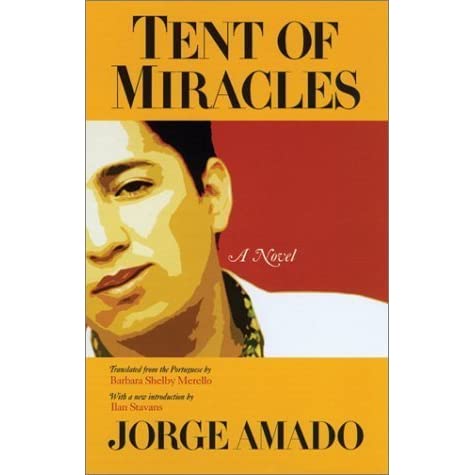
Tent of Miracles, by Jorge Amado: Racism and Parochialism Against the Backdrop of a Mythic Bahia


Jorge Amado (1912-2001), one of the most popular and internationally known Brazilian authors, started his career writing realistic books that carried a biting criticism of the economic elites and their exploitation of the working classes and the poor. This Marxist phase characterized the first of his works. After the publication of Gabriela, Clove and Cinnamon in 1958, however, his novels became more populist and satirical, with a stronger focus on the sensuality and picturesque aspects of the afro-Brazilian culture of the author’s native state of Bahia, located in the northeast of the country. The author was harshly criticized by many for having changed his tone.

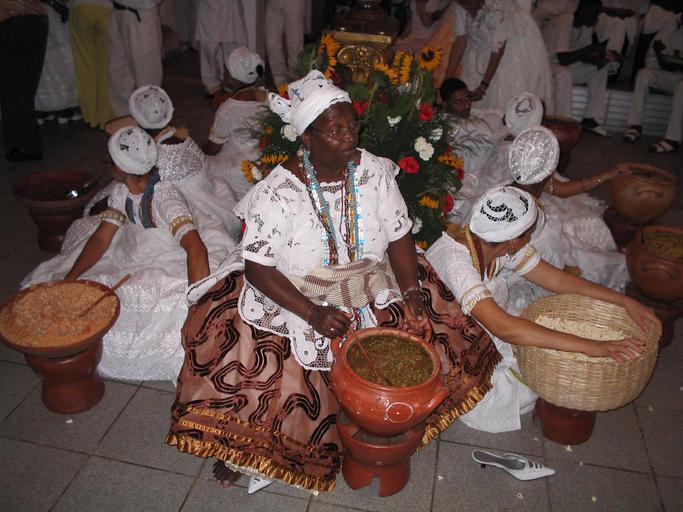
With Tent of Miracles, first published in 1969, one could say that Amado managed to strike a fine balance, providing a serious examination of Brazilian socio-economic issues and highlighting the hedonism and colorfulness of the Bahian culture, with its stunningly beautiful mulatto women, the freewheeling sensuality of its people, their lively songs, and dances and the prevalence of African-originated religions and cults.

The Themes

Tent of Miracles is a strong satire on the parochialism of the Brazilian intelligentsia – which needs validation from developed countries, especially from the US, before appreciating local talents in all areas of art and knowledge. The novel is also an inspired ode against racism, praising the power and beauty of miscegenation. In that respect, we can say that the themes of the book are more relevant than ever in today’s global context of generalized xenophobia, racism, and prejudice against diversity.

The Plot

The story kicks off when a Nobel Prize-winning North-American scholar, D.J. Levinson, comes across some forgotten books in the library of Columbia University and decides that their author is one of the best anthropologists he’s ever read. The racial considerations and the detailed description of the customs and “folkways” of the racially-mixed people of Bahia found in those four dusty volumes deserve to be known and discussed by the global academic community. The author, a black Brazilian called Pedro Archanjo, lived in Bahia for 75 years (1868 -1943), doing menial work in the streets of the city of Salvador (called Bahia at the time), destitute and unrecognized by his upper-class contemporaries. Levinson then comes to Brazil to experience first hand the theories put forward in the books and to promote their author.

Of course, the announcement of the arrival of the US luminary makes headlines in the biggest newspapers of Brazil. This arouses the interest and greed of the local authorities, intellectuals, and politicians, who wish to advance their own personal agendas, tapping into the newly-elevated status of Pedro Archanjo to scientific prodigy. It’s decided that the centenary of Pedro Archanjo’s birth – about to take place at the end of the year – deserves a fitting and official celebration in the city after all.

At this point, the lesser writer and poet Fausto Pena is hired by Professor Levinson to do research into the life and times of Pedro Archanjo, spanning more than 70 decades. In reality, Levinson’s main objective is to get Pena out of they way so that he can enjoy the pleasant company of the poet’s girlfriend, the journalist Ana Mercedes, an unashamedly social climbing mulatto beauty.

As a result, it is through Fausto Pena’s eyes that we get to know the story of Pedro Archanjo, despite all the gaps, incongruences and half-truths he gathers in his notes. We learn about Archanjo’s popularity among women, the innumerable children he fathered out of wedlock, his work as a runner for the School of Medicine and, finally, his rising awareness of the social conditions of the underprivileged people of Bahia, subject to all kinds of oppression, violence, and prejudice. Archanjo then decides to self-educate, write about race relations, and become a political militant.

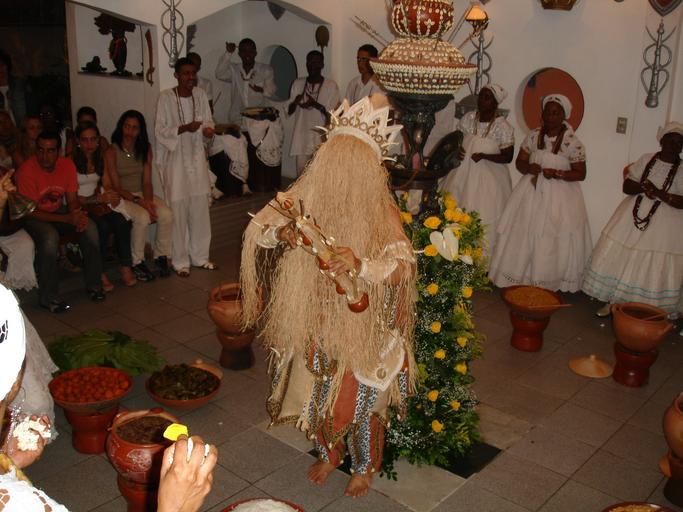
Despite its important and political undertones, the story, of course, unfurls against the backdrop of a poetic and colorful Bahia, with humorous anecdotes and detailed descriptions of the rituals of the local afro-influenced religions, the local foods and spices, the dance and music. Jorge Amado kept many original African words in these passages – wisely kept in the translation into English – presenting a complete glossary in the back of the book.

The Characters

The characters of Tent of Miracles are not entirely realistic, but ironic representations of specific types that populate the Brazilian collective imagination. We can split them into the powerful (corrupt politicians, controlling newspaper editors, arrogant college professors) and the disenfranchised (the malandros, bon vivants, ruffians, drunks, gorgeous mulatto women, old wise men, and gold-hearted prostitutes). 

Most of them, however, come across as a bit underwritten; they are not fully rounded characters. Pedro Archanjo, of course, personifies all the contradictions of a typical popular hero, as all his facets are praised in the Carnival celebration held in his honor at the end of the book: minor candomblé priest, vagabond, striker, runner of the School of Medicine (where he started his more formal education), heavy drinker, womanizer, teacher, sorcerer and writer! 

The Style

Although the book has strong elements of magical realism, especially in the scenes that take place in the candomblé terreiros, the space where the afro-religions and cults have their rituals (devotees embarking in trances; divinities taking possession of their bodies; supernatural events occurring; myth and reality getting intertwined), most of the plot develops in a fairly realistic and straightforward way.

The Relevance of Tent of Miracles Today

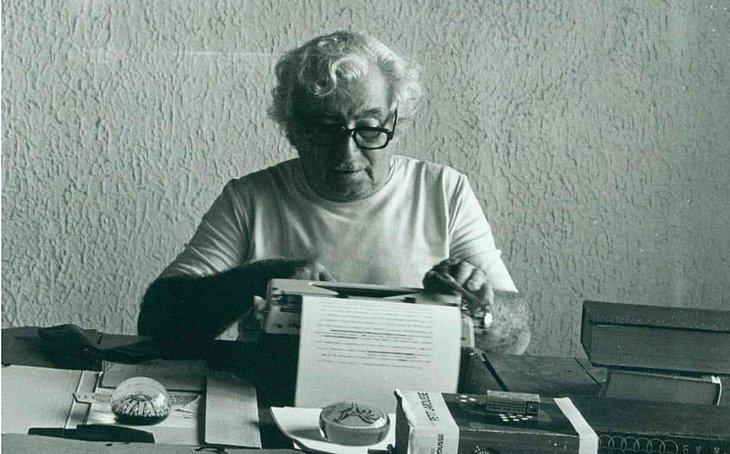
Jorge Amado

Written during the first years of the Brazilian military dictatorship, the passages depicting the brutal repression by the police of the Afro-Catholic cults, the bloody raids against the terreiros, and the beating or killing of their members – which happened especially during the 1920s and 30s – can be interpreted as a fitful metaphor of the times.

The novel, however, does not feel dated at all, as its themes are still universal and very concrete. The irony made explicit in the story is that miscegenation deeply permeates the whole of Brazilian society, and, thus, the bigotry and racism of people whose mixed-race blood is either carefully hidden in the family past or even naively ignored are laughable and hypocritical. It’s time for Brazil – and other countries in the world – to bury the myth of white supremacy and come to terms with the fact that we’ll carry on living in an irreversibly multicultural, mixed and diverse society.

Jorge Sette

Jorge Amado’s Novels: Marxism, Humor and the Beauty of the African-Brazilian Culture


Jorge Amado (August 10, 2012 – August 6, 2001) was a very prolific Brazilian author, having written more than 30 novels, translated into some 49 languages. Most of his stories are set in the state of Bahia, the region where he was born. His works highlight the brutal economic inequality of the society and the richness of his state’s Afro-Brazilian culture: the empowering traits of the religious cult of Candomblé, the beauty and creativity of its mestizo people, the spicy flavors of the delicious local cuisine, and the rhythms of its music and local dance/martial art (capoeira).

IMG_1233

Salvador, the capital of Bahia, the state Jorge Amado was born in. Photo: April, 2019. Jorge Sette.

Through Amado’s characters, we get to hear the voice of the lower classes, the poor, the fallen and the discriminated against. We also hear the voices of the strong women of Brazil. Despite the fact that his early books were derogatorily characterized as sentimental Marxism, Jorge Amado matured as a writer, as of the late 1950s. With the publication of Gabriela, Clove and Cinammon (1958), his novels became a lot more sophisticated, funny and authentic. Satire became a strong element of his style. The main themes of Jorge Amado’s books, however, remained the same: the lives of the poor people of Bahia, their traditions, the religious syncretism between Catholicism and the African cults, the prejudice and discrimination against the mixed-raced (mestizo) people of Brazil (which, ironically, comprises most of the population!) and open criticism of the hypocritical moral values of the Brazilian upper and middle classes.

Jorge Amado was a member of the Brazilian Academy of Letters from 1961 until his death in 2001. Here’s a list of his most popular works.

1.  Captains of the Sands (Capitães da Areia, 1937)

6EFE2FA8-3D2D-4AAA-A227-C1C98FEA18C2_4_5005_c

Captains of the Sands, a rather romanticized account of the lives of a gang of abandoned street kids in the city of Salvador (called the city of Bahia in the book), whose crimes terrorize the local population, may sound a bit tame by today’s standards. After all, the level of real juvenile violence experienced in the big cities of Brazil (exposed in books such as City of God by Paulo Lins, for example) surpass by far what we read in this novel, which takes place in the 1930s.

However, the reader can still be moved and relate to the thesis of how the social-economic context deprives these kids of their innocence and childhood and is ultimately responsible for their corruption and lack of choice. Reminiscent of Charles Dickens and Mark Twain, the book focuses on the adventures of the leader of the gang, Pedro Bala (bullet), and five of his closest allies, living off theft and petty crimes, and sleeping in a shack by the sea. We follow their early years as members of the feared gang of the Captains of the Sands and the different paths taken by each of them as they grow older and leave.

2. Dona Flor and Her Two Husbands (Dona Flor e Seus Dois Maridos, 1966)

FB71F3CD-6CD7-4091-A504-B58F9521AB07_4_5005_c


It’s surely inconceivable for most Latin American males to accept that it may take more than one man – at one given time – to completely satisfy the many facets of a woman’s life. In this widely successful novel (turned into a hugely popular movie in the 1970s), Jorge Amado adopts a very liberal and perhaps feminist point of view in this respect.

Flor, an adorable young woman in the Bahia of the 1920s, is an expert in the local cuisine. Her recipes are so popular that she decides to open a cooking school for girls. Soon afterwards, she meets and falls in love with the irresistible Vadinho, a typical “malandro” (a bohemian ruffian), an incorrigible rogue who spends most nights gambling and drinking in the company of prostitutes. The marriage takes place against her family’s wishes, as the whole conservative society of the time seems to foresee that it’s doomed. The couple is perfectly matched sexually, though. Vadinho fulfills Flor’s every fantasy and surpasses all her expectations in the bedroom. When he suddenly dies, celebrating Carnival, Flor is left inconsolable.

After a year of mourning, the widow finally marries the local pharmacist, a very decent man called Dr. Teodoro, who has nothing of the passion for life that Vadinho did. Teodoro stands for respectability, tender love, a reliable routine and financial safety. For a while, Flor seems happy and grateful for the arrangement, but it does not take long for her typical ardor to flourish again; she deeply misses Vadinho’s passionate lovemaking. After a couple of months living in this torture, her desire for Vadinho becomes so strong, that it brings him back from the dead. Only Flor can see him, when he appears, always naked, at the most unexpected times. He is invisible to everyone else. What will Flor do about this?

3. The War of the Saints (O Sumiço da Santa, 1988)

22235CA3-A806-4A8C-BAFC-CE538AE58A7B_4_5005_c


The holy icon of Saint Barbara (or Yansan, the goddess of thunder and lightning, as she is known in the Afro-Brazilian religion of Candomblé) is taken by boat from her original site, at the Church of Santo Amaro, to be part of a religious art exhibition in Salvador. When the boat docks, the saint miraculously comes to life, smiles, and winks at her fellow passengers and simply walks off through the market quay, raising Cain in the city of Salvador. Her mission is to liberate the young and beautiful Manela from the repressive grip of her aunt and guardian Adalgisa.

The plot, however, is only a pretext for the author to take the reader on an unforgettable and hilarious 48-hour tour of the city of Bahia during the oppressive years of the military dictatorship, introducing us to a series of colorful characters, savory foods and sensual religious rites. Mixing fact and fiction, where references to real musicians, singers, artists and political figures of the time abound, the narrator makes hilarious digressions, discussing, among other things, the nature of his narrative and making self-deprecating comments about his writing in a delicious conversation with the reader. This is undoubtedly one of the most accomplished and subversive books ever written by the author.

4. The Two Deaths of Quincas Wateryell  (A Morte e a Morte de Quincas Berro D’Água, 1959)

24EF29BB-E4A6-4AC3-B2E5-81E7FA5C49DD_4_5005_c


This novella tells the strange and hilarious story of a man who, getting fed up with the tyranny of a bossy and nagging wife and the pettiness of the codes of respectability of the lower bourgeoisie, suddenly decides to say goodbye to all that and start a new life as a drunk vagrant in the streets of Bahia. He leaves his family and dedicates himself to the most unthinkable hedonism: getting drunk every night, having sex with prostitutes and becoming the king of the bohemians of Bahia. He craves total freedom, has a legion of loyal followers and admirers, pledging that his tomb will be the endless sea.

When he suddenly dies, however, and faces the danger of having his corpse go through a respectable and catholic wake and burial, four of his closest friends show up to pay his respects and – in a sequence of scenes filled with humor and poetry – steal the corpse (or the living-dead man – as the reader is never quite sure how dead he really is) to take him for a last night of celebration in the city, before his second and final death.

On a deeper level, the story investigates the creation of popular myths and the distortion of reality prompted by the ingrained custom of gossiping, so typical of Brazil and Bahia, in particular.

Have you ever read any of Jorge Amado’s novels? How do you like his books? Please leave a comment below.

Au revoir

Jorge Sette.