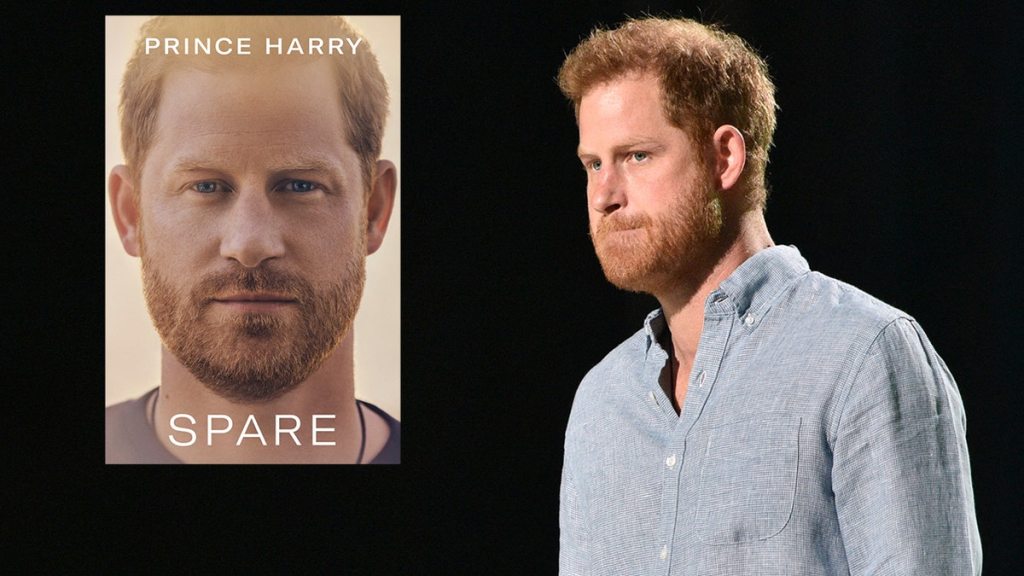
Why would a Brazilian, without a drop of British blood flowing through his veins, choose to read “Spare”? Well, stories of privileged but unhappy people managing to escape their gilded cages, spreading their wings and flying, as sings Elton John – one of Lady Di’s closest friends – in the song Skyline Pigeon, has always fascinated me. Rebels are my kind of hero. Besides, I couldn’t miss all the buzz surrounding the launch of the book.
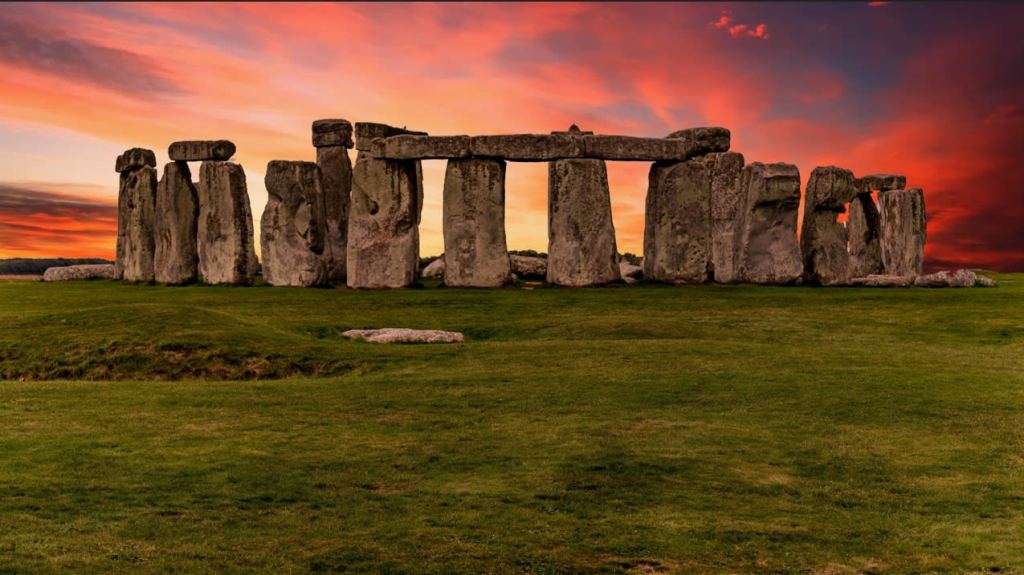
I lived in the UK for almost two years, ages ago (a very happy time in my life). It shouldn’t come as a surprise for those who know me that I simply love the English language (in all its variants), its literature, movies, and music. I also learned to like Marmite – an acquired taste! The National Gallery, Saint Paul’s Cathedral, and the Tube are also very close to my heart, as are the London parks and the colors of the land: green and gray. I paid three visits to Salisbury, just to experience Stonehenge in different seasons. Cornwall is a dream: The place I would love to grow old in.
Stonehenge
As for the British Monarchy, I never considered that institution something relevant to my life – I felt it was just an alien and outdated British cultural trait (although we did have something similar in Brazil for almost 400 years too). It fits into the same category of rugby, cricket, or EastEnders, the soap opera which had been running for centuries when I lived there.
I only began paying attention to the dysfunctional royal family, when Netflix’s The Crown started streaming – and, being told time and again by people who feel very strongly about it that it’s mostly fiction – I watch it as mere entertainment.
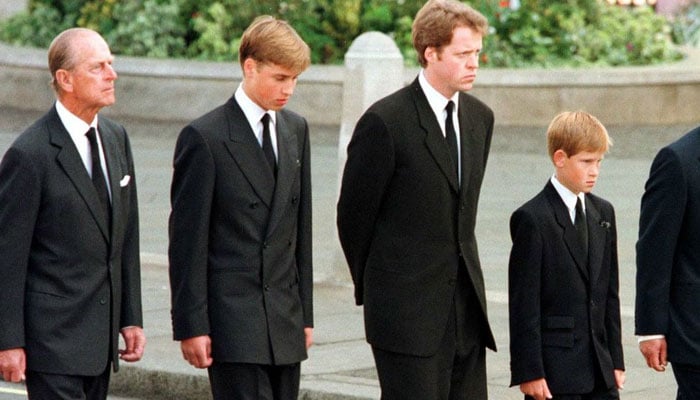
Years after I had come back to Brazil, the death of Lady Diana Spencer woke me up to the fact that the British Press was a weird and dangerous animal, but it did not really affect me – after all, I had never bought or even read a single page of a tabloid while I lived there, so did not even feel guilty. On the other hand, the image of a young Prince Harry walking behind his mother’s coffin left a painful and lasting impression: Actually, I never forgot it. As he grew up before the world’s eyes, contrary to what was portrayed in the media, I always considered him a normal boy, doing average stuff and making the same stupid mistakes we all did when we were young. Besides, he seemed rather lonely. I decided I liked him.
This long introduction is just to say that, Spare, his memoir, is a lot less whiny than I thought it would be. As a matter of fact, there’s quite a lot of humor, and I did enjoy it. The third and last part of the book is less exciting. After all, we all have heard about “When Harry met Meghan” – minus the hilarious fake orgasm scene in the restaurant, an iconic moment performed by Billy Crystal and Meg Ryan in the 80s movie with a similar title – more than we cared. However, I found it quite illuminating and sobering to know more about Harry’s education at Eton, the various palaces and estates the family owns, how the houses of the different members are distributed and allocated, his years in the Army (especially the boot camp passages), his trips to Africa and to both poles, and how the death of his mother traumatized him. The closeness and friendship that Harry seemed to share with his “granny”, the deceased Queen Elizabeth II, was also moving and unexpected.
It was also juicy gossip to find out how Charles, Camilla, and even his brother William, and their respective staff, are engaged in fiercely backstabbing each other to gain popularity in the media. The rivalry is so brutal that each camp gets to the point of leaking fake stories to the press to be seen as the good guys in the family.
Even if it’s all fiction, it’s well-written fiction, and makes for compelling reading. I recommend it.
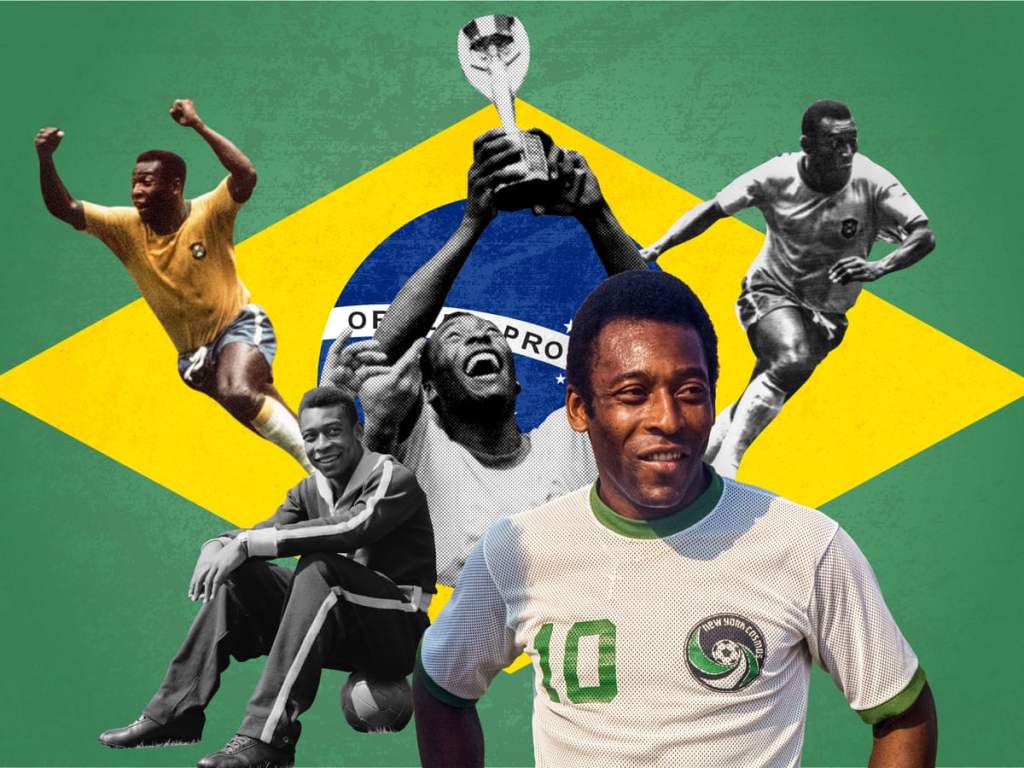
Pelé, considered the best soccer player of all time, has died today at age 82. There’s nothing much to say about a celebrity who’s known worldwide and that has elevated Brazil, soccer, and his hometown team of Santos to the level of luxury brands. Those, like me, who had a chance to watch Pelé play (at least on live television) are very lucky, as they had the unique experience of seeing a real superhero at his best perfomances. Pelé was a genius. This can be translated as a combination of talent (genetics) and preparation (exercising, discipline, effort, persistence). The lesson here is that even those who do not have an overdeveloped inborn talent in the field they become professionals can improve hugely if they decide to focus on hard work and practice.
Here are 10 quotes I collected, summarising some of Pelé’s thoughts and perspectives:
1. If you don’t give education to people, it is easy to manipulate them.
2. I sometimes lie awake at night and wonder why I am still so popular and, to be honest, I don’t know.
3. I’ve come to accept that the life of a frontrunner is a hard one, that he will suffer more injuries than most men and that many of these injuries will not be accidental.
4. You must respect people and work hard to be in shape. And I used to train very hard. When the others players went to the beach after training, I was there kicking the ball.
5. Success is no accident. It is hard work, perseverance, learning, studying, sacrifice and most of all, love of what you are doing or learning to do.
6. The more difficult the victory, the greater the happiness in winning.
7. If you are first you are first. If you are second, you are nothing.
8. Everything is practice.
9. The ambition should always be to play an elegant game.
10. Great teams are not made up of many well-rounded players. Great teams are made up of a variety of players, each having their own strengths
Do you know any other quotes by Pelé you would like to add to this list? Use the comments section below, please.
I have just finished one of the most fascinating books I’ve ever read. I can’t wrap my head around it, though. I don’t really know what it meant. One can interpret it in a number of ways, and I have been doing that for the past few days. The meaning the author wanted to convey can be as elusive as the book’s subject matter: SCENT.
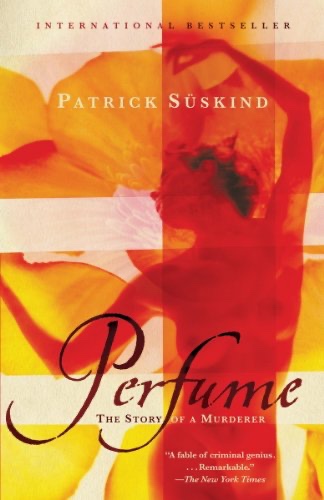
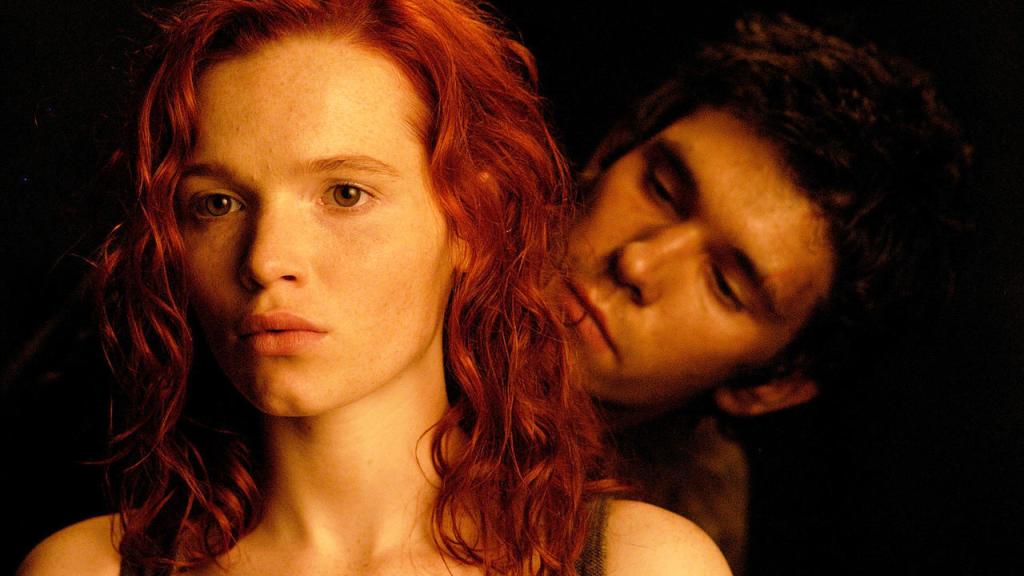
There was a copy of Perfume: The Story of a Murderer, by Patrick Süskind, at my mother’s house when I was in college. I never touched it. I’m glad I didn’t, as I’m sure I wouldn’t have liked it then, being too young to deal with its abstractions. Now I read the English translation from the German by John E. Woods: The language is amazing, a pleasure in its own right. I wonder what it sounds likes in the original. There’s a movie based on the book, but most of my friends told me it wasn’t nearly as good as the novel. So I guess I won’t see it.
The content of the book wafts from the page in its mixture of aromatic words, fragrant images, perfumed beauty, pungent corruption, and putrid evil. What does it mean to be human? What can satisfy a person? This is what the story seems to ask. Read this masterpiece and let’s discuss it.
However, after reading the book, you will never think of scent, odor, perfume, and stench – or France in the 18th century for that matter – in the same way again.
Have you read the book? What are your thoughts about it? Let us know.
I have always been fascinated by certain houses in novels. They exert a strange power over me, especially if they are part of gothic stories. Maybe because I have been living in apartments for more than half of my life now, I am somewhat jealous of the large spaces, yards, porches, gardens, the lack of noisy neighbors, and maybe the safety of the proximity of the ground those houses provide – despite the fact that I was never in an earthquake, and, as a consequence, never experienced the trauma caused by these events, which causes most people who have been through them to wish not to live far from the ground.
I lived in a house for some time growing up in Recife, and those were some of the best years of my life. Of course, living there as a distracted child, then as a sullen and hormone-crazed teenager, and finally as an ultra-busy college student, I never fully appreciated what I had back then. I took it for granted. Then, I left the city, came to live in São Paulo, and, presently, my mother sold it and bought a huge apartment, which I fell in love with too, while I went there on vacation.
Well, all this is beyond the point, however. What I want to do in this post is just to list book houses that I felt particularly close to or fell in love with. Not all these books are classics, but they have always been popular and famous.
The houses in this post are not listed in order of preference. The list is random to a certain extent, as I wouldn’t be able to actually rank them in terms of the impact they had in my imagination. Here they are:
Wuthering Heights (Wuthering Heights, by Emily Brontë): Rustic, uncomfortable, subjected to the rough weather conditions of the Yorkshire moors, this was the house that brought Cathy and Heathcliff together – two of most beloved and passionate characters in literature. Becoming orphans at an early age, they grew up like savages, free and wild, running and playing around the dreary surroundings of the house, and eventually falling in love with each other. Cathy was the daughter of the place’s owner, Mr. Earnshaw, who died when she was still a child, and Heathcliff was a gypsy boy her father found in the streets of Liverpool on one of his business trips, and brought home to live with the family. The house mirrors all the brutality and violence of the novel’s plot. In addition to that, Cathy became the ghost that, in the future, would haunt Wuthering Heights forever, driving Heathcliff crazy.
2. Manderley (Rebecca, by Daphne Du Maurier): Owned by the wealthy Mr. Maximilian de Winter, the house is described in all its beauty. I love houses by the sea and this, located in breathtaking Cornwall, is one of them. Besides, there’s the mystery surrounding the widowed owner’s first wife, Rebecca, who seems to have drowned. She was rumored to have been on top of her game, beautiful, sophisticated, well-connected, adored by the sinister housekeeper, Mrs. Denvers, who would later give Max’s second wife (who remains nameless to the reader throughout the novel) a hard time. However, signs abound that there was something off about all that perfection during the first marriage. Did Rebecca’s personality really match the architectural magnificence of landscaped Manderley?
3. Thornfield Hall (Jane Eyre, by Charlotte Brontë): This is a different case altogether from the houses listed before. The main attraction is the mystery that involves the place. I lived in the UK for almost two years, but never had the chance to visit Yorkshire or see heathers. However, both Wuthering Heights and Jane Eyre, novels written by two sisters, fascinate me. Who wouldn’t become excited reading about a house with a mysterious attic, hiding a crazy woman? That’s the most important thing about gothic Thornfield Hall: Mr. Rochester, the romantic lead, has his first wife locked up in the attic, mad as a March Hare, while Jane knew nothing about it.
4. Gatsby’s mansion in Long Island (The Great Gatsby, by Scott Fitzgerald): The green light at Daisy’s dock, which Gatsby stares endlessly, signaling how close and yet so far the woman he has always loved lives with her wealthy husband Tom Buchanan, makes one of the attractions of the book. The green light is a powerful metaphor for ambition, desire and the struggle for great accomplishments at any cost. Gatsby, the man, personifies the American dream: from a poor background, he rose to acquire a mansion, expensive cars, and a glamorous lifestyle. He also constantly gives popular and orgiastic parties, but he still needs to get the ultimate prize: Daisy herself. The parties were the means he used to call attention to himself and attract her, but only when he befriends her cousin, Nick Carraway, the story’s narrator, and persuades him to orchestrate a meeting between him and Daisy, does he have a chance to try to rekindle her love. In the novel, the house is described as a nouveau-rich paradise, with all the extravagances and bad taste of these kinds of places,. Yet, it does not lack its allure. The green light, seen from his side of the bay, is the strong symbol that stays with the reader long after he finishes the novel.
5. The Dakota Building (Rosemary’s Baby, by Ira Levin): This is an exception, as it’s a condo and not a proper house. The building itself is the setting of one of the most disturbing movies I have ever seen, Rosemary’s Baby, directed by Roman Polanski. Later, it was the place where John Lennon and Yoko Ono had an apartment and lived, at the time he was shot and killed right in front of it in 1980. As for Rosemary’s Baby, neither in the movie nor in the novella that inspired it, the Dakota building is mentioned by name. In the book, the location is not even where it’s seen and recognized in the movie by those who are familiar with the Upper West side of Manhattan. However, most people who both read the book and saw the movie agree that the power of the story is Polanski’s credit. He turned what could pass for a simple and not very sophisticated thriller into one of the most successful movies of the 1960s, catapulting actress Mia Farrow, who played the main character, into worldwide fame. One interesting comment I read somewhere was that Polanski, a non-believer in religion, did not want to make it clear that the baby was the devil (or his son). He claimed that this would go against his beliefs. After all, if you don’t believe in God, you can’t believe in the Devil. So, he turned the plot into a more ambiguous and interesting story – there’s the possibility that Rosemary could be delusional and paranoid, imagining that she was in the clutches of a coven whose leaders are her neighbors in the dark building, and that her own husband and her trusted gynecologist were in on the conspiracy.
6. The House on Matacavalos Street (Dom Casmurro, Machado de Assis): That is the setting of one of my favorite Brazilian novels. Today, this street, in the district of Santa Teresa, has the name of Riachuelo. When the main character, Bentinho, starts narrating the story of his life, already a middle-aged man, resentful and a recluse, the house he spent his childhood in had already been demolished, but it held such a symbolic reference to him that he had it rebuilt, in exactly the same way, only in another neighborhood. And that’s where he lives in the present, nursing his traumas and pains. The original house was next door to Capitu’s, the main female character of the novel, and the love of his life. Those neighboring houses witnessed the birth and blossoming of a sweet and romantic love story between teenagers growing up together. The story is told subjectively from the point of view of an unreliable character, Bentinho, so, as a result, the reader can never be sure whether his estranged wife Capitu was really unfaithful to him, having had an affair and got pregnant by his best friend, Escobar.
What are your favorite book houses? Let us know by leaving your choices in the comments section below.
Now that Zendaya won a Best Actress Emmy for the role of the drug addict Rue in the successful HBO series Euphoria, I’m rewatching the second season. I want to check out her performance and decide if the show is as good as I thought it was when I first saw it.
The series is definitely not for the faint of heart. The story, set in the fictitious town of East Highland in California, is about a group of High School teenagers, most of them still living with their highly dysfunctional middle-class families.
Drugs, sex, and cell phones abound. These characters are portrayed in all their rawness, brutality, and emptiness by an extraordinary cast of young and mature actors.
The highlight of the second season is a play within the show (“Our Lives”), created and directed by one of the students, Lexi, who seems to act as the moral center of the story. The play – stunning in itself for us, the home audience – helps the characters sitting in the school theater see themselves as they really are, with all their flaws and inconsistencies (rather than the fake personas they try to create and project), therefore stirring strong emotions, and leading to a huge unscripted fight on the stage. “Art should be dangerous”, says an assistant to the devastated director to soothe her. But the show must go on.
Most of the relevant current themes are discussed in Euphoria, to some extent: friendship, loyalty, love, the opioid crisis, fluid sexuality, transsexualism, pedophilia, toxic masculinity, feminism, sexual orientation, the breakdown of the traditional family and its values, the difficulty to communicate real feelings or develop an authentic personality.
There’s a lot of physical and verbal violence too. Keeping in mind that the objective of ambitious shows is not only to entertain but also to discuss controversial issues and provoke change, Euphoria is a great show, if you can manage to watch the frequent uncomfortable scenes.
Have you had a chance to watch the show? Please leave your comments in the section below.
I read Euclides da Cunha’s The Backlands (Os Sertões), a brilliant journalistic account of the War of Canudos, a couple of years ago. The report is extremely well-written, precise, and exciting – to the extent that non-fictional pieces of writing can afford to be, even when they incorporate techniques more typically used in fiction. However, regular readers will agree that nothing can be more thrilling, more stimulating to the imagination, than great novels.
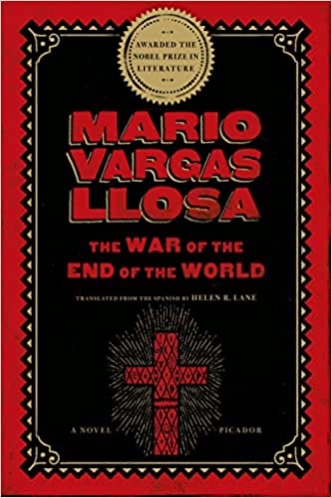
Therefore, even if you loved The Backlands, which I certainly did, don’t miss reading Peruvian writer Vargas Llosa’s The War of the End of the World, the novel based on the same event – a war waged between the official powers of the recently proclaimed Brazilian Republic and a gathering of some 30,000 jagunços (the name given to the impoverished and undernourished inhabitants of the backlands), who built a community, Canudos, in the northeast of Bahia at the end of the nineteenth century.
First of all, I was impressed by how much Llosa knows about Brazil. He must have undertaken extensive and in-depth research about this period of our history. As a consequence, he is quite familiar with the different groups of people who lived in the region, their customs and physical characteristics, the regional names they gave to the native vegetation and geographic locations of the backlands, an area of the interior of the northeast of Brazil punished by constant droughts, leading to poverty, scarcity of all kinds of resources and, as a result, illness, ignorance, and predisposition to all kinds of superstitions and fanaticism.
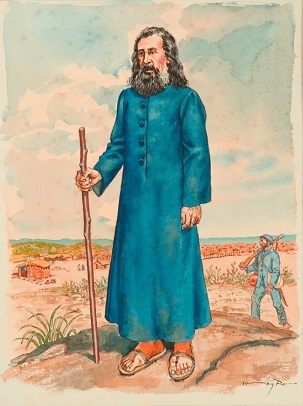
The War of Canudos is a very complex conflict, involving clashes between opposing political interests, different economic classes, idiosyncratic religious views, and diverse cosmologies to sum it all up. It was a war between myths, in the broadest sense of the word. The military sent to the region claim they were defending the interests of the Brazilian Republic against heavily armed conservationists backed up by the English and local aristocrats who were trying to revert the country to a monarchy. Nevertheless, the jagunços who came in droves to put together and live in the community of Canudos were mostly Catholics who followed the somewhat peculiar doctrine of the charismatic religious guru Antônio Conselheiro, the Counselor. This religious leader had, with the mere strength of his words and personal example, the power to persuade the simple-minded people of the backlands to turn their violent and empty lives into something more peaceful and meaningful; he gave them loftier aspirations.
Antônio Conselheiro
The War of Canudos needs to be interpreted from different angles and perspectives. The lines separating right and wrong as far as the confronting ideologies went are not clear-cut. Lots of gray areas. The horror, however, made itself rather concrete and clear, through the brutality and violence that took place in those forgotten and distant dry lands of the interior of Brazil during the conflict. Llosa’s novel is not for the faint of heart, by the way. The explicit descriptions of shots, throat slashes, decapitations, stabbings, bombardments, disfigurement of faces, bayonet perforations, dismembering of body parts, causing corpses to accumulate in piles or lie strewn around, exposed to the voracity of famished vultures, dogs and rats, disputing the remains, are nauseating and shocking.
On the other hand, a strange beauty permeates the novel, when it shifts to the narration of the resilience, bravery, abnegation, cooperation, and empathy shown by the jagunços toward each other. It also emerges in the description of the cold star-studded skies at night that alternate with orange moonlit landscapes lacking in water and vegetation – only cacti, mandacarus, and shrubs could survive in such hostile climate – or, also, in the rare and quick passages portraying the sudden and brief storms that brought hope and happiness to the fighters.
The War of the End of the World is a hard book to read, with many different themes to take into consideration and reflect on. Although, at a more superficial level, it seems to be simply the fictionalized account of a real conflict that took place more than 100 years ago, the novel encapsulates relevant and current themes, especially for Brazil, a country whose stark economic inequality and cruelty toward the lower classes are still a sad reality.
Have you read any of the books mentioned in this article? Did you like them? Please leave your comments below.
If you are in marketing, you certainly heard of or practice content marketing. This is the strategy of populating your blog, website and social media channels with written posts, video clips, audio clips, photos, games, infographics, etc. to attract your prospective customers, keep them coming back and start building a relationship with them. Of course, the idea is that this content is somehow related to your business.
You may think your business does not lend itself to this kind of promotion. Believe me: no matter how dry you may think your business is, there is always room to develop a content strategy for it. The efficacy of your marketing team should be measured by their ability to create such content and distribute it. In this day and age, it would be a huge mistake not to go this way. How do you expect to drive traffic to your website if you can’t offer useful information, entertainment, help or clarification about the products and services you sell?
In this blog post, we are focusing on one of the most effective kinds of content you could use on your website: blog posts. Having been an active blogger for the past 7 years, and seeing concrete results emerge from the strategy, I’ve selected 12 tips to help you improve your blog as a marketing tool:
1. Keep the blog on your website: for some kind of bloggers, there’s nothing wrong in using a public platform (such as WordPress or Tumblr) to host your blog. They have all the tools you need, and if you are prepared to pay for an upgrade, the possibilities of enhancement are unlimited. However, if you are a business, and already have a website – and especially if you sell directly through the Internet – why keep two separate sites, diverting your traffic or creating an intermediary step before your prospects reach you? Embed the blog in your main website. It will make it easier to turn prospects into leads, and convert them into buyers, if they are already there.
2. Write quality posts: blogs increase your page rank, allowing your company to appear higher in results lists of search engines. So it’s essential to avoid sloppiness. If you can’t write, hire competent writers. Everyone recognizes a good article when they read it. Have a strong and direct headline, able to capture the attention of the reader, and put a lot of effort into creating a compelling opening to your text. Grammar and spelling should be faultless. The language should be direct and simple. Paragraphs must be well ordered and clearly connected by linguistic cohesive devices. Break up long texts into smaller sections and use subheadings, lists, bullet points and italics as much as possible to guide the reader. Well written blogs, with quality articles, subject to careful Search Engine Optimization (SEO), increase your chances to do better in organic searches. Google specifically seeks to offer their clients the best possible experience in their search. The better your content, the more relevant your headlines and subheadings, the easier it will be for your business to be found on the Internet.
3. Choose an angle: many people write about the same topics. There’s nothing wrong about that. However, make sure your article is written with an original perspective. Make it personal. Base it on your own experience or the image your company wishes to project. Think brand alignment and positioning.
4. Write more frequently: quantity matters. Quality is essential, of course, but numbers also count. Therefore, the more blog posts or pages you have on your site, the bigger your visibility. Google loves freshness. Blogs which are systematically and frequently fed with new quality content gain points in their ever-changing page ranking algorithm.
5. Use images: make sure they are legal and attractive, maybe slightly controversial or funny (they must suit your positioning and brand voice. Do not steal images. Try free or paid photo libraries on the Internet, subscribe to Hubspot (they will reward you with dozens of images on certain topics as a gift now and then; or take your own pictures. Ask members of your staff to contribute their photos to an image bank everyone could draw upon at the company.
6. Write content that is fun, entertaining or inspiring: yet somehow related to your business: not all your posts need to be about your product or service. Use your blog as tool to attract prospects. Use soft sales tactics: get them to see or read something lighthearted or inspiring on your blog post occasionally. Of course, if you can subtly bridge the post to your service and product, even better.
7. Write content that helps educate your prospect: sometimes people will not even know they need a product like yours as they navigate the Web. You need to clearly show them the benefits of what you sell before they get interested. What is your product? What does it do? What problem does it solve? Why is it different? How can they use it? Where?
8. Write content to guide leads through the sales funnel: after you get the prospect’s attention, offer something else to get them even more interested: a free ebook for download, an infographics poster, a sample of your product, a visit from your rep to demonstrate the product. Do not ask them to fill in long forms to get the gift (their email address and opt-in allowing you to contact them should be enough to continue the conversation). Close the deal every step of the way. Closing doesn’t mean necessarily selling, but getting progressive commitments to the next steps along the sales funnel until you get the purchase.
9. Write content to solve your customers problems: use your blog as a troubleshooter. Transfer part of the work done by your customer service to the blog. Tutorials are a great help. You can use blog space to embed short how-to videos, slide presentations, or offer ebooks/white papers for download to help answer questions and have the clients take full advantage of the product after they purchase it.
10. Use social media sharing buttons to allow readers to share your content: people love to curate content. When they see something they like on the Internet, they immediately think of saving that for future reference or sharing it with their own audience. Make sure you make that sharing process direct and easy for them. They will be promoting your stuff to people you wouldn’t be able to reach otherwise.
11. Elicit the readers participation: unlike the days of Mad Men, the popular TV show, marketing nowadays is a two-way road. Customers wish to comment and talk to you about your product on the internet. Allow them to do so on your blog, so you can keep a closer eye on what is being said and take fast corrective measures if necessary. Invite them to a dialogue, build a community around your blog, by allowing them to post their comments and rate your post. Learn how to be cool: don’t let the compliments go to your head, but also don’t feel thrown off when you get criticisms.
12. Pomote your blog: use as many social media channels as you can to place links to your main content. These are the social media channels I find more useful to drive traffic to my blogs, ordered from the most effective to the least: Twitter, LinkedIn, Instagram, Google Adwords (paid ads),Tumblr, YouTube, Facebook (Meta). You need to try many others and start measuring to find how they work for you.
The payoff of creating and keeping a popular blog is huge. People will start thinking of you as an authority on the topics you usually write about. You will become a thought leader, to use the current buzzword for this kind of reputation. Your audience will grow through word of mouth and higher positions in search engine page results. As a consequence, you’ll slowly become a reference for the kind of service or product you offer. This is likely to have a direct impact on your bottom line.
Very few people don’t like chocolate. It’s the quintessential comfort food. Chocolate was first mentioned in history around 1100 BC. It was first consumed as a drink and, only afterward, in solid form.
Chocolate is a suitable food or gift for many different occasions. Consumption of chocolate is particularly typical during Easter, Valentine’s Day and Christmas.
Chocolate is produced and eaten all over the world, but the countries which are most famous for the quality of their product are: the USA, which is the world’s biggest producer and consumer and whose chocolate contains lots of almonds and peanuts. Their most well-known brands are Hershey, Snickers, Twix, Dagoba, and Milk Way. Belgium: despite the fact that the country does not produce cocoa, it’s one of the largest producers of chocolate in the world. They are famous for the quality of their chocolate’s ingredients and their most famous brands are Nirvana, Godiva, Neuhaus, and Floranne. Switzerland: producers of chocolate since the seventeenth century, the country has the highest per capita consumption of chocolate in the world. They are usually modified versions of Belgian chocolate, though, and their most famous brands are Toblerone, Swiss Army, Cailler Nestle, Lindt, and Glando.
The good news is chocolate is not only delicious but it has also been proven to bring many benefits to your health and well-being. Of course, it’s a very caloric food and should be eaten with restraint. Remember that if you ingest more calories than you burn, you will inevitably put on weight: it’s a mathematical truth. The best chocolate is the dark type, with at least 70% of cocoa, and not much sugar. Here are the main benefits of eating chocolate – with moderation:
1. Chocolate improves your mood: it’s great for stress; helps you beat depression, as it has phenylethylamine (PEA), which induces the brain to release endorphins, giving you a feeling of pleasure. It’s, therefore, a great consolation when you break up with your boyfriend.
2. It makes you feel more romantic: if you haven’t broken up with your partner, though, chocolate is even a better choice. It improves romantic experiences, making you feel loving and passionate.
3. Chocolate makes you live longer: chocolate lowers the levels of bad cholesterol and boosts the levels of good cholesterol. That’s because cocoa has antioxidants, called polyphenols, which can also be found in red wine.
4. It’s very nutritious: we are not talking empty calories here. Chocolate contains fiber, iron, magnesium, copper, manganese, potassium, phosphorous, zinc and selenium.
5. It improves your cognitive skills: due to a component found in cocoa called flavanols.
6. It prevents cancer: pentameric procyanidin, or pentamer, a component found in cocoa, interferes with cancer cells, hindering their ability to spread.
7. It helps prevent diabetes: because it enhances the sensibility to insulin.
If you know of any more benefits to indulging in chocolate, please write to us. We would love to hear from you.
This text was first published on February 28, 2016. I felt I should republished it now after the death of Charlie Watts this week. This is for him.
Feb 27th, 2016: Rolling Stones Latin America Olé Tour. After the competent and traditional paulista band Titans, who opened for the Rolling Stones in their two São Paulo shows, completed their participation, the stage began to be cleaned up and prepared to receive rock’n’roll royalty.
The atmosphere of anticipation was almost unbearable; you could sense the electricity in the air. The Stones’ clever choice of Jumpin’ Jack Flash to kick off the evening struck the unfailing spark to detonate an explosion of historic proportions. The crowd went crazy. It may be only rock and roll but we love it!
For the next two hours, some 70,000 fans, composed of grandparents, parents and kids, rocked, sang and responded, as if in a trance, to Mick Jagger’s antics, which, besides great singing and dancing, included greetings, swearing, and jokes in clear, yet heavily accented, Portuguese – he introduced the circumspect drum player Charlie Watts as Rainha da Bossa Nova (Queen of Bossa Nova). I hope poor Charlie did not get the joke.
In certain moments, the show just felt like some sort of ritualistic exorcism, with people jumping up and down, yelling, sobbing and pulling at their hair – I hadn’t seen this kind of fan hysteria since the worn-out footages of the Beatles arriving in the USA in the early 60s.
As the Stones were not promoting any new record, the show was a dizzying succession of classic hits (Wild Horses, Brown sugar, She’s a Rainbow, Miss you, Paint it Black, Honky Tonk Women, You Cant Always Get What You Want – the latter accompanied by the members of the Coral Sampa – which both moved the older guys who packed the Morumbi stadium, and drove the teenagers and 20-somethings wild. I don’t think the younger generations had ever experienced anything as good in terms of a rock and roll concert here in Brazil. Even better: the band seemed to be having the time of their lives: playing like fiends, smiling widely, being nice and friendly to their adoring Brazilian fans.
The show was indeed iconic, offering the public, at least, two sublime moments:
1. Mick Jagger and the beautiful black vocal singer Sasha Allen took the stage catwalk, which jutted into the audience, and sang what will surely become a legendary version of GIMME SHELTER while the light rain that began to fall shone against the bright spotlights, providing a wonderful and unexpected cinematographic context to the song. As the singers danced, embraced – and even simulated copulation on the stage – I noticed people’s eyes welling up at the exquisiteness of the performance. The rain lasted for the entire number and felt like a momentous gift from heaven to enhance the show. See the unedited, raw video clip below:
2. The audience was also awarded a historic 10 min long rendition of MIDNIGHT RAMBLER, electrifying the crowd, who either sang along or just stared wide-eyed at that mysterious 73-year-old sage, a force of nature, with the face of an old and battered seaman who’s been exposed to the harshest elements, yet carrying the body of a supple teenager, serpentining across the stage with his trademark moves, and slyly raising his t-shirt now and then to show off his well-defined six-pack abs!
But when we hear the first chords of Sympathy for the Devil (three-quarters into the show), and witness Mick Jagger stepping onto the stage in a flaming red boa (repeating an act he had already performed in Martin Scorsese’s documentary SHINE A LIGHT – with the difference that, in the movie, they used real fire!!) everything falls into place: we get confirmation of what we have known all along and yet refused to believe. Mick Jagger is either Faust, having struck a pact with Satan, or an alien dropped by mistake and forgotten on this planet!
To say the concert was perfect would be accurate, if only Keith Richards had refrained from singing two songs half-way into the event. Embarrassingly out of tune, he must abandon this recurring fit of narcissism and stick to what he does best: playing the guitar like a god.
The concert finished with the anthemic I can’t get no satisfaction, followed by a discreet display of fireworks. To its credit, the whole show keeps visual effects and pyrotechnics to the barest minimum. What we get is two hours of solid, raw, and uncompromising rock and roll. Worth every cent you may have spent on the ticket!
On a final note, let’s just point out that, although Mick Jagger avoided making political comments on the situation of the country during the show, whenever the movie crew who was registering the event trained their cameras at the audience, small groups would spontaneously break into offensive chants against President Dilma Rousseff.
Here are some of the most popular dads in classic movies. Celebrate the upcoming Father’s Day – Sunday, Aug 8, in Brazil – watching any of them with your old man. Some of them are available on Netflix. Maybe there’s still time to purchase a DVD too.
To Kill a Mockingbird (1964): The Open-Minded Dad
One of the most beloved movie dads of all time, Gregory Peck plays the widowed lawyer Atticus Finch, who goes up against an entire town in Alabama in the 1930s to defend a young black man accused of raping the daughter of a drunken bigot. The movie is based on the Pulitzer Prize-winning autobiographical account of the late author Harper Lee’s childhood. The story is seen through the naïve eyes of Atticus’ adoring, tomboyish daughter Scout, who leads a happy life, playing in the bucolic countryside in the company of her older brother Jem and a younger, precocious boy called Dill, who, most likely, represents her lifelong friend Truman Capote. Scout learns, by observing her dad’s impeccable behaviour, to respect and promote diversity in all its forms.
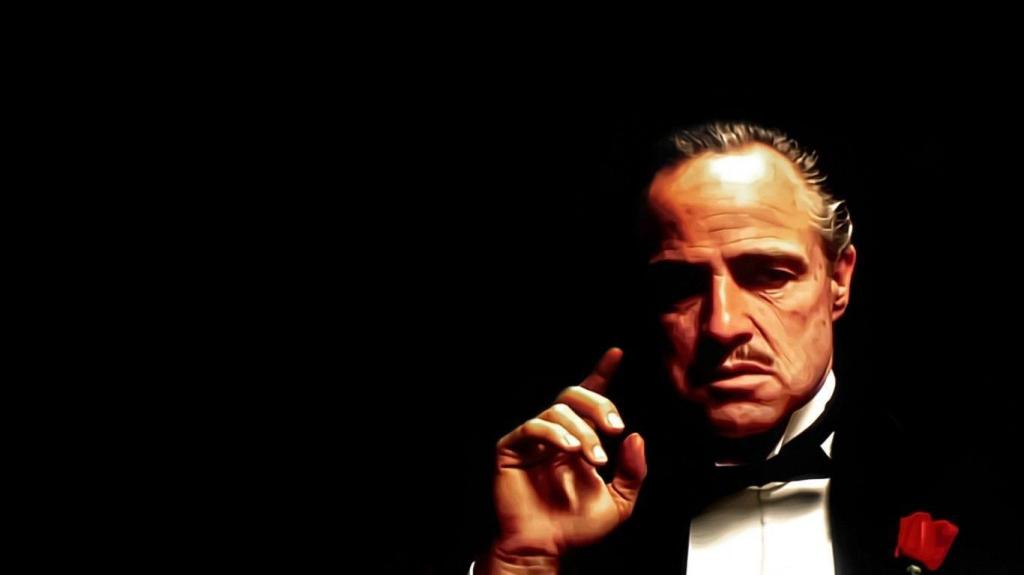
The Godfather (1972): The Mob Dad
This seminal mob movie from the early seventies reinvented the gangster genre by showing the Mafia from the perspective of family life. The portrait of a close and loving relationship between a father (Marlon Brando) and his sons, depicted against the backdrop of a violent war among mob families in New York, has both shocked and mesmerized audiences for almost 50 years now. The unexpected rise to leadership of the least likely of Don Corleone’s sons, the college educated and sensitive Michael (Al Pacino), who, on assuming the role of the head of the family, surpasses his father in coldness, decisiveness and cruelty, still has the power to galvanize audiences.
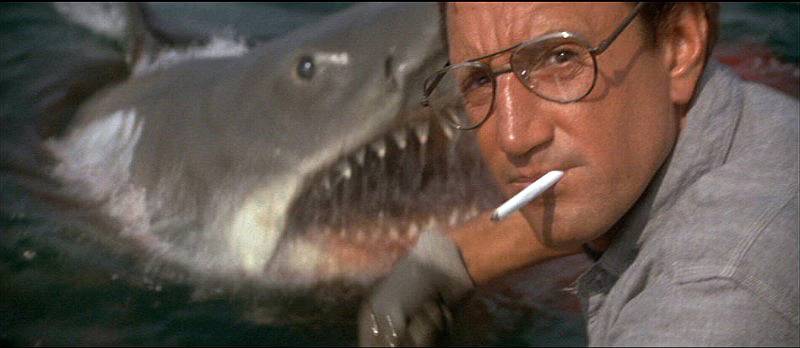
Jaws (1975): The Superhero Dad
Based on Peter Benchley’s bestselling book, Jaws was the first of the so-called blockbusters, earning an estimated $407 million at the box office. Chief Martin Brody (Roy Scheider) will be forever remembered as the worried dad who, not only grows overprotective of his two young boys, but becomes the surrogate father of the whole beach town of Amity. Brody sets out to kill the great white shark that haunts the summer resort, in a Moby Dick–style expedition. The repetitive chords of the iconic John Williams’ music score and the line you’re gonna need a bigger boat, uttered by Brody after his first glimpse of the huge shark, have been a part of pop culture since the movie’s release.
Back to the Future (1985): The Goofy Dad
A strong premise, great acting across the board, lots of action and humor, plus a a wonderful soundtrack, combine to make Back to the Future a landmark 80s movie. The focus here is on Marty McFly (the ultra charismatic Michael J. Fox), but the majority of the story revolves around his efforts to duck his mother’s romantic advances, while trying to create the necessary conditions for her to meet his shy father so that they can fall in love and marry, resulting in the existence of the family in the present.
Confusing? Not really, Marty is accidentally sent back to 1955 (from 1985) in a time machine made from a car, a 1982 DeLorean DMC-12, by his friend, the mad scientist Doc Brown (Christopher Lloyd). Marty attempts to put some order into his future parents’ chaotic lives.
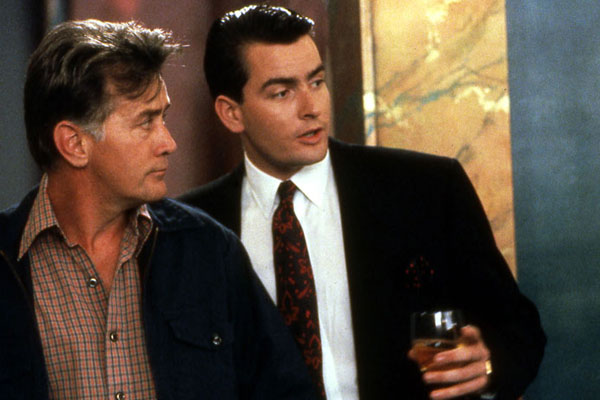
Wall Street (1987): The Sensible Dad
The movie begins with Bud Fox (Charlie Sheen) looking to climb the Wall Street ladder. His father, Carl (Martin Sheen), is a head mechanic at Bluestar Airlines, and reveals the results of an investigation into a plane crash. By using this inside information to presell the airliner’s stock before it crashes, Bud becomes the protégé of Wall Street wolf Gordon Gekko (Michael Douglas). Bud climbs to the top quickly, accumulating money, power, and women. Eventually, he becomes a heavy drug user. Luckily, his father is there for him to cushion his fall.
Can you add any other famous Dads from movies you have enjoyed to this post? Go ahead and use the comments section below.



















 Jorge Sette "Linguagem"