10 Books You Should Read to Understand Brazil Better


Congratulations, you got a new job. You will be relocated to Rio? How exciting. How did you manage to grab such an interesting post? You must know a lot about Brazil and speak good Portuguese. Or maybe you are just the only person who had the availability to move to this country. Whatever the reason, or despite how much you might already know about Brazil, I would strongly recommend you read the books listed below to get a crash course in the country. They are all fun to read and will contribute in their own way a small piece of understanding to complete the puzzle.

I’m Brazilian myself, spent most of my life here, and still profited a lot from reading these texts. Here they are:

1. The Brazilians, by Joseph Page.
510O0emLBRL._SX331_BO1,204,203,200_

This is one of my favorite books about Brazil. It’s visibly written by someone who loves the country, and despite its very objective, and sometimes hurtful, analysis, makes you feel appreciated and liked as a local. Besides, it covers many different aspects of the culture and history of the country, including the national religions and the nuances of the current power structure, all written in a light and pleasant language. I particularly liked the way it analyzes the way the different social classes interact with each other in Brazil, with all the hypocrisy and paternalism that underlies these brutal relationships. However, the book was written way before the passing of a new set of Constitutional amendments (PEC 478 – known as PEC das Domésticas) in 2013, regulating the working  life of the “empregadas domésticas” (Live-in maids; a very typical Brazilian institution), and therefore broadening the professional rights of these underpaid and exploited workers more than 100 years after the abolition of slavery took place in the country.

2. Brazil on the Rise, The Story of a Country Transformed, by Larry Rother.

5153cEwXJ+L

Written around the time when the now infamous cover of the magazine THE ECONOMIST showed an illustration of the statue of Christ the Redeemer in Rio taking off to the skies as a potent rocket on its way to a future of fully developmental glory and economic power, the book gives us the historical and economic background necessary to understand how we got to where we were by the end of the two mandates of the Labor Party, under president Luís Inácio da Silva (Lula). It focuses on the economic and political aspects and the obstacles the country had to overcome on its path towards democracy and to arrive at the reasonable level of economic stability we had some 6 years ago. Of course, things are not looking now as great as when that issue of THE ECONOMIST came out, but corrections are being made along the way and I firmly believe we will realize the bright potential we have been predicting for the past 500 years.

3. Futebol Nation: A Footballing History of Brazil, by David Goldblatt.

510bwbxTBGL._SX323_BO1,204,203,200_

The English writer does not sound very sympathetic to the country and its people. The writing is a cold and dispassionate account of the importance football gained in Brazil since its introduction in the early years of the 20th century and its ramifications through the history of the country. Although it became clear after the World Cup (2014) that football seems to have lost a lot of its importance to Brazilians – given the sense and irony most of the population demonstrated after the historic loss to Germany with a scoreline of 7×1, the book makes it clear that, especially from the 1950s to the 1990s, football was Brazilians’ greatest source of pride. It is also evident how strongly we identified the values of the nation with this foreign sport, allowing and making it easy for politicians to tap into its people’s naive passion to advance their own agendas. Although the book does not take into account the World Cup of 2014, it covers the June 2013 social unrest and popular demonstrations directed mainly against the realization of the over-budgeted upcoming event. All in all, it’s a very interesting read, even for those who are not really into the sport.

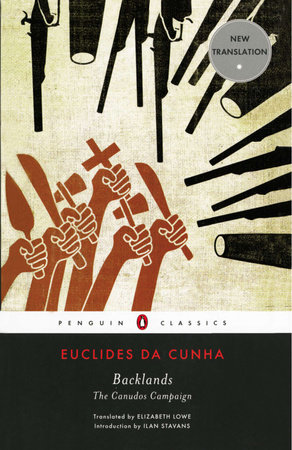
4. Backlands: The Canudos Campaign, by Euclides da Cunha.
9780143106074-1

Considered one of the most important books of the Brazilian canon, this text is a journalistic account of the conflict of Canudos – supposedly a civil war between monarchists and republicans at the end of the nineteenth century – which took place in the arid and difficult geographic region known as the backlands in the interior of Bahia. The official story says that a group of backlanders (sertanejos), led by a religious fanatic, Antônio Conselheiro, the Counselor, built up a settlement constituted of thousands of huts forming a kind of overcrowded slum, spreading over the valleys and hills of the region. The book reads like a novel, once you manage to get through the slow and dragging geological, topographical and climactic minutiae used to describe the region in the first couple of chapters. Then it finally gets to the action, depicting with cinematographic vigor the 4 military incursions into the settlement of Canudos, defended fiercely by the backlanders (sertanejos and jagunços, the latter considered bandits infiltrated in the community).

5. The War at the End of the World, by Mario Vargas Llosa.

Unknown

While Backlands was meant to be an objective report of the Canudos War in Brazil, this book by Peruvian writer Llosa is a fictionalized version of the events. It tells the same story, but as novels go, adding the thrill and emotional twists of the format. The book depicts characters on both sides of the war, offering a balanced perspective of what happened. It’s considered one of the author’s best books. Llosa himself considers it his most accomplished novel, and it features in Harold Bloom’s The Western Canon.

6. A Death in Brazil, by Peter Robb.

51wRrAw-XyL

A thrilling account of 500 hundreds years of Brazilian history, Australian writer Peter Robb’s book also reads like a novel. The writer lived in Brazil and offers authentic and knowledgeable insights into the country, its people and culture. He also talks very candidly and passionately about the country’s serious problems and inequalities. The death of the title is the mysterious assassination of PC Faria’s, fixer and bagman to corrupt President Collor in the early 1990s, but the book does not focus on this. It covers, among other things, the brutal slavery system we had in the country until 1888 (longer than anywhere else in the Western world), the destruction of the fugitive slave settlement of Palmares, the Canudos war, Brazilian cuisine and literature. A must-read.

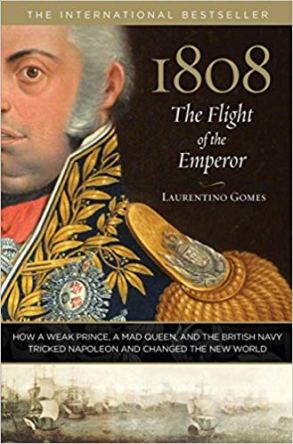
7. 1808 – How a mad queen, a coward prince and a corrupt court fooled Napoleon and changed the History of Portugal and Brazil, by Laurentino Gomes.
517MnMhRr7L._SX327_BO1,204,203,200_

Written by one of the most influential journalists of Brazil, this is the first installment of a trilogy that covers the history of the country from the transfer of the Portuguese royal court to Rio de Janeiro in 1808, in a maneuver to escape the Napoleonic wars, to the events surrounding the Proclamation of the Republic in 1889.

It took 10 years of research for the first volume to come to light. It’s a well- written, direct and very readable account of the story of the arrival in Brazil of D. Joao VI, his wife, Carlota Joaquina, and their entourage, changing the destiny of the colony forever by paving the way for the declaration of independence 14 years later. Mixing the personal anecdotes of these characters – some of them very funny – with important historical events, Gomes offers the reader a sprawling overview of those times in the colony.

1808 was awarded two Jabuti Prizes, in the categories of best reportage-book and non-fiction book of the year.

Screen Shot 2020-02-16 at 8.18.00 AM

8. 1822 – How a wise man, a sad princess and a money crazy Scotsman helped D. Pedro create Brazil, a country that had everything to go wrong, by Laurentino Gomes.

This is the second volume of the trilogy we mentioned above. Now we are focusing on the story of D. Joao VI’s son, Prince Pedro, and the role he played in the declaration of the independence of the country, culminating in the historic Cry of Ipiranga, and then becoming the first Emperor of Brazil. The book reads like a thriller, depicting the highly charged political events, the confronting factions and the many different interests that led Pedro to decide to stay in the country and cut its ties with Portugal. It portrays D. Pedro I as a wild, sensual and determined young man, who did not refrain from playing the role history reserved for him. 1822 added two other Jabuti Prizes (the third and fourth) to Laurentino Gomes’s collection, again in the categories of best reportage-book and non-fiction book of the year.

9. 1889 – How a tired emperor, a vain marshal and a wronged teacher collaborated for the end of the Monarchy and the Proclamation of the Republic in Brazil, by Laurentino Gomes.

The third volume of Gomes’s acclaimed trilogy revolves around the Proclamation of the Republic in Brazil, bringing down the Empire, which had been the most stable and solid government in the region for 67 years. Emperor D. Pedro II – 0ne of the most educated man of his time – was banned from Brazil with his family, being exiled in Europe. Marshal Deodoro da Fonseca, a former anarchist and a friend of the deposed emperor’s, was in charge now, despite his old age and debilitated health.

10. Gabriella, Clove and Cinammon, by Jorge Amado.

416OrtEBdpL._SX322_BO1,204,203,200_

Besides The War at the End of the World, this is the only other novel I included on our list of top 10 choices for the reader who wishes to understand Brazil. Written by Jorge Amado, Gabriella takes place in the small town of Ilheus, in the state of Bahia, during the economic boom of the cacao in the 1920s. The book consists of two intertwined stories: the first is the romance between the bar-owner Nacib, of Syrian origin, and the drought immigrant worker Gabriella, who becomes his cook and mistress; the second story is the confrontation between the conservative plantation colonels (powerful heads of landowner families) and the wealthy young man Mundinho Falcão, who represents the arrival of modernity, efficacy and urban values in the rural underdeveloped and backward region. Readers will be delighted to have all their senses and intellect arrested, as they immerse in the world of Gabriella: Amado describes the tastes, smells, and texture of the local foods; the funny, and sometimes violent, local customs; the hypocrisy of a narrow-minded and provincial society; the brutality of machismo; and the bright colors of what is supposed to be a microcosm of Brazil and Latin America.

I guess these 10 books will give newcomers enough introductory background and information on the beautiful, challenging and diverse country I’m lucky to live in. Welcome, good luck with your new job, and don’t forget to rate and comment on this post.

Au revoir

Jorge Sette.
 

Toxic Relationships Between Parents and Kids in Fiction


Parenting is hard work. This most intimate relationship between human beings is fraught with danger; it can be emotionally draining and has every chance of going wrong. It’s an incredibly difficult juggling act, where the pieces at play are as fragile as glasswork.  The books selected below are all stories about dysfunctional families, whose members are involved in highly toxic relations.

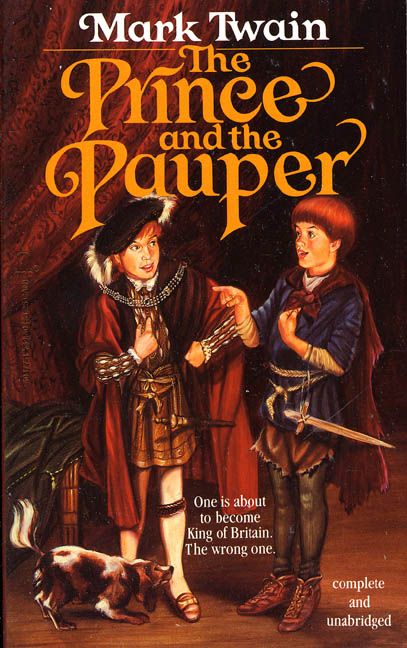
1. The Prince and the Pauper – by Mark Twain

1749b5af55cb2c2efb751e61abce0f1d

In this moving and entertaining classic story – Mark Twain’s first attempt at historical fiction – the young Prince Edward VI, son of Henry VIII, is given the unique opportunity to trade places with the pauper Tom Canty – a boy from Offal Court off Pudding Lane who bears an uncanny physical resemblance to the prince. Edward’s plan is to experience the freedom of a normal life and to get to know firsthand the reality of his future Kingdom. However, as he drifts along the squalid streets of XVI century London, fleeing from the brutal hands of the thieving alcoholic John Canty, Tom’s abusive father, he will have to deal with problems and learn harder lessons than he ever bargained for. Great quote:

“A full belly is little worth where the mind is starved.”

2. American Pastoral – by Philip Roth

71--XcbyBEL

Seymour “Swede”  Levov was the beloved blond-haired, blue-eyed Jewish athlete at Newark’s Weequahic High School. Levov was the object of envy and admiration of every boy in the community, a local hero. He grew up to become a successful businessman and to live the American Dream to the full, with a perfect wife and a loving daughter, owning a bucolic estate in the suburbs. But this is a Philip Roth novel, and reality has its ways of catching up. The times are changing; we are in the turbulent late 1960s now. From a sweet, good-looking little girl, Levov’s daughter Merry has slowly turned into a stammering, overweight teenager: a radicalized leftist terrorist, who detonates a bomb at the local post office to protest the Vietnam War. A bystander gets killed in the process, and Merry goes into hiding, but her father will never give up on her. There signs, however, that maybe Levov is somehow flawed, like a tragic Greek hero, bringing this catastrophe upon himself. What could have happened between Swede Levov and his daughter to change her so profoundly? Let’s look back at a small incident that took place on the beach a long time ago… American Pastoral is considered by many Roth’s masterpiece. The novel was awarded the Pulitzer Prize in 1998. I will leave you with a chilling quote from this stunning book:

“The fact remains that getting people right is not what living is all about anyway. It’s getting them wrong that is living, getting them wrong and wrong and wrong and then, on careful reconsideration, getting them wrong again. That’s how we know we’re alive: we’re wrong.” 

3. Dress Your Family in Corduroy and Denim – by David Sedaris

10176

David Sedaris is one of the funniest contemporary writers in America. Growing up gay in a family of four sisters and a younger brother, under a traditional middle-class father of Greek descent, and a chain-smoking and alcoholic mother, the obsessive-compulsive author focuses, in his stories, on the hilarious experiences of his severely dysfunctional family. His self-deprecating kind of humor and singular perspective on the various facets of family life will make the reader roar with laughter. Among his works, I would especially recommend Dress My Family in Corduroy and Denim, where you will find some of his funniest stories.

“She’s afraid to tell me anything important, knowing I’ll only turn around and write about it. In my mind, I’m like a friendly junkman, building things from the little pieces of scrap I find here and there, but my family’s started to see things differently. Their personal lives are the so-called pieces of scrap I so casually pick up, and they’re sick of it. More and more often their stories begin with the line “You have to swear you’ll never repeat this.” I always promise, but it’s generally understood that my word means nothing.” 

4. My Sister’s Keeper – by Jodi Picoult

400-keeper-9780743454537

This is the unsettling story of Anna Fitzgerald, who, unlike most of us, was deliberately conceived by her parents to fulfill a specific purpose. Anna was born to provide genetically suitable material for her older sister Kate, who has been diagnosed with promyelocytic leukemia. On the various occasions when Kate relapses, she needs to rely on Anna’s donations of leukocytes, stem cells, and bone marrow to survive. We meet Anna when she is already thirteen and beginning to resent and question her role in life. But when her parents expect her to give Kate one of her kidneys, Anna decides she’s had enough and looks for legal help to sue them for rights to her own body. From the book:

“In the English language there are orphans and widows, but there is no word for the parents who lose a child.” 

Have you read any of these books? Share your views with us.

Au revoir

Jorge Sette

10 Cool Questions about Peter Carey’s Oscar and Lucinda – A great love story (for your book club)


Oscar and Lucinda is one of those books that grow in the reader’s mind over time. The unforgettable and powerfully written novel by Peter Carey, winner of the 1988 Man Booker Prize, tells the improbable love story between a religiously obsessed English young man and a compulsive Australian heiress.

c7bfa1c130de93e81d6d2be25a84aeee

Oscar has a gambling problem. He loves horse races. Lucinda, on the other hand, adores glassworks and cannot resist a game of cards.

Lucinda purchases the oldest Glass Factory in Sydney. The story takes place in the 19th century and culminates with the couple’s joining forces on the biggest (and strangest) bet of their lives: gambling on the transportation of a glass church across the Outback from Sydney to the remote Bellingen, 400 km up the coast of New South Wales. This is certainly one of the most outlandish and beautiful literary visions I’ve come across as a reader in a long, long time.

In 1997, the novel was made into an acclaimed movie directed by Gillian Armstrong, starring Cate Blanchett and Ralph Fiennes.


Cate_Blanchett_Cannes_2015-1

Cate Blanchett – who plays Lucinda in the movie version.


The questions below are fairly open-ended. They are intended to be incorporated into the list of others you are possibly already using during your book club’s sessions. It helps to have a mediator to conduct the discussions. There are no absolute right or wrong answers, so I would recommend the members of the group be flexible, welcoming and respectful of other people’s opinions and interpretations. Enjoy:

1. Where did Oscar live as a child (country, region, city)? Where did Lucinda live as a child (country, region, city)?

2. Why did Oscar start moving away from his father’s religion to become an Anglican?

3. What did Oscar do for a living? What about Lucinda?

4. Where/When did Oscar and Lucinda first meet? And what was Oscar’s greatest fear at that point?

5. What feelings developed when they decided to play cards for the first time, and how did the storm change the situation?

6. How did Oscar morally reconcile religion and gambling?

7. How does a Glassworks or glass factory reflect Lucinda’s own personality?

8. Would you consider Lucinda a feminist ahead of her time? Give us three examples of her behavior in the story that would justify this idea.

9. What is the passage (or passages) in the novel that will probably linger in the readers’ minds after they’ve finished it?

10. If you were Peter Carey, the author, list three things you would have changed about the novel before it was published. Your answer can be about the characters, the plot, the location, the times or the ending.

Choose a couple of the questions above and answer them in writing in the comments space below, if you wish.

Au revoir

Jorge Sette.


Five of My Favorite Narrative Settings


Readers know the importance of compelling settings in novels – we hope writers do too. Some people would claim that character and plot are king. However, it’s not unusual for readers to first recall a certain region, a piece of geography, a neighborhood or city depicted in a novel when they think of it. While these settings may be the context for the whole story, sometimes, they are the backdrop against which only a number of important or climatic scenes develop.

cliff-of-mohar-324746_960_720

The Cliffs of Insanity – From The Princess Bride

Well-written settings create atmosphere; they may drive the plot, and even become as important as a main character. Often, readers are so enraptured by book settings (although the story will most certainly take place in a different time or era), they will wish to visit some of them. Yours truly, for example, is a stickler for visiting places depicted in books – or in their movie adaptations for that matter – when my travels take me anywhere near them.

In this post I’m sharing with the reader some of my favorite settings in novels. Please let me know how you feel about them. Also, if you wish, list and describe your favorite settings in the comments section below.

51Js6G5I9PL._SY344_BO1,204,203,200_The Curious incident of the Dog in the Night-Time, by Mark Haddon. The London Underground.

After seeing the London Tube through the eyes of the highly functioning – yet socially inadequate – autistic 15-year-old Christopher Boone, the charismatic narrator of this stunning novel, readers will agree the Underground is the perfect metaphor for the lair of imaginary or real monsters we all need to fight and overcome in the course of our lives. The Tube, with its vibrant atmosphere, train noises, buskers and the multitudes of daily travelers rushing down its corridors. can certainly be an overwhelming experience for someone like Chris, or readers who are not entirely comfortable with crowds and frenzy.


518A0CQ6VVLWuthering Heights, by Emily Bronte.
Yorkshire.

This region of northern England, swept by winds and storms, as depicted by Emily Bronte, is the ultimate expression of a romantic and dramatic landscape: wild, visceral, and passionate. This remarkable setting, of course, matches the personalities of the novel’s unforgettable characters, Cathy and Heathcliff, who roam the region’s bleak moors – alive and dead! The historic county of Yorkshire is, by the way, the largest and one of the greenest in the UK. 


2666The Bonfire of the Vanities, by Tom Wolfe. New York City.

Wall Street, Park Avenue and the Bronx are forever linked in many readers’ minds to the fate of naïve bond trader Sherman McCoy, one of the masters of the universe – in his own egocentric and distorted self-assessment. At a key plot point, Sherman misses the exit into Manhattan on his way back from Kennedy Airport, where he drove to pick up his mistress Maria. The journey ends up in a nightmare, when the couple gets involved in a hit-and-run accident, killing a black young man in the Bronx. Sherman, the superrich yuppie, becomes the perfect target: he will be used as a scapegoat and brought down by the petty political interests of the various ethnical and professional lobbying groups of 1980s New York.

9780544173767_p0_v2_s1200x630The Princess Bride, by William Goldman. The Cliffs of Insanity.

The first image that crosses my mind whenever I hear someone mention The Princess Bride are the Cliffs of Insanity (gosh, do I love this silly name!). Although this is a fictitious setting, the movie version – which was the first contact most of us had with this incredibly entertaining post-modern fairy tale – uses the real breathtaking Cliffs of Moher, in County Clare, Ireland, as the location. Facing the Atlantic, those rugged imposing cliffs are among Ireland’s most spectacular natural sights.


41hqc685dlL._SX317_BO1,204,203,200_Middlesex, by Jeffrey Eugenides. Detroit, Michigan. USA.

“I was born twice: first, as a baby girl, on a remarkably smogless Detroit day in January of 1960; and then again, as a teenage boy, in an emergency room near Petoskey, Michigan, in August of 1974”. This is one of the most intriguing opening lines in contemporary fiction. Middlesex is not only a powerful and moving journey into human sexuality, gender issues and identity, but also the three-generation saga of a Greek-American family, the Stephanides, migrating from a small village overlooking Mount Olympus all the way to Detroit, Muchigan – an improbable destination, where readers experience the story of the city from the Prohibition days, moving through its glorious days as the Motor City, and witnessing the race riots at the end of the 1960s – and beyond. An American epic.

Au revoir

Jorge Sette