Six Stunning Houses in Literature


I have always been fascinated by certain houses in novels. They exert a strange power over me, especially if they are part of gothic stories. Maybe because I have been living in apartments for more than half of my life now, I am somewhat jealous of the large spaces, yards, porches, gardens, the lack of noisy neighbors, and maybe the safety of the proximity of the ground those houses provide – despite the fact that I was never in an earthquake, and, as a consequence, never experienced the trauma caused by these events, which causes most people who have been through them to wish not to live far from the ground.

I lived in a house for some time growing up in Recife, and those were some of the best years of my life. Of course, living there as a distracted child, then as a sullen and hormone-crazed teenager, and finally as an ultra-busy college student, I never fully appreciated what I had back then. I took it for granted. Then, I left the city, came to live in São Paulo, and, presently, my mother sold it and bought a huge apartment, which I fell in love with too, while I went there on vacation. 

Well, all this is beyond the point, however. What I want to do in this post is just to list book houses that I felt particularly close to or fell in love with. Not all these books are classics, but they have always been popular and famous.

The houses in this post are not listed in order of preference. The list is random to a certain extent, as I wouldn’t be able to actually rank them in terms of the impact they had in my imagination. Here they are:

  1. Wuthering Heights (Wuthering Heights, by Emily Brontë): Rustic, uncomfortable, subjected to the rough weather conditions of the Yorkshire moors, this was the house that brought Cathy and Heathcliff together – two of most beloved and passionate characters in literature. Becoming orphans at an early age, they grew up like savages, free and wild, running and playing around the dreary surroundings of the house, and eventually falling in love with each other. Cathy was the daughter of the place’s owner, Mr. Earnshaw,  who died when she was still a child, and Heathcliff was a gypsy boy her father found in the streets of Liverpool on one of his business trips, and brought home to live with the family. The house mirrors all the brutality and violence of the novel’s plot. In addition to that, Cathy became the ghost that, in the future, would haunt Wuthering Heights forever, driving Heathcliff crazy.

2. Manderley (Rebecca, by Daphne Du Maurier): Owned by the wealthy Mr. Maximilian de Winter, the house is described in all its beauty. I love houses by the sea and this, located in breathtaking Cornwall, is one of them. Besides, there’s the mystery surrounding the widowed owner’s first wife, Rebecca, who seems to have drowned. She was rumored to have been on top of her game, beautiful, sophisticated, well-connected, adored by the sinister housekeeper, Mrs. Denvers,  who would later give Max’s second wife (who remains nameless to the reader throughout the novel) a hard time. However, signs abound that there was something off about all that perfection during the first marriage. Did Rebecca’s personality really match the architectural magnificence of landscaped Manderley?

3. Thornfield Hall (Jane Eyre, by Charlotte Brontë): This is a different case altogether from the houses listed before. The main attraction is the mystery that involves the place. I lived in the UK for almost two years, but never had the chance to visit Yorkshire or see heathers. However, both Wuthering Heights  and Jane Eyre, novels written by two sisters, fascinate me. Who wouldn’t become excited reading about a house with a mysterious attic, hiding a crazy woman? That’s the most important thing about gothic Thornfield Hall: Mr. Rochester, the romantic lead, has his first wife locked up in the attic, mad as a March Hare, while Jane knew nothing about it.

4. Gatsby’s mansion in Long Island (The Great Gatsby, by Scott Fitzgerald): The green light at Daisy’s dock, which Gatsby stares endlessly, signaling how close and yet so far the woman he has always loved lives with her wealthy husband Tom Buchanan, makes one of the attractions of the book. The green light is a powerful metaphor for ambition, desire and the struggle for great accomplishments at any cost. Gatsby, the man, personifies the American dream: from a poor background, he rose to acquire a mansion, expensive cars, and a glamorous lifestyle. He also constantly gives popular and orgiastic parties, but he still needs to get the ultimate prize: Daisy herself. The parties were the means he used to call attention to himself and attract her, but only when he befriends her cousin, Nick Carraway, the story’s narrator, and persuades him to orchestrate a meeting between him and Daisy, does he have a chance to try to rekindle her love. In the novel, the house is described as a nouveau-rich paradise,  with all the extravagances and bad taste of these kinds of places,. Yet,  it does not lack its allure. The green light, seen from his side of the bay, is the strong symbol that stays with the reader long after he finishes the novel.

5. The Dakota Building (Rosemary’s Baby, by Ira Levin): This is an exception, as it’s a condo and not a proper house. The building itself is the setting of one of the most disturbing movies I have ever seen, Rosemary’s Baby, directed by Roman Polanski. Later, it was the place where John Lennon and Yoko Ono had an apartment and lived, at the time he was shot and killed right in front of it in 1980. As for Rosemary’s Baby, neither in the movie nor in the novella that inspired it, the Dakota building is mentioned by name. In the book, the location is not even where it’s seen and recognized in the movie by those who are familiar with the Upper West side of Manhattan. However, most people who both read the book and saw the movie agree that the power of the story is Polanski’s credit. He turned what could pass for a simple and not very sophisticated thriller into one of the most successful movies of the 1960s, catapulting actress Mia Farrow, who played the main character, into worldwide fame. One interesting comment I read somewhere was that Polanski, a non-believer in religion, did not want to make it clear that the baby was the devil (or his son). He claimed that this would go against his beliefs. After all, if you don’t believe in God, you can’t believe in the Devil. So, he turned the plot into a more ambiguous and interesting story –  there’s the possibility that Rosemary could be delusional and paranoid, imagining that she was in the clutches of a coven whose leaders are her neighbors in the dark building, and that her own husband and her trusted gynecologist were in on the conspiracy. 

6. The House on Matacavalos Street (Dom Casmurro, Machado de Assis): That is the setting of one of my favorite Brazilian novels. Today, this street, in the district of Santa Teresa, has the name of Riachuelo. When the main character, Bentinho, starts narrating the story of his life, already a middle-aged man, resentful and a recluse, the house he spent his childhood in had already been demolished, but it held such a symbolic reference to him that he had it rebuilt, in exactly the same way, only in another neighborhood. And that’s where he lives in the present, nursing his traumas and pains. The original house was next door to Capitu’s, the main female character of the novel, and the love of his life.  Those neighboring houses witnessed the birth and blossoming of a sweet and romantic love story between teenagers  growing up together. The story is told subjectively from the point of view of an unreliable character, Bentinho, so, as a result, the reader can never be sure whether his estranged wife Capitu was really unfaithful to him, having had an affair and got pregnant by his best friend, Escobar.

What are your favorite book houses? Let us know by leaving your choices in the comments section below.

Jorge Sette

Euphoria (HBO): second season (review)


Now that Zendaya won a Best Actress Emmy for the role of the drug addict Rue in the successful HBO series Euphoria, I’m rewatching the second season. I want to check out her performance and decide if the show is as good as I thought it was when I first saw it.

The series is definitely not for the faint of heart. The story, set in the fictitious town of East Highland in California, is about a group of High School teenagers, most of them still living with their highly dysfunctional middle-class families.

Drugs, sex, and cell phones abound. These characters are portrayed in all their rawness, brutality, and emptiness by an extraordinary cast of young and mature actors.

The highlight of the second season is a play within the show (“Our Lives”), created and directed by one of the students, Lexi, who seems to act as the moral center of the story. The play – stunning in itself for us, the home audience – helps the characters sitting in the school theater see themselves as they really are, with all their flaws and inconsistencies (rather than the fake personas they try to create and project), therefore stirring strong emotions, and leading to a huge unscripted fight on the stage. “Art should be dangerous”, says an assistant to the devastated director to soothe her. But the show must go on.

Most of the relevant current themes are discussed in Euphoria, to some extent: friendship, loyalty, love, the opioid crisis, fluid sexuality, transsexualism, pedophilia, toxic masculinity, feminism, sexual orientation, the breakdown of the traditional family and its values, the difficulty to communicate real feelings or develop an authentic personality.

There’s a lot of physical and verbal violence too. Keeping in mind that the objective of ambitious shows is not only to entertain but also to discuss controversial issues and provoke change, Euphoria is a great show, if you can manage to watch the frequent uncomfortable scenes.

Have you had a chance to watch the show? Please leave your comments in the section below.

Jorge Sette

The Rolling Stones drive 70,000 Brazilians wild during their last show in São Paulo


This text was first published on February 28, 2016. I felt I should republished it now after the death of Charlie Watts this week. This is for him.

Feb 27th, 2016: Rolling Stones Latin America Olé Tour. After the competent and traditional paulista band Titans, who opened for the Rolling Stones in their two São Paulo shows, completed their participation, the stage began to be cleaned up and prepared to receive rock’n’roll royalty. 

The atmosphere of anticipation was almost unbearable; you could sense the electricity in the air. The Stones’ clever choice of Jumpin’ Jack Flash to kick off the evening struck the unfailing spark to detonate an explosion of historic proportions. The crowd went crazy. It may be only rock and roll but we love it!

For the next two hours, some 70,000 fans, composed of grandparents, parents and kids, rocked, sang and responded, as if in a trance, to Mick Jagger’s antics, which, besides great singing and dancing, included greetings, swearing, and jokes in clear, yet heavily accented, Portuguese – he introduced the circumspect drum player Charlie Watts as Rainha da Bossa Nova (Queen of Bossa Nova). I hope poor Charlie did not get the joke.

In certain moments, the show just felt like some sort of ritualistic exorcism, with people jumping up and down, yelling, sobbing and pulling at their hair – I hadn’t seen this kind of fan hysteria since the worn-out footages of the Beatles arriving in the USA in the early 60s.

As the Stones were not promoting any new record, the show was a dizzying succession of classic hits (Wild Horses, Brown sugar, She’s a Rainbow, Miss you, Paint it Black, Honky Tonk Women, You Cant Always Get What You Want – the latter accompanied by the members of the Coral Sampa – which both moved the older guys who packed the Morumbi stadium, and drove the teenagers and 20-somethings wild. I don’t think the younger generations had ever experienced anything as good in terms of a rock and roll concert here in Brazil. Even better: the band seemed to be having the time of their lives: playing like fiends, smiling widely, being nice and friendly to their adoring Brazilian fans.

The show was indeed iconic, offering the public, at least, two sublime moments:

1. Mick Jagger and the beautiful black vocal singer Sasha Allen took the stage catwalk, which jutted into the audience, and sang what will surely become a legendary version of GIMME SHELTER while the light rain that began to fall shone against the bright spotlights, providing a wonderful and unexpected cinematographic context to the song. As the singers danced, embraced – and even simulated copulation on the stage – I noticed people’s eyes welling up at the exquisiteness of the performance. The rain lasted for the entire number and felt like a momentous gift from heaven to enhance the show. See the unedited, raw video clip below:

2. The audience was also awarded a historic 10 min long rendition of MIDNIGHT RAMBLER, electrifying the crowd, who either sang along or just stared wide-eyed at that mysterious 73-year-old sage, a force of nature, with the face of an old and battered seaman who’s been exposed to the harshest elements, yet carrying the body of a supple teenager, serpentining across the stage with his trademark moves, and slyly raising his t-shirt now and then to show off his well-defined six-pack abs!

But when we hear the first chords of Sympathy for the Devil (three-quarters into the show), and witness Mick Jagger stepping onto the stage in a flaming red boa (repeating an act he had already performed in Martin Scorsese’s documentary SHINE A LIGHT – with the difference that, in the movie, they used real fire!!) everything falls into place: we get confirmation of what we have known all along and yet refused to believe. Mick Jagger is either Faust, having struck a pact with Satan, or an alien dropped by mistake and forgotten on this planet!

To say the concert was perfect would be accurate, if only Keith Richards had refrained from singing two songs half-way into the event. Embarrassingly out of tune, he must abandon this recurring fit of narcissism and stick to what he does best: playing the guitar like a god.

The concert finished with the anthemic I can’t get no satisfaction, followed by a discreet display of fireworks. To its credit, the whole show keeps visual effects and pyrotechnics to the barest minimum. What we get is two hours of solid, raw, and uncompromising rock and roll. Worth every cent you may have spent on the ticket!

On a final note, let’s just point out that, although Mick Jagger avoided making political comments on the situation of the country during the show, whenever the movie crew who was registering the event trained their cameras at the audience, small groups would spontaneously break into offensive chants against President Dilma Rousseff.

Jorge Sette

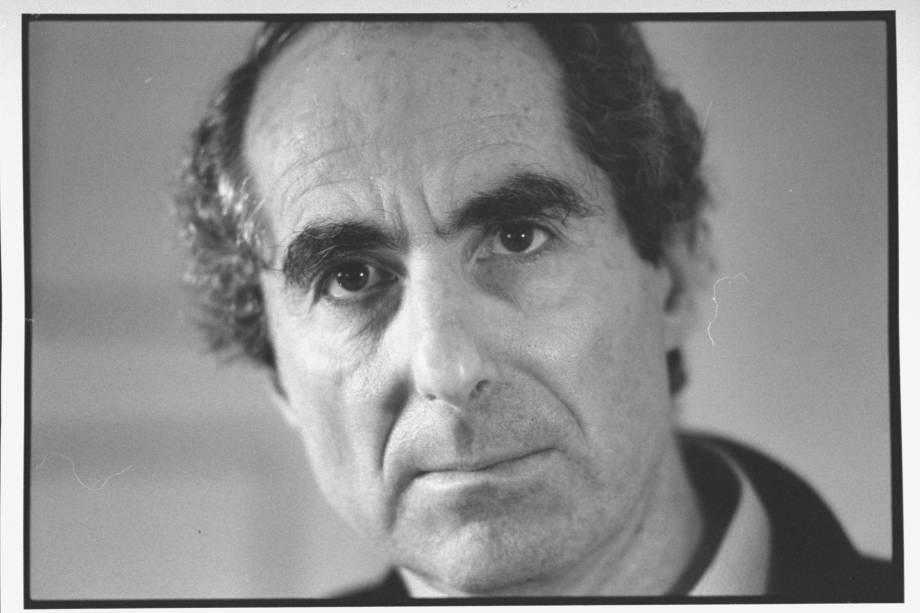
Philip Roth on the power of fiction


“Everybody else is working to change, persuade, tempt and control them. The best readers come to fiction to be free of all that noise.” Philip Roth

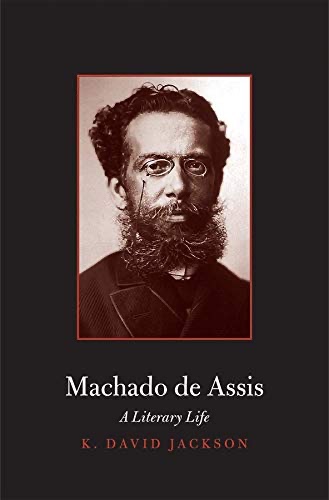
Highlights from the book Machado de Assis: A Literary Life, by K. David Jackson


In his in-depth work, K. David Jackson, Professor of Portuguese at Yale University, focuses on the oeuvre of Machado de Assis, rather than on more personal aspects of his life. If, on the one hand, you wish you’d get to know more about the man behind some of the greatest works of the Latin American literary canon, Jackson’s choice is understandable. Machado was a very private person, who led a rather uneventful and quiet life, totally devoted to his artistic objective: the construction of a philosophical and fictional world.

This detailed work by K. David Jackson isn’t, therefore, your typical biography, but a fascinating study of Machado’s output, illuminating unsuspected aspects of his fiction and acquainting the reader with hidden facets of his creative process.

Here are some of the most engaging points made in the book:

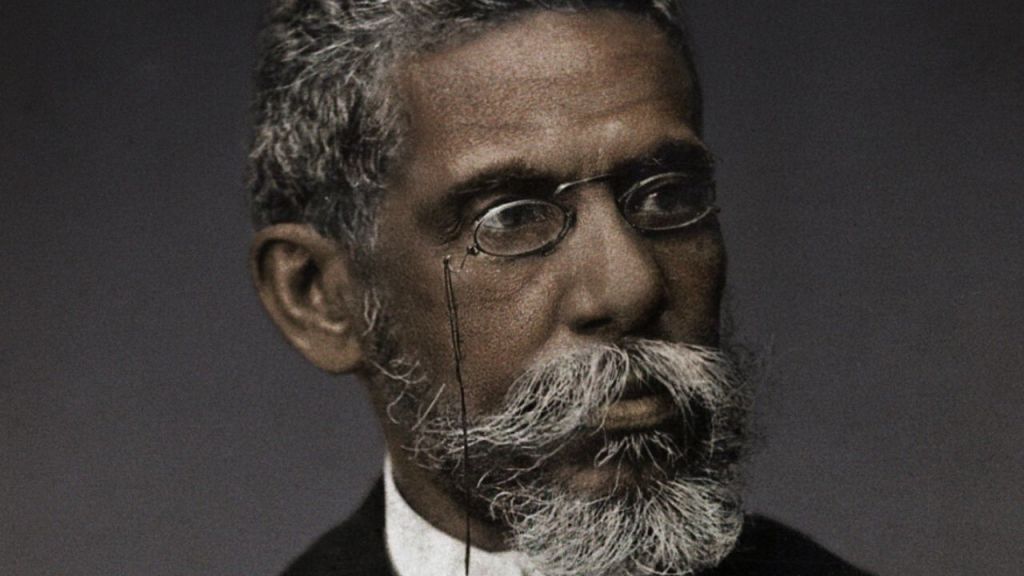
1. Biographical landmarks: Machado de Assis, known as the Wizard of Cosme Velho (the neighborhood in Rio de Janeiro where he lived), was the co-founder and first president of the Brazilian Academy of Letters (1897). His most famous works are the Carioca Quintet (a set of five novels published from 1881 to 1908: The Posthumous Memoirs of Brás Cubas; Quincas Borba; Dom Casmurro; Esau and Jacob; Counselor Aires’ Memoirs). He died in 1908 at the age of 69. His image was used on a Brazilian banknote in 1988, and he was the featured author at the International Literary Festival Party of Paraty (FLIP) in 2008, to celebrate the centenary of his death.

Brazilian academy of Letters

2. His importance: According to Jackson, Machado’s writings ought to be placed alongside the works of Dostoevsky, Gogol, Hardy, Melville, Stendhal, and Flaubert.

3. Innovation: Having started off as a romantic writer and progressively become associated with the Realist artistic movement in Brazil, Machado is said to have anticipated the modernist narrative features found in Proust, Joyce, T.S. Eliot, Camus, Mann, and Borges.

4. Features: Machado’s work is hybrid and cannibalistic (intertextual). Through extensive reading, he assimilated and digested an incredible amount of information on Western culture as a whole (arts, music, philosophy, and literature), and based on these sources produced a very original body of work, using the social context of the city of the Rio de Janeiro during the Empire as a means to discuss and represent, mainly through parody and satire, universal truths and human dilemmas.

5. His most important works (such as The Posthumous Memoirs of Brás Cubas and Dom Casmurro) feature unreliable character-narrators, whose hallucinations dreams and obsessions are said to anticipate Freud’s psychoanalytic theories.

6. Theater and opera: These are among the main influences in the construction of the fictional space of Machado de Assis. Rio de Janeiro hosted a great number of European theater and opera companies in the 19th century, which allowed Machado to be exposed to a lot of comedic operas (opera buffa) and plays, which are not only frequently referenced in his fiction, but are also woven into the fabric of his works.

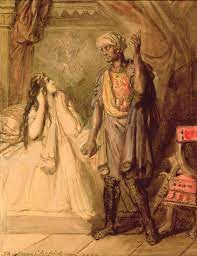
7. Shakespeare’s Othello: the classic story of the Moor who kills his wife Desdemona out of jealousy is reflected in the feelings – if not the actions – of important protagonists of Machado’s fiction. Othello is, for example, one of the main inspirations of Bento Santiago, the character-narrator of Dom Casmurro, whose insecurity and obsessions prompt him to write his memoirs as a way of persuading himself and the readers that his wife, Capitu, had an affair with his best friend Escobar, bearing an illegitimate son, Ezequiel.

Desdemona and Othello, Théodore Chassériau, 1847.

8. Social Darwinism and Positivism – dominating scientific theories at the time – were strongly criticized and ridiculed by Machado, especially through the fictitious philosophy of HUMANITAS, summarized by the motto To the Victor, the Potatoes, created by the mentally unstable character Quincas Borba, who first appeared in The Posthumous Memoirs of Brás Cubas. He later made a comeback in the novel Quincas Borba (although, in typically oblique Machadian fashion, he’s not the protagonist of the book).

9. Main themes: Machado’s work is a profound depiction of Rio de Janeiro society during the Empire. This microcosm, however, is used by the author only as a familiar context for the highlighting of universal themes, such as legitimacy, chastity, honesty, hypocrisy, adultery and cruelty, which receive a modernist treatment in his hands.

If you haven’t had the chance to read Machado de Assis yet, K. David Jackson’s book will surely whet your appetite. For those, like me, who have read and reread Machado on a regular basis, Jacksons’ work was a surprising and welcome source of new interpretations of the familiar novels and short stories the Brazilian author is most famous for.

Jorge Sette

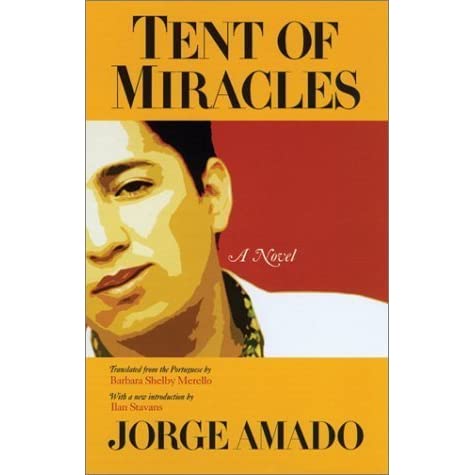
Tent of Miracles, by Jorge Amado: Racism and Parochialism Against the Backdrop of a Mythic Bahia


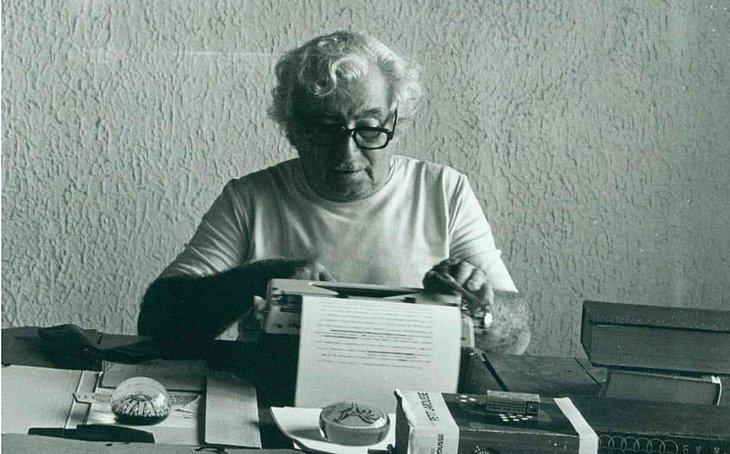
Jorge Amado (1912-2001), one of the most popular and internationally known Brazilian authors, started his career writing realistic books that carried a biting criticism of the economic elites and their exploitation of the working classes and the poor. This Marxist phase characterized the first of his works. After the publication of Gabriela, Clove and Cinnamon in 1958, however, his novels became more populist and satirical, with a stronger focus on the sensuality and picturesque aspects of the afro-Brazilian culture of the author’s native state of Bahia, located in the northeast of the country. The author was harshly criticized by many for having changed his tone.

With Tent of Miracles, first published in 1969, one could say that Amado managed to strike a fine balance, providing a serious examination of Brazilian socio-economic issues and highlighting the hedonism and colorfulness of the Bahian culture, with its stunningly beautiful mulatto women, the freewheeling sensuality of its people, their lively songs, and dances and the prevalence of African-originated religions and cults.

The Themes

Tent of Miracles is a strong satire on the parochialism of the Brazilian intelligentsia – which needs validation from developed countries, especially from the US, before appreciating local talents in all areas of art and knowledge. The novel is also an inspired ode against racism, praising the power and beauty of miscegenation. In that respect, we can say that the themes of the book are more relevant than ever in today’s global context of generalized xenophobia, racism, and prejudice against diversity.

The Plot

The story kicks off when a Nobel Prize-winning North-American scholar, D.J. Levinson, comes across some forgotten books in the library of Columbia University and decides that their author is one of the best anthropologists he’s ever read. The racial considerations and the detailed description of the customs and “folkways” of the racially-mixed people of Bahia found in those four dusty volumes deserve to be known and discussed by the global academic community. The author, a black Brazilian called Pedro Archanjo, lived in Bahia for 75 years (1868 -1943), doing menial work in the streets of the city of Salvador (called Bahia at the time), destitute and unrecognized by his upper-class contemporaries. Levinson then comes to Brazil to experience first hand the theories put forward in the books and to promote their author.

Of course, the announcement of the arrival of the US luminary makes headlines in the biggest newspapers of Brazil. This arouses the interest and greed of the local authorities, intellectuals, and politicians, who wish to advance their own personal agendas, tapping into the newly-elevated status of Pedro Archanjo to scientific prodigy. It’s decided that the centenary of Pedro Archanjo’s birth – about to take place at the end of the year – deserves a fitting and official celebration in the city after all.

At this point, the lesser writer and poet Fausto Pena is hired by Professor Levinson to do research into the life and times of Pedro Archanjo, spanning more than 70 decades. In reality, Levinson’s main objective is to get Pena out of they way so that he can enjoy the pleasant company of the poet’s girlfriend, the journalist Ana Mercedes, an unashamedly social climbing mulatto beauty.

As a result, it is through Fausto Pena’s eyes that we get to know the story of Pedro Archanjo, despite all the gaps, incongruences and half-truths he gathers in his notes. We learn about Archanjo’s popularity among women, the innumerable children he fathered out of wedlock, his work as a runner for the School of Medicine and, finally, his rising awareness of the social conditions of the underprivileged people of Bahia, subject to all kinds of oppression, violence, and prejudice. Archanjo then decides to self-educate, write about race relations, and become a political militant.

Despite its important and political undertones, the story, of course, unfurls against the backdrop of a poetic and colorful Bahia, with humorous anecdotes and detailed descriptions of the rituals of the local afro-influenced religions, the local foods and spices, the dance and music. Jorge Amado kept many original African words in these passages – wisely kept in the translation into English – presenting a complete glossary in the back of the book.

The Characters

The characters of Tent of Miracles are not entirely realistic, but ironic representations of specific types that populate the Brazilian collective imagination. We can split them into the powerful (corrupt politicians, controlling newspaper editors, arrogant college professors) and the disenfranchised (the malandros, bon vivants, ruffians, drunks, gorgeous mulatto women, old wise men, and gold-hearted prostitutes). 

Most of them, however, come across as a bit underwritten; they are not fully rounded characters. Pedro Archanjo, of course, personifies all the contradictions of a typical popular hero, as all his facets are praised in the Carnival celebration held in his honor at the end of the book: minor candomblé priest, vagabond, striker, runner of the School of Medicine (where he started his more formal education), heavy drinker, womanizer, teacher, sorcerer and writer! 

The Style

Although the book has strong elements of magical realism, especially in the scenes that take place in the candomblé terreiros, the space where the afro-religions and cults have their rituals (devotees embarking in trances; divinities taking possession of their bodies; supernatural events occurring; myth and reality getting intertwined), most of the plot develops in a fairly realistic and straightforward way.

The Relevance of Tent of Miracles Today

Jorge Amado

Written during the first years of the Brazilian military dictatorship, the passages depicting the brutal repression by the police of the Afro-Catholic cults, the bloody raids against the terreiros, and the beating or killing of their members – which happened especially during the 1920s and 30s – can be interpreted as a fitful metaphor of the times.

The novel, however, does not feel dated at all, as its themes are still universal and very concrete. The irony made explicit in the story is that miscegenation deeply permeates the whole of Brazilian society, and, thus, the bigotry and racism of people whose mixed-race blood is either carefully hidden in the family past or even naively ignored are laughable and hypocritical. It’s time for Brazil – and other countries in the world – to bury the myth of white supremacy and come to terms with the fact that we’ll carry on living in an irreversibly multicultural, mixed and diverse society.

Jorge Sette

Cult TV From The 60s And 70s – The Terrible Shows We Used To Love


Even if the reader did not watch these shows when they first aired, there were reruns throughout the seventies, eighties, and nineties, and some of them can still be watched on cable TV and streaming services. Besides, most of them are available as DVD box sets.

Younger people may find it hard to believe we loved those shows. How could we stand the primitive and amateurish visual effects? How could we tolerate the bias against women, gays, blacks and other minorities? How could we sit still through the slow pace, and the lack of jokes and punch lines present every other second in today’s sitcoms?

Well, those were more innocent times, we were naïve viewers, we couldn’t anticipate the complicated nuanced plots, complex social analysis and great acting of shows like THE SOPRANOS, MAD MEN, BREAKING BAD or HOUSE OF CARDS. Those early shows were all we had back then, and the whole family gathered together in front of the bulky black and white TV set to watch them. Few families had color TV in the early seventies in Brazil. Besides, now and then, one of us would have to stand up and reach for the TV aerial to adjust it or pound on the top of the TV set to get the image to straighten up. Did I forget to say there were no remote controls either? Bad news for the couch potatoes.

These were the most popular shows among my friends in those days: 

Lost in Space

Lost in Space. This was by far the kids’ favorite show. When I was older, my mother explained the reason we were so into that show was that it featured a well-adjusted, loving family confronting the tough obstacles an ominous Universe put in their way. Could be. The aforementioned family – the Robinsons (any reference to The Swiss Family Robinson, the novel by Johann David Wiss published in 1812, is not coincidental) – sets off to investigate conditions to colonize a planet near Alpha Centauri, due to the overpopulation on Earth in the inconceivably distant future of ….1997!

Their trip would last 4 years, during which time they would remain frozen in suspended animation. However, many other nations were working on similar projects, competing with the US. Therefore, the wicked and ambitious Doctor Zachary Smith (Jonathan Harris), who worked for the US project as a psychologist, was hired as an agent by one of these competing nations. He carries the responsibility of sabotaging the mission. The problem is Doctor Smith gets trapped in the spaceship, the two-story disc-shaped Jupiter 2, seconds before it takes off, being forced to leave Earth with The Robinsons. The extra weight veers the spaceship off its original course and they get inevitably lost. He will be a burden to the family and their pilot, Major West, as they face innumerable perils in space or on the alien planets they sometimes land on. Rumor has it the producers’ plan was to feature the family patriarch Professor Robinson (Guy Williams, of Zorro fame) and his co-pilot Major Don West (Mark Goddard) as the stars of the show. But as the episodes developed, the focus shifted almost 100% to the adventures of Doctor Smith (played hilariously by Jonathan Harris), the male kid, Will Robinson (Billy Mumy), and their loyal Robot, who stoically took all the abuse heaped upon him by Smith. The trio simply stole the show. Smith was supposedly gay (and rather camp), but no one talked about it at the time, and there was never any fear that he could corrupt his young partner, Will. The visual effects were pathetic and look ridiculous by today’s standards. The settings and monster costumes are incredibly amateurish and silly too. But we loved the show.

I Dream of Jeannie

I dream of Jeannie. Everyman’s sexual fantasy come true, there was never, however, a more innocent relationship between a master and his sexy slave than the one sustained by Astronaut Major Nelson (Larry Hagman) and the genie he finds imprisoned in a bottle on a desert island on the Pacific, setting her free.

Actor Barbara Eden, who played Jeannie, was at the height of her beauty and sensuality in those days, and, although the network decency guidelines wouldn’t allow us even a glimpse of her navel, she must have stirred the hormones of many a teenager and young man. Major Nelson, though, seemed immune to her attractions. We, on the other hand, were too young for those kinds of feelings and sensations. Girls loved the little doll house Jeannie lived in inside the bottle, while boys had the time of their lives watching the problems she caused Major Nelson by timing the execution of her magic tricks, accomplished by blinking her eyes and crossing her arms, to whenever Doctor Bellows (Hayden Rorke), the space program psychiatrist, was around.

The Time Tunnel

The Time Tunnel. This show did what every school should be doing: teaching history in a fun and engaging way. This, of course, was far from the objective of the producers, who only came up with a clever premise to raise their ratings, without any noble educational purpose in mind. The show featured two scientists trapped in a time machine built by the US government in the shape of a tunnel, hence the title. 

The machine gets out of control and the scientists cannot return to the present. Every episode would feature a story in which they’d land either in the future or the past. The episodes depicting important past events (the Second World War, the eruption of the Krakatoa and the sinking of the Titanic, among others) outnumbered the ones set in imaginary futuristic scenarios, which turned the series into great history lessons. We learned a lot from watching it, and had fun at the same time. 

Batman

Batman. The most psychedelic show of the era, the 60s version of the Dark Knight was an explosion of color (for those who could afford color TV), unforgettable idiosyncratic nemeses (such as Catwoman, the Joker, The Riddler and The Penguin) and exciting fight scenes during which innovative onomatopoeic speech bubbles popped up on the screen (Pow! Plop! Bang! Craack!). The costumes worn by most characters were duly ludicrous and it never crossed our naïve minds that the whole thing was supposed to be a parody of the comic books. We took the adventures very seriously: the anthological death scene of Catwoman, falling from a tall building after dangling for a couple of tense minutes by the grip of Batman’s heroic hands before plunging into the void, depressed the most sensitive kids of the time. We all loved Catwoman, she was sexy and fun, who cared if she was evil?

Many other shows of the time were also popular, such as Land of GiantsBewitched and The Monkees. Television evolved a lot in more recent years, and I daresay some of the new shows have way more quality than many of the movies we watch in theaters. I was lucky those silly shows coincided with my childhood and early teenage years: I was able to enjoy them fully without any sense of shame or guilt.

What was your favorite TV show of the sixties and seventies?

Jorge Sette.

Capitalism versus Communism – according to Philip Roth


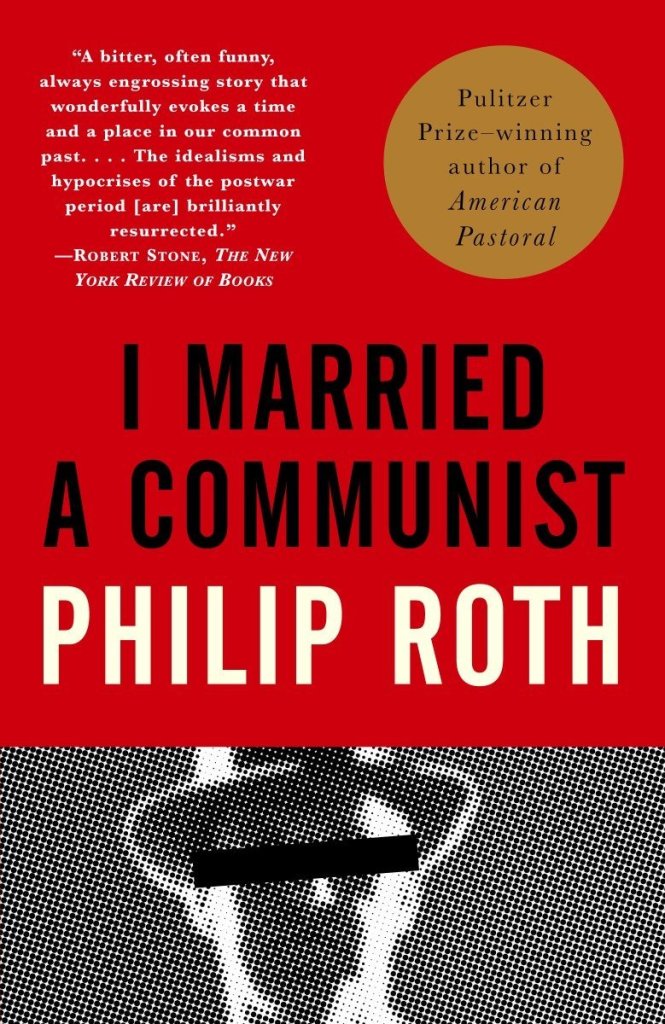
“Look, everything the Communists say about capitalism is true, and everything the capitalists say about Communism is true. The difference is, our system works because it’s based on the truth about people’s selfishness, and theirs doesn’t because it’s based on a fairy tale about people’s brotherhood. It’s such a crazy fairy tale they’ve got to take people and put them in Siberia in order to get them to believe it.” 

― Philip Roth, I Married a Communist

Philip Roth Revealed: Deconstructing Common Myths about One of the Greatest American Writers


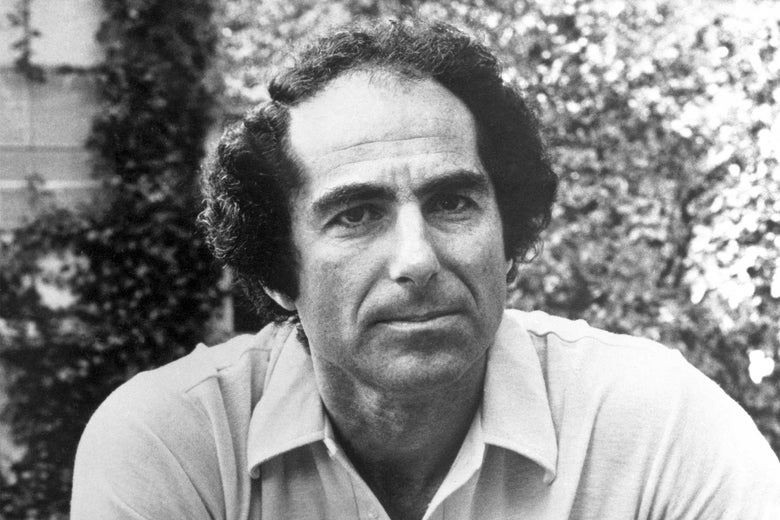
Philip Roth died on May 22, 2018, at 85. This is the last article I wrote about him:

Before you read this post, you must understand and accept that nothing about it is objective or detached. I’m a huge fan of Philip Roth, who is considered by many one of the greatest American writers. I love his books. From the first Philip Roth I ever read – I was 17 or 18 at the time, young and impressionable – I was hooked for life. The fact that it happened to be the outrageously funny and scandalous Portnoy’s Complaint undoubtedly had something to do with my obsession. So my disclaimer is this: partiality will color this article; I’m a pro-Roth kind of person. My plan in this article is to tear down ingrained myths about the life and work of this brilliant provocateur, in my own inartistic words.

1. Philip Roth was an anti-Semitic, self-hating Jew. 

Have you ever read any of his books? The fact that he was Jewish pervades his work. His self-deprecating comments can only deceive the naive. He was very proud of his ethnicity and his family and friends, although he was far from orthodox or even religious. Roth was an atheist. The misunderstandings arise from his greater pride in being an American and his love for the fundamental (although perhaps more ideal than real) values the US stands for. He never took for granted the freedom and lifestyle that are the simple result of being born and having grown up in the geographic space that comprises the United States of America. Unlike the Anne Frank of his book The Ghost Writer, he had a childhood. And if he refused to be “a good boy” to be accepted, it’s because he believed that being a good boy made it even harder to fit in. You need to be outstanding, outrageous, infamous to break down walls and belong in the world of the goy.

2. Philip Roth wrote about his own life.

 Of course, reality informed his stories, and reality is apprehended through personal experiences as much as from vicarious ones – from books we read, movies we watch, things that happen to our family and friends. So there’s certainly a lot of Roth’s own life in his stories, but these experiences are transformed by imagination; they’re not necessarily exact representations of things that happened to him or that he did himself. Everything is filtered through the powerful lens of language and fiction. Life becomes larger and its dark corners are illuminated by the spotlight of Art. Hyperbole, amplification, metaphors, and masks are all part of the process. You can’t put your finger on a single paragraph in any of his books and guarantee it describes something that really happened to him. Even the famous Nathan Zuckerman, who first appears in The Ghost Writer and continues to feature as either the protagonist or the narrator in many subsequent novels, isn’t a warranted alter ego. I’ll admit Zuckerman is the mask that most closely resembled the author behind it, but he’s not Roth. There are a couple of books, however, in which Roth dares to unmask himself and write about reality – as far as this is possible since experiences are based on memory and language, which somehow always transform them. One of these non-fictional books is The Facts: A Novelist’s Autobiography, written after a serious bout of depression caused by taking the drug Halcion for pain in his back. He wrote this short autobiography covering only the first 30 years of his life as a healing exercise, stripping himself as much as possible of his imagination and the usual masks. The second is the moving but never sentimental Patrimony: A True Story, a “snapshot of his father in movement,” as he states in the BBC documentary Roth Unleashed (which I strongly recommend), and a portrait written so he could remember his father in as much detail as possible. “I mustn’t forget anything,” was his mantra at the time. His father was dying of a brain tumor, and Roth realized he had the makings of a book – a tribute to the old man – in the notes he took at the end of each day, after coming home from the hospital where he looked after his father.

3. Philip Roth was a misogynist. 

All I can say is Claudia Roth Pierpont (no relation to Philip), the writer of a very interesting book titled Roth Unbound: A Writer and His Books, is a woman, and she strongly disagrees with the view that Roth hated women. She gives the reader great insight into his body of work, including the themes, language, characters, and masks explored in his novels, and she maintains his books probe deeply into the human soul and bring up everything, the good and the bad, and therefore include a wide spectrum of women characters. It’s not accurate to say that he always depicted women as shrews. Besides, who’s to say that the women depicted as shrews in certain novels are representative of all women? If he hated women, he must have hated men as well, or haven’t you met one of the most despicable and depraved heroes ever created in Western literature: Mickey Sabbath, the protagonist of Roth’s gripping novel Sabbath’s Theater?

4. Philip Roth was a misanthrope. 

Writers, as a rule, aren’t the most sociable people in the world. They need hours of solitude if they’re to produce something worthwhile. Roth was a well-integrated and sociable person in his years as a child, teenager and young adult, and made many friends in college. Some of these friendships lasted until the day he died. He survived a tumultuous marriage to an older woman he met when he was only 23 and entered into a long-term relationship with actress Claire Bloom, during which time he lived mostly in London. He had other lovers and mistresses throughout his life. As he grew older, however, he became more and more of a recluse, spending long hours on his books, which grew in scope and importance to become indisputable masterpieces. According to writer Salman Rushdie, the growth and maturity reflected in these books were a direct consequence of Roth’s turning his creative beam from the obsessive self-analysis of his early works to the depiction and discussion of what lay around him, focusing on the bigger issues and themes of his beloved America. In his early 80s, he was perfectly happy living alone in his beautiful country house in Connecticut. When asked if he ever felt lonely, he replied, “Yes, sometimes, like everyone else,” but that the absence of friction – the inevitable result of contact and negotiations with other human beings – was something he never missed. It’s bliss not to have to cope with this any longer, he claimed.

The best way to get to know the real Roth – or rather, the Roth that matters – is by reading any of his 31 books. Immerse yourself in his world of masks without worrying too much about what’s real or imaginary. Engage in his game of mirrors. Appreciate his language and power of imagination. The life of any human being is composed of memories, so its account is never 100 percent reliable. We create and recreate reality all the time, so why expect anything different from a man who earns his living writing fiction? You will never get to his core because it’s impossible to grasp, being unpredictable and transient.

Jorge Sette

Interviewing Homer Simpson – One of The Most Popular Dads in Pop Culture


For months, I tried to get an exclusive interview with Homer Simpson for Father’s Day. His PR representative kept turning me down but I didn’t give up. Then I had a lucky break. As Lisa, his daughter, was browsing through my blog Linguagem, she came across the article Stephen King’s The Shining: Like Father, Like Son (https://wp.me/p4gEKJ-1IL) and got interested. The PR rep had neglected to inform Mr. Simpson as to where the interview would be published. Lisa convinced her Dad how important it could be for his career to talk to Linguagem. Consequently, Homer immediately granted me an interview. He couldn’t have been more apologetic about his employee’s gaffe. Needless to say, she got fired.

15CE0A9C-6CE3-45A5-A863-E9660ACEF2A2

The next day I flew to Springfield and, after a wonderful dinner with the entire family, I spoke to Homer. Below, you will find a summary of the insightful conversation we had about his life and the importance of fatherhood:

Linguagem: Mr. Simpson, how do you plan to celebrate Father’s Day with your family? Are you going anywhere fancy?

HS: What’s the point of going out? We’re just gonna wind up back here anyway.

Linguagem: I see. How do you feel about life in general?

HS: I’ve learned that life is one crushing defeat after another…

Linguagem: Do you follow any particular philosophy on how to educate your kids? Can you give us an example of how you discipline them when they are out of line?

HS: Now Bart, since you broke Grandpa’s teeth, he gets to break yours.

244D29D3-B0BB-430A-968E-160A9C9E6F2E_4_5005_c

Linguagem: And what about when your boy reach puberty?

HS: …I told my wife how to go about teaching Bart how to become a man: The code of the schoolyard, Marge! The rules that teach a boy to be a man. Let’s see. Don’t tattle. Always make fun of those different from you. Never say anything, unless you’re sure everyone feels exactly the same way you do.

Linguagem: Hmmm. As a Dad, what are your hopes for your children?

HS: I believe that children are our future. Unless we stop them now.

Linguagem: Are you a religious man? Do you thank God for the great life and wonderful family you have?

HS: I’m normally not a praying man, but if you’re up there, please save me, Superman. But I remember saying on one particular occasion: Dear Lord, the gods have been good to me. As an offering, I present these milk and cookies. If you wish me to eat them instead, please give me no sign whatsoever…thy will be done.

7372A5E7-D016-4DAA-B55A-E43D92824867

Linguagem: What would you do if there were some kind of emergency with your kids?

HS: Operator! Give me the number for 911!

Linguagem: What is the best advice you could give to kids who didn’t accomplish what they had wanted to?

HS: Kids, you tried your best and you failed miserably. The lesson is, never try.

Linguagem: Do you consider yourself a good role model for your children?

HS: I think the saddest day of my life was when I realized I could beat my dad at most things, and Bart experienced that at the age of four.

1BCAB971-0E11-4B2A-B354-32B053C1D648

Note: all Homer’s answers are actual quotes from the very successful and funny TV show. Homer may sometimes sound harsh, but he is a loving father and adored by his dedicated wife. Happy Father’s Day to all.

Jorge Sette